29 June 2016

WHAT'S HAPPENING WEDNESDAY: JULY EDITION

WHAT'S HAPPENING WEDNESDAY

BY: KATE SEALLY
The view from my imaginary cottage. Source.

Welcome to the July edition of What's Happening Wednesday! I hope y'all have been enjoying summer and that some of you have had a chance to vacation, perhaps at a cottage with a view.
Enjoy the following collection of events, and luckily most of them are indoors, so you'll be safe from the humidity!

 1. Anarchist Workshop for the Maker Community

This satellite event of the Toronto Maker Festival is an interactive evening at Colborne Lodge in High Park. Colborne Lodge's original owner, John George Howard, was a 19th century Toronto architect, surveyor, city builder, early adopter and all around tinkerer.

Colborne Lodge will have all its doors open to welcome the maker (and museum) community. So come explore and decide if you think John Howard really was Toronto's original maker! Light refreshments will be served.
  • Where: Colborne Lodge, High Park, Toronto
  • When: Wednesday, July 13 from 6 pm to 8 pm
  • Cost: $10 + HST / person. Tickets here.
The Toronto Maker Festival is on until July 17 at various locations! Source.
2. ROM Daytime: Chihuly, Art in Context 

The ROM is running several interesting events in the coming weeks, so it was difficult to choose just one! (check out the events I didn’t choose here and here).

Happening June 30th, this ROM Daytime event will put Dale Chihuly’s magical glass art into context. Diane Charbonneau, Guest Curator of the ROM's Chihuly exhibition and Curator at The Montreal Museum of Fine Arts, will discuss the work of this celebrated and boundary-breaking artist. Following the lecture, refreshments will be served before participants are invited to visit the exhibition.

The event is included with admission, but RSVP here.
  • Where: Royal Ontario Museum, Toronto, Ontario
  • When: Thursday June 30, 11:00 am to 1:15 pm
  • Cost: included in ROM admission (so free for OMA members!). RSVP recommended
Source.
3. AGO Curator’s Talk: Andrew Hunter on Lawren Harris and The Ward

Join Andrew Hunter, the AGO’s Curator of Canadian Art, as he explores the Toronto of Lawren Harris. Toronto, in the 1910s as today, was a city of great diversity and dense urban growth. Harris painted often in St. John’s Ward, a downtown neighbourhood full of peoples of a variety of cultures.

Like the ROM, the AGO has several other exciting events coming up. Check them out here, here, and here.
  • Where: Art Gallery of Ontario, Jackman Hall
  • When: Friday July 15, at 6 pm
  • Cost: Members $12, Public $15, Students $10
Yoga in the Galleria Italia! Another great AGO event. Source.
4. Honourable Mentions from our MMSt Interns:
  1. Downton Downtown in downtown Hamilton (via Claudia Palermo, intern at Hamilton's  Tourism and Culture Division)
  2. Ottawa Storytellers at the Bytown Museum (via yours truly, intern at the Bytown Museum) 
Well that's all for this month, folks. Remember to leave me a comment with a new event happening near you, or reach out to me on Twitter! Have a wonderful week, and happy Canada Day!

27 June 2016

USING CONSENT AS A MODEL FOR COLLECTIONS MANAGEMENT

COLLECTIONS CORNER

BY: NATANIA SHERMAN


Large Group in the Living Room, 1963. Chromogenic print, 8.8 x 19 cm. © Art Gallery of Ontario. (Source)
The concept of consent is one that comes up frequently in media and has interesting implications when it comes to museum practice. I recently read an article in Canadian Art magazine about the Casa Sussanna album that was on display for the Art Gallery of Ontario's (AGO) Outsiders: American Photographers and Film 1950's-1960's exhibition and has been circulating as promotional material for this year’s Scotiabank Contact Photography Festival including a public display in St. Patrick subway station. The article brought up an interesting point, that although the material was being received as a positive public representation of the LGBT community, the circulation of these images raised a lot of questions about the privacy of its subjects, and their ability to consent to now being part of museum and festival promotional material. While it is genuinely exciting to see museums and cultural festivals celebrate positive representation, the reality is that public representation needs to take into account the safety and well-being of those individuals or communities being represented. This is where thinking about consent can become part of collecting institution’s policies and code of ethics. Collections managers and curator’s must be willing to balance the question of representation vs. consent, and be willing to employ policies that respect the parties involved.

The photographic record is not the only arena in which consent may play a role in collections practice. Historically, museum artifacts have been acquired through less than ethical means. The result of this historical practice is that many museums contain looted or stolen material, human remains and sacred objects. A self-reflexive institution needs to uphold best practices to ensure that the consent of all parties involved is upheld, including the of living ancestors of people whose bodies are now in museum collections, and respecting the requirements of ceremonial objects some of which require restricted access in their original contexts. As a collections manager recently told me, while there are some people who will donate their bodies to science, very few sign up for a second life as a museum artifact. There is often only one chance to create policies which show respect to the person in question. In the past, human remains were taken from indigenous or First Nations communities, and there are cases where relatives of the person now in a museum collection are still living. In cases like these, museums need to be open to creating accessibility for the relevant communities to visit their ancestors or to consider repatriation. When it comes to making decisions surrounding sensitive objects, taking the time to consult source communities around the need for special policies regarding certain objects can have a profound impact on the museum's relationship with those communities. The Canadian Art article also points out that a museum is a controlled space. While many museum professionals lament that fact as exerting an oppressive authority over visitors, an alternative view is that museums can use their authority to actively model respect for sensitive objects and by extension, for the communities that those objects represent.

Collections managers can add special accessibility specifications to certain sensitive objects, create policy about how an object is shown and who gets to see it, and get permission from living relatives to make decisions about display and care. Additionally a policy based on the idea of consent can be built into practices surrounding accessioning objects and new acquisitions. Making those decisions when new objects arrive in the collection will be greatly appreciated in any succession plan by collections managers and curators of the future. Ultimately the result of respecting the consent of all those involved in the decisions to display or not display an object is the building of a museum profession based not on authority but based on trust and mutual respect.

24 June 2016

EXPANDING HORIZONS & CHANGING TIME ZONES

INTERNSHIP CHECK-IN

BY: MAYA DONKERS

Welcome to the second instalment of the Internship Check-In for the class of 2017!

A message to my cohort: I hope you are all having amazing, productive, and meaningful experiences at your respective placements. To any incoming students: I think I can say on behalf of my class that the internship component of the MMSt program is a great experience that you can look forward to in the upcoming years (helpful tip: do NOT leave your Interim Report you the last minute - you will regret it for the rest of your life).

This is most of us working on our Interim Reports - don't be like us. Source.
As I am nearing the 10th week of my internship, the Interim Report is a distant memory and I living in daily disbelief at how fast the time has gone. Needless to say, it has been a busy few months. So, if you haven't had time for the coffee-wine-internship-download dates , I've got you covered.

Let's see what some pretty amazing people have been up to in some pretty amazing places... 

Jasmine Proteau - Time Zone: CEST (Central European Summer Time)  


Tell us where your internship is, what your position it, and when you started! My placement is in Florence, Italy, at the Kunsthistorisches Institut - which is a German art history library that is equal parts German and Italian. I started May 9th as a Curatorial Intern, so I will be coming home at the end of July. 

What excites you most about your internship position and/or organization? I think the opportunities I have been exposed to here are the most exciting part of my internship. I get to attend lectures, conferences, museums, presentation, and workshops on European history - particularly Renaissance Italy. There are so many museums here I still haven't seen them all, though I am slowly working on it!

I am also really lucky to get to work at the KHI because they do a lot of collaboration with heritage institutions throughout the city, particularly Harvard University's Villa i Tatti Institute at the Uffizi. This has allowed me to connect with other heritage professionals and academics. 

Tell us briefly about what you're working on! I've been working on two big projects while I am here - trying to take advantage of my environment. I have been creating a digital exhibition that I hope to release in the fall about guidebooks and tourism in 19th century Florence. I have also been working on a GSI project for DECIMA - a digital mapping tool of 16th century Florence - using a guidebook from 1591. I will be adding more guidebooks to observe visual changes in Florentine tourism over time. The projects are interrelated and I am learning a lot about the city and its urban development - plus there are some really cool things hidden in guidebooks and I'm always surprised at what I find.

What is the one thing you hope to accomplish before the end of your placement? I hope I can finish my digital exhibition on time. Since there were 160 19th century guidebooks I had to go through before I could start actually writing any of the exhibition text, hopefully I can persuade the KHI to display it on their website. 

I am also hoping to have one really good conversation in Italian or German before I leave - I am still at a beginner level but I am hoping another month and a half might do the trick!

The only time I will probably ever get to use ciao bella in a caption, so thanks Jas.
Photo Source: Jasmine Proteau.

Christine Pennington - Time Zone: PDT (Pacific Daylight Time) 


Tell us where your internship is, what your position it, and when you started! I started as as Collections Intern at the Museum of Vancouver on May 3rd. 

What excites you most about your internship position and/or organization? It has been really interesting to be learning about collections work and developing new skills in a hands-on environment, while simultaneously learning about the history and culture of the place I grew up in (and hope to work some day). Although early collections practices focused on showcasing the world to Vancouver, the Museum of Vancouver now focuses on showcasing Vancouver to the world. I feel like I learn amazing things every day, whether they are collections-related skills or just fun facts about the most beautiful city in Canada (sorry Toronto). 

Contributor's Note: I agree and can't wait to be back home in the beauty of the West Coast in one month TODAY! 

Tell us briefly about what you're working on! I am mainly working on cataloguing and digitizing a collection of transit related material donated to the Museum last year. This collection of over 600 items showcases the history of transit in Vancouver, with material dating back to 1890. There are a variety of objects - from ephemera to paper documents to old transit uniforms - some of which post interesting challenges to describe, number, and digitize. 

What is the one thing you hope to accomplish before the end of your placement? With all the cataloguing and digitizing I have been doing it will be satisfying to complete the process by learning more about storage and long term care. I will be able to finally find the objects some permanent homes in the collections storage space.

#mood when your museum is so close to the ocean you can smell the salt water.
Photo Source: Christine Pennington

India Burchell - Time Zone: EDT (Eastern Daylight Time) 


Tell us where your internship is, what your position it, and when you started! I am interning at the Royal Ontario Museum here in Toronto. My position is Collections Intern in the Hands-On Discovery Gallery and I started about 6 weeks ago on 9th May.

What excites you most about your internship position and/or organization? Each day is different and that is exciting for me. I also like the fact that sometimes the day is filled with project work and other days I am out on the Discovery Gallery engaging with visitors. The Royal Ontario Museum is a really interesting place to be, there is so much going on and I am looking forward to a new exhibition opening very soon.

Tell us briefly about what you're working on! I have a number of projects which I am working on. I am re-organizing a collections cabinet; testing a Discovery Box on the topic of Viking Exploration; photographing artifacts; improving the microscope station which includes researching textiles, currency, stamps and facilitation cards (I have just finished one on an Elizabethan Shilling and I am hoping to write one on a Tyrannosaurus Rex tooth replica). When I am not working on projects I am out in the Discovery Gallery at the dino dig or helmet stations engaging with visitors. I enjoy both project work and being in the gallery, it is always fun!

What is the one thing you hope to accomplish before the end of your placement? I hope to finish all of the projects I'm working on. Specifically, it would be great to see the improved microscope station finished and to see how visitors interact with the stamps, textiles and currency.

India and Bradford (the name I just made up for this dinosaur - maybe it will catch on?)
Photo Source: India Burchell

Claudia Palermo - Time Zone: EDT (Eastern Daylight Time)


Where is your internship, what is your position, when did you start? My internship started on May 2nd, and I am a Collections Intern working with the City of Hamilton’s Tourism and Culture Division. The City of Hamilton collection includes artifacts from the city's eight museums as well as a corporate and a civic collection.

What excites you the most about your internship position and/or organization? I absolutely love that because of the nature of Hamilton’s Civic Museums, I get to work with not only a large sized government run institution, but also National Historic Sites, Historic Homes, and a small community museum on a daily basis! It is so rewarding being exposed to such drastically different sites. Not to mention its been hugely exciting being able to put what I’ve learned from Professor Cara Krmpotich to use on a daily basis!

Tell us briefly about what you're working on! I am a Collections Intern and my primary task for this internship is the “Deaccessioning Project”. This project is intended to free up valuable space in the City of Hamilton’s storage facility for more valuable objects that fit the City’s mandate, which will ultimately result in a more relevant collection that can receive better care and attention. These tasks involve presenting and defending lists of items for consideration.

My secondary task is spending time with the Conservator on staff in order to gain hands on preventative care and pest management experience.

What is one thing you hope to accomplish before the end of your placement? I really hope I get to see at least one deaccession list go through the deaccession process from start to finish! The deaccessioning project is a huge undertaking and unfortunately it is not something that I will be able to finish before the end of this internship.

Claudia working hard in the best coloured gloves for collections work, ever.
Photo Source: Claudia Palermo

Again, I would like to extend a huge congratulations to these hard working interns who keep the rest of us inspired and learning new things.

Someone had to drop the mic for these amazing ladies. Source.

If you have something to share about your internship - we would all love to hear from you! Leave your comment below and let's take turns sharing our experiences. 

22 June 2016

TATTOOS: RITUAL. IDENTITY. OBSESSION. ART. AT THE ROYAL ONTARIO MUSEUM!

EXHIBITION REVIEWS

BY: STEPHANIE READ

As the summer weather finally begins to roll in (today is the second day of summer, so make the days count, people!), humans everywhere shed their clothes and reveal their exciting, strange and highly symbolic inks! Now is an exciting time for the art and science of tattoos; although many people feel tattoos are a too-mainstream and commodified trend, undoubtedly they are being accepted in societies across the globe at an unprecedented level, resulting in wonderful new styles and synergies! In the words of the Unbreakable Kimmy Schmidt:

Source.
Tattoos are highly individualistic and reflect the person’s heritage, beliefs, values and imagination. Furthermore, the quality of contemporary tools and the huge spectrum of shades and hues permit artists to use their craft in innovative ways, such as covering up old scars, burn marks, or that Winnie-the-Pooh wearing a bandana that your cousin got on his arm back in 2001.

One way to celebrate the emerging popularity and significance of tattoos, and the synergistic character of tattoo artistry, is to check out the Royal Ontario Museum’s 2016 main event Tattoos: Ritual. Identity. Obsession. Art. If you are a museum studies student, I HIGHLY recommend that you see this exhibition! It has incorporated so many museum “best” practices and theories in its content and design. It also supports body positivity! Yay!

"When I woke up, I was covered in 'em!". Tattooed Sailor Talking to His Crewmates. Photographer Unknown. United States, July 14, 1928. Reproduction.
Located in a section of the Crystal, the exhibition seems carved out severe glacial walls. Perhaps in order to stick with the unconventional exhibition theme, the ROM has, for the most part, forsaken wayfinding signage, which may either please or confuse you. I personally enjoyed the non-linearity. There is no suggested timeline to the exhibition material, as it explores over 5, 000 years of tattooing across various cultures, communities and situations. However, the ice-cave like maze resulted in my having missed out on a few tucked-away sections. I understand that since I have visited, some ROM personnel have attempted to alleviate this problem for its visitors with more signage.

My friends watching a video on Irezumi, Japanese tattooing (in this case of the whole body) using a hand-tattooing method. Not for the faint of heart. Photo Credit: Stephanie Read. May 2016.
The exhibition content is so diverse that it has the potential of catering to a spectrum of interests and tastes. Tattoos explores the art, uses and symbolism of ‘ink' in a way that reminded me how lucky we are to decide how, when, where and if we want a tattoo of our own. The history of tattoos is also that of individual agency (or lack thereof), and as a result takes a bold look at issues of colonialism, control, marginalization and social stigma. The exhibition content is diverse, bringing together fresh examples of the works of contemporary “star” tattoo artists, videos explaining the application of ink, objects, stories, representations and narratives which succeed in conveying this nuanced and highly-charged story of colour and line.

One of my favourite pieces from the exhibition. This is a shirt used by Japanese stage actors, part of a costume for depicting a tattooed bandit. Photo credit: Stephanie Read. May 2016.
Interestingly, examples of tattoos by renowned contemporary artists are inked right onto silicone models of body parts, such as legs, arms and perfectly imperfect torsos. I can’t help but remark, however, on the fact that many of the artists decided to draw flowers. Surrounded by the works of tattoo legends across history, I was let down by all of the simple, translucent pink flowers. I noticed that visitors did not linger more than a few seconds to look at many of the models. This is a shame, considering that the models provide a chance to take the time to really look at the tattoos on a person’s body. Every day we are surrounded by tattoos, yet even the most ostentatious designs and colours are hidden from us by the veil of personal space and propriety; the more interesting the tattoo, likely the more self-conscious we will be to stop and linger over someone’s decorated body in the street.

Delicate tattoos on the face, hands and legs hold different meanings and power for Inuit women.Sculpture, Inuit Woman with Tattoos. Artist Dominique Tungilik. Netsilingmiut, Gjoa Haven, King William Island, Nunavut Canada. Before 1989. Photo Credit: Stephanie Read,. May 2016.
Finally, Tattoos is a strong exhibition in its treatment of the subject as highly nuanced, rich and context-specific. It reflects our society’s growing acceptance of a formerly “underground” practice, yet offers a rounded historical approach to understanding why tattoos are powerful signifiers. Whether your canvas is “blank” (like me) or you are an ink veteran, Tattoos will give you a new appreciation for the humanity behind the ink. Be sure to not only give yourself ample time to browse, but also to explore every nook and cranny of the exhibition space. There is some nudity and graphic imagery, so you might want to do a bit more research before you bring the kiddies. 

A fascinating theme of the exhibit was that of the 19th century North American sideshow. Here is a depiction of the tattoo artist Charlie Wagner decorating his wife. He was known for working freestyle, that is without a reference or template. Charlie Wagner from the series Homage to Tattooing Icons.. Artist Titine K-Leu. Switzerland, 1990. Photo Credit: Stephanie Read. May 2016.
In celebration of Tattoos, you can tweet YOUR tattoo and “join the exhibition” at #ROMInk.

Tattoos: Ritual. Identity. Obsession. Art. will be on at the Royal Ontario Museum until September 5.

20 June 2016

LOST IN THEIR OWN MUSEUM PART 2


MUSEUM MYSTERIES

BY: CHRISTOPHER WAI

Left to Right: Dr. Schneider, Dr. Brody and Dr. Jones conducting object research. Source; Indiana Jones and the Last Crusade (1989)
Perhaps it's just some sort of ironic fate, providence or coincidence that between parts 1 and 2, I've found myself looking for things in storage between tasks on and off for the some of the same reasons I mentioned in my intro last time.

But in any case, here are 6 more cases :

6. Colonel Meinhertzhagen's Reappearing birds- Natural History Museum (London) 

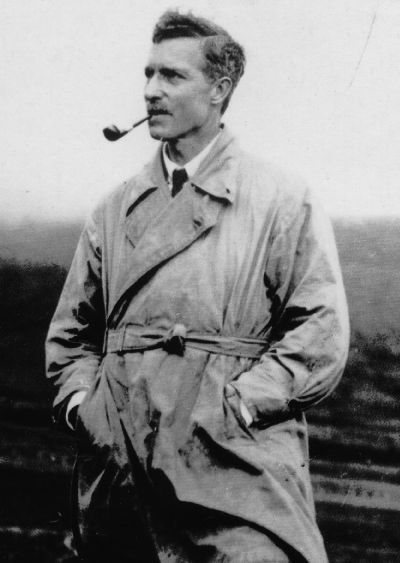
Meinertzhagen in 1922 Source
Colonel Meinertzhagen is a strange and increasingly unscrupulous character in early 20th century history.

Amongst other things, he served as a British officer in the African and Middle Eastern fronts during the First World War, has claimed to have met Hitler in the '30s (only to apparently regret not using his loaded gun) and may have murdered his wife, who apparently shot herself in a “shooting accident”. His two most infamous associations are his 'haversack ruse'; where he allegedly dropped misleading battle plans that lead to a key victory at Beersheba and assassinating a Kenyan leader revolting against colonial rule under the guise of a truce (they were about to shake hands to be specific apparently) before stealing the his staves representing Nandi tribal leadership (repatriated in 2006).

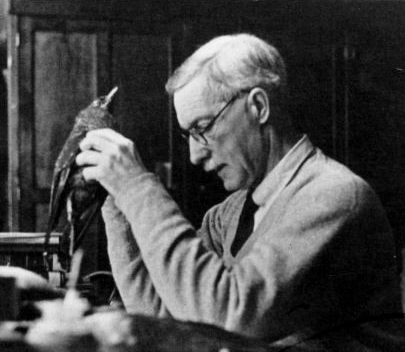
He was also an avid ornithologist throughout his life-so much so that he donated a large collection of around 20 000 bird specimens to the Natural History Museum in London (amongst other institutions) and allegedly mined someone else's unpublished manuscript for his own. 

 "Richard H. Meinertzhagen working with museum specimens" Source
The problem, as researchers Pamela Ramussen and Robert Prys-Jones began to discover in the 1990s, was that it a number of the specimens donated were actually missing specimens that came from other collectors and institutions. In other cases, their location of origin was changed.

This has had wider implications beyond plagiarism and theft as it calls into question any study using these specimens and the alleged context associated with them or any later research that cite those studies. 

7. Completing the Book of the Dead- Queensland Museum


Dr. John Taylor Source: Daily Mail
Dr. John Taylor, a curator of the British Museum was walking through the Queensland Museum's appropriately named “Mummy: Secrets of the Tomb" exhibit and found himself face to face with a fragment of a famous copy of the Egyptian Book of the Dead owned by the priest and  Chief Builder, Amenhotep. So he asked if there were more- there were 100 fragments

Other fragments of this copy had been known to have been proverbially scattered across the globe between collections at the British Museum, Boston's Museum of Fine arts and the Met. It seems the Queensland Museum had unknowingly been conserving them for almost a century since their initial donation.

8. Salieri and Mozart in Czech -National Music Museum, (Czech Republic)


The libretto Source 
Salieri was a famous composer who taught Lizt, Beethoven and Schubert. He was also a rival of Mozart's and as afar as history has told it, there was no loved lost between them.

So it was odd when it was announced last February that a joint composition of a libretto was found by German composer Timo Jouko Hermann while looking for compositions by Salieri's students.

The exact story behind their relationship remains unknown, but its an interesting new clue, though its also further fuelled existing theories about Mozart being poisoned by his rival.

9. Sherlock Holmes' early film adventures- Cinémathèque Française

 Ever seen Sherlock Holmes with a Calabash pipe?

As many Sherlockians/ Holmesians (myself included) might like to tell people in their long lectures on trivia of every little bit of minutiae or myth about the great detective's life, Conan-Doyle never actually described him ever owning a calabash pipe.

William Gillette on stage as Holmes Source
That addition to the lore comes from William Gilette in 1899, just 12 years after the character's inception. Gillette was the only actor to have ever played Holmes with Doyle's direct involvement in the production. Unfortunately, as it was a stage play little of it survives, though he did reprise the character in a 1916 film, but that too was long thought to be lost.

Gillette's Holmes doing lab work in the 1916 film. Source
For the next 98 years, only stills, advertising and the lamentations of Holmesians recounting the above gave us an inkling of what Gillettes' portrayal was like. In 2014, a print was rediscovered during a cataloging project in the Cinémathèque Française archive and restored for a showing at the San Francisco Silent Film Festival.


10. “...the single baby born in Auberive...” -Art Gallery of Ontario


Source AGO
Here's one for the interns.

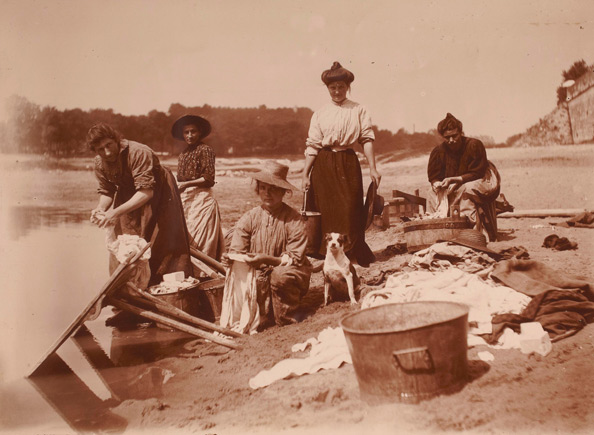
In 2011, MMSt alum Vanessa Fleet interned at the AGO managed to trace the origins of a collection of 1,702 photographs to a photographer who's identity had never been known and garnered little, if any reputation.

All she had to go on was a single line written on the back of one photograph: "Auberive-Avenue de l'Abbatiale-where I was born, 16 March 1839.".

As luck would have it, there was only one baby born that day, listed in the parish records at the town of Auberive- Abel, Boulineau.

He was a photographer, a painter and he taught in Paris at the Association Polytechnique. In the summers, he travelled across rural France taking photographs, many of which inspired his paintings.

11. "War Trophies"-"Curios"-Indigenous Heritage Looted from Villages- Melbourne Museum


"Australian Native Affairs staff brandishing New Guinea spears and shields" Source
Well, that's certainly a picture of some sort...

Here's a case study in museum ethics, colonialism and more to add onto the dissonance of the First World War.

To summarize Dr. Christine Winter's research on war trophy collecting in the region:

When the First World War began in 1914, Australian forces quickly took over the Northern, German half of the then colonies of Papua New Guinea in a number of weeks. This occupation would last until 1975.

The war had yet to become the nightmare that it eventually became and many soldiers celebrated with “war trophies” from the Germans and much like the German colonials before them, took numerous objects from the indigenous peoples of Papua New Guinea.

Shop windows that would later have memorials dedicated to the dead held many of these objects that the soldiers forwarded to their families.

In the scramble during and then after the war to create war museums with these war trophies, the Australian Government took to the idea of collecting “native curios” and in one instance, sent an armed expedition that took the “strategy” of shooting near the villagers to scare them out before looting and burning the village.

The greatest irony is that these objects were never displayed after they were collected because they were not deemed “war trophies” but “curios” and sent from the war museum to the Museum Victoria, boxed and forgotten until 1997, when Curator Ron Vanderwal and dr. Barry Craig rediscovered them during the museum's move to a new building.

Today, there is a refocusing on its value as a part of Papua New Guinea's heritage, though they have yet to be repatriated.

Conclusion

So who knows what you might find somewhere down the line, maybe even as an intern. Maybe that old set of neglected boxes that you need to rehouse is important. The old catalogue records in illegible cursive scrawl from a century ago or assorted papers stacked in a filing cabinet might not be so boring after all.

Maybe its something that's in the galleries. Perhaps you'll fix a misattribution that recontextualizes an object completely. You may also need to find answers to the troubled histories of where your rediscovery came from and what will be done with them in the future.

Of course, it's probably better to keep your records in order and do object research so that this doesn't happen to you...

Good luck!

Dr. Brody, Curator of the National Museum leading the charge Source: Indiana Jones and the Last Crusade (1989), Paramount.
I do love this scene..

Editor's Note: In an earlier edition of this article we incorrectly referred to Dr. Christine Winter as Dr. Christina Walker. We apologize for the earlier error and have corrected this mistake.

18 June 2016

JUST IN TIME FOR #PRIDETO, A 3RD GENDER AT THE ROM

WEEKEND EDITION

BY: NATANIA SHERMAN

Vinyl text at the entrance to A 3rd Gender (Photo: Natania Sherman)
Last week I had the privilege to attend the curator's remarks and a lecture at the ROM’s beautifully designed 3rd Gender exhibition. While I had initially thought I would write a straightforward review, the events of the past week and the fact that it is Pride Month, made me consider what kind of role museums have to play when it comes to representations of people who are often marginalized by mainstream institutions. I know that I'm not the only one having these thoughts, because Incluseum just published a post highlighting ways that museums can be more welcoming to people in the LGBT community through their reputations as safe spaces for learning. The 3rd Gender is an interesting exhibition to look at in this light because it tackles issues of culture, gender, fetishization and sexuality but does so without resorting to a one dimensional narrative.

The 3rd Gender focuses on gender ambiguity in Edo period Japan, when the country was still closed off from the western world. The exhibition discusses gender around the subject of wakashu, meaning youths, young men who had not yet reached adulthood who adopted feminine accoutrements and mannerisms to gain favour from the older merchants or samurai who were their patrons. The wakashu were considered to be great beauties and many of them were desired by both men and women, as evidenced by the many depictions of wakashu with both men, women and sometimes other wakashu in surviving ukiyo-e woodblock prints.

A painted screen in the exhibition (Photo: Natania Sherman)
In some ways, the 3rd Gender exhibition is a uniquely Torontonian exhibit in the way that it creates dialogue around both Japanese culture and the LGBT communities, reflecting the diversity of intersecting cultures in this city and the willingness of museums and their publics to be open to creating dialogue about culture, art and representation. I was pleased to learn from the curator’s remarks that the exhibition was developed with consultation from Sexual Diversity Studies here at the University of Toronto as well as LGBT2AQQ groups and the Japanese Canadian Cultural Centre.

Without context it is often difficult to "read" the gender in the images on display. (Photo: Natania Sherman)

In minimalist muted grey with pops of bright orange vinyl text, 3rd Gender is a multimedia exhibition containing a mix of artworks, books, textiles, clothing, objects and film. That being said, I truly think it is the ukiyo-e woodblock prints that steal the show, but that may be my own background as a former printmaking major showing. I was thrilled that the exhibition included not only the prints themselves but the wooden matrices which had to be carved and then inked in order to produce the prints.

I was so excited to see the wooden blocks used to produce the prints (Photo: Natania Sherman)

The other objects that were placed in the exhibition, such as the samurai armour and hair combs, did not on their own serve to enhance the theme of gender ambiguity but, in the context of the exhibition, served to highlight and explicate some of objects depicted in the prints and their gendered qualities. It was also positive to note that the curator chose to discuss sexuality as both part of culture and culturally defined instead of playing up the more sensationalist aspects of the images on display, many of which explicitly depicted sex acts. I was surprised to learn how important elements of culture, like food and fashion, are to understanding the context of the images. For example, when looking at prints from the kabuki era, in which cross dressing was common for men and women, without the subtle cues revealed by hairstyles and accessories, it would be almost impossible to “read” the gender of the individuals depicted. Similarly images of food can reveal the setting of an image because certain foods were only served in brothels, revealing the subjects of the print to be engaged in prostitution. A quite fun element of the exhibition was the subtle humour evidenced in many of the prints and their accompanying texts. The ambiguity of gender allowed for the audience (presumably an adult male contemporary of the printmaker) to feel surprised as they read the painting from right to left and discover that the young woman is in a fact a wakashu cross-dressing for the kabuki theatre or that the characters’ surreptitious activities may have ulterior motives such as a desire for wealth or power.

Some of the objects in the ROM's 3rd Gender Exhibition (Photo: Natania Sherman)

I think if the exhibition reveals anything it is that gender and sexuality and the ways that they are expressed can be culturally formed and that although the controlled and often conservative space of the museum can sometimes sanitize the more sexual elements of historical images, it also forces the visitor to confront their own cultural bias in understanding historical depictions of same sex couples. In fact sex and gender are important ways to understand cultural hierarchies and practices, and when discussed sensitively and without sensationalism can make not only an appropriate museum topic but one that is timely and all too relevant to contemporary events.

17 June 2016

THE GRAD SCHOOL GUIDE: VIEWS FROM THE STACKS

THE GRAD SCHOOL GUIDE

BY: EMMA HOFFMAN

            Hey friends! Welcome back to The Grad School Guide: a place where you can sit back, relax, and learn about all things related to the wonderful world of higher education. In the second edition of the 2016 guide, we’re going to talk about the best places on campus to eat and study: perhaps the two things that take up most of a grad student's time (other than classes, that is).

            I have always been a notorious and un-repenting “in-class eater” and I want to share the passion I have for food with all of you lovely readers. During my undergrad, I was known as “that girl who always eats during class” and my reputation has not changed as I have become older, and hopefully wiser, during the first year of my MMSt. This article also serves as an apology to anyone who has been stuck beside me during a lecture and had to listen to me masticating everything from a granola bar to a full-sized bowl of udon noodle soup.

           As we know, our good ol’ Faculty of Information is located in the Claude Bissell Building, connected to Robarts Library. We second years also know that as grad students, sometimes we feel like we don’t have time (even though we definitely do) to wander beyond the walls of this building (especially during the winter!) on our everyday quest for basic sustenance. Although our faculty has a library of its very own (the Inforum, located on the fourth floor), UofT has a whopping total of 44 libraries with copious amounts of resources and interesting study spots galore.

           With this article, I aim to introduce MMSt students, new and old, to spaces other than the Robarts cafeteria and the Inforum. Why? Because we all need to break out of our normal routines and change it up once in a while. If you want to cue up the song “Breaking Free” from High School Musical and play it while reading the rest of this article, now would be the time to do so.

Helping you lovely readers enjoy this article more than I presume you already are. Source.

            Together, we are about to embark on a journey towards curating the ideal grad school experience, outside of the classroom. So without further ado: let’s get to studeating (a portmanteau of studying and eating that I just made up for my own entertainment, and because I enjoy laughing at my own jokes way too much).

WHERE TO STUDY...
Gerstein Library
7 King's College Circle
Although this library is known as the “science and information centre,” it’s anything but a sterile environment. With glass enclaves that face directly onto Queen’s Park Crescent, this library can provide a quiet and serene study space for anyone who wants to study in a bit more of an anonymous setting and change it up from the chatty environment that the Inforum can often foster.

A view of one of the quiet study enclaves in Gerstein. Source.

John W. Graham Library at Trinity College
6 Hoskin Ave.
Another nice and quiet spot to indulge in a study session (sensing a theme here?), Graham Library is a great place to hunker down in a cubicle and seriously get your study on. Its beautiful early-19th century facade doesn't hurt either. I recommend taking a study break to contemplate your life choices in front of the reflective pool and fountain (!) at the front of the building, or at one of the tables outside in the courtyard.

A view of Gerstein and its reflective pool from the courtyard. Source.

Goldring Centre for High Performance Sport
100 Devonshire Place
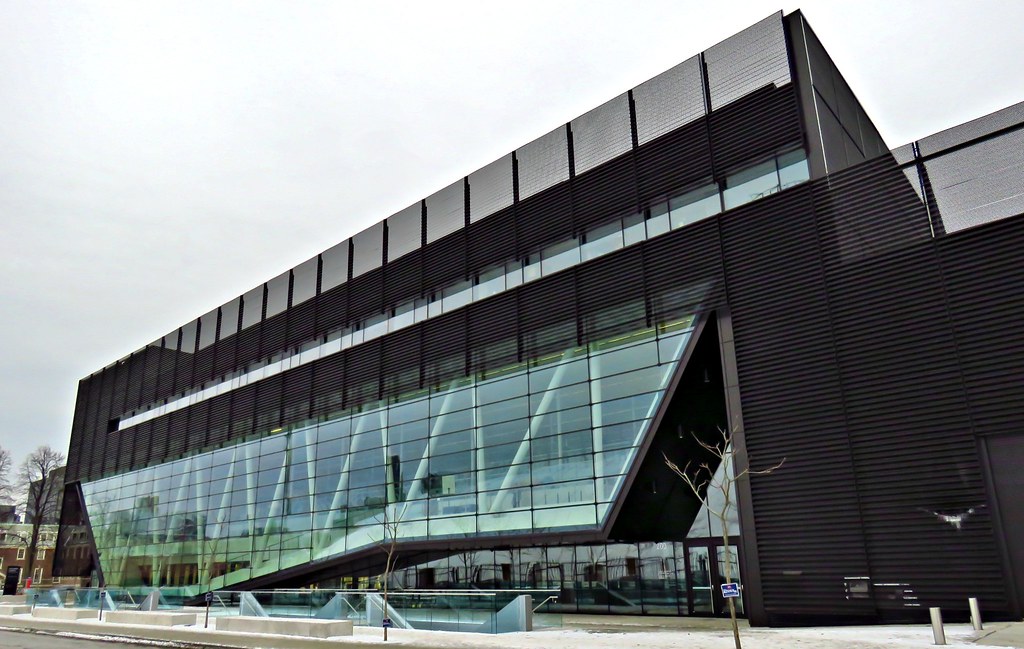
I know what you're thinking: "studying at the gym? That's just nuts." Well I'm here to prove you wrong. Not only is Goldring a hip new athletic facility, it also has a seating section on the main floor that is ideal for some post-cardio essay-writing, and that overlooks the Kimel Family Field House where basketball and volleyball games are played.

Goldring in all its glory. Source.

WHERE TO EAT...
Innis Café
2 Sussex Ave.
Located on the opposite side of Sussex Ave. from the Faculty of Information, this family-run café serves up healthy and hearty meals, made-to-order. The super sweet caf staff supply a menu of everything from breakfast sandwiches and freshly squeezed juices to burgers and quesadillas, all for a student-friendly price.


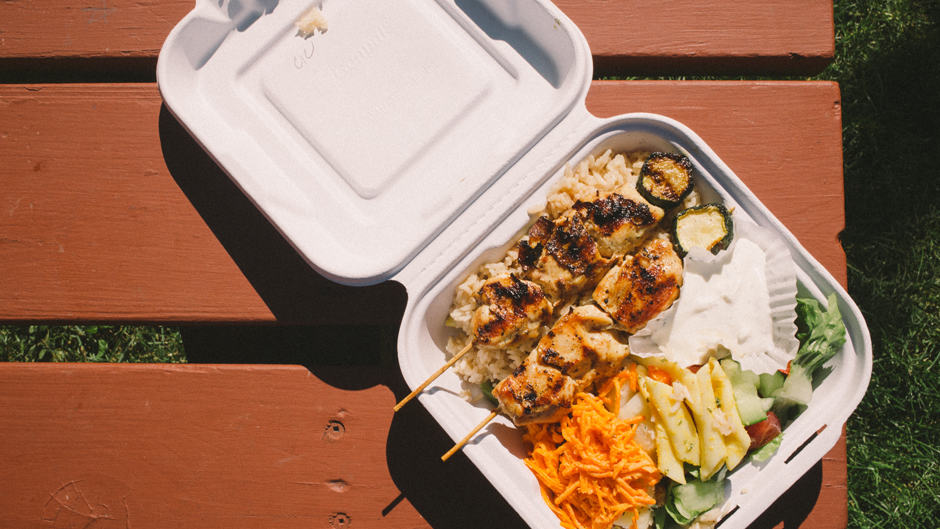
Someone else snapped an awesome photo of my favourite meal at Innis: the chicken skewers with salad and grilled vegetables. Source.

Diabolos Coffee Bar
15 King's College Circle
This student-run, fair-trade coffee shop in the Junior Common Room at University College sells coffee and snacks that will make you feel good too. If you're looking to "break free" (hope you're still listening to High School Musical!) from your usual caffeine-run to the Starbucks in Robarts cafeteria (and you might want to after a while), this is a great alternative.

View of Diabolos. Source.
Food Trucks
Looking for a break from the great indoors of the Faculty of Information but don't have time to head too far away? Roll on over to any of the food trucks that line the streets of St. George from Bloor to College. Anyone who has seen me during lunchtime knows that I eat the shwarma platter from the food truck right outside the entrance to Claude Bissell more often than I would like to admit in a public blog post. 
·
Kee's food truck on St. George. Source.

This article serves as a mere appetizer to the varied array of restaurants and study spots in and around UofT campus, so please sound off in the comments if you have any recommendations that you wish to share. Stay tuned for the next edition of the Grad School Guide on July 15th and stay cool, first-year friends.