31 January 2017

THE NORTH AMERICAN CURATION CRISIS: WARPING TIME IN SPACE (REPRESENTING IDENTITY AND BULLDOZING SITES PART 3)


MUSEUM MYSTERIES
BY:CHRISTOPHER WAI

Setting the Stage:

President Obama had finally issued an executive order at the end of last year to bar drilling permits in response to veterans joining the protests. Trump has since signed another to allow for the DAPL to resume and the issue here has been buried once again in the mass of controversies and responses to the Trump administration. Trump owns shares of stock in Energy Transfer Partners. Rick Perry, the top pick for Energy Secretary was also a board member. The volatile hierarchies I mentioned have in a sense proven itself. There have been many issues in the past week, so forgive me for some critical levity. To set the stage, I refer to you this wonderful documentary (#AlternativeFacts). Where it ends we begin.
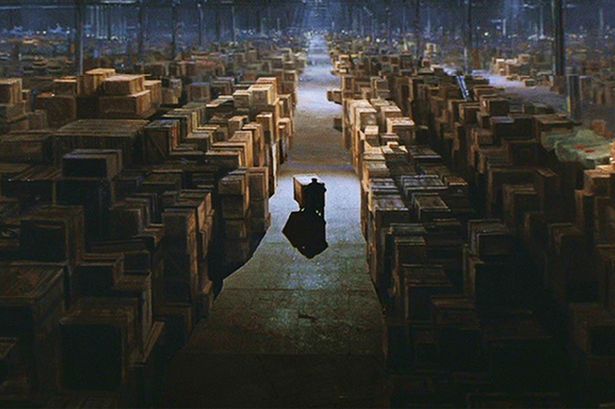
                                             

Improper storage as shown in fiction. Raiders of the Lost Ark (1981)

The Risk: Warping Time in Space:

In light of all the things that have happened in 2016 and in the past and upcoming weeks, this all may seem less important and yet it is all the more relevant. The all too common creation and reproduction of national mythologies used to promote specific visions and rhetoric are very much alive. The supposedly “post-truth” world or world of “alternative facts” is a dangerous one. Misinformation and confused information is a new norm and every tweet is the talk of the day.

The calls for making America great again for example implies a return to a nonexistent greatness of white picket fences and nuclear families sans nuclear fears. Maybe some image of Lewis and Clark without Sacagawea. A supposed “nativism” that is not remotely indigenous. The “origin” that is simply an imposition on a longer continuity. Perhaps it's a “captains of industry” origin without all the slave or immigrant labour. Historical archaeology in North America extends well beyond historic houses of the the gentry: slave plantations are archaeological sites, as are the remnants of life left by Chinese labourers working on the railroads (followed by Chinese immigrant bans for 61 and 24 years in the US and Canada) and the forgotten lower class apartment blocks and buried city factories that are still health hazards today.

A look into a very narrow mind. Bioshock Infinite (2013)
Archaeology and history can be a clearest challenge to self congratulatory myth making in written history or it can reinforce it. A factual hint at reality in all the thousands of years of diverse indigenous pasts before, recorded in diverse objects, and stories or a reinforcement of warped caricatures imposed by just a few centuries of domination and a national founding on an already found land.

Improper storage as shown in real life: US National Park Service
But if the archaeological or historical record never comes to light then it is rather futile. If we excavate a site, salvaging what we can before a bulldozer comes in to wipe the earth clean of of past by the wrath of industry,  there is an imperative to make whatever is salvaged available and preserved or, reburied. Threats to the National Park Service and other institutions, threatens the archaeological record they manage as well.

 In the last two parts, I've tried in my own messy way to meld the more general and complex issues of preserving archaeological sites with ongoing issue with DAPL and elsewhere, including here in Ontario. We'll now look at what happens afterwards. Collections are not simply saved. Like our present political situation down south, there is always a lot of work to maintain what good has been made. Here are a few core points:

Curation Crisis: Storage Space, Collections Stabilization and Tracking:

The curation crisis is on the face of it fairly simple and affects three major levels of archaeology in North America: Consultant, Academic and Government.

NPS
As contract archaeology has risen alongside the constant construction projects has meant that collections and records grow and grow. Cultural Resources Archaeology which rose as salvage projects (and not research projects) in response to these changes and in lieu of a larger government based archaeological assessment structure as mentioned in the previous parts and mediate a somewhat volatile landscape of tight budgets, high turnover and charged political environments.

While these surrounding issues continue to be debated in the field, the collections are stored wherever possible. What is excavated is collected, assessed, catalogued , reported on. Collections management often takes a back seat to the next project and the next bid for contracts. Salvage and pragmatically staying financially afloat as a small business are primary concerns.

Academic archaeologists in North America similarly, place grants and funding into research as the primary concern, with collections management as a necessary, but often secondary thought. Teaching and supervising graduate and undergraduate students also takes up time and university budgets but are core to its existence.

Collections for contract and academic archaeology may be found at the firm and university storage or when space gets tight, at their homes, in basements and garages. Where they go when they retire or pass on is not regulated.

Government agencies will often place more priority as heritage management and conservation of government owned lands are core components in their mandate, though it is also often imperfect due to funding. Government storage can vary greatly, though it is usually more formally regulated than the above two and more stable because of the fact that they mostly own or have some control(through easments) on the properties assessed. The more impromptu storing methods of contract and academic archaeologists would not apply so much for public servants. With that being said, technically all contemporary collections are held in trust for the government in many places, only, the government provides little financial assistance to consultants and academics in charge of those collections and has collections of their own to contend with.

As a result, in many cases, collections are also not always stabilized, but stored in whatever environment is available where RH and temperature are not necessarily regulated and where there is a risk of flooding or pests. These collections are also not often well tracked. But they continue to grow and grow and become bigger and bigger issues that are known, but difficult to resolve. Here in Ontario, John Lorinc and ASI founder Ron Williamson have even called it "Ontario's Hidden Archaeological Scandal"

Research and Grey Literature: 

 Practicing with a builder's level, Limeridge Monument 2013: Christopher Wai
Unlike art or history collections, archaeological collections from documented excavation generally come with a large amount of documentation. This includes site maps, stratigraphic profile drawings, layer forms, photographs and notebooks for each unit. Archaeological reports today must be submitted to the government, but older collections prior to the present system (which has only been around for several decades), will not always be recorded or when they are, the documentation may not be known to the government. Access to this information as a result can be difficult and as mentioned in the previous parts, dependent on professional networks for awareness.

Collections Management Standards and Policy: 

Cover of Ministry Standards and Guidelines for Fieldwork: MTCS
Outside of independent and internal policies in government agencies and variably in firms and universities, most, if not all provinces and states do not have government mandated collections standards for CRM assessments to adhere to. Here in Ontario we have standards and guidelines for fieldwork Unfortunately, a demand for this will also put pressure on budget tight organizations.

Collections Density and the Danger of Deaccesioning

Archaeological collections from many excavations are often fragmentary and incredibly dense. One could feasibly find a hundred artifacts in a single box ranging from textile to bone, stone, glass and ceramic.

While many museum professionals more familiar with art and historical collections may wonder why some are not deaccessioned, like their own museum collections, it is important to note that there is a foundational difference in how these collections work. Many archaeological collections in older museums are often the result of poorly excavated contexts with minimal documentation or are acquired second hand after the fact.

However, archaeological collections created in the process of methodological excavation, while still imperfect, have very clear contexts (archaeological provenience) in relation to the site it came from. The layer it came from and the associated assemblages or buildings and features are all recorded.

These collections are often very under researched, so deaccessioning without the right expertise or also awareness of potential research methodologies may lead to mistakes.

Knapped glass, or glass bottles that have been chipped for woodworking in the past may not be recognized by many professionals unfamiliar with flintknapping techniques and might might simply be tossed as just another bottle fragment. Debitage, or the small stone flakes that are removed in the process of making tools also have developed methodologies for analysis.

Funding, Staffing and the Publics: Pragmatics and/ or Culture? 

 "What gets measured gets managed."- often attributed to Peter Drucker
"Even if you can't measure it, you're still responsible for it" - Paul Glen

Collections in CRM firms are not always managed or monitored by collections care professionals trained in preventative conservation practices and records management, but in an auxiliary capacity by archaeologists and is primarily focused on initial assessment/ artifact processing, reporting and facilitating research. Existing issues of depending on seasonal contract staff for field work and high turnover rates, make it difficult to include new staff for this purpose as it means a foundational change existing cultures and policies. Funding is a component, but the recognition of this issue enough to be a priority to allocate funding is also necessary.

Public and private support is also core to resolving this issue just as it is core to resolving tensions in the field. Awareness and interest in the public spheres would generate more discussion and perhaps a willingness to aid. Support by private land owners would also help avoid the perceptions of archaeological assessments as inconveniences. 

Affordable Collections Transfer:

One alternative to in-house collections management is to send it off to a specialized facility. Governments that own site museums or have the funds for a purpose built building may resolve this issue internally. However, not many specialized repositories have been built to accommodate for privately held collections, though there have been some attempts. Ontario's Sustainable Archaeology project at McMaster and Western University are two..

Unfortunately, the creation of storage facilities alone is not enough, as collections must be repackaged to be adequate for transfer. It is difficult for these facilities to take in poorly packaged collections because the process of creating the facility in the first place already incurred high costs and the additional responsibility and resources expenditure to be responsible for this process while also maintaining collections already in the facility may be too much of a burden at the moment.

On the other end of the spectrum, because of the issues many CRM firms already face, as mentioned in the previous parts, finding time and resources to repackage it is also not often feasible. Museums are another option, but many museums already have existing collections concerns and will also have to be able to contend with the density of these collections.

Sustainable Archaeology at McMaster: Globe and Mail

Conclusion: Shortening Time or Warping Time in Space Redux
"Who controls the past controls the future; who controls the present controls the past"- George Orwell
So to reiterate, once it's out of the ground, it's empty. There are no layers of earlier occupation afterwards. History will seemingly begin with a house a fence, foundation walls and concrete buildings. Even in the case of historic American/ British- French-Canadian collections, there is a class distinction for memory. The many historic estates of the wealthiest families that are celebrated and meticulously preserved and interpreted are a testament to what represents the “beginning”, “early history”, “founding fathers”, “pioneers” “settlers”, “explorers” “discoverers”, “our foundations” “the captains of industry”, “new beginnings”, “rags to riches”, “old stuff”, “the new fertile land”, “the new world”, etc.

Time gets shortened and begins later. The wealthiest and most notable are metonyms of average life. It's the disparity between centuries vs. millenia and also class. So to summarize once again, all the reports and catalogues and bankers boxes upon bankers boxes are undeniable proof of the depth of time and complexities of existence that were once represented here in the ground, now bulldozed.

Bonus:

More from our documentary: Two professors and two government workers look for a box containing two important artifacts. I'm sad to say that the tablets were rather poorly conserved.



30 January 2017

THE CLEVELAND MUSEUM OF ART: GALLERY ONE

EXHIBITION REVIEWS

BY: TABITHA CHAN

Interactive Kiosk (Source)
The Cleveland Museum of Art officially unveiled Gallery One in January 2013, as part of an ambitious overarching initiative to reinstall and reinterpret its entire permanent collection into new gallery spaces. Gallery One offers visitors an innovative opportunity to experience and learn about art through technology. The space fluidly integrates interactive and immersive digital activities with physical artworks from the museum’s collection.

There are four main digital components: a 40-foot multi-touch MicroTile Collection Wall, six interactive learning kiosks, a dedicated family area called “Studio Play” and the ArtLens application. Gallery One has six stations or “lenses” to examine groupings of physical artwork through: sculpture lens, lions lens, epic stories lens, globalism lens, thirties lens and painting lens. Each lens offers interactive games and activities designed around the specific theme and question of the lens.

Collection Wall (Source)
The sculpture lens features two different activities called “Make a Face” and “Strike a Pose” that enables visitors to use their physical bodies to create connections with the artwork. In the first activity, a visitor’s facial expression is matched to artworks within the CMA’s collection using facial recognition software. The nodal points in the visitor’s image are compared to the nodal points in the database of 189 catalogued artworks. 

Sculpture Lens: "Make A Face" activity (Source)
In the second activity, visitors are asked to mimic the physical position of the image of a sculpture displayed on the screen. Through the use of sensors, visitors are “evaluated” and given a percentage based on how accurate their pose matches the original. These activities incorporate an aspect of humour and encourage visitors to interact with the artwork in a fun, unconventional way. Although only one person can partake in each activity at a time, this lens naturally attracts groups of people to watch.

Sculpture Lens: "Strike A Pose" activity (Source)
The painting lens has a total of five activities, but I will focus on two called “Make Your Mark” and “Remix Picasso”. In the first activity, visitors are presented with three artworks from the CMA’s collection representing three different abstract painting techniques. Visitors are invited to experiment digitally with different painting techniques such as pour, drip and gesture. They are able to share their paintings to a visitor-created collection in the lens. 

The second activity encourages visitors to adopt the mindset of Picasso and digitally rearrange abstract pieces of a composition by using rotational and zoom functions, as well as, manipulating flatness and depth perspectives. Both of these activities give visitors the chance to learn about abstraction by becoming the artist and creating their own abstract artwork.

Visitors are empowered to play and create their version of abstraction, while a real Picasso or Pollock is hanging in front of them. The goal of these activities is not for visitors to learn how to paint, but in adopting the mindset of the artist, they are able to make a real connection to the greater context of what constitutes as abstraction. Abstract art is often a difficult topic to approach for visitors without an art background. These activities act as an accessible entry point, as visitors are engaged in active learning and motivated by discovery.

Painting Lens: "Make A Mark" activity (Source)
In addition to these interactive games, all six stations have a “Look Closer” mode activated by touching any artwork on the screen. This mode gives visitors the ability to rotate and zoom in on high-resolution images of the artwork. Visitors can learn more about each artwork through informational hotspots, in the form of text and video, conveying further details about the artwork, artist and time period.

Although Gallery One makes use of thematic groupings, the CMA’s role as a museum according to its mission is primarily to provide the institutional space, art objects and technological tools to transform visitors from being passive observers into active participants. The magnitude and depth of how much is learned is left up to the visitor. Gallery One is successful in providing visitors with opportunities to learn experientially through digital technology and to ultimately enjoy the process of learning.


Resources:
Alexander, J. (2014). Gallery One at the Cleveland Museum of Art. Curator: The Museum Journal, 57(3), 347-362. doi:10.1111/ cura.12073

27 January 2017

SHOWCASING STRUGGLES FOR JUSTICE: RYERSON IMAGE CENTRE AND BLACK ARTIST'S NETWORK DIALOGUE PRESENT POWER TO THE PEOPLE

Museums and galleries are uniquely poised to showcase struggles for justice. The Ryerson Image Centre (RIC) in partnership with Black Artist’s Network Dialogue (BAND) has opened Power to the People: Photography and Video of Repression and Black Protest. This series of exhibitions throws light on various moments and forms of resistance by people of colour in the twentieth century.  As noted in the remarks made on opening night, you cannot fail to notice that these historical issues are timely. 


Attica USA 1971 at Ryerson Image Centre Photo: Kendra Campbell 

Power to the People includes
Each individual exhibition addresses the struggle of yesterday and today in a way that is poignant and profound.  The sprawling timeline in Attica, USA 1971 recounts the hour-by-hour struggle to regain control and the failed negotiations of the Attica Prison Riots.


Timeline of Attica Prison Riot at Ryerson Image Centre
Photo: Kendra Campbell
Perhaps even more sobering is the Declaration to the People of America Wall that outlines the practical proposals of the inmates. Number 1? Apply the New York State minimum wage law to all state institutions. Stop Slave Labour.  Number 4?  End all censorship of newspapers, magazines, letters and other publications coming from the publisher.


Attica USA, 1971 at Ryerson Image Centre
Photo: Kendra Campbell 
Compelling text is complemented by the voice of the struggle that can be heard in the exhibit space. Multimedia was an important tool used by the oppressed to write, sing, and resist. Songs of the era made subtle and not-so-subtle references to the political climate. TV appearances by lawyers, activists and public figures further amplified the voice of the oppressed. 

Attica USA 1971, Ryerson Image Centre
Photo: Kendra Campbell


Power to the People has framed the themes of power and representation in a way that balances the tragedy and resiliency of Black stories. I'd argue that the exhibit masterfully embodies Angela Davis who proclaimed that "I am no longer accepting the things I cannot change. I am changing the things I cannot accept." 

At this critical juncture in our history, what can museums change? What can they no longer accept?

Power to the People is a striking example of the ways in which museums and galleries cannot only preserve and showcase cultural memory, but also become a site for exploring the roots of historical tensions through dialogue and action. 

Power to the People is on display from now until April 9, with a number of guest lectures offered to the public.  On February 2nd,  Ryerson Image Centre and BAND will open a pop-up gallery titled No Justice, No Peace: From Ferguson to Toronto at the Gladstone Hotel.

25 January 2017

LOCAL COLOUR: COLLECTIONS CAFÉ AND CHIHULY GARDEN AND GLASS IN SEATTLE, WA

A MUSE BOUCHE

BY: ERIKA ROBERTSON

“Did you visit any museums over break?”

“Three or four. One was all about this artist who… well, you know Chihuly.”

“Oh, cool!”


Detail of Nijima Floats. The glass spheres were inspired by Japanese fishing net floats that drift onto Washington Beaches. Photo by Erika Robertson.

 How many contemporary artists get that kind of instant recognition? Growing up in the Northwest, I feel like I’ve always been aware of Dale Chihuly’s work. He’s an innovative glass artist, entrepreneur, and collector. But until I moved to Toronto, I didn't realize how much he contributes to Washington’s culture and reputation abroad.

Born and raised in Tacoma, Chihuly brought the practice of art glass from Italy back to his hometown. He’s very visible there today, as shown the Chihuly Bridge of Glass at the Museum of Glass. Today, Tacoma is a former industrial seaport that is reinventing itself as a funky, innovative, coastal city. Walking through Chihuly Garden and Glass in Seattle Center, I traced regional connections from the artist’s hometown, through his museum, to the café.

Glass Forest, a collaboration between Dale Chihuly and James Carpenter. Photo by Erika Robertson.

Visitors to the ROM’s recent exhibition, CHIHULY, know it’s almost impossible to take a bad photograph of those glass sculptures. The camera loves those vibrant, smooth surfaces against black backgrounds. The museum’s lighting technicians illuminate the bold, yet delicate material. The sculptures remind me of the urban Northwest’s optimism, new modernist style, and reverence for natural forms.
Glass blowers interpret the process of hand blowing a glass bottle. Photo by Erika Robertson.
From the galleries, I was drawn outdoors to the Community Hot Shop. The mobile glass studio is designed to look like an airstream trailer. It reminded me of a food truck, but the ‘cooking demo’ consisted of two glassblowers making a bottle. According to Conor McClellan, the hot shop was a response to popular demand: guests wanted to see the process of glass blowing alongside the finished artworks.

While turning, heating, and shaping the glass, Conor explained that Dale Chihuly was once a gaffer, working from the bench like him. When the artist lost his eye, he moved to a designer role. This allowed him to hire more skilled workers, expanding the range of possibilities. As an institution about a living artist, Chihuly Garden and Glass feels almost like a showroom; guests can even buy a slumped bowl in the gift shop. Can those who don’t take home an original Chihuly carry away a piece of the Northwest in their memories?


Now that's a souvenir! Photo by Erika Robertson.
Beauty is a theme throughout the exhibition. Wall texts say as much, but tombstone labels for individual pieces are absent. The café’s menu quotes the artist as saying, “I love to find the beauty in everyday objects.” Vitrines in the restaurant tables display pieces from Chihuly’s personal collection. Mine happened to contain strings of glass beads, but others held ceramic animals and bottle openers. Other than a few sentences in the menu, these displays are presented without context.

Certainly an innovative approach, but I wonder who beaded these and how they came to the artist's collection. Photo by Erika Robertson.
Like the galleries, my meal is full of bright flavours and Pacific Rim fusion. The café offers Ste Michelle wine from Woodinville, Washington and local Beecher’s cheese curds next to meaty clam chowder. I tasted the char siu (Cantonese barbeque) sandwich with miso aioli and pickled slaw, itself a reference to Southern barbeque with a hint of báhn mi. (Ironically, the one thing you can’t get in this Seattle eatery is espresso. I overheard staff sending more than one customer across the square to Starbucks.) The flavours seem to say ‘this is the Northwest: funky, international, and irreverent.’

Is this sandwich a product of tasty, tasty cultural appropriation? According to author Soleil Ho, the answer may depend on who's in the kitchen. Photo by Erika Robertson.
Collection Café’s curation embraces regionalism: “the distinctive local character of a geographic area, or to a people's perception of and identification with such places” (source). To me, the practice of taking things, whether objects or foodways, out of context and remixing them characterizes Tacoma culture. Tacoma’s recent past, filled with boats and red brick, is thrown together with fragments gathered from around the world and mixed with enthusiasm for anything innovative. It’s flavourful, but we need to consider where it all comes from and how it arrived on our plates.

In a globalized era, is it possible to define regional flavours and cultures? Is it worthwhile? In my next article, I visit MOHAI’s Edible City, which attempts to capture Seattle’s complex cuisine and food industry.

TORONTO STORIES FROM THE ONTARIO JEWISH ARCHIVES

TORONTO STORIES

STORIES BY: EMMA HOFFMAN, HAYLEY MAE JONES, KRISTINA KARAKOLIS, CLAUDIA PALERMO, AND NATANIA SHERMAN

COMPILED BY: BRENNA PLADSEN

The series of digital stories about Toronto history and culture which make up this project are the work of fifty-three Master of Museum Studies (MMSt) graduate students. The project was inspired by the 2015 Myseum Intersections – Telling Toronto’s Stories and invited each storyteller to select an object from local collections which has significance to Toronto’s past and present. The objects inspired the authors to connect historical events with contemporary context so that they tell stories about the multiple intersections that happen in the city.

Musings will be posting collected stories once a cycle. We hope that, after reading the stories, you will know Toronto a little bit better. And perhaps you will find similar stories in your own objects!

Our partners for this project, to which we are extremely thankful, are:
Now, without further ado, object stories from Ontario Jewish Archives.

FROM GEFILTE FISH TO GRILLED CHEESE: UNITED BAKER'S AND JEWISH CULTURE IN TORONTO


BY: EMMA HOFFMAN

The smell of beet borsht and the savoury taste of cheese inside a blintze… that’s what Jewish culture tastes like at United Baker’s, a true Torontonian institution.

A dairy restaurant [1] serving traditional Ashkenazi [2] fares, United Baker’s was originally located in Kensington Market until it closed in 1986, but still maintains a location uptown at 506 Lawrence Avenue West. The Ladovsky’s, a Polish-Jewish family, established the original United Baker’s in 1912 when Kensington Market was the centre of the Jewish community in Toronto and the population of Kensington Market was almost 100% Jewish. [3]

The copy of the last menu [4] used at United Baker’s in Kensington Market, can be found in the Ontario Jewish Archives (OJA). Herman Ladovsky, the second-generation owner of the restaurant and his daughter Ruthie Ladovsky donated this object to the archives when the downtown location closed in 1986. Herman and Ruthie have signed the menu with the message: “With fond memories of a long history.” 

United Bakers Dairy Restaurant menu, cover. (1986).
Ontario Jewish Archives, fonds 83, file 8. Scanned copy of object by OJA.
Although similar dishes can be found on United Baker’s 1986 menu and on their current menu, this object is significant because it represents the migration of the Toronto Jewish community north during the past 60 years. [5] By the end of the Second World War, Jewish peoples had prospered from their businesses in Kensington Market and began moving to wealthier neighbourhoods uptown, while new immigrants displaced by the War were moving into the more affordable houses in Kensington Market, at the same time Jewish families were relocating from the area. [6]

Today, United Baker’s still provides a meeting place for Jewish immigrants to Toronto and their descendants. Ruthie Ladovsky, the third-generation co-owner of United Baker’s, gives insight into why the restaurant originally gained popularity: “It was a real meeting spot. The same as it is today.” [7]

United Bakers Dairy Restaurant menu, inside. (1986).
Ontario Jewish Archives, fonds 83, file 8. Scanned copy of object by OJA.
Herman Ladovsky was a great supporter of the Ontario Jewish Archives, [8] so much that after his death in 2002, the Ladovsky family installed a plaque at the OJA that reads: “A Jew is not a Jew unless he is a member of a community.” [9] With continued support from a community of customers from all cultures, United Baker’s still remains a central place for schmoozing [10] and for enjoying delicious homemade food.

Footnotes
1. A restaurant that does not serve meat or meat-products to accommodate those who follow the Kosher laws of kashruth that disallow milk and meat from being consumed together.
United Baker’s. (2012). “United Baker’s Dairy Restaurant: Celebrating 100 Years, a Toronto Tradition Since 1912.” United Baker’s. 21. Retrieved from http://unitedbakers.ca/wp-content/uploads/2012/08/united-bakers-celebrating-100-years1.pdf.
2. Jewish peoples originating from Central and Eastern Europe.
3. N. Li, (2015), Kensington Market: Collective Memory, Public History, and Toronto’s Urban Landscape, Toronto: University of Toronto Press, 15.
4. United Bakers Dairy Restaurant menu. (1986). Ontario Jewish Archives, fonds 83, file 8. Scanned copy of object by OJA.
5. E. Roher, (1986, August 4), “A Spadina tradition, restaurant to close,” The Globe and Mail. Ontario Jewish Archives.
6. Li 2015, 17.
7. Li 2015, 54.
8. Li 2015, 72.
9. Ibid.
10. Socializing and chatting in a group setting.

SENDING OFF CRIMINALS, COMMUNISTS, REBELS, SOLDIERS AND HEROS


BY: HAYLEY MAE JONES

Personal Photo of Mackenzie Papineau Battalion Pin Taken at the Ontario Jewish Archives
Hidden away in the Ontario Jewish Archives (OJA) is a Mackenzie Papineau Battalion pin. The pin is small, about the size of a dime, but the colours are bold, and it is smooth to the touch. Despite the size, the artifact has a powerful message: No Pasaran. Translated from Spanish, the passage means: "they shall not pass". These words were the slogan of men and women who fought against fascism during the Spanish Civil War.

The pin's origin is a mystery. Archivists claim that little is known about how the object fell into the Joseph Baruch Salsberg fonds at the OJA. Many members of the Jewish community were actively involved with the labour movement, including Joseph Salsberg. Salsberg's files provide copious information about his political involvement with the Communist Party of Canada, but show little information about how he acquired the pin. This being said, the pin reveals the Mackenzie Papineau Battalion’s strong connection to the city of Toronto.

The Mackenzie Papineau Battalion was made up of almost 1,600 Canadians who defied the Canadian government, broke the law, and fought against the fascists in the Spanish Civil War. Spain became politically divided after the abdication of King Alfonso XIII in 1931, which escalated into the Spanish Civil War after a fascist coup d'état in 1936. Many nations, including Canada, wanted to avoid aggravating the conflict at all costs. As a result, the Mackenzie King government imposed the Foreign Enlistment Act, to bar any Canadian involvement. However, the members of the Battalion foresaw the dangers of fascism, and knew they must act.

Toronto was one of the two meeting points for these soldiers when they left their lives behind, and began their journey to Spain. In Toronto, these men prepared to be smuggled out of Canada while hiding from the RCMP. This was done with the help of the Communist Party of Canada. The story goes that the Communist Party would meet volunteers in Toronto or in Montreal and travel with the volunteers until they reached Spain, providing them with clothing, and travel tickets. As they were being smuggled out of Canada, volunteers were under threat of being arrested by the RCMP for attempting to disobey the Foreign Enlistment Act.

Once in Spain, the Mackenzie Papineau Battalion faced even greater challenges. The fascists led by General Francisco Franco were being supported by Adolf Hitler and Benito Mussolini. Ultimately, many members of the battalion were captured, wounded or killed. Having lost the War, the surviving members eventually returned to Canada only to face discrimination for their actions. They were placed under RCMP surveillance and deemed to be criminals, communists and rebels.

Regardless of how they are perceived, the memory of the Mackenzie Papineau battalion lives on through artifacts scattered across Toronto, the city where their journey began in 1936.

For more information on the Mackenzie Papineau Battalion:

Secondary Sources

Beeching, William C. (1989). Canadian Volunteers: Spain 1936-1939. Regina: Canadian Plains Research Center.

CBC radio. (2012) Canada's 'MacPaps' and the Spanish Civil War (Promo) [Podcast] Retrieved from: http://www.cbc.ca/player/Radio/The+Sunday+Edition/ID/2302691551/?page=4&sort=MostPopular

Frohn-Nielsen, Thor Erik. (1982). “Canada’s Foreign Enlistment Act: Mackenzie King’s Expedient Response to the Spanish Civil War” Masters dissertation. Available from UBC Theses and Dissertations. University of British Columbia. DOI: 10.14288/1.0095528

Howard, Victor. (1987). The Mackenzie-Papineau Battalion: the Canadian contingent in the Spanish Civil War. Ottawa: Carleton University Press.

Jones, Hayley Mae. (2014). Final Paper: The Canadian Spanish Civil War Volunteers. (Unpublished Undergraduate paper). University of Ottawa: Ottawa.

Petrou, Michael. (2008). Renegades: Canadians in the Spanish Civil War. Vancouver: UBC Press.

Poggi, Mathew. "Spanish Civil War Veteran’s and the Pursuit of Recognition." Masters dissertation. (n.d.) url: http://www.albavolunteer.org/wp-content/uploads/2013/01/Poggi_Watt-Essay_2012.pdf

The Friends and Veterans of the Mackenzie-Papineau Battalion. (n.d.). Canadian Volunteers in Spain 1936-1938. Retrieved from: http://web.net/~macpap/volunteers.htm.

The Friends and Veterans of the Mackenzie-Papineau Battalion. (n.d.) Bibliography. Retrieved from: http://web.net/~macpap/bibliography.html

The Friends and Veterans of the Mackenzie-Papineau Battalion. (n.d.) La Pasionaria (Dolores Ibarruri, Member of the Spanish Parliament) Farewell to the International Brigades in Barcelona, Spain. Retrieved from: http://web.net/~macpap/texts/Farewell.htm.

The Friends and Veterans of the Mackenzie-Papineau Battalion. (n.d.) Poetry, Speeches, Texts on Individual Brigadistas. Retrieved from: http://web.net/~macpap/texts/texts.htm.

Wikipedia. (2014). No Pasarán Speech (1936) by Dolores Ibárrui Spanish Civil War, Speeches. Retrieved from: https://en.wikisource.org/wiki/No_Pasaran

Wikipedia. (2015). They shall not pass. Retrieved from: https://en.wikipedia.org/wiki/They_shall_not_pass

Primary Sources
Blum, Leon. (September, 1936). 5697 - Approaching the Crisis. The Jewish Standard. (p. 5, 40-43). Ontario Jewish Archives.

International Workingmens Association an Archosyndicalists. Events In Catalonia. Ontario Jewish Archives. Fonds 32, series 3-3, file 24.

Mackenzie Papineau Battalion pin [object] – [195-?].Ontario Jewish Archives. Fonds 92, Series 3, Item 2.

Workers Party of Marxist Unification of Spain. (October 1936). The Spanish Revolution. Ontario Jewish Archives. Fonds 32, series 3-3, file 24. 

Workers Party of Marxist Unification of Spain. (November 1936).  The Spanish Revolution. Ontario Jewish Archives. Fonds 32, series 3-3, file 24.

DORA TILL, THE WOMEN'S AUXILIARY, AND BAYCREST: A GLIMPSE INTO THE TORONTO'S JEWISH COMMUNITY


BY: KRISTINA KARAKOLIS

Dora Till could be defined best as a leader in the Jewish community in Toronto. From her early commitment to community service, her advocacy for women, children, and the elderly, Till aimed to make changes and fulfil a need within her community wherever possible. According to Ontario Jewish Archives (OJA) Archivist Donna Bernardo-Ceriz, Till emphasised the welfare of youth and elders in the Jewish community and urged others to give back through donations, volunteer work, or by participating in community events.

During her long and inspiring philanthropic career, Dora Till, participated and created a number of organisations that directly helped Jewish mothers and children. From the Federation of Jewish Philanthropies of Toronto, the United Jewish Welfare Fund (UJWF), and The Women’s Service Council, Till actively donated her services, skills, and passion wherever she was needed. Till later served as the vice-president for the Maternity Hebrew Aid Society and later become president of Women’s Auxiliary at Baycrest Heath Sciences.

The Ontario Jewish Archives, Blankenstein Family Heritage Centre is currently displaying an exhibit entitled Polyester, Pattern, and Perms: Fashion from the 1960s and 70s. The exhibit highlights women, their fashions, and their lifestyles during the 60s and 70s, giving viewers a glimpse into Toronto’s history and it’s Jewish community.

The “Visit of Constance Bennett to Baycrest Women's Auxiliary, 1961” is one of the photographs displayed in the exhibit and depicts six women in the midst of conversation. Taken by Famous Portrait Studio, a significant institution in the Toronto Jewish community, the photograph features Constance Bennett, who during her career as an actress started in over 60 films, standing in the center, wearing a glamorous fur coat, and Dora Till, who stands to Bennett’s left. The photograph was taken during an annual fundraiser held by the Women’s Auxiliary in honour of Baycrest hospital. 

Jewish Home for the Aged hosts Constance Bennett, 13 Dec. 1961.
Ontario Jewish Archives, fonds 18, series 3-4, file 11.
The Women’s Auxiliary, which operated separately from Baycrest, helped to encourage female participation, leadership, and aided in the foundational work for the hospital. Through various initiatives, from program development to running the hospital’s gift shop, the women at Baycrest filled an important role in the operation of the hospital. One of the Women’s Auxiliary main initiatives was an annual fundraising event, and under Till’s leadership, the Auxiliary was able to directly aid in the build and development of their new facilities on Bathurst, which is still in use today.

Jewish Home for the Aged hosts Constance Bennett, 13 Dec. 1961.
Ontario Jewish Archives, fonds 18, series 3-4, file 11.
Due to her long-standing commitment to the Jewish community and her unwavering leadership, Dora Till was the first woman to ever receive the UJWF’s Ben Sadowski Award for Jewish Community Service in 1969. Till was a central figure to her community, a prominent women through her philanthropic work, and was instrumental in the rebuilding of Baycrest hospital.

The Ontario Jewish Archives, Blankenstein Family Heritage Centre is the largest repository of Jewish life in Canada. Check out their website to learn more about Till and other prominent figures in the Jewish community.

PHILANTHROPY IN THE GTA: THE LEGACY OF SYLVIA SCHWARTZ


BY: CLAUDIA PALERMO

Sylvia Schwartz, 1950.
Ontario Jewish Archives, fonds 80, series 5-1, item 17.
A quick search in the Ontario Jewish Archives reveals some fascinating information about the photographic work of Sylvia Schwartz. Schwartz, pictured in the photograph below was born with a medical condition known as dwarfism. [1] She is best known for capturing wonderfully creative formal portraits of servicemen during the war, families, brides, and eventually carved out her own niche specializing in child portraiture.

Schwartz had the ability to connect with children on a level that most adults could not. She could get children to sit quietly and pose in creative and charming positions and the result was formal children’s portraiture with exceptional lighting, props, and posing. After the death of her sister, Sylvia Schwartz established the Ruth Schwartz Children’s Book Awards, which was later changed to the Ruth & Sylvia Schwartz Children’s Book Awards [2] to honor both sisters. For over 35 years, this award has recognized artistic excellence in Canadian children’s literature and features two awards, which are presented annually, for picture books and for young adult readers.

The Ontario Jewish Archives holds the records of individuals who have made important contributions to the Jewish communities of Ontario, and Sylvia Schwartz serves as a reflection of the important role that Jewish citizens played in the artistic history of Toronto. Sylvia’s is also the story of female artists in Toronto during the 1940’s. Through both her life and her work, Sylvia Schwartz has demonstrated her involvement and engagement with the philanthropic community in Toronto. Personal philanthropy has been a mainstay of funding art programs in the City of Toronto, and through her partnership with the Ontario Arts Foundation, [3] Schwartz has helped build a stronger art community.

Her legacy continues to touch the lives of numerous gifted children around the Toronto area. Alan Walker, the Executive Director of the Ontario Arts Foundation writes, “We hear time and time again from Ruth and Sylvia Schwartz Children’s Book Award winning authors at how moved they are by the insight and sophistication shown in the school-age jurors. These awards have a profound impact on all involved, and we thank the Ruth Schwartz Foundation and the Ontario Arts Council for helping to make these awards such a memorable experience for all.” [4] Her story leaves us wondering just how many other less known female artists have also left a lasting legacy on the city? To learn more information about Sylvia Schwartz or other prominent Jewish Torontonians, visit the Ontario Jewish Archives at ontariojewisharchives.org.

Footnotes
1. “Dwarfism.” 2015. Wikipedia. Wikimedia Foundation. https://en.wikipedia.org/wiki/dwarfism.
2. “PERSONAL PHILANTHROPY Ruth & Sylvia Schwartz Children's Book Awards.” 2015. Ontario Arts Foundation / Fondation Des Arts l'Ontario. Ontario Arts Foundation / Fondation des Arts l'Ontario. Accessed. http://www.ontarioartsfoundation.on.ca/pages/ruth-sylvia-schwartz-awards.
3. “Sylvia Schwartz.” 2015. Sylvia Schwartz. Ontario Jewish Archives. Accessed. http://ontariojewisharchives.org/explore/people/sylvia-schwartz.
4. “Shortlist For 2015 Ruth and Sylvia Schwartz Children's Book Awards Announced.” 2015. Shortlist For 2015 Ruth and Sylvia Schwartz Children's Book Awards Announced. Ontario Arts Council. Accessed. http://www.arts.on.ca/page5833.aspx.

LIFE IN THE SHMATA BUSINESS: THE STORY OF TIP TOP TAILORS AND ITS WORKERS


BY: NATANIA SHERMAN

This two inch sliver of silver engraved with the words “Tip Top Tailors: Canada’s Largest One Price House” was brought to the Ontario Jewish Archive (OJA) by a collector. It is a small pocketknife from the 1960s. There is no record of who owned and used the pocketknife. Instead, I started to think about all the people who might have owned it, and the company that made it. From trendy Tip Top Lofts downtown to the old Jewish furriers on Queen West, there is no question that the garment trade physically altered the city of Toronto. Tip Top Tailors’ history is the story of the Dunkelman family who owned it, of the Jewish immigrants who worked there, and of the labour and Zionist movements that shaped their experiences.

Tip Top Tailors Pocketknife from the Ontario Jewish Archives, Blankenstein Family Heritage Centre,
circa 1960’s, photo by author
A Jewish immigrant named David Dunkelman founded Tip Top Tailors in 1909. His concept was to sell one-price suits tailored to measure. This business model quickly became a success, transforming Dunkelman into a leading manufacturer of men’s clothing in Canada. Until 1967, Tip Top Tailors was owned and operated by members of the Dunkelman family. The Dunkelmans were well known Zionist leaders in Toronto, and maintained a strong commitment to assisting Jews in the diaspora.

While the Dunkelmans had built a comfortable life in Toronto, many of their Jewish employees had a very different experience when they settled in Canada. After World War Two ended in 1937, a large number of Jews who had lost their homes to the Nazis, were displaced. Many of these Jews had been tailors in Europe because that was one of the few professions open to Jewish people. Meanwhile, Canada was experiencing a shortage of skilled labourers in factories because so many men had joined the war effort. From 1946 to 1948, an initiative by the Canadian Overseas Garment Commission, called the Tailor Project, provided sponsorship and housing to displaced Jews from Europe to work in Canadian garment factories. Tip Top Tailors was one such company. [1]

Tip Top Tailors factory interior, Toronto, [ca. 1933].
Ontario Jewish Archives, Blankenstein Family Heritage Centre, item 2373.
While the Tailor Project certainly helped many displaced people find shelter and work in Canada, Jewish immigrants to Toronto had few options. Not only did they face anti-Jewish sentiments in their new homes, they faced the reality of harsh labour conditions in the garment factories. In Sweatshop Strife, Ruth Frager describes the sweatshops of 20th century Toronto as places where “…women toiled alongside men, and Jews toiled side by side with non-Jews…” Eventually, workers in the sweatshops unionized in order to build better working conditions. In today’s culture of imported fast fashion, it is easy to forget that our city was shaped by the local garment industry. We may never know who used this pocketknife, but its history tells the stories of the industrialists and workers at Tip Top Tailors.

Footnotes
1. A Daily News article from November 6th, 1947 described Tip Top Tailors taking on 75 displaced persons.

Works Consulted
Charles, Alana, “Condo of the Week: The Tip Top Lofts Building,” BlogTO, June 25, 2015 http://www.blogto.com/city/2015/06/condo_of_the_week_the_tip_top_lofts_building/. Retrieved on November 13, 2015

Frager, Ruth A. “Sweatshop Strife: Class, Ethnicity and Gender in the Jewish Labour Movement of Toronto 1900-1939.” University of Toronto Press, Toronto 1992, pages 1-24

Gladstone, Bill, “Tailor Project brought displaced persons to Canada.” February 19 2015, Canadian Jewish News, Toronto ON

Tip Top Tailors, “Homepage” 2015, http://www.tiptoptailors.ca/. Retrieved on November 13th 2015

Wigoder, Geoffry, Ed. “The New Encyclopedia of Zionism and Israel.” Fairleigh Dickinson University Pr; Rev Sub edition, 1994

(ca. 1960’s) Tip Top Tailors pocket knife, Morris Norman Collection, The Ontario Jewish Archive, Fond 22, item 165, Toronto ON.

Various authors, 195-?-1996, “Biographies of Dunkelman Family Members,” Benjamin Dunkelman Fonds, Ontario Jewish Archives, fond 2, series 1-1, file 9, Toronto, ON.

Various Authors, “Mrs. D. Dunkelman obituaries,” Benjamin Dunkelman Fonds, Ontario Jewish Archives, fond 2, series 1-1, file 3, Toronto, ON.

Tip Top Tailors, 1941-1949, “Tip Topics, Vol 9 No. 3,” Benjamin Dunkelman Fonds, Ontario Jewish Archives, fond 2, series 3-1, file 1, Toronto, ON.Meduiau, Walter and Thomas Aplin, Overseas Garment Workers Commission Correspondence1946-1948. Men's Clothing Manufacturers' Association of Ontario fonds, Ontario Jewish Archives, fonds 31, file 1, Toronto ON,