Showing posts with label @AgaKhanMuseum. Show all posts

7 November 2019

NON-NEUTRAL SPACES: ALUMNI CHECK-IN WITH ERIN CANNING

Alumni Check-In | Elizabeth Cytko


Erin poses in the Aga Khan photobooth.
Photo courtesy of Erin Canning. 

Erin Canning is the Digital Platform Administrator at the Aga Khan Museum. They defended their Master’s thesis Affective Metadata for Object Experiences in the Art Museum in 2018 and graduated from the University of Toronto in 2019. Erin also sits on the Canadian Heritage Information Network (CHIN) Linked Open Data advisory committee; CHIN’s mandate is to assist Canadian museums in documenting, managing, and sharing information about their collections now and in the future.

What is your favourite memory from your time in the Museum program?

My favorite memory is probably my thesis defense. It can be really stressful. And there definitely was a lot of stress involved with it. But it was also probably like what a lot of exhibitions students feel with their exhibition opening. It's a culmination of all of this work that you've put in and a real critical point that shows all of the different things that you've learned during your time at the iSchool. For myself as a CRO*, it was really a chance to work across both departments, applying the things I learned in the MI program to the MMSt context, and just get a chance to really look back at all the work that I had done in putting the pieces together and seeing it actually work.

*Concurrent Registration Option, now known as the Combined Degree Program

Why did you decide to pursue a thesis instead of the exhibition project?

I did my MI studies in Information Systems Design and User Experience Design. I'm really interested in information structures and information systems design in the arts and culture heritage context. The exhibition option didn't really speak to those things. Additionally, I'd spent a number of years working at an artist-run center during my undergrad, so I had a lot of exhibitions experience already and I was looking for something that could sort of take what I was interested in now to the next level.

Did your thesis feed into your current position?

Definitely. All the database courses, database structure, coding, etc., that's what I do. I spend most of my days in SQL and in the back end of databases. But having that museum studies knowledge and being able to understand it through that lens and in that context is really essential for doing the work well, making it fit the institution and knowing the kinds of questions that I need to raise or that should be discussed, and finding the people to talk about those with. Databases are not these neutral things: we make them, we actively configure them, and the ways that we label and structure and present information is very political. We need to make sure that the ways that we're developing our information systems speaks properly to the concerns that we have around collections, and that theory really comes from the museum studies side. The work that I do really encompasses a lot of the core concepts that I was taught about in the MI and the MMSt sides at my time at the iSchool.

What pulled you toward digital platforms?

I've worked in digital for quite some time. In my first jobs out of undergrad working in the commercial art scene, one of the biggest issues that I always noticed was that we had great artists, we had amazing art, we had amazing collectors, but we weren't really great at connecting the information about the art in the artists with the collectors in the ways that they wanted to see it. A lot of that came down to the fact that our databases weren't really working for us. I realized that everything could be much more efficient if we had our information systems geared up in a way that actively works to support our end goals. That got me really interested in digital platforms because databases now are digital; this led me back to the iSchool for my Master's program.

What is digital infrastructure?

It’s the plumbing in your house, it’s the lay of your foundation. If I'm going to put it up an exhibition online, that may be your public presentation, but the infrastructure is the piece behind that links all these things together. So if we want to create a publication after the website we don't have to recreate pulling our assets together. Infrastructure is the work that the public doesn't see that has to take place in order for us to produce the best exhibitions and programming and educational initiatives because we can spend our time focused on those public presentations as opposed to finding the things that we need in order to make them.

Databases are not all Erin works on. Here is a "hologram" they made.
GIF Courtesy of Erin Canning

What should current Museum Studies students keep in mind when it comes to digital collections?

Just because you see digital collections one way doesn't mean that is the way that it will always be or the way that is the best. It means that it's the way that we are currently trying, because it's the best that we've gotten to so far. You might see an online collection and think, “that doesn't really come across very well, therefore, digital doesn't do anything for me”. That makes about as much sense as going to one exhibition and saying that all museums aren't working: you're seeing just one thing in just one way, because we're trying things that are new. Keep that open mindedness towards it, but come at it with a critical eye as well.

Don't shy away from it and don't shy away from learning about the mundane tasks that are required in order to make those things happen. With any of those projects, there's a monumental amount of work that goes on behind the scenes. No matter where you're working in the museum, being able to understand a little bit of that is really helpful.

Is there anything you wish you had done while you were in the program?

I didn't start going to conferences until my third year, I wish I started going earlier. My advice here would be to go to all the conferences you can, take advantage of that student funding. Everyone that I've ever met at a museum conference has been nothing but welcoming, and willing to Skype with me about their projects. Take advantage of those things and start doing it as early as you can.

5 November 2019

(FUN)DRAISING RETROSPECTIVE: 1.5 YEARS OF INTERVIEWS

(Fun)draising | Samantha Summers


This is my penultimate column of 2019, and thus it marks 1.5 years of me writing the (Fun)draising column. Rather than feature another interview this month, I decided to sit back and reflect a bit on what I have learned about fundraising over the past 16 months. (Don’t worry, I have some amazing interviews lined up for later this month and for 2020.)

A quote adorns the wall of the Textile Museum's collection space. "Who is worthy of memory?" -Desmond Miller.
Photo courtesy of Samantha Summers.

I started (Fun)draising knowing nothing at all about the art of fundraising. In fact, I didn’t even realize I was interested in this field as a career. I went to my first Musings meeting, was told it was essentially the only column available, and so I took it. Knowing nothing about fundraising, I decided the best way to tackle this would be to feature the words of those who do know something about fundraising. Surely that would be a better use of readers’ time than the ramblings of someone who knew nothing about the field.


Armed with all of the confidence of someone who did not understand this field very well, I set out to meet with anyone and everyone who was involved in the financial side of museums. I sent emails with abandon. I have met with Executive Directors, COOs, Directors, curators, and even high-profile donors. I have met with people who, now that I understand the field better, I am shocked ever took the time to meet with me. Which brings me to the first thing I have learned about fundraising through writing this column: this is a field of incredibly friendly people. You cannot be successful in fundraising (or I think a more accurate term, development) unless you are excellent at meeting with people and building and maintaining relationships with them.

The Art Gallery of Hamilton in downtown Hamilton. (Source.)

I would characterize the average development professional as passionate, driven, and incredibly warm. They are all deeply invested in the educational and social programming at their institutions, and work hard to ensure that other departments have the support they need to achieve their goals. My favourite question to ask my interviewees is what they think is the most exciting thing achieved through fundraising since they joined their institutions. Almost every single person I have spoken to has discussed providing the support for educational programming, supporting marginalized communities, and supporting their institution’s involvement in the local community.

I have learned that the root of development work is education; teaching potential donors about the importance of the work your institution does and showing them how they can support that mission. This can take many forms, from throwing major events like galas to meeting with people for coffee and a chat. As an aside, if you hate coffee, this might not be the field for you.

Friday Night Live, an event hosted at the ROM in which the museum becomes a club. Drink and dance with your favourite dinos! Source.

I have learned a lot of practical things writing this column, like the ideal ratio of funding from various sources to which major corporations tend to support what kind of philanthropy (any literacy initiatives coming up? Talk to TD). I have learned tips for how to make “The Ask” (for money) to major donors and smaller donors alike. I have learned that the financial side of museums requires just as much passion and heart as the more artistic side.


I get the impression at the Faculty of Information that we prefer to avoid talking about the financial side of museums, or to think of them as less our business than what might be more cultural concerns. It isn’t easy to marry ambitions of social justice and curating conversations with the capitalist reality in which museums exist, so we tend to sweep those realities under the rug. While there is a half-year course offered about fundraising and project management, and the Ethics, Management, and Leadership course usually includes an assignment involving a spreadsheet, we really don’t talk about money in a practical way during our museum studies courses here. The overwhelming impression this gives is that we are museum professionals, interested in tough conversations and changing the world, and the money side of things will be sorted out by the cold capitalists working in accounting and development.

A gift of custom Caxton Cicero stationary given to donors who helped the Fisher purchase the Caxton. Photo courtesy of Samantha Summers.
I think that this is a grave injustice to the field of development. This is not only an important field and one that everybody working in museums should have some understanding of, but also one that engages with some of museology’s biggest questions today in a very unique way. I hope that my column has introduced readers to this fascinating field, challenged our understandings of development, and provided some insight into this extremely important aspect of running a museum.


Here’s to another 16 months!

12 July 2019

KEEPING UP WITH THE KHAN: HOW THE AGA KHAN MUSEUM CATERS TO SUPPORTERS ALL AROUND THE GLOBE

(Fun)draising | Samantha Summers


The Aga Khan Museum is extremely young. Founded in 2014, the museum is already globally renowned for its stellar programming, international reach, and incredible collection. I sat down with Tazim Hirji, Development Officer for the Aga Khan Museum’s Patrons’ Circle, to talk about how this truly global museum serves patrons around the world.


Exterior front of the Aga Khan Museum. Source.


What is the Aga Khan Museum’s mission?


It’s bringing cultures together to work together, share knowledge, and grow that knowledge. It’s not a matter of who you are, where you’re from. [Our] mission is to foster a sense of understanding and appreciation. [The museum is] a place where people can come and basically break their misconceptions and perceptions of who Muslims are. When you enter our permanent collection and you realize that no matter who you are, you have a connection to [Muslim culture]. We try to ensure that the focus of [the museum] is art from Muslim civilizations, but we look at contemporary artists, we look at exhibitions that complement what we’re here to do. We have a beautiful auditorium, and our programming is so vast, both our education and our performing arts programming, our exhibitions—we’re only four years old and I believe we’ve have 15-20 contemporary exhibitions that we’ve put up.


You’re busy here.


We’re very busy. We’re unique in the sense that our performing arts program is connected to our special exhibitions and our permanent collection. Our themes are very intertwined. Our lectures series, our workshops, all of that. We do programming out in the park. We try to bring communities together.


The reflecting pool in front of the Aga Khan Museum. Source.


Your work here is primarily with the Patrons’ Circle, which has seven levels. How are those levels decided upon? How did you make those distinctions?


When we first opened our team benchmarked against other museums locally as well as internationally. We looked at which levels of engagement we offered and what we could offer based on the programming we had here at the museum. When we opened we grew our membership, and over time we did a lot of informal questioning, getting feedback from our patrons. We are a global museum, we have programming we do outside of Toronto and supporters outside of Toronto. We have supporters across Canada, the US, Dubai, Pakistan, the UK, East Africa, Tanzania, Kenya, Uganda, we have a Director’s Circle in South Africa. We’re truly a global museum. With supporters around the world we also put on programming in those cities. We’ve been talking to a lot of our supporters locally and globally, and getting a feel of, “Are there making use of our benefits here, someone living all the way in Dubai? If someone gets to an event once a year is that good enough, or if someone can’t come here can they make use of their admission passes?” So yes we looked at what other museums are doing, but we came to realize very quickly that we are truly a museum like no other. Our offerings have to be very unique. Our benefits have to be unique as well.


Part of the Aga Khan Museum's permanent collection, featuring a map depicting the spread of Islam across the world. Source.


That is a really interesting challenge. I cannot think of any other museum doing this. How does foreign patron membership grow?


Oftentimes it’s visitors that walk in the door. I try to make my way down from my office so that I’m connecting with people here. Quite often I get supporters just by meeting them. [I’m] always talking to people, always sharing what we offer, and encouraging them to join and support. Our patrons are our biggest advocates and ambassadors. They go out and they say, “Hey, you need to come and join me,” and I think a lot of that happens because of the close connection I have with our supporters. I make sure they know who I am, my team does the same, we try to build a rapport with our supporters so that they gain trust in us and they have a positive experience and so that they want others to enjoy that too.


So what kind of events do you have for international supporters? If someone in Dubai wants to stay in touch, but they don’t want to come to Toronto so you have an event there, what would that event look like?


In all of our cities we have volunteer convenors who support us. We have monthly meetings with our convenors over the phone, and every year they come to Toronto for a workshop where we train them, equip them, and talk about programming events in their own cities. In collaboration with our convenors we seek out opportunities where we can engage. There are times when we take programming to them, we’ll send artists to the different cities. We just had a performance in London, England, Misaq-e-Ishq [The Covenant of Love]. Ali Sethi, who is a Pakistani, Sufi singer, and Dr. Ali Asani, who is a Professor from Harvard, put together this show where Professor Ali Asani talks about Rumi poetry and Sufi poetry, and Ali Sethi will sing it. We try and seek out local opportunities as well as sending programming out. With [the exhibition] The World of the Fatimids, for example, we did a VR exhibition. Dr. Ulrike Al-Khamis, who is our Director of Programming and Collections, [went] on a tour to the west coast of Canada as well as through the US, and she did a presentation on The World of the Fatimids. We had the attendees experience the exhibition through VR.


A portion of the Aga Khan Museum's permanent collection. Source.


I’m always interested in how you go about targeting younger demographics. How do you communicate to young people that this is the Patrons’ Circle they should be investing in, rather than one at any other institution?


Globally we have a lot of young patrons. In Toronto itself we have a handful, and we’ve grown that quite considerably. I think the success of that has been first that we offer two levels for young patrons. We offer the single and the dual, [and] you can have anyone as your second card holder. That’s one aspect. The other thing is that our young patrons get the full benefits that our regular patrons get, which is not common in most institutions. Our young patrons get invitations to everything: our exhibition openings, our Patrons’ Lounge, Chai and Chats. They can be engaged along with everyone else. However, we do target the young patrons and provide programming that is more exciting for them. When we do our programming, our Programming Department makes sure we’re getting all the demographics in. For example, this season we have three comedians. In January we had Mo Amer, who has his own Netflix show. In April, we had Zahra Noorbakhsh, a female comedian. Then in June we had Azhar Usman, who we had last year and who had two-sold out shows. We’re trying to create more fun stuff. We try to ensure we connect with our young patrons on a personal level. It’s not just via emails, it’s picking up the phone and calling them and having a conversation.


Glass details inside the Aga Khan Museum. Source.


What is the most exciting thing for you that has been achieved through donor relations, fundraising, and of the broad financial-ness here at the Aga Khan Museum since you joined.


I think the most exciting part for me is that 2018 was a wildly successful year. We had a total of 54 Patrons’ Circle events that we did in the year, globally. I, personally, attended 48 of them.


You must be so tired!


I love what I do! It’s energizing, not tiring. I believe in this museum. I see the fruits of it and it’s just amazing. We have some incredible people supporting the museum and we are so grateful for that. That’s really exciting. They feel confident in us, they trust us, and they believe in us and want to continue supporting philanthropically to our mission.


Autumn at the Aga Khan Museum & Ismaili Centre. Source.


Check out these upcoming events and programs at the Aga Khan Museum: Moon Craters, Exoplanets, and Galactic Revolutions with Bettina Forget, Tabla Maestro Pandit Kumar Bose in Concert, Moon Mission with Bettina Forget. Check out their current exhibition, The Moon: A Voyage Through Time, here.

7 June 2019

RESEARCH, NETWORKING, AND SNACKS: INTERNSHIP CHECK-IN 2019

Internship Check-In | Joanna Wreakes


Welcome to the first edition of Internship Check-In for 2019. This summer we've got MMSt students working all over Canada (and beyond) and I am so excited to be able to share what they're up to with all of you!

Our brave interns who have agreed to be interviewed will be asked five questions:
  1. Please introduce yourself & tell us about your internship role
  2. What is a typical day like at your institution?
  3. Is there anything that’s surprised you about your internship?
  4. What are you excited about accomplishing throughout your internship?
  5. Do you have any words of wisdom for someone entering a similar position?


This post features:

Savannah Sewell: Aga Khan Museum, Toronto, ON

Emma Puddicombe: The Canadian War Musuem, Ottawa, ON

Jordan Fee: Art Gallery of Ontario, Toronto, ON

Erin Stodola: Art Gallery of Ontario, Toronto, ON

Toronto's AGO - where two of this edition's interns are working! Source.


Please introduce yourself & tell us about your internship role.

Savannah: Hi there, my name is Savannah Sewell and I am completing my summer internship in the marketing department at the Aga Khan Museum. My role here is a little bit of everything. The marketing department is made up of seven individuals, including myself who range from designer to social media coordinator. The role I play, specifically, usually incorporates a bit of all of the marketing and communications jobs together. For example, my project for this internship is to prepare the social media campaign for the fifth anniversary of the Aga Khan Museum. This project will narrate the impact of the museum and hopefully engage new visitors.

Emma: My name is Emma Puddicombe, and I’m currently completing my internship at the Canadian War Museum in the Education, Creative Development and Learning Department (ECDL) and I love it! This department is responsible for creating public and educational programming for the institutions as well as exhibition development for the whole institution. The programs the staff work on include tours of the museum, theatrical orientations (mini skits presented to schools by staff in character), and the Supply Line Discovery Boxes. My role in this internship is to help out with various projects, such as developing condition tracking tools for the Supply Line Discovery Boxes (the staff simply call them ‘kits’), helping with planning and operations for the Historical Thinking Summer Institute, and also helping with planning for the family-targeted series, “Awesome Sundays”.

Jordan: My name is Jordan Fee, and I am currently working as an Exhibition and Publishing Intern at the Art Gallery of Toronto. The department that I work in is under the umbrella of Curatorial Affairs, and my supervisor is Jim Shedden.

Erin: I’m Erin! I am the Curatorial Intern of Indigenous + Canadian Art at the Art Gallery of Ontario. Which means: I help the Assistant Curator of Indigenous + Canadian Art, Renée van der Avoird (an MMSt Alumni!), with research tasks and projects, among other things. These vague-sounding tasks and projects are things like researching a work of art that the AGO wants to acquire, preparing reports for Cultural Property Export Permits, writing text briefs that will turn into didactics, cross-referencing sources to prove a contested date on an artwork and anything else Renée needs a hand with. Donald the librarian and I are good friends! While these are the main things I have been working on, Renée has been so generous to include me in departmental meetings, conservation demonstrations, installation supervision, trips to the vault, acquisition committee meetings, watching a Renoir being packed for travel... and the list truly goes on.


Emma & colleagues at the Canadian War Museum recreated this photo from the Second World War for #MuseumsWeek. Photo courtesy of Emma Puddicombe.


What is a typical day like at your institution?

Savannah: A typical day at the Aga Khan Museum begins with logging in and answering any emails that have come up. Most of the staff here works later than I do (I rather coming in earlier), so sometimes there are a few things to catch up on. After that is finished, I check up on our Monday.com checklist and begin one of the tasks that have been assigned to me. These tasks range from packaging donation requests, archiving collateral, and writing copy for events on our website. As the day continues, I am usually a part of one or two meetings, the staff here is very welcoming and often invite me to sit in, in order to expose me to as much of the institution as possible. The tasks continue through the day, sometimes new ones getting assigned as we go. The great thing about this department is that the constant collaboration between people allows me to challenge myself and learn new skills every day.

Emma: A typical day for me begins with arriving at my little cubicle (which I did not think I was going to have) and turning on my computer. Almost everything at the institution is done online, such as scheduling, planning meetings, sending files, etc. First thing in the morning I always look to see what new emails I have (regarding meetings, readings about projects, etc.) and what my schedule for the day is. From there, my day usually involves shadowing meetings and working on various projects. I always love attending the meetings because they give me a better insight into what projects the department is working on. Sometime, I’m even asked my own opinion on how to move forward with certain decisions (minor ones, like “Do you think this is a good photo to include in the Supply Line kits?”). The projects I’m working on include my own Big Project (more info below), and also smaller tasks that permanent staff just need taken off their own plates (eg. data entry and organization). This part of the day is always so great because I actually feel like I am contributing in the department. The last notable thing about my ‘typical day at my institution,’ is lunch. The majority of the staff take lunch at the same time each day, so there’s always a large group to eat with and talk to about non-work related things (Eg. Cheese and what your favourite cheese is….which turned into create Cheese Club, who meet every Tuesday at lunch to try new cheeses!). At the end of my day, I clean up my desk to make it look clear and fresh for the next morning and my day is done.

Jordan: My day typically begins around 9am, although I sometimes arrive a little early to spend time in Grange park prior to entering the building. I take the elevator to the third floor, step into our collective office, and begin work on my computer. So far, I’ve been predominately working on the first draft of a publication in Adobe InDesign, although there have also been a number of days when we’ve spent time planning the layout of an exhibition. I generally try to take a break around 1pm to have some lunch with Erin (in the park whenever possible). After this, I will either return to what I was doing in the morning or go to a meeting with Jim. The day ends sometime around 5pm, when I leave to go make dinner.

Erin: May 31, 2019: I spent the morning finishing a report for an Export Permit review, gathering any relevant information to help Renée make a decision as to whether or not the piece was of “outstanding National significance”. Later, Renée and I met with Karl Beveridge of Carole Condé and Karl Beveridge, Toronto’s social activist artist duo, to talk about a few of their pieces that will soon go on temporary display. It was such a pleasure hearing an artist speak about his own art in person. As I will be writing the text briefs for the labels, it was an amazing opportunity. Meeting artists doesn’t happen for me everyday, so on a more typical one, I would attend a small departmental meeting for a project, which are fascinating in a different way! After having lunch in Grange Park with fellow AGO intern and desk neighbour, Jordan Fee, I went over several Export Permit reports with Renée and we decided that they were all ready to find new homes outside Canada. For the rest of the day, I researched a number of specific facts about David Milne for the upcoming revamp of the David Milne Centre. Also there were surprise donuts. All in all, a very good day!
Jordan enjoying the Henry Moore Sculpture Centre during some downtime at the AGO. Photo courtesy of Jordan Fee.
Is there anything that’s surprised you about your internship?


Savannah: I was surprised by how much they trust me! When anyone hands me a new task they are so confident in my ability to succeed at it. The support from the whole institution has been incredible and continues to allow me to push myself and learn. I really feel like they like me! Wasn’t expecting that.

Emma: What surprised me most about my internship, besides getting my own desk and cubicle, was how much my supervisor wanted to help me network. During my first week at the institution she told me to take some time and think about what museums I wanted to visit and who I wanted to talk to at those institutions. From there she would help me set up informational interviews with them so I could get a better idea of where my career could take me. This was something I would never have expected to happen at my internship, and I am so grateful that I have been given this opportunity.

Jordan:
The thing that surprises me most is the amount of creative freedom that I have been given so far. Of course, it’s not like I’m making any final decisions, but Jim is quite open to new ideas and generally lets me try them out. Other than that, I would say that the amount of people working at the AGO is quite astounding. I’m still meeting someone new every day, and I don’t think that will stop anytime soon.

Erin: I had a fairly good idea that the AGO was a large, well-oiled machine but I did not know just how large! It is its own little city and everyone has their job to do to make the city function and flourish.

Savannah at her placement at the Aga Khan Museum. Photo courtesy of Savannah Sewell.


What are you excited about accomplishing throughout your internship?

Savannah:
I am really excited about accomplishing this social media campaign, it is a new type of project for me and the challenges of a large institution’s narrative is exciting. This would also have a lasting impact on the museum itself and be an excellent addition to my resume. I have also begun to archive and organize all of their collateral which is exciting! Right now it resides in piles that have collected for five years and have been driving me BONKERS!


Emma: What I am most excited about accomplishing throughout my internship is my Big Project. Even before my internship started, my supervisor kept telling me, “We’re going to give you your own project that you can call yours from start to finish. Something you can leave this internship with and say ‘I did that.’” This Big Project is to create a Condition Tracking Report for the objects included in the Supply Line kits. It’s no quite condition reporting, but it is supposed to help the staff track the condition of the objects within the box so they can monitor object lifespans and budget accordingly for replacements and repairs. At first I thought I was going to be quick and fairly easy, but it was only once I started working on it that I realized how much work is going to be put into this. I have loved every step of this process so far. I cannot wait until I have the final product completed!


Jordan: I am excited about the fact that I will be able to walk away from this internship with some sort of portfolio, showing the work that I have done in InDesign and Illustrator. I have learned that the person who was in my position last year got to leave their internship with a bound book of all of the work they had accomplished in terms of research and writing, so I am hoping that I might be able to walk away with a similar document.

Erin: I am excited to soak up as much knowledge as I can handle in 12 weeks! From learning the ways that departments work together and the systems they use, to conservation theories, to political structures that can dictate the decisions of the gallery, to all the AGO’s works by Arthur Lismer, to how to send meeting requests in Microsoft Outlook. 12 weeks is time enough just to get my feet wet, which is to say: not enough time. A specific project that I very happy to be working on is researching a collection of Mary Wrinch’s miniature watercolour portraits on ivory. There is a lot to be said about this trailblazing woman, her fascinating career, the implications of ivory and discussion of femininity and gender roles in Victorian-era Toronto. The works won’t appear in the gallery until 2020, but my research will inform the accompanying didactics.

Erin in the beautiful Galleria Italia at the AGO. Photo courtesy of Erin Stodola.


Do you have any words of wisdom for someone entering a similar position?


Savannah: My words of wisdom would be to remain positive. The space is accepting, exciting and supportive. Ask questions and enjoy yourself while challenging your skills. Its sometimes difficult to recognize when you’re pushing yourself too hard vs. just the right amount. Ask questions! No one is going to laugh at you or get angry if you need help, everyone knows you’re new! Also, office jobs always have lots of snacks!! Be prepared for that, I wasn’t!

Emma: Keep a little notebook and a pen with you at all times and write down all the advice you hear. Just being in the office environment you hear so much advice that will be so useful in the future. No one will just sit and tell you everything you need to know, but sitting in on meetings you can easily catch on to what best practice is, and what has been most successful in projects. Always make sure to listen to what people say and take from it any advice you can.

Jordan:
Well I don’t think that I can offer too much concrete advice, but I would say that it’s best to learn by doing. I had very little experience with the kind of work that I am doing now, but I just tried to jump in head first. If you get the chance to try something new, then take it!

Erin: Remember that everyone wants to help you learn! Ask questions. Of anybody. Take notes for when you forget everything all of the time. Show your enthusiasm, gratitude and willingness to take on tasks. Bring treats to share.

The interviews have been edited for length and clarity. 

That's all for this edition of Internship Check-In! And I have to agree with the advice above, office treats are plentiful and everyone appreciates when you bring things to share! Check back in a few weeks for another update about what some of the wonderful MMSt students are up to this summer.


1 June 2018

A FUTURE TO IMAGINE FOR

PROGRAM REVIEWS

BY: SAMANTHA KILPATRICK

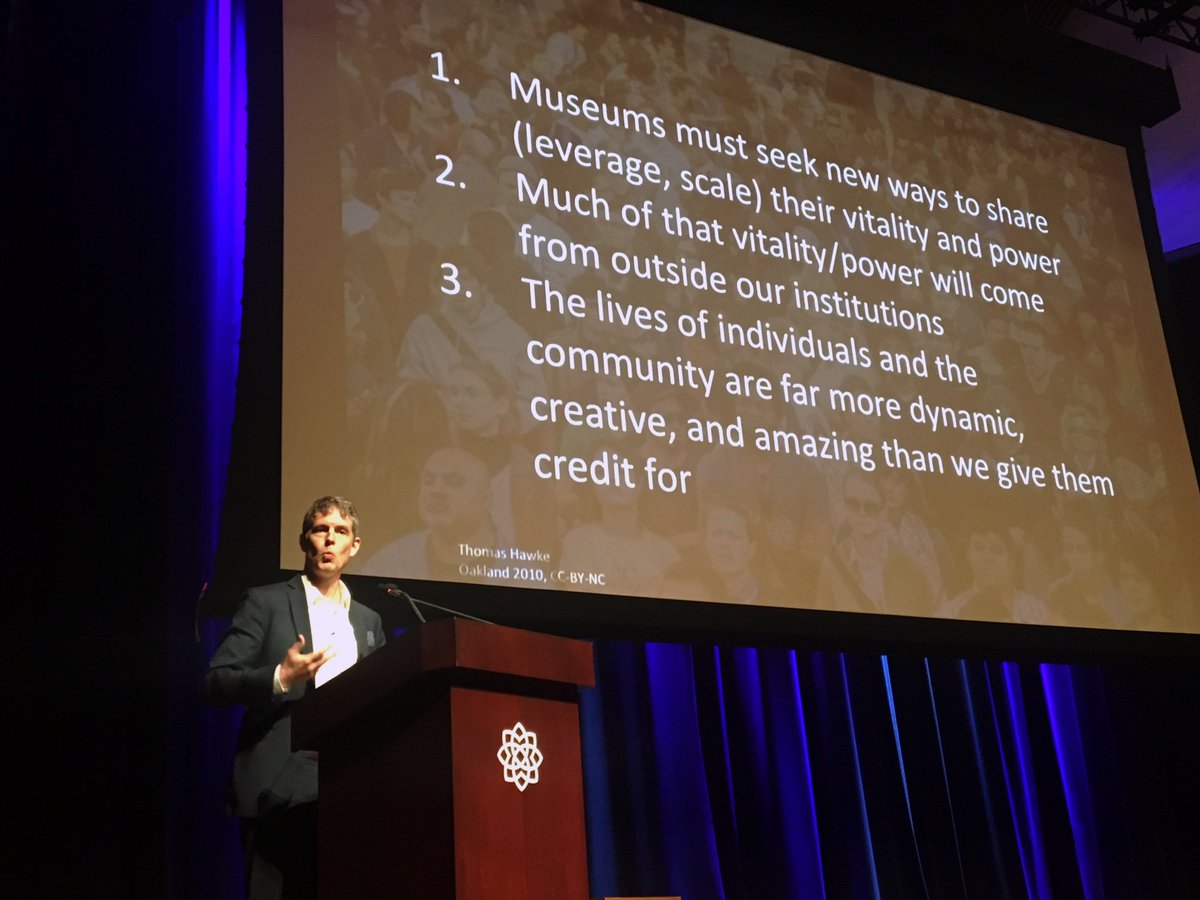
For the inaugural edition of the #ProgramReviews column, I attended a talk called The Evolving Role Of Museums hosted by the Aga Khan Museum on May 9th, 2018. Michael Edson, co-founder of the still-forming United Nations museum, UN Live. Edson gave a lecture about the evolving role of museums for the upcoming International Museums Day, as part of the Aga Khan Museum’s Changing Perceptions Series.

Formerly director of Web and New Media Strategy at the Smithsonian, Edson gave a wide-ranging and energetic talk, where at one point he organized a rock paper scissors competition with the entire audience. I expected, at the end of this competition, for him to speak about the power of statistics, and that it is exceedingly improbable that any individual would win, but that it was inevitable that someone would. Instead, he spoke briefly about the power of play to activate learning, and then showed us this video:


He used this as a launching off point to talk about the three dimensions in which the world has shifted rapidly in scope, scale, and speed- the problems of globalization and rapid automation that are shaping the world in ways which no one, not museums, not nations, not individuals, yet understands. What then, is UN Live to become?

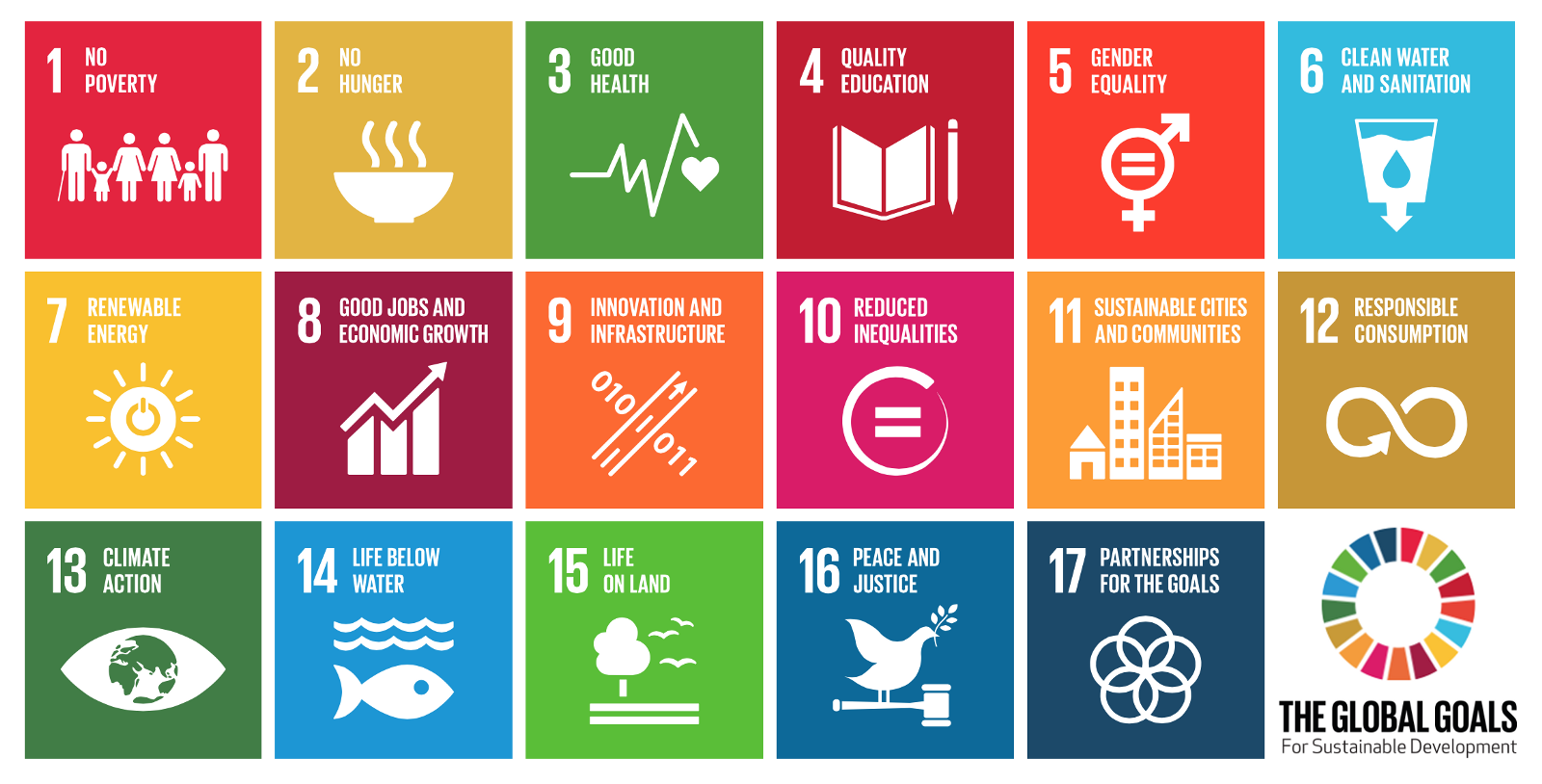
The goal of UN Live, as Edson explained it, is not to be an institution which would educate its visitors about the history of the UN. The museum is instead constructed around about the UN’s 17 Sustainable Development Goals for 2030, and to encourage anyone who comes into contact with the museum to go forth and make progress towards these goals in their own communities.

The UN's 17 sustainability goals for 2030. Source.
He said that when people see these goals for the first time, they often laugh at the sheer audacity of them. End poverty everywhere? Peace and justice everywhere? In a scant twelve years? And yet, there is a near global consensus that this is important work that someone, somewhere ought to be doing. So why not have a UN museum, one which uses the institutional strength of the United Nations not only to push for these goals but to encourage everyone, everywhere, to be the someone, somewhere that works towards fulfilling them.

The challenge, as Edson framed it, was not to educate. We do not, he reminded us all, act because we have a lack of information available to us. People continue to smoke well after they know the adverse effects of smoking. The challenge of UN Live is to encourage people to engage with the goals of the UN and to embody them in their own lives and their own communities. UN Live seeks to build within people the habits of community engagement and democracy. Their role is to be the United Nations “at eye level” with the citizens of the world, and to help people understand and act on these goals in the language of everyday life.

The ways one can encounter UN Live, which Edson promises are getting equal love and attention, are the physical location in Copenhagen, its network with other public institutions all over the world, and a digital museum. Edson’s former role, as director of Web and New Media Strategy at the Smithsonian, will doubtless help him in this pursuit. Each of these, of course, will maintain as part of its mission and in every step of the design, a bridge between information and action. Part of the mission is not to ensure that every person who interacts with UN live leaves to solve a world problem, but to find, elevate, and assist the changemakers that already exist in every community. UN Live seeks to change the encounter rate of those brilliant, inspiring people we all know, from one in a million to two or three in a million, and to help those change makers, creatives, leaders to effect change more efficiently. Edson bounced back and forth from grand sweeping statements about the way the world should be, to specific steps UN Live was taking to help that change happen with such rapidity it at times gave me goosebumps.

Michael Edson, at the Aga Khan Museum. Source.
I will leave you with this, although this is not how Edson closed the talk. He said that neither the UN or the concept of the museum was a concept that always elicits cheers from your audience. But, no matter how they resent one or both concepts, when you call on behalf of the UN Museum, people always return your calls. It’s a weighty responsibility, and that we as future museum professionals ourselves should be conscious of. Very few of us will ever work for an institution with as much cultural gravity as the UN, but institutions have power. Institutions have reputations and weight and gravity, and whether or not they are liked, they are respected and listened to. We would all do well to remember that this is not an abstract concept. Why shouldn't a museum, for instance, partner with Elections Canada and help people register to vote? Why shouldn't a museum not only have and use green energy but also host events where visitors can learn to plant their own green roofs. It all felt possible, while Edson spoke. He speaks with the kind of passion that can move mountains, and perhaps more impressively, people.

The overwhelming feeling I had leaving The Evolving Role of Museums lecture was one of hope. Hope as a motivator, a driver, as a source of strength. I could practically feel it beating against my chest as I left. As a program host, could you imagine a better way for your attendees to leave?

5 February 2018

A SYMPHONY OF SENSES AT THE AGA KHAN MUSEUM

EXHIBITION REVIEWS

BY: JULIA ZUNGRI

I danced in a Mongolian yurt.

Come on in! Mongolian Yurt in the Aga Khan Museum's courtyard. Photo courtesy of Julia Zungri.
That’s how I began my afternoon at the Aga Khan Museum to explore the new Listening to Art, Seeing Music exhibition. The exhibition offers multi-sensory experiences through musical soundscapes and video installations placed throughout the museum’s permanent gallery, the Bellerive Room, and Diwan restaurant. The exhibition features Middle Eastern music, instruments, and related artifacts, and explores how this intangible art has changed over time.

Visitors first encounter an eye-opening and very well-written introductory panel in the lobby of the museum. As the introduction begins, it reminds us that this exhibition challenges the conventional thought of museums dealing with stationary, tangible objects, but that intangible arts are just as important and, even more so, are still alive and forming cultural identities and histories around the globe. It challenges us, as visitors, to form a physical relationship with an immaterial artistic expression.

Challenge accepted.

Listening to Art, Seeing Music reminded me that music is an expression that all humans can relate to, which I certainly got the sense of as I entered the highlight of this exhibition: the Mongolian Yurt. The Mongolian Yurt is placed in the museum’s courtyard, which is in the centre of the museum and immediately visible to visitors. A representative at the front desk informed me of programming that would take place in about five minutes, so we decided to check out the Yurt first (its size, beauty and centrality is also incredibly difficult to ignore). In my conventional understanding of museum programming, I expected to hear music, perhaps see live musicians or a museum employee discussing the development of the exhibition.

I was wrong.

As I entered the Yurt, a large circle of museum visitors – who I take it were all strangers at one point – were holding hands and dancing around the centre of the Yurt to traditional French/Welsh folk music. I automatically joined in and had one of the most incredible museum experiences! There were three live musicians; one was leading the circle with an accordion and later facilitated our singing to the music.

The smell, look, and sound that surrounded the Yurt made me realize that this was not going to be a typical museum visit. If this experience was an object, I lived inside of it.


The centre around which we danced; when stranger-visitors became dance partners. Photos courtesy of Julia Zungri.
The interactives were the second highlight of my exhibition experience, which were tied to the new artistic venture, A Hidden Order. This endeavour examines the relationship between art and music, and between traditional Islamic art and the Western contemporary musical composition.


Images from A Hidden Order. Photos courtesy of Julia Zungri.
In a collaborative effort by Musical Forms, a team consisting of composer Lee Westwood and geometer Sama Mara, this installation invites visitors to explore the relationship between artistic patterns and music. I had the pleasure of visiting with a fellow Museum Studies colleague, Sarah Rolko, who can be seen here enjoying making art through music.

Sarah interacting with the installation created by the Musical Forms artistic team. I guarantee this song will get stuck in your head, as it did in ours. Photo and video (below) courtesy of Julia Zungri.

The installations throughout the rest of the museum are a great accompaniment to the permanent galleries as they make the material objects come to life. It is incredibly interesting when we consider how something immaterial can bring something material to life.

Made my Anwar Kebbeh (oud maker, 1975-2000). Collection of Radwan Al Taleb, Damascus, Syria, 1991.

These artifacts and stories tell visitors of the importance, but also destruction of the oud industry in Syria. Photos courtesy of Julia Zungri.
This exhibition made me proud to know that our city is home to this museum and is producing such wonderful experiences. It has reaffirmed my passion for museums, and if this is where the field is heading, count me in.