
8 October 2021
6 October 2021
WHAT EVEN IS JEWISH ART? MARC CHAGALL AND THE ÉCOLE DE PARIS AT mahJ (PART 1)
Musings Abroad | Molly Gosewich
How long has it been since the world effectively shut down? As restrictions loosen (and I say that loosely), jabs administered, and life begins to show some signs of normalcy, I cannot be the only one who has been plotting (more like pining for) their return across the Atlantic.
For Musings Abroad, continuing this year, I’ll continue to spotlight the goings-on of international museums/galleries with a deeper dive into specific exhibition topics, and to hopefully provide some travel inspiration for when we can step foot inside international museums again.
To start us off, we have the mahJ – formally known as the Musée d’Art et d’Histoire du Judaïsme (Museum of the Art and History of Judaism) – which I was fortunate enough to visit back in 2019.

Located in the Marais District, once the Jewish hub of Paris, the mahJ is home to the largest collection of Jewish art and antiquity in France – documenting the rich history and culture of Jews across Europe and North Africa, from the Middle Ages to the 20th century. Among other stunning Judaic objects, archival manuscripts, and works of art, the mahJ’s collection includes pieces by the legendary Marc Chagall and Amedeo Modigliani, which are conveniently on display until October 31 in an exhibition focusing solely on Jewish artists within the “École de Paris” (School of Paris). The term coined sometime before 1925, was in fact tinged with antisemitism, due to the tendency to lump foreigners together in this way (Fayard, 2001). Many Jewish émigré artists from major European cities and the Russian Empire (plus Asia and Africa) belonged to the cosmopolitan generation of the School of Paris (or Paris School), one without a common style but with a shared desire for freedom amid pogroms and creative internment (see Entartete Kunst for how art was stifled under the Nazi regime). As we know, Paris was the artistic epicentre of Europe — from La Ruche (“The Hive”) building or on Cité Falguière, in the streets near the Boulevard Raspail to the cafés of Montparnasse.

Marc Chagall
Sotheby’s posits that the School of Paris first appeared at the turn of the century and ended roughly after the conclusion of World War II. However, this “school” was completely abstract, including luminaries associated with several assorted avant-garde movements (such as les Nabis or Fauvism, Cubism, and Surrealism). Because of the diversity of abstract genres part of the School of Paris, it begs the question: what is Jewish art?
Of course, there are many other Jewish artists within the Paris School (Jules Pascin, Otto Freundlich, and Chana Orloff to name a few) that are captivating in their own right. But, especially to me, as a student in the Jewish Studies Collaborative Specialization, Marc Chagall is of a particular interest to me. Why you may ask? His artistic archive and legacy is deeply imbued with Jewish signifiers and signals a certain collective memory.
A prominent figure in the School of Paris, the Jewish artist Marc Chagall had lived in the city from 1910 to 1914, and quickly absorbed many of the stylistic influences of the avant-garde working in the French capital. Chagall’s “Bride with Fan” of 1911 is simply enchanting and is indicative of the very delight and radiance typical of his work at this time. Naturally, he became a leading artist of the School of Paris during this time and after his exile from Russia in 1923. In the School of Paris, around 200 artists, most of them being foreigners, had occupied La Ruche at the beginning of the twentieth century. It was a legendary building in the Passage de Dantzig where Yiddish (the language of the Central and Eastern Ashkenazi Jews) reigned supreme.
When Marc Chagall arrived in Paris, he settled there with sculptor Zadkine and artists Michel Kikoine and Chaïm Soutine. It is said that Soutine, the native of a small village in Belarus, knew only Yiddish and it was in La Ruche that he learned a few new words in Russian, perhaps in conversation with Chagall (Levin, 2021). Essentially, there was an obvious Jewish influence on a movement that encompassed many Jewish artists, though not calling itself outright a "Jewish" School of Art. Below you will be two of Chagall's paintings, one of a praying man and one of a shtetl, which both evoke a collective Jewish memory that would have been understood by the Yiddish speakers in the movement.

To understand the full extent of Chagall’s contribution and participation in the School of Paris scene, and his contribution to Jewish art — we have to look back into his earlier days, before he became (to many) one of the greats of art — that'll come in Part 2.



13 July 2021
IN THE DARKROOM: EXPLORING TOM OF FINLAND'S ENDURING INFLUENCE
 |
| Tom of Finland aka Touko Laaksonen Collage credit to Worldcrunch. Photo source. |
 |
| Fotografiska |
However, an artist I’ve always found to be equal parts seductive and intriguing throughout my experience as a Master of Museum Studies student is Tom of Finland (born Touko Laaksonen, 1920-1991). Though fairly characterized as graphic, provocative, and pornographic through his tangible association with kink and eroticism, his work is a refreshing reprieve from the puritanical Western art often kept by mainstream museums. Highly stylized and recognizable by muscled bodies, bulging appendages, leather fetish gear, and uniforms inspired by blue-collar workers and military men, Tom of Finland occupies a distinct, subversive space in the queer visual culture canon.
As someone with both an academic and personal interest in portraiture, I was even more enthralled with The Darkroom, a current exhibition (located in New York City, from April 30-August 20, 2021) that serves as an intimate look into the prolific artistry of Tom of Finland, curated by Berndt Arell of Fotografiska in collaboration with the Tom of Finland Foundation. As Pride 2021 celebrations looked a little different this year, The Darkroom is a fascinating way to engage with Tom of Finland’s 100 year legacy of queer art and never-before-seen, boundary-pushing, sexually powerful, homoerotic photographic portraits that served as references for his drawings.
Oppressed by the persecution of queerness in his native Finland, Laaksonen clandestinely photographed his muses/models as references for his drawings. They were kept under the cover of darkness and would become highly-coveted works in underground gay subcultures and communities. With the increasing openness found in the West, he would spend time in Los Angeles, where both freedom and his art were able to flourish. There, he would draw inspiration from American bodybuilding and develop a burgeoning interest in depicting Black men (some of his later illustrations would feature Black men and interracial sex scenes). This inclusion is doubly interesting, if not slightly problematic: Laaksonen had the general tendency to depict cis, white men, and more and more academics have touched on the hypermasculinization/hypersexualization and presence of Black men in visual culture. Though, it can be noted that, to some, he had helped to increase the visibility of "black gay male subjectivity" towards the culmination of the 20th century, the end of his career, to which critics characterize this period as his most overtly political. With Tom of Finland, all men were created equal.
 |
| Untitled, 1989. From Tom of Finland Foundation |
 |
Untitled, 1984 (Val Martin); Untitled, 1986, Untitled, 1986 (above), Untitled, 1986 (below). |
The very premise of this exhibition is born out of the sexually repressive environment of 1950s Finland. Laaksonen set up a darkroom in a closet of his home in Helsinki to develop the photographs he took. Not only racy and homoerotic, they were outlawed. The Darkroom displays his portraits on black walls with red accents; they are the star of the show, featuring hyper-masculine hunks, clad in uniforms or leather gear, all distended muscles and members. They act to fearlessly confront a system that even today continues to deny freedoms, legality, and basic rights to queer, gay, and trans communities — bringing to light the current relevancy of their struggle for liberation.
 | |
|
“Tom of Finland emerged in the 1950s to deliver us from the repressive, fearful, and disguised sexuality of the eighteenth and nineteenth centuries. Tom made the idealized male beauty of the Greek gods become contemporary, real living gods, with no judgmental distinction between active and passive sexual roles. Tom made the artificial Roman breastplate into lively skin and muscle; Tom made Christian sado-masochism positive, desirable, and enviable; Tom made Michelangelo’s saints naked and aggressive; Tom brought honest, ribald, consensual, enjoyable, and delirious male sexuality back into twentieth century art. (1997, p. 252)”
Suffice to say, as travel restrictions begin to lessen, I recommend visiting this exhibition if you’re interested in studies and imagery of sex positivity, masculinity, countering heteronormativity, queer culture, and unapologetic art. If you find yourself in New York City, go see for yourself.
5 April 2021
WOMEN'S HISTORY MONTH: WOMEN'S MUSEUM FAR FROM HOME
Musings Abroad | Jingshu Helen Yao
Vietnam Women’s Museum, Hoan Kiem, Hanoi, Vietnam
 |
| Exhibition at The Vietnam Women’s Museum|Vietnam Travel |
 |
| Exhibition at The Vietnam Women’s Museum|Vietnam Travel |
Women's Museum Istanbul, Istanbul, Turkey
 |
| Online Exhibition at Women’s Museum Istanbul|Women's Museum Istanbul |
The Women’s Museum at Bait Al Banat, Dubai - United Arab Emirates
 |
| Exhibition Poster | The Women’s Museum at Bait Al Banat |
 |
| Exhibition IN Bait Al Banat Gallery | The Women’s Museum at Bait Al Banat |
5 March 2021
BLACK CULINARY CULTURE IN MUSEUMS AROUND THE WORLD
Musings Abroad | Jingshu Helen Yao
 |
| Soul Food |iStock |
 |
| Suya | flickr |
 |
| MOFAD "African/American: Making the Nation's Table” | Colorline |
10 February 2021
SMELL IN MUSEUMS AROUND THE WORLD
Musings Abroad | Jingshu Helen Yao
With a new semester starting, I began several new courses. For Dr. Hooley McLaughlin’s Curating Science course, we were asked to keep a smell journal, a daily recording of odours and fragrances around us. While the idea of documenting scent is rather interesting, the assignment also made me realize that olfaction — sense of smell — might be underrated among all of our sensory organs. In school, we were often taught that human olfaction is inferior to many animals due to evolutionary reasons. Compared with vision, hearing, and touch, our ability to smell seems to be less salient. Though I imagine the loss of smell could bring potential problems to our daily lives, those problems seem less severe than the loss of sight or hearing. However, during my research for the smell journal, I came across many recent studies that suggested human olfaction is much more powerful than previously thought and in some cases even compatible with that of dogs. This discovery made me interested in how smells and our abilities to smell are presented in the museums, from both scientific and nonscientific angles.
 |
| Visitors sniffing scent sample at museum | Getty Image |
The most recent news about "smell museums" is surrounding the creation of Odeuropa. The project aims to research smell in the context of both human biology and computer science. In November 2020, Odeuropa received a $3.4 million grant from European Union as a part of the Horizon 2020 Programme. The project will make use of AI to research the documentation of smell between the 16th and 20th century. Their mission is to create an online museum of smell and preserve the olfactory heritage of Europe.
 |
| Odeuropa Historical Smell Project | Yahoo News |
“In Search of Lost Scents” is an exhibition at the Stedelijk Museum Amsterdam in the Netherlands. It is the PhD project of Caro Verbeek, whose primary interest is to study the use of smell as a medium of art, especially among futurists and surrealists. The exhibition features smell in historical arts, which were distributed to visitors by facilitators on strips of test paper. A scentman, the artist who uses smell as the method of artistic expression, also performed on site. It was an eye-opening experience for the visitors and an interesting application of Verbeek’s study.
 |
| Stedelijk Museum Amsterdam | Getty Image |
Other than treating smell as an object, it can also be used as a tool to create a more accessible museum space. In “Seeing by Smelling,” Caro Verbeek explains the ways in which smell, touch, and storytelling could facilitate the interpretation of visual art for low sighted people. For example, the smell of myrrh was added to the exhibition of the 'Adoration of the Magi' painting. Myrrh is not only an element presented in the painting, offered to Jesus by the three kings, it was also burnt in ritual to honor kings and gods. Adding the smell to the storytelling allows visually impaired participants to establish a connection to the artwork. Even for visitors who have no visual accessibility needs, the element of smell created a multi-sensory experience. Verbeek quoted neuro-scientist Richard Stevenson who says “scents are known to elicit intense historical sensations... even more so than images or sounds.”
17 November 2020
WHAT IS NOT MY STORY TO TELL
Musings Abroad | Jingshu Helen Yao
I took creative writing as my undergraduate minor and I was asked to submit a short fiction story as an assignment for one of my courses. I wrote a story based on my latino roommate’s experiences of poverty and sexual violence. I did research beforehand and asked my roommate for confirmation and approval after the story was written. However, my work was still criticized for containing stereotypical perspectives about latino culture, and being potentially offensive to others. I was confused about how my work still turned out to be problematic when I took all possible measurements to avoid it.
The answer was simple. It was not my story to tell. Even if I carefully conducted research and interviews, and shared a similar identity of being an immigrant and person of colour, I can’t take on the first person narrative in my roommate’s story.
 |
| Illustration Artist | Source |
 |
| Walker Art Centre | Source |
 |
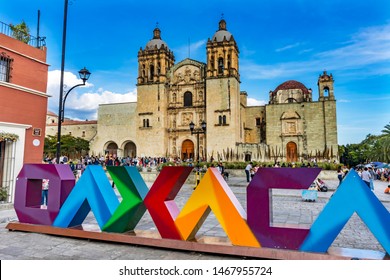
| The City of Oaxaca | Source |
27 October 2020
SEEKING HAPPINESS: A PEEK AT MUSEUMS ABOUT HAPPINESS AROUND THE WORLD
Musings Abroad | Jingshu Helen Yao
Who doesn't want to be happy? For many years, psychologists have studied the causes behind human emotions. Writers and artists create works that attempt to make people happy. Sociologists research the impact that happiness has on both personal and societal wellbeing. Museums dedicate themselves to the most intriguing parts of human history, and happiness is no exception.
In the midst of a pandemic, words such as anxiety and depression seem to dominate what we discuss nowadays. While mental health and the wellbeing of people becomes more critical than ever, the Happiness Research Institution in Denmark opened the Happiness Museum. The museum is located in Copenhagen's pastel-perfect historic center. While the small space of exhibitions and activities only took up 240 square meters, they attempted to show the visitors answers to some big questions. How have the standards of happiness changed throughout history? How does the concept of happiness vary across countries and cultures? Which type of society makes people happier, and what can the policymakers do to improve the wellbeing of people?
 |
| The Happiness Museum | source |
Meik Wiking spoke of the mission of the Happiness Museum in an interview with CNN. One of the Happiness Research Institution’s studies centred on why people’s happiness in Nordic countries usually ranks highly compared to the rest of the globe. According to the data from the United Nations' annual World Happiness Report, Finland and Denmark are at the top of the happiest countries around the world, even though both countries have relatively cold weather, longer night times, and high taxes. Danish psychologist Marie Helweg-Larsen believes that trust is a critical reason, as well as the casual attitude Danish people have in their lives. The Happiness Research Institution presents their research results through the museum exhibition in the hope that those who visit the museum will leave a bit happier and wiser.
 |
| The Museum of Happiness | source |
Though most media claim that the Happiness Museum is the first of its kind in the world, in my research I also came across the Museum of Happiness that opened in London, UK, in 2017. While the Denmark institution mainly took a social science approach to discuss the topic of happiness, the museum in London seems to be more science-based. Aside from free exhibitions and fun activities on the psychology of happiness, London's Museum of Happiness also provides training and workshops on how to become a happiness facilitator, online videos for individual wellbeing, and resources for organizations on building a positive working environment. With a longer record of operation and development, London's Museum of Happiness not only provides knowledge on happiness but also gives guidance on how to put the knowledge to use.
 |
| The Happy Place | source |
Both museums in Copenhagen and London focus on educating their audience about happiness, in contrast to the main goal of pop-up exhibition “Happy Place” who intends to let audiences have fun. The exhibition features “the world’s largest indoor Confetti Dome, six-foot-tall X’s and O’s surrounded by red lips, the famed Rubber Ducky Bathtub, the wildly popular Cookie Room scented with the aroma of freshly baked chocolate chip cookies, an Upside Down room that defies gravity, and Super Bloom, a room filled with 40,000 golden handmade flowers.”
Happy Place first started in Los Angeles and soon made its way to other big cities in the United States. The Harbourfront Centre in Toronto also hosted the exhibition between November 2018 and January 2019. Recently, Happy Place opened in Sydney, Australia.
No matter in which country these museums and exhibitions are found, what form and approach they take, it’s comforting to think about institutions that are devoted to improving the mental well-being of the world, especially during this special time.
7 August 2020
IT'S ALIVE!: A LOOK AT LIVING HISTORY MUSEUMS IN EUROPE
 |
| Village Historique Acadien in New Brunswick | Source |
 |
| Strážnice Museum's website. The text translates to "Folk crafts and traditional agriculture." | Source |
 |
| "Jardins des simples," one of the gardens at the Musée des Maisons Comtoises | Source |
 |
| Dem Gamle By in Aarhus, Denmark | Source |
 |
| The "Mesothilicum" section of Archeon, which encompasses the period from 8800 to 5300 BCE | Source |