Showing posts with label Chloe Houde. Show all posts

12 March 2021

A YEAR IN MPOSEASONS: REFLECTIONS ON COLLABORATION AND MAKING CHANGE

Special Edition | Dominica Tang, Chloé Houde, Denise Tenio, and Megan Sue-Chue-Lam


We’ve all been hustling through and dealing with internships, jobs, school, MPOC projects, exhibition development, and general pandemic stress and we haven’t had the time to really process what has happened with MPOC in our first year of existence. Despite all the physical barriers, this year has really been about connecting and collaborating. We wanted to take this opportunity to reflect and share what we have learned, and give thanks to these amazing relationships.

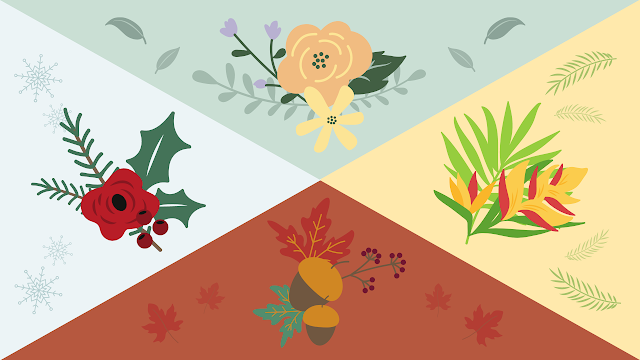
Four plants representing the four seasons
Source: Megan Sue-Chue-Lam


Spring — Birth

We formed MPOC because we felt neglected in a program that didn’t address our unique experiences in museums as people of colour. As early as spring 2020, we met and spoke with Wendy Ng, J’net Ayayqwayaksheelth, and Armando Perla, who are museum professionals of colour addressing and tackling issues of inequality and violence in their museums, in academia, and the larger museum field. Reaching out to people can be as nerve wracking as it is exciting. You want to do right by your collaborators. Listening is foundational to understanding how to best support each other. It will inform your practice moving forward and help you figure out how to best support each other. The Museum Detox panel was a great opportunity to listen to IBPOC for both us and the iSchool and figure out how to support fellow students. Spring was also a time of incredible student support from you all, as well as MUSSA and Musings.

In case you didn’t know, MPOC started out as a bigger group of museum students of colour. To them: thank you so much for “planting the seeds” of MPOC and for your ongoing support; we hope that we are doing right by you.


Summer — Growth

Spring was the catalyst for building so many new connections and as our network grew, our sense of who we are and where we want to take MPOC grew with it. During the summer, we learned a great deal from professionals in Canada and abroad, doing the work and holding space for marginalized folx in their community. Through MPOSees and a number of other projects, the collaborations and conversations had with these individuals has informed our own practice as an organization that strives to uplift IBPOC voices.

Summer was also a time of understanding how much change people could inspire if we advocate for each other. Social justice movements against anti-Black racism defined the warmest months of the year, and cultural institutions felt the heat now more than ever to take accountability for upholding systemic racism. Our faculty was also pressured to reevaluate its operations, as student-led protests revealed the severe lack of support minoritized students and alum faced at the iSchool. While we were unsure of how our actions would affect our careers before they had taken off, we were firm in our convictions and believe that taking action is doing the right thing. As we look back at summer 2020, we feel proud (and to be honest, a little impressed) of the work we’ve done, but we also recognize how much room there is left to continue growing.

Though there are things we still have to figure out – like pacing ourselves – we’re looking forward to all the lessons we’ll learn in this second year of MPOC.
An image of a mannequin dressed in a suit looking at stocks next to white text that says "Investing in Communities"
Source: Chloé Houde


Fall — Harvest

By the time fall rolled around, we felt so grateful for all the connections we had made, but we knew we needed to slow down and reflect upon all the initiatives we had undertaken. To be honest, we were burnt out. We realized that a large part of the work we do is spontaneous by nature, but that we also need to be more intentional about who we work with and what we work on. We knew that it was important to continue growing by strengthening our existing relationships, rather than branching out more and more until we were unable to dedicate time and energy to nurture them.

With our impending final semester at the iSchool and the prospect of increasing quarantine isolation looming over us, we knew that the upcoming winter would be harsh, so we were careful not to overextend ourselves. Instead, we focused our efforts on the Diversity and Inclusion in Information Sciences (DIIS) Speaker Series, a collaborative event initiated by the Accessibility Interests Working Group (AIWG), in order to bring our focus back to the faculty where we have our roots. This series allowed us to create more connections with local organizations and artists, and reminded us of the astounding work going on in our city.


Winter — Hibernation

Although winter causes many creatures to hibernate, our academic, professional, and personal commitments showed no signs of slowing down. We did, however, wind down our more external MPOC operations to focus on our internal development, but not before completing our DIIS series. We also released our brand new website and the first MPOSees interview we recorded back in May, two projects we had steadily been working on for months. It felt amazing to see the fruits of our longer term endeavours come to light, like children borne out of sweat and strained eyes and the cold and darkness of a pandemical winter, especially since these were more permanent than other initiatives we’d undertaken before.

We recently achieved a major milestone — our first anniversary of being ratified as an official UofT student group! This year has been a wild ride, where at times we’re in control and other times we’re going along for it (and sometimes we’re stuck upside down in a loop-de-loop). We went through lots of late nights, choppy video calls, faking it till we make it, and hyping each other up this year, and we don’t regret a second of it. As the end of this semester and of our degrees alarmingly approaches, we’re getting ready to plant more seeds as we head into our second year of existence. Without forgetting, of course, the hard work of clear-cutting done by museum professionals of colour before us, which has made everything we’ve done possible. As we look towards the future, we’re taking time to reflect on what we’ve accomplished, what we can improve on, and what MPOC is becoming.


Source: Chloé Houde

1 December 2020

A LIST OF ORAL HISTORY COLLECTIONS

Collections Corner | Martin Bierens

Oral history is certainly not a new concept in the museum field. Realistically, it is the oldest form of passing along knowledge over generations. Recently I have started to think about the relevance of oral histories as my upcoming exhibition project is planning to include information gathered through oral history interviews.

The conduction of an oral history interview as part of the Greater Rosemont History Day. (Source)

In a way, we can think of oral history as an essential element to museum collections. Most collections are composed of objects that have been donated to a museum, but oral histories are individuals donating their story rather than their possessions. A museum must then hold these stories to the same standard as they care for their collections. Oral history in a sense is a way for individuals who may not be wealthy in material goods, but are wealthy in knowledge and stories to share their experiences in a museum setting. Thus, it becomes evident that oral histories are a great way for museums to give space to people who have historically been marginalized.

Here I will be providing a list of some interesting oral history collections in North America that you can check out and listen to amazing stories and histories that are not widely told. If you are looking for more detailed information about oral history as an approach to heritage, check out the work of Chloé Houde and Jingshu Helen Yao.

Historica Canada, a large organization conducting oral history interviews. (Source)

1. Historica Canada — the famed organization behind the iconic “Heritage Minutes” also conducts oral history projects. The organization features stories ranging from Indigenous heritage, historical injustices in Canada, 90 years of Canadian military history, and first-hand accounts of notable Canadians. Their goal is to amplify voices missing from the standard historical narrative.

2. UofT Libraries — The UofT Libraries offer access to thousands of oral history collections on an uncountable amount of topics. Some include the Ellis Island Oral History Project, the Civil Rights Documentation Project, and the Japanese American Relocation Digital Archive.

3. Ah-Tah-Thi-Ki Seminole Museum Oral History Program — This project focuses on the preservation of Seminole culture, history, and memory. This project has also been an effective method to preserve Creek and Miccosukee, the languages of the Seminole. The production of Creek and Miccosukee dictionaries and a mobile app are also available to Seminole Tribal Members. They have also produced content that teaches how to conduct oral history interviews.

The Columbia Center for Oral History is one of the largest university-operated oral history projects. (Source)  

4. Columbia Center for Oral History — Columbia University actually offers a Master of Arts with a focus on Oral History. Some interesting projects available online are the September 11, 2001, Oral History Project, the Institute for Research on Women, Gender and Sexuality Oral History Project, and the Rule of Law Oral History Project. The latter features interviews with challengers of capital punishment, and in 2010 shifted focus to the experiences of detainees at Guantanamo Bay following the 9/11 Terror Attacks.

5. Library of Congress —The LOC features many oral history projects that touch on a very wide range of topics.

6. Jewish Women’s Archive — The Listen and Tell: Oral Histories project collects oral histories that teach listeners about Jewish history, identity, and community. A wide variety of material is available online some of which includes resources on how to conduct oral history projects, family histories, the testimony of Holocaust survivors, and contemporary Jewish personal histories/stories.

This is a relatively small list of oral history projects, not all of which are conducted by museums, but all tell personal stories. There are so many oral history projects available online that if there is any topic that you are interested in, a quick google search will likely turn up a wealth of resources.

15 October 2020

CLOUT-Y WITH A CHANCE OF MET BALLS: FASHION AND FUNDRAISING’S BIGGEST NIGHT

Sew What | Chloé Houde


I might be late in realizing this, but I only recently found out that the Met Ball is an annual fundraiser for the Metropolitan Museum of Art in New York, and not just a fancy red carpet night for designers and celebrities to show off beautiful, over-the-top, statement-making outfits. The Met Ball, also known as the Met Gala or the Costume Institute Benefit, is an annual themed event held on the first Monday of May to raise funds for the Met's Costume Institute and to kick off its annual exhibition. The event raises enormous amounts of money annually, which goes towards funding exhibitions, acquisitions, and capital improvements for the Institute. The Gala raised $US12 million in 2014 and over US$13 million in 2019. The Costume Institute is also the Met's only curatorial department that is responsible for its own fundraising, presumably due to the Gala's success. I was struck by the contrast between what I thought a fundraising event looked like and what the Costume Institute hosts every year. How did a museum fundraiser become one of the most mainstream, exclusive, and anticipated global fashion events of the year while also becoming ubiquitous in popular culture?

Gown by Chinese designer Guo Pei in the "China: Through the Looking Glass" exhibition at the Metropolitan Museum of Art in 2015 | Source

The Costume Institute, originally the Museum of Costume Art, joined the Metropolitan Museum of Art in 1946. At the time, charity events were hugely popular with New York socialites, who used philanthropic events to elevate their social status and retain relevance in high society. From its first iteration in 1948 as a benefit party, the Costume Institute's annual fundraiser remained an attractive socialite-centered event for decades. From 1972 to 1989, Diana Vreeland, special consultant to the Institute, greatly elevated the event. She transformed the benefit supper into a theme party linked to the theme of the Institute's yearly exhibition. The event garnered more notoriety and excitement throughout Vreeland's time at the Met, as both an art and social affair that became more international and open to celebrity. When Anna Wintour became the co-chair of the Met Gala in 1995, and took over leadership in 1999, the event veered its trajectory towards what we know it to be today. Anna Wintour has been the editor in chief of Vogue Magazine since 1988 and the artistic director of Condé Nast since 2013. Wintour wields an undeniable grip on the world of fashion through these positions, and the Met Gala is no exception. 

The Costume Institute's website | Source

Under Wintour's direction, the event has become much more exclusive. Over the years, Wintour has implemented a strict dress code, banned personal photography during the event (although some celebs sneak selfies in the bathroom), has made ticket and table prices more expensive (individual tickets jumped from US$15,000 to US$25,000 in 2014, up to US$30,000 in 2018, and tables went for US$275,000 in 2019), and she personally approves every single guest that attends (there are between 600-700 guests annually). Wintour is also responsible for making the event celebrity-focused, in a stark departure from the socialite event it had previously been (which some have lamented). It is now virtually impossible to buy individual tickets to the Gala, since companies and designers will buy tables and invite Wintour-approved celebrities to the event to model their creations. Wintour exerts immense control over the Gala, which has received criticism over the years.

The Met Gala is now inextricably tied to the contemporary world of fashion and design, more than it had ever previously been. Being seen at this event has long carried a heavy social importance for individuals, but nowadays, having a presence at the fashion event of the year is an unmissable marketing opportunity for designers, brands, and companies. It also carries much significance in determining a celebrity's relevance at a particular moment. The Met Gala is closely followed by millions of spectators, and has resulted in unforgettable and iconic moments for many celebrities that persist in popular memory.

Recent tweets highlighting Met Gala outfits worn by Kacey Musgraves, Zendaya, and Emily Ratajkowski from the past few years | Source, Source, Source

It is easy to miss the fact that the Met Gala is a museum fundraiser when there is so much notoriety, popularity, celebrity, and exclusivity tied to the event. Nicknamed "the Oscars of the East Coast," the Costume Institute Benefit is now considered part of the roster of yearly red carpet events, where famous people parade designer clothing. Anna Wintour's control looms large over the event, which has had the effect of closely associating the Met Gala with Vogue Magazine. Wintour has employed similar strategies for popularizing the Met Gala and Vogue; she was one of the first fashion magazine editors to have celebrities on cover pages, rather than models, and was the one who made the Gala the celebrity-saturated affair it is today. This association to celebrity has had the effect of bringing these cultural products out of their respective niches and into popular culture. It seems to be a symbiotic relationship masterminded by Anna Wintour; Vogue benefits from being associated with the enormously high profile Met Gala, celebrities add notoriety while adding to their own relevance, and the Costume Institute reaps the funding and exposure generated by this ever-prominent event. The Gala and the corresponding exhibition are so reliant on big corporate sponsorships that Wintour is consulted and signs off on the theme of the Costume Institute's yearly exhibition so that she can find appropriate sponsors. Her impact is present at every level. This degree of commercialism and control isn't without criticism, however.

Another important factor in the Met Gala's popularity is its relationship to fashion, which, as a topic of interest, is popular, visually engaging, and accessible to wide audiences. Fashion affects us whether we realize it or not, which the fictional Miranda Priestly (based on the real life Anna Wintour) reminds us of in the famous "Blue Sweater" scene from the movie The Devil Wears Prada. Fashion is ubiquitous in celebrity culture as well, and seeing both come together so obviously and opulently at the Met Gala makes for a blockbuster affair. Every year (except this year, for obvious reasons), on the first Monday of May, the world watches as the Costume Institute Benefit congregates a themed flurry of celebrities, artists, high-powered individuals, designers, brands, outfits, works of art, innovations, and lots and lots of money to create a monumental spectacle. Hard to believe it all started as a benefit supper, right? 

I may be wrong, but I (sadly) can't imagine a fundraiser for any other museum generating a cultural impact (or as much money) as the Met Gala.

Viral tweets about the Met Gala from 2018-2019 | Source, Source, Source


7 August 2020

IT'S ALIVE!: A LOOK AT LIVING HISTORY MUSEUMS IN EUROPE


The first living history museum I ever visited was the Village Historique Acadien in New Brunswick and I fell in love. Exploring all those old buildings while learning about the history of the region, its people, and its traditions from costumed interpreters made all this history come alive. I remember crying as I sat in the living room of an old home with other visitors as a woman recounted the emotional story of the Acadian deportation. I had learned this history before, but the setting and the first-person narrative of the story made this experience more personal in that moment, like it was being told to you by someone who lived it. I also remember enjoying some warm fresh baked bread from the local bakery, which only added to my overall experience as I learned about historical baking and cooking. Living history museums are spaces where learning becomes intertwined with experience. On top of being great spaces for education, living history museums act as preservers of traditional architecture, agricultural techniques, arts and crafts, and more, by not only conserving physical objects, but by practicing embodied artisanal knowledge that can sometimes only be kept alive through people.

Village Historique Acadien in New Brunswick.
Village Historique Acadien in New Brunswick | Source

Canada and the United Stated have their fair share of living history museums, and Toronto is lucky enough to have a few in its vicinity: Black Creek Pioneer Village, Fort York, and Markham Museum. For this article, I wanted to highlight living history museums in Europe that preserve important knowledge and keep local history alive.

Europe is filled with living history museums, such as the Strážnice Museum of the Villages of South-east Moravia in the Czech Republic. Strážnice has been open since 1981 and showcases Moravian folk costumes, traditions, architecture, and art. This living history museum is unique for its preservation of viticulture and wine growing techniques over time. Visitors can witness ancestral crafts such as smithery, weaving, pottery, wine making (including partaking in wine tasting), and can attend harvest festivals and folklore ensemble competitions!

Strážnice Museum's website. The text translates to "Folk crafts and traditional agriculture." | Source

In France, the Musée des Maisons Comtoises is a living history museum made up of 35 historic homes and buildings from the Franche-Comté region that spans from 1750 to 1950. The site presents itself as a nature haven and a place to relax, surrounded by gardens, a pond, a forest, and an orchard. They have animals, a small farm, and buildings that reflect many different facets of society, such as workshops, communal ovens, chapels, homes, and more. The Musée also offers visitors a range of demonstrations and activities, such as bread baking and making your own cosmetics. They are very focused with questions about what the past can bring to the future and make connections between the sustainable everyday life of the museum with issues of today. Some of the topics covered are the decline of the bee population and the problems within the agricultural sector.

"Jardins des simples," one of the gardens at the Musée des Maisons Comtoises | Source

In Aarhus, Denmark, the living history museum of Dem Gamle By (or "The Old Town" in English) showcases a small town from the 16th to the 19th century. When it opened in 1914, it was the first living history museum that showcased town life rather than rural or village life. The town is made up of 75 historical buildings that were reconstructed there from all over the country. The costumed historical interpreters of the site work in the city in traditional roles, such as blacksmiths, merchants, and cooks, which add to the air of this living historical town. The museum has greatly expanded over the last century, with more buildings, gardens, structures, and objects added over the years. They also feature exhibits and programming for visitors who want to experience and learn about historical Danish life.

Dem Gamle By in Aarhus, Denmark | Source

Finally, the living history museum of Archeon in the Netherlands showcases three different historical periods, namely the Stone Age, the Roman period, and the Medieval period, all from the perspective of this one location. Archeon features a hunter-gatherer camp, a Roman town, and a medieval town through which visitors can discover these three different periods and how they affected the history of the Netherlands. Archeon celebrates many historical and traditional festivals, such as the Midsummer Fair, the Roman Festival, and the Midwinter Fair,  as well as holding knight tournaments and showcasing cooking form these distinct historical periods. As with any living history site, Archeon offers demonstrations and unique experiences for visitors. Living history museums rarely venture before the Middle Ages in their historical recreations, and so having three older historical periods shown at one site makes it into an enriching environment where visitors can connect with the past.

The "Mesothilicum" section of Archeon, which encompasses the period from 8800 to 5300 BCE | Source

Living history museums are rich with potential when it comes to conservation and education that keeps knowledge and traditions alive for generations of visitors, all set in an immersive environment. As I mentioned, the few museums highlighted in this article are only a handful of what is available in Europe, where there are many opportunities to connect with the past in an experiential way. As travel remains risky during the ongoing COVID-19 pandemic, consider safely traveling to the past at a local living history museum this summer!


17 July 2020

"ARE WE EVEN QUALIFIED TO WRITE ABOUT IMPOSTER SYNDROME?": A GUIDE ON HOW TO REASSURE YOURSELF THAT YOU'RE DOING JUST FINE

The Grad School Guide | Megan Sue-Chue-Lam, Denise Tenio, Dominica Tang, Chloé Houde

Made by Megan Sue-Chue-Lam

Hello incoming graduate students! We — Megan, Chloe, Denise, and Dominica — are the current Museum Professionals of Colour (MPOC) executive team. MPOC aims to support students who identify as BIPOC and works toward making the MMSt program more diverse, inclusive, equitable, and accessible. We are three Asian cisgender women and one white cisgender woman. Our group is limited by our own lack of diversity and we do not speak on behalf of Black, Indigenous, and other People of Colour. We strive to make our program, and by extension the museum field, a safer space for us all.

When we met each other and our incredibly accomplished colleagues, we felt our imposter syndrome skyrocket. Generally, imposter syndrome is the feeling that you are where you are by chance rather than by merit, and that you don’t deserve to be in that position. It comes with an unhealthy fear of being outed as an imposter at every achievement and opportunity you earn. Dr. Suzanne Imes and Dr. Pauline Rose Clance first identified the psychological and sociological phenomenon in 1978. While many people can experience imposter syndrome, it disproportionately affects those who’ve been marginalized, including women and people of colour.


As much as imposter syndrome is an internal condition that distances us from our peers, systemic external factors amplify the symptoms. Too often, students feel unable to take advantage of the resources available to them because these resources are inaccessible. Lack of appropriate resources, too-long waiting lists to see counsellors, and numerous other barriers all add up to create a dangerous culture of isolation and unattainable self-sufficiency [CW: link discusses mental illness, sexual violence, suicide].

Feelings of inadequacy can be magnified by the fact that faculties routinely validate those who have more “traditional” academic and professional backgrounds, to the detriment of others. When schools affirm the experiences of those who’ve had the privilege of focusing on their academics and not on other needs, this further alienates already marginalized people. For example, only select students are able to take on unpaid internships in order to make crucial professional connections and build up targeted work experience.

On top of all this, there’s the harsh truth of tokenism. Tokenism is an unfortunate reality that is made all the more apparent by the lack of equity-focused resources, and can lead you to question your self-worth. Being aware that there are likely only a few openings for people like you can lead to a damaging sense of competition within oppressed groups, when really, we deserve to feel solidarity amongst those we identify with. Perhaps most importantly, we must remember that it is not our fault. It’s up to the institutions that benefit from our work and our identities to change, in order to create a culture of sustained action and justice.

Made by Denise Tenio | Source

With all that being said, how can we monitor our imposter syndrome and mitigate its effects on our mental health?

First off, find your support system!

Identify the people in your life who you can trust, or who share similar life experiences as you, to talk openly with about your imposter syndrome. Whether that’s your family, friends, or peers, having a strong support system is extremely important, so you don’t end up carrying the weight of your anxieties all by yourself. We can wholeheartedly vouch for how uplifting it is to find your people in this program. Make friends with others in your cohort who will encourage you as fellow emerging museum professionals.

You may be wondering, “how do I find my people?” One surefire way to develop closer bonds with others is by participating in student life! In our MMSt program, we have three associations you can get involved with: The Master of Museum Studies Students Association, Musings, and Museum Professionals of Colour (that’s us!). Reach out to your student representatives on these organizations and feel free to chat with the second years in each group for advice. There’s also an Incoming 2020 iSchool Students Facebook group that you can join to meet other first year students. However, while extracurriculars are a great way to meet new people, we acknowledge that they aren’t for everyone. Our program requires a lot of group work, so even that can be an easy way to connect!

Second, realize that your worth isn’t tied to academia.

For many of us who’ve chosen to pursue academia, it can be difficult to separate our sense of self from the work we produce as students. This dangerous mentality is what often leads to imposter syndrome. If we fall into a rut of convincing ourselves we’re not capable enough, this ultimately diminishes our mental health. When you feel your imposter syndrome being triggered, try to remember that you are so much more than your academic abilities. One way to remind yourself of this is by practicing self-affirmations daily. Repeating phrases like “I have endless talents which I will utilize today” is a great way to start or end the day and, over time, could positively influence your self-esteem.

Lastly, reach out to academic support services within the University of Toronto or the iSchool.

The iSchool has a number of staff members whom you can meet with to talk about your worries. However, if you find yourself too nervous to contact them yourself, consider reaching out to peer groups or intermediaries such as iStudents for Mental Health who can get you started on finding the help you need.

Made by ErinWhite1 | Source

Now, in terms of what can be done to change the institutional culture that breeds imposter syndrome, here’s what people in positions of authority or leadership can do to make a significant difference.

First, be proactive in letting your students know how they can get help and how the school is there to support them.

It’s not always obvious who to go to for questions or problems, especially if a student’s concerns have to do with matters outside of course content. Invite Student Services staff to your classes so that everyone is familiar with them, what they do, and how to reach them. Similarly, be proactive in seeking out professional development opportunities that specifically focus on inclusion, equity, and accessibility for your students. Make them feel supported in every sense.

Second, familiarize yourself with your unconscious biases.

Understand that imposter syndrome affects different groups of people disproportionately, based on different factors, such as race, sexuality, gender, mental health, and many more. Make your official and unofficial class policies more accessible, and make your course content more diverse. Practice active listening in order to ensure that you are interpreting your students correctly and to show that you respect their contributions.

Finally, don’t take for granted what people know.

Especially in a program like MMSt, where students come from such various academic and professional backgrounds. A concept you assume to be common knowledge might not be widely known by others — this can be alienating and trigger students' imposter syndrome. Understand that your students come from diverse backgrounds and experiences, that they all bring something enriching to the table, and that this diversity is a strength that should be fostered.

But what do we know! ¯\_(ツ)_/¯

Here are some inter-faculty peer-support groups and mental health resources:
  • Sherry Dang is the Associate Registrar and oversees Student Services. She’s amazingly supportive!
  • MUSSA hosts amazing events and opportunities for you to meet your peers.
  • As for us at MPOC, we have openings on our team reserved for first years (to be announced!) and there are always opportunities to get involved in events. You can email us or find us on Facebook, Instagram, Twitter, and LinkedIn.

Sincerely,
The MPOC team ❤︎

Made by Chloé Houde | Source

10 July 2020

ORAL HISTORY IN MUSEUMS: ADVANTAGES AND CHALLENGES

Musings Abroad | Chloé Houde

Have you ever been to a museum exhibition that featured oral histories? How were they presented?  Did you pause to listen to or read them? Did you find them compelling?

Oral history and storytelling have been present in museums for several decades, and are utilized around the world as a way to collect and share personal and life stories of individuals and communities. However, oral history is an interdisciplinary field in its own right, and I wanted to outline the basics of oral history and its uses in museums. Not only is oral history in itself a valuable methodology for museums, but the concepts and values at the core of oral history are applicable to other museum practices, especially now that museums are increasingly focusing on fostering and maintaining relationships with different communities. Indeed, oral history is a democratizing practice that aims to share authority between researchers and participants. It can be used to bridge gaps between communities and museums, give space to historically-silenced voices, and integrate people’s stories in exhibitions and collections. This kind of practice, when done correctly, opens up museums to various audiences in meaningful ways that can have lasting impacts.

The Museu da Pessoa in Brazil is a "virtual and collaborative museum of life stories" | Source


Histories and traditions have been transmitted orally for most of human history, but the field was formalized and institutionalized between the 1940s and 1970s. The Oral History Association in the United States was founded in 1967, the Oral History Society in the United Kingdom was formed in 1973, and the Canadian Oral History Association was started in 1974. Nowadays, organizations worldwide, such as universities, archives, museums, libraries, arts and heritage organizations, and associations, do significant oral history work.

Oral history, at its basis, is about recording the memories and lived experiences of individuals through verbal shared exchanges, most often through interviews. Oral history has been used for research, community-building, historical preservation, truth and reconciliation, storytelling, and many more purposes. This allows historical accounts from ordinary people to enter official historical narratives (a form of “history from the bottom up”) and challenge dominant narratives, which is why oral history is well-suited to uplifting the stories of peoples and communities who have been marginalized and oppressed. Oral history is not about learning facts from personal stories; it’s about valuing memory, personal narratives, emotions, and lived experiences, and about dispelling the myth that written accounts are more important than oral accounts.

The Museum of London holds a large oral history collection | Source

Oral history is not only about making history accessible to the public, but involving the public in its creation and diffusion. One of the main tenets of oral history is the concept of sharing authority. Involving interview partners and developing projects alongside them in a process of collaboration is a commitment to moving away from learning about certain groups, to “knowing with” them. It’s important to remember that people are the experts of their own stories, and different kinds of expertise come together in oral history projects.

Active listening is also part of the process of oral history interviewing; asking open-ended questions, being flexible, letting interviewees lead their narratives, and accepting silences and reticence. Being self-reflexive every step of the way and thinking of one's positionality in relation to participants is also crucial.

Ethics are another huge facet of oral history; informed consent, mitigation of harm, and right of withdrawal are vital when working with community members, especially when recounting stories of trauma, oppression, violence, displacement, genocide, etc., that can be difficult to relive.

Oral history projects must also be non-extractive. Fostering and maintaining relationships with project partners and participants is one facet of this, but communities and individuals also need to get something out of a project. Museums can have a powerful role in this aspect, where people get to see themselves in historical narratives, have their stories valued and preserved for future generations, and it can have the effect of “mak[ing] big history personal.”

The State Library of Western Australia holds a collection of oral histories from Aboriginal people | Source

However, there are challenges with oral history that can’t be forgotten, as these can arise in museums. As important as it is to collect oral histories, it is even more important to share them and bring them to the public in meaningful ways. Collecting and sharing oral histories brings about many questions to address, such as: who gets to interpret stories? How can they be shared in engaging, compelling, and dynamic ways? How can we rightfully represent accounts by not relying on "juicy" quotes? What is lost when transcribing interviews? Should oral history be used to complement the narrative of an exhibition or challenge it? What forms should video and audio preservation take for long-term collecting of interviews? Who owns the rights and permissions to an oral history interview, and what are the limits around its uses?

The Canadian Museum of Immigration at Pier 21 records stories of immigration to Canada | Source

Even with these challenges, oral history is a powerful methodology with its own history, ethics, and theory, which has relevant potential in museums. Not only is oral history interviewing and collecting an enriching endeavour for museums and communities, the values and concepts at the core of this field can also be applied to all kinds of museum projects, exhibitions, and programming. Democratizing museum institutions by bringing in outside perspectives, fostering long-lasting and beneficial relationships with community members, and allowing people to not only see their stories preserved and shared, but also allowing visitors to connect with museums on a deeper level, are all part of the positive impact that oral history has on museums.

15 June 2020

INTERNATIONAL MUSEUM DAY 2020: HIGHLIGHTS

Musings Abroad | Chloé Houde

This past May 18th was International Museum Day (IMD), which has been organized by the International Council of Museums (ICOM) every year since 1977. It serves as a way for museums and cultural institutions to participate in the yearly theme, engage with their audiences in various capacities, and raise awareness in regards to museums’ important social and cultural roles. This year’s theme was “Museums for Equality: Diversity and Inclusion,” which museums worldwide participated in with panels, discussions, events, and activities. Most organizations had the added challenge of participating in IMD while remaining closed, turning to various digital alternatives to celebrate the day and connect with the public. The ICOM website features an interactive world map with IMD initiatives that I spent quite some time exploring, noticing that the theme of “inclusion” was often interpreted as the inclusion of audiences and communities in museum activities. In this article, I wanted to share a few examples that I found noteworthy in the ways that organizations were able to interact with visitors at home and engage various communities in honour of International Museum Day.


ICOM's 2020 IMD poster (Source)

First up, ICOM partnered with Google Arts and Culture to create “Connected to Culture,” a digital toolkit to assist organizations with online programming. Moreover, in honour of IMD 2020, more than 80 museums from dozens of countries added stories and parts of their collections to Google Arts and Culture, including three new collections highlighting the history and culture of Uzbekistan. Not only does this platform allow cultural organizations to make their content accessible to worldwide audiences, joining over 2000 other organizations on the platform, the toolkit also allows smaller museums that lack resources to share their projects and collections. I think the greatest advantage for users is that it becomes easier to explore and discover different museums, all on one well-designed website.


Google Arts and Culture's IMD 2020 page (Source)

Other museums are taking the initiative to host digital content for the public. La Pedrera in Barcelona, Spain, is a house designed by Antoni Gaudí in the early 1900s that was turned into a museum. They feature a virtual tour of the building on their website. For IMD, they hosted a live tour on Instagram Live with one of their curators, allowing users to choose the part of the house that was to be toured in advance and answering questions live on May 18th. This live tour was a great way to involve the public in choosing what the curator would share and which part of the house would be explored, as well as allowing people from all over the world to participate (in Catalan, of course). The tour was posted on their Instagram and you don’t have to speak Catalan to see some beautiful architecture!


Sílvia Vilarroya, La Pedrera's curator of the permanent exhibition, giving a tour of one of the apartment's inside the house on Instagram on May 18, 2020 (Source)

The Museo Municipal de Bellas Artes Juan Sánchez (Juan Sánchez Municipal Museum of Fine Arts) in General Roca, Argentina, is a museum highlighting artists from the Patagonia region. For IMD, they hosted an activity on their Facebook page entitled “¿Crees que algo de tu casa podría estar en el Museo?”, which translates to “Do you think something in your house could be in the museum?” This virtual showcase encouraged local residents at home to interact by sharing their objects with the museum’s community. Through this activity, their Facebook page now features multiple works of art, old personal letters and correspondence, a 90-year old water pump, a crochet chicken, an ocarina, and old family photographs, among many other submissions from community members. These submissions show many historically-significant objects alongside objects with personal meanings of pride and love. Valuing personal and local history is an incredible way for museums to engage their public and have people participate in fostering ideas of local heritage, history, and culture.


IMD's interactive map, showing the initiative hosted by the Museo Municipal de Bellas Artes Juan Sánchez in General Roca, Argentina (Source)

In the United Arab Emirates, the Sharjah Museums Authority of the city of Sharjah invited young local artists, aged 16 to 25, to contribute their art to a digital exhibition entitled “Museums for Equality: Diversity in Times of Adversity.” The artworks were encouraged to correspond to IMD’s 2020 theme, “Museums for Equality: Diversity and Inclusion.” This initiative aimed to connect with the artistic community in UAE and highlight the importance of the arts during the pandemic, as well as continue to provide access to the museum for the public. Seventeen works of art were chosen for the exhibition, including digital art, paintings, photography, and poetry surrounding themes of the pandemic.


20 Seconds by Aisha Ghubar al Shamsi. Part of the Sharjah Museums "Diversity in Times of Adversity" online exhibition, these drawings were made using continuous lines to show the importance of everyone continuing to follow guidelines to end the global pandemic. Photo courtesy of Aisha Ghubar Al Shamsi and Sharjah Museums (Source)

These initiatives are just a few of the many activities that various communities worldwide engaged in for International Museum Day, showing how many cultural organizations were able to bring people together from a distance. The digital component of this year's activities allowed for even more global participation and sharing, which is what ICOM strives for in fostering an international museum community.
