Showing posts with label Jingshu Helen Yao. Show all posts

9 November 2021

LANGUAGE ACCESSIBILITY, COMMUNITY ENGAGEMENT, AND INCLUSION


 Colour the CanvasJingshu Helen Yao


During the winter of 2020, I worked as a volunteer at Agincourt Community Services Association for their project Recipe for (Climate) Change. The project used video recordings to document senior community members’ knowledge of cooking, food preservation, and gardening, as well as its connection to their personal history. Youth participants then utilized the material to create a series of cooking lessons and a cookbook. 


Most of the senior participants were immigrants with minimum English and I was brought in to be a Chinese translator. While there were second generation Chinese speakers among the youth participants, they either didn’t have or were not comfortable enough using the language abilities required to transcribe full meetings and recipes. During my time spent working with the participants, I realized the challenges of documenting storytelling and oral history in the face of the language barriers, technical difficulties, and the social isolation of COVID 19.

Translation sample for a workshop survey. Courtesy of the author.

I had a background in translation studies as an undergraduate student, but I had only been trained to translate written text in an academic context. Translating unscripted speech was challenging and I often encountered unfamiliar vocabularies when cooking ingredients and techniques were involved. The language barrier was intensified by technical difficulties. It was already difficult to communicate with seniors through zoom call; the process became more challenging when we had to instruct them to turn on cameras, set up their phone or laptop at a correct angle, and start recording. It would have been much easier if we were able to communicate with them face to face, help them set up recordings, and give them direct assistance. However, none of these could have happened due to COVID-19 safety concerns. 


Facing these difficulties, I had to use an extra amount of time to email back and forth with staff members and make multiple phone calls with senior participants. Still, I wasn’t satisfied with my work. Sometimes I failed to translate phrases and sentences during workshops or video calls, which took more time to communicate again later on. The deadline was pushed back once and once again due to these delays. However, the senior participants still expressed their gratitude despite the frustrating communication situation. They mentioned that they often felt isolated and lonely during the pandemic and were grateful to be able to participate in the project. 

Example of a transcription for a cooking video. Courtesy of the author. 


A year ago, I joined the MMSt program without knowing much about the demographic of museum workers. The summer before my admission, the iSchool conducted research on the diversity and inclusion of the faculty. The working group formed by 3 students identified various issues. The adjustments to the curriculum were made and, in many of my first-year courses, the topic of diversity, inclusion, and decolonization in the culture sector was the centre of discussion. 


Compared with the previous cohort, I wasn’t feeling as isolated, but I was still overwhelmed initially. Getting to know the statistics of underrepresentation of the BIPOC community and white dominance in art and culture-related careers was a setback. I almost lost hope in being employed at museums as an international student because a lot of institutions specified that the jobs are funded by YCW or Canada Summer Jobs. I also felt confused when we discussed “the lack of representation in the GLAM sector” and “how to diversify the museum field” in class. These conversations made me feel invisible at times and misplaced at others. I wasn’t sure how to approach these topics as a racialized person since it seemed like a conversation about us, not with us. 


When I thought of diversity and inclusion before, it occurred to me more as recognition and representation, more on a psychological level than a physical level. Working with these senior participants made me realize that language was the key point for their engagement and in this case, the risk of exclusion wasn’t on an emotional but a physical level. 


We always discussed engaging the community, sharing their voice, and making them feel included. However, in reality, how could we approach them if we don’t even speak their language, how could we share their voice if their voice is not accessible to the rest of the community, and what is “inclusion” when only the space is shared but not knowledge and thoughts? Through the time I volunteered as a translator, the participants tended to approach me with any questions, including information about compensation and confidential agreement that I wasn’t capable of answering. Even when the staff members sent out translated information through email, they tend to approach me for confirmation. The simple fact of a familiar tongue made me seem more approachable, thus granting me authority and trust. 


It was with this new understanding that I joined Museum Professionals of Colour, students aimed at addressing the lack of racial diversity and representation within the MMSt program and GLAM sector at large. I’ve long followed their activities and was tempted to reach out several times during my first year. I was held back by my fear of not having an understanding of my role as a racialized museum professional as well as what changes I could possibly bring with my effort. The experience working as a translator didn’t fully address my doubts, but it allowed me to realize that diversity and inclusion is not a conversation about big ideas – but, rather, small tasks that could be exhausting and troublesome. That’s why it requires effort from as many individuals as possible, and I need to be one of them. 


8 September 2021

INTERNSHIP CHECK-IN: AUGUST 2021

 Internship Check-in Jingshu Helen Yao


For this month’s Internship Check-in, I interviewed Loren Wong. Our conversation also inspired me to reflect on my own job searching and internship experience.

Loren is working as an intern at the Public Art Program for the City of Ottawa. While her work includes the installation of artworks in public spaces around the city, Loren’s main responsibility is collections management. Loren targeted opportunities in Ottawa, the city she lives in, during her internship search. She didn’t find many formal job postings online, so she made a lot of cold calls and sent out several emails to potential employers instead.

Research is the main part of Loren’s daily tasks, where she looked up information on artists and artworks. For example, she collected background information of pollinator gardens for a meeting on future installations in the city. She is currently compiling a document for her department, consisting of a contact list of artists working in the area for reference and for future commissions. Aside from independent research and writing, Loren also took part in labelling art pieces and deductive tags. Recently, she also did social media posts to promote artworks.

Loren admitted that she didn’t like working from home. The main challenge is “one million and one technical difficulties,” as Loren described. To complete her work, she needs access to the city’s database and software. It took weeks to process an application for a computer from the city; access to software licenses and shared drives had become barriers during her internship. Loren believes that work from home also leads to inefficiency of communication, which adds to the potential for problems.

“There were weeks when I just sat on my hands and couldn’t do any work because I didn't have access to the database…", Loren related. “Then, after five hours on the phone with IT, I finally gained access and completed all the work in three days.”

Since galleries were not open during the time of her internship, Loren couldn’t visit any sites to view the artworks she was working with, but could only rely on her computer.

“It’s just me and my dying laptop against the world,” Loren quipped.

Even with the advantages of not having to commute and having flexible working hours, Loren still much preferred working in-person.

Having a background in visual art, Loren really enjoys that she could write about art for her internship. Museology and the process of collection are two of her areas of interest, and she appreciates that she had the chance to look behind the curtain of how an art gallery works.

Loren gave a piece of advice for future students in the internship course to not rely solely on the opportunities posted by the MMSt program, especially if they want to work somewhere outside of Toronto. She had a positive experience doing cold calls and felt that many institutions are open minded and happy to take on interns.

“A mistake I’ve made, and I hope other people could avoid, is selling yourselves very short during the job search process,” Loren added. She mentioned that imposter syndrome is what always made her freeze at interview questions such as, “Why would you be better at this job than the others? Why should we hire you?” Self-confidence is a simple concept but one which is the most difficult in practice, especially for people from marginalized communities. I resonate with Loren’s sentiment and instead of interviewing another fellow student, I decided to continue this discussion with my own experience.

I started with very little hope of finding an internship for the summer. The past year of trying to find opportunities in museums had strongly discouraged me. Most jobs I found in the arts and cultural sectors are reserved for Young Canada Works, which require applicants to be Canadian citizens or permanent residents. I am an international student on a study permit, which disqualified me from applying for any of those openings. The fact that I had no background in visual arts or history added to my worries and, at many points during the last year, I had doubted my decision of pursuing museum studies in general.

In January, I decided that if I am not able to work during the summer, I might as well go home to visit my family. Later that month, an iSchool email about the Architectural Conservancy of Ontario’s NextGen Job Shadowing Program caught my attention. It was only a short program consisting of virtual meetings with a host, but I was open to every little opportunity. 

Among the hosts, I found the Canadian Language Museum, an institution that I had previously connected with and always wanted to volunteer for but wasn’t able to due to COVID. Although I applied for the job shadowing program without many expectations, the virtual meetings with museum director Dr. Elaine Gold gave me the chance to ask for an opportunity to work for the museum during the summer. I was surprised by how accommodating they were, developing my internship together with me. I was given the responsibility to conduct research for an upcoming exhibition on Chinese Languages in Canada – related to my background in linguistics and language abilities. I initially worried that my trip back to China would result in a 12-hour difference from Toronto, and even if I could work remotely, it wouldn’t be ideal. But my hosts were willing to do our weekly meetings first thing in the morning at 9 am, which allowed me to return home while still being able to work a regular schedule.

I appreciated my host’s efforts to help me get the most out of my internship experience, and I started to think about ways in which I could use my situation to benefit to the work I was doing. I was also in charge of updating a list of language museums around the world, among which several museums are located in China. However, language barriers and internet restrictions made it difficult to research them. I reached out to Shanghai International Studies University (SISU) and visited their language museum to make the connection. It turned out to be a surprising experience and you can read about it in my blog post here.

 
Museum of World Languages at SISU | Photo courtesy of the author. 

My international status was one of my disadvantages from the beginning, but it ended up becoming a unique opportunity. It gave me hope that I may bring something different to my studies and in my work experience in Canada, and my internship helped to explore different possibilities to make the most of my museum studies experience.

22 July 2021

INTERNSHIP CHECK-IN: JULY 2021

Internship Check-in Jingshu Helen Yao


For July's internship check-in, I got in touch with Beatrice Hunter, who is currently working at the Mississippi Valley Textile Museum in Almonte, Ontario, and Sarah Cavaliere, who is interning with the Association of Nova Scotia Museums (ANSM).


1. Beatrice Hunter and the Mississippi Valley Textile Museum

Beatrice was surprised to find out about the location of the Mississippi River in Ontario Canada, and the museum itself is situated about 30 minutes away from Ottawa. Although Beatrice is currently working remotely as a research assistant, she will be traveling to Almonte in a few weeks to continue this internship in-person.

 
Mississippi Valley Textile Museum in Almonte, Ontario | Flickr

The main task for Beatrice’s position is to establish a historical timeline of mills and woolen mills in the Mississippi Valley by consulting primary and secondary research documents. [rearranged] She is responsible for organizing her findings into an Excel spreadsheet and coding the data. Later on, when she is on site, she will collaborate with the volunteers at the museum to create a research binder. [reworded]

What most intrigues Beatrice about her role at the Mississippi Valley Textile Museum is the working class aspect of Canadian history that she gets to explore.

“Since I began working in the museum profession as a volunteer, most of the history I've gotten to explore and interpret has been [that of] upper-class Canadians,” Beatrice explained. “This project dealt with working class Canadians, which I was very interested in.” She has been able to apply research skills, collaborative skills, and especially critical analysis skills to produce accurate research accessible for the public.

Artifact on Display in Mississippi Valley Textile Museum | Flickr

Beatrice found this opportunity through Symplicity, the internship recruitment platform provided by iSchool. She had applied for a dozen positions and didn’t think that the Mississippi Valley Textile Museum would consider her due to her having aspirations in a different area of the museum field than the position encompassed. However, she was thrilled to be offered this opportunity and to connect with various museum professionals during her work. Thus, she would like to suggest other emerging museum professionals approaching the internship course to be open to any opportunities, even when they aren’t aligned with your exact career goal.

“You will get to meet some really wonderful people who are very supportive and empathetic and generally really fun to talk to,” Beatrice said. “The skills you learned will be transferable.”


2. Sarah Cavaliere and the Association of Nova Scotia Museums (ANSM)

Sarah found out about the internship through the emails sent by the Careers Office at the iSchool. Cold-emailing was also a strategy that she took during the job searching process. She specifically reached out to institutions that were affiliated with the university for student internship opportunities.


Association of Nova Scotia Museums (ANSM) | LAMNS


Sarah described ANSM as a small organization. Therefore, her role involved many different aspects of the museum’s operation, where collections and educational programming were the main focus.

“I work with the Association’s 56 member museums’ databases, and I also create educational resources based on the collections to be posted on ANSM’s collections website, novamuse.ca,” Sarah stated. “For my collections work, I have been doing a lot of data cleaning and entry. I go through each site’s database, where I merge duplicated donor records as well as ensure that data has been entered consistently. I’m also working with a subject matter expert from the community to help enrich the descriptions and object histories recorded in the museums’ object records. Most recently, I’ve started working with the collections management system’s IT person to develop new features for the database’s condition reporting function.”

Sarah's work also involves the creation of diverse educational activities.

“I have been selecting photographs of the museums’ objects from novamuse.ca and turning them into colouring pages to add to the website, and I have also been creating object-based lesson plans for teachers in Nova Scotia to use with their students,” she explained. “So far, I have created a math/social studies lesson about the Canadian census, a math/art project about patchwork quilts, an art project about hooked rugs, and an English Language Arts/French assignment about samplers. I’ve been having a lot of fun with them!”

Example of Sarah’s work. Screenshot courtesy of Sarah Cavaliere.


Sarah believed that the different roles she took up during the internship gave her the opportunity to learn about diverse aspects of museum professions, as well as to gain insights that will benefit her in future career.

“My position combines my two major interests – collections and educational programming – which was not something I expected to be able to find,” Sarah said. “Being able to work in both of my interest areas has helped me understand the things I like best about both.”

“Even though I haven’t been able to physically handle any collections, I’ve discovered that I enjoy data entry more than I expected to.” Elaborating on her experience with the two separate subfields, Sarah concluded the following: “My internship projects have also confirmed my ideas that my passion in the museum field lies in creating collections-based educational programming for schools.”

Similarly to Beatrice, Sarah worked from home for her internship. She had originally hoped to live in Halifax for the summer, but was forced to change her plans due to the new restrictions in May.

“As disappointing as that was, the best part of working from home is how convenient it is. Everything I need is always really close at hand and, instead of commuting, I can spend that time on other things. And, best of all, I can still play with my cat on my breaks!” Sarah said when I asked about the disadvantages and advantages of her online internship. “One of the biggest challenges of working from home, though, has been achieving a good work-life balance. It’s easy to feel like I’m constantly in intern-mode, since there isn’t much of a boundary between where I work and where I do other things. The time difference between the GTA and Halifax has also been a bit of a learning curve. Halifax is only an hour ahead of Toronto, but sometimes it takes more mental gymnastics than I expected to translate the times my co-workers mention in meetings and emails!”

Sarah’s workspace at home (feat. Leo)

Lastly, Sarah gave the following suggestions to future students: “Don’t be afraid to take chances! I almost didn’t apply to the position I’m working in now since it seemed like a big risk to do my internship somewhere I’m unfamiliar with. I am so glad that I decided to take a chance on ANSM – it has turned out to be an incredible experience!”


5 April 2021

WOMEN'S HISTORY MONTH: WOMEN'S MUSEUM FAR FROM HOME

Musings Abroad | Jingshu Helen Yao


During March 2018, in honor of women’s history month, Musings editor Kristen Mclaughlin wrote an article showcasing museums around the world that celebrate International Women’s Day (IWD). Mclaughlin’s article focused on museums in the UK, Italy, and Australia, because it was difficult to find any information on celebrating IWD in museums of nonwestern countries. Though more than 80 countries officially recognize IWD, their celebration may not be immediately available to us due to the language and information barrier. Three years later, in 2021, I would like to take a look outside the western lenses and introduce three more museums that focus on women’s history.


Vietnam Women’s Museum, Hoan Kiem, Hanoi, Vietnam


Exhibition at The Vietnam Women’s Museum|Vietnam Travel

The Vietnam Women’s Museum was founded in 1987 by the Vietnam Women’s Union. Since then the museum has dedicated itself to public education on the history and cultural heritage of Vietnamese women. The museum is also a centre for promoting, encouraging, and inspiring the work of culture preservation, knowledge exchange, as well as gender equality. The exhibitions in the museum include “Women in Family,” “Women in History,” and “Women’s Fashion.” Its temporary exhibitions shed light on women in different fields and aspects of society, for example, female entrepreneurs were featured in “Start-up Journey” and efforts of environmental activists are honored in a photography display titled “I Live Green.” Other exhibitions also focused on domestic violence (“Smiling Tears”), migrant women (“Shining Night”), single mothers (“Single Mothers’ Voices”), and human trafficking (“Peaceful Place”). The various topics are not only a learning opportunity to understand women’s history in Vietnam, but also point out the urgent issues that need to be addressed for women’s equality.


Exhibition at The Vietnam Women’s Museum|Vietnam Travel


Women's Museum Istanbul, Istanbul, Turkey


Women's Museum Istanbul is a relatively new museum, established in 2011. Though the museum doesn’t have as many exhibitions as traditional museums, the online archive is a great resource for historical learning and research. The permanent online exhibition is an archive of all the “first” women in Istanbul’s history who contribute to the culture and art of the city. The archive traces back to as early as the 11th century and is organized alphabetically, chronologically, and thematically. The museum is also making an effort to improve education on the “HERstory” of Istanbul in schools by organizing teachers’ programs. It also offers funds and support for research in women’s history.


Online Exhibition at Women’s Museum Istanbul|Women's Museum Istanbul


The Women’s Museum at Bait Al Banat, Dubai - United Arab Emirates


The Women’s Museum at Bait Al Banat is located in a historical building called “The Girls’ House.” The museum’s vision is to document women’s life in different historical and social contexts across the UAE, with a focus on women’s activism in arts, academia, business, culture, and politics. The current exhibition in Bait Al Banat's gallery is on Muneera al Mazrou, a distinguished marksman (or in this case marksperson) and photographer. The exhibition features her work as one of the first female photographers from Sharjah. “HERstory” is an exhibition on women’s design work and the conversation and connections between artists through their art. Bait Al Banat is also home to the Women’s Studies Centre which facilitates and supports further research on women’s history and empowerment.


Exhibition Poster | The Women’s Museum at Bait Al Banat

Exhibition IN Bait Al Banat Gallery | The Women’s Museum at Bait Al Banat

5 March 2021

BLACK CULINARY CULTURE IN MUSEUMS AROUND THE WORLD

  Musings Abroad | Jingshu Helen Yao


February is Black History Month. As a member outside of this community, I looked into different approaches to learn about black histories and cultures. Food is often a window to look into the relationship within or between communities.
 
Soul Food |iStock

In a paper where researcher Camille Bégin discussed the changes in writing about black food culture, Bégin pointed out that early culinary descriptions were used to reinforce stereotypical views and racialize African American communities. The image of black mammy cooking, a racial caricature of African American women, became a comfort for many during the great depression. This image is not an accurate representation of African American women and in some ways represents a negative stereotype. Regardless, with industrialization and social change, African American food has become a major part of cuisine in the southern United States.


Suya | flickr

Though soul food is the most well-known representation of African American cuisine, black food culture goes far beyond that. The Museum of Food and Drinks (MOFAD) in New York City focused on the culinary history of African Americans when putting together the exhibition “African/American: Making the Nation's Table”. One of the exhibition’s highlights was the “Legacy Quilt”, a quilt that stands 14 feet tall, spans 30 feet wide, and contains 406 blocks, each devoted to an individual who contributed to African American cuisine. The Ebony Test Kitchen, which was located at the headquarters for Johnson Publishing Company, was used as the test kitchen for Ebony Magazine’s food column. MOFAD acquired the kitchen set and recreated it as a tribute to the innovation of Ebony Magazine, which was known for challenging stereotypes and contributing to the evolution of African American cuisine. In addition to these objects, “African/American: Making the Nation's Table” featured a unique taste testing experience. Shoebox lunch was the food migrants stored for their trip during the Great Migration, which was an evolutionary period in African American history. Their food symbolizes the establishment of African American communities across the United States and the African American identity.


MOFAD "African/American: Making the Nation's Table” | Colorline

The global pandemic might have prevented us from traveling to exhibits and dining outside of our homes. However, there are other ways that we can learn about and appreciate black food culture. Dine Diaspora, an agency who introduces and expands the influence of African food culture around the world, has great resources on their website. 31 Days of Black Women in Food is an annual award by Dine Diaspora that celebrates the achievements of black women in the food and beverage industry. During the past 4 years, the organization has told different stories of hundreds of individuals through food. The nomination for 2021 award is currently in progress. Black stories and culture continue to endure through new culinary adventures. 

10 February 2021

SMELL IN MUSEUMS AROUND THE WORLD

 Musings Abroad | Jingshu Helen Yao


With a new semester starting, I began several new courses. For Dr. Hooley McLaughlin’s Curating Science course, we were asked to keep a smell journal, a daily recording of odours and fragrances around us. While the idea of documenting scent is rather interesting, the assignment also made me realize that olfaction — sense of smell — might be underrated among all of our sensory organs. In school, we were often taught that human olfaction is inferior to many animals due to evolutionary reasons. Compared with vision, hearing, and touch, our ability to smell seems to be less salient. Though I imagine the loss of smell could bring potential problems to our daily lives, those problems seem less severe than the loss of sight or hearing. However, during my research for the smell journal, I came across many recent studies that suggested human olfaction is much more powerful than previously thought and in some cases even compatible with that of dogs. This discovery made me interested in how smells and our abilities to smell are presented in the museums, from both scientific and nonscientific angles. 


   Visitors sniffing scent sample at museum | Getty Image


The most recent news about "smell museums" is surrounding the creation of Odeuropa. The project aims to research smell in the context of both human biology and computer science. In November 2020, Odeuropa received a $3.4 million grant from European Union as a part of the Horizon 2020 Programme. The project will make use of AI to research the documentation of smell between the 16th and 20th century. Their mission is to create an online museum of smell and preserve the olfactory heritage of Europe. 


    Odeuropa Historical Smell Project | Yahoo News

In Search of Lost Scents” is an exhibition at the Stedelijk Museum Amsterdam in the Netherlands. It is the PhD project of Caro Verbeek, whose primary interest is to study the use of smell as a medium of art, especially among futurists and surrealists. The exhibition features smell in historical arts, which were distributed to visitors by facilitators on strips of test paper. A scentman, the artist who uses smell as the method of artistic expression, also performed on site. It was an eye-opening experience for the visitors and an interesting application of Verbeek’s study. 


    Stedelijk Museum Amsterdam | Getty Image

Other than treating smell as an object, it can also be used as a tool to create a more accessible museum space. In “Seeing by Smelling,” Caro Verbeek explains the ways in which smell, touch, and storytelling could facilitate the interpretation of visual art for low sighted people. For example, the smell of myrrh was added to the exhibition of the 'Adoration of the Magi' painting. Myrrh is not only an element presented in the painting, offered to Jesus by the three kings, it was also burnt in ritual to honor kings and gods. Adding the smell to the storytelling allows visually impaired participants to establish a connection to the artwork. Even for visitors who have no visual accessibility needs, the element of smell created a multi-sensory experience. Verbeek quoted neuro-scientist Richard Stevenson who says “scents are known to elicit intense historical sensations... even more so than images or sounds.”

1 December 2020

A LIST OF ORAL HISTORY COLLECTIONS

Collections Corner | Martin Bierens

Oral history is certainly not a new concept in the museum field. Realistically, it is the oldest form of passing along knowledge over generations. Recently I have started to think about the relevance of oral histories as my upcoming exhibition project is planning to include information gathered through oral history interviews.

The conduction of an oral history interview as part of the Greater Rosemont History Day. (Source)

In a way, we can think of oral history as an essential element to museum collections. Most collections are composed of objects that have been donated to a museum, but oral histories are individuals donating their story rather than their possessions. A museum must then hold these stories to the same standard as they care for their collections. Oral history in a sense is a way for individuals who may not be wealthy in material goods, but are wealthy in knowledge and stories to share their experiences in a museum setting. Thus, it becomes evident that oral histories are a great way for museums to give space to people who have historically been marginalized.

Here I will be providing a list of some interesting oral history collections in North America that you can check out and listen to amazing stories and histories that are not widely told. If you are looking for more detailed information about oral history as an approach to heritage, check out the work of Chloé Houde and Jingshu Helen Yao.

Historica Canada, a large organization conducting oral history interviews. (Source)

1. Historica Canada — the famed organization behind the iconic “Heritage Minutes” also conducts oral history projects. The organization features stories ranging from Indigenous heritage, historical injustices in Canada, 90 years of Canadian military history, and first-hand accounts of notable Canadians. Their goal is to amplify voices missing from the standard historical narrative.

2. UofT Libraries — The UofT Libraries offer access to thousands of oral history collections on an uncountable amount of topics. Some include the Ellis Island Oral History Project, the Civil Rights Documentation Project, and the Japanese American Relocation Digital Archive.

3. Ah-Tah-Thi-Ki Seminole Museum Oral History Program — This project focuses on the preservation of Seminole culture, history, and memory. This project has also been an effective method to preserve Creek and Miccosukee, the languages of the Seminole. The production of Creek and Miccosukee dictionaries and a mobile app are also available to Seminole Tribal Members. They have also produced content that teaches how to conduct oral history interviews.

The Columbia Center for Oral History is one of the largest university-operated oral history projects. (Source)  

4. Columbia Center for Oral History — Columbia University actually offers a Master of Arts with a focus on Oral History. Some interesting projects available online are the September 11, 2001, Oral History Project, the Institute for Research on Women, Gender and Sexuality Oral History Project, and the Rule of Law Oral History Project. The latter features interviews with challengers of capital punishment, and in 2010 shifted focus to the experiences of detainees at Guantanamo Bay following the 9/11 Terror Attacks.

5. Library of Congress —The LOC features many oral history projects that touch on a very wide range of topics.

6. Jewish Women’s Archive — The Listen and Tell: Oral Histories project collects oral histories that teach listeners about Jewish history, identity, and community. A wide variety of material is available online some of which includes resources on how to conduct oral history projects, family histories, the testimony of Holocaust survivors, and contemporary Jewish personal histories/stories.

This is a relatively small list of oral history projects, not all of which are conducted by museums, but all tell personal stories. There are so many oral history projects available online that if there is any topic that you are interested in, a quick google search will likely turn up a wealth of resources.

17 November 2020

WHAT IS NOT MY STORY TO TELL

 Musings Abroad | Jingshu Helen Yao


I took creative writing as my undergraduate minor and I was asked to submit a short fiction story as an assignment for one of my courses. I wrote a story based on my latino roommate’s experiences of poverty and sexual violence. I did research beforehand and asked my roommate for confirmation and approval after the story was written. However, my work was still criticized for containing stereotypical perspectives about latino culture, and being potentially offensive to others. I was confused about how my work still turned out to be problematic when I took all possible measurements to avoid it.

The answer was simple. It was not my story to tell. Even if I carefully conducted research and interviews, and shared a similar identity of being an immigrant and person of colour, I can’t take on the first person narrative in my roommate’s story.


Illustration Artist | Source 

Similar to writers, artists are often encouraged to research, to consult, and to get consent from the community their works connect to. These strategies are helpful but they cannot fully ensure the proper representation in the final product, especially when we tell someone else’s story. A community is a collective of individual thoughts. While we tend to generalize a community based on similar ethnicity, class, education, and religious background, these vary largely between each individual. The consultation and approval of one or several members of the community may not represent many other thoughts and voices, which might lead to problems.

Walker Art Centre | Source

An example is the controversy surrounding the sculpture, "Scaffold", at the Walker Art Centre in Minnesota. "Scaffold," was modelled after 7 gallows meant to reflect on capital punishment and racial oppression. Its creator, Sam Durnt, stated that he designed the sculpture as a learning space. He also stated it was well received by audiences from various backgrounds when it was first displayed in Europe in 2012. However, when "Scaffold" was brought to the Walker Art Centre in 2017, the local Dakota First Nations community was deeply offended. One of the gallows was used to hang 38 Dakota men during the 1862 U.S.-Dakota War. The fact that "Scaffold" did not receive criticism from European audiences in 2012 does not ensure it will be appreciated from other members from those same communities, nor does it make it necessarily acceptable in different contexts. Similarly, Durnt's research efforts when creating the artwork still did not make up for the fact that it was not his story to tell. 


The City of Oaxaca | Source


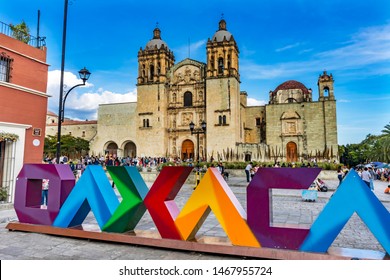
In contrast, the best way to let the story be told is always through the communities themselves. A case study on Oaxacan Museos Comunitarios in Oaxaca, Mexico examined the value of community autonomy in the museum’s operation. Oaxaca has the largest South American Indigenous population. Former attempts to establish community museums in other parts of Mexico were not successful because the organization was run by professionals from the outside and the locals felt their culture was appropriated. For Oaxacan Museos Comunitarios, however, the professionals and scholars only act as advisors and provide workshops and training for community members that are elected to run the museum. Such strategy allowed self representation of the indigenous heritage and allowed the locals to tell their own story.

27 October 2020

SEEKING HAPPINESS: A PEEK AT MUSEUMS ABOUT HAPPINESS AROUND THE WORLD

 Musings Abroad | Jingshu Helen Yao


Who doesn't want to be happy? For many years, psychologists have studied the causes behind human emotions. Writers and artists create works that attempt to make people happy. Sociologists research the impact that happiness has on both personal and societal wellbeing. Museums dedicate themselves to the most intriguing parts of human history, and happiness is no exception.

In the midst of a pandemic, words such as anxiety and depression seem to dominate what we discuss nowadays. While mental health and the wellbeing of people becomes more critical than ever, the Happiness Research Institution in Denmark opened the Happiness Museum. The museum is located in Copenhagen's pastel-perfect historic center. While the small space of exhibitions and activities only took up 240 square meters, they attempted to show the visitors answers to some big questions. How have the standards of happiness changed throughout history? How does the concept of happiness vary across countries and cultures? Which type of society makes people happier, and what can the policymakers do to improve the wellbeing of people?

The Happiness Museum | source

Meik Wiking spoke of the mission of the Happiness Museum in an interview with CNN. One of the Happiness Research Institution’s studies centred on why people’s happiness in Nordic countries usually ranks highly compared to the rest of the globe. According to the data from the United Nations' annual World Happiness Report, Finland and Denmark are at the top of the happiest countries around the world, even though both countries have relatively cold weather, longer night times, and high taxes. Danish psychologist Marie Helweg-Larsen believes that trust is a critical reason, as well as the casual attitude Danish people have in their lives. The Happiness Research Institution presents their research results through the museum exhibition in the hope that those who visit the museum will leave a bit happier and wiser.

The Museum of Happiness | source

Though most media claim that the Happiness Museum is the first of its kind in the world, in my research I also came across the Museum of Happiness that opened in London, UK, in 2017. While the Denmark institution mainly took a social science approach to discuss the topic of happiness, the museum in London seems to be more science-based. Aside from free exhibitions and fun activities on the psychology of happiness, London's Museum of Happiness also provides training and workshops on how to become a happiness facilitator, online videos for individual wellbeing, and resources for organizations on building a positive working environment. With a longer record of operation and development, London's Museum of Happiness not only provides knowledge on happiness but also gives guidance on how to put the knowledge to use.
The Happy Place | source

Both museums in Copenhagen and London focus on educating their audience about happiness, in contrast to the main goal of pop-up exhibition “Happy Place” who intends to let audiences have fun. The exhibition features “the world’s largest indoor Confetti Dome, six-foot-tall X’s and O’s surrounded by red lips, the famed Rubber Ducky Bathtub, the wildly popular Cookie Room scented with the aroma of freshly baked chocolate chip cookies, an Upside Down room that defies gravity, and Super Bloom, a room filled with 40,000 golden handmade flowers.”

Happy Place first started in Los Angeles and soon made its way to other big cities in the United States. The Harbourfront Centre in Toronto also hosted the exhibition between November 2018 and January 2019. Recently, Happy Place opened in Sydney, Australia.

No matter in which country these museums and exhibitions are found, what form and approach they take, it’s comforting to think about institutions that are devoted to improving the mental well-being of the world, especially during this special time.

12 August 2020

THE POTENTIAL OF ORAL STORYTELLING IN MUSEUM EXHIBITIONS

Heritage Moments | Jingshu Helen Yao

Artifacts, specimens, and models might first come to mind when people think of museums. Though museums today incorporate a variety of media into their exhibitions, the traditional items in visual exhibitions still remain at the forefront of people’s minds. Changes tend to occur gradually, but oral storytelling has shown its potential to become an alternative method to showcase history and culture.

In the Fall of 2019, the Future of Museum Storytelling Conference was held in New York. Professionals put their focus on how storytelling could benefit from the digital age, and how they could facilitate a museum environment rich in both oral and visual materials. In recent years, oral storytelling methods were employed to deliver complex topics such as immigration, decolonization, and LGBTQ stories. The strategy gave the marginalized communities full representation of themselves, which achieved better results while approaching these hard topics.

Metis Prisoners in 1885 (source)


Many indigenous communities around the world have strong oral traditions, which made oral storytelling a natural element of recording their history. Oral storytelling is now widely used to present indigenous culture in museums. The Gabriel Dumont Institute Of Native Studies And Applied Research presented audiences and researchers with an online archive of Metis oral history. The collection includes transcription and audio stories, interviews with storytellers, and additional resources for oral history research. The Virtual Museum of Canada, a digital platform created by Canada’s museums and heritage organizations, uses its space for virtual storytelling and illustrations.


Virtual Museum of Canada Logo (source)

These archives and digital exhibitions have become extremely useful during special times like quarantine. While most resources are limited to in-person use, oral storytelling maintains the same value remotely. In addition to its close connection to indigenous culture, oral storytelling has also been used in other topics that largely involved personal experience. The Toronto Ward Museum’s program Block by Block focuses on the storytelling of immigration. The initiative intends to use storytelling as a method to create a more inclusive city. 

Canadian Museum for Human Rights (source)

Bidzinski and her colleagues at the Canadian Museum for Human Rights introduced their methods for including personal perspectives in historical events. “Oral history offers something other sources lack — perspectives from often-marginalized groups and individuals, including many who have suffered human rights violations. Many of these stories have been excluded from the historical record.” Bidzinski et. al, explains this in greater depth in their paper “Building the Oral History Program at the Canadian Museum for Human Rights”. With more and more museums adopting oral storytelling as a part of their exhibitions, it will add depth to museums and culture education.