Showing posts with label Christopher Wai. Show all posts

7 March 2017

"PROTOMYTHS": THE BROKEN TELEPHONE HUNT FOR PALAEOLITHIC STORIES


MUSEUM MYSTERIES
BY: CHRISTOPHER WAI

Final Note: After the last three text blocks, for my final Museum Mysteries post before graduating, I thought I should have a lighter return to form. I had a few other ideas I'd been working on, so if you're interested, they'll be up on my new blog in the next few weeks..
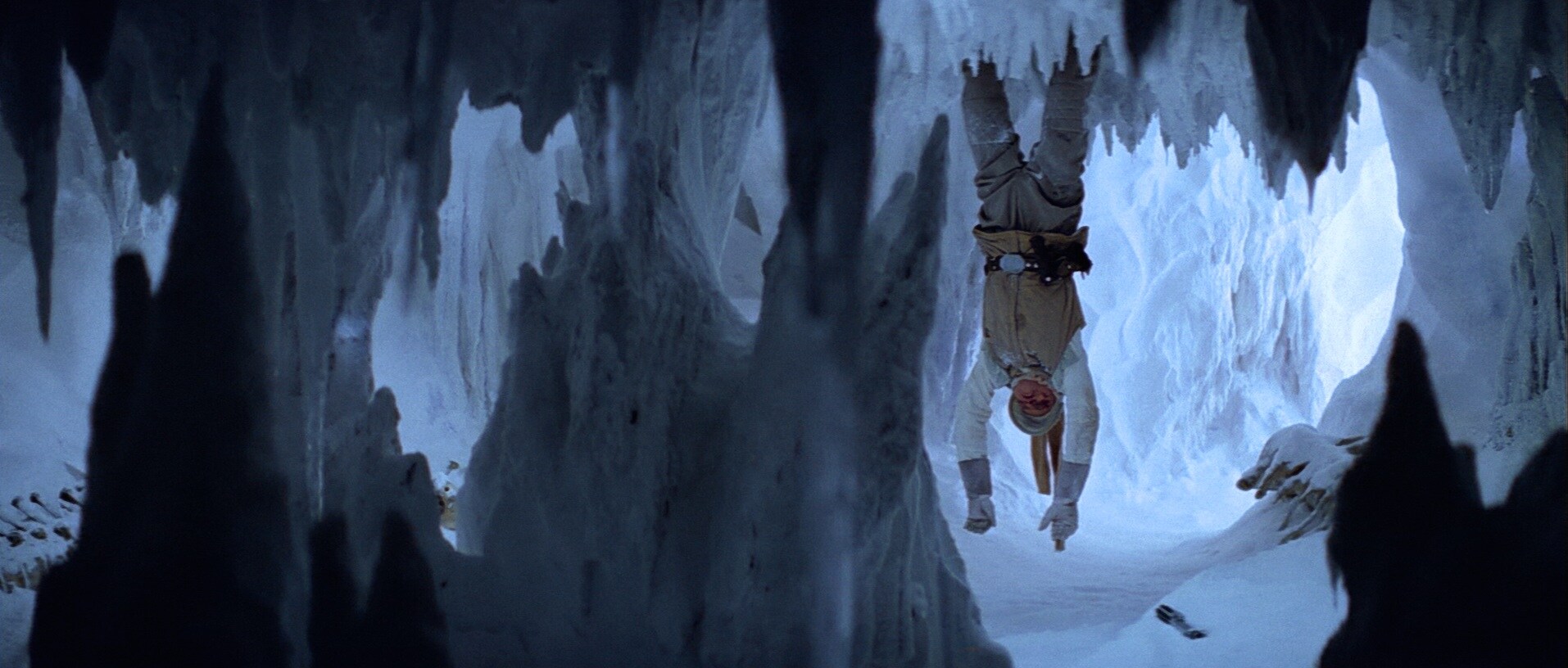
Luke Skywalker in a Cave. Star Wars V:The Empire Strikes Back (1980)


Julien D’Huy, has recently talked about his research in Scientific American last September (now pay walled) and it's an interesting piece about trying to trace the origins of different myths, possibly all the way to the Palaeolithic using databases of attributes.

Trying to trace the broad number of stories we have in our world today isn't necessarily a new temptation*. As D’Huy mentions, Jung was famous for creating common archetypes of our collective conscious from myths. English majors and Star Wars fans will have heard of Joseph Campbell's Hero Cycle. Scholars have played with the question of the Biblical flood myth being a descendant of the one in the Mesopotamian Epic of Gilgamesh , where the hero Gilgamesh comes across an old wise man, who survived a giant flood in a giant boat.
                                     
 
Lara Croft exploring the Tomb of King Arthur. Tomb Raider Legends (2006)

It's also something we've played around with in modern fiction. Tomb Raider Legends plays with the idea of the “Monomyth” to have Lara Croft jump from country to country to find the true ancient sword behind Excalibur and other stories behind powerful heroes and their swords. Pseudoscience and conspiracy theorists have also played with this idea. But what results might we get if we try to seriously trace common plot details and structures not for some grand secret conspiracy, but just to try to understand the possible stories from our Palaeolithic ancestors before they spread far across the world?

Linguistic research has been a component of theorizing about cultural identity and population change in the past, whether it be discussions on the waves peopling of the Americas or common ancestry and spread of Indo-European speakers, but how far can one push this? It is an interesting thing to ask, though we probably have to be careful.

From Cave Art to Backtracking from Oral tradition :

Cave art, burial practices and artifacts are generally the way to think about stories, myths, ritual and religion. In recent decades, shamanism has become a dominant approach to interpreting rock art based on analogies with ethnographic evidence (which can be tenuous because cultures and meanings vary over spans of centuries, let alone millennia). As I mentioned in an earlier post last semester, burial practices can be seen even in our Neanderthal relatives, though meaning is difficult.

Language and oral traditions are essentially impossible because there is no written record to work with. Linguists do try to to figure out this gap by backtracking through languages to see how far we can get to looking at language families we have today. D’Huy is trying to do something similar with stories and their details by attempting gather different myths from around the world from later periods. In order to minimize arbitrary comparisons, he borrows a page from bioanthropologists and evolutionary biologists by using phylogenic databases. Phylogenies are like family trees and have been used in evolutionary research to figure out how ancestors and relatives of humans (or other animals and plants) might be related (i.e. who came before who, who has a common ancestor and which common ancestors had common ancestors and the amount of time between different descendants and ancestors).

Then he creates a supertree that collects separate trees:

A biological example of what a phylogentic supertree is like: Source
The theory behind it is also based in the evolutionary concept called punctuated equillibrium: evolution occurs often, but the species (or myth) remains fairly stable unless there are big changes to the world or if a small part of a population moves away and creates bottlenecks of species variation that  change and evolve in new conditions. So, in other words, there are periodic stops and big changes that you can look at and point out a common species and its ancestors.

 So his method is to try establish a database to link different myths in different regions in all their variations to their oldest versions in different cultures and regions and then look to see how they might connect, not just by their plot, but by specific details mentioned in the same plots and then contrast it to existing theories and  watersheds of early human migration (i.e. Out of Africa migrations for early Homo Sapiens and the Bering Strait hypothesis in the Americas). It's not perfect, but it does try to be fairly rigorous to weed out old lazy comparisons.

D’Huy's Proposed “Protomyths”:

1. Polyphemus/ “Monster” in the Cave**:
The protagonist(s) finds themselves trapped in a cave with the entrance guarded by a monster and escapes by hiding underneath the belly of a flock of animals. 
Greek: Odysseus blinds Polyphemus the Cyclops and escapes his cave after Odysseus blinds him in the middle of the night. Odysseus' men hide under the bellies of Cyclops’ sheep when reinforcements come.
Source
Swiss: Old version: A hunter escapes a mountain monster dwarf beast master with one eye (?). New version: Monster is now in a shelter.

Blackfoot (North America): Two hunters transform into a dog and a staff and are brought into a cave by the daughter of the Trickster Crow. They free a herd of Buffalo trapped inside and hide underneath the buffalo to escape.

A galaxy far far away: Luke Skywalker escapes the ice cave of a wampa creature. His friend hides him in the belly of a tantaun as shelter through a snowstorm. (My addition, see first image).

2. "Cosmic Hunt":
A hunter or group of hunters chases an animal or animals, which turn into Ursa Major in the sky.
Greek- Arcas, a hunter and grandson of Zeus chases a bear only for zeus to step in and reveal that the bear was his mother transformed by Hera to spite Zeus. Zeus turns mother and child into the constellations Ursa Major and Minor.

Iroquois (North America)- A wounded bear jumps into the sky to escape three hunters who follow along, and together they become Ursa Major.

Chuckchi (Siberian)- Orion, the hunter chases Cassiopeia, the reindeer, in the sky.

Lascaux Cave?: D'Huy suggests a "well-scene" on one of the walls has black spots below a bison, one above and a hunter nearby. The image below may be what he is referring to. I don't know if I really see it... but I suppose.

Well/Shaft scene from Lascaux. Source

3. "Pygmalion"***
Pygmalion by Tischbein 1800s Source
A lonely man creates a woman out of wood who is brought to life by a deity.
Roman: A sculptor by the name of Pygmalion sculpts a woman of ivory whom he calls Galataea and spends much of his time with it. He prays to Aphrodite for someone like Galataea and finds the statue turned into a human.

Bara (Sub-Saharan Africa): A man carves a woman out of wood and it comes to life. Some variations have a tribal leader try to kidnap her and she becomes wood again.

4. “Serpents and Dragons”
In lieu of specifics, here's a basilisk Sourc
In progress it seems. Flying Horned/ antlered Serpents guard water, create rainbows and can “rejuvenate” by shedding skin. They also are the originators of death. A mortal human learns its secrets to “revive or cure itself or other animals” and copies it successfully.

5. “Life Giving Sun as a Big Mammal”


No idea, but it's certainly quite a concept that he leaves at the end, along with the next one.

6. “Women as Primordial Guardians of Sacred Knowledge Sanctuaries”

No idea again, but it certainly sounds like something.

Reality, Coincidence or Fiction? 

Considering that there is a history of comparative religion or mythology being a tad out there and the many fringe theories that are similar, I tend to be cautious, but the use of phylogenies and databases intrigues me in a way that the less organized methods don't. Additionally, he isn't making claims of lost civilizations nor aliens but a more modest, but equally foundational understanding of the minds of Palaeolithic humans. Granted, if it overreaches, even with highly developed methodologies, it could be more like this:

Source
Still, regardless, his research would still give us an incredible cross-comparison of myths across the world.

Tracing myths like this is a lot like tracing many other technologies or inventions in the world. There is the diffusionist perspective that says that someone invented an idea or an object and that it was spread and there's the counter that argues that different people can certainly invent similar things on their own. Or it's a hodgepodge both depending on the time period and even if there was a connection once, it likely had different meaning to different peoples at different times. Considering how connected the world is, it's also difficult to prove that the myths collected have not already been influenced by modern peoples telling other or reading about them in the last 200 years. Though it might just be him writing for a specific audience in mind, most of D'Huy's protomyths centre on using Ancient Greek/ Roman versions as the frame of reference to demonstrate equivalences as well, so it may be interesting to see what connections or “Protomyths” may exist that have no Greek equivalent to use as a central point of reference. He tries to connect it to known changes in human migration and life from the Ice Age to the peopling of the Americas and Out of Africa, but it is still tenuous considering how intangible these things can be. But for the risks and flaws, it is certainly something to keep an eye on to see how far one can push to the limits using the computer databases and systematic approaches we have today. In fact, his bold goal is to try to trace this as far as he can to get into the minds of early Homo sapiens. We can't discuss or debate till there's something there for us to discuss after all and this is certainly a fun one to think about.

* also a lack of internet made it difficult to properly link everything.
** Or villainous herder really, D'Huy's “monster” is a tad pejorative, though villanous herder doesn't have a ring to it...
** "Take on me...take me on" from A-ha springs to mind, though I wouldn't want to risk drawing false equivalences...
**** Blog: Cassandra's Paradox for those interested



31 January 2017

THE NORTH AMERICAN CURATION CRISIS: WARPING TIME IN SPACE (REPRESENTING IDENTITY AND BULLDOZING SITES PART 3)


MUSEUM MYSTERIES
BY:CHRISTOPHER WAI

Setting the Stage:

President Obama had finally issued an executive order at the end of last year to bar drilling permits in response to veterans joining the protests. Trump has since signed another to allow for the DAPL to resume and the issue here has been buried once again in the mass of controversies and responses to the Trump administration. Trump owns shares of stock in Energy Transfer Partners. Rick Perry, the top pick for Energy Secretary was also a board member. The volatile hierarchies I mentioned have in a sense proven itself. There have been many issues in the past week, so forgive me for some critical levity. To set the stage, I refer to you this wonderful documentary (#AlternativeFacts). Where it ends we begin.


Improper storage as shown in fiction. Raiders of the Lost Ark (1981)

The Risk: Warping Time in Space:

In light of all the things that have happened in 2016 and in the past and upcoming weeks, this all may seem less important and yet it is all the more relevant. The all too common creation and reproduction of national mythologies used to promote specific visions and rhetoric are very much alive. The supposedly “post-truth” world or world of “alternative facts” is a dangerous one. Misinformation and confused information is a new norm and every tweet is the talk of the day.

The calls for making America great again for example implies a return to a nonexistent greatness of white picket fences and nuclear families sans nuclear fears. Maybe some image of Lewis and Clark without Sacagawea. A supposed “nativism” that is not remotely indigenous. The “origin” that is simply an imposition on a longer continuity. Perhaps it's a “captains of industry” origin without all the slave or immigrant labour. Historical archaeology in North America extends well beyond historic houses of the the gentry: slave plantations are archaeological sites, as are the remnants of life left by Chinese labourers working on the railroads (followed by Chinese immigrant bans for 61 and 24 years in the US and Canada) and the forgotten lower class apartment blocks and buried city factories that are still health hazards today.

A look into a very narrow mind. Bioshock Infinite (2013)
Archaeology and history can be a clearest challenge to self congratulatory myth making in written history or it can reinforce it. A factual hint at reality in all the thousands of years of diverse indigenous pasts before, recorded in diverse objects, and stories or a reinforcement of warped caricatures imposed by just a few centuries of domination and a national founding on an already found land.

Improper storage as shown in real life: US National Park Service
But if the archaeological or historical record never comes to light then it is rather futile. If we excavate a site, salvaging what we can before a bulldozer comes in to wipe the earth clean of of past by the wrath of industry,  there is an imperative to make whatever is salvaged available and preserved or, reburied. Threats to the National Park Service and other institutions, threatens the archaeological record they manage as well.

 In the last two parts, I've tried in my own messy way to meld the more general and complex issues of preserving archaeological sites with ongoing issue with DAPL and elsewhere, including here in Ontario. We'll now look at what happens afterwards. Collections are not simply saved. Like our present political situation down south, there is always a lot of work to maintain what good has been made. Here are a few core points:

Curation Crisis: Storage Space, Collections Stabilization and Tracking:

The curation crisis is on the face of it fairly simple and affects three major levels of archaeology in North America: Consultant, Academic and Government.

NPS
As contract archaeology has risen alongside the constant construction projects has meant that collections and records grow and grow. Cultural Resources Archaeology which rose as salvage projects (and not research projects) in response to these changes and in lieu of a larger government based archaeological assessment structure as mentioned in the previous parts and mediate a somewhat volatile landscape of tight budgets, high turnover and charged political environments.

While these surrounding issues continue to be debated in the field, the collections are stored wherever possible. What is excavated is collected, assessed, catalogued , reported on. Collections management often takes a back seat to the next project and the next bid for contracts. Salvage and pragmatically staying financially afloat as a small business are primary concerns.

Academic archaeologists in North America similarly, place grants and funding into research as the primary concern, with collections management as a necessary, but often secondary thought. Teaching and supervising graduate and undergraduate students also takes up time and university budgets but are core to its existence.

Collections for contract and academic archaeology may be found at the firm and university storage or when space gets tight, at their homes, in basements and garages. Where they go when they retire or pass on is not regulated.

Government agencies will often place more priority as heritage management and conservation of government owned lands are core components in their mandate, though it is also often imperfect due to funding. Government storage can vary greatly, though it is usually more formally regulated than the above two and more stable because of the fact that they mostly own or have some control(through easments) on the properties assessed. The more impromptu storing methods of contract and academic archaeologists would not apply so much for public servants. With that being said, technically all contemporary collections are held in trust for the government in many places, only, the government provides little financial assistance to consultants and academics in charge of those collections and has collections of their own to contend with.

As a result, in many cases, collections are also not always stabilized, but stored in whatever environment is available where RH and temperature are not necessarily regulated and where there is a risk of flooding or pests. These collections are also not often well tracked. But they continue to grow and grow and become bigger and bigger issues that are known, but difficult to resolve. Here in Ontario, John Lorinc and ASI founder Ron Williamson have even called it "Ontario's Hidden Archaeological Scandal"

Research and Grey Literature: 

 Practicing with a builder's level, Limeridge Monument 2013: Christopher Wai
Unlike art or history collections, archaeological collections from documented excavation generally come with a large amount of documentation. This includes site maps, stratigraphic profile drawings, layer forms, photographs and notebooks for each unit. Archaeological reports today must be submitted to the government, but older collections prior to the present system (which has only been around for several decades), will not always be recorded or when they are, the documentation may not be known to the government. Access to this information as a result can be difficult and as mentioned in the previous parts, dependent on professional networks for awareness.

Collections Management Standards and Policy: 

Cover of Ministry Standards and Guidelines for Fieldwork: MTCS
Outside of independent and internal policies in government agencies and variably in firms and universities, most, if not all provinces and states do not have government mandated collections standards for CRM assessments to adhere to. Here in Ontario we have standards and guidelines for fieldwork Unfortunately, a demand for this will also put pressure on budget tight organizations.

Collections Density and the Danger of Deaccesioning

Archaeological collections from many excavations are often fragmentary and incredibly dense. One could feasibly find a hundred artifacts in a single box ranging from textile to bone, stone, glass and ceramic.

While many museum professionals more familiar with art and historical collections may wonder why some are not deaccessioned, like their own museum collections, it is important to note that there is a foundational difference in how these collections work. Many archaeological collections in older museums are often the result of poorly excavated contexts with minimal documentation or are acquired second hand after the fact.

However, archaeological collections created in the process of methodological excavation, while still imperfect, have very clear contexts (archaeological provenience) in relation to the site it came from. The layer it came from and the associated assemblages or buildings and features are all recorded.

These collections are often very under researched, so deaccessioning without the right expertise or also awareness of potential research methodologies may lead to mistakes.

Knapped glass, or glass bottles that have been chipped for woodworking in the past may not be recognized by many professionals unfamiliar with flintknapping techniques and might might simply be tossed as just another bottle fragment. Debitage, or the small stone flakes that are removed in the process of making tools also have developed methodologies for analysis.

Funding, Staffing and the Publics: Pragmatics and/ or Culture? 

 "What gets measured gets managed."- often attributed to Peter Drucker
"Even if you can't measure it, you're still responsible for it" - Paul Glen

Collections in CRM firms are not always managed or monitored by collections care professionals trained in preventative conservation practices and records management, but in an auxiliary capacity by archaeologists and is primarily focused on initial assessment/ artifact processing, reporting and facilitating research. Existing issues of depending on seasonal contract staff for field work and high turnover rates, make it difficult to include new staff for this purpose as it means a foundational change existing cultures and policies. Funding is a component, but the recognition of this issue enough to be a priority to allocate funding is also necessary.

Public and private support is also core to resolving this issue just as it is core to resolving tensions in the field. Awareness and interest in the public spheres would generate more discussion and perhaps a willingness to aid. Support by private land owners would also help avoid the perceptions of archaeological assessments as inconveniences. 

Affordable Collections Transfer:

One alternative to in-house collections management is to send it off to a specialized facility. Governments that own site museums or have the funds for a purpose built building may resolve this issue internally. However, not many specialized repositories have been built to accommodate for privately held collections, though there have been some attempts. Ontario's Sustainable Archaeology project at McMaster and Western University are two..

Unfortunately, the creation of storage facilities alone is not enough, as collections must be repackaged to be adequate for transfer. It is difficult for these facilities to take in poorly packaged collections because the process of creating the facility in the first place already incurred high costs and the additional responsibility and resources expenditure to be responsible for this process while also maintaining collections already in the facility may be too much of a burden at the moment.

On the other end of the spectrum, because of the issues many CRM firms already face, as mentioned in the previous parts, finding time and resources to repackage it is also not often feasible. Museums are another option, but many museums already have existing collections concerns and will also have to be able to contend with the density of these collections.

Sustainable Archaeology at McMaster: Globe and Mail

Conclusion: Shortening Time or Warping Time in Space Redux
"Who controls the past controls the future; who controls the present controls the past"- George Orwell
So to reiterate, once it's out of the ground, it's empty. There are no layers of earlier occupation afterwards. History will seemingly begin with a house a fence, foundation walls and concrete buildings. Even in the case of historic American/ British- French-Canadian collections, there is a class distinction for memory. The many historic estates of the wealthiest families that are celebrated and meticulously preserved and interpreted are a testament to what represents the “beginning”, “early history”, “founding fathers”, “pioneers” “settlers”, “explorers” “discoverers”, “our foundations” “the captains of industry”, “new beginnings”, “rags to riches”, “old stuff”, “the new fertile land”, “the new world”, etc.

Time gets shortened and begins later. The wealthiest and most notable are metonyms of average life. It's the disparity between centuries vs. millenia and also class. So to summarize once again, all the reports and catalogues and bankers boxes upon bankers boxes are undeniable proof of the depth of time and complexities of existence that were once represented here in the ground, now bulldozed.

Bonus:

More from our documentary: Two professors and two government workers look for a box containing two important artifacts. I'm sad to say that the tablets were rather poorly conserved.