Showing posts with label audre lorde. Show all posts

14 October 2020

THE TOLL OF BRIDGING THE GAP: GENDERED AND RACIAL SYSTEMATIC SEPARATION IN MUSEUM STUDIES

She's My Muse | Jaime Meier


Last year I walked into my first day of class in the MMSt program and was pleasantly surprised to see the room of women before me. Despite this female majority, a handful of men, and certainly not all, have taken it upon themselves to occupy the most space. One went as far as to say that he "speaks for the class," as the silence of women during discussion may be interpreted as an apprehension to participate rather than contemplation for a thoughtful answer. Others will have a moment of self awareness and acknowledge that they "talk too much," but continue to take up space or repeatedly add their commentary to the chat box. The men mentioned would be horrified to learn that their actions had negative impacts on their female colleagues, as it is not done out of a dislike of women, but because systems of oppression rely on separation, whether it be gendered or racially based. I find myself fearing these dynamics will continue within museum spaces once I enter the workforce. 
(Source)

I strive to participate in class discussion and use in-class activities and written assignments to assert my thoughts and critically engage, which has led to a male professor branding me as "brazen" — to be bold and without shame. While I am willing to embrace this term, I wonder if the men dominating discussion are ever called brazen or if their opinions and statements are easily accepted as being reasonable. It is also not lost on me that Audre Lorde has called attention to the ways Black women have been associated with hostility when expressing sentiments similar to white women, such as myself, or men. Lorde continues on to say that we "too often pour the energy needed for recognizing and exploring difference into pretending they are insurmountable differences." This has led me to reflect on how the MMSt program has been preparing or under-preparing us to face and overcome these challenges in the field. 

It has often been students and student organizations working to challenge systems of oppression present within the MMSt program. A Report on Diversity and Inclusion Experiences at the Faculty of Information was created based on a survey in June 2020 and was compiled by Oy Lein Jace Harrison and Lo Humeniuk, members of the Diversity Working Group, and Dominica Tang from Museum Professionals of Colour in collaboration with the Accessibility Interests Working Group, the Doctoral Student Association Indigenous Connections Working Group, the Master of Information Student Council, and Master of Museum Studies Student Association. Over 130 students, faculty, and alumni attended the panel discussion on the report. The report highlights the lack of inclusion in regards to BIPOC, people with disabilities, and the LGBTQ2+ community and how these topics have been handled in an inappropriate way that has left students feeling unsafe. Reports such as these can be difficult to absorb and implement, as challenging systems threaten those within power, but growth is not possible without feedback and critique.
Courtesy of the Diversity Working Group, Museum Professionals of Colour, Accessibility Interests Working Group, the Doctoral Student Association Indigenous Connections Working Group, the Master of Information Student Council, and the Master of Museum Studies Student Association. 

The students and organizations who participated in the survey, put together demands for change, and led the panel discussion, were not compensated for their labour. Many of the published comments from the survey mention difficult experiences that were hard to endure the first time and I am sure were unpleasant to repeat. The coordination between six different student organizations is no easy task, getting three people together to discuss a project over zoom is difficult enough, not to mention the hours that were poured into the brilliantly executed report. Luckily, t I have many counterparts in MMSt with me, straight and queer, men, women, and non-binary people, and we all have a responsibility to each other to reduce the emotional toll that comes with our mere existence within a system that so often seeks to destroy difference in favour of assimilation. While I work on navigating my relationships with talkative men in MMSt and ensuring that I uplift rather than ignore the struggles experienced by BIPOC and people with disabilities, it is my hope that MMSt graduates will take reciprocity, inclusion, and relationality into the field with them, as oppression cannot survive as long as we bridge the gap together.

1 July 2020

DIVERSITY IS NOT INCLUSION: MUSEUM INNOVATIONS THAT FACILITATE CHANGE

Museum Innovations | Jaime Meier


When I think about the history of museums and their place in the future, I think about Audre Lorde. She once said, "The master's tools will never dismantle the master's house. They may allow us to temporarily beat him at his own game, but they will never enable us to bring about genuine change. And this fact is only threatening to those women who still define the master's house as their only source of support." Museums have already led campaigns of "diversity" to meet quotas and appease the public, but what is needed is a complete restructuring demonstrated through hiring and purchasing practices that will dismantle the museum as we know it and create something new.

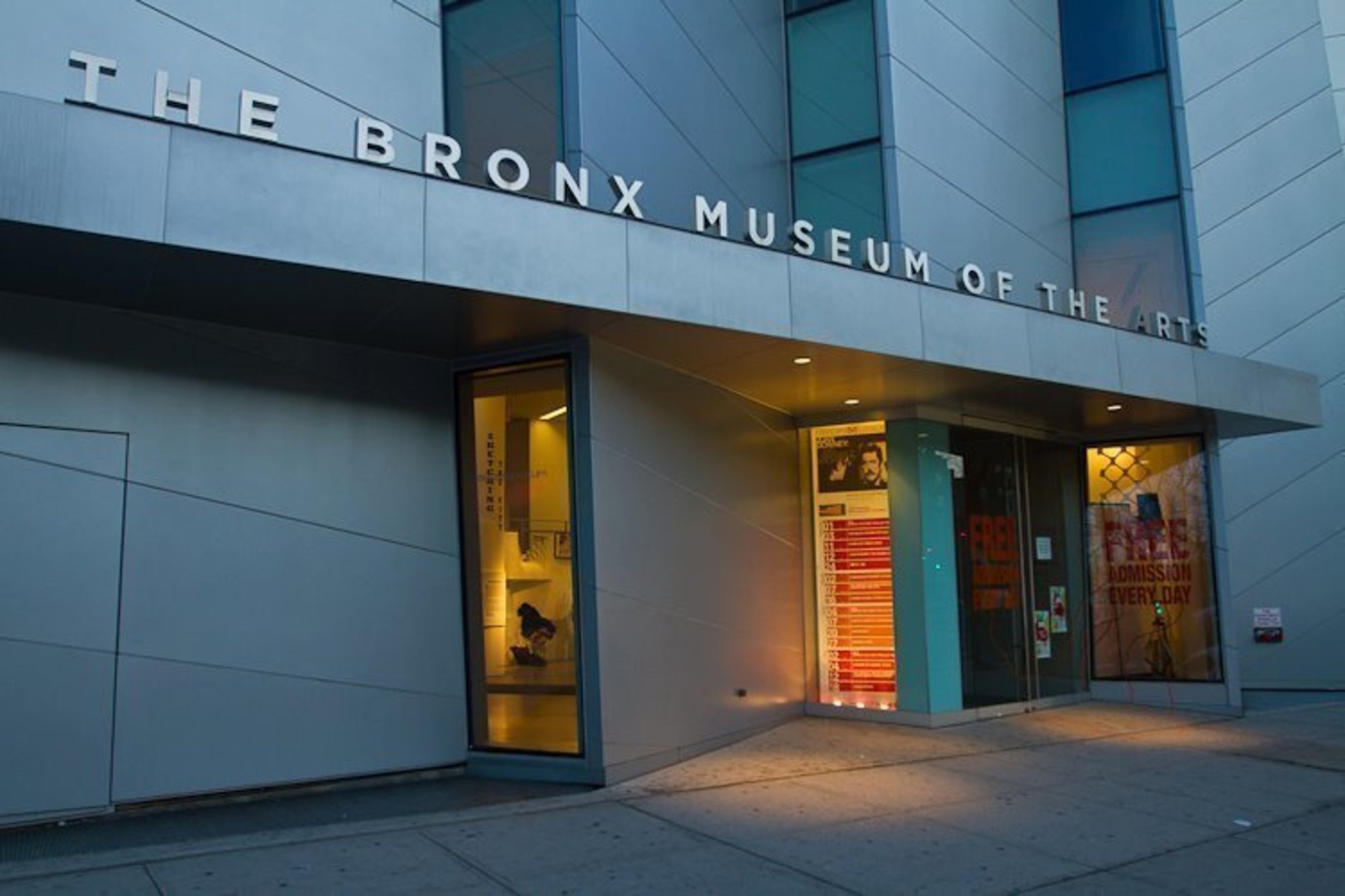
Bronx Museum of the Arts | Artsy
The Bronx Museum (Source)
The Bronx Museum has recently hired Jasmine Wahi as the Holly Block Social Justice Curator to "prompt dialogue and subsequent change towards a more socially equitable and just society." A huge part of her job as curator is to consider who the exhibition is created for and how to bring in stories and discourses that are often suppressed and go beyond a single audience narrative. Wahi also encourages museums and galleries to not only purchase more art created by people of colour, but also provide investment through "respect, attention, and intellectual investment." Reconsidering who is hired and their intentions within the museum is at the heart of a museum's innovation and their capacity to change.
Image may contain: text
Museum Professionals of Colour Logo (Source)
Within the Master of Museum Studies program, Museum Professionals of Colour (MPOC) are starting within the educational institution to dismantle racial bias before Masters students officially enter the museum field. MPOC was created by students who realized that their lived experiences were not being adequately addressed in academic and professional settings and were willing to put in the emotional labour to ensure that the art, history, and other disciplines that permeate museums serve a wider audience, instead of privileging a white colonial one.

Jasmine Wahi – Glassbook
Jasmine Wahi (Source)
Some of the necessary changes, such as diversifying art collections or staff hiring, have been met with concerns over meritocracy. However, a true meritocracy has never existed. The racial, social, educational, and other boundaries have always been successful at rejecting people who do not serve the colonial project, no matter their ability. As Jasmine Wahi has said, "I can say with zero doubt that there are plenty of mediocre white men in positions of power who have not risen through the ranks based on their intellectual or creative prowess," not in attempt to discount many talented white men but rather dismiss the myth that good work means reward.

The problem is not the desire to witness and experience art and science, but rather how it is done through colonial institutions that I believe are capable of change if the right steps are taken. It is my hope that museums will cease to only show exhibitions and instead innovate to become a trusted centre for the local art community and general public, while still welcoming international audiences.