Showing posts sorted by relevance for query jaime meier. Sort by date Show all posts

21 March 2020

MUSEUM DETOX PANEL REVIEW: ADDRESSING CHALLENGES IN THE MUSEUM

Weekend Edition | Madison Carmichael & Jaime Meier


The Master of Museum Studies program (MMSt) is overwhelmingly white. This is true whether you’re looking at the students or the syllabuses. We talk about diversity and race in the context of museums often, but not so often do we remark upon the privileged position from which many of us speak, nor the privileged position from which many of us will operate once we move into our careers.

Museum Professionals of Colour (MPOC) was originally a support group for students of colour to talk about being in an all-white program. It started out with about six or seven Indigenous, Black, and People of Colour (IBPOC) who were excited to finally be open about their feelings of underrepresentation and isolation. Upon learning that the MMSt program previously had a diversity group that had dissolved, MPOC decided to become an official student organization to provide a permanent collective for future generations. They are driven by their desire to support People of Colour (POC) within the MMSt program and help facilitate conversations about race with their peers and the wider museum community. MPOC have used multiple platforms to achieve their goal, including social media (Instagram, Facebook), online publications, and most recently a panel featuring Wendy Ng, Manager of School Programs at the Ontario Science Centre; J’net Ayay Qwa Yak Sheelth, Indigenous Outreach and Learning Coordinator at the Royal Ontario Museum (ROM); and Just John Samuels, Art Curator and Community Organizer at Blank Canvas Gallery. 

From left to right: Denise Tenio, Megan Sue-Chue-Lam, Wendy Ng, J'net Ayay Qwa Yak Sheelth, Just John Samuels, Dominica Tang, and Chloé Houde. Photo courtesy of Jaime Meier. 
The panel, “Museum Detox: Cleansing Institutions of Unconscious Bias and Developing Anti-Racist Praxis,” was developed by MPOC in partnership with MUSSA. Guided by questions from members of MPOC, panelists discussed the emergent trend of diversity work in cultural institutions and how museums might break that trend-cycle to do “diversity right,” speaking to institutional examples or projects as well as the unexpected and very real challenges in doing this important work. Race is, according to panelist Wendy Ng, a pivotal factor in oppression, and it is critical to recognize the role that race plays in intersectional museum work as well as the oppression that one may experience within these institutions. 

These discussions led us to the idea of risk. Risk and risk-taking is embodied in the work that the panelists and MPOC themselves engage in everyday to decolonize cultural institutions and support their communities in the face of systematic oppression. While various groups work to assist in these efforts, it is critical that we consider and reflect upon how risk differs depending on who undertakes it. 

From left to right: Wendy Ng, J'net Ayay Qwa Yak Sheelth, & Just John Samuels. Photo courtesy of Jaime Meier. 
As panelist J’net Ayay Qwa Yak Sheelth so aptly put it, museums are rooted in systems of white supremacy and the systems that abet it. They are rife with binaries of us and them – or else us vs. them – which is only compounded by the strict hierarchies of power, position, and knowledge hammered into their foundations. And the “us,” those who occupy the highest positions of power, are – much like our program – overwhelmingly white, and so the systems in place actively advantage white folks and disadvantage others. As such, what constitutes risk and what is at stake in taking a risk looks markedly different within a system like that. 

It is not and cannot be up to POC alone to address all institutional issues themselves. White people and allies have an important role to play in challenging institutions that uphold white supremacy, that stem from colonial roots, and to recognize those histories and structures so as to confront them in real terms and meaningful action. MPOC have played a crucial role in beginning this work in the faculty, inspiring peers and others in the museum field to do the same. The panelists brought attention to the fact that we exist in a culture of whiteness that requires us to decenter ourselves in regards to power, culture, and relationships. A starting point for allies and white people is to ask important questions about our relationship to hierarchies and privilege. This may include:
  • What privilege do you have?
  • Who’s missing from the conversation? Who are you talking to?
  • How can we create equilibrium in our (museum) spaces?
  • Who are events for? Is it a performance for non-racialized folks? 
  • What risks are you willing to take? How will you leverage your power to enact change and challenge oppressive structures?

Faculty and students alike consider issues of  doing "diversity right," confronting institutional systems of white supremacy, and the important work that allies can engage in to help with these efforts. Photo courtesy of Jaime Meier. 
Once allies and white people occupying museum spaces begin to consider these things, important work can begin to take place. This does not mean turning to POC exclusively for guidance and support; white people and allies must shoulder the responsibility of educating themselves and talking to other white people and allies about issues that POC face, even when they are not in the room. MPOC have also stressed the importance of allies speaking up in difficult situations and to take the initiative to ask questions and challenge statements. It is a moment of fleeting discomfort as opposed to the compounded lifetime of negative experiences felt by POC, which only increases feelings of isolation. In the words of Wendy Ng, white people need to be willing to sacrifice their comfort, and at times more, in order to be an ally. 

“Museum Detox” was, in the words of MPOC, a single step towards developing anti-racist practice within cultural institutions but not a small or unimportant one. As Just John Samuels so wonderfully put it, we’re in such a beautiful position to begin this work in earnest. Whether as museum professionals or as students of museum studies, we have the power to enact change and pose challenges. And so we must agree with Just John: that position is indeed a beautiful place in which to work. 

And, of course, if you're interested in listening to the panel yourself, please check out the livestream here!

2 March 2021

TO DIG OR NOT TO DIG?: TECHNOLOGIES AND TEMPERMENTS IN ARCHAEOLOGICAL DIGS

Technology Tuesday | Jaime Meier


I was thrilled to get the chance to visit the ancient city of Troy while I was on a tour through Turkey in 2019. The city was made infamous through the stories of Homer – detailing the decade of battle and the adventure home to Greece. The city re-appeared in my undergrad as an example of horrific archaeology practices that have likely destroyed the possibility of finding objects of significant historical value. Through lessons from the past and new technology, these issues have largely been avoided, as reflected in the case of the Terracotta Army in Xi’an, China.  

The City of Troy | Photo courtesy of Jaime Meier


In 1873, Heinrich Schliemann, an amateur archaeologist from Germany, dedicated his post-retirement life to finding the city of Troy due to the impact of the Iliad on his childhood. Without a permit from Turkish authorities and against the advice of other archaeologists, Schliemann began his assult on the site. One of his major projects was digging a giant trench that went down through nine different layers of the city of Troy – uncovering evidence of cities being built on top of each other and also causing untold damage to original buildings. It is incredible that Schliemann was able to find the site and due to his haste and desire for infamy, our understandings of the ancient city may be permanently affected. 

The different layers, indicating a new city, is marked by numbered plaques | Photo courtesy of Jaime Meier

The terracotta army was discovered in 1974 by farmers and the excavation, led by Zhao Kangmin began shortly after. The initial excavation in Pit 1 lasted 10 years, resulting in the discovery of over 1000 terracotta figures. The project was paused in 1986 and would remain untouched until 2009, as the archaeology teams recognized the need for more advanced technology to uncover the remaining objects and patiently waited for the equipment to become available. The excavation of pit 2 went similarly, with efforts being paused in the late-1990s due to concerns around object damage, with projects restarting in 2015 with new technology and strategies. While the discovery of new objects is always exciting, it is imperative to prioritize preservation of the objects and community needs over the personal gains achieved through quickly gathering objects for sale.

The terracotta army | Source

While the ideas and technology surrounding archaeology had changed considerably during the excavations of Troy and the Terracotta Army, an interesting difference is also the locality of the people making decisions regarding the sites. In the case of Troy, Schliemann was a German businessman and amateur archaeology. While the Terracotta Army had the great fortunate of being initially discovered by farmers, who alerted local archaeologists, including Zhao, who went to the site. The difference between these men is not inherently their experience, but rather the respect shown to the sites. As someone not from the area and a budding interest, Schliemann had no issue in exploiting the site based on personal interest and gain, whereas Zhao was able to recognize the importance of the site to not only his history, but the history of others. Unearthing new discoveries is exciting and it is also crucial for all archaeologists to follow the example of Zhao in centering community needs and long-term preservation. 


16 April 2021

SO LONG, FAREWELL, AU REVOIR: GOODBYE LETTER FROM THE EDITORS

  Letter from the Editors | Jaime Meier and Erika Serodio


Today is the last day of mine and Erika’s reign as Editors-in-Chiefs and while we are sad to bid everyone adieu, we are excited to look back at the articles created by our talented team of writers. Over the past year we had 16 fantastic permanent and guest writers to cover a huge variety of museum topics, from collections to MMSt classes. If you weren’t able to catch all of our publications, we have made a list of highlights. 

We appreciate your ongoing support! | Courtesy of Jaime Meier

For Collections Corner, Martin interviewed recent CDP grad, Karen Macke, to discuss her collections related insights and her hugely popular Facebook group that focuses on collections. 

Madison brought fresh perspectives to the Heritage Moments column with her article on preserving historic scents and their important place as intangible heritage. 

With the pandemic changing how we view exhibitions, Rachel brought us comforting Exhibition Reviews, such as the “Three-Thirty” show at the Doris McCarthy Gallery, and how cultural institutions are seeking to adapt rather than cease creation. 

Brooke made our Research Column better than ever with her in-depth series on critical conversations happening in museum and the rights of museum workers that have been challenged by “neoliberal economic strategies” and ongoing resistance from museum workers. 

For Museum Innovations, Sara brought us examples of how the cultural sector has continued to engage communities on new platforms like Twitch and Tiktok. 

Annabelle highlighted the Jewish community's many accomplishments through Walk of Fame, including the crucial role of Frieda Schiff Warburg in the creation of the Jewish Museum in New York City, one of the first and oldest to focus on Jewish history. 

For Internship Check-in, Annie brought us the inside scope on working in cultural institutions, including Lauren at the Royal Botanical Gardens and Leora at the Robertson Davies Library. 

Caitlin created a new column, Final Project Reflections, to highlight the many accomplishments of students completing their thesis and exhibition projects, including her own and the inspiration behind it. 

For Technology Tuesday, Jaime explored what the future holds for interpretation in museums after the pandemic ends and many of the new approaches significantly aid in accessibility for all visitors. 

Melissa used GLAM Gets Mindful to bring us resources to help in our success and reduce stress, with a very timely one with tips on how to conquer job search anxiety. 

We have been so lucky to have Museum Professionals of Colour contribute a Special Edition each season, with their most recent article highlighting their successes and delivering handcrafted memes. 

The MUSSA President & Co-President also contributed a Special Edition where they gathered and shared student experiences from working in the field and all of our wonderful memories together. 

Natalie is a student like none-other and wrote for two whole columns, Sew What and A Muse Bouche. She delved into her Italian heritage to explore and re-create disappearing pasta forms and also explored the sustainable history of 18th century clothing through fabric reusing - the duality! 

Erika continued to highlight outside-the-box spaces for arts and culture, like Underpass Park, in the Beyond Tradition column.

In Museum Mysteries, Mia has kept us wildly entertained with stories of horror, fictional fantasy, and eerie holiday traditions. 

Helen took us to museums all around the world with Musings Abroad, where she looked at how international museums work with topics like black culinary culture, scents, and women's history. 

It has been a very "online" year for all of us, with museums closed for the majority of our school year. Finding inspiration to write has been challenging and has made the accomplishments of this year's writers even more impressive. We look forward to someday running into each other in museums again, and finally meeting the writers who we've been working with all year but have never met in person. The articles from this year will be remembered as small tokens of resilience. We know it has been anything but easy and we are so very grateful for everyone that's written with us and followed along. 


Signing off,

Jaime & Erika

20 May 2020

THE UNKNOWN CREATOR: THE MYSTERY BEHIND INDIGENOUS CRAFT ARTISTS


Alongside art and cultural objects, museums preserve the names of those who created the items, except in the case of Indigenous peoples whose personhood often fails to appear in the official museum record. One of these reasons is due to the unfortunate binary created between craft and art. We typically think of art as paintings, sculptures, or drawings, while craft denotes pottery, textiles, or woodworking. This gap has been greatly contested over the past decade and my use of “craft” is of great respect for the practice that rivals or exceeds other art practices. Emerging craft artists are more readily recognized for their works, especially due to the growth of social media, but museums are still left with many brilliant craft items created by unknown Indigenous artists.

Coiled Tlingit basket made by Unknown (Artist). (Source)

Many Indigenous craft items, such as woven Tlingit baskets, are utilitarian and used by various family or community members. A special acknowledgement of the creator was not a necessity, as members of the community knew who the item was created by and it was created for public use rather than just visual appreciation. When these objects are brought into museums, the makers are listed as “Unknown.” Dolores Churchill, a Haida elder and basket weaver, has said, “As long as Native art remains in museums, it will be thought of in the past tense.” The use of the “Unknown" artist only reiterates the idea of a past culture by amplifying knowledge that was lost to time and does not continue into the present. The item was not created by a Tlingit artist, but a depersonalized and uniform Tlingit culture.

"Peace Treaty Belt" made by a Haudenosaunee Artist. Photo courtesy of Jaime Meier. 

As of now, the names of the artists involved in Indigenous craft are either irrecoverable or museums lack the resources or to solve the mystery. The National Gallery of Canada has made the decision to move past listing unnamed Indigenous artists as “Unknown” and have relabeled to acknowledge the artist in connection to their nation. For example, as an “Haudenosaunee Artist,” thus bridging the gap between artist and community. The artist is no longer an unidentified person, but rather an artist who carries the spirit of their community. The Royal Ontario Museum (ROM) has taken similar steps in their online collection, listing the maker based on the Indigenous community who created it rather than simply an affiliation.

"Lacrosse Stick" made by a Haudenosaunee Artist. (Source)
Museums are closely drifting away from the use of the “Unknown Artist" to the benefit of the public, the original artist, and the artist's community. Social media has made it difficult for Indigenous craft artists to remain unknown, as many have thriving social media accounts and online shops. Whether it's beadwork, tufting, or birch bark, Indigenous artists are reclaiming craft, identities, and their places in the art world. 

25 November 2019

YOU ARE AN ART COLLECTOR: OWNING AND INTERACTING WITH INTERNET ART

Collections Corner | Jaime Meier 


Photo courtesy of Jaime Meier
Earlier this week I had the pleasure of seeing "Age of You" at the Museum of Contemporary Art (MOCA). The exhibition is a fantastic dive into our complicated relationship with technology and its inseparable presence in our lives. A quote by Liam Young has continued to haunt me, "Ideology rarely evolves at the pace of our technology. As we turn our gaze towards the machine landscapes, we need to radically embrace our uncomfortable place in a world where we are no longer at its center." As an ever dedicated Musing columnist, I began to ponder the implication of this for collecting.

Traditional art collecting is considered to be different than simply owning art because creating a collection requires a plan for acquisition and an overarching theme. Advice for collecting typically comes down to knowing your taste and purchasing art you like, not just investment pieces. This guidance has been applied to traditional art forms for centuries but has began to be called into question by evolving technology. New software and technological advances have rapidly produced an artistic medium that moves beyond canvas and clay, the machine landscapes of the internet.

Source

Internet artist, Rafael Rozendaal, displays his web-based works online and in galleries. His art, typically priced at $7,500 has been purchased by private collectors and museums such as the Museum of the Image in Breda and Borusan Collection in Istanbul. Since his works continue to exist on the internet after purchase, anyone with an internet connection is able to view the art an unlimited amount of times. With the art's eternal presence, the collection is no longer at the center of containing the art work, but rather it belongs to the internet itself and the people who utilize its spaces.

the great bluish ruby
Source
Loren Schmidt and Katie Rose Pipkin are also internet artists who take the ownership of internet art a step further. Their twitter project, @mothgenerator, allows users to tweet a word at them that signals a software generator to create a personalized moth using that word. People are given this personalized artwork that remains on display for the public, creating an intersection of ownership between artist, moth requestor, and the public.

To understand the role of the internet in our lives, we must re-evaluate our definition of collecting. Our ideology about the internet and its ownership are far behind where the internet has taken us. Traditionally, a majority of art collections exist in the shadows and only re-appear for an exhibition or special request.  Someone who possess art is a guardian and the art becomes integrated into a personal canon that expresses interests, desires, and fears. The internet does not allow for its art forms to hide or disappear from sight, instead they become a permanently accessible feature.

Many web-based art forms rely on an interaction to set it a part. Going through a randomly generated art website, such as"My Boyfriend Came Back From War" by Olia Lialina. No one will ever will the exact same webpage nor experience it in the same way, it is not a static art form you can return to again and again for consistency. How can someone own your unique experience? They cannot, this is yours and you get to own it.

As the world continues to criticize, analyze, and relish in the presence of web-based media in our daily lives, one thing becomes clear - we cannot own art the same way we once did. Each person is able to add or refuse art work into their personal collections. I have imbedded 16 links in different letters for you to explore and to aid in the formation of your internet art collection,  are you able to collect them all?


14 August 2020

AUGUST INTERNSHIP CHECK-IN

Internship Check-In | Annie McCarron


For August I got to chat with Jaime and Hanna, who are both completing their internships remotely from Toronto.


Jaime Meier is completing her internship with a Professor in the Drama and Performing Arts Department within the University of Toronto.


AM: Tell me a bit about the work you are doing for your internship this summer?


Jaime: My internship transitioned from a work study I completed in the fall. The Professor I am working with focuses on 17th century Indigenous and French relations in regards to performance. I have done a lot of work with 17th C. Indigenous accounts and explorers, so it tied in well with my knowledge. The Professor had grant money to go to Paris and do research in the archives for a book. Due to COVID19 we had to make changes to our summer plans so this summer has been finding other things to do. Instead of cancelling the internship my supervisor has found other things for me to do. A lot of my work has been with copyright and image permissions which is something that I wanted to learn about. Having worked in museums before, when they are developing exhibitions I have heard about the challenges around image permissions and rights, and the price of using these images. This summer I have been trying to figure out what images to use, working with different institutions across the world. It has provided me with a case study in copyright and permission in different places. In Canada and the U.S. it can be very expensive, from $60 to well over $100. In France and the U.K. it is more like 5 euro/pounds or no licensing fee at all. It's been interesting to see how they treat academics. In Europe, even though it's commercial, they know it's for use in something academic and for the public so they charge less. They just want a small amount to keep their institution going or a free copy of the book with the images in it when the professor is done and that’s all they expect. I have looked at images from institutions in Toronto that the rights are well over 100 dollars! My supervisor gave me a list of images but I have gotten to help curate the final selection for the book, I help to decide which ones end up in the book and where they go. If it will be a full image, or in black and white or in colour. I have a great supervisor who trusts me.


I have also done a lot of transcription work, taking French documents and writing them up. It's really strange looking at old French from the 17th c. it's really different, it can sometimes look like typos but I just transcribe it as I see it. It's been great also working on my French skills as I have always wanted that experience.


AM: What’s something useful that you have learned from your internship? 

Unicorn of the Red Sea, n.d. Photo courtesy of  Louis Nicolas Life & Work


Jaime: I liked hunting down an image and almost negotiating for the rights. I think this skill will help me with my work with museums. I know copyright can be really stressful and I did not have a lot of experience in it, but now I feel a lot more confident when people ask me what they can do with certain images. Even for my own work, knowing the limits of what you can do with an image is extremely useful.


AM: What is the main focus of the images you are researching?


Jaime: We are doing research looking at Indigenous performance and ceremonies, how it has been recorded by Jesuit missionaries, and how it has influenced European forms of dance. We have been working with members of the Haudenosaunee community to make sure we are not crossing any boundaries since we are talking about their ceremonies and we don't want to include anything that we shouldn't. We ran into this issue where we almost included a sacred ceremony that they did not want included, because it was never supposed to be recorded. So we have taken that out and we are working with the community to see what they want. The last thing we want to do is perpetuate what the Jesuits did and just record anything and everything.


AM: Do you have any  interesting images you have found through through your research you can share with us?

Jaime: Unicorn of the Red Sea by Louis Nicolas. The context is when he was in "New France" the Jesuit Missionary Louis Nicolas recorded hundreds of animals and plants and then threw in a unicorn, and claimed to have seen the unicorn with his own eyes!


AM: Have you encountered any challenges in your work?


Jaime: I find working from home extremely challenging, I like being able to work from a different space or with someone else. It's nice that I have flexible work hours, but it's hard to stay focused at home because you can’t escape other work and chores. I also miss the camaraderie of office spaces. My supervisor is amazing but it would be nice to see people everyday and check-in.


Hanna Schacter is currently doing her summer internship at the Ontario Jewish Archives and the Neuburger Holocaust Education Centre.


AM: Tell me a bit about the work you are doing for your internship this summer?


Hanna: I am working for two institutions, the Ontario Jewish Archives and the Nueberger Holocaust Centre. I have been working on three different projects, one for the Ontario Jewish Archives and two for the Holocaust Centre. I am enrolled in the Collaborative Specialization in Jewish Studies, and as part of those requirements I needed to do my internship at a Jewish Institution. I had solidified an internship in early March, before the pandemic and luckily they were able to keep me as an intern.


For the Ontario Jewish Archives, I am working through creating a digital version of their Stories of Spadina Walking Tour. The tour has been run for over 40 years since the 1970s and tells the Jewish History of Kensington Market and the early settlement of Jewish people in Toronto and the surrounding areas. I started by reviewing the content of the tour, as well as looking at other digital tours to see what was out there and what would work for us. I got to interview the 5 amazing tour guides who have been doing the tours for years. I had a list of questions that I asked to gain their insight. From there I took all that information and thought about the common themes. Then I developed what I think will work on the digital version. Now we are waiting for tour guides to write different sections of the stops and I have been going through the Ontario Jewish Archives and the Toronto Star archives to find pictures to go along with the digital stops. From my work this summer I discovered that I love working with archival collections and looking at old pictures.


For the Neuberger Holocaust Centre I am doing research on young professional programming. They currently have a great young professional program unlike any other institution, and I have been gathering information to see how other places have been handling similar programming during COVID19, and what sort of changes they have made to online.


For my third project I am doing some collection development for the Neuberger Holocaust Centre. They have plans to open a new physical museum in the future, so I have been going through their archives to see what exhibiting content there is that is useful, the interpretive elements available, and what common themes they cover. I am also researching other holocaust museums and what they cover, what pieces and artifacts they use to tell stories. This project has been more on hold because of COVID19, as I have not been able to talk to as many people and conduct the necessary research due to the pandemic.


AM: What are you most excited to accomplish?


Hanna: For my exhibition project in the fall I will actually be able to continue with the walking tour that I am doing and continuing working through it, it will be great because I get to see what it will become. I would love to do some user testing once the website is launched and also make some educational resources to go along with the tour. I have really enjoyed doing the research for it and finding the archival materials, I get really fascinated looking at old photos and I love Kensington Market too. It is a place that I have grown up going and now get to learn about the Jewish history of it too. It has been a home to so many different commutes and still is.


AM: Any advice for future people in your position?


Hanna: For anyone taking on a remote internship, I would say communicate — a lot. I regret not communicating more at certain times. I think also that you should never be afraid to ask for help! I have also learned more technical stuff about archives, and I have become a better researcher throughout this internship. I have had an amazing supervisor who is an archivist at the OJA. We have weekly calls checking in and seeing where I am at, she has been very helpful especially if I am unsure if something is useful or not, I will present to her and she will give me great feedback about my work.


AM: What skills have you employed from classwork?


Hanna: I took the User Experience for Galleries, Libraries, Archives and Museum course and it is always in the back of my mind now, whenever I do anything for the public. Even at the start, doing research about different walking tours I am constantly thinking about the users, what are their needs, ease of use, site accessibility issues. I also took the Public Programming and Education course, where we learned about tours and the different elements to set up a tour. Certain questions to keep in mind: what are we learning here? What is our theme? These helped guide my research for the walking tours.


AM: Any interesting stories from the walking tours you would like to share? 


Augusta Fruit Market, August 1956.
 Ontario Jewish Archives, accession 2006-1-3

Hanna: The tour guides told me that everyone has a fish in the bath story. Before Shabbat people would buy fish and they didn’t have anywhere to keep it but their bathtub. Someone had a story where they were about to hop in the bath and there was a fish. I liked this story because I think it conveys the hustle and bustle of how Kensington Market is. Not sure how true the story is but it is something that has been passed along.


AM: What interesting facts have you learned?


Hanna: I have learned some interesting institutional history about organizations that the Jewish Community have established that still live on. On Cecil Street the Jewish old folks home was established in the early 1900s, which is now Baycrest Centre. Places have moved out of the Kensington Market area but are still going strong and serving the community. I have always felt that being Jewish you care for your community, and that was so true with everyone coming here to Toronto, and establishing themselves, and helping each other when they got here. These stories of care and serving the community are well documented within the archives.

19 August 2020

LETTER FROM THE EDITORS: A SUCCESSFUL SUMMER IN THE FACE OF UNCERTAINTY


Hi, hello! Behind the scenes this summer, the two of us — Jaime and Erika — have been editing, promoting, and thinking hard about Musings. We have truly enjoyed our work so far and we are looking forward to the school year ahead.

Courtesy of Erika Serodio | Source

When we were elected into our positions in April as editors-in-chief, we were living in a different world. In some ways, it felt lucky that this blogging platform we work within is already completely digital. But as the rest of our day-to-day lives transitioned to online, it felt like less of a novelty. Our writing team this summer has adapted to so many overwhelming changes, and it has made us even more proud of everything they have accomplished.

Here are some of our favourite pieces written this summer:

Our resident foodies, Dominica and Lindsay, wrote on migrant agricultural workers’ rights, how they have been affected by the COVID-19 pandemic, and the role museums play in giving a platform. 

Jessica wrote a special "Weekend Edition" piece on her first experience back to the AGO during the pandemic and how institutions are navigating the "new normal." 

A beautifully written review of the heartbreaking destruction of the S.S. Florizel by Madison is a must read of the summer.

Martin explored the life and work of lego artist, Ekow Nimako, who creates stunningly intricate statues that explore Afrofuturism and Black art. 

An essential part of the "Grad School Guide" series was written by the leaders of MPOC — Megan, Denise, Dominica, and Chloé. It’s a deep dive on how imposter syndrome manifests and how to overcome it on a personal and communal level (with amazing memes). 

Made by Chloé Houde | Source


Chloé reflected on her on emotional experiences with living history museums and explored the variety available in Europe that allow for an immersive educational experience. 

The colonial misinterpretation and fetishization of a nude Buddhist deity are highlighted in Caitlin’s article as she calls us to reconsider what we consider to be "obscene." 

Jaime explored the difference between diversity and inclusion and how museums and organizations are executing steps to make the ideal of equity a reality. 

A thoughtful piece on oral storytelling in museums and how they allow for minoritized narratives to enter museum spaces was written by Jingshu. 

Erika wrote about how Torontonians are attempting to record this strange pandemic moment by saving records of their experiences and participating in art installations. 

Annie’s summer internship check-ins helped us all feel more connected with what our peers have been up to and the exciting ways they are implementing and growing in their knowledge. 

Last, but certainly not least, Melissa reminded us all of the issues with unpaid internships and how they put students in the difficult position of choosing between financial security or relevant career experience. 

Courtesy of Melissa Mertsis.

Despite its challenges, this summer was filled with thought-provoking moments as we worked with our contributing editors and connected with the wider museum community. We whole-heartedly thank all of our readers for following along and we will see you again in the fall!

8 November 2019

MY WEEK IN OTTAWA: A LETTER FROM NATALIE HEATON, VICE PRESIDENT

Weekend Edition | Natalie Heaton


Dear Musers:

Monday, November 4, 2019, thirty-three students from the Faculty of Information departed on a journey to the nation’s capital--Ottawa. After a 6 hour bus ride, we arrived and were ready to see what they city had to offer. Our group will visit 5 museums in 4 days and meet over twenty-five different museum professionals.

Tuesday morning, the adventure began at the National Gallery of Canada (NGC). After taking a group photo under the infamous “Mama” sculpture, we enter the gallery and were welcomed by Gary Goodacre, the chief of Education and Public Programs. Gary spoke about keeping the visitors experience at the centre of everything that Gallery does and making the overall experience of the museum less transactional. The way the NGC aims to do this is by implementing art and an Indigenous library before guests purchase their ticket. Dr. Sasha Suda the Director and CEO of the NGC, spoke to the group next, her ‘why not’ attitude was very inspiring as she talked about her career in museums. Her most notable piece of advice being to tell great stories that are relevant to what is going on and be inclusive. The rest of our time at the NGC was spent going on tours with either David Gillanders (educator) or Jaime Morse (educator, Indigenous outreach & programming). I went on Jamie’s tour and she discussed white privilege engrained within the museum system. She stressed the need to remember the colonial history of Canada and treatment of Indigenous people within these institutions.

National Gallery of Canada. Photo Courtesy of Natalie Heaton. 

Tuesday afternoon was spent at the Canadian War Museum. We met Britt Braaten (creative development specialist), who talked about what inclusion looks like at the War Museum along with some of the drawbacks of working with the museum’s collection. Britt discussed the need to diversify the voice that is heard in exhibitions. Sandra O’Quinn (Learning Specialist) showed us Supply Line Discovery Boxes, boxes that are designed to be circulated to schools in remote locations. Essentially bringing the museum to the students, oppose to bringing the students to the museum. 

Canadian War Museum. Photo courtesy of Natalie Heaton.
The Canadian Science and Technology Museum (CSTM) was our first stop on Wednesday morning. At this stop we met ten museum professionals. In particular, we discussed the relationship between sponsorships and the museum. Raising questions of how an institution works with a donor such as oil companies, when the exhibition is intended to tell both the positives and negatives “facts” of oil production. The main take away from this discussion was it matters to show and talk about both side of the story in a museum context.
Canadian Science and Technology Museum. Photo Courtesy of Natalie Heaton. 


Canadian Science and Technology Museum. Photo Courtesy of Natalie Heaton. 

We had the opportunity at both the CSTM and the Canadian Museum of History (CMH) to visit collection storage. The CSTM have just finished building their new storage space which houses a range of artifacts from steam trains, buses and cars, to smaller objects such as cameras. At the CMH we walked through their collection storage and conservation section and saw variety of objects such as kayaks, canoes, and furniture. Going through both of these collections spaces was a highlight for me because we had the opportunity to see the treasures that the public does not often get to see. 

Canadian Museum of History. Photo courtesy of Natalie Heaton.
 

The last museum that we stopped at was the Diefenbunker: Canada’s Cold War Museum, where we received a very informative tour of the bunker’s history. The 100,000sq foot, four level, underground bunker, was very impressive. While the Deifinbunker is not a national museum, their innovative programming and partnerships have helped to establish themselves as a destination. 


Diefenbunker Museum. Photo Courtesy of Natalie Heaton.
Overall, my week in Ottawa was lovely. I got to visit some amazing museums, meet amazing people, and strengthen my friendships with my classmates.

Thanks for reading,
Natalie Heaton

Ottawa Sign in ByWord Market. Photo Courtesy of Jaime Meier. 


P.S. We didn't lose anyone! 

13 February 2020

A MUSEUM WITHOUT STUFF?: NON-COLLECTING MUSEUMS

Collections Corner | Jaime Meier 


It is safe to say that collections are a major part of museums and their adjacent institutions. While collections can serve as a cultural cornerstone of museums and galleries - defining their mission and values - there has been a unique departure in many contemporary art institutions. Many modern and contemporary art galleries have defined themselves as non-collecting institutions, meaning that they have no permanent collection. Contemporary art appears to find itself at uncommon intersection, it is deemed important for institutions to make available but not important enough to own. But, the issue is more complex than that.

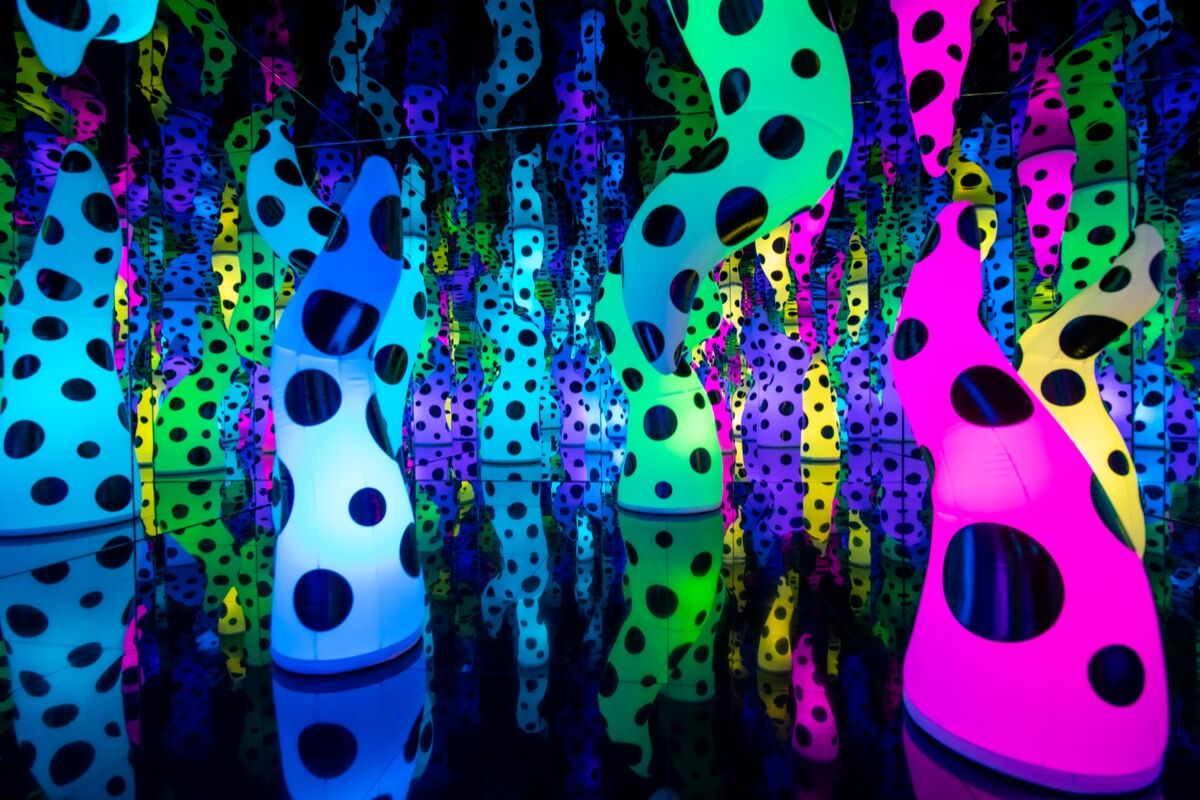
Yayoi Kusama's work is beautiful but if we focus on finding its specific meaning, it can be hard to decipher. (Source)
Contemporary art easily confounds and intimidates the public (myself included), it should be of some consolation that it also intimidates collectors. All of us have seen an abstract contemporary art form, whether it be a Warhol or Pollock, and know it has immense monetary value and yet the reason completely escapes us. Contemporary art can be experimental and strange, that deciding on the value can be nearly impossible. If an institutions invests in an artwork too early and risk never seeing the money pay off or wait too long and have the art become too expensive to purchase. The premise behind non-collecting for contemporary art emerged for these fears coupled with the desire to promote and raise awareness of challenging and evolving art practices.

With a non-collecting museum, ownership is de-centered as the foundation of the museum structure, allowing for cultural exchange to occur in other forms. Documentation fills the gap of collecting by recording visual or written information about the context, concept, and process of the art and exhibition. Instead of physically collecting and item, interaction and mediation is preserved. The lack of collections also means precious money is saved by not employing conservators and collections staff. Processes such as accessioning, deaccessioning, and repatriation become a non-issue. The lack of funds being spent on collections can be redirected into high quality public programming, outreach, and education.

Image result for powerplant toronto
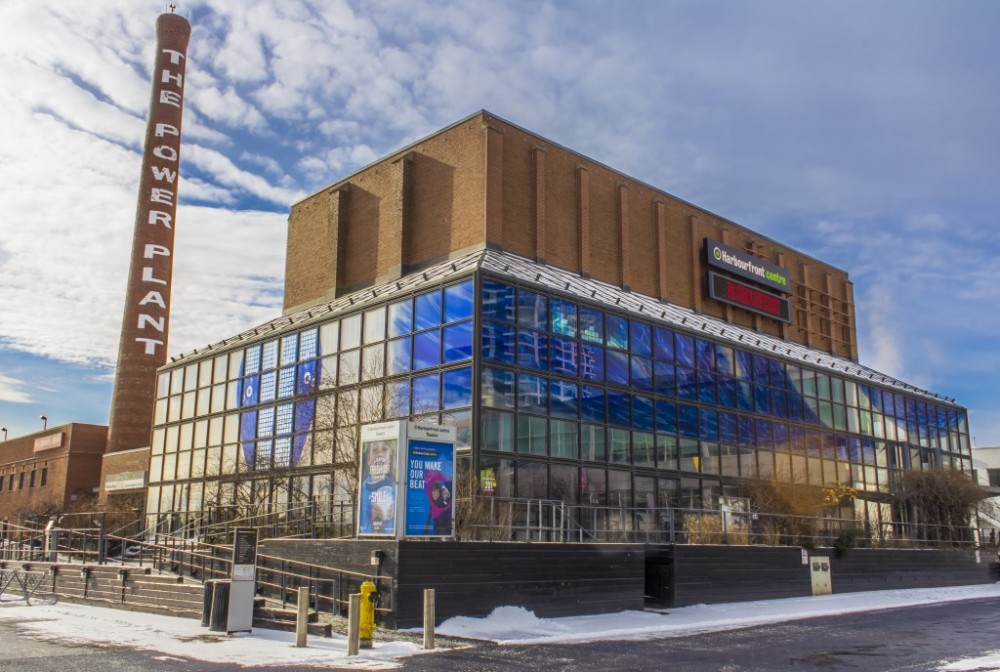
The Power Plant Contemporary Art Gallery, Toronto. (Source)
While there are many benefits  surrounding the collection of contemporary art, it brings up important concerns surrounding the livelihoods of artists. It is impossible to have a functional and thriving art community without providing monetary support to the artists. The Power Plant in Toronto has become a place, that despite its lack of collecting, provides a beneficial relation to artists. Their strategic plan for 2019-2022 outlines their mission to commission new works of art, therefore not collecting but still funding important projects. As a part of their 2018-2019 programming schedule, they also provided portfolio nights and other events for their artist members.

Non-collecting museums and institutions are almost exclusively found in the contemporary art sector. While this allows for more money to go into public engagement and projects, money is not always being used to directly support artists. I am curious to see if this model will continue and the longterm role it will play in the expansion or depreciation of contemporary art.

10 August 2020

RIGHT WHERE YOU SHOULD BE: STUDENTS REFLECT ON MMST

Grad School Guide | Jaime Meier
I learned about the MMSt program when one of my undergraduate classes required us to present on three school or job options we were interested in after convocation and how to achieve them. I was thrilled to get in to MMSt but had to make the big move from Saskatoon to Toronto. As the Museum Professionals of Colour team put it so eloquently in their grad school guide on imposter syndrome, it can be easy to feel like you don’t belong in a new program or place. I have thoroughly enjoyed the program so far but my experiences with MMSt are just one of many, so I surveyed MMSt and CDP students for feedback about their experiences. Even with COVID-19, it is my hope that the experiences discussed will still make new and continuing students excited for the year ahead. 

(Source)

With my degree and prior work experiences focusing on history and art history, I had expected a majority of the students in the program to be similar to myself but was pleasantly surprised to meet students whose backgrounds range from Environmental Studies in International Development to Sports Industry. As much as I love talking about art whenever possible, having classes with students who had knowledge far outside my scope only enhanced the experience. One student commented that they were initially nervous about not having specific museum experience but later realized the value in everyone having a different background that allows them to contribute unique skills and passions. It is important for incoming and continuing MMSt students to know that their opinions are valuable, and people usually want to hear them, so take a step outside your comfort zone and contribute in class — the professors always appreciate it.

While students come from different areas of study, we are connected by an interest in museums, galleries, and cultural institutions. The students surveyed commented on how they wanted to make museums more interesting to locals, improve accessibility, and address the lack of diversity and inclusion. These interests can be embraced through conversations with fellow classmates and in class. Some of the favourite classes from the feedback survey were Interpretation and Meaning Making, Public Programming, and Museums and Indigenous Communities. Professors and their assignments often allow the flexibility to work in a current area of interest or explore something new. I learned so much through my personal research for assignments; it's a good opportunity to learn more about topics that you haven't yet had a chance to study. 

A few of the amazing people I've met! They've taught me about everything from archaeology to zoology. Photo courtesy of Chloé Houde. 

With classes in the fall guaranteed to be online,  COVID-19 will require us all to show up for each other digitally. The most common sentiment expressed in the survey was how people's experience in the MMSt program was enhanced by the camaraderie experienced between people in the cohort. To over come the possible isolation this coming year, make sure to check out the discussions and events happening via the Virtual Inforum on Acorn, as well as events put on by the Museum Studies Student Association (MUSSA) and Master of Information Student Council (MISC). Grad school will provide many moments to take your education into your own hands, so despite any road blocks put in place by the pandemic, make sure to make the most of it!


A huge thank you to everyone who participated in the feedback survey! We appreciate you so much. 

1 July 2020

DIVERSITY IS NOT INCLUSION: MUSEUM INNOVATIONS THAT FACILITATE CHANGE

Museum Innovations | Jaime Meier


When I think about the history of museums and their place in the future, I think about Audre Lorde. She once said, "The master's tools will never dismantle the master's house. They may allow us to temporarily beat him at his own game, but they will never enable us to bring about genuine change. And this fact is only threatening to those women who still define the master's house as their only source of support." Museums have already led campaigns of "diversity" to meet quotas and appease the public, but what is needed is a complete restructuring demonstrated through hiring and purchasing practices that will dismantle the museum as we know it and create something new.

Bronx Museum of the Arts | Artsy
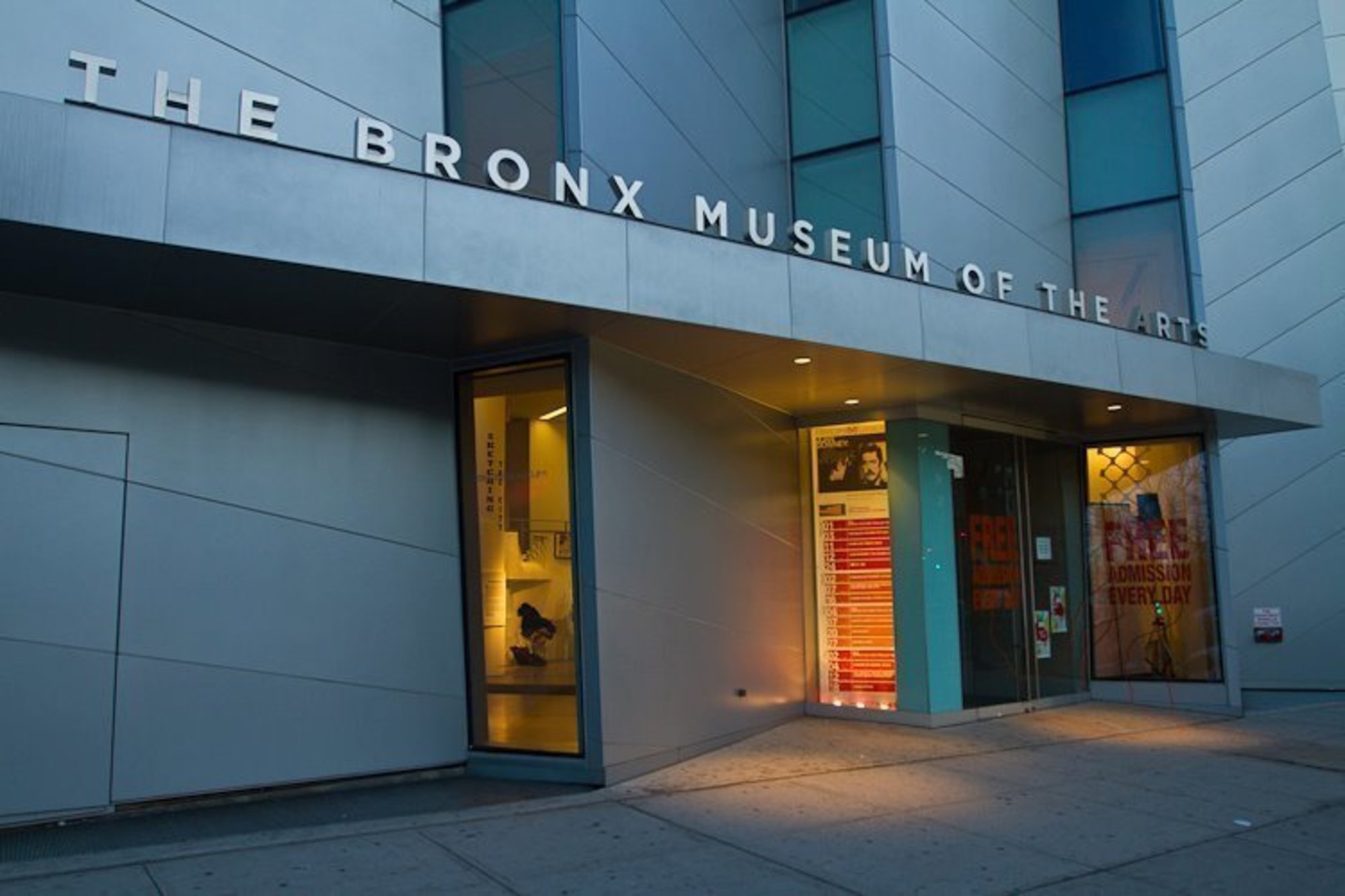
The Bronx Museum (Source)
The Bronx Museum has recently hired Jasmine Wahi as the Holly Block Social Justice Curator to "prompt dialogue and subsequent change towards a more socially equitable and just society." A huge part of her job as curator is to consider who the exhibition is created for and how to bring in stories and discourses that are often suppressed and go beyond a single audience narrative. Wahi also encourages museums and galleries to not only purchase more art created by people of colour, but also provide investment through "respect, attention, and intellectual investment." Reconsidering who is hired and their intentions within the museum is at the heart of a museum's innovation and their capacity to change.
Image may contain: text
Museum Professionals of Colour Logo (Source)
Within the Master of Museum Studies program, Museum Professionals of Colour (MPOC) are starting within the educational institution to dismantle racial bias before Masters students officially enter the museum field. MPOC was created by students who realized that their lived experiences were not being adequately addressed in academic and professional settings and were willing to put in the emotional labour to ensure that the art, history, and other disciplines that permeate museums serve a wider audience, instead of privileging a white colonial one.

Jasmine Wahi – Glassbook
Jasmine Wahi (Source)
Some of the necessary changes, such as diversifying art collections or staff hiring, have been met with concerns over meritocracy. However, a true meritocracy has never existed. The racial, social, educational, and other boundaries have always been successful at rejecting people who do not serve the colonial project, no matter their ability. As Jasmine Wahi has said, "I can say with zero doubt that there are plenty of mediocre white men in positions of power who have not risen through the ranks based on their intellectual or creative prowess," not in attempt to discount many talented white men but rather dismiss the myth that good work means reward.

The problem is not the desire to witness and experience art and science, but rather how it is done through colonial institutions that I believe are capable of change if the right steps are taken. It is my hope that museums will cease to only show exhibitions and instead innovate to become a trusted centre for the local art community and general public, while still welcoming international audiences.