Showing posts with label Black History Month. Show all posts

5 March 2021

BLACK CULINARY CULTURE IN MUSEUMS AROUND THE WORLD

  Musings Abroad | Jingshu Helen Yao


February is Black History Month. As a member outside of this community, I looked into different approaches to learn about black histories and cultures. Food is often a window to look into the relationship within or between communities.
 
Soul Food |iStock

In a paper where researcher Camille Bégin discussed the changes in writing about black food culture, Bégin pointed out that early culinary descriptions were used to reinforce stereotypical views and racialize African American communities. The image of black mammy cooking, a racial caricature of African American women, became a comfort for many during the great depression. This image is not an accurate representation of African American women and in some ways represents a negative stereotype. Regardless, with industrialization and social change, African American food has become a major part of cuisine in the southern United States.


Suya | flickr

Though soul food is the most well-known representation of African American cuisine, black food culture goes far beyond that. The Museum of Food and Drinks (MOFAD) in New York City focused on the culinary history of African Americans when putting together the exhibition “African/American: Making the Nation's Table”. One of the exhibition’s highlights was the “Legacy Quilt”, a quilt that stands 14 feet tall, spans 30 feet wide, and contains 406 blocks, each devoted to an individual who contributed to African American cuisine. The Ebony Test Kitchen, which was located at the headquarters for Johnson Publishing Company, was used as the test kitchen for Ebony Magazine’s food column. MOFAD acquired the kitchen set and recreated it as a tribute to the innovation of Ebony Magazine, which was known for challenging stereotypes and contributing to the evolution of African American cuisine. In addition to these objects, “African/American: Making the Nation's Table” featured a unique taste testing experience. Shoebox lunch was the food migrants stored for their trip during the Great Migration, which was an evolutionary period in African American history. Their food symbolizes the establishment of African American communities across the United States and the African American identity.


MOFAD "African/American: Making the Nation's Table” | Colorline

The global pandemic might have prevented us from traveling to exhibits and dining outside of our homes. However, there are other ways that we can learn about and appreciate black food culture. Dine Diaspora, an agency who introduces and expands the influence of African food culture around the world, has great resources on their website. 31 Days of Black Women in Food is an annual award by Dine Diaspora that celebrates the achievements of black women in the food and beverage industry. During the past 4 years, the organization has told different stories of hundreds of individuals through food. The nomination for 2021 award is currently in progress. Black stories and culture continue to endure through new culinary adventures. 

27 February 2018

DEBRIEFING BLACK HISTORY MONTH IN YOUR INSTITUTION

AFRICAN CANADIAN HISTORY

BY KENDRA CAMPBELL 

Just like that, 28 days dedicated to Black art, Black voices and Black stories is over (sort of).
As Black History Month 2018 draws to a close, what did you discover?  What inspired you? What surprised you? This year’s offerings, both at home and abroad, were extensive as they were impressive. For instance, the sound of Sylvia D. Hamilton’s installation continues to literally and figuratively resonate long after I exited the Royal Ontario Museum’s Here We Are Here. On the final day of Black History Month, perhaps the most important question to ask of museum professionals is what comes next? Or rather, what will you do next?

Sylvia D. Hamilton's Naming Names at the ROM. Photo courtesy of Kendra Campbell
It is my hope that the incredible content that intentionally and unapologetically centres Black experiences will not be de-installed and packed into crates to lie dormant for the next 11 months. In fact, I am elated to see that in Toronto the Royal Ontario Museum (ROM), The Power Plant, and a number of other institutions will continue to feature and interpret these works well into the Spring. But beyond displays and programs, I’m curious to know how museums will continue the conversation.  How will you sustain critical conversations within your own institution and with audiences?  If you are struggling to begin, I recommend the following:

5 Questions Your Museum Should Ask in Your Black History Month Debrief

1.What was our greatest success this month? Would our partners (publics, teachers and school groups, communities) also consider it a success?  What prevents us from reproducing similar experiences the rest of the year?

2.What was our greatest challenge this month? What actionable steps will we take to mitigate this challenge in the future?

3.What did we learn about visitor needs, interests and expectations? What changes do we need to make in order to prioritize audience relevancy?

4. With whom inside and outside of your museum do you need to have further dialogues? What will we do to sustain reciprocal relationships and ensure ample space for critique?

5. What resources will we use to redress anti-black racism in our institutional practices? What is our plan to hold everyone accountable to this work?

This set of questions makes for a full agenda, but a Black History Month debrief is neither complete nor effective if it does not ask this final question: What are we doing to address staff diversity? The relationship between diverse audiences and a diverse staff is not exactly causal. However, I am convinced that staff diversity and the range of voices who feel safe and supported to respond to these questions will result in higher quality museum experiences.

Consider this debrief an opportunity to be proactive, rather than reactive to forthcoming changes in the museum world, not just in February but all year round.

There are 338 days and counting, but you need not wait that long.

2016 American Alliance of Museums Annual Meeting and Museum Expo - Alliance Labs Source.


9 February 2018

RICHARD PIERPOINT: UNSUNG DEFENDER OF CANADA

WALK OF FAME

BY: SERENA YPELAAR

Welcome back to Walk of Fame, where we look at biographies in the context of museums and heritage! For this edition, I'd like to highlight Richard Pierpoint, a Black Loyalist and an important player in the War of 1812.

But why am I writing about him now, and not any other time of the year? In some ways, my reasons for doing so mirror that of the well-intentioned museums and historic sites in Ontario who routinely commemorate him every February, taking cues from the designation of Black History Month. I find this dynamic interesting at the least; while we should of course commemorate Black individuals and recognize their contributions throughout history, I can't help but wonder if the designation of Black History Month ultimately relegates these important narratives to one month of the year.

Richard Pierpoint. Photo courtesy of the Canadian War Museum 1.E.2.4-CGR2.
I wasn't overly familiar with Richard Pierpoint until I noticed on one of my (many) visits to Fort York National Historic Site that there is a small panel upstairs in one of the blockhouses about his role in the War of 1812. I learned that Pierpoint was born c. 1744 in Senegal and as a teenager was sold into slavery and given the name "Pierpoint". He fought as a private in Butler's Rangers during the American Revolution, after which he settled in the Niagara region in Upper Canada. He is known for petitioning for an all-Black military unit in the War of 1812, aged 68. Though initially rejected, he ended up fighting in the "Coloured Corps", as it was named at the time (the racist legacy of such a term renders it inappropriate today). 

Upon researching Pierpoint, I noted that the majority of events commemorating him were specifically organized for Black History Month programming. Why is Pierpoint only commemorated within this restrictive framework? Why not integrate his story into the widely shared narratives about the war?

Pierpoint isn't overtly celebrated within the commemorative view of the War of 1812. If you saw the Conservative government's commemoration of the Bicentennial of the War of 1812 between 2012 and 2014, you may have noticed the strategic choices made in featuring leaders from various groups involved in the war: 

On another note, Brock didn't really look like that, did he? 
  • Major-General Sir Isaac Brock represents the British military
  • Tecumseh represents Indigenous peoples (though as a Shawnee Chief he was from one of many distinct Indigenous nations) 
  • Charles de Salaberry is depicted on behalf of French Canadians 
  • Laura Secord is included as the only woman, recognized for warning the British of an impending American attack 
Using each of these figures as representative of a whole demographic is somewhat irresponsible. You may also notice that one face/voice is missing from this campaign: Pierpoint petitioned for the all-Black military corps to help repel the Americans, yet he (or any of the Black soldiers in his unit) is nowhere to be seen. The campaign oversimplifies the various cultural communities and their relationships for the sake of nationalism, but the absence of a Black presence is startling. Black Loyalists made up at least 10% of the Loyalist emigration from America after the Revolutionary War, with many defending Canada against invasion. Hence, this reductive depiction of the war minimizes Pierpoint's contribution. 

When Pierpoint is commemorated, he is mythologized as a Black hero, suggesting that he accurately represents a portrait of Black life in early nineteenth century Upper Canada. However, this is another oversimplification which demonstrates the dangers of using an individual to foster an understanding of a varied and complex experience. Our veneration of Pierpoint (no matter how understated) as a Black hero of Upper Canada can lead to oversight in the way we learn about the Black experience as a whole. 

The interesting element of his involvement in an all-Black corps as early as 1812 may also result in the common complacency we often feel when comparing Canadian history to that of our southern neighbours in the United States. Pierpoint is portrayed as an exceptional leader, but his petitioning to defend Canada was rejected and he faced numerous obstacles. The same can be said for his appeal in 1821 for passage back to Senegal, when he was "old and without property; ... he finds it difficult to obtain a livelihood by his labour; that he is above all things desirous to return to his native Country..." This request was also denied, with Pierpoint instead receiving a land grant outside present-day Fergus, Ontario. Pierpoint died there in 1838.

I'll leave you with this Heritage Minute from 2015 describing Pierpoint's significance. 

So what can we learn from the way Pierpoint's life is commemorated? For one thing, in engaging with his story we can gain an understanding of the nuances of interpreting Black history, and what is left out tells us just as much as what's included. We know that Pierpoint is celebrated as a Black hero, but there is still much to be done to illustrate Black life in Upper Canada before, during, and after the War of 1812. The question, I think, isn't when we should remember Pierpoint and his contributions (ideally every time we examine the War of 1812), but rather, how will we remember him going forward?

31 January 2018

SPREAD THE LOVE: WHAT'S HAPPENING WEDNESDAYS FEBRUARY EDITION

WHAT'S HAPPENING WEDNESDAYS

BY: KELLY MANIKOTH

Hello friends! Welcome to the February edition of What’s Happening Wednesdays and my first Musings post of 2018! February may be the shortest month of the year, but it’s jam packed with so many things to do. It’s time for the Super Bowl, Mardi Gras, Valentine’s Day, and Black History Month. Along with these events, MUSSA is hosting a plethora of trips and activities for us MMSters to have some fun and get over the winter blues together!

1. Super Bowl Sunday at the Elephant and Castle 


Source.
If you’re a football fan (or just enjoy watching all the Superbowl commercials while eating nachos like me) then you can’t miss the big game this upcoming Sunday! A fun place to catch the Superbowl is at The Elephant and Castle, an English-style pub which opened in 1977. The pub has 2 bars and 40 flat screen TV's, 2 wide screen projectors, and seating for over 300 people to ensure you have an incredible viewing experience. Enjoy classic pub food such as wings, nachos, beer and pretzel bites while you cheer on your team. There will be prizes, games and lots of giveaways such as NFL jerseys and Super Bowl Memorabilia throughout the day. Whether you’re an Eagles or a Patriots fan, or just want to enjoy some wings, it’s sure to be a great time! For more information, visit Elephant and Castle

When: Sunday, February 4, 2018, 3:00 pm – 11:00 pm

Where: 212 King St W.

Cost: Click here to reserve a table

2. Toronto Fashion Week

Source.

Toronto Fashion Week takes place this month! The bi-annual Festival, in partnership with THE COLLECTIONS and RE\SET, spans three days and takes place in the swanky neighborhood of Yorkville, along Hazelton Avenue and Yorkville Avenue. The festival will look at the intersection between fashion, art and culture and features amazing Canadian talent, including emerging designers and industry experts. Keep your eye out for Christopher Bates, Hilary MacMillan, and Pedram Karimi, to name a few. Along with the runway shows, there will be a speaker series and special presentations in partnership with the Canadian Arts and Fashion Awards (CAFA) and Fashion Talks that will cover topics such as Fashion and the Royals; Fashion, Costume and the Handmaid’s Tale; and Fashion and Pop Culture.

When: February 5 – 7, 2018, All day

Where: Yorkville Village, various venues. For a list of venues, click here.

Cost: Various Prices. You can reserve individual tickets, or 1 and 3 day passes here.

3. Women in Leadership Panel


Photo courtesy of Kathleen Vahey, MUSSA.
This month, the Master of Museum Studies Association (MUSSA) is holding an amazing event! For the first time ever, MUSSA will present their panel titled Women in Leadership: A Discussion on Challenges, Successes, and the Future, which will be hosted February 9th. Women in different museum leadership positions will talk about their obstacles, successes, advice, stories, and more! Panelists include Gaëtane Verna, Director of the Power Plant Contemporary Art Gallery, Shelley Falconer, President & CEO of the Art Gallery of Hamilton, Dara Solomon, Executive Director of Ontario Jewish Archives, and Gracia Dyer Jalea, Co-Founder of The Toronto Ward Museum.

When: Friday, February 9th, 2:00 – 4:00 pm

Where: Floor 4 of the Inforum, Claude T. Bissell Building

Cost: Free!

4. Going Back to New Orleans Mardi Gras 2018

Source.
It’s Mardi Gras time! The celebration of Fat Tuesday, the day before the commencement of Ash Wednesday and Lent, can be traced back to Medieval Europe, originating in Rome and Venice, then to Bourbon France and their colonies. The tradition of colourful processions and masquerade balls have continued to the present day, and we can take part in the celebrations in Toronto! St. Andrew's Church is hosting a Mardi Gras concert which features traditional Mardi Gras street beat music, beads and a parade! Some of the musical performances include Patrick Tevlin on trumpet, Jacqueline Chia on trombone, Paul Neufield on the sousaphone and Jordan Klapman, the music director, playing the Bosendoffer Imperial grand piano. After the concert, there will be a New Orleans-themed reception in the Great Hall of historic St Andrew's Church.

When: Saturday, February 10, 2018, 7:00 pm – 9:30 pm

Where: St Andrew’s Church, 73 Simcoe Street

Cost: $20 - $25. You can purchase tickets here.

5. Toronto Black Film Festival

Image of Recy Taylor from the critically acclaimed The Rape of Recy Taylor. Source.
Celebrate and support Black History Month by attending the The Toronto Black Film Festival (TBFF). Launched in February 2013, TBFF is devoted to celebrating the cinematic work of Black filmmakers and talent, and in providing the opportunity for filmmakers from all ethnic groups to share and promote authentic stories that reflect the true reality of Black people around the world. It is a sister festival to Montreal International Black Film Festival (MIBFF). The opening film for the festival is The Rape of Recy Taylor, which centers on African American woman Recy Taylor, who was raped by a group of white men in Louisiana in 1944. Rather than stay silent, Taylor stood up and identified her rapists. The critically–acclaimed film first played at the 2017 Venice Film Festival and won the Human Rights Nights Special Prize, will play on February 14th at the Isabel Bader Theatre. Other movies include Amelia’s Closet and Service to Man. For a full list of screenings, visit festival film selection. There is also a multitude of special talks and panels, one of which takes place at the Art Gallery of Ontario. The Movie-Talk with Lamman Rucker, Morgan Auld and Aaron Greer discusses the film Service to Man in the AGO’s Jackman Hall after a screening of the film.

When: February 14 – 19, 2018, all day. The Service to Man Q&A discussion takes place on Saturday, February 17th, at 9 pm.

Where: Multiple Venues. Click here for a full list of venues. The Service to Man Talk takes place at the Jackman Hall, Art Gallery of Ontario, 317 Dundas St.

Cost: Varied prices. You can purchase individual tickets or passes here. The tickets for the AGO Talk are $30, and can be purchased here.

6. MUSSA ‘Spread the Love’ Movie Night

Photo courtesy of Kathleen Vahey, MUSSA.
Celebrate Valentine's Day with your much-loved museum colleagues this year! We will be watching one of my favourite films, Moulin Rouge, the iconic musical of a young writer who falls in love with a cabaret dancer. We’ll even have chocolate and imaginary champagne! Spread the museum love and hang out with your museological buddies this romantic month. 😊 💘

When: Monday, February 12th, 4:30 pm

Where: Claude T. Bissell Building, 7th Floor Student Lounge

Cost: Free!

7. Valentine’s Day with the Toronto Symphony Orchestra 

Source.
Looking for something exceptional to do with a loved one on Valentine’s Day? This year the Toronto Symphony Orchestra’s Conductor Laureate Sir Andrew Davis will present selections from Prokofiev’s timeless Romeo and Juliet. The Orchestra’s Principal Harp is featured in Reinhold Glière’s thoroughly romantic Harp Concerto, and an overture by 19th-century Russian composer Mily Balakirev opens the program. These amorous tunes will ensure that you have the most swoon-worthy Valentine’s day with your special someone.You can get more information on the performance here.

When: Wednesday, February 14, 2018 8 pm – 10 pm Thursday, February 15, 2018 8 pm – 10 pm

Where: Roy Thompson Hall, 60 Simcoe Hall

Cost: Ticket prices range. You can purchase tickets here.

8. Closing Keynote of Dior at the ROM Tuesday, February 20, 2018 

Source.
Enjoy a talk at the end of the month on the ROM’S stunning exhibition, Dior. The co-curator of Christian Dior’s 70th anniversary exhibition in Paris discuss the brevity of the House of Dior’s designs and what “the future holds for Dior”. The lecture includes a post-event reception with one host drink.

When: Tuesday, February 20, 2018, 7 pm – 8 pm

Where: Royal Ontario Museum, 100 Queen's Park

Cost: $20 public, $18 members

9. MUSSA Trip: Markham


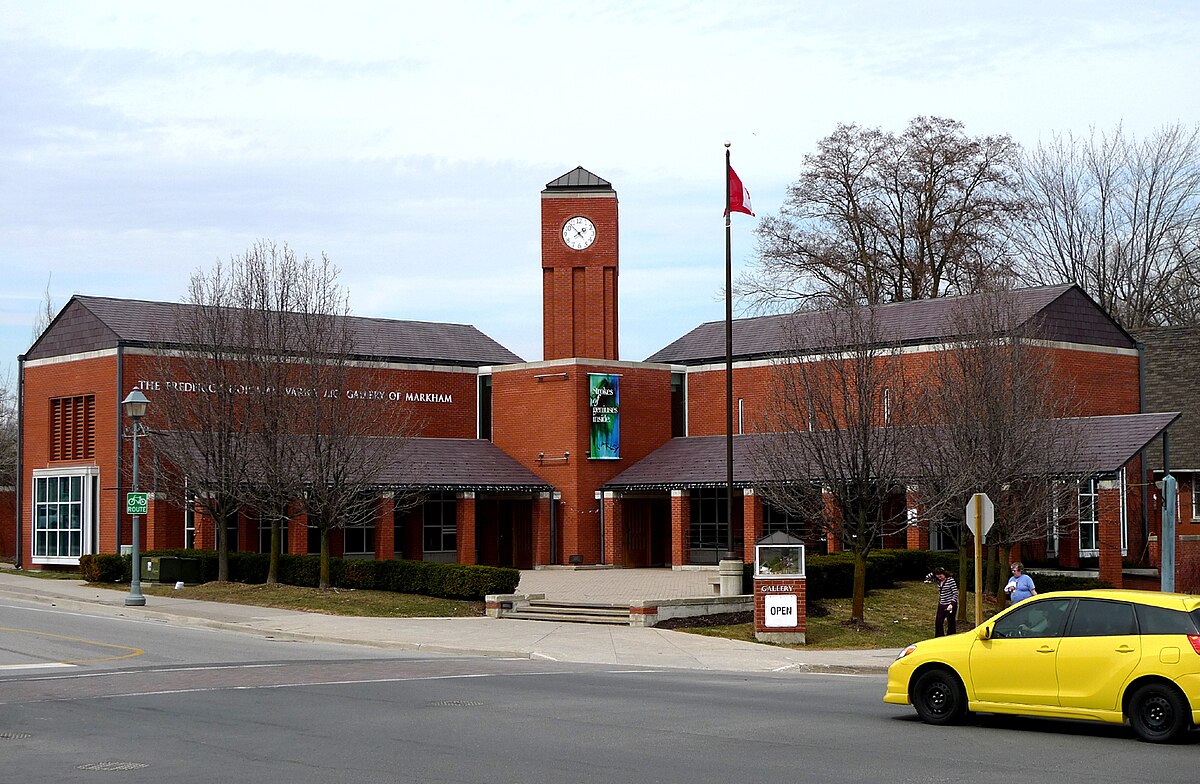
Varley Art Gallery. Source.
I am so pumped for the last  MUSSA class trip this year! We will be headed up to Markham to visit the Markham Museum and the Varley Art Gallery.

The Markham Museum is an open-air museum that spans 25 acres. The site was established as a museum in 1971 and includes nineteenth century barns, churches, and a train station, with the oldest building constructed in 1824. Named after Frederick Varley of the Group of Seven, The Varley Art Gallery began in 1977. The Gallery features local, national and international contemporary art while hosting educational programming and lectures.

While touring these institutions, we will have opportunities to speak directly to staff members about exhibitions, collections, education, and programming!

When: February 23rd, all day. The group will meet at 8:30 am.

Where: Meeting Spot: The Claude T. Bissell Building Lobby

Cost: $10 deposit. Contact Kathleen at kathleen.vahey@mail.utoronto.ca to sign up.

Source.
This year, let’s not wait for a groundhog to determine how soon we’ll break out of our winter hibernation. I hope everyone has a February complete with love in all its forms, whether that be sharing moments with your significant other, getting together with the MMSt squad, or taking some time for relaxation and self-love during Reading Week. 

1 February 2017

"THIS IS CANADIAN HISTORY" - BLACK HISTORY MONTH 2017

The month of February marks a special occasion...  


February has been designated as a month to celebrate Black people and Black achievements in politics, science, business, art and sport. Interestingly, it was originally a week-long event championed by historian and educator, Dr. Carter G Woodson (1875-1950).  This tradition has been preserved in the United States, most notably in 1976 when it was expanded from a week to a month during the US Bicentennial. 


Charles Alston's Cartoon - New York Historical Society

The tradition of Black History Month in Canada is much more recent. Jean Augustine, the first African-Canadian woman elected to Parliament, successfully gained national recognition for Black History Month in Canada in 1995. More on her here. Last February, Augustine appeared on The Agenda and took some time to reflect on the 20th anniversary of Black History Month. 


Four takeaways from the video: 

1.  It is somewhat baffling to hear about Rosemary Brown's image on a stamp, and then to think about Viola Desmond on a $10 Bill.  Things certainly have changed in a year! 

2.  Paikin asks "Is there one thing in particular, that you think Black History Month has failed at?" 

Augustine responds with the need for Black stories to be interweaved within the existing narrative. Black stories should not just be mentioned during Black History Month, they need to be mentioned throughout the course of the year. Also, when Black stories are incorporated they should be treated as historical issues with equal weight.  Sidebar anecdotes do little to create more accurate and inclusive narratives.  Some dissenting opinions on Black History Month, (the film More than a Month as an example),  directly address the need for systemic change. This is connected to emerging ideas that seek to shift away from surface-level diversity to sustainable models of inclusion.

3. There is much work to be done, but we are taking important steps. The strong activist environment is discussed. Researchers in archives and museums are mentioned explicitly. These platforms for inclusive practices matter as much as textbooks as we move toward a more complete understanding of Black history as part of Canadian heritage. 

4. Lastly, widen the circle. Augustine affirms, "this is Canadian history and it is our history." This February I encourage you to explore the multitude of Black History happenings, giving special attention to the voices and the messages.  I have included some links below, but this is by no means an exhaustive list. There is a wide range of activities going on both inside and outside of museums.

Seek them out. Learn their stories.  Participate not only this month, but in the months to come. 

Exhibitions: 

(February 2-26, 2017)

(February 4 - September 3, 2017)

Events: 


What Black History Month event are you most looking forward to? 


2 February 2015

BLACK HISTORY MONTH IN CANADA

AFRICAN CANADIAN HISTORY

BY: BLAIR NEWBY

The history and contributions of African Canadian History is often absent in Canadian History books and within in classrooms across the nation. In an attempt to raise awareness of Black history in Canada, In 1995 a motion was made in the House of Commons by the Hon. Jean Augustine PC, CM, CBE (the first Black Canadian woman elected to Parliament), to have February officially recognized as Black History Month. Although, I certainly contend that the history of African Canadians should not only be studied during one month of the year, I do have to admit that it provides an opportunity to reflect on and honour the contributions and achievements made by people of African descent that often is unfortunately not examined. This past September, over dinner, I had the great fortune to hear Hon. Jean Augustine describe the efforts she made to have February officially designated as Black History Month. It was such a treat to her it first hand from Hon. Jean Augustine, that after that evening, I wanted to research further into how Black History Month was introduced into Canada. As such, I thought I would share the history behind Black History Month in Canada for my post today.

Hon. Jean Augustine
The first thing that must be acknowledged is that Black History Month in Canada is modelled after Black History Month in the United States. In 1926, African American scholar Carter G. Woodson proposed to mark February, Negro History Week. Woodson chose the month of February because it coincided with African American former slave and abolitionist Frederick Douglass’ and President Abraham Lincoln’s birthdays. Over the years what began as Negro History Week transformed into Negro History Month. You may be wondering then, how it became popular in Canada. Well interestingly, it was sleeping car porters who worked on the rails and travelled between Canada and the United States who introduced the idea to the Canadian public. In fact in 1950, Stanley G. Grizzle, CM, O. Ont., a World War II veteran and sleeping car porter planned the first Black History Month program in Canada at the Shaw Street British Methodist Episcopal Church. And over the years through the efforts of the Canadian Negro Women’s Association Black History Month programs started to become a tradition.

Stan Grizzle
To bring further awareness to the history African Canadians, founders of the Ontario Black History Society (OBHS) petitioned the Toronto City Council to proclaim February as Black History Month. As a result of their efforts, in 1979 Canada's first proclamation declaring February, Black History Month was issued. Fourteen years later, in 1993 the OBHS made history once again, by successfully petitioning the Ontario Provincial Government to have it recognized provincially. As previously noted, two years later the Hon. Jean Augustine introduced a motion in the House of Commons to have Black History Month recognized nationwide.

Black History Month continues to be celebrated year after and year and this year in recognition of Black History Month, the iSchool will be hosting a program on February 11th. This year’s program features Governor General Award Winning author and historian, Dr. Karolyn Smardz Frost. For more information please visit the event page, Digging for History: Toronto and the Underground Railroad. 

22 February 2014

BLACK HISTORY MONTH: UNCLE TOM'S CABIN HISTORIC SITE (UTCHS)

BY: BLAIR NEWBY

      Located in the town of Dresden, Uncle Tom’s Cabin Historic Site (UTCHS) is dedicated to sharing the life story of Rev. Josiah Henson, a former slave who escaped with his family to Canada and founded the British Manual Institute for Science and Technology. For my last post, however, instead of focusing on Henson, I have decided to discuss the Human Right’s movement that occurred within the same community during the late 1940’s and 1950’s, because it is a piece of history that I believe should be shared.  Nevertheless, I do recommend that you visit UTCHS, because it is a phenomenal site.

Rev. Josiah Henson, a former slave, after his master swindled him out of his
freedom, Henson escaped with family to Canada and helped to found the
 British Manual Institute for Science and Technology.
Author Harriet Beecher Stowe utilized Henson's autobiography as a
source for her classic novel "Uncle Tom's Cabin".
http://www.heritagetrust.on.ca/Uncle-Tom-s-Cabin-Historic-Site/Home.aspx

      There has been a perception that within Canada no racism or prejudice exists. This belief stems from what one scholar suggested the Romanticization of the Underground Railroad. Since blacks found freedom from enslavement in Canada, it has simply been accepted as true that there was no racism. Chatham-Kent certainly proved this to be a fallacy.

The second image of a man is of Hugh Burnett.
He was the secretary of the National Unity Association and Human Rights Activist
http://humanrights.apps01.yorku.ca/blog/2009/08/hugh-burnett/

      Within Chatham-Kent, blacks could not eat in some of the restaurants, have their hair done in salons or barbershops, or even purchase goods in many of the shops. Moreover, black men returning home after serving during WWII were still refused service. Well in 1948, after decades of being treated as second class citizens, African Canadians from Dresden, Chatham and North Buxton banded together to fight against the de facto segregation that plagued their community and formed the National Unity Association. As crusaders for justice, the NUA approached the Dresden council with a proposal to prohibit segregation in businesses licensed by the council. Instead the council decided to put the issue to a referendum. On December 5, 1949, the vote was held. The results were 83 percent in opposition and 17 percent in favour, a direct reflection of the ratio of whites to blacks. The shocking results of the referendum garnered the attention of the Canadian press, and an offering of support from a coalition of Toronto reformers. The hard work of the NUA and the Toronto Reformers led to Fair Employment Practices Act (1951) and the Fair Accommodations Practices Act (1954). However, even with the FAP, stubborn proprietors still refused to adhere to the law and serve blacks in their establishments. To counter the proprietors’ obstinacy, the NUA initiated a new phase referred to as “testing”. In essence, with the help of the Toronto reformers, members of the NUA, blacks from Toronto, as well as others would “test” the restaurants for compliance. As a result of the NUA “testing” phase, the proprietors in their community who still refused to serve African Canadians were ultimately charged and convicted under Section Five of FAP. The courage and determination of the NUA were ultimately rewarded as the barriers that divided their community finally toppled down. Their victories in the field in the Human Rights made it possible for further triumphs and opened the door for future Human Rights legislation across Ontario and Canada.

Toronto Telegram, June 19 1954
Courtesy of the Chatham-Kent Black Mecca Museum

For more information concerning UTCHS, please visit http://www.heritagetrust.on.ca/Uncle-Tom-s-Cabin-Historic-Site/Home.aspx