Showing posts with label Greatest Hits. Show all posts

29 November 2017

RESPONSE, REJECTION, RECONCILIATION: EXHIBITING CANADA 150

GREATEST HITS

BY: AMY INTRATOR

Welcome back to the final edition of Greatest Hits 2017! Writing for this column has allowed me to look to the recent past to make sense of developments in the museum world today. With the end of the year quickly approaching, I thought it would be fitting to turn to the very recent past to make sense of the year-long “celebration” that’s about to end: Canada 150.

Official logo for Canada 150. Source. 

The Government of Canada has been planning Canada 150 for years as a celebration of the 150-year anniversary of Canadian confederation. From the very beginning of this project, however, many communities in Canada have rejected this celebratory narrative of Canadian history. The Government of Canada includes reconciliation with Indigenous peoples as one of the themes of Canada 150, but the celebration of Confederation is at odds with most Indigenous peoples’ experience. Indigenous peoples have lived in “Canada” for hundreds of years, so this year marks 150 years of colonial persecution, not nationhood.

Tweet from the artist who designed Colonialism 150 logo, a response to Canada 150. Source.
Where do museums fit into this Canada 150 narrative? Over the past year museums across the country have hosted exhibits that critically reflect on Canada 150. For many curators, artists, and creators, museums have provided a space to stage a counter-narrative and incorporate non-celebratory perspectives on the 150-year anniversary of Confederation. Since there have been so many fantastic exhibits that reflect on Canada 150, for my last Greatest Hits post I have included not one, but three Musings posts, all of which reflect on exhibits that challenge Canada’s sesquicentennial celebration.


Shame and Prejudice: A Story of Resilience 

Miss Chief Eagle Testickle in front of the Fathers of Confederation. The Daddies, Kent Monkman, 2016. Collection of Christine Armstrong and Irfhan Rawji. Photo courtesy of Sadie MacDonald. Source.
In February, Sadie MacDonald reviewed the Art Museum at University of Toronto’s exhibit Shame and Prejudice: A Story of Resilience. The exhibit was on display at the Art Museum from January until March 2017 and is slated to tour museums throughout Canada until 2020. Kent Monkman organized the exhibit, which spanned 300 years and included hundreds of works. I used the word “organized” because Monkman played the role of creator, artist, and curator in this exhibit as several of his own paintings, dioramas, and other pieces were included, but he also put these objects in dialogue with pieces from museums across Canada. I had to visit the exhibit four times to completely take in the exhibit’s objects and text. Sadie’s review of the exhibit immediately picks up on the fact that Monkman organized a narrative that responds to Canada 150 by exploring the Indigenous experience with colonizers that began long before 1867. Even the timeline in the exhibit is a commentary on Canada 150, as Monkman cleverly begins his narrative 150 years before confederation in 1717. Monkman uses the museum as a stage for his narrative that contests Confederation as the beginning of life in Canada.


Jane Ash Poitras: New Acquisitions of Contemporary First Nations Art


Buffalo Seed by Jane Ash Poitras. Photo courtesy of Natania Sherman. Source.

In March, former Musings Editor-in-Chief Natania Sherman reviewed a display at the ROM entitled Jane Ash Poitras: New Acquisitions of Contemporary First Nations Art. Unlike Monkman’s exhibit which spanned centuries and included numerous works, the display Natania reviewed was extremely small in scale. The display included four new acquisitions by the Indigenous artist, Jane Ash Poitras, and while this form of display is common, Natania examined how the works were positioned to stage an anti-colonial dialogue. Poitras paintings feature colonial symbols, like the Hudson’s Bay stripes, in dialogue with symbols of traditional Indigenous knowledge. The paintings themselves were staged next to objects like a school desk and a basket to gather herbs to create a dialogue between the art and the ethnographic objects in the ROM collection. Natania’s thoughtful review of a small exhibit proves that there are many ways to challenge Canada 150 narratives in museums.


Witness Blanket


An unknown boy in from of the Chesterfield Inlet Residential School (top). Photo courtesy of Sadie MacDonald. Source.
For the final exhibit review I’m including in my Canada 150 retrospective, we’re returning to Sadie but leaving Toronto. In June, Sadie reviewed Witness Blanket after visiting the exhibit at Museum London. The exhibit has been touring Canada since 2015, and currently the exhibit is slated to continue touring the country until 2021. The exhibit is composed of 887 artifacts from residential school survivors, which were collected by Carey Newman, a Kwagiulth sculptor and carver. Together, the hundreds of pieces create a patchwork of lost narratives from survivors of the schools, and in the process hundreds of narratives of loss and pain emerge. Sadie’s review examines the power of these objects curated together, both as a way for residential school survivors to heal and remember, but she also examines the power of this exhibit for the non-Indigenous population of Canada. The exhibit may have begun touring two years before Canada 150 celebrations began, but the powerful counter-narratives take on another layer of significance when remembering confederation. 

I tried to provide a brief snapshot of some of the important, challenging, and brave exhibits that have responded to Canada 150. If you have the time please read the amazing reviews of each exhibit! The exhibits take different approaches to staging a counter-narrative in the museum, from a small display of new acquisitions, to creating a dialogue between artifacts and contemporary art, to creating a collage of objects of trauma. These counter-narratives in museums are likely to continue for years to come, especially with many of these exhibits touring years into the future. Museums may help shift the legacy of Canada 150 from a celebration of nationhood to a rejection of colonial glory.

1 November 2017

RAPID RESPONSE COLLECTING: ADAPTING MUSEUM PRACTICE IN MOMENTS OF CRISIS

GREATEST HITS

BY: AMY INTRATOR

Welcome back to Greatest Hits, where I bring back some of the great work of past contributors! One of the greatest parts of writing this column is the chance to see what questions, ideas, and museum innovations were circulating in the recent past. So far, I have been shocked to find that the innovations in the museum world today aren’t so new after all.

My latest dive into the Musings archive led me all the way back to Alexandra Jeffery’s June 2014 post, Contemporary Collecting. I was absolutely shocked that this article, written over three years ago, discussed rapid response collecting, a trend I had thought was pretty new to the museum world.

Rapid response collecting, as Alexandra describes in her article, is a museum collecting practice that emphasizes collecting items of cultural significance in the moment that they become significant, so collecting items of the now in the now. I have become increasingly aware of this new approach to collecting, but I had no idea that the Victoria and Albert Museum had been engaging in rapid response collecting and exhibiting since 2014. The museum’s first rapid response exhibit in 2014 evolved into an ongoing collecting practice at the museum.

The V&A have an ongoing commitment to Rapid Response Collecting. Source.

The V&A Rapid Response Collecting team focuses on collecting items related to design and manufacturing that can provide a window into our world today. Alexandra’s article ponders how collecting and exhibiting objects of immediate significance could lead to valuable insights about contemporary culture, but she also questions if this collecting practice could lead to a devaluation of collections down the road when museums are faced with an overflow of ephemera of little value.

Alexandra’s article brings up some of the major issues facing museums that engage in rapid response collecting, especially concerns with collecting items that may not hold lasting significance, but a lot has changed since then. The practice of rapid response collecting has reacted to the massive political turmoil of our time.

A recent New York Times article In an Era of Strife, Museums Collect History as It Happens explores how the National Museum of African American History and Culture has responded to unfolding racial tension in America by collecting posters, buttons, clothing, gas masks and countless other objects from rallies, protests, and other historically significant moments. 

Two shirts collected by the National Museum of African American History and Culture. Source.

In the article, Aaron Bryant, a curator at the National Museum of African American History and Culture, states “we are in times that require us to acknowledge that history is happening before our eyes.” Rapid response collecting acknowledges the significance of now, and it preserves these moments of extreme tension and strife for the future.

Rapid response collecting is one of the ways museums can reactively adapt to a society in turmoil, but I am left wondering how many museums will rise to the challenge of responding to the tensions of our times by adapting existing practices and adopting new approaches.

In the past year alone, museums have reacted to political upheaval in various ways. In February, when U.S. President Donald Trump issued an executive order that led to the now infamous "travel ban," the Davis Museum at Wellesley College in Massachusetts responded with #Art-Less. The project removed over 20% of the gallery's artwork, all of which was created or donated by immigrants, to show the devastating reality of a world without immigrant contributions. 

The Davis Museum temporarily removed artwork made or contributed by immigrants as a response to the travel ban. Source.

Project #Art-Less and rapid response collecting are more radical examples of museums adapting to political turmoil, but museums have also responded to crises within their societies in subtler ways like offering free admission on January 20th, the date of Trump's inauguration. 

Rapid response collecting, like other reactive developments in the museum world, is an opportunity for museums to enter into dialogue with contemporary life and present turmoil. I think it is critical for museums to respond and adapt to the society they exist within, and this new form of collecting offers an opportunity to reflect a rapidly changing society in the collections.


Do you think museums have a responsibility to adapt their practices? Should rapid response collecting be adopted by more institutions?

4 October 2017

NIGHT(LIFE) AT THE MUSEUM: ESCAPE ROOMS AS A MODEL FOR MUSEUM ENGAGEMENT

GREATEST HITS

BY: AMY INTRATOR

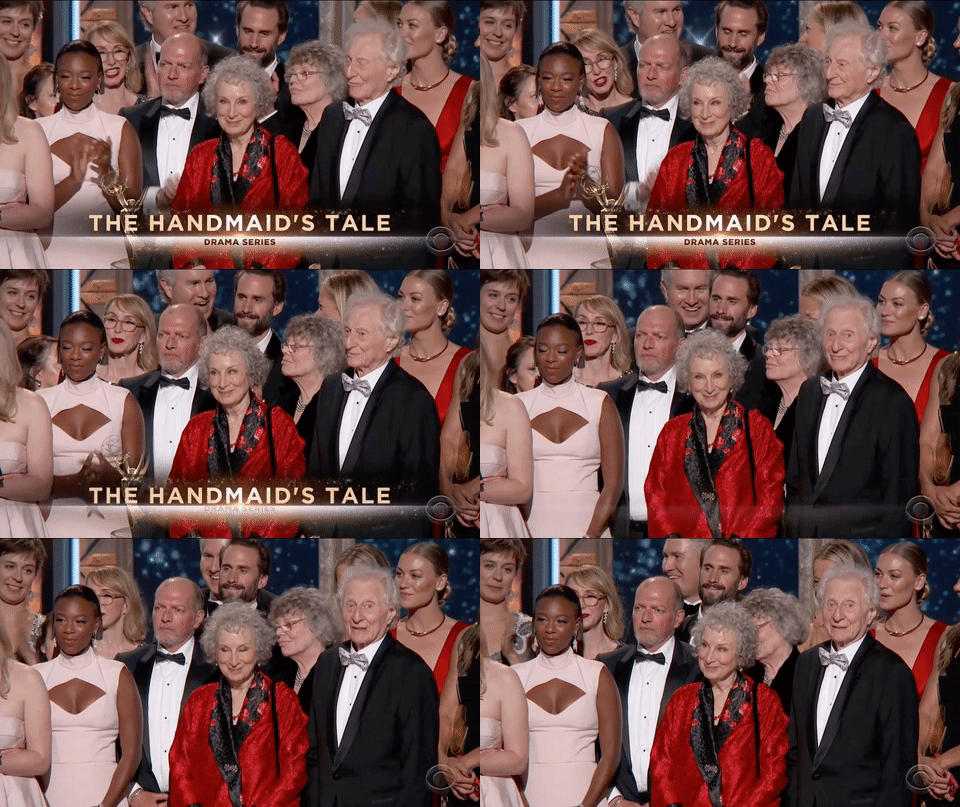
Welcome to a new school year and a new edition of Greatest Hits! My name is Amy, and over the next few months I’ll be bringing back some of the great works of bloggers past. As a first-year Museum Studies student, I can’t imagine a better column to start out with. I have so much to learn from the fabulous minds of other Museum Studies students! I'm also a believer that past writing holds valuable insights about the world we find ourselves in today. Clearly, I’m not the only one turning to recent history to make sense of the present: cue our beloved Margaret Atwood capturing the world’s attention with her dystopian novel about women’s reproductive rights… written in 1985.

Margaret Atwood taking centre stage after the TV adaption of her novel captured 8 Emmys. Source.

All of that’s to say, I’m thrilled to be wandering through the Musings archives with all of you in tow!

For my first edition of Greatest Hits, I’m revisiting Jenny Ford’s 2016 posting The Great Museum Escape. When I first came across this article I actually had to re-check the post date because I couldn’t believe Jenny wrote this over a year and a half ago! 

Source.

Why so surprised? In her article, Jenny draws parallels between the escape room and narrative museum exhibitions, as both attempt to create an immersive experience for their audience, but recently, cultural institutions have been integrating escape rooms in a more literal way. The company Secret City Adventures that hosts the escape room in Casa Loma, which Jenny references in her post, has introduced a new escape experience Where Dark Things Dwell, hosted at Black Creek Pioneer Village. 

Poster for the escape experience at Black Creek Pioneer Village. Source.

Clearly, heritage sites, like Jenny, see the narrative potential of the escape room model, but what do these immersive experiences mean for the future of visitor engagement at museums and heritage sites?

On the one hand, these exciting experiences at heritage sites have potential to draw in new audiences for a “night at the museum” or, more accurately, a night in the village. The Globe and Mail calls attention to the fact that Black Creek is following many other institutions in an attempt to draw in a “new demographic” of visitors. Museums and cultural institutions have always struggled to find new ways to attract non-visitors, so the escape room model seems like a particularly ingenious way to turn a night of entertainment into a culturally engaging experience.

On the other hand, there is a tension between entertainment-focused companies that host these activities and the cultural mission of heritage institutions. When outside companies are responsible for generating the experience, is there a risk of losing the history of the site? Does the museum become a backdrop for an exciting experience rather than a location of meaning-making?

Unlike Jenny Ford, I am no escape room aficionado. In fact, I’ve only ever tried “escaping” once, and my experience was hosted above a storefront on Yonge Street. Overall, I had a fun but unmemorable experience, but the Casa Loma and Black Creek escape rooms put an entirely different spin on escaping. While my experience was hosted inside a room built for the purpose of escaping, escape rooms at heritage sites utilize the historical depth of their surroundings. Maybe if I’d been offered a chance to engage with local history, my experience would have been more meaningful. Maybe these entertainment companies can elevate the thrill of the escape to an opportunity for place-based learning.

Welcoming visitors to the spooky and spectacular world of museum. Source.

While outside entertainment companies are bringing entertainment to the museum, there has also been an increase in museum-organized entertainment. Programs like the AGO’s First Thursdays and the ROM’s Friday Night Live transform the museum into a space of entertainment and nightlife, but these programs are usually focused around the museums’ current exhibitions. The AGO’s upcoming First Thursday: Enter Darkness is “inspired by the new exhibition Guillermo del Toro: At Home with Monsters” and combines the monster theme of the exhibit with “spooky” entertainment including artists, mentalists, and performers. This sort of program brings entertainment to the museum but keeps the museum’s programming at its centre.

Poster for the upcoming First Thursday at the AGO. Source.

The tension between entertainment and meaningful engagement is by no means new to museums, but the new nightlife programming at museums introduces new challenges and potential to engage viewers.


Let me know if you’ve attended a nightlife experience at a museum or historical site! Did it impact your relationship with the institution?

10 May 2017

THE DEVIL IS IN THE DETAIL

GREATEST HITS

BY: KATIE PAOLOZZA

I'm so excited to present the first summer edition of Greatest Hits! As much as I enjoyed writing this column over the last school year, I was uncertain about whether or not I wanted to continue on as its contributing editor. I adore writing for Musings because of the versatility we have as writers to explore our specific opinions on things, and I thought switching it up and writing for another one of our bylines would be a great way to have a new adventure within the safety of the familiar...

Source
What clinched it for me was the fact that if I kept writing Greatest Hits, I would finally get to revisit the articles of my classmates! We have a rule that the older posting must be at least eight months old, which gives us a chance to really trace the evolution of Museum Studies and the blog's response to that. It also forces us to be as impartial as we can and make sure we pay attention to the learning curves of our more experienced colleagues, and not just post an entry that's little more than a shout-out to our friends.

Source
That being said, enjoy my review of my friend's exhibition review!

Source
My friend Sadie MacDonald wrote what I believe was her very first article for Musings in September of 2016 (so technically I did go back far enough). She chose to review the Bata Shoe Museum's exhibit called Art & Innovation, which explores traditional Arctic footwear.

It's a good time to revisit an article like this. For one, the exhibit is still running, and will likely be running for quite some time. I also enjoy how the review came from Sadie's first visit to the museum in general. There are many ways that museums update themselves and keep the visitors' experiences feeling fresh no matter how many times they visit. In fact, that's a guiding principle behind the concept of museum memberships, but actually visiting a museum for the first time is something different and irreplaceable. When I talk to tourists who are visiting the ROM for the first time, many of them say that they planned their visit around one or two galleries, but ended up spending most of their time in another. I like hearing that because I like knowing that we can still surprise ourselves. The knowledge that we will never completely understand what triggers our emotions is disturbing but also comforting; life will always have a little mystery to it, and so too will museums.

Sadie also calls attention to how the Bata Shoe Museum was careful to focus on the specifics. They didn't draw grand (and over-generalized) conclusions about the Arctic or the different Indigenous nations that were represented. They told individual stories, crediting the artists themselves whenever possible, and used the gallery space to try to recreate the geographical layout of the Arctic by placing the artifacts in their appropriate region. The stories behind the footwear sit and speak for themselves in the same rough configuration that they do in reality. The connections we make as critical thinking visitors are of course shaped and aided by the didactic materials, but they remain our own. I appreciate Bata's efforts to appeal to our intelligence and not to spoon-feed us what they believe we should be thinking.

Source
It's almost like when we get excited, or perhaps a tad obsessive, over something that is by definition trivial. I know too much about the history of Western European hygiene, and the Simpsons, and I don't really know what my accumulated knowledge of these things means in the grander scheme. I'm not always aware of the ways in which my brain makes connections between various things, and what guides me to learn more about one thing and ignore something else. I also never really know which gallery is going to interest me the most when  I visit a museum for the first time, but I value the process.

We don't always have to have the perfect defense for why we love the things we do. It's enough that we thoughtfully question ourselves and what is around us. If we sometimes have to admit our ignorance, all the better. We can just make a new connection.

Source

13 March 2017

IN MUSEUMS, FOOD IS EVERYWHERE AND NOWHERE

GREATEST HITS

BY: KATIE PAOLOZZA

One of the things I love about writing for Musings is the freedom we have to explore facets of the museum world that inspire us. When I write for Collections Corner I am able to research and explore items and thematic exhibitions from literally the entire world, physical or digital.

Here in Greatest Hits, the scope is widened (is that even possible?) because I get to peruse everyone else's interests. All of us chose our respective columns because we felt we had something unique to say on that particular subject. I love material culture, so naturally I gravitated towards Collections Corner. There are endless rabbit holes I can dive into when I think about the peculiar histories behind every collection, because every museum collection was assembled in its own strange way.


In Greatest Hits, I am essentially writing about writing. I explore what makes my colleagues tick, and quite frankly it's a ball. I think part of why we love museums so much in the first place is their transformative qualities. We get out of our own heads and into someone else's, whether it be an artist, a historical figure, a curator, or an everyperson.

Erika Robertson ventured even further outside of the box when she created the A Muse Bouche column. In her very first posting under that heading her blog entry mirrored this one: she explained the rationale behind her "experiment", which was her fascination with how food and museums intersect. She's right when she says that food and museums have a contentious relationship. There are very few things that risk a valuable collection more than exposure to food. Yet it's a necessity to have a solid meal when you plan to spend the day at a museum. They're exhausting enough without adding low blood sugar into the mix. Yet just because a museum is a world-class institution does not mean that it will have world-class dining facilities (I won't name names, but several prominent Canadian cultural centers come to mind).

What's so interesting about a column like A Muse Bouche is that it draws connections between food and other essential parts of the museum world that we wouldn't necessarily notice. Erika has traveled quite a bit, so she has found increasingly interesting ways to discuss food. When people visit a zoo (also under our large definition of museums) the highlights are watching the animals eat. There's something comforting when we see or imagine other beings enjoying a good meal. And empathy and imagination are key parts of a well-planned exhibition.

Erika made another great point when she wrote about how many of the artifacts we see in social history museums are directly related to food. Something like a soldier's canteen is linked to food culture. It seems obvious to point that out, but this is where the imagination component comes into play. I've forgotten many, many times when looking at a specifically curated collection unrelated to food that regardless of the context surrounding the artifact it undoubtedly has at least one direct link to our physical bodies and the process of digestion. We are mortal beings, and the majority of what we produce is related to our sustenance and survival. When you start to view collections through this lens, it's hard to wander a museum and not get hungry. Fun fact: I've yet to visit the tea/coffee/hot chocolate dowry cases at the Gardiner Museum and NOT want a large brunch afterwards.


So whether you prefer to pack a lunch, eat at a nice restaurant, or grab a quick bite from a museum cafe, I propose a game of sorts. Look at each item on your tray/table/blanket and try to find a corresponding item in the museum. If I'm correct, the game will be far too easy, and you'll have to think outside the lunch-box to spice it up.


6 February 2017

LEAVE THE GUN, TAKE THE CANNOLI. THE END IS NIGH

GREATEST HITS

BY: KATIE PAOLOZZA

For my last entry in Collections Corner, I wrote about the cool, niche exhibitions that routinely pop up on campus. This was partly inspired by my own experiences, and also intended as an update/alternative perspective to Natania Sherman's take on the subject that she wrote about last summer.

For this Greatest Hits entry, I want to take those ideas about individual, eccentric collections and broaden the scope... and I mean really broaden it. Just a little less than a year ago Jennifer Maxwell wrote an entry for Collections Corner called "The Apocalyptic Collection,"  which blended commentary about our pop culture preoccupation with the apocalypse with a survey of which items people would choose to save should the unthinkable happen. The answers varied from silly and fun, like the original script for Star Wars, to items of immense historical importance like the Magna Carta, back to our pop culture fixations like a vinyl album of The Eagles' Greatest Hits. It was a fun and sassy article.

Just a year later, discussions of the apocalypse have taken a considerably darker tone. Nuanced and complex issues are being spoon-fed to us as black and white, and many people are feeling less like this:


and more like this:


Personally, I'm more middle of the road, in that I think the general ugliness and bullying that is happening everywhere has always been there. I can't say whether or not it is actually worse now or if it's just more publicly acceptable to express aggression and hate. Either way, millions of people have already had their world fall apart around them, and many were not lucky enough to choose which treasured item to take with them into the uncertain future. 

With that sobering thought, I have a question: Which items in our homes do we truly care about? If we strip away amusing hypothetical scenarios like "Desert Island" or "Zombie Apocalypse," what would we actually grab if there were, say, a fire? If your loved ones were safe, and you could pick any item to be magically transported to safety, unharmed, would it be practical? Sentimental? A mixture of both or neither? 

I ask these questions because I think regardless of the political or social climate, it's never a wasted exercise to evaluate what is most important to us. Outside of the realm of material culture, we need to know what we want, what is worth saving, and what we would gladly jettison if given the opportunity. Being able to articulate those things is perhaps the most practical apocalyptic tool of all. 

For now, don't let the misguided and the charlatans of the world bring you down. See it for the absurdity that it is:


V-Day approaches... stay safe.

7 December 2016

NEW BEGINNINGS AND THE FUTURE OF OLD CITY HALL

GREATEST HITS

BY: KATIE PAOLOZZA

There's been a lot of buzz lately about the future of Old City Hall. Despite my obvious bias as a Museum Studies student, turning the building into a museum solely dedicated to Toronto history would be a great way for museum professionals to address repatriation issues. Many museums and other cultural institutions in the city are already taking steps to better represent Toronto's diversity, but the specific issue of repatriation is one that continues to be a challenge, partly because it is difficult for many reasons to change a permanent exhibition that has a history of its own.


That being said, we need to not only better represent our visible minorities, but address how their history has been whitewashed, denied, and rewritten. This is much easier said than done, and in my opinion, it is easier still when building a new exhibition from the ground up. A Toronto museum would be a wonderful opportunity for innovation. We could create a place that from its very inception represented ALL of Toronto, in all its controversial and storied glory.


I recently discovered an old Musings entry from 2014 that deals with this very issue. Blair Newby wrote in our African Canadian History column about how Toronto's first cab company was started by an African Canadian named Thornton Blackburn. It's a great blog entry because it chronicles how Dr. Karolyn Smardz Frost spent 18 years researching Blackburn and his wife Lucie's story after discovering his identity almost by accident. Without her passion and hard work, the Blackburns might never have been named Persons of National Significance.

Thornton and Lucie Blackburn’s Person of National Significance Plaque.
http://www.torontoplaques.com/Graphics/Thornton_And_Lucie_Blackburn2_Plaque.jpg
There are so many significant contributions to our city that go unrecognized or buried for generations, and needlessly so. A Toronto museum could be a major way we can rectify this problem, because every culture has a distinct voice, we just need to find new avenues of expression. Old City Hall is like a blank canvas. Toronto could use its past to create something new, beautiful, and honest. Even if it never becomes a museum, Old City Hall should be a safe space for everyone to have their voices heard. 

Let's get to it, Toronto!

2 November 2016

CATS AND COCKROACHES: A LOOK AT ANIMALS IN MUSEUMS

GREATEST HITS

BY: KATIE PAOLOZZA

One of the most popular posts from the 2015 fall semester was Amanda Barbosa's look at the Maritime Museum of the Atlantic. The museum uses cats to control the rodent population aboard the CSS Acadia, one of their permanent exhibits. They call them RCOs, or Rodent Control Officers.

Aside from how adorable it is to employ cats as part of a collections management team, it got me thinking about the role of live animals in museums. The Maritime Museum uses animals as mascots, with the practical benefit of its cats controlling the pest population and garnering media attention. The ROM has the Hands-on Biodiveristy Gallery, where visitors can see honey bees, mossy frogs, axolotls, fish, and a variety of insects. As a long-time volunteer in the Hands-on Gallery, I can personally vouch for how effective it is to use animals as a way to connect with visitors and bridge the gap between their personal knowledge and the message that the museum is trying to convey.

Me with the Madagascar Hissing Cockroaches
The Natural History Museum in Los Angeles County has adopted a similar strategy. They are currently working on a live animal program about vertebrates (animals with backbones) that will focus, among other things, on educating people about misunderstood animals and hopefully leave guests with a greater understanding of the natural world.

In fact, natural history and science museums all over the world feature live animals, and have for almost a century, so why are so many people surprised to find out that they can visit animals in many different cultural institutions aside from zoos? I can't count how many times I've explained to guests at the ROM that we have live specimens only to hear: "Really? At a museum?" Some people don't even believe me right away.


There's an odd disconnect between live museum specimens and zoos, especially the nature of the ethical debates surrounding them. Sure, many people have issues with institutionalizing animals in any context, even deceased animals that have been preserved by taxidermists. There are many moving and passionate articles and books on both sides of the debate, and most major museums will have an official policy on human and animal remains. However, the specific issue of live specimens in museums that primarily feature inanimate material culture has not permeated our social consciousness in the same way that zoos have.

Most people already have informed opinions on how they feel about zoos, but in my experience the same cannot be said for how they feel about the museum's role in researching and studying live animals. Personally, I have nothing against humane and well-run zoos, but I still believe that museums use animals in a way that is contextually and fundamentally different from the way that zoos use them, and really cannot be compared on a deeper level. Do most people have the same feeling that I do? Are natural history museums so far removed from zoos that it justifies how differently we view and judge them?


28 September 2016

THE SEDUCTIVE PULL OF NOSTALGIA

GREATEST HITS

BY: KATIE PAOLOZZA


Hello fellow Musers! For my inaugural post in the "Greatest Hits" column I want to talk about Madeline Smolarz's discovery of the Museum of Endangered Sounds.

It's quite telling that the website chose the word museum to define and describe its collection of nostalgic technological sounds. It implies that a lot of care and specific planning went into the selection of these retro sound bites. As Madeline highlights in her incredibly fun blog entry, the creator Brendan Chilcutt justifies the existence of the website in a clever and intentionally dramatic blurb that pokes fun at our post-modern obsession with nostalgia while also embracing it.

So why do we find nostalgia so enticing? And why is the Museum so much fun to visit and write about? 


I think a partial answer to my latter question lies in the novelty of sound-based media. We are so often bombarded with visual nostalgia. Auditory nostalgia? Not so much. Even modernized or repurposed retro objects still usually have the insides of contemporary technology. I could go out and buy a beautifully designed modern radio that looks exactly like one made in 1942, but it wouldn't be the same. I wouldn't want to sacrifice things like modern sound quality, or wifi capabilities. Even if I could somehow program this radio to sound retro when I wanted it to, it still wouldn't be the same. And it really shouldn't be. A reproduction can enhance but not replace a real artifact.


What makes the Museum such an interesting little detour is its simplicity. It's fun to reminisce and take stock of where we once were. Michael Enright's CBC podcast "Rewind" does this as well, and audio is once again front and centre because the CBC archives are the source material. But as with any podcast there is a time commitment and there are underlying themes in play. With the Museum of Endangered Sounds, you can pop in and out of the past at your leisure. You can combine random sounds from different generations, or listen to your favourite sound over and over, just because.

Familiar sounds and smells can trigger strong emotional responses. Sometimes we just want to go home again. And sometimes, however briefly, we can. Do you agree?

6 April 2016

WE CAN ENGAGE THEM, WE HAVE THE TECHNOLOGY.

GREATEST HITS 

BY: HAYLEY MAE JONES

In her post What to Wear During Wartime: 'Fashion on the Ration', Mallory Horrill tackled a question all museums have faced: how do we engage visitors?

While visiting the exhibit Fashion on the Ration at the Imperial War Museum, Mallory observed that some visitors were slightly disengaged with the subject matter of "fashion". In trying to increase their attendance, museums need to figure out ways to engage new audiences, and Mallory suggests the use of audio and video aids. I agree with what Mallory suggested; however, I think that museums should not be limited to the use of audio and video aids to create new and engaging experiences. There are many new technologies being produced that can facilitate visitor interactions, while at the same time increasing visitor engagement. This is seen in the Star Wars Identities Exhibit that is currently touring the globe.


The Star Wars Identities Exhibit was displayed at the Canada Aviation and Space Museum, in Ottawa (summer 2013). I was hesitant to visit this exhibit, mostly because I am not a huge Star Wars fan.  I had seen the Star Wars movies, but I was worried that I would be confused or worse -- bored. In retrospect, I had nothing to worry about.

Visitors were provided with a hands-free audio guide that incorporated infrared technology, making the exhibit's audio-visual content accessible to visitors of all languages. The exhibit then surpassed my expectations by letting visitors create their own realistic Star Wars hero based on the visitors' responses to pre-set questions.

Before entering the exhibit, I was given an RFID bracelet, which tracked my progress throughout the exhibit. The exhibit had various stations that asked visitors questions about what type of Star Wars hero they wanted to develop. These questions tackled key building blocks of an individual's identity such as: species, genres, parents, culture, mentors, friends, events, personality and values. To answer each question, I would tap my RFID bracelet with my selected answer. All of my answers shaped my character, and in turn created my own unique Star Wars hero.

Hayley Mae Jones' Star Wars Identities Character - Published with X3 Production's Permission
 
At the end of the process, I had to select whether or not I would join the "dark side".  I chose to resist the "dark side", and fight against the Emperor.  My character was then  displayed on a giant screen for all visitors to see, and I was also able send myself an email with my character and character information. 

It was such a popular exhibit that its stay at the Canadian Aviation and Space Museum was extended by over a month. This exhibit is a significant example of how museums can go beyond the traditional audio and visual aids by using technology creatively. It also shows how new and innovative technologies can engage visitors in an unexpected way.  Hopefully we will continue to see more unique applications of technology in the future. 

Comment bellow if you know of any other exhibits that use innovative technology to engage visitors!

9 March 2016

AFTERNOON TEA, WITH A SIDE OF HERITAGE

GREATEST HITS

BY: HAYLEY MAE JONES

I love hearing stories of people experiencing heritage when they least expect it.  Lunch, With a Side of Heritage, describes author Katherine Hannemann's unexpected encounter with Toronto's hockey heritage at the 60 Carlton Street Loblaws.  Katherine reminisces about her unexpected Bill Barilko history lesson, and how heritage is hidden throughout the building.  It goes to show that history can be found in the most unexpected places. 

I have also had a similar experience at the Fairmont Royal York hotel here in downtown Toronto. 

My family decided to have Afternoon Tea at the Royal York to celebrate my Aunt's birthday.  I had never been to the hotel, and didn't know what to expect.  Once I arrived, I quickly understood the appeal.  The tea and dessert were divine.  


Photo Credit: Laura Nigro

 What followed was an unexpected treat: a historical guided tour of the hotel.  Neither myself, nor my family knew that the Fairmont offered tours to their diners.  The tours were supposed to be 20-30 minutes long; however, mine ran longer due to the fact that I asked a million questions (I was that person).

On the tour, we saw some of the gorgeous ballrooms, while learning about the history of the building.  Through these stories, and visits, to normally inaccessible areas, I was able to gain insight into how a hotel can contribute to the history of Toronto.   

Photo Credit: Hayley Mae Jones

The 60 Carlton Street Loblaws, and the Fairmont, are not traditionally seen as heritage sites, but rather as businesses.  This raises a two questions: how can businesses promote their heritage, while maintaining their primary function as businesses? Should businesses spend time promoting themselves as sites of heritage?  Unfortunately, I don't think that there is one overarching answer to these questions. 

I believe that each institution should critically reflect on their mandate.  It is important to recognize that promoting your business, and promoting heritage are not always one in the same. More specifically, it may not be suitable for your institution's goals or organization's brand.  Only after this reflection can the institutions understand whether or not they should promote their corporation's history, and how they should share their heritage with the public.  In formulating a strategic plan, businesses can control the platform, and the amount of historical information they share with the public, in a way that suits their organization. 

Regardless, I am happy to have found an unexpected glimpse of history at the Fairmont Royal York.  Let me know in the comments if you have had any similar experiences!

If you want to treat yourself to Afternoon Tea and a tour at the Royal York, the tours are still being offered to patrons on Saturdays and Sundays at 2pm/4pm, and reservations can be made by email (RYH.RestaurantReservations@Fairmont.com).


10 February 2016

BAKING WITH THE BARD: DID THE SOUP CAN WIN?

GREATEST HITS

BY: HAYLEY MAE JONES

I have been a huge history nerd since I was young, and one of my favourite time periods is the English Tudor dynasty. My obsession was so strong that I went to Shakespeare camp as a kid. This partially explains why I was so drawn to Leah Moncada's blog post: Baking with the Bard: Where's my Sparknotes? In this post Leah provides step by step instructions to recreate three historical recipes from the Elizabethan and Jacobean era.

I really wanted to remake the first recipe Leah outlined: minst pie (mince pie). However, after critically evaluating my skill level in the kitchen, and realizing that I didn't want to eat an entire pie by myself, I decided against it. Instead while searching the internet I came across the Hampton Court Palace Website, and the: Tudor cook-along videos. It was as if I was meant to find this website, because the title of the first video was: Ryschewys close and fryez - a perfect alternative to Christmas mince pies. I couldn't believe my luck!  All of my fears vanished after watching the interactive video, and I was inspired to try the recipe for myself.


This recipe requires few ingredients, most which you can purchase at the local supermarket, or bulk food store. I highly recommend going to Bulkbarn as it is less expensive. The spices: saffron, mace (nutmeg), and canelle (cinnamon) were the most expensive components to the dish. The only spice that was difficult to find was the saffron, which I ended up getting at a Chinese grocery store.  For the spices you only need a small amount.

I initially had some trouble with making the dough which is called paste in the video. My issues were that I put in too much saffron water and as a result, needed to add a lot more flour and sugar to balance out the ratios. I also did not know if I needed to strain the saffron from the water, or if I should leave it in to combine with the dough. In the end I decided to remove the larger pieces of saffron before adding the water.

photo credit: Hayley Mae Jones

For the filling, I recommend modifying the amount of spices to your taste rather than following the recipe, as I found that there was too much cinnamon. I also discovered that I did not have a mortar and pestle at home, and I ended up putting all of the ingredients into a plastic bag, and smashing them together with a soup can. To be honest, I don't know who won: the filling or the soup can.


photo credit: Hayley Mae Jones

I ended up frying the recipe in corn oil, as the video does not specify what type of oil to use, nor what specific temperature was needed in the cooking process.  I also had some leftover dough which I fried up as well. 

photo credit: Hayley Mae Jones


photo credit: Hayley Mae Jones

This recipe doesn't take too much time to make, and is super tasty. I highly recommend that the Ryschewys close and fryez are eaten warm.  That being said, if this doesn't seem to be your kind of recipe (or you just don't like dried fruits), the Hampton Court Palace website has other recipes, including chocolate recipes from the Georgian era. Perfect timing for Valentine's Day! 

photo credit

In the end, my experience goes to show that reproducing historic recipes authentically and with few resources at hand without spending a copious amount of money can certainly be a challenge. You have to wonder how historic sites that have cooking programmes do it, and applaud them for their often very dedicated efforts. I ended up improvising based on what was in my kitchen and what matched my level of ability, and although the result was positive - it was edible after all! - I know that those in the age of Shakespeare were cooking in an entirely different context. I can honour and try to imitate historic dishes, but to make something that accurately represents what used to come out of English kitchens hundreds of years ago has significant difficulties. This final point is truly what makes "Historic Kitchen" great: Leah is always honest about the shortcomings, inaccuracies, and improvisations made in her own process but she still strives to reach a level of authenticity that honours and continues the legacy of the delicious recipes she selects.

If you do try some of the chocolate recipes, let me know in the comment section bellow, or through the Musings' social media!

18 November 2015

REVISITING THE FIVE BEST “CANADA: A PEOPLE'S HISTORY" EPISODES

GREATEST HITS

BY: HAYLEY MAE JONES

Last year Mallory Horrill wrote an amazing post about the CBC series Canada: A People's History. For those of you who are not familiar with this series, it is a based completely on Canada's history. Each episode has a different length and covers different topics from different time periods.

Horrill's blog post takes readers back to her childhood education. She writes about her favourite episodes, and gets really excited. Reading her post brought back a lot of old memories. I reminisced about when I was an awkward elementary school kid just getting used to wearing braces. To be honest, I would prefer to forget those years, mostly because I got my tongue stuck in my braces... twice.

Awkward childhood aside, my experiences with these episodes was a little different from that described by Horrill. She looks back fondly on these episodes and recommends them to readers. I look back on my school experience and remember: sleeping.

I know that sounds a little harsh, but in my defence my elementary school history classes were reliant on these episodes. Students would watch, and re-watch the same episodes constantly. Not that there is anything wrong with that, but I remember waking up from my nap in the middle of the episode and seeing that even the teacher wasn't paying attention.


I didn't feel like history was exciting until I entered into high school, where I met passionate teachers that were dedicated to their topics. These teachers actively wanted students to like what they were teaching, and tried to be engaging. Under these teachers I learnt about both world history and Canadian history. I really enjoyed these classes because I saw the teachers cared.

The series, Canada: A People's History is really educational, and yes it is worth watching. However, try not to rely on the series to teach the whole story, and if you are a teacher, please don't force students to watch these episodes more than once.


21 October 2015

CLASS TRIPS!

GREATEST HITS

BY: HAYLEY MAE JONES

Looking through Musings' archives, it is interesting to see which articles were popular amongst the readers.  Blog posts (find an example here about the 2015 Ottawa trip) dedicated to the class trips, including fundraising for the trips were always popular.  Even back in 2013, the bake sale fundraising post for the 2014 Washington trip gained a lot of internet action.

This gets me really excited because just last week, MUSSA - the Museum Studies Student Association - announced the plans for the 2015/2016 school trip. I was really curious about what MUSSA had planned this year.   All I wanted to know was: where are we going? Would we be going to Ottawa or Washington as in previous years? 

The waiting paid off because this year MUSSA surprised everyone and planed not one, not two, but three fantastic trips.  To top it off, two of the trips are free!

If you missed the meeting, and want more information the MUSSA website has all the wonderful details.  

Hope to see you all on these museum adventures.

Source