Showing posts with label Kara Annett. Show all posts

6 December 2021

CATHERINE THE GREAT... ART COLLECTOR?

 Collections Corner | Kara Annett


The art conisseur herself. Source. 

​​Like many of my peers, I’m eagerly counting down the days until the end of the semester. It won’t be long before we can catch up on sleep, spend time with friends and family, and, most importantly, have a chance to catch up on shows. For me, this means binge-watching The Great (can you tell I did my undergrad in history?). In honour of the second season being released, what better collection to highlight than that of the Hermitage Museum in Russia?

Sometime during the 1750s, a Berlin merchant named Johann Gotzkowski began travelling around Europe to purchase artwork at the request of King Frederick II of Prussia who hoped to expand the royal collection. This would never come to be, as the Seven Years War devastated Prussia in Gotzkowski’s absence, leaving Frederick unable to afford the 225 paintings that had been collected for him. Luckily for Gotzkowski, one man’s misery is another (wo)man’s fortune. In 1764, Catherine the Great bought the collection – if only to rub it in Frederick’s face that Russia could still afford to make such lavish and expensive purchases. These 225 paintings would eventually grow to a collection of over three million pieces.

Cupid and Pysche by Antonio Canova. Source. 

Catherine had a bit of a shopping addiction and by 1771 her collection had outgrown the Small Hermitage. As anyone in this situation would do, Catherine had a second building constructed to accommodate her new collection, aptly called the Great Hermitage. Since there was no point in letting all this newfound space remain empty, the museum wasted no time in acquiring the collection of Baron Pierre Crozat in 1772, closely followed by that of Sir Robert Walpole’s in 1779, and the John Lyde Browne’s ancient sculpture collection in 1787.

Rembrandt's Portrait of a Young Bachelor, part of the Hermitage collection. Source. 

Some of the highlights from her impressive collection include multiple Rembrandts, Raphael’s Holy Family, Pieter Paul Ruben’s Bacchus, and the infamous Peacock Clock that her lover Grigori Potemkin commissioned for her in 1766. The collection housed at the Hermitage became the envy of Europe, especially amongst the French who thought they were cheated out of the Crozat’s collection by Dennis Diderot (yes, that Diderot). This didn’t deter Catherine, who remained an avid collector up until her death. Throughout the last three decades of her life, Catherine employed several agents to travel across Europe and purchase works for her rapidly expanding collection. By 1796, she had amassed nearly 4,000 paintings and established herself as one of the greatest art collectors in Europe.

The Peacock Clock. Source. 

It wasn’t just all fun and games though; by building up such a prestigious collection, Catherine was able to transform Russia’s global reputation from one of supposed backwardness and barbarism to the epicentre of cultural enlightenment. However, it came at a cost: while millions of rubles were being spent on art, Catherine was also quashing growing unrest amongst peasants and serfs, who continued to suffer under feudalism. Amid the Great Hermitage’s construction, a military officer named Yemelyan Pugachev led hundreds of thousands into a rebellion in response to Russia’s continued conflict with Turkey. Pugachev ended up burning Kazan and captured Tsaritsyn before he was ultimately caught and executed by Catherine’s army, along with other members of the rebellion.
 
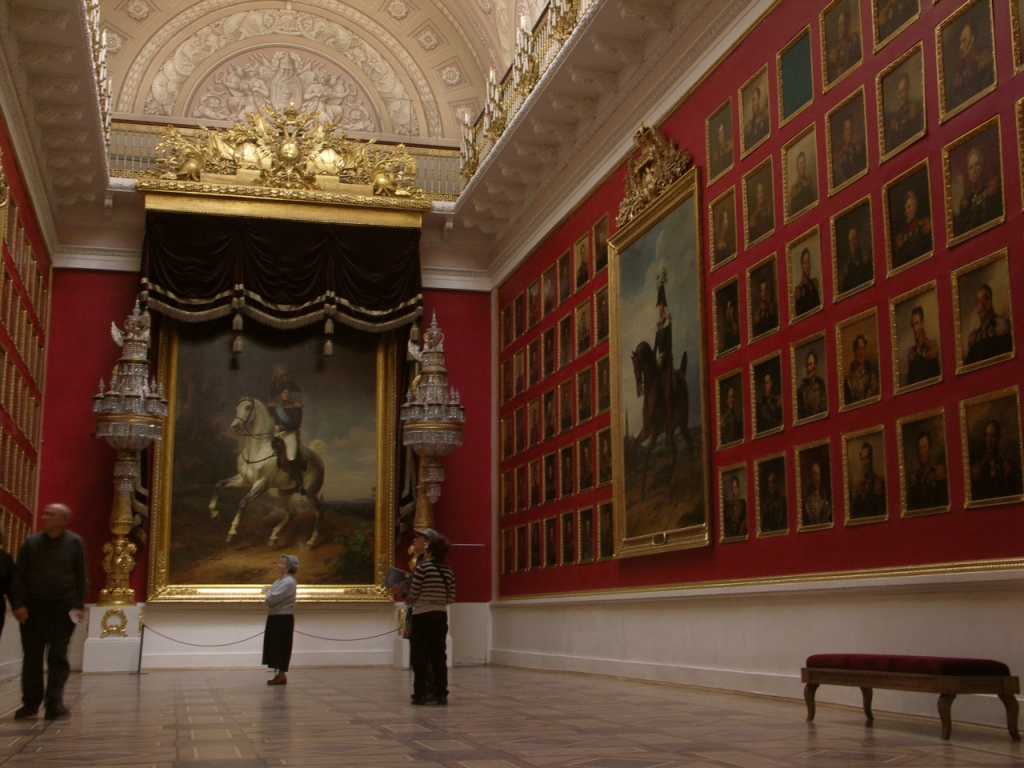
The Hall of Military Fame. Source. 

It’s undeniable that Catherine the Great transformed Russia’s reputation during her rule, leading the country to become a major power in terms of arts, sciences, and education. She supposedly embraced Enlightenment ideals with the promotion of education and freedom, yet she failed to abolish serfdom and kept thousands of people enslaved in the name of maintaining power. While her ideals were at odds with her actions, her expansive collection altered the Russian cultural landscape, establishing the country as an enlightened power to be reckoned with.

1 November 2021

SOAP, SKIN, AND SKULLS: INTO THE MACABRE WORLD OF THE MÜTTER MUSEUM

Collections Corner | Kara Annett


Some of the skulls at the Mütter Museum. Source.

As we bid goodbye to October, I’m filled with a sense of dread knowing it won’t be long before stores start blasting Mariah Carey and Michael Bublé again and reminding us how it’s the most wonderful time of the year. To me, Halloween is the most wonderful time of the year and instead of hanging stockings by the chimney with care and visions of sugar plum fairies dancing in my head, I’m wondering how much longer I can get away with playing “The Monster Mash” and keeping the paper skeleton on my door. It’s no surprise then that I decided to write about one of the eeriest museum collections in the world; that’s right, today we’re delving into the marvellously macabre collections of the Mütter Museum in Philadelphia.

Founded in 1858 by Thomas Dent Mütter, the original purpose of the museum was to improve and expand upon medical education. The original collection of 1,700 objects has grown to over 25,000 and includes oddities such as sections of Albert Einstein’s brain and the unfortunately named Soap Lady, a poor woman whose body developed a fatty covering following burial (I don’t recommend looking up pictures of her after midnight because it definitely does not look like soap). Fellow bookworms might be interested in the world’s largest collection of anthropodermic bibliopegy, or books bound in human skin (this one is safe to Google, I promise). What’s most iconic, however, is their vast collection of skulls and skeletons.

A glimpse at just some of the skulls. Source. 


The Hyrtl Skull Collection came into the museum’s possession in 1874 through Dr. Joseph Hyrtl, a Viennese physician who studied 139 skulls to disprove phrenology, a popular theory at the time that stated a person’s intelligence, race, and personality could be determined by the shape and size of their skull. Hyrtl documented his findings on the sides of the skulls and his subjects mainly comprised of the poor and criminals from all over the world. Amongst those on display in the cabinet are Andrew Sokoloff, a Russian man who died of self-inflicted castration, and Francisa Seycora, a famous Viennese prostitute who died at 19 from meningitis. The skulls themselves are just as varied as the people they came from, with no two looking the same. Some have bullet holes, others are partially decayed, and absolutely none of them resemble the perfectly clean and symmetrical skull that Halloween aisles proudly display. As easy as it is to get caught up in the morbid fascination of it all, these were once real people just like you and me.


The skeleton of conjoined twins. Source. 


While it’s easy to dismiss the Mütter’s collection as morbid, it served an important purpose: to improve medical education. The museum is now run by the College of Physicians of Philadelphia, who use the acquisitions for research purposes. Carol Orzel passed away in 2018 from Fibrodysplasia Ossificans Progressiva, a rare disease that causes tissue to turn to bone. She donated her skeleton for the purpose of bringing public awareness to the disease and in hopes of researchers eventually developing a cure. Carol is displayed next to Harry Eastlack, who also had FOP and requested his body be used for research purposes. Harry’s case is still the most well-known when it comes to FOP and his body is still referred to in research. It was because of his skeleton that scientists were able to determine which gene is responsible for FOP, leading to ongoing trials for potential cures.

The skeleton of Harry Eastlack. Source. 


Though not every specimen in the Mütter is used to advance current medical research, it is impossible to deny the importance of this unique and sometimes disturbing collection. It’s easy to dismiss the museum as a cabinet of curiosities, but in reality, the Mütter has led to significant contributions in the medical field. Maybe I’ll keep the skeleton hanging on the door for just a bit longer.

A close-up of one of Hyrtl's skulls. Source