Showing posts with label MET Museum. Show all posts

15 April 2021

DRESSING FOR THE PAST: AN INTERVIEW WITH DR. CAROLYN DOWDELL

 Sew What | Natalie Scola


Natalie Scola: Hi Carolyn, it is so wonderful to have the chance to speak with you and thank you for taking the time to meet with me.

Carolyn Dowell: No problem at all, I am excited to be here!

NS: So my first question is how did you become interested in historical dress?

CD: It was probably in a very Canadian way! When I was a little girl, the CBC version of Anne of Green Gables came out and I was reading the books at the same time. I’m an Anne girl and the costumes in that were really good – you watch it today and they still look really good. You can see little of the fluffy 80’s hairstyles and all that in it, but for the most part it was really well done and I was absolutely enamoured of the costumes in that production. I just loved period movies and stuff ever since then. That kind of sparked the initial interest. I didn’t follow that path right away, my undergrad was in visual art. I ended up taking all the costume courses in the theatre department at my school, so by the time I finished my undergrad I thought I was going to go into costume design. But then I was exposed to the Pattern of Fashions books by Janet Arnold, and I discovered that I was really into actual historical clothing and how it was made and learning more about it - and that drove me towards my graduate studies in actual dress history. So it started nascently really early but it took quite a bit of time to develop into what it would become.

NS: When did you start making your own historical costumes? Did it come from those theatre courses?

CD: A little bit, it was a little bit the other way around, they started very close to each other but I started sewing when I was I think 17, I started making clothes for myself and I make pretty well all my own clothes still. So I started with that but I already knew I loved period movies and costumes so I pretty quickly started dabbling in that. And it was around about the same time that I was taking the costuming courses in the theatre department and so that was when I started to learn about drafting, and I made my first corset and started learning theatre versions of period techniques and I kind of just kept going with it. It was still very movie oriented, I would make costumes based on movies and TV shows that I saw. And so I was gradually realizing that I was interested in these original garments more and more. An exhibition I saw that made a really big impression on me was the Dangerous Liaisons exhibition [at the MET], that just completely sucked me in, especially because it was 18th century. Even though Anne of Green Gables was the first, I really developed a love for the 18th century and that exhibition blew me out of the water. There was so much that was really great about that exhibition. It had a really strong impression on me because it was about a year after that I moved out west to go to the University of Alberta to start my masters. As part of my degree, I did a large scale 18th century reproduction project. I was learning 18th century sewing while I was doing it and already started doing object based research for my masters. I made clothing that was from the years 1750 to 1775-ish. There was a set of foundation garments, a robe a la francaise, a robe a la anglais, a riding habit, a matching calico jacket and petticoat, a pet-en-l’air and a quilted petticoat. I put that on exhibition at University of Alberta, they have a small exhibition space in the department that I was in. It was all about the making of and showing the fashion and it was about how they were made and what it was like to be like a dressmaker or mantua maker at that time.
French dress, 1775, Costume Institute at the Met | Source


NS: When you’re making all these costumes, what does the research process look like? Do you start with sourcing material or looking for inspiration first, or do you look at the references first?

CD: Yes, all kind of at the same time! No two projects happen exactly the same way, it's kind of inorganic process. I have a ton of Pinterest boards constantly looking for new images visual sources on Pinterest. I have lots of books, like my patterns of fashion books are one of the most used sources for both styles and then how to visualize making them and what the pattern pieces should look like things. But also various types of books like from the Kyoto Costume Institute and then books of fashion plates. Mostly I do use images of extant garments and images of fashion plates, I do tend to use those more than portraiture; I mean there's definitely things that you can sometimes get from portraiture that you can't get from those other sources. Usually what ends up happening too is I almost never directly reproduce something. It's usually a combination of a few different inspirations because a lot of the times I'll see something and think “oh I really love this except I don't like this about it” or “I really love this but is there some way that I can modify this that is a way that they still would have done.” I do a lot of "franken-patterning" where I'll take patterns from different sources and squish them together.

NS: I can't read patterns at all, I have very basic sewing skills but I still have all the Janet Arnold books. I just can't truly read them so every time I see someone put a pattern together I think it’s the coolest thing ever – like how can you even read that!

CD: I mean you actually do sewing the more you understand patterns, and I was kind of thrown into the deep end with it too. My first sewing project was a dress, like every day dress for myself. But it had like a fitted bodice with darts, it had gathered skirt, it had pockets, it had a zipper and a lace up back, it really had every component possible. It was the biggest hot mess on the inside, it was atrocious! I remember there was somebody once who asked if they could borrow it and I said “no I'm not going to lend it to you just in case it falls apart”. I really wish now that I had kept it because it would be amazing to show what I started with. I started with something complicated and most people don't - for most people it's a good idea not to start with something complicated because you can easily get discouraged. But for myself it was the right thing, so having a challenging project as my first one even though was it was such a mess and perhaps only barely wearable, I was still so proud of myself.

NS: That leads really well into my next question which is: what is your favourite piece of clothing to make?

CD: I like making so many different things it's easier to say what I don't like making! I don't like making pants! My favourite things to make are probably 18th century gowns. After I did that reproduction project is part of my masters I didn't want to do 18th century again for a while because was six full months sewing eight to twelve hours a day, but now it's probably my favorite. 18th century fashion is probably my deepest love and it's why I did two graduate degrees on that. It ended up becoming kind of like my comfort sewing; I understand 18th century sewing so well that it's so easy for me to go into and do it. I really do enjoy hand sewing, I find it very relaxing - you can kind of do it anywhere, you can do it while you're watching TV and stuff which you can't really do with the machine. I find it visually and aesthetically really appealing and I really like the particular process of construction of 18th century gowns. There's that element of feeling like you're communing with historical dressmakers, particularly when you're doing hand sewing projects because it is so particularly physical and kind of visceral as opposed to when you're using a machine. Now that I feel really comfortable with it, it doesn't take as long as when I first started doing it. Like that project that I did as part of my masters I could probably do that in noticeably less time.

NS: 18th century fashion is so interesting because the fashion changes so much from the beginning to the end of the century.

CD: There's a lot of variety! When you get to know it well, you read more you start to see more in it, so I really enjoyed exploring the variety that is in the 18th century. I need to do some more from the first third of the century, I’m focusing a lot towards the end. I did a like a 1690s mantua and that was a really interesting exploration of dress.

NS: With all these outfits that you’ve made, what was the most challenging project you’ve worked on?

CD: Well actually it's one that I wouldn't really call historical more vintage. The most challenging project I think is when I reproduced Charles James' tree gown. The only reason that I was able to do it is because when I was back in London in 2012-2013 to do research for my PhD, the new assistant curator at the Museum of London was Timothy Long. He had come from the Chicago History Museum and did the Charles James exhibition there and he had taken patterns from of the foundation layers of several of James’ gowns. They had done reproductions of the foundation layers to display alongside the gowns to show what was underneath and the structure of the gown. He sent me pattern pieces for the foundation layers of the tree gown and so the next year I made my own. It was it was an amazing learning experience. I can say that it is a standing dress! I made it to go to the 2014 Toronto Officers' Garrison, my husband and I have gone several times; I love to go because it gives me an excuse to make a ballgown. It definitely made an impact that year I was there but it was it was the worst to wear it. There's a dinner that's part of the ball and the skirt of this dress just did not fit under the table! And there is an element of the under structure almost sort of like cones or buttresses that are right behind your thighs to give shape at the back and it's right where you want to sit! So my dress doesn't really fit under the table and I'm having to sit at the edge of my chair, it wasn't fun to wear. But I really love looking at it on the mannequin as a decorative dress now!

NS: Obviously you love dress history a lot, you've done two degrees in it. So why do you think that the study of dress history is important?

CD: There are a bunch of reasons. It is something you know people really do respond to. Dress is something that all human beings have in common; even if you're not in a culture that wears what we would call clothing you still practice some form of dress. Every single human being on the planet is connected by dress - we are connected to it and we are impacted by it literally from the moment we're born to death. It's our most intimate environment, it's what is literally next to our skins and it's sort of like our second skin or public skin. Dress has been so important to other aspects of history and society and culture. It’s the reason why the Industrial Revolution happened. Textiles have been the foundations of numerous countries’ economies in past centuries and it's what civilizations and empires were built on. Dress touches every single facet of life and it factors in so much to knowing who we were, which tells us who we are, which helps inform us about where we're going.

NS: That's great, I think that's a really great answer! Thank you so much for your time, you have provided such a great look into the world of historical costuming.

24 March 2021

SUSTAINABILITY IN 18TH CENTURY STYLE: REMAKING AND REUSING GARMENTS

 Sew What | Natalie Scola 


Sustainability in fashion has grown as people become more aware of the products they buy and consume. There is a huge interest in thrifting and upcycling clothes in an effort to reduce the environmental impact of the fashion industry. This seems like a new, green movement but the remaking of older clothes and reusing textiles is a centuries-old concept.

Extant garments (original garments that are still in existence in museums or private collections) are interesting because they reveal so much about the life of the object itself. Clothes are fascinating items to study as they hold a personal, intimate connection across time and place. We all wear clothes – styles change but clothing still holds thaziz  e same functions.

Clothing tells us how people lived their lives. They are a visual and physical marker of time periods, the wearer’s status and even represent important events in people’s lives. There is a prevailing idea that the wealthy wore an outfit only once. Scholarship and analysis of extant garments has proved this false. Clothes have been made and remade for centuries. Extant garments are rare partially because of the fragility and decay of textiles over time but also because they were continually remade into other clothes or items. Diaries and account books of women living in the 17th and 18th centuries show that women were concerned with cost, usefulness and aesthetics when making purchases. Studying how clothing was altered provides contextualization and gives life to an otherwise static object.
 
This dress (robe a la anglais) dates to the 1760s. However the large silk pattern is earlier, from the 1740s. The MFA Boston lists the provenance as being originally worn as a wedding dress in 1740. The dress was remade and worn by the original owner's daughter in 1760. Source. 

While it is generally understood that museums want the most pristine, undamaged objects for their collections, there is a great value placed on altered garments because it shows how construction techniques changed, how fashions evolved and how people used clothes. While remaking and reusing of clothes and textiles probably existed since people starting wearing them, this article focuses on garments from the 18th century. The 18th century saw a massive growth in consumer culture, with new imported materials and advancements in industry. Styles also changed a great deal over the century, notably with the shift towards the Regency style at the end of the 1700s and the rise of new materials for clothing. Because of these factors, there are many examples of extant garments that show evidence of alteration.

One of the main reasons why people remade garments was changing clothing styles. During the first half of the 18th century, women wore dramatic, wide gowns, which gradually narrowed by the 1770s and 1780s. Aside from fashion, people’s bodies went through natural changes, such as growth, pregnancy or weight. The large second-hand trade market meant that clothes needed to be altered to fit a new wearer. Clothes were remade also as a function of economy. The material purchased for clothes (cloth, metal, lace etc.) was often more expensive than the labour needed to make them. It made sense to remake clothes to get the maximum use out of costly textiles and trimmings. This allowed people to keep current fashions without having to purchase new materials each time.

How is it possible to tell that an extant garment is remade? It can be difficult because the level of craftsmanship in the alterations is so fine that it is hard to distinguish between the original and altered construction. Telltale signs of altering include: small holes left behind where fabric was unpicked, such as along the sleeve cuffs or the waist. Another clue are pleats that were taken out but retain their original crease.

The fabric itself provides a visual clue as to the age of the garment. Silk was an extremely popular fabric throughout the 18th century. Silk patterns changed over the course of the century. Large, abstract prints were popular in the earlier decades and more rigid, striped designs in the latter part. Some garments are made of silk that dates to earlier decades but the style and construction of the piece itself is much later; the clothes would have been remade in a newer, fashionable style while being economical in reusing an older piece. 

The large decorative pattern on this silk indicates a weaving date of the 1730s. The dress was remade in the 1770s. Source.

Some extant garments from the 19th century are also made from older, 18th century clothes. With the shift to neoclassical styles at the end of the 1700s, lighter fabrics, like muslin and cotton, were used; they evoked the specific ancient aesthetic of the period and silk was no longer as fashionable. The introduction of cotton to the British market in the 1780s also led to the decline in the silk market. By the 1820s and 30s, styles had changed again and silk was back in fashion. Contemporary silks were not as well made as older their older counterparts and could not hold up to the desired construction. The large sleeves and finely pleated skirts could be achieved with the stiffer fabrics from the 18th century.

This dress shows the fashionable style of the late 1820s with a wide neckline and puffy sleeves. The neckline featured deep, stiff pleats. The fabric of this dress was woven between 1770 and 1780. Source.

Visible alterations like patches and hemming are indicators that clothes were remade. Patching can be seen on the inside of garments, particularly bodices. Some dressmakers and tailors tried to match the original lining with a similar fabric but others used different fabrics. On visible outside areas that were widened, such as around the torso or at the skirt waist, similarly patterned fabric to the original was used; although the patterns were not identical, patching would not be noticed unless it was examined close up. The materials used in alterations are also indicative of when the garment was changed. 19th century alterations can be noted by the use of cotton thread which was introduced in the 1800s. Machine stitching and manufactured lace also point to 19th century alterations, as these would have been done by hand prior to the 1800s. 

Evidence of alterations are often minute and hard to see without high resolution photographs or in-person examinations. Museums also rarely show the interior of garments. This jacket in the collection of the MET shows careful piecing of the lining. The reusing of scraps demonstrates how fabric was used and nothing was wasted as clothes were reused. Source.

 With the rise of consumer culture, fashion became central to self-image. Altering clothes to remain fashionable was a smart economic move, ensuring that you could be dressed in the latest style for less money. The 18th century saw huge shifts in fashion as new materials became available and reflected economic and political changes. By the 1730s, the sack-back gown (robe à la française, or sacque) had become a popular style, replacing the older mantua gown. The sack-back gown featured a fitted, conical bodice with long pleats that fell from the shoulders. Square hoops or panniers were worn under the skirt to support the fabric and create a wide silhouette. As styles changed throughout the mid-1700s, the silhouette became less wide and the fullness moved to the back of the body. Close-bodied gowns (robe à l'anglaise) became fashionable by the 1770s. These gowns had less width at the sides and had fitted back pleats. Many examples of altered gowns are from this period, reflecting the change in fashion over a short period of time. By the end of the 18th century, the French Revolution ushered in an entirely new era inspired by Ancient Greece and Rome, shifting the style away from structured gowns. 

The chintz fabric of this gown was woven in the 1740s but the dress dates from the 1780s. The dress is a close-bodied gown (robe à l'anglaise) and has a fitted back with no flowing pleats as was the style later in the century. It may have been remade from an earlier sack gown. Source.

Changing fashion was not the only driving force behind altering clothes. A person’s body changes in many ways and clothes need to reflect that. As a person gained or lost weight, their clothes could be let out or taken in to fit their body. Pregnancy was also a consideration as a woman’s body would change shape for nine months! There was no maternity wear as we have today (although a rare maternity set does exist in the collection of Colonial Williamsburg) so clothes needed to be designed for a long-term, continual change. Dresses could be let out at the waist or have ties loosened in the back to allow for an expanding belly. These garments could then be taken in and altered after the pregnancy; in this way, a woman remained fashionable throughout her pregnancy and beyond.

Children’s clothes also followed the practical need for alterations as they grew: it was more economical to have clothes that grew with a child than to continually make new clothes. Adult clothes could also be altered down to fit smaller children – there were no “children’s clothes” as children wore miniature versions of adult clothes. In other instances, entirely different garments were constructed from the original. Some of these follow a logical process based on the design of the item. Short jackets like caracos or casaquins could be made by shortening a longer dress. Others were completely different, like making gloves from stockings, or shoes from a jacket! Fabric household items were repurposed as well. Quilted fabrics were commonly reused as they were sturdy and warm. Some quilted petticoats found second lives as bedcovers while original quilts became petticoats. 

The deep hem on this girl's dress from 1771-1780 may indicate extra fabric for future alterations as the child grows. Source. 

The piecing of fabric on the skirt (same garment of above) shows evidence of alteration, possibly to accommodate growth. Source.

The thriving trade in second-hand clothes also necessitated clothes being remade: whether they were given to a friend or a maid or sold to a shop, the new owners of these garments needed them altered to fit their body. Once clothes were worn down, they became rags or other useful scraps. Metal trimmings or threads were stripped from fabrics and melted down for reuse. Fabric rags ended their lives in mills to be made into paper for a growing literate society.

The reuse and remaking of clothes continued throughout the 19th century and were widely adopted for fancy dress balls. This marked the transition of the garment from clothing to costume. Fancy dress balls were a common entertainment throughout the 19th century. At fancy dress balls, people would dress in a variety of themes, including as mythological, allegorical and natural subjects. Historical themes were very popular as people could look into their attics and closets to find old clothes to repurpose. The extremely wealthy often had their fancy dress costumes made from scratch by dressmakers or couturiers – but that’s a whole other article! Older clothing could be altered to fit new wearers for fancy dress balls but also needed to be altered to align with contemporary styles. For example, the style throughout the majority of the 18th century was a flat, conical torso which was created by wearing stays. When corsets became the dominant undergarment, they produced a different shape of the body with a full bust and hips. The garments would need to be altered to accommodate this difference in support and structure.
 
Here an 18th century men's waistcoat has been altered to become a 19th century woman's fancy dress bodice. Darts were added to the front to shape the waistcoat to create a curved silhouette and the back features boning. The sleeves are a 19th century addition. Source.

This photograph shows Mrs. Louis de Lotbinière Harwood in historical dress when she attended a fancy dress ball at the Chateau de Ramezay (Montreal) in 1898. Her outfit is not a remake of an earlier garment. The dress shows elements of 18th century costume but the silhouette is distinctly late 1890s, especially the cut of the bodice which is very curved. Source. 

Aside from fancy dress events, fabrics and clothing from other cultures were made into clothing which reflected the European interest in non-Western cultures. In the early 1800s, Kashmir shawls became fashionable wear after Empress Josephine of France popularized it as a luxury symbol. They were not just used as shawls but the fabric was made into dresses. The light weight fabric lent itself well to the neoclassical style of fashion and the teardrop motif of the pattern, called buta, was visually interesting and appealed to expensive tastes. These shawls originated in the Kashmir region and were primarily worn by men. In Europe, the shawls were brought back by European officials who gave them as gifts to their wives. Several paintings exist showing upper-class women wearing dresses made from Kashmir shawls. They became ingrained in European society as indicators of class and wealth and were seen as women’s items, given to a woman upon her marriage. The shawls were removed from their original meaning, use, and cultural context and were adapted to suit Orientalist tastes in Europe. The popularity of the shawls, particularly for their patterns, led to the rise of imitation weavers in Europe. The Paisley design, copied from the buta, derives its name from the weaving town of Paisley in Scotland, where imitation Kashmir shawls were mass-produced. 

An 1812 fashion plate shows a dress made from a Kashmir shawl. Source

Empress Josephine wearing a dress made from a Kashmir shawl. She is wearing another shawl wrapped around her body. Antoine-Jean Gros, 1808. Source.

Like the Kashmir shawls, the European interest in the East led to a rise in Japonism throughout the 19th century. Japanese patterns and aesthetics were adapted for Western dress. Contemporary paintings and extant garments reflect this interest as clothes were made from kimono fabric. Some kimonos were even taken apart and made into entirely new clothes, mainly women’s dresses.

The gown on this 1870s bustle dress was made from a kimono. Source.

Altered and remade garments are important parts of museum collections as they provide so many clues about the lifecycle of an object and provide a glimpse into consumer culture of the 18th century. Extending the life of garments by reuse and alteration exists into the modern day. Wedding dresses, baptismal gowns, prom dresses and university jackets are all common items that are passed down as heirlooms and used by new generations. These reuses add another chapter of history to the story of the garment.

I am extremely grateful to Dr. Carolyn Dowdell for sharing her dissertation and bibliography with me. Dr. Dowdell is a dress historian whose work focuses on the remaking of historical garments. I will be interviewing her for this column next month, discussing dress history and historical costuming. You can see her work on her blog and Instagram.
9 June 2016

SEW WHAT: LEARN FROM YOUR ELDERS

SEW WHAT

BY BRENNA PLADSEN

So I may have dropped the ball a little. Last month, while I was thinking about lingerie, the Met Gala happened.

For brief context, the Met Gala is a fundraiser for the Costume Institute and celebrates the opening of their annual exhibition, which also supplies the theme for the evening. The annual event began in 1948 and while it has been a social staple since the 70s, the intense scrutiny and expense surrounding the event are much more recent (source). Now, while the event is technically open to the public, it’s $30,000 for an individual and $275,000 for a table and there are only ~ 600 tickets. The exclusivity surrounding the gala in part because the guest list is tightly controlled by the chair, who uses it to continue the tight immersion of the fashion industry into the event. Anna Wintour, editor-in-chief at Vogue, chairs the event and celebrity designers are often brought in as co-chairs. Unsurprisingly, this results in monied fashion labels contributing and vying for publicity via their guests. (source) The resulting coverage of guests arriving rivals is comparable to the Academy Awards, and is the only time I've seen the Met on E! Entertainment.

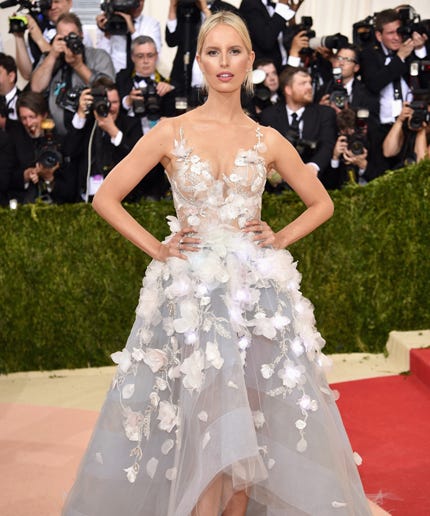
The 2016 theme, “Manus x Machina: Fashion in an Age of Technology” yielded interesting, glittery confections that are simultaneously 22nd century and gilded age glamour. A few outfits addressed the thesis of the exhibit, which looks at how technology influences high fashion. These range from Beyonce in an unexpected use of latex to Karolina Kurkova in a gown partially designed by IBM’s Watson (source). This ambiguous use of the theme is better than last year, where “China: Through the Looking Glass” resulted in some stunningly tone-deaf outfits that demonstrate how costume parties can go wrong. But comparing the two galas and exhibits is surprisingly difficult. Both exhibitions end at the present and look towards the near future but China: Through the Looking Glass has a much grander scale, moving through the entirety of a history from the other side of the world. The 2015 gala in turn demonstrated how surprisingly shallow aesthetic influence can be. Manus x Machina is more focused on the internal mechanisms of fashion as an industry. Working towards this theme requires a deconstruction of creation process, as the collaboration between Kurkova, IBM, and design house Marchesa demonstrates (source).

Kurkova at the 2016 Met Gala. Photo by Dimitrios Kambouris/Getty Images. Source.
Kurkova also introduced the dress on her Instagram, since it responded to emotions tweeted at her that night. 

So, what does it mean to create a dress to the theme? Every new, often laboriously and meticulously created garment speaks to the historic objects on display (or rather, speaks to an imagining of the objects on display, since this is the preview and these garments can take years to make). Further, it reveals how the circus of designers, celebrities, and press understand the theme and the scope of the exhibit. But most clearly, it demonstrates how the internet loves to spread images, and how the Met has leveraged the Costume Institute’s connection to the popular to enter into that economy of circulation. Last year, Rihanna, in a golden Guo Pei gown, demonstrated how the intersection of celebrity, novelty, and the gravitas of a space and time can be leveraged towards a mutual increase in social currency for everyone involved. For the Met, it attracts the eyes of a wide audience, and encourages a different way of engaging with the collections and understanding objects as living objects.

Rihanna's "Omelette dress"from the 2015 Met Gala. Photo by Josh Harner/New York Times. Source 

So, what can I apply to my smaller scale practice? Well, I have to understand what I have, what I don’t have, and how that distance can be bridged so that when it blows up on the internet, I have a good reason for doing it. Also: before posting, remember things on the internet have a long half-life (notice how meticulously documented the arrivals are but how mysterious the actual Gala is). This is why I’m not posting about my latest sewing project until I can figure out how this historical pattern can be updated gracefully. Hopefully it will probably be the subject of my next musing.

Preview/My cat "helps." Photo by author.
      

6 November 2014

MUSEUMS AS AGENTS OF SOCIAL CHANGE IN ISLAMIC COMMUNITIES: A RESEARCH INTEREST

RESEARCH COLUMN

BY: DAIRA SZOSTAK

Illumination by Hannah Habibi
My research interests lie in looking at museums as agents of social change toward making a difference for Islamic communities. There exists a need for a deeper and more nuanced understanding of Islam, especially in light of recent events, which have misconstrued the faith into an extremist terrorist movement. I am determined to prove that museums can play an integral role in combatting Islamophobia (the fear of Muslims) in Western society. By offering another way to approach Islam, museums may be capable of replacing, challenging or subverting dominant forms of prejudice against its followers. The ability to harness the power of objects to explain and inform audiences about Islam through its means of cultural production is unique to the museum. I believe it is our responsibility to create the opportunity for meaningful cross-cultural experiences through our collections and public programming.

I have analyzed educational programs in cultural competency, community outreach initiatives, and social media practices in institutions worldwide. Two North American museums worthy of note are the Arab American National Museum in Dearborn, Michigan and the Oriental Institute in Chicago, Illinois for their course called Hadiths, Hijabs, and Hamas: Everything You Wanted to Know About Islam but Were Afraid to Ask.

I wrote a report on this subject during the course of my graduate studies for the class MSL2370, Museums and Cultural Heritage I: Context and Critical Issues. I delivered a presentation on my preliminary findings to my colleagues at the Metropolitan Museum of Art in July, 2014. I hope to continue my research by partnering with the Aga Khan Museum in the coming months.

Please feel free to contact me should you want to know more or discuss any of the ideas presented here.

Sources:

Sandell, Richard. 2007. Museums, Prejudice and the Reframing of Difference. London: Routledge.

Editor's Note: Daira Szostak is a second year MMSt student who graduated from UofT with a degree in Near and Middle Eastern Civilizations and Anthropology. If you are a Museum Studies student engaged in research for a work, volunteer, or school project that you would like to share, please contact Robin Nelson.

28 May 2014

MUSEUM INNOVATIONS: THE PUBLIC DOMAIN AND DIGITAL COLLECTIONS

BY: JAIME CLIFTON-ROSS

Is it just me or have museums been all over the news lately? The month of May has been incredibly active in the museum world as the Royal Ontario Museum collected the beached blue whale, The American Museum of Natural History partially launched their new digital collection, and now The Metropolitan Museum of Art has provided open access to images from their digital collections for personal download and non-commercial use. After obsessing over the wonderful Rijksstudio application—launched by the Rijksmuseum in Amsterdam last year—I was delighted to discover that yet another museum has altered their digital image policy and has thus entered the realm of the public domain. These high-resolution images, that thread together multiple photographs, reveal intricate details of paintings through a zoom-in feature.

Young Woman Seated on a Sofa by Berthe Morisot
Young Woman Seated on a Sofa, Berthe Morisot, ca. 1879, MET Digital Collection

The MET’s initiative, called Open Access for Scholarly Content (OASC) is essentially created for scholarly purposes as “students, educators, researchers, curators, academic publishers, non-commercial documentary filmmakers, and others involved in scholarly or cultural work” are encouraged to use this database (Quote from MET website). While their public domain and downloading policy is not presented as liberally as that of the Rijksmuseum (who encourage anyone to download, manipulate, and repurpose their art-read about it here), I believe this is a step in the right direction. 

Study for "A Sunday on La Grande Jatte" by Georges Seurat
Study for "A Sunday on La Grande Jatte", Georges Seurat, 1884, MET Digital Collections

The reason why so many museums—typically art-based—are able to offer this digital feature to the public is because many artworks are no longer under copyright laws. That being said, not every piece in museum collections can be openly available as copyright status, ownership titles, and other restrictions are prohibitive. You will also notice that artworks within the public domain are primarily historical. So you may just have to wait another 50 years or so for your favourite contemporary artworks to hop on this wagon!

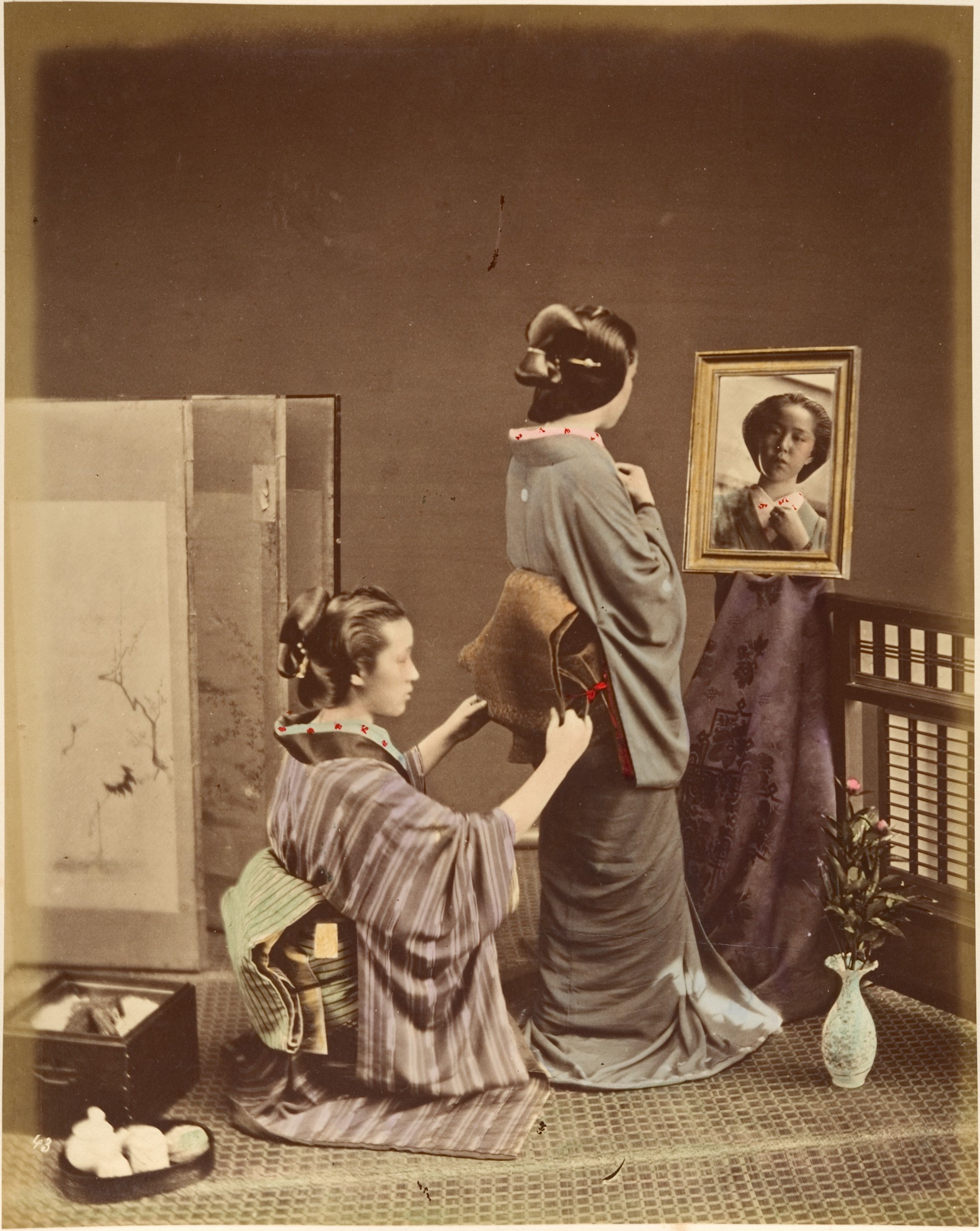
Two Japanese Women in Traditional Dress by Shinichi Suzuki
Two Japanese Women in Traditional Dress, by Shinichi Suzuki, 1870s, MET Digital Collection

While not everyone is thrilled about their favourite artworks being readily available for anyone to download, this digital trend will essentially ensure that high quality images of artworks are circulated on the internet. In doing so, these nearly flawless images will maintain the integrity of the original artwork and assert their association with the museum in which they are housed. Furthermore, each image is embedded with appropriate metadata thus optimizing search engine capabilities. This will ultimately rank them higher in Google searches than low quality renditions of artworks that currently crowd image searches.

The Unicorn is Found (from the Unicorn Tapestries)
The Unicorn is Found (from the Unicorn Tapestries), artist unknown, 1495–1505, MET Digital Collection

So what are the implications of digital museum collections? The most common argument amongst museum scholars is that digital replicas of artworks devalue the original and ultimately threaten its authenticity. Digitization more or less removes objects from their museum context and distances them from their physicality and the “essence” of the original. While this can definitely have some negative effects, digital replicas can offer a new lens in which objects can be examined. The public can now experience more intimate encounters with artworks as digital technologies tap into other human senses, such as light and touch. Imagine how engaging it would be to zoom into an artwork using your fingers on the surface of iPad or a tablet? As I have argued in my essays, digital replicas were not created as a replacement of original artworks, rather they act as supplementary devices that augment public experience—if users so choose. 

Bahram Gur Sees a Herd of Deer Mesmerized by Dilaram' s Music attributed to Miskin
Bahram Gur Sees a Herd of Deer Mesmerized by Dilaram' s Music, Folio from a Khamsa (Quintet) of Amir Khusrau Dihlavi, attributed to Miskin, 1597–98, MET Digital Collections

Do you believe digital technology should be prominently utilized in museum operations? What do you think are the positive and/or negative effects of the digitization of artworks. Please share your thoughts in the comments section.