Showing posts with label Nicole Ritchie. Show all posts

2 January 2015

MUSEOLOGY AND CULTURAL THEORY: ‘THE NEOLIBERAL MUSEUM’

THESIS COLUMN: SPECIAL ISSUE

BY: NICOLE RITCHIE

(Images are texts that have highly influenced this paper)
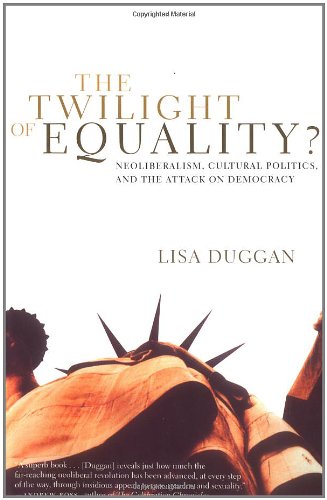

41jYX6sbfUL.jpg51vUz+NdzyL.jpg

For the colloquium, I will present a select portion of my reading course paper in which I outline and critique the neoliberal rhetoric and subsequent affects that I argue to be permeating arts and cultural space. It provides the theoretical premise for ‘the museum’ within my argument, constructing its historical foundations and contemporary ideological context, which I argue influences its subsequent implication of rhetorics and affiliated affects. Through this, I will argue that arts and cultural space - that is, museums and galleries, more broadly, representative of a large ‘whole’, such as nations - are very much influenced by the rhetoric and values maintained by our neoliberal, postmodern, cultural-capitalist states of the ‘West’, broadly defined here as including the USA, Canada, and Britain.
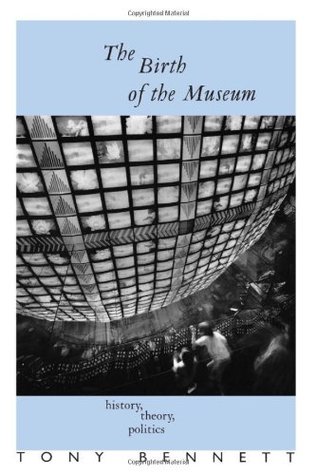
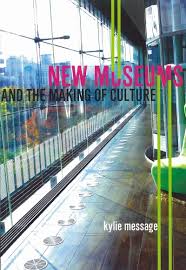
1144763.jpgUnknown.jpeg

I first provide a description of neoliberalism and postmodernism, highlighting core concepts that are relevant to my argument. Following this, I describe the emergence of ‘the disciplinary museum’ in order to tie such rhetorics into the foundation of the museum, ultimately stemming into discussion about the persistent power and discipline of museum spaces. The final section elucidates what I see as two simultaneous layers - ‘the whole’ and ‘the selves’ - of ‘the neoliberal museum’ in our contemporary moment, a museum that strategically puts to play disciplinary power in dialogue with neoliberal, postmodern rhetorics. In particular, these sections analyze the persistent practice of ‘nationing’ whilst also harnessing identitarian politics into the neoliberal fold of inclusivity and diversity, such as within the representation of queers and human rights museums.
41PM3FYGXWL.jpg978-0-8223-4725-5_pr.jpg

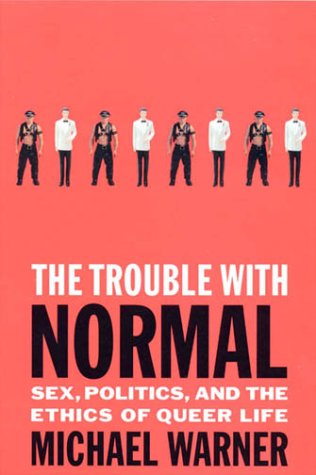
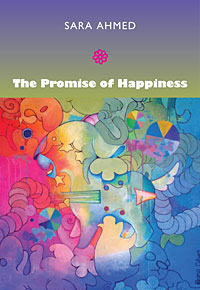
The language of rhetorics and subsequent affects is persistently utilized because I will argue, at a later point in my project, that such narratives and affects can be placed in dialogue with queer theory. Thus, this paper is the first step in working towards my argument that such neoliberal rhetorics that incorporate ‘queers’ into neoliberal, postmodern rhetorics have been playing into neoliberal affects, such as the promise of happiness (Ahmed), cruel optimism (Berlant), and the valorization of normal (Warner). And, even further, I will be analyzing the use of these rhetorics and subsequent affects within the context of the Canadian Museum of Human Rights (CMHR), looking more closely at the representation of queers within a human rights rhetoric in the context of a Canadian national, cultural institution. At this time, though, I strategically construct and argue for the foundation and context in which I see my core object of study - the museum of our contemporary time, ‘the neoliberal museum’ - embedded historically on a disciplinary structure and folded into neoliberal, postmodern rhetorics within a cultural-capitalist state, working towards, here, the creation of space for interrogation and potentiality.

While only a select portion of this paper will be presented at our Museology & Cultural Theory Colloquium on January 7th at noon (location TBA), broader questions and conversations can be had in relation to my presentation and research in general!

Works Cited

Ahmed, Sara. The Promise of Happiness. Durham, NC: Duke University Press, 2010. Print.
Berlant, Lauren. Cruel Optimism. Durham, NC: Duke University Press, 2011. Print
Warner, Michael. The Trouble with Normal: Sex, Politics, and the Ethics of Queer Life. Cambridge: 
Harvard University Press, 1999. Print.

And now for some questions from Robin and Katie:

Robin: You use the term ‘nationing’ - what specifically do you mean by it?

I focus on the neoliberal rhetorics and incentive for ‘nationing’ - that is, the disciplinary perpetuation of a ‘whole’ in which the identitarian ‘selves’ of neoliberalism are immersed. For my purposes, I call this ‘nationing’ - that is, the creation of cohesion, oneness, homogeneity, a community, an identity across a nation. Nationing practices are positioned here as a furthering of this disciplinary power, forming a cohesive and shared value system across time and space, constructing cultural subjects. It is this construction, and its presumption of citizen participation and unity in shared histories and subsequent moral rhetorics for everyday life, that presents a normalizing function of who is recognized as a citizen and what the correct pathway for citizenry is. By participating in national cultures, one is rendered a citizen and subsuming those identities, values, and thus belonging, which is an important mode of discipline and regulation that ultimately educates the public according to normative narratives and systems of culture. As will become key in my larger argument, it is those who do not fit within this normative narrative and/or the negotiation of this barrier of the normal that present the intrinsic problem with these normative narratives for queers. Thus, nationing is a critical aspect of the disciplinary nature of cultural narratives (and the affiliated affects) and the formation of selves within a whole, creating and disciplining that whole according to what one strives to reach or maintain. I discuss this practice of nationing in relation to three core concepts - temporality, affect, and spatiality.

Katie: Do you think the development of the disciplinary museum and the interest in creating a cohesive identity through collections and displays has made it difficult for other histories or identities to permeate these narratives?

This question, Katie, relates a lot to my answer to Robin’s question above. I do believe that the contemporary museum is inescapably tied to its disciplinary, foundational structure and purpose, and its practices and disciplinary technologies emerge in our contemporary moment through neoliberal, postmodern rhetorics and affects. It is in the ‘nationing’ space, I argue, that the museum puts to play the neoliberal notions of individual freedom and responsibility, and identity politics and alternatives, as well as the endless pathway for the incomplete, postmodern self. In short, I do think that the dominant ‘whole’ that attempts to form belonging and normativity through a cohesive identity has made it difficult for other identities to permeate these spaces. However, more so, my argument believes that the move in the late 20th century in museum practice towards a community participation and multi-perspective practice ties directly into the ‘culture wars’ and the birth of ‘identity politics’ in the 1980s and 1990s. I believe that this shift in museological practice further entrenches neoliberal rhetorics, strategically turning to identitarian selves at this time. There is a persistent neoliberal disciplining of these rhetorics as only encompassing a normalized - that is, limited - version of inclusivity and diversity. I believe that these practices have a tendency to implicate the self into an endless path of neoliberal rhetoric and affiliated affects, becoming a tool of these overarching ideologies and disciplines.

2 September 2014

THESIS REFLECTION: TIPS FOR FUTURE THESIS STUDENTS

BY: NICOLE RITCHIE

To wrap up the summer 2014 thesis column, I decided to make a general list of tips imbued with some 2nd year wisdom (hopefully!) for any future thesis students.  Some of these tie into what was discussed by Robin and Katie these past two weeks, but are to act complimentary as well.

Rainbow-Coloured Figures Holding up Community Sign.

1. MAKE A COMMUNITY: While we may be harping on this a lot, it is so important. There are not a lot of thesis students within the MMSt program, let alone the iSchool as a whole. Making connections with other 1st year thesis students (MMSt and MI) as well as the 2nd year thesis students can be very beneficial. Whether about procedures/deadlines, scholarship applications, research methods, ethics approval, thesis proposals, course selection, summer research, let alone writing the actual thesis – having people who share these experiences and pursuits is undeniably helpful, supportive, and reassuring.

Two figures in illustration of picking ones brain for knowledge

2. PICK EVERYONE'S BRAIN: Don’t stop asking questions. Because we tend to be a minority in the program, it is easy to overlook where to find information, deadlines, and strategies. Ask! Throughout the iSchool, there are many resources of people on every different tier – from your fellow thesis students, your TAs (who are likely PhD students at the iSchool), your professors, or the support and administrative staff. Many of them have experience going through these steps, whether personally or procedurally.

Mousing wearing helmut as it attempts to steal cheese from trap with "Never Give Up"  written over top.

3. DON'T GIVE UP: As Robin alluded to in her post about SSHRC applications, throughout the thesis process, there are several (many?) hurdles that, in the end, provide deep satisfaction and pride but are also daunting. Don’t give up! If you have the desire and ambition to pursue the thesis option, power through – that thesis topic will develop and refine, those guiding questions will form, that thesis proposal and scholarship application will get written…the support of your community and committee will reflect these goals.

https://shimaneparesources.files.wordpress.com/2013/04/6x17e.gif

4. FIND JOY IN THE SMALL THINGS: After spending a summer that was theoretically supposed to involve full-time thesis work, it is easy to get lost in the big picture. While I struggle with this very suggestion, I strongly believe that finding joy in the small things and setting achievable goals throughout the thesis process is key.

Keep Calm, It's Just a Thesis
http://sd.keepcalm-o-matic.co.uk/i/keep-calm-its-just-a-thesis.png

5. THIS IS NOT YOUR LIFE'S WORK: While we may like to think that our thesis will be a groundbreaking, insightful, and original piece of art, it is (also?!) just a thesis. It is not your life’s work; it does not define you. The thesis provides the opportunity the get one’s feet wet with the research process, with linking ideas rather than just engaging, levitating above the literature. This involves being flexible and uncomfortable with the unknown, but also recognizing the needed perimeters of the project and its completion.

6. GENERAL TIMELINE: 

Note: Do not take this as written in stone – this is simply a general guideline of what occurred in 2013/14
Thesis Committee: Supervisor - likely confirmed during the 1st semester at the iSchool; 2nd Reader - likely confirmed during the 2nd semester, if not before
SSHRC deadline: ~December 1st
OGS deadline: ~ February 2015
Ethics Approval deadline: ~ end of April 2015 (Robin & Katie can both advise on this complicated process)
Thesis Proposal Submission: suggested deadline is by May 2015; must be submitted by September 2015
Research Methods: this course is required during the 1st year of the program

Shout out to future thesis students: please don’t hesitate to contact Robin, Katie, and/or myself! We will be meeting regularly in the 2014/15 year, as well as hanging out in the Inforum. We would love to chat with you, go for drinks, answer any questions, etc.

Thanks for reading our thesis column!

12 August 2014

THESIS REFLECTION: NEOLIBERALISM

BY: NICOLE RITCHIE

A major tenet in queer theory is its disavowal of neoliberalism. These criticisms have been elucidated through the creation and utilization of various terms, such as heteronormativity, homonormativity, and homonationalism. However, what even is neoliberalism?


David Harvey is an oft-quoted author of this concept from his book entitled A Brief History of Neoliberalism (2005). While giving a useful history of the development and pervasive adoption of neoliberalism on the world stage, Harvey is very clearly critical of the economic political system. I can in no way relay the complexities of this system’s development, but, instead, with this post I want to set an initial seed for considering neoliberalism in relation to the museum.

On the most basic level, “neoliberalization has meant, in short, the financialization of everything” (Harvey 33).

Meme of Margaret Thatcher, a major figure in the 1980s growth of Neoliberalism; her infamous slogan was TINA: there is no alternative

“Neoliberalism is in the first instance a theory of political economic practices that proposes that human well-being can best be advanced by liberating individual entrepreneurial freedoms and skills within an institutional framework characterized by strong private property rights, free markets, and free trade. The role of the state is to create and preserve an institutional framework appropriate to such practices” (Harvey 2).

Furthermore, neoliberalism strategically chose the seductive ideals of human dignity and individual freedom as core values, which were also, not accidentally, counter to views of fascism/dictatorships/communism that conversely utilize collective judgment versus individual free choice (Harvey 5). Harvey highlights how this concept of ‘freedom’ is utilized to justify all things, for American neoliberalism in particular (39). Success, in opposition to failure, is placed diametrically in relation to personal and cultural pursuits, rendering inequality as a necessary risk of enabling the rights and liberties of the individual. Queer and affect theory has delved into this language and tool of individual rights and the ‘right’ pursuits, which, as mentioned in the terminology links above, are of course limited within this – something I will be engaging with soon.

“To live under neoliberalism also means to accept or submit to that bundle of rights necessary for capital accumulation. We live, therefore, in a society in which the inalienable rights of individuals…to private property and the profit rate trump any other conception of inalienable rights” (Harvey 181).

 Meme of David Harvey
Meme of David Harvey

I came across an intriguing museological happening when considering the ‘neoliberalization of culture’ that I think would be valuable to discuss within our museum studies community prior to fully operationalizing what this concept (that is, the ‘neoliberalization of culture’) entails within the literature.

Students in London, UK occupied the empty School of African and Oriental Studies' property on Gordon Square, renaming it The Bloomsbury Social Centre in 2011 and creating their “Museum of Neoliberalism”. The exhibit space contained empty glass cases, containing only artefact labels of ‘Culture’, ‘Politics’, and ‘Economy’.

Image of the Museum of Neoliberalism
As discussed in one article, this attendee highlights some important considerations about what this emptiness symbolizes:

“The exhibit of nothing (with the exception of a lone Lehmann Brothers’ cap in one corner) suggests multiple meanings: is it empty because neoliberalism has so pervaded every aspect of our lives that in our contemporary moment we have indeed “forgotten” the most pernicious form of capitalism yet witnessed by the world? Is it empty because at some future point the ascendance of neoliberalism will mean the “absolute hollowing out of culture, politics and the state” as one commentator suggests—or, even more so, that neoliberalism will have entirely eviscerated our capacities to imagine what the terms “politics” and “culture” even mean, let alone identify objects associated with them? Does the ex post facto request for visitor participation point, ironically, to the “degree of respect” with which neoliberalism cares about public input?”

This questioning of ‘full or empty’ is further contextualized and interrogated here by another attendee of the event.

What do you think of this ‘museum of neoliberalism’? How does it speak in dialogue with the political economy of our time and the museological work that we study and practice? What does this exhibit say about the ‘neoliberalization of culture’?

21 July 2014

THESIS REFLECTION: 'QUEER' EXHIBITIONS?

BY: NICOLE RITCHIE

As many of you may know, WorldPride 2014 happened in Toronto this past June. This encouraged a wide variety of WorldPride funded, supported, and affiliated events, and, in particular, I was excited about the mass quantity of queer related arts and cultural events.

There were several events and exhibits that began before the WorldPride week in late June, while others are still continuing throughout the summer, including exhibits directly affiliated with WorldPride and ones that are just hopping on the queer summer bandwagon here in Toronto.

These events included a queered version of AGO’s First Thursdays entitled Fan the Flames: Queers on Fire, a queered version of Nuit Blanche entitled Nuit Rose, and even an exhibit co-curated by two of our very own Master of Museum Studies students entitled Archiving Public Sex.

Did anyone get a chance to check out any of the exhibits? I’d love to hear your thoughts! If not, don’t fret – there are several ‘queer’ exhibitions continuing this July and August. With my thesis, I may not be engaging directly with these exhibits or with a specific ‘queer’ exhibit, but I am constantly analyzing what ‘queer’ means for arts and cultural space. I would like to encourage you to attend one (or all!) of these exhibitions listed below, or any seemingly or self-proclaimed ‘queer’ exhibit in your vicinity and share with me your thoughts, criticisms, and opinions. In particular, I would like to engage in a dialogue in light of my previous posts on queer theory and my proposal to ‘queer’ museums, and how these existent and experiential spaces work within (or not) that frame of interrogation.

Wynne Neilly: Female to “Male”
July 23rd - August 24th
Student Gallery, Ryerson Image Centre
(article of note)


Wynne Neilly, January 24th 2014 – 24th Shot, 2014, Fuji Instax film

Just Me and Allah: Photographs of Queer Muslims
By Samra Habib
June 24th - October 5th
Canadian Lesbian and Gay Archives


Excerpt from an interview with Samira Mohyeddin for the Queer Muslim Project

Camp Fires: The Queer Baroque of Léopold L. Foulem, Paul Mathieu, and Richard Milette
May 29th - September 1st
Gardiner Museum
Tours Everyday at 2pm - FREE for students on Tuesdays

 Robin Metcalfe, Curator, discusses “What is Camp Fires?”

Side note: I particularly like this quote from The Varsity that is demonstrative of ‘camp’s potentialities to work in dialogue with the concept of ‘queer’ as identified in my queer theory 101 post:

“Apart from its affinity for the frivolous, camp can be summarized as a form of resistance against dominant order, concerned with challenging the social conventions that marginalize queer individuals and oppress queer cultures.”


To conclude, here are some questions that I have and continue to interrogate. They are just a sliver of my own queries in order to provoke your thoughts and criticisms.

Are exhibitions ‘queer’ simply because they (which, who even is ‘they’?) self-identify as ‘queer’? Are the exhibits ‘queer’ because they contain content that is affiliated with the LGBT movement? Is ‘queering’ fulfilled by filling a normative arts and cultural space with such ‘queer’ content’? To what extent does being financially supported by WorldPride, a corporate sponsored non-for-profit organization, affect said ‘queerness’? Does the space and experience of the exhibitions differ at all from normative exhibitions? What affective experiences are being promoted? What are the overarching messages or narratives of the exhibits for the LGBTQ community?

For my thesis, I pursue a broader understanding of the que(e)rying of arts and cultural space that is more in dialogue with the non-normative, albeit ideologically and discursively. I would, therefore, also encourage you to share, in dialogue with this post, your experiences of what you felt was a non-normative arts and cultural space or exhibit.

1 July 2014

THESIS REFLECTION: QUEER THEORY 101

BY: NICOLE RITCHIE

So what is queer theory? As outlined in my first post, my goal is to queer museums.  But, what does ‘queering’ even mean? 

In order to provide a general understanding of queer theory that will contextualize my future posts, I decided to dedicate a post to defining this field.  Like any attempt at briefly defining a major body of knowledge, I struggle to be brief and concise while not over simplifying. Therefore, please note that there are major gaps, oversights, and simplifications below, as well as a clear emphasis on the academic development of ‘queer theory’ rather than a history of the term ‘queer’ and queer identities/communities/activism.

Epistemology of the Closet Book Cover, by Eve Kosofsky Sedgwick

Queer theory emerged in the 1990s in the USA after the AIDS crisis, an event that greatly affected the feminist and gay communities and its politics.  Teresa de Lauretis is credited with first using ‘queer theory’ at a conference at UCSC in 1990.  The term, which has historically been used as slander, was, at that point, being reclaimed and adopted by a burgeoning body of academics and activists.  Most famously, Eve Kosofsky Sedgwick’s Epistemology of the Closet (1990) and Judith Butler’s Gender Trouble: Feminism and the Subversion of Identity (1990) are credited as the founding queer theory texts.  On the most basic level, these two texts interrogate the binary structure of heterosexuality and homosexuality and the culturally constructed performance of gender, respectively.  Sedgwick and Butler marked a move into questioning the social, cultural, and political structures and systems that both create and perpetuate those identities and activities seen as ‘non-normative’, and thus an interrogation of the ‘normative’.

Meme of Judith Butler
In the last twenty-five years, the field has grown vastly.  Queer theory has been utilized as a lens in almost all disciplines from the humanities and social sciences to engineering and medicine. In order to provide a taste of the diverse definitions of ‘queer theory’, here are some brief quotes by several of the ‘big’ queer theorists.  There is also, by no means, an agreement as to what ‘queer’ means, what queer theory seeks, and what queer world-making entails.

In a Queer Time & Place book cover by Judith Halberstam

“…queer refers to nonnormative logics and organizations of community, sexual identity, embodiment, and activity in space and time” (6).

José Esteban Muñoz, Cruising Utopia: The Then and There of Queer Futurity (2009)

“Queerness is essentially about the rejection of a here and now and an insistence on potentiality or concrete possibility for another world” (1).

No Future book cover by Lee Edelman

“…queer must insist on disturbing, on queering, social organizations as such – on disturbing, therefore, and on queering ourselves and our investment in such organization.  For queerness can never define an identity; it can only ever disturb one.  And so, when I argue, as I am to do here, that the burden of queerness is to be located less in the assertion of an oppositional political identity than in opposition to politics as the governing fantasy realizing, in an always indefinite future…” (17). 

And what about ‘queer’ in our society today?  Generally, I would say that we think of the Q in the LGBTQ acronym, or the extended one of LGBTTIQQ2SA (lesbian, gay, bisexual, transsexual, transgender, intersex, queer, questioning, 2-spirited, and asexuality).  Queer is a growing ‘non-identity’ adopted by those not partaking in ‘normative’ labels or values or activities, such as genderqueer, pansexuality, or non-goal-oriented sexual practices. 

Thus, ‘queer’ has been taken up in both academic and community environments to a variety of ends.  Furthermore, I would like to note that I have not truly touched on various complexities of the relationship of queer theory with feminism, with queer activism, and more.

However, I will leave it at that – I recommend checking out this humorous article entitled “What the F@#$ is Queer Theory?”.  Hopefully, we can flush out some of these brief points and any further curiousities or comments about ‘queer’ in the comments, as well as elucidate my use of queer theory for my thesis in future posts!

10 June 2014

THESIS REFLECTION: THE WORLD OF CONFERENCES

BY: NICOLE RITCHIE

With an interest in pursuing doctoral studies, I have dived into the world of conferences, gaining experience in public speaking and exposure to the dynamic dialogues. The iSchool annual student conference and the newly developed MMSt panel at the CMA conference were both invaluable opportunities for myself!


However, you might be wondering – how does this relate to my thesis? Well, I recently attended the Berkshire Conference on the History of Women at U of T and the Sexuality Studies Association’s conference at Congress in St. Catharine’s, ON. Most prominently, my interest was piqued by a paper entitled “Queering Museums: Epic Fail”. Seeing as this is the project that I am just embarking on, this talk was both foreboding and exhilarating. You can imagine, I’m sure!

Special Session at the Sexuality Studies Association’s Conference

I chose these conferences because they had various panels about collecting on the edges and challenging museum and archival practices through asexuality, affect, and more.  I went on to feel stimulated, intimidated, disappointed, excited, and overwhelmed by attending discussions on topics that I am both engaging with as well as pursuing.  These are the people I want to be in conversation with, who are discussing the same sources, and who can provide me with innovative (and perhaps scarily similar and/or oppositional) ideas that directly affect my work and future goals.  I was nervous to explain my current project without knowing quite where I fit yet and where I was going.  What do I want to take away from these experiences into my research?

Train Ride from St. Catherine's ON
Reflecting on the train ride back from St. Catharine’s, ON
(I attended both of these conferences over a seven-day period, leading to many thoughts and feelings!)

Well, I have noticed that, even though I am just starting on this project, I am not super surprised by where these panels and papers went. In fact, I had hoped for something more groundbreaking. They discussed several things that I have and will interrogate in, hopefully, a much deeper and deconstructive way. And yet, there were also instances that triggered and highlighted areas and ideas to consider. My key discovery is that I have a major research topic that is deeply needed and present. There were underpinning notions within many of the talks that, I believe, need to be questioned, and now I am even more inspired to engage in those interrogations.


So is queering museums an epic fail? Well, I can’t actually share the example from that paper due to the confidentiality issues that prefaced the talk. But, the presentation did make clear that the neoliberal values embedded in the language of individual rights and freedoms have lived strong and true, censoring the proposed representation of diverse (minoritarian and non-normative) queer kinship formations in order to hold true to the queer liberalist celebration of same-sex marriage. While this instance, albeit by significant people at significant places, may have failed, where can we go with this? How can we question the underlying principles and structures of normative institutional systems of archives and museums? In what ways can we productively view such ‘failure’, particularly in relation to, rather than being a negative experience, the potentially queer power of such experiences (an argument that has been made by Jack Halberstam)? Furthermore, is not this failure categorized as such according to the institutional norms and structure? What is beyond this limited definition and dominant paradigm of failure (and success)?

20 May 2014

THESIS REFLECTION: QUEERING MUSEUMS

BY: NICOLE RITCHIE

My name is Nicole Ritchie, and I entered the Master of Museum Studies program in collaboration with Sexual Diversity Studies in September 2013.  As the third contributor to the thesis column this summer, I will give you a brief overview of my background and my research.

I graduated from the University of Alberta with a Bachelor of Arts with Distinction in Women’s Studies and Art History.  Throughout my undergrad, I volunteered at a variety of museums, galleries, and collections, which led to my interest in arts and cultural institutions and my application to the MMSt program.  This included collections management and curatorial work at the Clothing and Textile Collection at the University of Alberta, the Royal Alberta Museum, the Bata Shoe Museum, Lando Art Gallery and Auctions, and, currently, the Sexual Representation Collection. With this background in practical expertise intertwined with my love of feminist and queer theory, my thesis topic emerged.


My thesis will interrogate and conceptualize the theoretical foundation of non-normative – that is, values and ideas that do not uphold the dominant social system – arts and cultural space through the act of ‘queering’.  This will involve looking at several major academic bodies of literature – museum studies, queer theory, affect theory, and social and cultural geography studies.  I will engage with these fields, drawing innovative connections that contribute to both new theoretical dialogues as well as new possibilities for museum practice.  As well, I will engage with museums as participants within and tools of neoliberalism, which is a frame that, I believe, is valuable to interrogate in the context of queer theory – a field that insistently criticizes neoliberal values, such as that of normativity and inclusivity.  Throughout my thesis, I will reference various examples of museum practice to demonstrate current museum practices that either perpetuate a normative paradigm or develop a ‘queer’ space in order to enhance and highlight various aspects of my argument.  

This engagement will be guided by various themes that are reflected in my research questions:

  • How can queer and affect theory be utilized to think about non-normative arts and cultural space?  
  • How can these spaces be queered, and what does ‘queering’ accomplish for the theoretical development of museum identity and space and the potentialities of practice?  
  • In what ways do specific practices of museum studies, such as ‘difficult knowledge’, preservation, and commemoration, speak in dialogue with practices of queer theory, such as the formation of ‘archives’ and queer historiography? 

My project is significant for engaging museology in dialogue with queer theory, affect theory, and theories of social and cultural geography, but also for the development of non-normative museum methods, practices, and experiences that reflect the growing contemporary discussion of ‘queer’ in society. 

My thesis committee is composed of a communications and museum studies scholar, Dr. Irina Mihalache, and a feminist and queer technology studies scholar, Dr. Patrick Keilty.  Thus, my committee forms a dynamic and well-rounded grouping in order to support my diverse interests and fields of research.    

Now here’s to executing this!  Stay tuned for my progress on June 9th!