Showing posts with label Samantha Kilpatrick. Show all posts

14 March 2019

MULTIMEDIA MIXTAPE

Program Reviews | Samantha Kilpatrick


I recently found myself in Winnipeg for a week, and while I was there I dropped into the Winnipeg Art Gallery, (the WAG) to check out their collection, but specifically to see their The 80s Image exhibition, which centered the idea of changing media as it affected art production.

The exhibition title, at the WAG. Photo courtesy of Samantha Kilpatrick. 

I explored this exhibition through another changing media, the museum's app, and the in-app audio tour. The audio tour is a mixtape in its own right, a collection of 80s songs related to the artwork on display as curated by CKUW, the University of Winnipeg's university radio station.

A screencap of the app, with both song
and artwork displayed.
Listening to 80s music in an art gallery, while contemplating art, is a fantastic experience I would recommend to just about anyone. Fair warning, it can make you want to bop along to music only you can hear.

As in tours of all kinds, your mileage may vary on how much you get out of it. I definitely found that it had me lingering longer with each work supported by the app- at least long enough to get a sense of the song and to try to understand how it connected to the work on display.

I freely admit I don't know much about 80s music- but I came to the suspicion, walking through the gallery that these songs were chosen for their essential '80s-ness' as much as the works on display were. There's a multisensory effect that's hard to quantify, and having these songs fit to each work and the time period in which both were created was a very striking experience.

I was very interested in how this Mixtape Tour was going to cover the more politically fraught issues of the exhibition- there's a whole room in The 80s Image of huge painted panels and silkscreened wallpaper by Canadian artist collective General Idea made to raise awareness of the AIDS pandemic.

I shouldn't have worried.


In the mixtape, this room is accompanied by an absolutely haunting arrangement of Tainted Love, slowed down and stretched out and distorted from a bop to an absolutely harrowing experience. It was one of the few songs on this tour that I didn't even think of stopping partway through and moving on.



AIDS, by art collective General
 Idea, on display at the WAG.
Gif courtesy of Samantha Kilpatrick.

Listening to that song, in the presence of that art, made me wish I knew much more about music. Tainted Love is a song memetic enough that one can assume a general population's knowledge of it, if not all its iterations. The distorted use and the selection of this arrangement (further research would lead me to discover all profits from that single went to AIDS research, years before discussion of the issue was acceptable in the mainstream) honestly blew me away. It made me wonder what other stories I was missing, hiding in the history of the music. The single change I would make to this audio tour would be the inclusion of a story about the music in the app.

The distortion of the music and the use of new media in music- the heavy synth and the techno and the nearly unpleasant audio distortion- all mirror the radical changes occurring in the artworks hung on the gallery walls. (For my Toronto readers who want to replicate the experience- you can find another edition of this work on display at the 4th floor of the AGO as of the writing of this article,  and the audio tour is downloadable anywhere.)

 This tour felt incredibly interesting and distinctive, weaving together visual and audio art made in a time of social and artistic upheaval in an experience that made a single cohesive whole out of the two parts. I wish all audio tours were so ambitious- rocketing between fun and thoughtful, provoking and reflective. If you find yourself in Winnipeg before this exhibition closes on April 14th, do yourself a favour and get the mixtape too.

11 February 2019

HUMILITY AND ACTION: AN OMA CLIMATE CHANGE WEBINAR

Program Reviews | Samantha Kilpatrick


On January 16th, the Ontario Museums Association hosted a webinar titled "Climate Change: Implications for your museum practice." Thankfully, if you missed it, you can still find it embedded at the bottom of this article.

I've been thinking about Climate Change more and more the past few months, for obvious reasons, and it can be a hard topic to dwell on without succumbing to angst and despair. When I heard about this webinar, I was looking forward to a talk that gave some direction to that amorphous, all-consuming dread. 

A Photo of the Anthropocene exhibit at the AGO- pictured here, an example of the "good Anthropocene"; these are part of lithium processing, increasingly necessary for the creation of electric vehicles. Photo courtesy of Samantha Kilpatrick. 

Moderated by Robert Janes, founder and Co-chair of Museums for Climate Justice, the webinar featured three museum professionals discussing initiatives they had enacted in their own institutions to address the climate crisis we as a species have found ourselves living in.

 Laurie Carmount, Curator of Minden Hills Cultural Centre & Nature’s Place, spoke about her efforts in using historic collections to demonstrate what a world without plastic might look like, her efforts to improve the sustainability of the physical buildings these sites operate within, and partnerships with local environmental groups.

Shiralee Hudson Hill, Lead Interpretive Planner at the Art Gallery of Ontario, spoke about Anthropocene and the effect of the exhibition rippling through the institution, from attempts to reduce plastic in the gallery's cafeteria and the emotional push in interpretive planning- "revelatory, not accusatory.

Ian Kerr-Wilson, Manager of Heritage Resource Management for the City of Hamilton, spoke about incorporating municipal priorities around sustainability into museum practice, and the use of museums as a tool to work on a problem, rather than an end unto themselves. 

    A photo of Hamilton's Ice Harvesting Industry, which Ian Kerr-Wilson notes doesn't exist anymore "for a variety of reasons, including the fact that the harbour doesn't freeze anymore." Image via Hamilton Public Library. 

    I am firmly of the opinion that we have now moved beyond the 'raising awareness' stage of the climate crisis. This is not to say that we should stop trying to convince those around us that this is a pressing and important issue, or that convincing people is a waste of time (as many as 8% of Americans have changed their minds in the past year about climate change) but if the only action we are taking as institutions is raising awareness, it will soon be too late to do anything.

    Cathedral Grove, British Colombia. The key to wanting to save nature is to love it, but I wonder also at the heartbreak of loss that comes with that, the present certainty of knowing that many of the places you love will be forever changed by climate change that you are helping to cause. Photo courtesy of Samantha Kilpatrick. 
    There is a certain humility that you must adopt as an institution attempting to address an issue as large as global climate change. This humility includes putting your trust in other groups, to let your own mission serve as a piece (and only a piece) of something greater. Laurie Carmount shared that the following quote is painted on a wall at Nature's Place:

    Nature is careless of the individual but careful of the species. We have reversed the maxim; we are careful of the individuals and careless of the species. That is the road to extinction. If you kill the species, the individual will follow.” —R.D. Lawrence

    Museums are not the species. We are the individual-- part of a much larger web, infinite and wonderful and more delicate than we can possibly imagine. When we make that paradigm shift, when we stop thinking of museums as a network unto themselves and begin thinking of ourselves as points of a much, much wider network, we can begin to think of our impact in a very different way. No individual caused this problem, and no individual can fix it. But no species is made up of anything other than many individuals working together.

    So call your MP.

    Reduce your plastic consumption.

    And think about how your institution can begin working as part of a much, much larger system in a time of crisis.


    4 December 2018

    BY KIDS FOR EVERYONE: KIDS TAKEOVER DAY IN MUSEUMS

    Program Reviews | Samantha Kilpatrick


    For this last edition of Program Reviews in 2018, I wanted to do something a little different. I wanted to review a program I hadn't attended. In fact, I wanted to review a program that a museum didn't design. Who, then, is this interventionist? This invited artist or academic, will they treat these hallowed halls with respect?

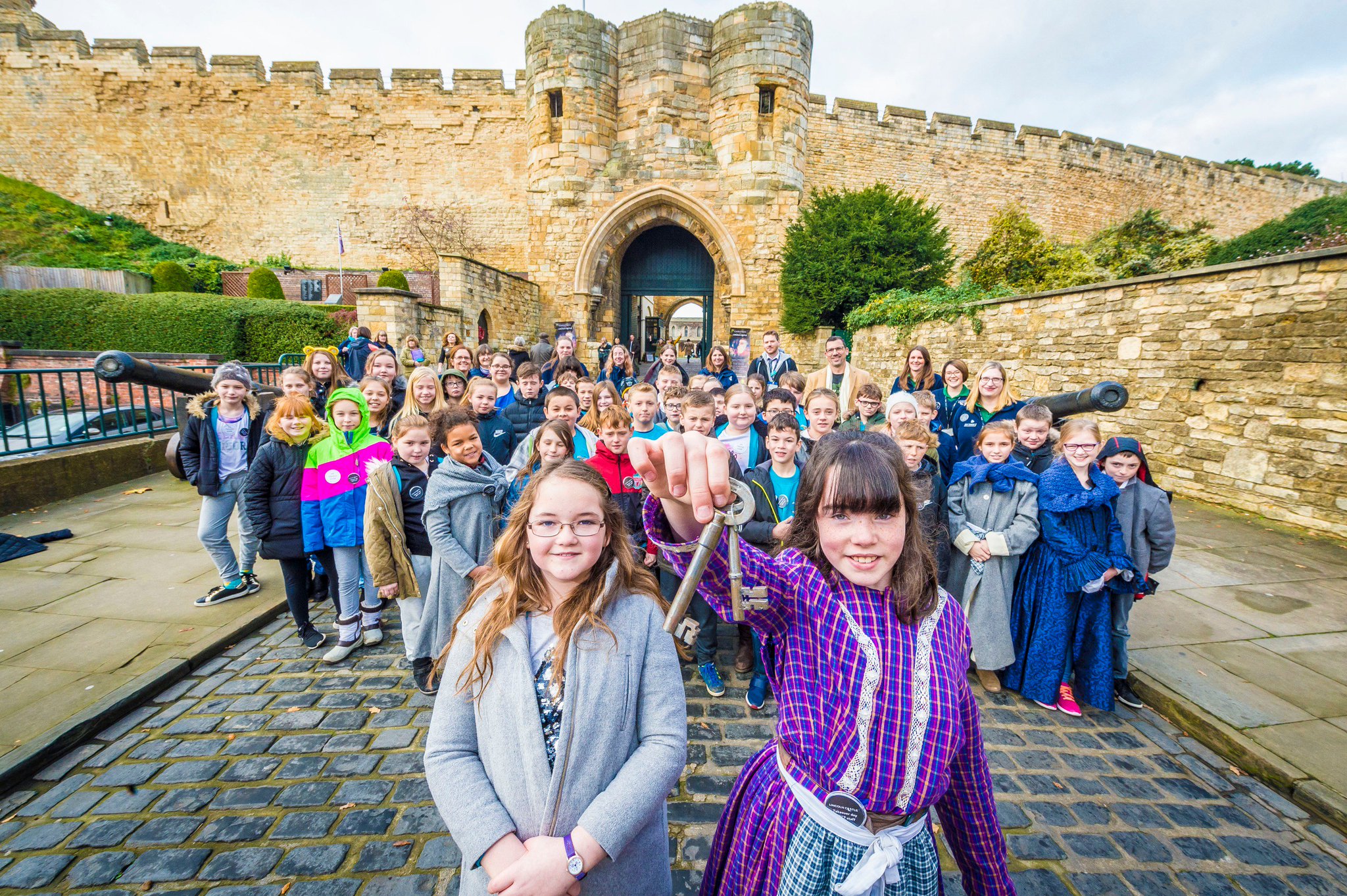
    The group of children taking over Lincon Castle, home of the Magna Carta for 2018 Kids Take Over day. Source.
    How about school kids? Would you invite a team of children into your museum to lead tours, handle artefacts, and sell items in the shop? Would you invite them to design and lead programming of their own?

    That's the premise of Takeover Day, an initiative now in its 8th year. Run by Kids In Museums, Takeover Day is a charity based in England which encourages and assists museums in being more family and child-friendly. On its face, the idea combines two of the most basic underlying ideas in museum engagement today:

    First, "Nothing About Us Without Us": If your institution is creating an exhibition, programming or event focused on serving the needs of a particular community, you should at least consult with, if not collaborate with that community.

    Second, families, school groups, and children are a massively important part of any museum's audience.

    The logical conclusion, therefore, is that we should be consulting, collaborating, and generally involving children in our institutions. Not just as guests and visitors, but as designers as well.
    Kids In Museums Takeover Day logo. Source. 
    If we should be doing this, then what does it look like to have kids running a museum, even if only for a day? Well, you can ask the over 200 institutions who participated in 2017. (The data for 2018 isn't in just yet, given that it happened a scant week and a half ago as of the time this article was written). Kids In Museum's official case-study document even helpfully lists roles that kids in museums can fill, including, but not limited to:

         -Archivist
         -Front of house staff
         -Curator
         -Conservator
         -Cafe
         -Tour Guide
         -Social Media
         -Workshop Leader

    Ceding your social media to outside forces is not unknown, (heck, Honda let the Grinch take over their twitter account for a holiday promotion) and it's easy to imagine giving over some gallery space to a local school to display art and have them put on their own show.

    But what about having a bunch of middle schoolers answer phone calls and emails on behalf of your institution that day? What about trusting them with the function of making and serving food?

    But what about writing labels, or wall text? What about keeping that text up after Kids Takeover day is finished, without a tag that says it was written by kids?

    What about putting a kid, or a teenager, on your board of directors, to ensure someone young has a say in where your museum is going for the next five, ten, twenty years?

    This is what makes Takeover Day so fascinating to me as an initiative. It strikes right at the terror of museum authority. If we are institutions of the public, for the public, don't we need to involve the public in our decision making? And how, among all the communities we need to satisfy, do we do this with children?

    I hope these questions are never fully answered. Our field is more complicated and wonderful for having to struggle to answer them. Kids Take Over is one fascinating, brilliant start to addressing these questions, and I look forward to seeing where it goes in years to come.

    30 November 2018

    MUSEFLASH: RISK TAKING AND DIGITAL STRATEGIES WRITING WORKSHOP

    Weekend Edition | Samantha Kilpatrick


    In our first ever Musings Writing Workshop, we were joined by Sarah Hill of Lord Cultural Resources to talk about new spaces for museum writing and content delivery in the digital era. "Soon," she notes, "we're not going to be talking about museums that are using digital content and museums that aren't. We're just going to be talking about museums."

    Sarah Hill discussing digital projects in museums across the country. Photo courtesy of Amy Intrator.

    Writing for a museum's social media accounts is a chance to help a museum develop its voice just as much as internal content like text panels and labels. To stand out in a digital landscape saturated by content requires risk. The Museum of English Rural Life (MERL), for example, has developed a distinct, irreverent and extremely recognizable online voice.


    Image via the MERL's twitter. The MERL has 75.5 thousand twitter followers.

    However, one can imagine how arguing for the twitter voice of the MERL to be witty and light on its feet enough to respond to the meme of the day would have been a risk.

    In a digital age, every interaction the visitor has with the museum matters. Interactions on the website, on Twitter, on Instagram, through their app, in person, all affect visitor perceptions of the museum. Omnichannel communication requires that every touch-point is in the spirit of your museum, and that, more than anything else, is what digital content requires-- a unified voice across every medium.

    Image via the Musing's Instagram. Sarah Hill, running the show.

    In the museum industry, we often speak of meeting the visitor 'where they are'. Is where they are now online? Should we assume that every museum visitor is equally interconnected? Of course not, but it's certainly worth remembering that writing content for digital requires flexing different muscles than writing static panel text. Neither is better or worse. We are just meeting the audience in different places. Online, people skim and can tab away from your content at any moment, whereas in person, visitors are spending significant time in your space, but perhaps not stopping at any of your panels. This is a challenge. It's always been a challenge and will continue to be a challenge in perpetuity. These complications make our field more rich and interesting, not less.

    Our writing experience is richer for having had her. Thank you again, Sarah Hill.

    6 November 2018

    COMBINING HORROR, HISTORY AND HALLOWEEN

    Program Reviews | Samantha Kilpatrick


    In search of a Halloween event to review for this column, I finally decided on 'Legends of Horror: 'Vampire Circus', presented by Captain Morgan at Casa Loma'.

    While trying to summarize the experience, I kept coming back to my sister's review of Mamma Mia 2: "Do you want to see a movie musical titled 'Mamma Mia 2: Here We Go Again?' If yes, you're going to enjoy this movie."

    Similarly: Do you want to go to 'Legends Of Horror: Vampire Circus, Presented By Captain Morgan at Casa Loma?' Do you want a fun horror romp without much history or fact? If you do, you will enjoy the experience.

    My My, How Can I Resist Ya. Entrance to the experience.
    Photo courtesy of Samantha Kilpatrick. 

    This experience was void of guides, in cloaks and hushed voices, speaking of grisly murders a hundred years past. It was not a tale of cold spots, and mysterious apparitions, and small objects going missing. It was a carnival haunted house. One of the groups in front of us included a man who brought a rubber chicken with us, who would squeak it at his companions when they were being 'chicken'. This set the mood. It's a fun group event; horror, like joy or a bottle of wine, is best enjoyed shared.

    The horror maze itself was reasonably by-the-book. The maze included flashing lights, smoke machines, actors jumping out of bushes and from behind corners, hanging 'bodies' to push past, and animatronics rigged up to motion detectors to lunge at the visitor on their way past. Themes ranged all over the place. If you want a smorgasbord of horror, with everything from Phantom of The Opera, to werewolves, to cannibals, ghosts and demon children, Legends of Horror has you covered.

    One of the performers in the haunted house, juggling flaming devil's sticks. Impressive, absolutely. Scary? The jury's out. Photo courtesy of Samantha Kilpatrick.  


    There were also many acrobats, I'm entirely not sure why. They veered mostly away from the 'scary circus' theme, but still included a number of incredible acrobats, some on aerial devices and trampolines. I think I spotted only one murderous clown and no allusions to any of the other traditional horror elements of the circus. The acrobats felt included to simply bring credence to the subtitle of the show this year; contributing to the production value, but certainly not the fright of the experience.

    After about forty-five minutes walking through various horror experiences in the grounds, you find yourself actually inside Casa Loma for the first time. Your first glimpse inside the castle itself is a bar.


    In case you wanted a fortifying shot or a meal before going on to the rest of the Legends of Horror, or just to disrupt the mood. Photo courtesy of Samantha Kilpatrick. 

    The second half of Legends of Horror takes place in Casa Loma rather than just on the grounds, and it is the piece of the experience I most wanted to talk about. The second half of the trip attempts to tap into the actual history of Toronto with the exact same level of tact and production value that the rest of the house had displayed.

    That is to say: costumed actors, smoke machines, special effects and jump scares, set against the backdrop of actual historical events. It was so dark in the tunnel it was difficult to take photos, so please bear with me a moment while I talk about the exhibition on display, and how it was used in Legends of Horror.

    "Toronto, The Dark Side" a permanent exhibition in the Casa Loma tunnels. The tunnel is covered on both sides by photos from The Toronto Archives, blown up and sorted into different 'Dark Sides' of Toronto's past, including fires, the depression, and Toronto's first plane crash Most notably was the photos titled 'the Plague Years', which were photos of real children treated for unnamed diseases at Sick Kids Hospital- given that the photos in question were from the 1920s, typhus? Cholera? Smallpox? Just getting vaccines?


    Legends of Horror's Instagram post about Casa Loma, featuring their intervention in the tunnels. 

    Regardless of the facts of the photos, they served as the backdrop to the same sorts of effects that the rest of the experience featured. The photo was framed by a 'cage' of plastic bars, convincingly rusted. Between the photo and the viewer, was a bloody fake body on a bed which lurched at the visitor, and a mannequin of a girl in a bloody, old-timey dress covered in sores was lit by a menacing red light. Again, I emphasize: the backdrop was a blown-up black and white photo of a children's ward at a hospital circa 1920, and the foreground was 'look at how scary sick children are.'

    Photos of the aftermath of the fires in Toronto's history were subject to their own genre-appropriate treatment. Red and yellow lights, crackling sound effects, a full-body replica of a man with horrible burns.

    I spent the first half of the experience wishing that the Legends of Horror would engage more with the actual history of Casa Loma, and the second half deeply regretting my wish. I'm not sure if there is a tasteful way to plug into actual lived tragedy for the purposes of provoking titillating and exciting horror for the viewer, but I am certain that this isn't it. Perhaps it's unfair to demand a haunted house experience treat historical figures with the respect they deserve. In that case, I would vastly prefer they hung sheets over the photos and had an actor with a chainsaw chase us through the tunnel. I think this is the first time that I have found historical context detract from an experience rather than add to it.

    Legends of Horror was exactly as advertised: a high quality, high budget, horror experience. But it certainly wasn't a historic experience, and it didn't tap into any ghosts that may have been haunting the premises. And it was weakest when it was trying to be.

    9 October 2018

    INN TO THE PAST

    Program Reviews | Samantha Kilpatrick


    Every Sunday afternoon the Montgomery’s Inn runs a Sunday tea. A beautiful, sunlit tea room, an art exhibition on the walls, costumed interpreters, and of course, tea and cookies.

    The tea service at Montgomery's Inn. Photo courtesy of Samantha Kilpatrick. 

    This spread is available for a suggested donation of only seven dollars (ten, if you want to include the tour as well) and is excellent. Four varieties of cookie, plus a peach loaf, plus tea, all homemade and delicious. If tea isn't your preference, the Montgomery’s Inn also hosts Thirsty Thursdays on the last Thursday of every month. The Inn reprises its former role as a tavern and serves stew,
    A small sample of the wide array of events Montgomery's
    Inn runs. Photo courtesy of Samantha
    Kilpatrick.
    a selection of bread, and wine to the accompaniment of live music. Don't get this confused with the first Thursday of every month when the Inn hosts “Fret Not Ukulele Night.” Ukulele players of all skill levels are invited to congregate and become part of a tradition of music at the Inn (bringing your own ukulele is encouraged, but not mandatory). If you’re not fond of going out to eat at all, they also host a farmers market on Wednesday 2-6 year round. All events can be found here.

    The museum hosts seasonal events of all kinds, including Halloween and Christmas, plus summer camps. It is also available, of course, for rentals of space, although not overnight.

    The Inn came to my attention while writing this column precisely because of this wildly diverse array of activities; I was making a list of programs hosted by museums in the area, and then realized that nearly half were from the same institution.

    During my tea, in the beautifully restored tea room, a kind interpreter in costume pointed out the exhibition of landscapes on the wall, by a Canadian artist who took her very early automobile on and off the road in search of the most picturesque landscapes in Ontario to paint. In this space were a scattering of other guests, and the crew of “Scenes From Joshua,” blocking scenes for the upcoming one-hour chamber opera. By the time this article posts, they will be performing.

    By any count, this impressive roster of events for a museum with only twelve rooms, but I like to think that the historic use of the Inn acclimatized the building to the activity. It is an Inn so well used, that there is a groove in the floorboards from the door to the bar. The building would likely not be bothered by the constant rotation of activities through this space.

    While the Inn was active, it was the meeting place for the local Orange Lodge at the turn of the eighteenth century, and later served as the meeting place for annual Home District Meetings, later served by four separate counties. Records made by the eponymous Montgomery indicate that the Inn was also home to at least one political campaign meeting, one wedding, and multiple concerts and dances.

    One of the bedrooms historically available to rent at Montgomery's Inn, as seen on the tour of the house.
     Photo courtesy of Samantha Kilpatrick.
    I bring up this wide array of activities because how to program a historic site is a question every museum is either currently grappling with, or should be grappling with. For small museums and historic sites/houses in particular, how to encourage repeat visitors is a perennial and crucial question. Montgomery's Inn seems to answer this question with not only a host of programming for all visitors, but also by rotating these events with such frequency that it’s incredible that the entire building doesn’t spin on its foundations.

    I can’t, of course, speak to the other events programmed in the Inn. I can only speak to the tea I had-- an excellent offering of a variety of foods wide enough to please nearly every palette.