Showing posts with label Program Reviews. Show all posts

21 February 2020

VICTORIAN AFTERNOON TEA: CATERING TO A GREATER AUDIENCE THROUGH MULTISENSORY PROGRAMMING

Program Reviews Dominica Tang

My sister's favorite thing to do in a museum is sleep. To be fair, some of the benches are rather comfy and the galleries can be awfully quiet. I, on the other hand, would join the museum equivalent of a Tuscan wine tour faster than you can say "you don't have enough money, Dominica!" I get it though. Museums just do not appeal to everyone. Some people are not interested in reading the text panels or studying the artefacts and specimen. However, their perspective is still valuable to the museum. It might not always be that they are not interested in the content, but that the way in which museums present that content is not interesting enough. Multisensory-rich programs can accommodate for these visitors, create entry points into the exhibits, and, potentially, change their relationship with museums.

Last summer, I was tasked with planning a week-long family trip to London, UK. In the effort to make our trip meaningful and worthwhile for the entire family, I strategically selected only a few museums that I thought best catered to both mine and my sister's interests. One such museum was the Victoria and Albert Museum (V&A) because it offered a unique opportunity to try Victorian Afternoon Tea. This program was created by Tasha Marks, an award-winning artist, food historian and founder of AVMCuriosities, in partnership with Benugo, a catering franchise that brings food to different public spaces in a creative and sustainable way. Marks is a wonderfully talented curator and artist,  who holds an interesting perceptive on museum programming and story telling. With exhibitions called 5318008 (Boobies spelled backwards) and The Edible Archive, it is no wonder that she has captured the attention of so many well-established museums and formed partnerships with them. Her immersive and multisensory programming captured my sister's interest in new food experiences and made her visit to the museum an ounce more memorable.

Photograph courtesy of Benugo.

The Victorian Afternoon Tea program costs £30 per person with the option of upgrading to the Prosecco Afternoon Tea for £35 or Champagne Afternoon Tea for £38. It takes place every Friday between 1:00 pm and 7:00 pm in the Morris Room and requires a reservation via email. It comes with every item on the menu and unlimited tea! The lemon and elderflower tea was my favourite by far and I drank a few pots worth of it. Yes, a few pots worth. Marks’s curation of this collection of bite-sized Victorian foods from the second half of Queen Victoria's reign balances sweet and savory dishes, and more familiar recipes and lesser-known ones. They range from Crayfish and Mayonnaise Sandwich (1890) to the spongey Victoria Sandwich (1901). 

Menu Courtesy of Victoria and Albert Museum. 

Gooseberry Tart (left) and Lemon and Seed Cake (right). Photograph courtesy of Benugo.

It is quite pricey and, certainly, not for everyone. However, it highlights how the sociability of food lends itself to developing dynamic museum programming that effectively engages with a wider variety of audiences. It especially caters to visitors, such as my sister, who are seeking novel experiences to share with their friends and family.

At the most superficial level it serves the experience economy. Food programming, however, is far more than a tourist attraction; it has the potential to be pedagogical, immersive, accessible, artistic, experimental and, overall, an asset for engagement in informal learning spaces. Mark's curates multisensory environment creates a quasi-simulacrum of Victorian aristocratic life that encourages full-bodied learning without the visitor being fully aware of it. This article is a testament to the fact that this program has truly stuck with me and that I still think about this absolutely scrumptious experience several months later.


The choice of location is, though in the most subtle way, a significant factor to the success of this program. The Morris Room, originally called the Green Dining Room, is located in the 19th century refreshments center. William Morris, an activist, interior decorator, a champion of artisanal methods of production over industrialization, and an artist who was commissioned by the museum to decorate the Green Dining Room with light green wall paper, teal wood paneling, and stained glass. The V&A also display Morris's work throughout the rest of the museum.  In this way, the room doubles as an exhibit that is not unlike the ones in the main halls. In addition to the continuity of Morris's art, the Victorian foods carries forth a pedagogical and historical significance aligned with other museum artefacts. This pocket within the museum creates an environment that is conducive to boisterous  discussion, infused with delicious smells, and wholeheartedly encourages hands-on learning, all the while respecting visitors who prefer silent meditation in the gallery spaces or have allergies.

Morris Room at the V&A. Photograph courtesy of Benugo.


Indian Ham Sandwich (left) and Nasturtium Open Sandwich (right). Photograph courtesy of Benugo.

Working in living history museums where the multisensory programming is embedded in the exhibition spaces and speaking with other food studies enthusiasts, I wanted to see larger institutions move away from the current model of separating food and exhibits and to adopt this type of environment.  The symbiotic relationship between Marks's artistic program and the Morris Room demonstrates that it can be done in a way that accommodates for all types of visitors.


The Tang family post-afternoon tea. Photograph courtesy of Dominica Tang.

My sister was engaged for the entirety of Victorian Afternoon Tea; a rare occurrence in her museum-going experience. Be sure to check out the rest of Marks's highly experimental and eye-opening work, and I will see you in the next one!

20 January 2020

VERTICAL INTERSECTION: HISTORIC HOUSE SPROUTS ANEW


Program Review Dominica Tang and Lindsay Chisholm

Mackenzie House Museum is hosting the "Vertical Intersections Installation, Workshop & Pok¡ Launch" created by Diana Guzman of IDITA Design Services, every Sunday between January 19th and 26th as part of the DesignTO2020 festival. Guzman is a multidisciplinary industrial designer and architect that works with several mediums to create human centered designs. Her newest product, named Pok¡, is a paper-based, yet waterproof, sleeve that holds small plants that can be decorated with crayon and hung indoors or outdoors. They start out as a single sheet of paper and is transformed into a three-dimensional plant-holder with a few folds. Pok¡ is named endearingly after the pouch’s poke-ability and is an expression of Guzman’s passion for bringing people together through art and gardening.

Photograph courtesy of Dominica Tang and Lindsay Chisholm
At Mackenzie House Museum, the plants are hung on an upright rack creating a living exhibit that displays the personalities and creativity of individuals who share an interest in Guzman’s work; hence, a “vertical intersection.” The Vertical Intersection program serves as a quasi- communal garden that fits perfectly in the concrete jungle where green spaces are far and few between. It caters to anyone looking for a mini escape from the brutal wintriness of January and wishes to be in the presence of some greenery, creativity and great company.

While we sipped Moringa tea from Colombia and listened to El_Búho and Nicolă Cruz’s music, the ambiance of Mackenzie House museum shifted from being strictly a pedagogical atmosphere to a more relaxed space for open discussion. Each of us relinquished personal stories about our love for plants and our studies, which was followed by laughter. This eased us into a creative mindset where we felt connected and comfortable within the space. After an in-depth presentation on her creative process, Guzman demonstrated and patiently guided us through the assembly process at our own pace. This felt more like a conversation among friends than an educational tutorial. Finally, we decorated our Pok¡s with crayon and placed a small plant of our choice in each one. Here are our finished plant-abodes:

Photograph courtesy of Dominica Tang and Lindsay Chisholm


Toronto, during the long, barren winter months, can feel restrictive, isolating, and cold. This can make any Torontonian, especially those residing in our infamous shoe box-sized apartments, feel gloomy and disconnected. Newcomers, who may not have a local support system, can be further afflicted by the winter blues. Spaces of greenery can help relieve these feelings and serve as an oasis to escape the slush and greyness of the Torontonian winter. Guzman’s project creates green spaces to foster community building; it, as she puts it

“invite[s] locals into shared public space to grow plants, share stories, and create community. It nourishes opportunities for interaction and new friendships fighting loneliness and social isolation; grows awareness of local ecosystems and the importance of their protection and integration into urban landscapes, and educates the community to reclaim and create more green urban spaces.” 
Dominica Tang, Lindsay Chisholm and Diana Guzman. Photograph courtesy of deMirandaProducciones

Mackenzie House Museum's decision to host Vertical Intersections is something worth thinking about when considering the value and purpose of museum programming. Green spaces are not often associated with small historic houses. Furthermore, there is no obvious connection to the history of the museum, William Lyon Mackenzie, or to printing. Yet, it ties in with and enunciates the underlying values of Mackenzie House Museum, namely community building, diversity, and the well-being of their visitors. Museums in Toronto are striving to become loci of community building, but some museums activities such as self-explored and guided tours, though valuable in their own right, are not appropriate tools for such a goal.

A Pok¡ for Museum Studies Student Association (MUSSA) and one for Musings. Photograph courtesy of Dominica Tang and Lindsay Chisholm


Admission into the museum and attendance to the program is free, creating an inclusive and accessible environment. The space is inviting and allows for a wider range of visitors to attend, with a wider breadth of interests that not only pertain to history. There are few social spaces left, outside of our own homes, where we can gather and not expect to pay. Here, we can fully be in the moment and enjoy each other’s company without the looming guilt of spending money on leisurely and self-care activities.

Mackenzie House Museum, the structure and institution, and its community benefits from green-based programming. Participants bring a new liveliness and form connections to the space by taking care of the plants and colouring the Pok¡s with their own personal touch. This process helps visitors associate new memories and meaning with Mackenzie House Museum and can, potentially, change their perception of what a museum can be. A symbiotic relationship is formed resulting in the ongoing care of the heritage site.

Stay tuned for more museum programming adventures with Dominica and Lindsay, your program purveyors!
Photograph courtesy of Dominica Tang and Lindsay Chisholm

14 March 2019

MULTIMEDIA MIXTAPE

Program Reviews | Samantha Kilpatrick


I recently found myself in Winnipeg for a week, and while I was there I dropped into the Winnipeg Art Gallery, (the WAG) to check out their collection, but specifically to see their The 80s Image exhibition, which centered the idea of changing media as it affected art production.

The exhibition title, at the WAG. Photo courtesy of Samantha Kilpatrick. 

I explored this exhibition through another changing media, the museum's app, and the in-app audio tour. The audio tour is a mixtape in its own right, a collection of 80s songs related to the artwork on display as curated by CKUW, the University of Winnipeg's university radio station.

A screencap of the app, with both song
and artwork displayed.
Listening to 80s music in an art gallery, while contemplating art, is a fantastic experience I would recommend to just about anyone. Fair warning, it can make you want to bop along to music only you can hear.

As in tours of all kinds, your mileage may vary on how much you get out of it. I definitely found that it had me lingering longer with each work supported by the app- at least long enough to get a sense of the song and to try to understand how it connected to the work on display.

I freely admit I don't know much about 80s music- but I came to the suspicion, walking through the gallery that these songs were chosen for their essential '80s-ness' as much as the works on display were. There's a multisensory effect that's hard to quantify, and having these songs fit to each work and the time period in which both were created was a very striking experience.

I was very interested in how this Mixtape Tour was going to cover the more politically fraught issues of the exhibition- there's a whole room in The 80s Image of huge painted panels and silkscreened wallpaper by Canadian artist collective General Idea made to raise awareness of the AIDS pandemic.

I shouldn't have worried.


In the mixtape, this room is accompanied by an absolutely haunting arrangement of Tainted Love, slowed down and stretched out and distorted from a bop to an absolutely harrowing experience. It was one of the few songs on this tour that I didn't even think of stopping partway through and moving on.


AIDS, by art collective General
 Idea, on display at the WAG.
Gif courtesy of Samantha Kilpatrick.

Listening to that song, in the presence of that art, made me wish I knew much more about music. Tainted Love is a song memetic enough that one can assume a general population's knowledge of it, if not all its iterations. The distorted use and the selection of this arrangement (further research would lead me to discover all profits from that single went to AIDS research, years before discussion of the issue was acceptable in the mainstream) honestly blew me away. It made me wonder what other stories I was missing, hiding in the history of the music. The single change I would make to this audio tour would be the inclusion of a story about the music in the app.

The distortion of the music and the use of new media in music- the heavy synth and the techno and the nearly unpleasant audio distortion- all mirror the radical changes occurring in the artworks hung on the gallery walls. (For my Toronto readers who want to replicate the experience- you can find another edition of this work on display at the 4th floor of the AGO as of the writing of this article,  and the audio tour is downloadable anywhere.)

 This tour felt incredibly interesting and distinctive, weaving together visual and audio art made in a time of social and artistic upheaval in an experience that made a single cohesive whole out of the two parts. I wish all audio tours were so ambitious- rocketing between fun and thoughtful, provoking and reflective. If you find yourself in Winnipeg before this exhibition closes on April 14th, do yourself a favour and get the mixtape too.

11 February 2019

HUMILITY AND ACTION: AN OMA CLIMATE CHANGE WEBINAR

Program Reviews | Samantha Kilpatrick


On January 16th, the Ontario Museums Association hosted a webinar titled "Climate Change: Implications for your museum practice." Thankfully, if you missed it, you can still find it embedded at the bottom of this article.

I've been thinking about Climate Change more and more the past few months, for obvious reasons, and it can be a hard topic to dwell on without succumbing to angst and despair. When I heard about this webinar, I was looking forward to a talk that gave some direction to that amorphous, all-consuming dread. 

A Photo of the Anthropocene exhibit at the AGO- pictured here, an example of the "good Anthropocene"; these are part of lithium processing, increasingly necessary for the creation of electric vehicles. Photo courtesy of Samantha Kilpatrick. 

Moderated by Robert Janes, founder and Co-chair of Museums for Climate Justice, the webinar featured three museum professionals discussing initiatives they had enacted in their own institutions to address the climate crisis we as a species have found ourselves living in.

 Laurie Carmount, Curator of Minden Hills Cultural Centre & Nature’s Place, spoke about her efforts in using historic collections to demonstrate what a world without plastic might look like, her efforts to improve the sustainability of the physical buildings these sites operate within, and partnerships with local environmental groups.

Shiralee Hudson Hill, Lead Interpretive Planner at the Art Gallery of Ontario, spoke about Anthropocene and the effect of the exhibition rippling through the institution, from attempts to reduce plastic in the gallery's cafeteria and the emotional push in interpretive planning- "revelatory, not accusatory.

Ian Kerr-Wilson, Manager of Heritage Resource Management for the City of Hamilton, spoke about incorporating municipal priorities around sustainability into museum practice, and the use of museums as a tool to work on a problem, rather than an end unto themselves. 

    A photo of Hamilton's Ice Harvesting Industry, which Ian Kerr-Wilson notes doesn't exist anymore "for a variety of reasons, including the fact that the harbour doesn't freeze anymore." Image via Hamilton Public Library. 

    I am firmly of the opinion that we have now moved beyond the 'raising awareness' stage of the climate crisis. This is not to say that we should stop trying to convince those around us that this is a pressing and important issue, or that convincing people is a waste of time (as many as 8% of Americans have changed their minds in the past year about climate change) but if the only action we are taking as institutions is raising awareness, it will soon be too late to do anything.

    Cathedral Grove, British Colombia. The key to wanting to save nature is to love it, but I wonder also at the heartbreak of loss that comes with that, the present certainty of knowing that many of the places you love will be forever changed by climate change that you are helping to cause. Photo courtesy of Samantha Kilpatrick. 
    There is a certain humility that you must adopt as an institution attempting to address an issue as large as global climate change. This humility includes putting your trust in other groups, to let your own mission serve as a piece (and only a piece) of something greater. Laurie Carmount shared that the following quote is painted on a wall at Nature's Place:

    Nature is careless of the individual but careful of the species. We have reversed the maxim; we are careful of the individuals and careless of the species. That is the road to extinction. If you kill the species, the individual will follow.” —R.D. Lawrence

    Museums are not the species. We are the individual-- part of a much larger web, infinite and wonderful and more delicate than we can possibly imagine. When we make that paradigm shift, when we stop thinking of museums as a network unto themselves and begin thinking of ourselves as points of a much, much wider network, we can begin to think of our impact in a very different way. No individual caused this problem, and no individual can fix it. But no species is made up of anything other than many individuals working together.

    So call your MP.

    Reduce your plastic consumption.

    And think about how your institution can begin working as part of a much, much larger system in a time of crisis.


    4 December 2018

    BY KIDS FOR EVERYONE: KIDS TAKEOVER DAY IN MUSEUMS

    Program Reviews | Samantha Kilpatrick


    For this last edition of Program Reviews in 2018, I wanted to do something a little different. I wanted to review a program I hadn't attended. In fact, I wanted to review a program that a museum didn't design. Who, then, is this interventionist? This invited artist or academic, will they treat these hallowed halls with respect?

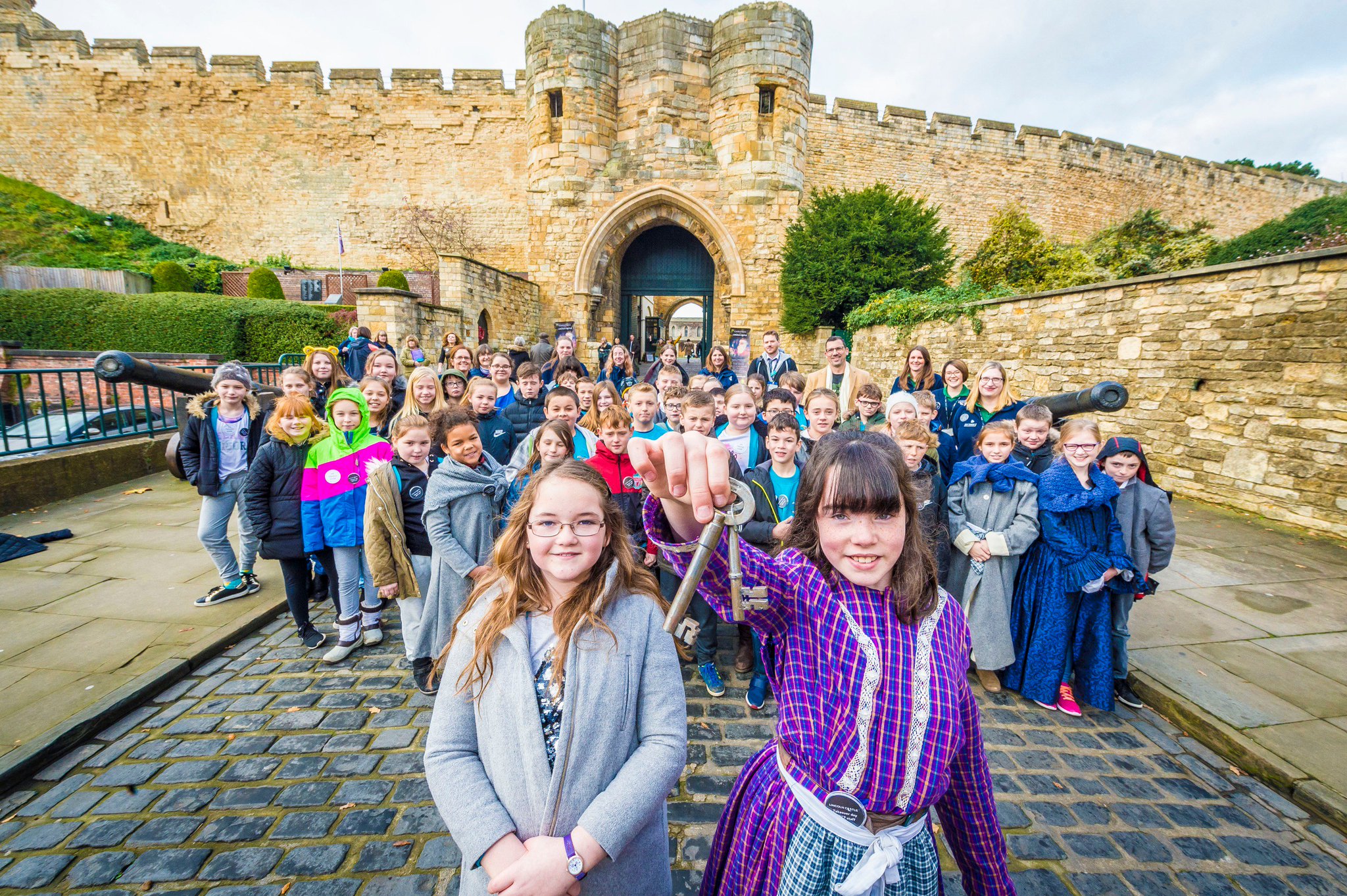
    The group of children taking over Lincon Castle, home of the Magna Carta for 2018 Kids Take Over day. Source.
    How about school kids? Would you invite a team of children into your museum to lead tours, handle artefacts, and sell items in the shop? Would you invite them to design and lead programming of their own?

    That's the premise of Takeover Day, an initiative now in its 8th year. Run by Kids In Museums, Takeover Day is a charity based in England which encourages and assists museums in being more family and child-friendly. On its face, the idea combines two of the most basic underlying ideas in museum engagement today:

    First, "Nothing About Us Without Us": If your institution is creating an exhibition, programming or event focused on serving the needs of a particular community, you should at least consult with, if not collaborate with that community.

    Second, families, school groups, and children are a massively important part of any museum's audience.

    The logical conclusion, therefore, is that we should be consulting, collaborating, and generally involving children in our institutions. Not just as guests and visitors, but as designers as well.
    Kids In Museums Takeover Day logo. Source. 
    If we should be doing this, then what does it look like to have kids running a museum, even if only for a day? Well, you can ask the over 200 institutions who participated in 2017. (The data for 2018 isn't in just yet, given that it happened a scant week and a half ago as of the time this article was written). Kids In Museum's official case-study document even helpfully lists roles that kids in museums can fill, including, but not limited to:

         -Archivist
         -Front of house staff
         -Curator
         -Conservator
         -Cafe
         -Tour Guide
         -Social Media
         -Workshop Leader

    Ceding your social media to outside forces is not unknown, (heck, Honda let the Grinch take over their twitter account for a holiday promotion) and it's easy to imagine giving over some gallery space to a local school to display art and have them put on their own show.

    But what about having a bunch of middle schoolers answer phone calls and emails on behalf of your institution that day? What about trusting them with the function of making and serving food?

    But what about writing labels, or wall text? What about keeping that text up after Kids Takeover day is finished, without a tag that says it was written by kids?

    What about putting a kid, or a teenager, on your board of directors, to ensure someone young has a say in where your museum is going for the next five, ten, twenty years?

    This is what makes Takeover Day so fascinating to me as an initiative. It strikes right at the terror of museum authority. If we are institutions of the public, for the public, don't we need to involve the public in our decision making? And how, among all the communities we need to satisfy, do we do this with children?

    I hope these questions are never fully answered. Our field is more complicated and wonderful for having to struggle to answer them. Kids Take Over is one fascinating, brilliant start to addressing these questions, and I look forward to seeing where it goes in years to come.

    6 November 2018

    COMBINING HORROR, HISTORY AND HALLOWEEN

    Program Reviews | Samantha Kilpatrick


    In search of a Halloween event to review for this column, I finally decided on 'Legends of Horror: 'Vampire Circus', presented by Captain Morgan at Casa Loma'.

    While trying to summarize the experience, I kept coming back to my sister's review of Mamma Mia 2: "Do you want to see a movie musical titled 'Mamma Mia 2: Here We Go Again?' If yes, you're going to enjoy this movie."

    Similarly: Do you want to go to 'Legends Of Horror: Vampire Circus, Presented By Captain Morgan at Casa Loma?' Do you want a fun horror romp without much history or fact? If you do, you will enjoy the experience.

    My My, How Can I Resist Ya. Entrance to the experience.
    Photo courtesy of Samantha Kilpatrick. 

    This experience was void of guides, in cloaks and hushed voices, speaking of grisly murders a hundred years past. It was not a tale of cold spots, and mysterious apparitions, and small objects going missing. It was a carnival haunted house. One of the groups in front of us included a man who brought a rubber chicken with us, who would squeak it at his companions when they were being 'chicken'. This set the mood. It's a fun group event; horror, like joy or a bottle of wine, is best enjoyed shared.

    The horror maze itself was reasonably by-the-book. The maze included flashing lights, smoke machines, actors jumping out of bushes and from behind corners, hanging 'bodies' to push past, and animatronics rigged up to motion detectors to lunge at the visitor on their way past. Themes ranged all over the place. If you want a smorgasbord of horror, with everything from Phantom of The Opera, to werewolves, to cannibals, ghosts and demon children, Legends of Horror has you covered.

    One of the performers in the haunted house, juggling flaming devil's sticks. Impressive, absolutely. Scary? The jury's out. Photo courtesy of Samantha Kilpatrick.  


    There were also many acrobats, I'm entirely not sure why. They veered mostly away from the 'scary circus' theme, but still included a number of incredible acrobats, some on aerial devices and trampolines. I think I spotted only one murderous clown and no allusions to any of the other traditional horror elements of the circus. The acrobats felt included to simply bring credence to the subtitle of the show this year; contributing to the production value, but certainly not the fright of the experience.

    After about forty-five minutes walking through various horror experiences in the grounds, you find yourself actually inside Casa Loma for the first time. Your first glimpse inside the castle itself is a bar.


    In case you wanted a fortifying shot or a meal before going on to the rest of the Legends of Horror, or just to disrupt the mood. Photo courtesy of Samantha Kilpatrick. 

    The second half of Legends of Horror takes place in Casa Loma rather than just on the grounds, and it is the piece of the experience I most wanted to talk about. The second half of the trip attempts to tap into the actual history of Toronto with the exact same level of tact and production value that the rest of the house had displayed.

    That is to say: costumed actors, smoke machines, special effects and jump scares, set against the backdrop of actual historical events. It was so dark in the tunnel it was difficult to take photos, so please bear with me a moment while I talk about the exhibition on display, and how it was used in Legends of Horror.

    "Toronto, The Dark Side" a permanent exhibition in the Casa Loma tunnels. The tunnel is covered on both sides by photos from The Toronto Archives, blown up and sorted into different 'Dark Sides' of Toronto's past, including fires, the depression, and Toronto's first plane crash Most notably was the photos titled 'the Plague Years', which were photos of real children treated for unnamed diseases at Sick Kids Hospital- given that the photos in question were from the 1920s, typhus? Cholera? Smallpox? Just getting vaccines?


    Legends of Horror's Instagram post about Casa Loma, featuring their intervention in the tunnels. 

    Regardless of the facts of the photos, they served as the backdrop to the same sorts of effects that the rest of the experience featured. The photo was framed by a 'cage' of plastic bars, convincingly rusted. Between the photo and the viewer, was a bloody fake body on a bed which lurched at the visitor, and a mannequin of a girl in a bloody, old-timey dress covered in sores was lit by a menacing red light. Again, I emphasize: the backdrop was a blown-up black and white photo of a children's ward at a hospital circa 1920, and the foreground was 'look at how scary sick children are.'

    Photos of the aftermath of the fires in Toronto's history were subject to their own genre-appropriate treatment. Red and yellow lights, crackling sound effects, a full-body replica of a man with horrible burns.

    I spent the first half of the experience wishing that the Legends of Horror would engage more with the actual history of Casa Loma, and the second half deeply regretting my wish. I'm not sure if there is a tasteful way to plug into actual lived tragedy for the purposes of provoking titillating and exciting horror for the viewer, but I am certain that this isn't it. Perhaps it's unfair to demand a haunted house experience treat historical figures with the respect they deserve. In that case, I would vastly prefer they hung sheets over the photos and had an actor with a chainsaw chase us through the tunnel. I think this is the first time that I have found historical context detract from an experience rather than add to it.

    Legends of Horror was exactly as advertised: a high quality, high budget, horror experience. But it certainly wasn't a historic experience, and it didn't tap into any ghosts that may have been haunting the premises. And it was weakest when it was trying to be.

    9 October 2018

    INN TO THE PAST

    Program Reviews | Samantha Kilpatrick


    Every Sunday afternoon the Montgomery’s Inn runs a Sunday tea. A beautiful, sunlit tea room, an art exhibition on the walls, costumed interpreters, and of course, tea and cookies.

    The tea service at Montgomery's Inn. Photo courtesy of Samantha Kilpatrick. 

    This spread is available for a suggested donation of only seven dollars (ten, if you want to include the tour as well) and is excellent. Four varieties of cookie, plus a peach loaf, plus tea, all homemade and delicious. If tea isn't your preference, the Montgomery’s Inn also hosts Thirsty Thursdays on the last Thursday of every month. The Inn reprises its former role as a tavern and serves stew,
    A small sample of the wide array of events Montgomery's
    Inn runs. Photo courtesy of Samantha
    Kilpatrick.
    a selection of bread, and wine to the accompaniment of live music. Don't get this confused with the first Thursday of every month when the Inn hosts “Fret Not Ukulele Night.” Ukulele players of all skill levels are invited to congregate and become part of a tradition of music at the Inn (bringing your own ukulele is encouraged, but not mandatory). If you’re not fond of going out to eat at all, they also host a farmers market on Wednesday 2-6 year round. All events can be found here.

    The museum hosts seasonal events of all kinds, including Halloween and Christmas, plus summer camps. It is also available, of course, for rentals of space, although not overnight.

    The Inn came to my attention while writing this column precisely because of this wildly diverse array of activities; I was making a list of programs hosted by museums in the area, and then realized that nearly half were from the same institution.

    During my tea, in the beautifully restored tea room, a kind interpreter in costume pointed out the exhibition of landscapes on the wall, by a Canadian artist who took her very early automobile on and off the road in search of the most picturesque landscapes in Ontario to paint. In this space were a scattering of other guests, and the crew of “Scenes From Joshua,” blocking scenes for the upcoming one-hour chamber opera. By the time this article posts, they will be performing.

    By any count, this impressive roster of events for a museum with only twelve rooms, but I like to think that the historic use of the Inn acclimatized the building to the activity. It is an Inn so well used, that there is a groove in the floorboards from the door to the bar. The building would likely not be bothered by the constant rotation of activities through this space.

    While the Inn was active, it was the meeting place for the local Orange Lodge at the turn of the eighteenth century, and later served as the meeting place for annual Home District Meetings, later served by four separate counties. Records made by the eponymous Montgomery indicate that the Inn was also home to at least one political campaign meeting, one wedding, and multiple concerts and dances.

    One of the bedrooms historically available to rent at Montgomery's Inn, as seen on the tour of the house.
     Photo courtesy of Samantha Kilpatrick.
    I bring up this wide array of activities because how to program a historic site is a question every museum is either currently grappling with, or should be grappling with. For small museums and historic sites/houses in particular, how to encourage repeat visitors is a perennial and crucial question. Montgomery's Inn seems to answer this question with not only a host of programming for all visitors, but also by rotating these events with such frequency that it’s incredible that the entire building doesn’t spin on its foundations.

    I can’t, of course, speak to the other events programmed in the Inn. I can only speak to the tea I had-- an excellent offering of a variety of foods wide enough to please nearly every palette.

    29 June 2018

    WHY REPEAT THE PAST: SPADINA HOUSE'S GATSBY GARDEN PARTY

    PROGRAM REVIEWS

    BY: SAMANTHA KILPATRICK

    The Great Gatsby Garden party hosted by the Spadina House Museum is an era-appropriate bash held in a beautiful outdoor garden every year in late June. Running since 2014, this event has exploded into a success for the museum, as well as a social media phenomenon in its own right. This year, the weather was damper than preferable for an event that advertises itself as a picnic as much as a party, but the drizzle didn’t stop hundreds of people turning up for the event.

    Attendees at the grey and cheerful Gatsby Garden Party (Spadina House). Photo courtesy of Samantha Kilpatrick.
    The main event is a bring-your-own-food-picnic in advertising, but in truth is a meandering, cheerful wander through Spadina House’s grounds, doubling back and back again. Dotted across the grounds were vendors and historic society booths, offering to take your picture or quiz you on the uses of historic silver wear implements. Spadina House also had a pair of bands playing music, as well as an array of vintage gramophones playing to make the event sound the part of a party in the 20s.

    One of two bands playing the Gatsby Garden
    party, trying to stay dry (Spadina
    House), photo courtesy of the Samantha Kilpatrick..

    For the more involved, there was also a gambling den, a chance to learn several 20s dances on the dance floor under a tent, a screening of several silent movies courtesy of the Toronto Silent Film Society, and the opportunity to play croquette.

    Vendors sold food and drinks, and many of them offered themed items. Chau offered, among others, ‘Daisy’s Dainty Tea Sandwiches,’ and Crystal Head Vodka, a sponsor of the event, offered several themed drinks, including the ‘across the bay’ cocktail. This, of course, was green. Throughout the entire event, there were also those who brought their own food, and had set up picnic blankets and were enjoying the event in jackets and dresses and headbands and hats.

    I would like now to dwell on the other attendees because the other attendees are worth remarking on. Of the hundreds of people I saw at the party, only a dozen or so made no attempt to dress for the event at all. To be fair, my perhaps generous definition of ‘dressing for the event’ runs the gamut from ‘wearing an old-fashioned dress and a necklace as a headband,’ all the way to button-perfect recreations of suits and dresses. Some of the more creative and adventurous party goers came dressed as 20’s police officers, or aviators, (and one Charlie Chapman) and many were chattering happily with others about how they created their costumes.

    The dance floor at the Great Gatsby Garden Party, where the wide array of costumes can be seen. (Spadina House). Video curtosy of Samantha Kilpatrick..
    Again, the vast majority made some effort- this is not to say that everyone came in pink suits with straw hats, but that even most of the men found a pastel collared shirt and a pair of khakis to take pictures in. It created an atmosphere not only of a party but also a shared, secret experience, common only to the hundreds of other people at the party. I should, now, admit that I was one of these costumed attendees. There seemed no better way to experience the event than enthusiastically, without reservation, and with an additional dozen hours of work to create an era-appropriate costume before the event itself. 

    The author (left), and Elizabeth Patti, maker of these dresses, and companion to the event (right). Photo taken on Spadina House porch, by fellow attendees. Photo courtesy of author.
    A side effect of this mass costuming is the feeling that the experience of this party starts well before the event itself. For one thing, there is always the delightful ride on public transit in period dress, and the attempt to suss out whether or not your fellow passengers are simply dressed well or attending the same event. If you have never ridden public transit in costume before, I recommend the experience highly. It is in my experience, an event that brings you much closer to those who you are riding with, and makes you acutely aware of how comfortable you are with being stared at. As you draw closer and closer to the party, you begin spotting more ropes of pearls, and boater hats, and long dripping 20s shawls. It creates an atmosphere of anticipation and mutual excitement, this spotting of other partygoers, that is difficult to describe except to someone who has experienced a similar event.

    Even before the ride itself, of course, there is not inconsiderable effort if you are one of those attending in more dedicated period dress. There is the effort of looking up historic photos, illustrations, or advertisements to attempt to find inspiration and ideas. There is the scouring of thrift stores, fabric stores, flea markets, or the back of one’s closet in search of a material you can wear or transform into something era-appropriate. There is the negotiation of ‘close enough’, where compromises are made to make outfits more fun, or flattering. Drop-waist 20s style dresses have the same tendency that high-waisted regency gowns do, to make the wearer look slightly pregnant. Many attendees opted to nip the actual waist of the dress in slightly, to create a more modern silhouette while maintaining much of the look of the 20s.

    This pre-event energy is something that Spadina house plays into quite consciously. Spadina Museum has an incredibly robust social media presence, and their Instagram, as well as their Facebook page, has been promoting the event with great humour and success. Pictures from previous years, two-minute etiquette guides, and daily posts meant to run a countdown to when the tickets went on sale all served to heighten the excitement. It’s an annual event that’s a roaring success, and Spadina House has seized it as their blockbuster event of the year.

    The event this year was a delight to attend, and I can’t wait to see how Spadina house harnesses this energy again next year.

    1 June 2018

    A FUTURE TO IMAGINE FOR

    PROGRAM REVIEWS

    BY: SAMANTHA KILPATRICK

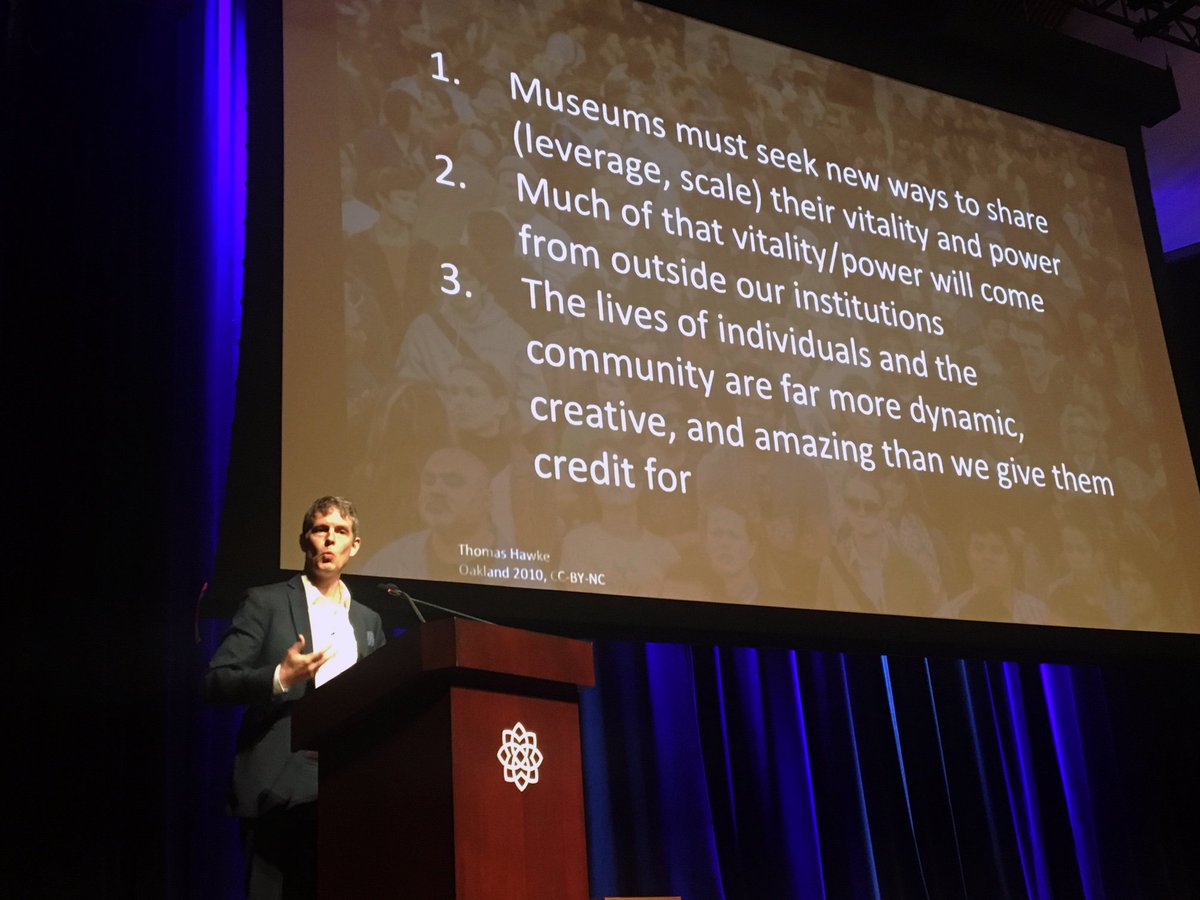
    For the inaugural edition of the #ProgramReviews column, I attended a talk called The Evolving Role Of Museums hosted by the Aga Khan Museum on May 9th, 2018. Michael Edson, co-founder of the still-forming United Nations museum, UN Live. Edson gave a lecture about the evolving role of museums for the upcoming International Museums Day, as part of the Aga Khan Museum’s Changing Perceptions Series.

    Formerly director of Web and New Media Strategy at the Smithsonian, Edson gave a wide-ranging and energetic talk, where at one point he organized a rock paper scissors competition with the entire audience. I expected, at the end of this competition, for him to speak about the power of statistics, and that it is exceedingly improbable that any individual would win, but that it was inevitable that someone would. Instead, he spoke briefly about the power of play to activate learning, and then showed us this video:


    He used this as a launching off point to talk about the three dimensions in which the world has shifted rapidly in scope, scale, and speed- the problems of globalization and rapid automation that are shaping the world in ways which no one, not museums, not nations, not individuals, yet understands. What then, is UN Live to become?

    The goal of UN Live, as Edson explained it, is not to be an institution which would educate its visitors about the history of the UN. The museum is instead constructed around about the UN’s 17 Sustainable Development Goals for 2030, and to encourage anyone who comes into contact with the museum to go forth and make progress towards these goals in their own communities.

    The UN's 17 sustainability goals for 2030. Source.
    He said that when people see these goals for the first time, they often laugh at the sheer audacity of them. End poverty everywhere? Peace and justice everywhere? In a scant twelve years? And yet, there is a near global consensus that this is important work that someone, somewhere ought to be doing. So why not have a UN museum, one which uses the institutional strength of the United Nations not only to push for these goals but to encourage everyone, everywhere, to be the someone, somewhere that works towards fulfilling them.

    The challenge, as Edson framed it, was not to educate. We do not, he reminded us all, act because we have a lack of information available to us. People continue to smoke well after they know the adverse effects of smoking. The challenge of UN Live is to encourage people to engage with the goals of the UN and to embody them in their own lives and their own communities. UN Live seeks to build within people the habits of community engagement and democracy. Their role is to be the United Nations “at eye level” with the citizens of the world, and to help people understand and act on these goals in the language of everyday life.

    The ways one can encounter UN Live, which Edson promises are getting equal love and attention, are the physical location in Copenhagen, its network with other public institutions all over the world, and a digital museum. Edson’s former role, as director of Web and New Media Strategy at the Smithsonian, will doubtless help him in this pursuit. Each of these, of course, will maintain as part of its mission and in every step of the design, a bridge between information and action. Part of the mission is not to ensure that every person who interacts with UN live leaves to solve a world problem, but to find, elevate, and assist the changemakers that already exist in every community. UN Live seeks to change the encounter rate of those brilliant, inspiring people we all know, from one in a million to two or three in a million, and to help those change makers, creatives, leaders to effect change more efficiently. Edson bounced back and forth from grand sweeping statements about the way the world should be, to specific steps UN Live was taking to help that change happen with such rapidity it at times gave me goosebumps.

    Michael Edson, at the Aga Khan Museum. Source.
    I will leave you with this, although this is not how Edson closed the talk. He said that neither the UN or the concept of the museum was a concept that always elicits cheers from your audience. But, no matter how they resent one or both concepts, when you call on behalf of the UN Museum, people always return your calls. It’s a weighty responsibility, and that we as future museum professionals ourselves should be conscious of. Very few of us will ever work for an institution with as much cultural gravity as the UN, but institutions have power. Institutions have reputations and weight and gravity, and whether or not they are liked, they are respected and listened to. We would all do well to remember that this is not an abstract concept. Why shouldn't a museum, for instance, partner with Elections Canada and help people register to vote? Why shouldn't a museum not only have and use green energy but also host events where visitors can learn to plant their own green roofs. It all felt possible, while Edson spoke. He speaks with the kind of passion that can move mountains, and perhaps more impressively, people.

    The overwhelming feeling I had leaving The Evolving Role of Museums lecture was one of hope. Hope as a motivator, a driver, as a source of strength. I could practically feel it beating against my chest as I left. As a program host, could you imagine a better way for your attendees to leave?