Showing posts with label Smithsonian. Show all posts

13 October 2020

FRAMING THE CONTEXT OF COLLECTIONS AT THE NMAAHC

Collections Corner | Martin Bierens


After I have graduated from the MMSt program my goal is to be hired as a collection manager. I assume that I will find myself in two possible situations. First, I find myself at a well-established museum with a larger collection, that is well documented and it will now be my job to continue this excellent care. Or perhaps I am hired by a small institution that is in desperate need of somebody to come in and document their collection which has not been housed or organized efficiently in the past. What I would never imagine is coming to a museum with not a single object, and then being asked to amass a complete collection in little more than a decade.

Lately, I have been reading A Fool’s Errand: Creating the National Museum of African American History and Culture in the Age of Bush, Obama, and Trumpa new book by Lonnie Bunch, Secretary of the Smithsonian and former director of the National Museum of African American History and Culture. During the development of the new NMAAHC, which opened in 2016, Bunch was in charge of the exact task I have described above. Bunch and his small team of curatorial staff and collections managers had to travel the United States to establish a brand new museum collection — from scratch.

Trumpet owned by jazz musician Louis Armstrong, part of the NMAAHC collection. (Source)

I could tell the story of how Bunch went about finding objects to collect, all the interesting people he met on this mission, and the collection’s lasting impact on the Smithsonian. All of these stories are fascinating, but I guarantee that in his book Bunch tells these stories much better than I could. Rather, I would like to ponder the differences between a “new” collection and an “old” collection, and the implications of each.

Museums are constantly trying to innovate and stay relevant in the twenty-first century, and many are doing an excellent job engaging with their communities, but there are still many issues. Perhaps an origin of these contemporary issues is that collections reflect radically different methodologies and values from those today. Could part of the reason that these collections do not serve their communities be due to the age of the collection?

I would like to make it clear that the age of the objects within a collection is not the issue, but rather the context in which the object has been collected which can dictate the stories that museums convey centuries later. Many large institutions such as the ROM, the British Museum, and the Louvre were founded in the nineteenth or early twentieth century. As a result, the objects that were chosen to be included in these museum collections were influenced by this time period.

Some museums, like the Brooklyn Museum pictured here, have opted to promote transparency in the museum's practises with "open collections" visitors can explore as additions to traditional galleries. (Source)

It is not the fault of the objects, but many of these objects reflect the attitudes and beliefs of this time. For example, in ethnographic museums, the collection reflects a history of Western colonial exploitation and the theft of material culture from marginalized colonial populations. Art museums on the other hand may reflect gender, class, and racial prejudices of the past. Think of all the white-male artists hanging in galleries all over the world. Of course, the great tragedy of collecting practices of the past that were based on deeply held prejudices is to think of what we have lost because it was not considered worth preserving at the time.

Ole Worm's "Musei Wormiani Historia" the original colonial collecting practise, the Cabinet of Curiosity (Source)

In a sense, the new collection at the NMAAHC is free from the dubious collecting practices of the past. However, perhaps in one-hundred years, future museum professionals will look back at the material collected today and identify issues that we are now foolishly unable to recognize. This highlights the assumptions, and reminds us that collections are so much more than their objects, the act of collecting itself has long-lasting implications, reaching beyond the objects, and the lowly collection manager themselves.

2 April 2020

WE'WHA: AN EXPLORATION INTO AGENCY

Not Your Average Cistory | Amelia Smith


In 1886, a Zuni Two-Spirit artist visited the Smithsonian. Her name was We’wha. Brought to Washington by ethnologist Matilda Coxe Stevenson, We’wha was able to impart knowledge onto the museum in incredible ways.
A portrait taken of We'wha in 1894. Source

Gender is a weird thing, especially when talking about other culture’s genders. In Zuni culture, We’wha was a lhamana, someone who was assigned male at birth, but would take on the gender roles of women. While this may sound similar to what we in the West understanding of transgender people, it is important not to conflate the two as the lhamana played a significant social and religious role within Zuni society. For the purposes of this article, I will be using she/her pronouns for We’wha.

By all accounts, We’wha was a highly acclaimed artist. Her pottery and weaving skills drew the attention of Coxe Stevenson, who was sent by the Smithsonian to Zuni to document and collect research on the Zuni peoples. As a result, many pieces that were made by We’wha found their way into the Smithsonian collection. Unfortunately, due to the way that the Smithsonian recorded information in their ledgers, We’wha’s role was frequently lost.

We’wha’s  six month visit to Washington and the Smithsonian is truly a fascinating story. For Coxe Stevenson, bringing We’wha to the Capital served two purposes; spark interest in the nascent field of ethnology and to allow for more information to be collected on objects that had already been obtained from the Zuni peoples. Of her time at the Smithsonian, there are two instances that are particularly noteworthy: one involving a loom and another involving prayer feathers.

The loom had previously been collected by the Smithsonian, but it was disassembled upon arriving at the museum and catalogued as individual pieces. As a result, no one at the Smithsonian was aware of how the loom was meant to be used. With We’wha being on the museum's premises, she was able to assemble and use the loom. This was a highly documented moment in both newspaper articles as well as photographic evidence, as We’wha’s activities in the nation’s Capital were the talk of the town. A personal favourite of mine is the photograph of We’wha setting up the loom. In, what appears to be a storage room at the Smithsonian, We’wha is sitting on the floor while the loom is placed upon collection boxes and stepping stools. It is a brilliant contrast that feels out of place for a 19th Century institution.
We'wha and the loom in the Smithsonian. The loom came from the museum's collection. Source
The prayer feathers are a creation by We’wha in a most delightful way. While she was in Washington, the Summer Solstice was coming up and We’wha wanted to perform the traditional Zuni ceremonies that accompanied it. This involved the creation of prayer feathers. While the materials to make these would have been able to be purchased in Washington, Zuni customs forbade acquiring them through any sort of monetary system. This left only one option; the Smithsonian’s collections themselves. In an act that echoes the artist in residence programs of over a century later, the Smithsonian made its storage available for We’wha to use. And that is just what she did. The result was a set of prayer feathers that came from multiple birds local to Zuni as well as shells and dyes. Once the ceremony was performed, the feathers were planted for two days before re-entering the museum as something entirely new. In this way, We’wha was able to recontextualize the museum’s collection, highlighting the overlap between the strict categories that existed in the catalogues.
The prayer feathers that We'wha created to celebrate the Summer Solstice. Source
These are but two examples of We’wha’s time in Washington and this is really only just scratching the surface of her experiences with the museum. Her story is truly remarkable and if this article has piqued your interest, I would highly recommend reading more about her. Her role as not just a subject of the museum but a participant as well, in a time when institutions were predominantly concerned with preserving indigenous material culture without preserving the indigenous peoples themselves, opens up so many discussions that could not possibly be told in this article alone.

For further reading on We'wha, I would recommend:

Issac, Gwyneira. "We'wha Goes To Washington." In Reassembling the Collection: Ethnographic Museums and Indigenous Agency, edited by Rodney Harrison, Sarah Byrne, and Anne Clarke, 143-169. Santa Fe: School For Advanced Research Press, 2013.

Roscoe, Will. The Zuni Man-Woman. Albuquerque: University of New Mexico Press, 1991.

25 February 2019

VROOM VROOM

Museum Innovations | Keelan Cashmore


Imagine a world where, instead of going to a museum, the museum came to you.

Does this seem far-fetched? Perhaps. But it’s an idea that appears to be making a splash not only in Canada, but around the world.


Van cartoon. Source.

The mobile museum is “a museum’s educational outreach program that brings the museum to the people rather than vice versa. Typically, they can be in recreational vehicles, or trucks/trailers that drive to schools, libraries, and rural events.” (Source)

A primary example of mobile museums in Canada is the BC Artifacts Museum. This museum’s collection contains First Nations, Pioneer, Fur Trade, and Gold Rush artifacts, with presentations primarily in British Columbia. These presentations can be tailored to anyone, from students, to the elderly, to those with special needs, and allows the audience to not only view, but also touch some of the artifacts. (Source)


Logo for the BC Artifacts Museum. Source.

A similar museum, TAME Trailblazer, is available in Texas. The Tame (Texas Alliance for Minorities in Engineering) Trailblazer is a STEM museum on wheels. This museum’s primary focus is students in grades 3-8. The museum is housed in a 40-foot trailer and brings interactive exhibits students. These exhibits have an emphasis on STEM topics, such as energy, space, biotech, and weather, and provides students with a support network, consisting of after school TAME clubs, STEM competitions, and even college scholarships. (Source
TAME Trailblazer logo. Source.
However, North America is not the only continent home to mobile museums. In Australia, Shark in a Bus has become a popular attraction. This heritage marine museum is located on wheels in a 157 Leyland Bus and is meant to represent Australia as a whole. The main attraction is a 5-metre long Great White Shark called Frankie, but the museum also exhibits whaling artifacts, fossils, and more. (Source


Shark in a Bus photo collage. Source.
The appearance of these mobile museums speaks strongly to accessibility within various institutions. Having museums on wheels could be a huge benefit to those who do not have access to museums otherwise. They are also highly beneficial for teachers, as with the BC Artifacts Museum and the TAME Trailblazer, the exhibits can be brought to the schools directly. In cases like Shark in a Bus, with its consistent travelling, it allows anyone the chance to see the exhibits, despite proximity to a specific city. It also allows people to cut back on travel costs if they want to see one specific exhibit.

This poses an interesting question; could large institutions become a mobile museum?

Yes and no. 


Source for all three images.


Some museums, like the Smithsonian, have over 150 million specimens and artifacts throughout their displays and collections (source). It would be impossible to fit this many objects, artifacts, and specimens into the trailers or trucks typically utilized by the mobile museums. However, the adoption of this concept could help larger museums reach a broader audience, and potentially get more visitors through the institution itself. Therefore, the museum would not become completely mobile, but could utilize the idea of mobility to help reach more patrons than before.

Overall, I think the mobile museums are a fantastic new way to promote educational programming and small exhibits to students and the public. If their success is continued, I think it will only be a matter of time until we see institutions big and small offering this service and helping to make museums around the globe more accessible!

7 November 2018

EXPLORING YOUR DISCOMFORT ZONE

She’s My Muse | Kathleen Lew


From October 24-26 I attended my first museum conference, the Ontario Museum Association’s Collaborating for Impact: Not Business as Usual. My nerves about attending a professional conference became relatively minor amidst a larger conversation about the value of discomfort in museums. “Not Business as Usual” means questioning existing assumptions about museum practices and acting to change them to better serve audiences. Difficult conversations of self-criticism are uncomfortable, but worth having. This is why “discomfort”—as a feeling and a practice, is an important ‘muse’ to consider.

OMA's conference "Collaborating for Impact: Not Business as Usual" in Toronto, ON.
Photo courtesy of Selin Kahramanoglu.


Who is already uncomfortable?

There are many people who do not want to visit, or feel unsafe visiting, museums because of their elitism and relationship to colonialism and power. As museum professionals, we must sacrifice our privileges of comfort for communities to feel welcome and engaged in the museum space.

Dr. Deborah L. Mack from the National Museum of African American History and Culture (Smithsonian Institution) expressed similar sentiments in her keynote “The Work You Do, The Person You Are.” She stated that people need to feel heard before you can start a dialogue. Mack spoke about how African American communities have felt historically unwelcome at the Smithsonian, highlighting the importance of going out to communities rather than expecting them to come to the museum.

Source.

Who does discomfort benefit?

There is violence in not engaging with discomfort consciously, or not preparing for the potential consequences of discomfort.

Wendy Ng, J’net Ayayqwayaksheelth, and Sarah Chu from the Royal Ontario Museum emphasized in their talk “In a Good Way…Prioritizing Indigenous Education and Learning” that we need to address legacies of historical grief that persist without tokenizing Indigenous peoples. Our discomfort does not benefit communities if we are speaking for others or relying on western academic frameworks. Ally is a verb, not a noun— there needs to be action and we need to hold each other accountable.

As an emerging professional, I hope to become increasingly comfortable at conferences and increasingly uncomfortable when challenging my existing perceptions of museum work.

What does discomfort look like at your institution?

30 November 2017

A DIAMOND IN THE ROUGH: THE SIGNIFICANCE OF DIAMONDS THROUGH HISTORY

THROWBACK THURSDAY

BY: LEORE ZECHARIA

This week the Royal family announced the engagement of Prince Harry to actress Meghan Markle. A lot of discussion has been focused on her engagement ring, and not for reasons one may think. It is because the ring the Prince commissioned uses diamonds from the personal collection of his late mother, Princess Diana. Using diamonds belonging to the late Princess Diana is not a new phenomenon; in Prince William’s engagement to Kate Middleton, he proposed using the late Princess Diana’s sapphire and diamond engagement ring.

So, what is it about diamonds?

Diamonds were first mined in India, with earliest descriptions dating back to the fourth century BC. Resources for mining allowed for limited quantities of diamonds distributed among an equally limited market – India’s elite and wealthy classes. By the thirteenth century, diamonds started to appear in European regalia and jewelry, set as accent pieces among pearls and gold. At this point, King Louis IX declared that diamonds were only for the king, showing the rarity and value of diamonds throughout the world.

Over the centuries, diamonds began spreading through the aristocracy of European elite; however, with political upheavals, especially the French Revolution, the distribution of wealth changed. More and more people were able to afford the luxury of diamonds. During this time, the distributors of diamonds shifted from India to Brazil, and then South Africa in the 1800s as the demand for diamonds expanded to North America. In the last 150 years, diamond distributors also expanded into Botswana, Canada, and Australia.

Therefore, this week, I would like to throw it back to some of the world’s most extravagant  diamonds housed in museums.

1. The Hope Diamond – Smithsonian Museum of Natural History in Washington, D.C., USA

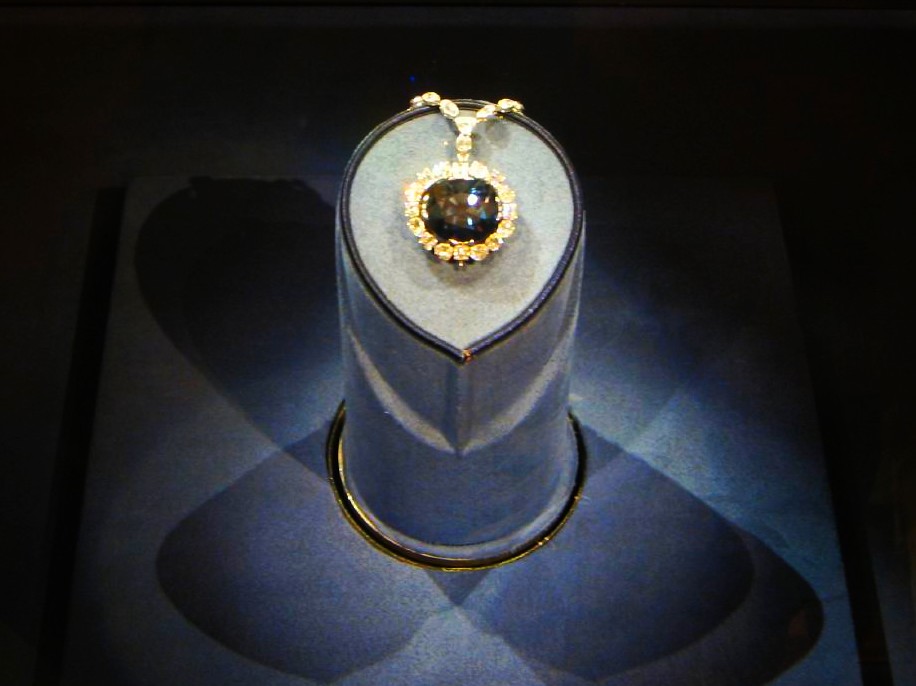
This 45.52 carat diamond was found in India in 1642, cut from an original diamond worth 132.00 carats. The Hope Diamond was originally set in the royal crown of King Louis XIV in 1688, and stolen during the French Revolution. In 1839, a blue diamond was described in the collection of Henry Phillip Hope (which is where the name comes from). His grandson was forced to put it up for sale, eventually ending up in New York City and traveling between many hands, including the House of Cartier and Harry Winston. In 1958, Harry Winston donated the Hope Diamond to the Smithsonian. Rumour has it that this diamond is cursed, bringing misfortune to anyone who owns it.

The Hope Diamond. Source.
Source.

2. Crown Jewels – Tower of London in London, England


The Crown Jewels are part of the Royal Collection, and are the most powerful symbols of the British monarchy, containing over 23,000 gems. The Crown Jewels are under armed guard in the Jewel House at the Tower of London, due to the destruction of the Crown Jewels at the Tower after the Civil War. They were remade for Charles II for his coronation in 1661. Included in the collection is the Coronation Regalia, St. Edward’s crown, the Sovereign’s Orb and Jewelled Sword of Offering, the Sovereign’s Scepter and Rod, and the Imperial State Crown.

The Cullinan I is the world’s largest and top quality white cut diamond, with the Cullinan II as the second largest. These diamonds are now set in the band of the Imperial State Crown. The Mountain of Light diamond, which has a reputation for bringing bad luck to men, was presented to Queen Victoria in 1849, and now adorns the Queen Mother’s Crown belonging to Queen Elizabeth. The Crown Jewels hold significant importance because they symbolize the passing of authority from one monarch to the next.

The Mountain of Light (Koh-i-Nûr) Diamond on the Queen Mother's Crown. Source.

The Imperial State Crown with the Cullinan I Diamond. Source.
3. The Orloff Diamond – The Diamond Fund, The Armoury Museum in Moscow, Russia

The Orloff Diamond weighs approximately 200 carats, and is part of the Crown Jewels collection in the Diamond Fund located inside the Armoury Museum in Moscow, Russia. Its shape is described as half a chicken egg, and is most famously mounted in the Imperial Scepter during the reign of Catherine the Great (1762-1796). Originally, the diamond was one half of eyes of Sri Ranga, a Hindu Temple God. Stolen by a French soldier stationed in India, the diamond eventually ended up in the hands of Khojeh, a Persian jeweller and friend of Prince Gregory Orloff, the lover of Catherine the Great, who then presented the diamond as a gift. Catherine the Great was a lover of diamonds and constantly adorned herself in them; however, she never wore the Orloff Diamond. Instead, she mounted it in the Imperial Scepter, showing she never accepted Prince Orloff’s love and rather chose to rule alone. The Diamond Fund’s Crown Jewels collection also contains the Great Imperial Crown, which was also created for Catherine the Great and contains 4,936 diamonds (2,858 carats).

Orloff (Orlov) Diamond set in the Imperial Sceptre of Catherine the Great. Source.
Great Imperial Crown of Catherine the Great. Source

Diamonds and other precious stones are an important tool for understanding the diverse aspects of any cultural history and society. By looking at the history of diamonds, we can reveal the conditions and processes in which ordinary pieces develop value, both monetarily and culturally. From these examples, we can see that diamonds hold meaning for individuals and families, and, therefore, can be woven into the cultural patterns of society.

16 October 2017

THE SMITHSONIAN REALLY WANTS YOU TO THINK ABOUT FOOD

A MUSE BOUCHE

BY: JENNIFER LEE

How much time do you spend thinking about your food? The everyday business of shopping for, buying, cooking, and eating food consumes enough attention that we can miss opportunities to consider the cultural, economic, and historical processes that shape our diets. If you’ve ever wondered why nutrition labels look the way they do, or who decided that carbs were bad for you anyway - or if this is the first time you’ve pondered this - the Smithsonian’s National Museum of American History might be able to help you out.


Take a moment to stop and think about food. Source. 

From Oct 26 to 28, the Smithsonian Institution will host the third annual Smithsonian Food History Weekend under the theme ‘Many Flavors, One Nation’. The weekend brings researchers, culinary practitioners, writers, and the general public to the National Museum of American History to discuss and understand the history and role of food in America. The meat of the weekend lies in the moderated roundtable discussions (free to attend and streamed online) and Saturday’s Food History Festival, a day stuffed full of food-related public programming.

Commendably, the SI keeps its yearly weekends topical; last year’s theme was ‘Politics on Your Plate’, in keeping with the end of the 2016 election campaign season. Each Food History Weekend wrestles with big and often difficult questions and themes, including identity and the politics of farm labour, nutrition, and health. In 2016, participants and attendees asked, “Whose voices are influencing food policy today? What are the critical issues, and what role does democracy play in the future of food in America?” This year, the weekend will centre on stories of migration, cultural exchange, tradition, and identity. The theme suggests that the weekend will embrace pluralism and emphasize the diversity of American food history: the ways in which all of our foodways and traditions influence each other. A public discussion on culinary diplomacy (“A new soft power, culinary diplomacy has the ability to bridge conflicts in situations where traditional forms of diplomacy have been ineffective”) seems almost comically well-timed for the current political climate.

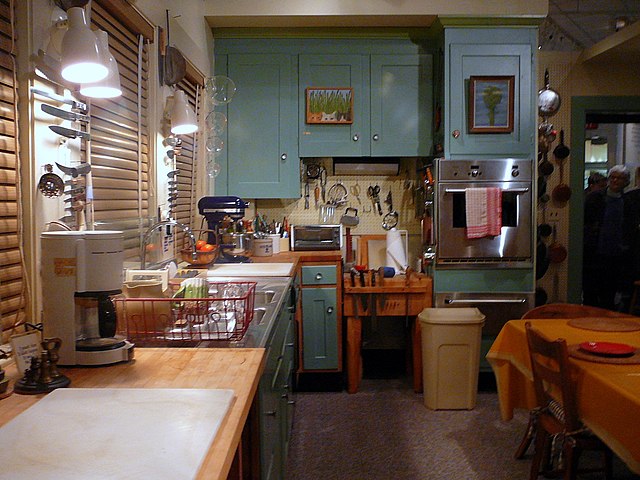
The Food History Weekend is only one pea in a pod full of food-history initiatives at the Smithsonian. The NMAH boasts a full slate (or perhaps a full plate?) of exhibitions and programming that examine why and how Americans eat the way they do. Most famously, the museum houses Julia Child’s kitchen, which was featured in her later cooking shows and relocated from her home in Massachusetts, complete with her signature copper pans.

Julia Child's iconic kitchen, preserved at the NMAH. Try to resist doing the Voice. Source. 

Child’s kitchen serves as the gateway to the ongoing exhibition FOOD: Transforming the American Table 1950-2000, which examines the changes wrought by innovation, industry, and cultural change on American diets. A demonstration kitchen hosts regular historically-inspired demos hosted by Smithsonian staff and guest chefs, and the museum runs programming outdoors in its gardens, including a recreated wartime Victory Garden. 

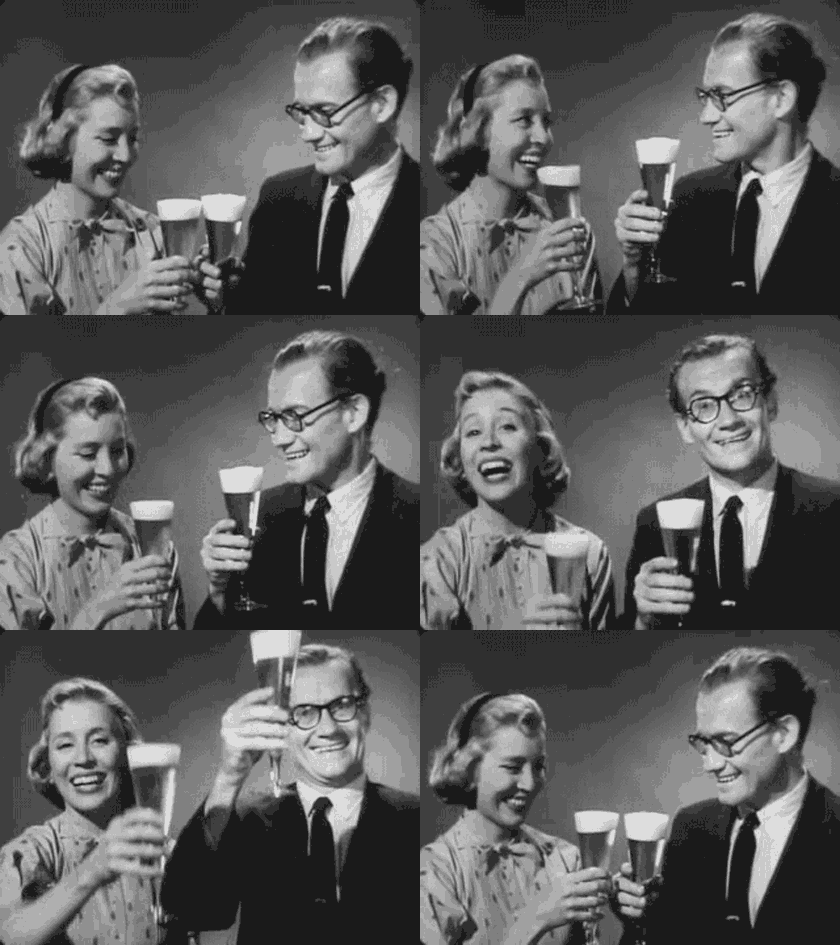
The Smithsonian’s commitment extends into the history of beverages. In January of this year, it hired Theresa McCulla as overseer of its American Brewing History Initiative (described by more than one media outlet as ‘the best job ever’). McCulla, a Harvard scholar whose background is in social history and food literacy, began by surveying the museum’s beer-related collections. She stated in January that she especially hopes to illuminate the overlooked role of women, immigrants, and enslaved people in the early history of American brewing.


Cheers to that. Source. 

Why this commitment to food history, and why does it matter?

Food history as demonstrated in museums (one of the most publicly accessible media through which people can learn about food) often takes the shape of demonstrating pre-industrial processes and recipes from the history of white settlement in North America: this is how pioneers made bread and brewed beer. Less frequently, museums and heritage sites may expose visitors to Indigenous foodways, usually also rooted in the distant past. These approaches are limited in time and scope: food history isn’t just about what white pioneers ate, but how all people have fed and continue to feed ourselves. What’s missing is a discussion of how we got from breadmaking in the eighteenth century to Yelp reviews of sushi in 2017, how culinary traditions have been adapted to meet the needs of the recent past and the present, and a critical look at how we think about food, including diet culture, food labour, and food literacy.

Food is both universal and highly specific. The ways in which we eat and think about eating are determined by and reflect our time, place, class, ethnicity, and gender. The universality of food as an experience makes it an ideal starting point for education: visitors already have a strong personal connection to the subject.

It’s loaded with meaning, and that means it’s well worth talking about everywhere in the public sphere, but especially in museums. At the same time, food can act as a gateway to topics we need to address more than ever: health, politics, labour, the environment, and racial and cultural difference. The Smithsonian’s food history programming recognizes that we are what we eat, and if what we eat isn’t ideal, that’s an interesting avenue to discuss, too. 

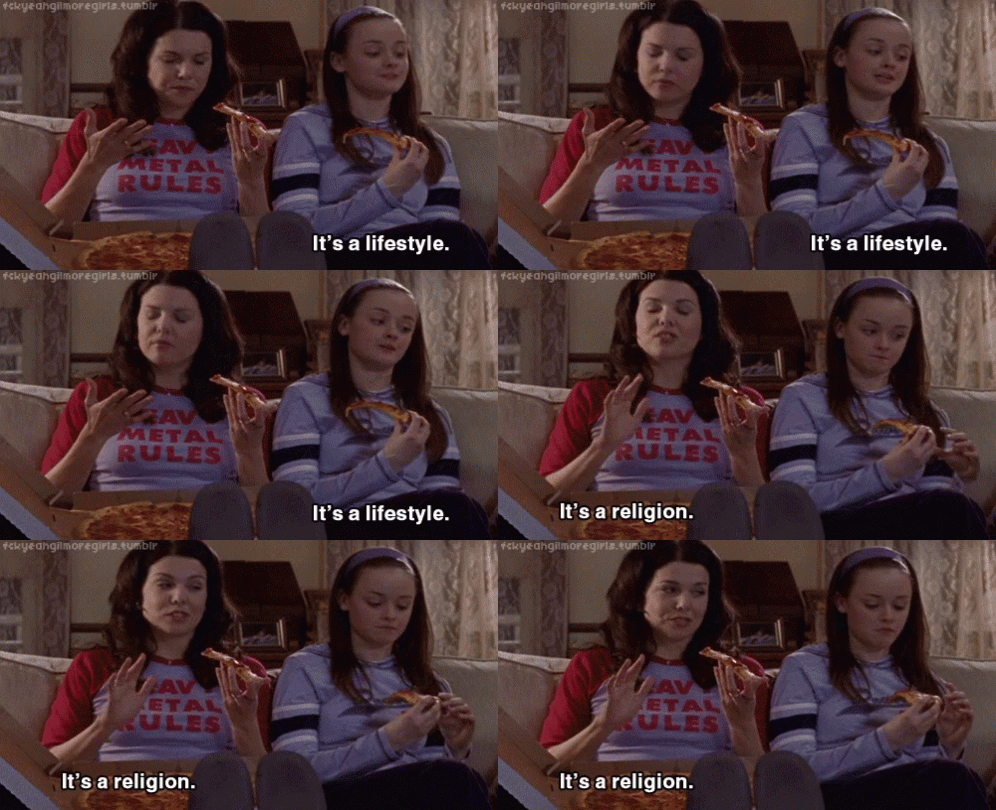
Can food history programming tell me why millennials are obsessed with pizza? Actually, yes, it probably can. Source. 

The Food History Weekend programming champions diversity, research, and critical thinking, which will be increasingly important as we face a changing intellectual landscape, in which there are facts, "facts", and Twitter. 

As stewards of material culture and historical record, heritage institutions are well-placed to help people think through historical processes and current events, and institutions like the NMAH have the resources to do this in a big way. The museum was the third most-visited Smithsonian institution last year, after the Air and Space and Natural History Museums, and welcomed 3.6 million visitors. Even without the impact of online content such as podcasts, blog posts, and the streamable Food History Weekend roundtables, that’s a pretty impressive reach, and it represents 3.6 million opportunities to get people thinking critically about their food.

If you’re interested in food history at the Smithsonian, I suggest checking out the NMAH blog's food history tag and the Food History Weekend page for videos of past roundtable events. If you're podcast-inclined, there's an interview with beer historian Teresa McCulla on the Smithsonian podcast, Sidedoor.

17 January 2017

NOT JUST FOR PLASTICS

SEW WHAT

BY: BRENNA PLADSEN

In the latest instalment of exhibitions I wish I could go to we have Scraps: Fashion, Textiles and Creative Reuse at the Cooper Hewitt, Smithsonian Design Museum. Scraps is currently on view until April 16, 2017. The exhibit highlighted, in one of the Cooper Hewitt’s small temporary exhibition spaces, is global in scope and features works from Italian label Riedzioni, founded by Luisa Cevese; Christina Kim, founder of dosa, inc., in Los Angeles; and Reiko Sudo, of Japanese textile firm NUNO.
Installation View of Scraps: Fashion,Textiles, and Creative Reuse.
Photo credit: Cooper Hewitt (source)
Each designer interrupts the typical mass production cycle at a different point to produce luxury products from the cast offs of a notoriously wasteful industry. While all three companies are commercially successfully, their approach towards their shared material, pre-consumer industrial textile waste created during garment manufacturing, and aesthetics differ dramatically. When placed together, they demonstrate differing but viable approaches to reducing waste in contemporary manufacturing.

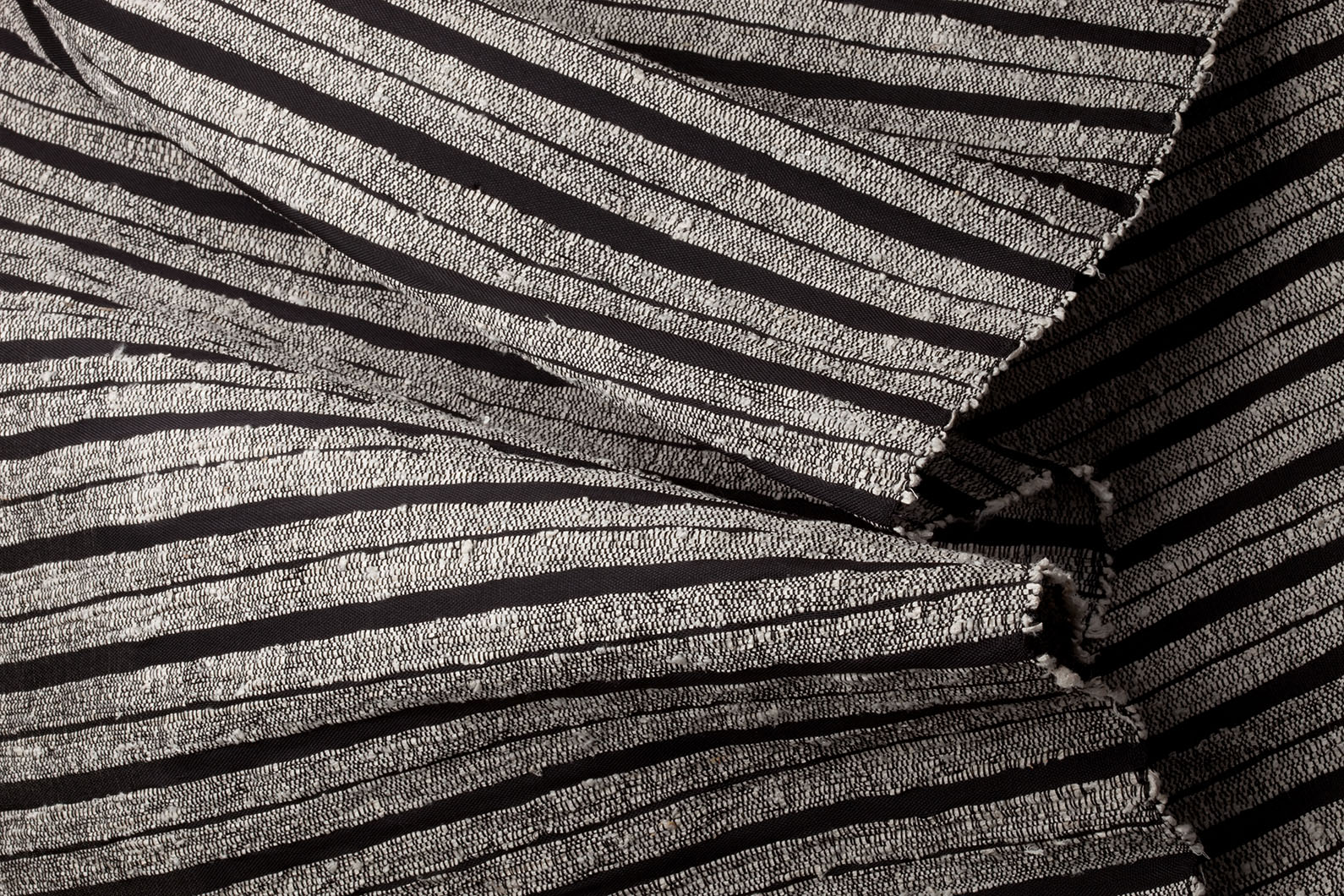
NUNO textile Kibiso Stripe from 2008. Designed by Reiko Sudo. NUNO uses materials usually discarded in the silk production process to make their textiles.
Photo credit: Matt Flynn for the Smithsonian Institution (source)
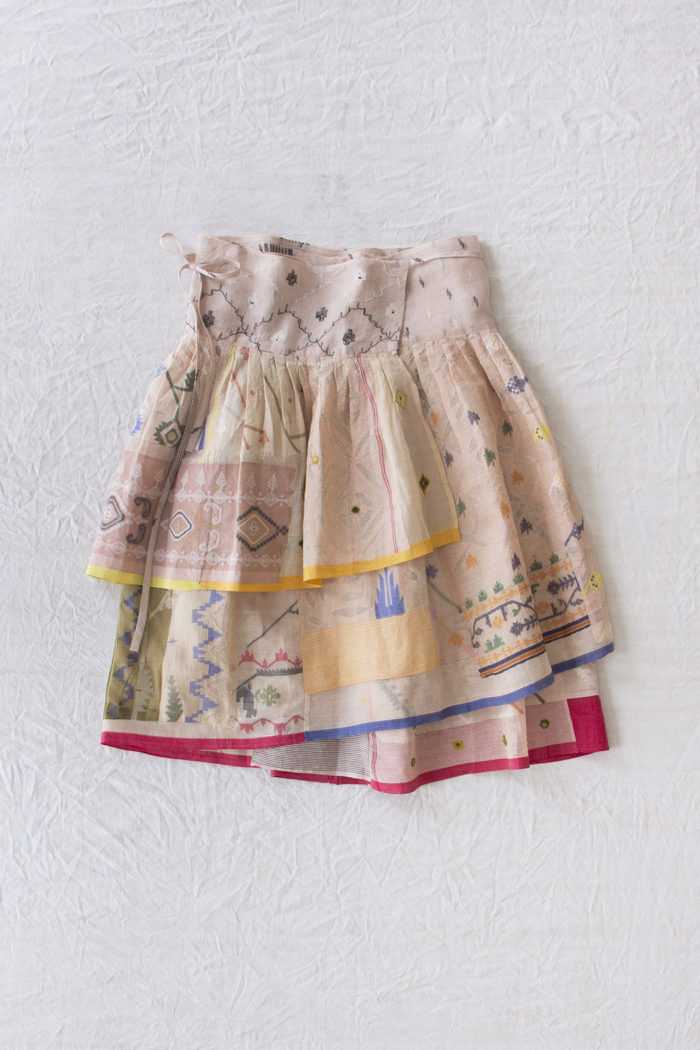
dosa skirt, 2008. Desiged by Christina Kim. This particular skirt is made from material discarded during industrial garment making. There is also a line made from the discarded materials used to make these garments.
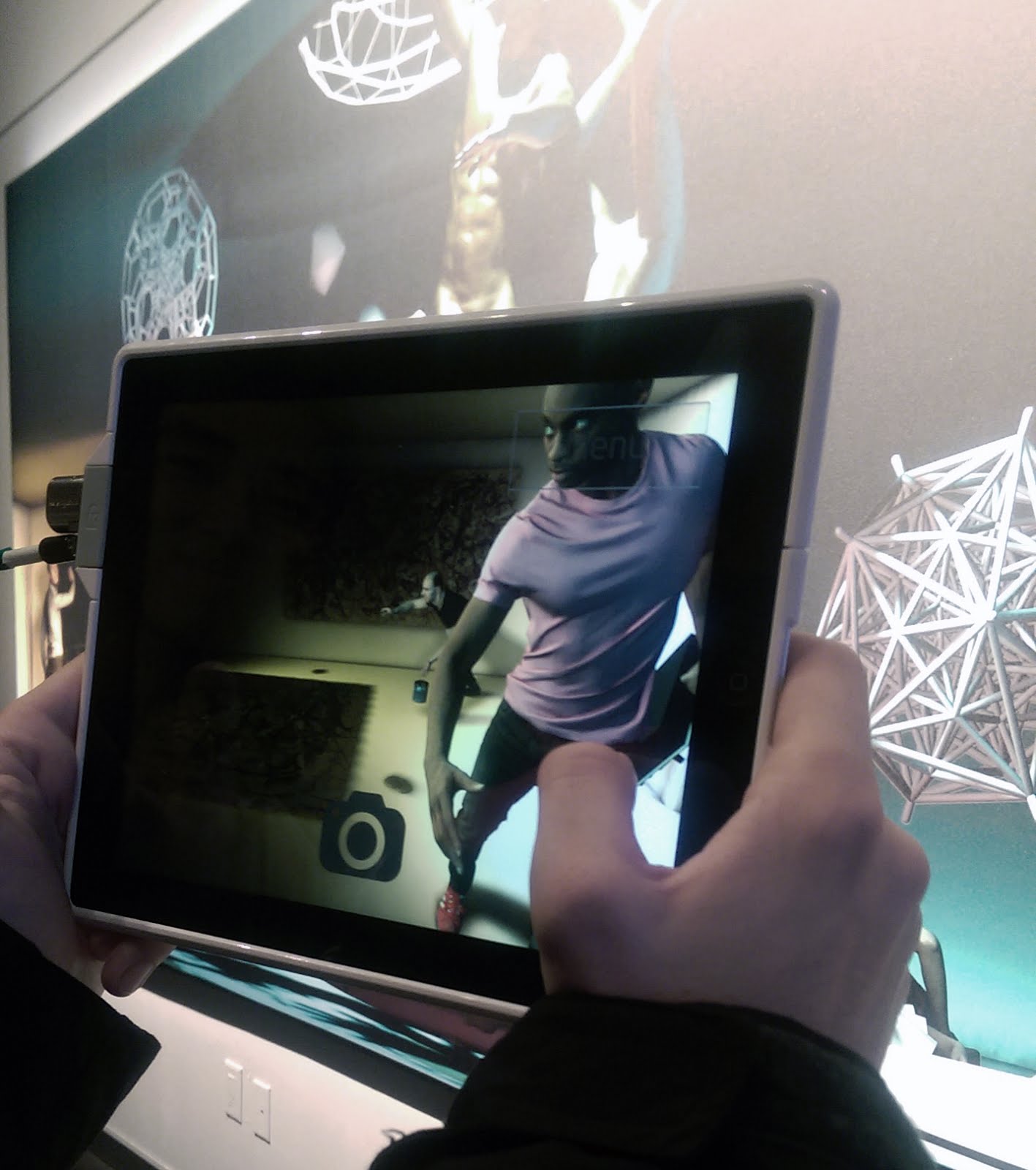
Photo credit: dosa (source)

Large rectangular bag and very small bag by Riedizioni. 2013.
Luisa Ceverse, under the label Riedizioni, uses the discarded edges off rolls of silk and other waste textiles to create patterns in polyurethane.
Photo credit: Riedizioni (source)

There are two niggling thoughts that demand I address them. The first is to point at the tapestries of Hannah Ryggen and the works featured in Soft Monuments at KODE in Bergen as other examples of textiles as a feminine medium for political art, in part because of its status as craft or otherwise outside art. But I’ll leave/challenge Natania to tackle that in a She’s My Muse.

The second thought is more a series of questions: where else could this exhibit live? Where can we celebrate and worry at contemporary society before it becomes history?

The featured creators in Scraps point towards an answer. These three designers were selected in part because of the longevity of their environmentally motivated design practice. [source] This history is also closely tied with the art museum and gallery sector. NUNO has a decades long affair with museum exhibitions, including another show at the Cooper Hewitt in 1990. [source] Riedzoni products slide nicely into that art museum store niche. [source] dosa, the newest of the three companies, has already done collaborations with LACMA and a Pulitzer Art Foundation

Installation view of dosa's floor pillows for the Pulitzer Art Foundation in St. Louis.
The pillows are patched together and some are dyed with tea!
Photo credit: Carly Hilo for the Pulitzer (source)
So we see two potential roles of palaces of art: exhibitors and incubators/clients. Inside of the museum exhibition, visitors are asked to contemplate objects outside of their immediate use value, to take a moment and consider the networks and systems that created them, move them, and inscribe them with value. In the case of new objects, this is one place where this can be done without the immediate question of how this thing can be bought and consumed, where we can take a moment to think about how we fit into larger systems and our actions reverberate out into the world.

Final notes: if you'd like more content, including traditional upcycling textile techniques, Scraps includes blog posts by textile researcher Magali An Berthon. It looks like the digital content is updated regularly, including today's post on greenwashing! If you're on the cusp of a closet clean out but don't want to contribute to landfill, try any of these charities and shops if you're in the Toronto area.  

Resources

4 November 2016

CONSERVING WITH YOUR COMMUNITY

CONSERVATION TIPS & TRICKS

BY: KRISTEN MCLAUGHLIN

Hello again! So last time I made some fun conservation do it yourself interactive PDFs that were hopefully useful to you guys! But this time I'm going to change it up a bit. Also, I'm fairly certain my brain can only handle about 1 chart post a semester.

This week I'm taking the view of a conservator at an institution and looking at the issue of: opening conservation to the public.


Normally, conservation takes place behind intimidating shadowy doors. It is something rarely viewed. The question is: with museums recognizing the need of involving our communities more and more in the work that we do, is conservation one of those things that should be included in opening up to the public?


CHANGING PRACTICES: Community Ownership and Museum Relevance

It is becoming more and more common to "educate" the public on conservation but that is very different than actually involving people in the process. Museum staff are constantly brainstorming on how to keep their institutions relevant and increasing the feeling of ownership and investment from their communities into the museum; this is an important feeling to encourage because the passion of the people is what makes a museum function!

Thinking of this only in terms of exhibits, education programs, talks, and singular events that are designated ~public space~ or ~public learning~ can be limiting. I think it's about time for museums to get to the nitty gritty of what they conserve and why they do and how people can help.


WHAT AM I TALKING ABOUT?

Good question! It should not surprise archaeologists, conservationists, (art) historians, museum workers, etc. that our visitors like seeing the objects. They like the idea of them being real, of seeing them from all angles, of them having stories and histories. The curiosity for artifacts or art is not something unique. We should LOVE that lots of people LOVE it! We should be excited that people want to know more about how it got to the display case!

Imagine: wouldn't it be cool to see conservation or rebuilding in action? Wouldn't it be neat for visitors to understand how or why pieces go together, what techniques are important for sustainability, or being able to gain an understanding about how fragile some of these objects are? PLUS... some people could have really great ideas! Some visitors probably know more than we do about supports and physics and chemistry!

It's super cool to see museums taking steps toward a more engaging conservation experience. And boy, do I have some cool examples for those of you interested in pursuing this in your own institutions! And if you're a visitor reading this thinking "hey yes, that sounds cool!" then let the examples below be your guide to future excursions...

OPENING UP YOUR CONSERVATION TO THE PUBLIC: Some Ideas

 1. LABORATORY WINDOWS

Opening up your lab to the public with the use of windows is a good idea for large, busy institutions that might not be able to bring people to the back or with items that really are super sensitive. It allows visitors (and kids!) to see the cool work going on. There are quite a few examples of this so I've chosen two to quickly talk about.

A) Smithsonian American Art Museum - The Lunder Conservation Center at the Smithsonian allows visitors to see crucial behind-the-scenes art conservation. Five labs (frames studio, paintings studio, paintings lab, paper lab, and objects lab) are visible through floor-to-ceiling glass walls, which gives visitors views often not possible. You can also watch videos of these conservation projects!

A view of the lab. Carl Hansen, Smitsonian Institution. Source

B) Philip J Currie Dinosaur Museum -- I have to make a shout out to my hometown! Philip J Currie Dinosaur Museum, just 10 minutes out of Grande Prairie, Alberta, has a unique view of their laboratory where they are conserving fossils. The great part about these windows (also one in the ceiling!) is their location: right beside the children's exhibits, so that young children can really see what scientists are doing, ask questions, and make plans for the future! It's a great experience.


Photographs courtesy of Kelly McLaughlin.

2. OPEN STORAGE

Open storage can be a frightening concept that may only work for certain types of artifacts. Basically, it is the idea of museums opening up storerooms to visitors. Simple as that! This is not exactly a straight forward conservation aspect, however it can be an inexpensive way to display large quantities of material and provide behind-the-scenes views of how collections are stored and conserved. Open storage helps visitors to better understand the museum's mission and function and builds their interest in collections and education. Taking away the secretiveness of museum work can lead to more visitors and greater financial support.

I have to say it's really cool when it can be pulled off! A well-known example of this is Museo Larco in Lima, Peru, which has a branch of regular storage rooms that contain ceramic artifacts from various eras of ancient Peru for visitors to walk through. We know it's a great experience for visitors; just look up any online review agency and you will see the raving.


A look into the Museo Larco open storage. Lyndsay Ruell. Source


3. BLOGS and APPS

Conservation blogs are not a bad thing! (AHEM) They can still be useful resources, particularly for other museums, repositories, and heritage institutions. The next step in this realm is to try and get our friends and neighbors reading such blogs. Make cool conservation projects for families to try! Write about cool famous items and their conservation histories! There are also really neat apps out there that show the conservation process, particularly for paintings such as Touch Van Gogh. This is the COOLEST app. You can zoom in on painting details, see what other older paintings are underneath through the use of X-Rays, look at the backs of paintings (which always have neat little details) and so much more. There's a lot to this app, but it also allows for understanding the different techniques used by art conservators. There is definitely a place for conservation and public in the online world... the trick is finding the key!


4. WORKSHOPS (and no, not with your buddy museum)

Workshops between institutions and professional groups are all well and good but the best kinds of workshops are those done with and for the public on items they own and would recognize. One example of this is the Okanagan Heritage Museum and their Ursula Surtees Regional Conservation Laboratory. They hold workshops with people on how to conserve their family heirlooms, photographs, documents, etc. As someone who grew up in a household with a TON of these I think this is such a cool idea! And a great way to get younger people interested in not only conservation but their family histories! Think of all the amazing histories sitting in people's attics, boxes, and photo albums. Families love this stuff and it's a great way for multiple generations to come together and discuss/preserve their own histories!

THE FUTURE OF THIS PRACTICE

So as museums continue to grow and change and recognize the importance of involving their publics in a variety of museum activities, conservation seems to be one of those last problematic walls to climb. It will be exciting to see if more museums attempt to play around with the idea of more open conservation and make it even more interactive and engaging! I would love to see some actual participatory conservation happening in museums (despite the controversies). I know the concept of involving the public in cnservation can be scandalous, frustrating, or sometimes nearly impossible. All I am suggesting is: let's consider it. Let's think about how it could make a difference. Let's also think about the problems with it, because there are always problems! But don't let that stop you! Dream big! What do people think? Anti-share? Pro-share? Any other good/bad examples of this happening out there? Let me know!

REFERENCES 

http://americanart.si.edu/conservation/
http://www.apollo-magazine.com/conservation-accessible-stores-museum-future/
https://www.kelownamuseums.ca/collections-conservation/ursula-surtees-regional-conservation-laboratory/
http://www.jcms-journal.com/articles/10.5334/jcms.1021215/
https://www.si.edu/content/opanda/docs/Rpts2005/05.04.ConcernAtTheCore.Access.pdf
http://www.museums.ca/uploaded/web/docs/CMACollectionsMNGT2013REPORTENG.pdf

3 November 2016

AUGMENTED REALITY IN MUSEUMS: DINOSAURS, COLOURING BOOKS AND PAINTINGS, OH MY!

MUSEUM INNOVATIONS

BY: CASSY KIST

It has officially been over a month since Nuit Blanche and now that we are halfway through the term I think it is an excellent time for reflection! One art piece I found innovative and intriguing was "The Merging" on display at OCAD University.


THE MERGING


This 2D art mural by Nicola Verato is brought to life using an app designed by SE3D interactive, which could be downloaded onto your smartphone or used on the ipads that the University provided. 

By focusing the ipad on the painting the image is stirred into movement and viewers can move through and look around what appears to be a 3D room. This gave the painting depth, merging outsiders with a virtual world.

What would happen if museums used similar augmented reality applications to add context, movement, sound and or even texture to artefacts?
Your phone or ipad would become a story telling treasure chest.

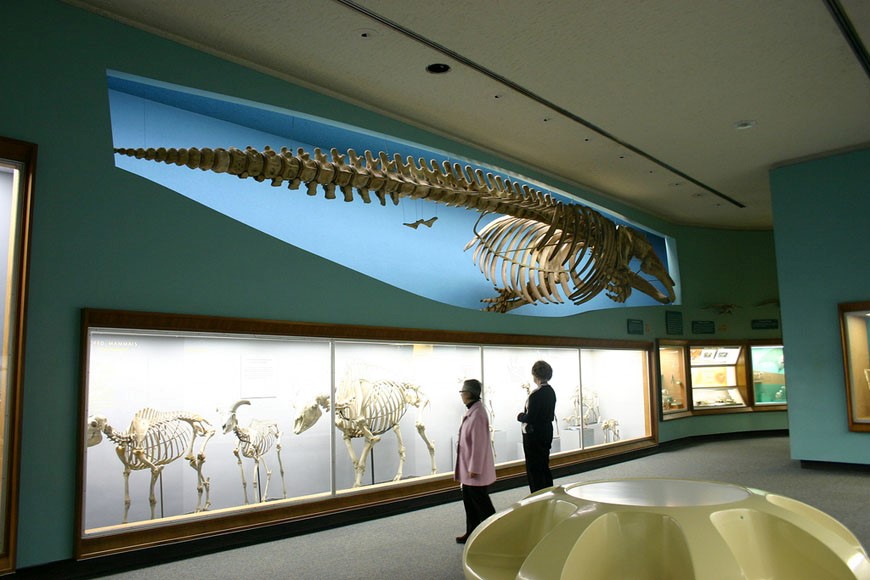
Museums are already stretching their virtual reality muscles; the Smithsonian has an app available for their Skin and Bone Hall at the ANHM. By downloading the app and using the exhibit's trigger images, visitors can see how the skeletons of animals and fish would have looked in the flesh. 

AMNH Bone Hall. Source
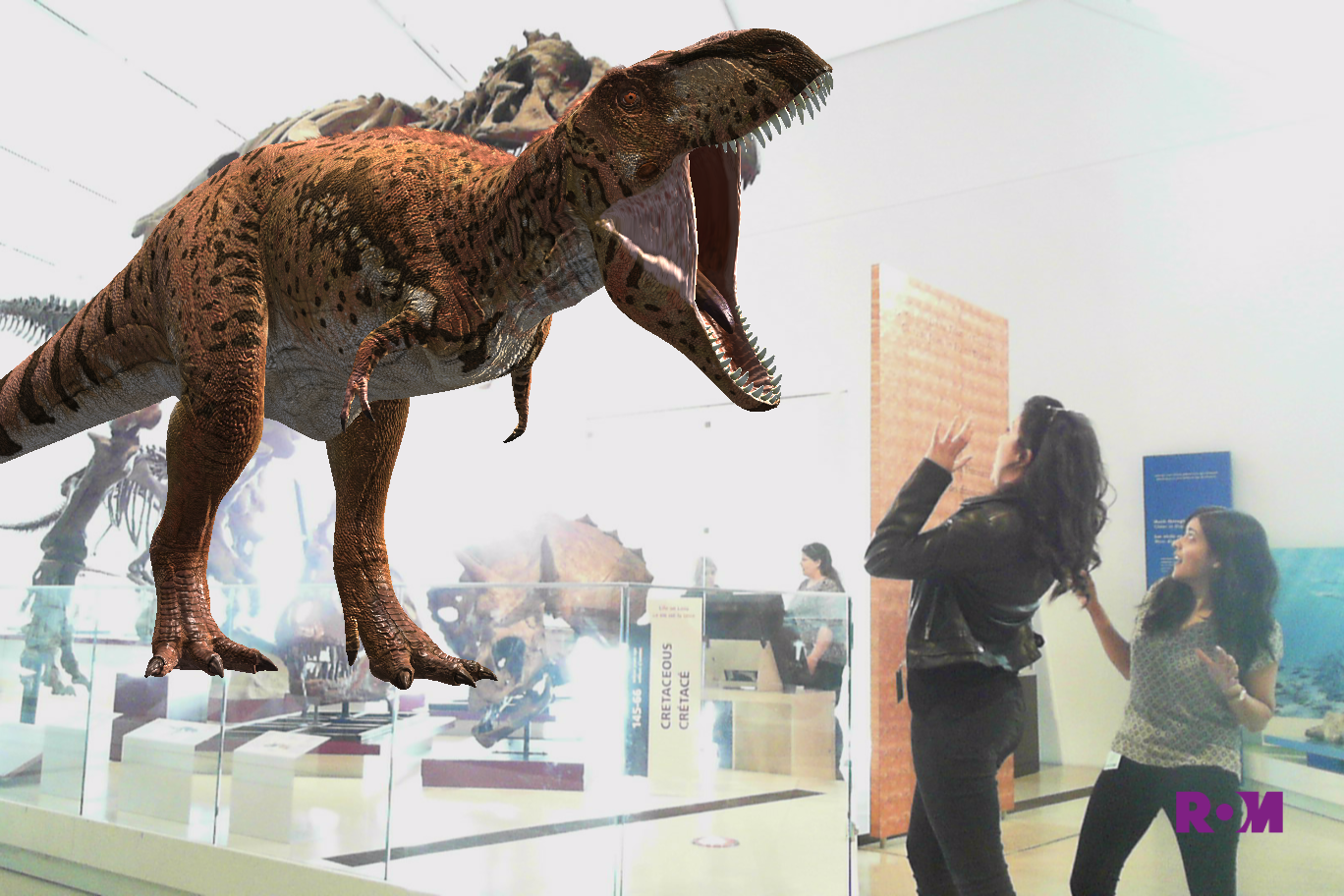
The Royal Ontario Museum has also been experimenting with augmented reality. If you visit the museum today make sure to check out their fossilised T-Rex which has a quirky modification. A stationary ipad brings the T-rex to life with whom you can then take a selfie!

At the Royal Ontario Museum. Source
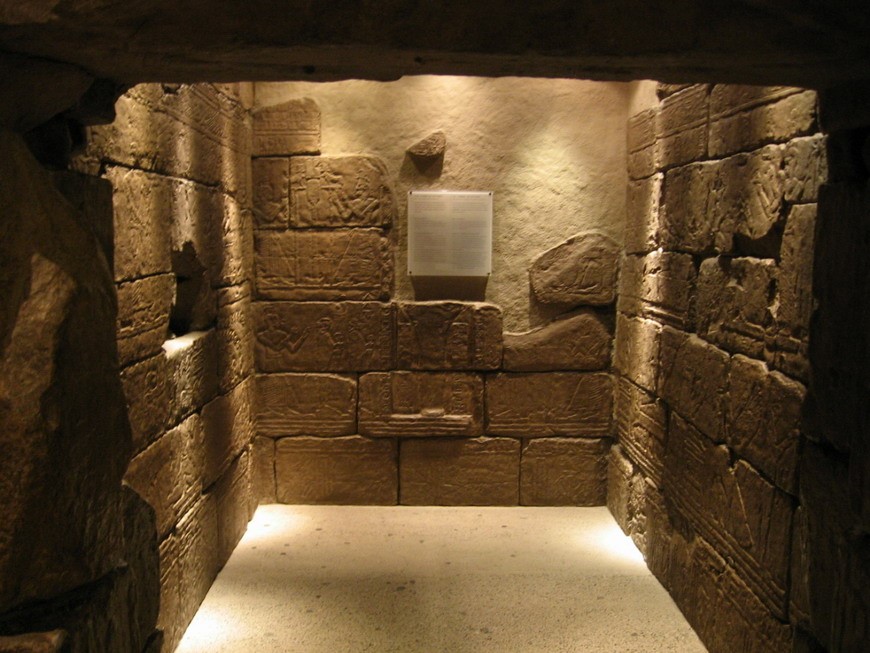
I for one would love to enter the Egyptian tomb at the ROM and be able to see, using augmented reality, how it might have looked centuries ago when the doors were first sealed.

Egyptian Tomb at the ROM. Source.
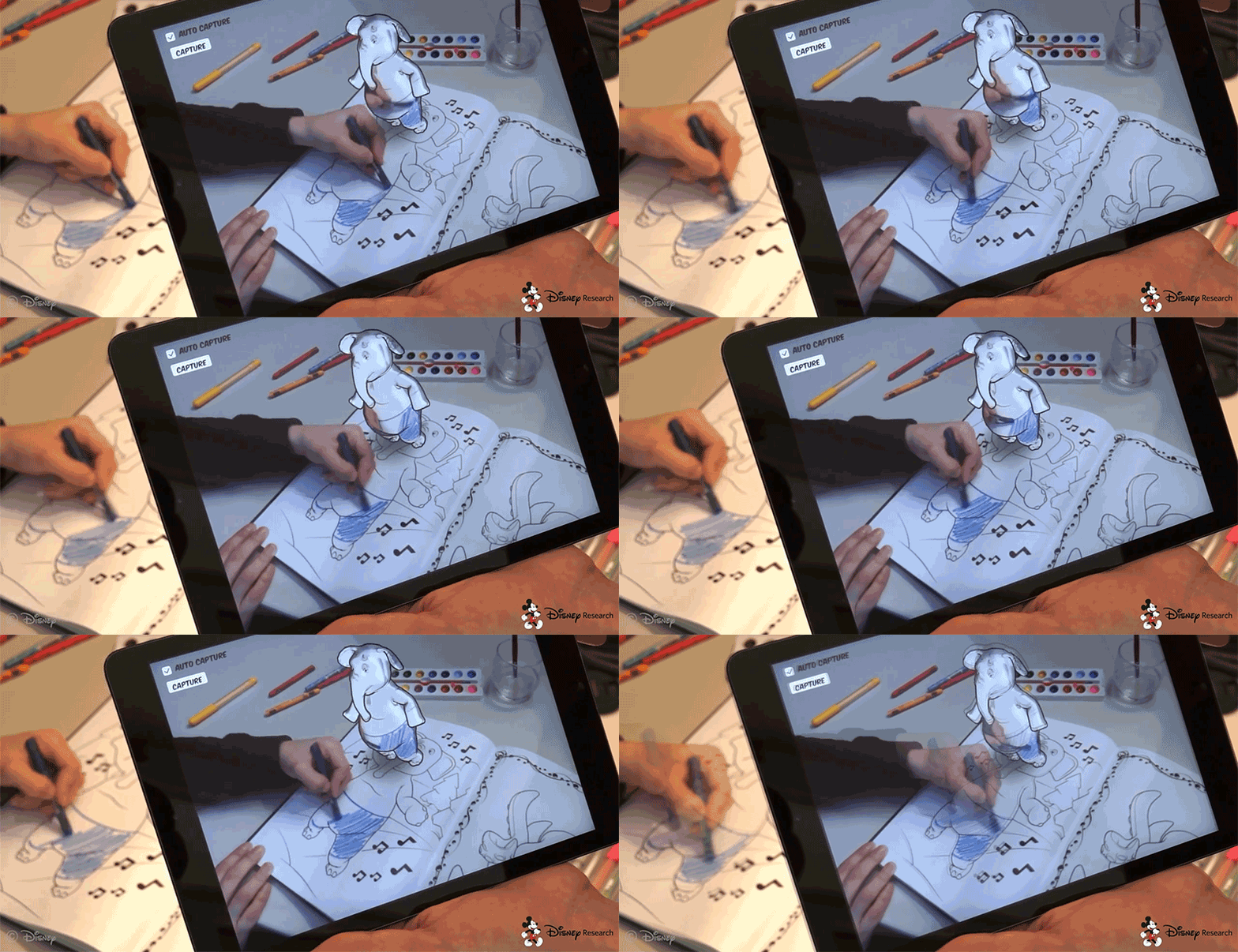
Many big corporations are adopting and creating augmented reality apps to facilitate new experiences. Disney for one, is creating an app that animates colouring pages. As an individual colours a paper page, a 3D character comes to life on an ipad - even with movement and texture.
This has made me consider the possibility of museums adding virtual reality components to portions of their exhibit catalogues.

 For instance, imagine a catalogue in which artefacts can be popped into 3D using an ipad or smartphone and examined from all angles. This would change the game of accessibility but also possession; how would it feel to examine a virtual piece in your own home?
Individuals who tested the Disney colouring pages said they felt more connected to the virtual characters. Could 3D apps connect museum goers and catalogue pursuers with the objects and stories therein? 

Do I secretly want one of these for mid-semester stress relief? Yes, yes I do. 


10 October 2016

FINALLY, WE CAN CURATE AT THE SMITHSONIAN. . . KIND OF

MUSEUM INNOVATIONS

BY: KELLY MACKENZIE


The internet can be a wonderful thing, making resources available to new and more diverse audiences. Museums have taken advantage of this and created some amazing online resources for their publics. Unfortunately, museums do not have their whole collection online, it is a process that takes numerous resources (time, staff, and equipment just to name a few) that museums do not always have easy access to. Simultaneously, schools cannot always afford to go to museums and have to rely on this online content. In addition, just because an institution has some of their collection digitized or have resources in the “Learning” section of their website, does it mean teachers have everything they need to share the resources of cultural institutions with their students? No. 

Digitizing collections and resources. . . more complex than expected (source)

 Even museums have to prioritize what the focus of their “Learning” section will be based on their available resources, time, available material, and cost to create a teaching/learning resource that will be useful to the largest number of people.

So what is a teacher to do when they want to show their students artefacts from a particular moment in time or significant person to complement their lesson? The Smithsonian Institute has come up with an innovative and fun solution.

Everybody DANCE NOW! (source)

This past June, they debuted the Smithsonian Learning Lab. This engaging resource enables the user to find digital resources, images, and audio to create their own “exhibit” that can be shared with others or kept private. Creating an account is easy and, more importantly, free!

Once you have your account, you create your own collection, then simply search the Smithsonian website and add your favourite findings. An added benefit to the Smithsonian Learning Lab is the ability to add your own resources, images you have made, a resource list for useful sources, or maybe an assignment or activity for students.

While the Learning Lab is valuable for teachers, it has also has success with students. Students can create their own collections, their own assignments, and quizzes and share them with each other. They can explore artworks, artefacts, audio and video recordings, and teaching material created by the Smithsonian (source).

The Smithsonian has developed an amazing resource that anyone can use to explore (and add to) their collection. I encourage you to check it out and make your collections public so they can benefit everyone, such as my (simple yet amazing) Joan of Arc Collection!