Showing posts with label Theft. Show all posts

5 November 2015

14 RECENT THEFTS, RECOVERIES, AND LATEST EFFORTS

MUSEUM MYSTERIES

BY: CHRISTOPHER WAI

Though I knew museum thefts to be common, it seems that they are far more frequent than I had imagined. They also seem to be fairly overt (in the news at least); less secretive and more of the smash and grab variety. Thankfully though, recoveries seem to be just as common, though the space in between can be quite... variable. Unfortunately, I haven't touched on the situation in the Levant here as there is a lot of ground to cover, but I do hope to do so later.

So here are a selection 14 cases that have either just been solved, are still ongoing with a new strategy, or have just begun. Click on the headings for more info!


Motoshige: Chido Museum. Source

1. Swords reunited? (The Motoshige Sword)- Sakai Family/ Chido Museum 


Stolen in 1986 with its shorter twin, the 14th century Motoshige sword of the Sakai family has been recovered by a private buyer (with permission from the family). Similarly, the Chido museum managed to recover the short sword earlier in 1986. In September, an exhibition was set up at the Chido museum to celebrate the recovery but unfortunately, the Motoshige was not planned to be returned to the Sakai family, so what will happen next is unknown.


2. Isabella Gardner Museum CCTV Footage


While the Isabella Stweart Gardner Museum has yet to recover the stolen subjects from the infamous heist in 1990, surveillance footage of the theft is available online in hopes that someone will recognize the culprit. At 25 years though, one wonders if it will help.

The museum also has a virtual exhibition and 3-D tour on the stolen objects as well.                                                                            


3. Elton John's Heart Shaped Glasses- Memphis Rock N' Soul Museum 


Heart Shaped Glasses. Source
Once owned by one Sir Elton Hercules John, a British musician active since 1964, these glasses were worn for a song by the name of “Don't Go Breaking My Heart.” They were stolen on April 21, but not six days later they were recovered in a mailbox, and a man has been indicted based on a matching fingerprint from the display case and his admission of guilt over the phone. In some cases, it can be that fast. 


La Coiffeuse Source

4. Picasso's 'La Coiffeuse'   


Stolen 14 years ago, Picasso's 'La Coiffeuse' was recovered in a shipping container after police received a mysterious tip. It's worth according to the shipping label? 30 Francs or 39.76 CAD/ 30.21 USD.


5. Auschwitz
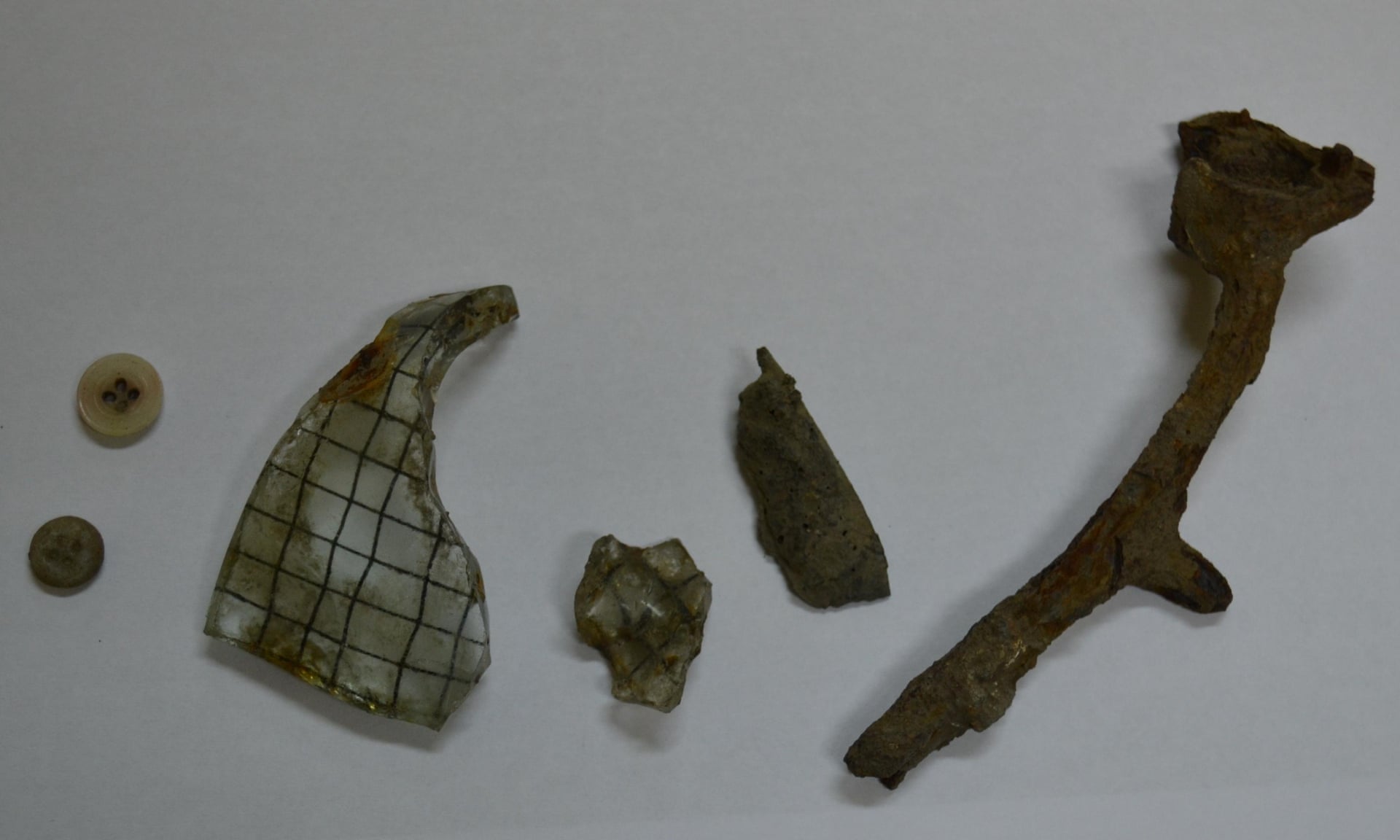
Personal Effects. Source: Polish Police
Two teenagers on a school trip were caught stealing a number of prisoners' effects from Auschwitz. Why these teenagers stole them isn't clear, but the most frustrating thing is that it was not an isolated incident. Other attempts have been made. Is it a question of trying to own a piece of the past? Just a dare?

In a previous, unrelated case, a neo-Nazi was among the suspects apprehended for attempting to steal a sign at the site.


6. Science Imaginarium- Bluedom Science Imaginarium


Space Exhibits. Source
An 18 year old stole a trailer full of space displays for a children's museum in Waterloo only to dump it in a creek. Likely prank, but they are worth $75, 000, and I couldn't help but imagine the potential value of these children's science displays on the black market.


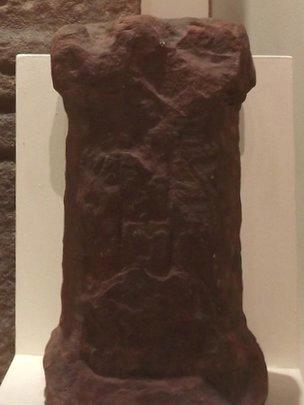
7. Roman Altar- Senhouse Roman Museum 


Roman Altar. Source: BBC

An example of one of the great fears of open displays and mounts, a Roman altar was stolen in August from the Senhouse Roman Museum. There is CCTV footage of the theft, so perhaps it will be found, but the altar will never be in the same condition. The museum is said to be reviewing its security practices.


8. 5th Century Achaemenid Bas Relief/ 1st. Century 'Roman Head'- Montreal Museum of Fine Arts


5th Century Achaemenid Bas Relief. Source: Quebec Provincial Police.
Much like the Roman altar above, this Achaemenid panel was stolen from an open mount in 2011, but was finally recovered in 2014 by a team made up by the Sûreté du Québec, Alberta RCMP and RCMP Integrated Art Crime Investigation Team and the Alberta RCMP in an Edmonton home. The original thief has yet to be found.


9. Body Parts- Siriraj Medical Museum


Perhaps the most immediately disturbing and unsettling in the list, body parts stolen from the Siriraj Medical Museum in Bangkok were found in a series of packages by DHL employees before they could be sent abroad. There are three suspects, but no arrests have been made.


10. Stolen Rodin- Ny Carlsberg Glyptotek Museum 


Rodin's Man with Broken Nose was stolen from Copenhagen's Ny Carlsberg Glyptotek Museum just this July. There was no dramatic heist or plan; it was taken in broad daylight and the thief strolled out the front door. CCTV footage is available.


11. Guns and Scabbard- Baroda Museum and Picture Gallery 
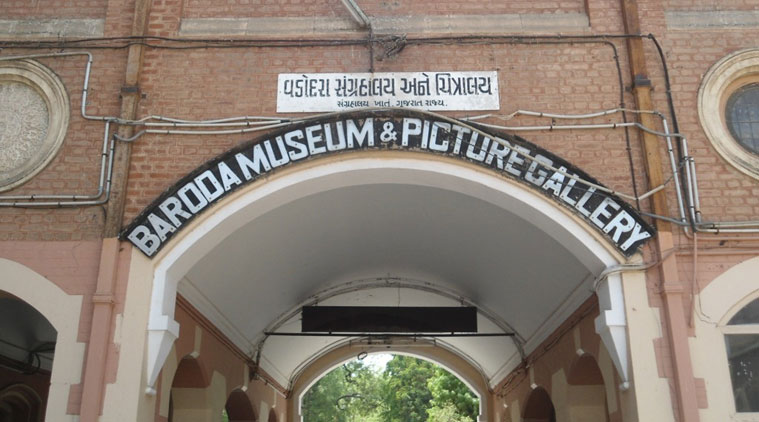

Baroda Museum and Picture Gallery. Source

Two revolvers and a scabbard were stolen during Diwali in October 2014 from the Baroda Museum and Picture Gallery. Curiously enough, the sword itself was simply discarded at the museum. The gold scabbard was acquired in 1986 and the revolvers were gifted this year. As with the Senhouse Museum, they are now also reviewing their security measures after the fact.


12. Pearl Harbour Jeep- Imperial War Museum Duxford 


Pearl Harbour Jeep. Source
An entire Jeep was stolen during a show at the Imperial War Museum Duxford last July. It was not a permanent part of the museum’s collection, but an heirloom that was passed down from parent to child by the veteran who originally owned it.


13. Dorothy's Red Slippers-Judy Garland Museum 


Red Slippers from the Judy Garland Museum. Source: Associated Press
One of Dorothy's pairs of red slippers from the Wizard of Oz was stolen in 2005 and there has yet to be any new leads. An unnamed donor is offering a 1 million dollar reward for new information on the case. It's been close to 4 months since the offer was announced but there has yet to be any new leads.


14. Machine Gun-Road to Victory Military Museum 


Type of .30 Cslibre Machine Gun stolen. Source: Road to Victory Military Museum

A full sized, belt fed machine gun was stolen from its mount on top of an armored car in August 2015.

Thankfully it is inoperative, though it can make “realistic gunfire-like sounds...” by creating "small explosions"



Bonus: The Museum of Stolen Art

I'll leave you with this interesting project that collects together a number of stolen works into one online exhibition. It's designed for the Oculus Rift, but it can still be enjoyed without it.


15 January 2015

MUSEUMS AND THEFT: LET'S TALK ABOUT IT

RESEARCH COLUMN

BY: MD SALZBERG and ANNISSA MALVOISIN

Editor's Note: MD Salzberg and Annissa Malvoisin are both first year MMst students who took Cara Krmpotich's MSL2370H Museums and Cultural Heritage I: Context and Critical Issues in the Fall 2014 semester. For their final papers, Salzberg wrote about theft in museums and Malvoisin wrote about theft in an archaeological context. This post aims to provoke conversation about theft and museums by providing two different contexts and research perspective. If you are a Museum Studies student engaged in research for a work, volunteer, or school project that you would like to share, please contact Robin Nelson.

NOT A SAFE PLACE: INTERNAL THEFT IN CULTURAL INSTITUTIONS

BY: MD SALZBERG

We can all safely agree that stealing from Museums, libraries and archives, is wrong. We as cultural institutions do all that our budgets allow to prevent outsiders from "stealing our stuff," but we don't hold ourselves as museum professionals to the same standard. At its most basic, internal theft is an abuse of one's authority, wherein a member of the institution's family - be it staff, board, or volunteer - takes advantage of their position to steal. For this reason, internal theft is far more common than external theft. The notorious theft at the Isabella Stewart Gardner Museum (ISGM) in 1990 is not what cultural heritage theft looks like.

Libraries and archives are leading the charge to curb internal theft by having an open conversation about the problem. Museums on the other hand, are not as open about internal theft, to this author's knowledge there has only been one professional conversation about the problem.

In fact museums don't readily acknowledge any kind of theft, regardless of who is doing the stealing. It seems as though museums are too scared of losing the public's trust to acknowledge when they have been the victims of a crime. While museums should have a healthy respect for the public's trust, this fear is extreme.

If someone breaks into your home, you are upset that you have been the victim of theft and report it to the authorities. So why is it museums do not see themselves as victims when a theft has occurred and report it to the authorities?

The ISGM has not shied away from the theft and openly displays the empty frames of some of the stolen paintings.
The robbery at the ISGM is one of largest thefts in American history and the public was outraged. They were outraged at the thieves who committed the crime, not the security guards who let the thieves in the building. In the 25 years since the break in ISGM has thrived financially and its collection has grown. Clearly they were not 'punished' for failing the public.

The public's outrage is not reserved for external thieves but internal ones as well. Such as when Denning Mctague, former intern, was arrested for stealing documents from the United States National Archives and Records Administration, everyone from the assistant attorney general who prosecuted the case to the judge who did the sentencing considered it to be a crime against America.

It should be noted that in the US, stealing from a museum is a federal offense. Clearly, the public takes internal and external theft seriously, so why don't we?

We secure the front of house but what do we do, back of house? In the course of my research I have found that victims of internal theft have a few things in common.
  • Not tracking object locations
    • If you don’t regularly update the records when an object has been moved, it is difficult to prove that a theft has occurred.
  • Not changing the locks and alarm codes after staff turnover
    • Anyone can make a copy of a key or fail to forget an alarm code.
  • Not acting when theft is suspected
    • Usually, this is out of fear of causing offence.
  • Not realizing that if some one steals from you once and gets away with it they will continue until they are caught
This is not to suggest that museums should not trust anyone but we should use a little more caution.

HINDERING ARCHAEOLOGICAL EVIDENCE: AN EXAMPLE OF LOOTING IN THE EGYPTIAN CONTEXT

BY: ANNISSA MALVOISIN

Entrance to the Royal Tomb at Amarna. Tomb robberies were one of the most common cases of theft at the site. The Armana Project, 1978.
During my undergraduate studies, my interest in the study of archaeological artifacts as vehicles of further understanding past civilizations was heightened through the Egyptian archaeological site of Amarna. Through the study of artifacts from the Amarna period, I became very interested in the complexity of the society that inhabited it. Because it was never resettled after its abandonment in the late 18th dynasty, there still exists a large amount of artifacts scattered underneath the very well preserved site. I believe that archaeological objects, especially ceramics, help convey the cultural histories and artistic trends throughout a certain society’s life. Not only do they do this, but in the Egyptian context, they also display the greatness that is ancient Egyptian artistic innovation (which also encompasses their religion!). Unfortunately, although Amarna is not one of the most prominent victims of looting in Egypt, it is an example of repeated theft of archaeological evidence since the late 1200 B.C.

Though not directly located at the site, Amarna artifacts are still victims of theft. Selected artifacts excavated at Amarna were placed in the Egyptian Museum in Cairo and during the country’s 2011 revolution, the Museum was also looted. Many of the Amarna objects have not been recovered. Museum partnerships with other museums and source communities with the aim of preserving Egyptian sites that are consistently subject to archaeological theft is one way that has incrementally been put into use in order to decrease looting. The Petrie Museum has been an actor in aiding with the preservation of archaeological evidence through partnerships with Egyptian universities and their collections. Professor Barry Kemp’s involvement has also been vital in the preservation of Egyptian cultural and funerary objects, especially at the site of Amarna. I believe that the study of these artifacts through these partnerships are important in understanding the culture that created them, which is lost when they are stolen.

The next project for Amarna is the construction underway for the Amarna Site Museum and Visitor Centre which will be located on the site. However, will this museum provoke more theft as already excavated artifacts will be grouped together in one place? Or will it decrease theft because of increased security around the future museum and archaeological site?

I am obsessed with Amarna, and if I have persuaded you in becoming obsessed too since reading this post, take a look at Professor Barry Kemp’s Amarna Project website to learn more on past and current excavation and archaeological artifact preservation at the site. To learn more about Egyptian archaeological objects that have been stolen, check out ICOM’s redlist.