
Showing posts with label Toronto. Show all posts
Showing posts with label Toronto. Show all posts
9 September 2021
8 April 2021
LET'S TAKE A WALK: SIX OUTDOOR HERITAGE SPACES IN TORONTO
Heritage Moments | Madison Carmichael
4. High Park
One of the greatest surprises of completing the MMST program in Toronto was the city itself. I grew up in Mississauga, which is about forty minutes – depending on the traffic – from downtown Toronto. The suburban child’s mind easily paints an urban jungle paved from tip to toe in concrete and crowned with shining skyscrapers too tall to fathom. What that little kid misses, and what I was thrilled to discover, was the amount of heritage embedded within the city, outdoors and indoors, old and new. And so I thought, what with spring (hopefully) on its way, I'd take a leaf out of a fellow editor's book and set out on a long walk across Toronto to shine a light on some of the city’s fantastic outdoor heritage spaces and sites.
 |
| Ah, the CN Tower. Our favourite example of Brutalist architecture. Photograph courtesy of Madison Carmichael. |
1. The University of Toronto
This one is perhaps a given, but there is something to be said for the St. George campus at the University of Toronto. The University, founded in 1827, contains a whole slew of architectural styles from Gothic to Brutalist (looking at you, Robarts) to Victorian. It’s easy to read the long history of the University in the Philosopher’s Walk, the Soldiers’ Tower, and the 50 heritage buildings which are scattered across the campus.
 |
| A postcard from 1903. Even then, they were keen to highlight their older buildings. (Source) |

2. The Beltline Trail
The Beltline Trail is what remains of a short-lived commuter railway from the 1890s. In the 1890s, it seemed as though Toronto was on the cusp of a suburban boom, and so the businessmen who formed the Belt Line Railway sought to capitalize on these future commuters. The Railway operated with a similar ethos as it would seem the GO Transit and other such rapid transit currently do: to connect the suburbs of Toronto to the downtown core. The Belt Line only operated for two years between 1892 and 1894, but to this day, Torontonians continue to use its right-of-way, albeit very differently. The Kay Gardner Beltline Park, which is the most notable enduring stretch of the Railway, is frequently used by runners, walkers, and cyclists. You can even spot the site of one of the original Belt Line stations or follow one of Toronto’s Discovery Walks.
 |
| The "Yonge Station" of the Belt Line Railway as it currently stands. Photograph courtesy of Madison Carmichael. |
3. Mount Pleasant Cemetery
Said Discovery Walk will also bring you to Mount Pleasant Cemetery. As one of Canada’s most historic cemeteries, Mount Pleasant has operated in Toronto since 1876. The cemetery houses a unique sort of heritage, one found in epitaphs and mausoleums, as well as in the sculptures and memorials found throughout the grounds. Mount Pleasant has several running and walking routes for you to try, if you’re up for exploring; and while you do, you can enjoy the cemetery’s abundance of trees, flower gardens, and wildlife – namely birds.
 |
| The many tombstone and memorials of Mount Pleasant are also indicative of Victorian burial practices and symbols. Check out that urn - and if you look closely, you can see a small veil draped over it. Photograph courtesy of Madison Carmichael. |
4. High Park
High Park is a park that knows how to multitask. In the century and a bit since the park was handed over to the City of Toronto, it’s acquired a pool, a zoo, playgrounds, and tennis courts, in addition to the open spaces frequently utilized by Torontonians for picnics, walks, etcetera. The park also contains Colborne Lodge, which is currently closed, but was originally owned by John and Jemima Howard, who deeded High Park to the City in 1873. A walking visitor can also enjoy the gardens and waterfront along Grenadier Pond. And of course, High Park is known for its cherry blossoms, which are set to bloom in the coming months, so look forward to that.
 |
| A shot of High Park. (Source) |
5. Humber River
The Humber River was designated as a Canadian Heritage River in 1999, but it has a much longer history of human settlement, going back thousands of years. Presently, you can take the City’s Discovery Walk beginning around the Old Mill Subway station to explore its rich, multifaceted heritage, beginning the with the Old Mill and Old Mill Bridge. The Old Mill, dating to 1793, was part of Toronto’s first industrial buildings and helped to build Fort York. The walk then takes you to the Toronto Carrying Place Trail, which was used by Indigenous peoples for millennia as a trade route between Lake Ontario and lakes further north. The Humber River, Valley, and Marshes are also home to a variety of wildlife such as migratory birds and butterflies.
 |
| A more historic Humber River. And a cow. (Source) |
 |
| Now something a little more current. See what I did there. (Source) |

6. Distillery District
While the Distillery District is more generally known for its Christmas Market, the District is also a wonderful example of Toronto’s industrial heritage. It’s also a National Historic Site. Formed of more than 40 buildings, the Distillery District functioned as the Gooderham and Worts Distillery from 1859 to 1900. Gooderham and Worts largely produced whisky, and its location on the side of the Canadian National Railway mainline ensured its commercial success. The District is considered the largest and best-preserved collection of Victorian industrial architecture in North America, and in the past few decades the District has transformed into a pedestrian-oriented area filled with shops, art galleries, theatres, coffeehouses, and restaurants. While much of that is closed at present, the Distillery District is certainly worth a walk – for the buildings, if nothing else.
 |
| The Distillery District is worth a visit any time of the year! (Source) |

For those keen to explore outdoor Toronto in the upcoming warmer months, I’d advise checking out the City of Toronto’s Discovery Walks and all the fantastic walking tours listed here! They cover far more than I’ve listed here, which gives you some indication as to just how much there is in the city to discover. Best of luck out there, and stay safe!



7 April 2021
CECIL ROTH: A MAN WITH A COLLECTION OF INFORMATION
Walk of Fame | Annabelle Kolomeisky
In the field of Jewish history, it is difficult to explore the subject without referencing the work of Dr. Cecil Roth. Dr. Roth was a British Jewish historian who worked on a variety of projects which have strongly influenced the field of Jewish history to this day, and whose legacy lives on through his countless publications and his rich collection of artifacts.
Born in 1899 to immigrant parents, Cecil Roth grew up in a family that was very dedicated to education and Jewish life. Throughout his academic career he learned a variety of subjects, however he eventually seemed to find his way towards history. He picked up a variety of languages including Hebrew, Italian and Latin to help him research historical texts. His education took a pause during the world wars which he served in before he returned to Oxford to complete his undergraduate degree.
In his post-graduate work, Cecil found himself doing research in Italy, a country who he fell in love with, on the last Florentine Republic. However, it was not until he was working on his doctoral thesis in Italy that he began to engage with the local Jewish community. During this time, he began to realize the significance of studying Jewish reactions to environmental culture while becoming more interested in Jewish art. Roth's interest in Jewish history and art is seen in his various publications throughout his career such as Jews in the Renaissance, and the Short History of the Jewish People. These works were considered to be very important contributions in the field of Jewish studies.
Being the avid learner that he was, Cecil Roth created a large collection of Jewish artifacts from his travels around the world throughout his 40-year career. This collection consisted of items from places like Italy, France, Egypt, and Israel and many more, providing a very diverse and unique look into Jewish life. Roth's collection included priceless artifacts that add incredible depth to stories of Jewish history such as a hand-illuminated Scroll of Esther from the Jewish community of China and over a hundred illuminated marriage contracts with the oldest one dating back to 1645 in Venice.
In 1962, Cecil Roth was retiring from his teaching position at Oxford University and his collection of Jewish historical artifacts was made available. Through a series of quick actions and a bit of luck, the Beth Tzedec Congregation in Toronto, Ontario was able to purchase the collection with the help of local members Samuel and Israel Shopsowtiz. Following the acquisition of the collection, Beth Tzedec created a museum within the walls of the synagogue called the Reuben & Helene Dennis Museum which can be visited today.
In the field of Jewish history, it is difficult to explore the subject without referencing the work of Dr. Cecil Roth. Dr. Roth was a British Jewish historian who worked on a variety of projects which have strongly influenced the field of Jewish history to this day, and whose legacy lives on through his countless publications and his rich collection of artifacts.
 |
| Cecil Roth looking at a book | Source |
Born in 1899 to immigrant parents, Cecil Roth grew up in a family that was very dedicated to education and Jewish life. Throughout his academic career he learned a variety of subjects, however he eventually seemed to find his way towards history. He picked up a variety of languages including Hebrew, Italian and Latin to help him research historical texts. His education took a pause during the world wars which he served in before he returned to Oxford to complete his undergraduate degree.
In his post-graduate work, Cecil found himself doing research in Italy, a country who he fell in love with, on the last Florentine Republic. However, it was not until he was working on his doctoral thesis in Italy that he began to engage with the local Jewish community. During this time, he began to realize the significance of studying Jewish reactions to environmental culture while becoming more interested in Jewish art. Roth's interest in Jewish history and art is seen in his various publications throughout his career such as Jews in the Renaissance, and the Short History of the Jewish People. These works were considered to be very important contributions in the field of Jewish studies.
 |
| Cecil Roth working in his office | Source |
Being the avid learner that he was, Cecil Roth created a large collection of Jewish artifacts from his travels around the world throughout his 40-year career. This collection consisted of items from places like Italy, France, Egypt, and Israel and many more, providing a very diverse and unique look into Jewish life. Roth's collection included priceless artifacts that add incredible depth to stories of Jewish history such as a hand-illuminated Scroll of Esther from the Jewish community of China and over a hundred illuminated marriage contracts with the oldest one dating back to 1645 in Venice.
In 1962, Cecil Roth was retiring from his teaching position at Oxford University and his collection of Jewish historical artifacts was made available. Through a series of quick actions and a bit of luck, the Beth Tzedec Congregation in Toronto, Ontario was able to purchase the collection with the help of local members Samuel and Israel Shopsowtiz. Following the acquisition of the collection, Beth Tzedec created a museum within the walls of the synagogue called the Reuben & Helene Dennis Museum which can be visited today.
13 January 2020
MAIZE AND MEXICAN HERITAGE: AN EVENING AT THE DEPANNEUR WITH IVÁN WADGYMAR
A Muse Bouche | Jordan Fee
In the final weeks of 2019, just days before we all sunk into holiday-hibernation, a friend and I took a leisurely stroll to an unknown location. That is to say, my friend knew where we were going but I did not. The entire night had been set up as an end-of-semester surprise, and I had no serious expectations as to what we were getting into.
Around 6pm, we arrived at our destination: The Depanneur, which is located at 1033 College Street, just a few blocks west of Ossington Avenue. Lovingly referred to by patrons and owners as “The Dep”, this space is one-part kitchen, one-part restaurant, and one part-forum. As I write this article, I find it quite difficult to define just what is The Depanneur. Perhaps, it is best to simply refer to their website, where the space is described as “a place where interesting food things happen.”
The event attended by my friend and I was part of a larger Table Talk series. For each of these events, the owner of the Depanneur, Len Senater, invites a local culinary personality to speak to guests about a topic that is of particular interest to them. The talk is then accompanied by a series of plates and dishes that reflect the ideas and themes found within the talk.
In the final weeks of 2019, just days before we all sunk into holiday-hibernation, a friend and I took a leisurely stroll to an unknown location. That is to say, my friend knew where we were going but I did not. The entire night had been set up as an end-of-semester surprise, and I had no serious expectations as to what we were getting into.
Around 6pm, we arrived at our destination: The Depanneur, which is located at 1033 College Street, just a few blocks west of Ossington Avenue. Lovingly referred to by patrons and owners as “The Dep”, this space is one-part kitchen, one-part restaurant, and one part-forum. As I write this article, I find it quite difficult to define just what is The Depanneur. Perhaps, it is best to simply refer to their website, where the space is described as “a place where interesting food things happen.”
 |
| Inside of The Depanneur (Source) |
The personality invited to speak at this particular event was Iván Wadgymar, who is the owner of a tortelleria (ie. a place where tortillas are made) called Maizal. Originally a restaurant, Maizal has scaled down to become a one-stop shop for hand-made tortillas and totopos (think the best chips you’ve ever had). Although hard to find, the business is located on Ossington Avenue, in the kitchen space behind the bar Baby Huey.
Originally, hailing from Mexico, Wadgymar was careful to emphasize the importance of what is known as maize to Mexican culture and heritage. Although corn and maize are both varieties of the same species Zea Mays, the corn that we consume in North America today is generally prized for its high-sugar content, whereas maize is much more prized for its starch. This means that maize holds greater potential health benefits than corn, and that it can sustain humans for a longer period of time.
However, Wadgymar explained that one cannot simply eat maize like you would a piece of corn-on-the-cob. Instead, maize needs to be dried and then boiled in an alkaline solution (most commonly water and limestone). This solution breaks down the cellular structure of the corn and produces a thick porridge called nixtamal, which is highly nutritious in nature. This can in turn be used to make masa, which is the dough that can be made into those tortillas and totopos that I mentioned before.
 |
| A Traditional Tortelleria (Source) |
According to Wadgymar, both nixtamal and masa have integral to the agri(cultural) history of Mexico for thousands and thousands of years. In fact, the process of nixtamalization (ie. the process through which dried maize is turned into nixtamal) has been dated back to 1500 B.C. This means that this process could have been just as important for pre-Columbian, Mesoamerican societies as it is to people like Wadgymar today.
In keeping with this extensive tradition, Wadgymar has travelled to Mexico to collect indigenous species of maize and brought them back to Canada to be cultivated here. Much of the maize grown for Wadgymar’s tortelleria is produced on a farm north of Toronto, and he is very careful to follow the steps taken by his predecessors to produce the highest quality masa possible.
More recently, Wadgymar has also taken the opportunity to plant varieties of corn that are indigenous to North America, thereby constructing a bridge between the Mesoamerican cultures that relied on varieties of Zea Mays as a major food staple. He has even gone on to describe the food that he makes as “indigenous Mexican cuisine”, thereby embedding himself firmly in the traditions of his home country.
When this talk began, I believed that I possessed a strong understanding of what the many varieties of corn represented in todays agricultural system. For many, corn is representative of some of the worst aspects of contemporary agriculture, from habitat destruction, to animal feed lots, to monocultures whose scale exceeds comprehension. However, Wadgymar’s talk revealed a completely different world, one that is defined by local communities, intangible cultural heritage and generational wisdom. In just a few short hours, Wadgymar flipped the script completely and showed each of the guests how maize can represent some of the strongest and most resilient aspects of food culture.
I would highly recommend that anyone reading this article check out the Depanneur’s website to see all of the exciting events that they have planned for the coming months (these are not limited to the Table Talk series!). Furthermore, if you want to taste the product of Wadgymar’s hard work, make sure to stop in at Maizal for some tortillas! I promise that you will not regret it.
Finally, if you’d like to find out what me and my friend ate on this wonderfully informative evening, follow this link: https://thedepanneur.ca/event/table-talk-ivan-wadgymar-on-the-past-present-and-future-of-maize/ to find out.
10 December 2019
A GIFT GUIDE FOR MUSEUM PEOPLE
Beyond Tradition | Erika Serodio
As our first semester comes to a close, many of the first year Museum Studies students have remarked on the joy of being surrounded by so many like-minded people in our program. There are obvious characteristics that draw people to this field. If you’re reading this blog, you probably have Museum People in your life. And if you need a gift for that special someone, you should keep in mind that we like cultural experiences, we have an affinity for the tactile, and we are drawn to aesthetics. Read on for a few gift ideas for your new (or old) museum friends.
EXPERIENCES
Museum people love to take part in cultural activities. We enjoy watching eclectic films (note the use of the word films, not movies) and we like to do so in old elegant theatres like the newly opened Paradise on Bloor. A gift card for a night out at the theatre would be a real treat this winter. Or better yet – just buy tickets and drag your museum friend to the show you want to see!
An annual pass to a museum like the AGO would be a great gift for the museum people in your life. But the museum people in your life might already have a pass… in which case you should get tickets for one of the many talks and events put on by some of the great institutions in your city. Who wouldn’t want to spend an evening at the ROM learning about The Human History of the Mosquito?
TACTILE
Museum people prefer flipping pages to scrolling. Encourage this tactile habit with a subscription to an arts and culture magazine like Canadian Art or Frieze!
Should we keep our agendas on our phones and laptops like the rest of our technologically advanced society? Maybe. But museum people tend be old school and impractical. We write down our plans on paper. And the crowd favourite in museum studies classrooms seems to be the Moleskine.
After we manually check off every item on this week's to-do list, museum people return to flipping pages for pleasure. An artsy coffee table book would be much appreciated! I recently gifted one from this gift guide in a Museum Studies gift exchange. Each book on this list is recommended by an artist, collector, gallerist, or curator.
ART
And last, but not least, museum people do not have blank walls. Add to their personal collection with something aesthetically pleasing.
Stephanie Cheng is a Toronto-based designer with designs that are infused with local landmarks and people. You can buy from her online store or from one of several shops who stock her work.
Annie Axtell is a printmaker and artist who works out of Vancouver. She makes some seriously sublime art. You can buy her prints online or pick up one of her infamous lunar calendars at this shop in Toronto.
One last thing to remember about museum people is that they value the intangible just as much as the tangible. The gift of your time is never wasted on them. You could take your museum people to free events like this gallery party at the Power Plant or go an adventure in mental spelunking at the new Architecture and Design Gallery. Whether you're shopping or not this season, be sure to spend some time with your museum people.
As our first semester comes to a close, many of the first year Museum Studies students have remarked on the joy of being surrounded by so many like-minded people in our program. There are obvious characteristics that draw people to this field. If you’re reading this blog, you probably have Museum People in your life. And if you need a gift for that special someone, you should keep in mind that we like cultural experiences, we have an affinity for the tactile, and we are drawn to aesthetics. Read on for a few gift ideas for your new (or old) museum friends.
EXPERIENCES
Museum people love to take part in cultural activities. We enjoy watching eclectic films (note the use of the word films, not movies) and we like to do so in old elegant theatres like the newly opened Paradise on Bloor. A gift card for a night out at the theatre would be a real treat this winter. Or better yet – just buy tickets and drag your museum friend to the show you want to see!
 |
| Paradise Theatre on Bloor | Source |
TACTILE
Museum people prefer flipping pages to scrolling. Encourage this tactile habit with a subscription to an arts and culture magazine like Canadian Art or Frieze!
 |
| Photograph courtesy of Erika Serodio. |
Should we keep our agendas on our phones and laptops like the rest of our technologically advanced society? Maybe. But museum people tend be old school and impractical. We write down our plans on paper. And the crowd favourite in museum studies classrooms seems to be the Moleskine.
After we manually check off every item on this week's to-do list, museum people return to flipping pages for pleasure. An artsy coffee table book would be much appreciated! I recently gifted one from this gift guide in a Museum Studies gift exchange. Each book on this list is recommended by an artist, collector, gallerist, or curator.
ART
And last, but not least, museum people do not have blank walls. Add to their personal collection with something aesthetically pleasing.
 |
| The Champs by Stephanie Cheng | Source |
Stephanie Cheng is a Toronto-based designer with designs that are infused with local landmarks and people. You can buy from her online store or from one of several shops who stock her work.
 |
| Mass by Annie Axtell | Source |
Annie Axtell is a printmaker and artist who works out of Vancouver. She makes some seriously sublime art. You can buy her prints online or pick up one of her infamous lunar calendars at this shop in Toronto.
One last thing to remember about museum people is that they value the intangible just as much as the tangible. The gift of your time is never wasted on them. You could take your museum people to free events like this gallery party at the Power Plant or go an adventure in mental spelunking at the new Architecture and Design Gallery. Whether you're shopping or not this season, be sure to spend some time with your museum people.
28 October 2019
SURVIVING AND THRIVING: LIVING PLANT COLLECTIONS
As a plant parent, there is an undeniable joy that comes from taking care of a living
creature and watching it flourish in return. Needing only a small investment of time, soil, and water to keep it alive, plants are one of the most cost efficient living things. The accessibility of owning plants and the mood enhancing
experience that accompanies them has caused the plant economy in Canada to increase 8% to 1.5 billion dollars from 2013 to 2018.
 |
| The arid room hosts a plethora of unique succulents and cacti. Source |
Not everyone
is capable of keeping plants alive but there are other possibilities for plant
appreciation. Instead of consistently reverting to static and inanimate
objects, there are important living collections in most Canadian cities – plant
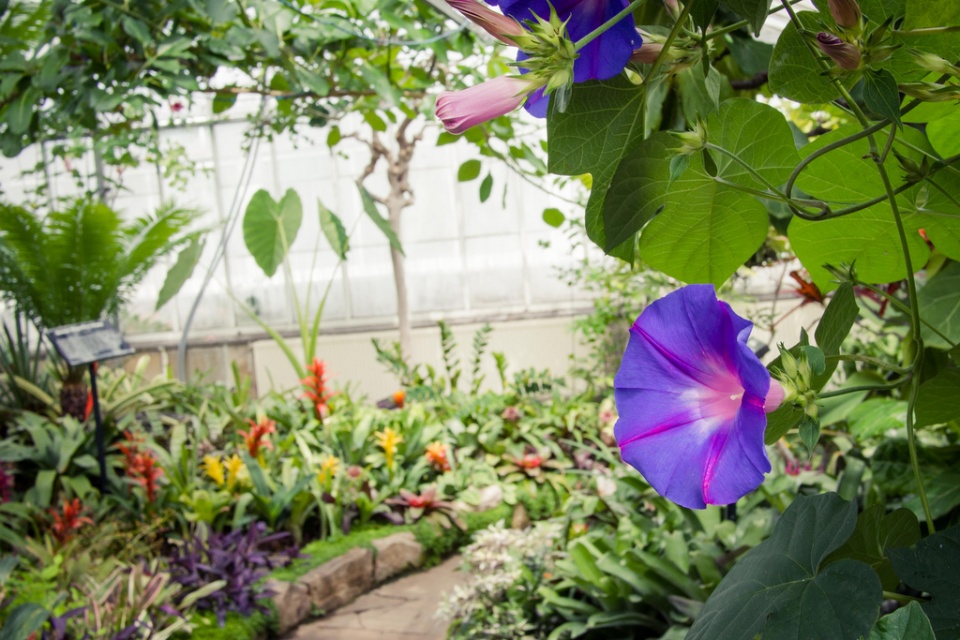
conservatories. Toronto is fortunate enough to have one with free admission
in the heart of the city, the Allen Gardens Conservatory. Similar to an art
gallery that displays different eras of art, the Allen Gardens Conservatory
features six green houses that include palms, cacti and succulents, tropical
plants, and many more.
I have
happily spent many afternoons in plant conservatories across North America and
whether you are a plant lover or not, it is impossible to not be struck by
their beauty, which is an immersive experience. Each room offers a new adventures,
teleporting you from desserts covered in succulents and cacti to tropical forests
complete with waterfalls and lush greenery. Curtis Evoy, the supervisor at the
Allen Gardens Conservatory, says that “Live plants can tickle all of our senses
– sight, touch, smell, hearing, and taste. Whereas an inanimate object may just
satisfy one or two of the senses.”
 |
| The tropical room in full bloom. Source |
Beyond the beauty,
plant conservatories, especially the Allen Gardens, serve as an important place
for discussions about Indigenous connections to the land. Every institution has
a land acknowledge that recognizes the presence of Indigenous groups and their
unique connection to the land long before settlers. This good natured gesture
rarely goes beyond an acknowledgement, even though it is meant to play an important
role in decolonization and putting Indigenization into action. Allen Gardens is
one of the few places putting land back into the hands of Indigenous peoples through
gardening and art.
Plants have
always played an important role in Indigenous cultures. There is
a permanent Indigenous Medicinal Garden outside the conservatory growing traditional
plants with the local Indigenous community. It includes staples such as sage,
sweetgrass, and tobacco. Making space for traditional Indigenous plants and allowing
the community to utilize them re-affirms the history of the land and its
stewards through action rather than words.
 |
| The banners in front of the conservatory. Source |
The Allen Gardens Conservatory is the perfect place to spend a sunny or dreary Toronto day. It has something for plant admirers and adversaries. I look forward to seeing how the conservatory continues to work with Indigenous peoples and that other institutions follow their lead.
7 October 2019
REUNITING WITH RISK: A DAY AT THE MMST50 UNCONFERENCE
In 1969, a small group of students gathered in the Royal Ontario Museum as part of a new program offered by the University of Toronto. The program itself was named Museum Studies, and it sought to prepare a new generation of museologists through direct, hands-on training in a cultural institution. Little did they know that 50 years later, this small, specialized program would grow into a thriving community of alumni that stretches across the globe.
 |
| The Official Logo of the MMSt50 Conference |
Last week, the Museum Studies program celebrated its 50th anniversary in the Claude T. Bissel building, which has housed the program since the year 2006. Students and professionals of all ages were invited to engage with one another in a series of workshops and discussions in the Inforum.
Although everyone was happy to be in such an enthusiastic group, the conference was not fluffy or wistful. Rather than simply using this occasion as a platform for blind optimism, the MMSt50 committee – led by alumni Melissa Smith – chose to center this special day around the topic of risk. More specifically, the event attempted to shed light on how museums can become more open to risk, and how we as museum professionals can create environments where risk is encouraged.
 |
| Faculty Dean Wendy Duff addresses the crowd at the beginning of the Unconference. Photograph courtesy of Jordan Fee. |
To begin the day, participants engaged in a series of discussions about the definition of risk, which was followed by a rapid-fire series of discussions, each of which were led by a specific museum professional. These facilitators came from a wide variety of backgrounds, from historic houses, to municipal government, to the world of business and marketing. Cheryl Blackman, Director of Museum and Heritage Services for the City of Toronto, brought some incredible energy to these discussions, encouraging all of the participants to surround themselves with people who they can trust. It seems like taking risks becomes much easier when you can rely on your team for advice, support and hard work.
There were also commentators who chose to speak about risks not only facing museums, but also the human population at large. The MMSt50 celebration took place on the same day as the Global Climate strike, which saw an unbelievable turnout in Toronto. Doug Worts, who bills himself as a Culture and Sustainability Expert, took to the floor to ask pressing questions, such as “What cultural impacts are museums trying to achieve?” and “How might we change our actions to make a greater impact outside of our institutions?”
 |
| A group of students, alumni and faculty members discuss risk at the roundtable. Photograph courtesy of Jordan Fee. |
As the day went on, more and more people got in touch with one another, and became more comfortable with bringing new ideas to the table. A group exercise led by Cara Krmpotich, Director of the Museum Studies program, asked the group to make commitments about the kinds of risks that they would take after returning to their respective places of work. More importantly, this exercise asked other people in the room to commit their own time and resources to helping others in the room to take risks. This led to an extensive conversation about precarious work in museums, support groups and professional development events. There was an exciting energy pulsating in this room, and it was quite apparent that new bonds were being formed as we spoke.
To cap off this exciting day, Katherine Ott, curator at the National Museum of American History, gave an incredible talk about risk, inclusion, power and memory in museums. Some of the most impactful statements made by Ott were related to museums as places of healing, therapy and wellbeing for those who have experienced past traumas.
 |
| Katherine Ott at the Royal Ontario. Photograph courtesy of Jordan Fee. |
In keeping with the theme of risk, Ott was careful not to spare words about the brutal nature of the world today. The lecture was inspiring in a way that few others can be. In the end, this talk reminded us that we are all much more powerful when we support one another, and that we can make a difference if we pool our resources. In the words of Katherine Ott: “Just be your beautiful selves! We’re all in this together.”
Subscribe to:
Posts (Atom)