29 February 2016

A PORTRAIT OF A CITY: IMAGES OF ISTANBUL AT THE AGA KHAN MUSEUM

EXHIBITION REVIEWS

BY: MADELINE SMOLARZ

After hearing about the Aga Khan Museum’s exciting first year of existence from afar, I was finally able to pay it a visit this month. Fortunately, the day I chose happened to be the first day the new temporary exhibition “A City Transformed: Images of Istanbul Then and Now” was open! I found it to be an excellent show with many features of a successful exhibition.

The Aga Khan Museum glowing in the sunset. Photo Credit: Madeline Smolarz.

There are no photographs allowed in the exhibition space which struck me as ironic as it is an exhibition of photography after all, but of course, I acquiesced as any respectful museum-goer should. Instead of taking my own, I have done my best to provide appropriate images to entice you to make the trip out to the Museum to see this stunning exhibition for yourself.

Walk with me through each section of "Images of Istanbul" and allow your mental portrait of the city to develop.

The entrance into "Images of Istanbul" on the second floor of the Museum. Photo Credit: Madeline Smolarz.


“Architectural Heritage and Urban Landmarks”


After walking through a foyer-like area that displayed portraits of Istanbul’s photography pioneers such as Vassilaki Kargopoulo, some of the sultans who patronized them, and an early portable travel camera called a Reisekamera, I entered the room where the historic obsession with the stylistic differences in the local architecture became apparent. It can be difficult to make old photos of buildings interesting, but the diversity of the subjects chosen - the Hagia Sophia, a palace, Byzantine-era walls, the waterfront, fortresses, cemeteries, fountains, and more - held my interest. Closed imperial albums sit behind glass, their covers resplendent with rich colour and texture. The iPads subtly embedded in the table beside them happily allow you to digitally turn their pages and see what is inside.

“The Glorification of Istanbul: Panoramas”


Two lengthy, mirror-image panoramas feature prominently in this section of the exhibition. One was taken last year, while the other is 120 years old, but both were taken from the same medieval stone edifice called the Galata Tower in Istanbul. Positioning the photos closely together allows for a direct comparison between the skyline they present. The human landscape of the city and its waterfront has changed quite a great deal. However, nearly all of the mosques and historic architecture remain, some even partially obscured by scaffolding that I hope indicates restoration. The Museum provided little interpretive text, but I appreciated the chance to make my own observations, and many visitors were held captive by the panoramas for several minutes. They are truly breathtaking.

The main image used for the exhibition. Source: The Aga Khan Museum.

“Glimpses Into Everyday Life”


Against the backdrop of a massive, enlarged panorama covering the entire wall of the narrow walkway that allows visitors to gaze down into the permanent exhibition area below, a parade of striking images offer an intimate look into quotidian experiences in Istanbul at the advent of photography. I especially enjoyed the inclusion of stereoscopes and stereoscopic photos, which offered a way to help visitors of all ages to engage with the photographs. Who wouldn’t want to see how past generations made 3D images?

“Murat Germen: Contemporary Photographs of Istanbul”


In Murat Germen’s Istanbul, the past and present literally collide in the many “muta-morphosis” images he has created by horizontally compressing panoramas of the city. I’ve personally never seen anything like these photographs, and this method suits Germen’s purposes perfectly. He expresses a kind of cautionary tale about the effects of rapid growth in an ancient city by evoking the collision of ideas, people, buildings, and time. A series of impressive, unconstricted modern panoramas also by Germen are also displayed as an antithetical contrast, and a selection of historic panoramic albums remind visitors of the origins of this photography practise in the sprawling metropolis.

One of Germen's visually arresting "muta-morphosis" photographs. Source: The Aga Khan Museum.

“A City Transformed: Images of Istanbul Then and Now” will be open from February 6, 2016 - June 26, 2016 and is located on the second floor of the Aga Khan Museum. I hope you go visit, and if you do, share your thoughts in the comments!


26 February 2016

THIS IS THE DROID WE'RE LOOKING FOR

OBJECT OF THE WEEK

BY: ROWENA MCGOWAN

Last year, a little movie came out that you might have heard of.

You know, if you were really paying attention, you might have caught a whisper. Source.

I jest, of course. Disney’s marketing kicked into high gear last year to make sure that everyone was excited about the new Star Wars movie. A lot of the marketing focused on BB-8, the adorable new droid starring in the film, who premiered in the first teaser released in November 2014.

BB-8
It doesn't even have cheeks and I want to pinch them. Source.

 Of course, people got excited about BB-8. Somehow, the filmmakers had made a droid even cuter than R2-D2. And BB-8 had a cool, if apparently impractical, design. BB-8’s lower body is a sphere, the head a small dome perched on top. As the body rolls, the head stays perfectly in place. It was a pretty weird design but hey, with CGI you can produce anything, no matter how physically impossible, so people were mostly nonplussed.

Then, during the Star Wars Celebration 2015, BB-8 rolled out on stage.


http://i.imgur.com/umSzUjp.gif
Source

People went nuts. It had actually already been confirmed, in December 2014, that BB-8 was a physical prop but I don’t think people were really expecting it to actually be able to move autonomously. Somehow, this weird little thing could move, look around and interact with the world without its head falling off. The Internet being the Internet, the race was on to figure out how BB-8 works.

With all of nerddom bent on solving this problem, we must know by now, right? Not so much. Disney has never confirmed exactly how BB-8 works so we’re still just guessing.

People pretty quickly connected BB-8 with the Sphero, another spherical rolling robot. This seemed like a pretty safe guess, since Disney had actually contributed funds to start the company behind it. However, Sphero didn’t have a head on top, which is the truly amazing part of BB-8, and Lucasfilm released a statement saying that, in fact, Sphero’s mechanism was not used because it didn’t produce the expressiveness that BB-8 demanded.


The Sphero. Source

So, how does BB-8 work? Magic? Giant hamster ball? (Don’t laugh, it was suggested!). The best guess comes from howbb8works.com, which is run by Carlos Sánchez and Emilio Gelardo.

They discovered a patent filed by Disney for a magnetic spherical balancing robot drive. One of the descriptions pretty closely matches BB-8. The body rolls using omni wheels (wheels which can roll in any direction) and relies on accelerometers and gyroscopes to know its position in space. The body also has a mast inside, which swivels around as the body moves so the head can reposition itself (for a video of how it works, click here). How does the head stick to the mast? That’s still the biggest question but the general consensus is magnets.
 

BB-8 drive mechanisms (Copyright and trademark Lucasfilm Ltd, all rights reserved. Image: Carlos Sanchez and Emilio Gelardo / howbb8works.com). Source

This is all very cool but is all this pop culture and techy stuff really relevant to the museum world? I think so. Museums are unique because of their focus on objects but lately, especially with the rise of digitization, we’ve been wondering how much the physical object really matters. Can people form the same connection from just looking at a picture or a digital model?

I think BB-8 and the broader Star Wars movie proves how much the object still matters. It would have been far easier for the filmmakers to just use CGI to create BB-8, just as it would have been easier for them to skip many of the physical effects they used. But they didn’t. They took the time to make a functioning prop. They played with it. They innovated. They poured their hearts and souls into BB-8. And people responded. They got excited. They got curious. They started theorizing how it worked and sharing ideas. They researched. They built websites. They built working models. None of that would have happened if BB-8 had been just a collection of pixels on a screen.

CGI creates marvels. But objects, physical objects, still have the ability to connect with people in a special way. BB-8 would always have been cute. But the magic happened when we found out it was real.

Also, when tired MMSt students misspoke the name. That was pretty magical, too. Credit: Olivia Gawron

Sources

howbb8works.com

http://www.forbes.com/sites/jvchamary/2015/12/30/how-bb8-works-star-wars/#769ef102ab2e

Want to try making one of your own?


25 February 2016

"JEWELLERY" BEFORE HOMO SAPIENS?

MUSEUM MYSTERIES

BY: CHRISTOPHER WAI

Note: For readers with a biological anthropology background, I am aware of the technical error above. Unfortunately I couldn't properly italicize Homo sapiens in the title!

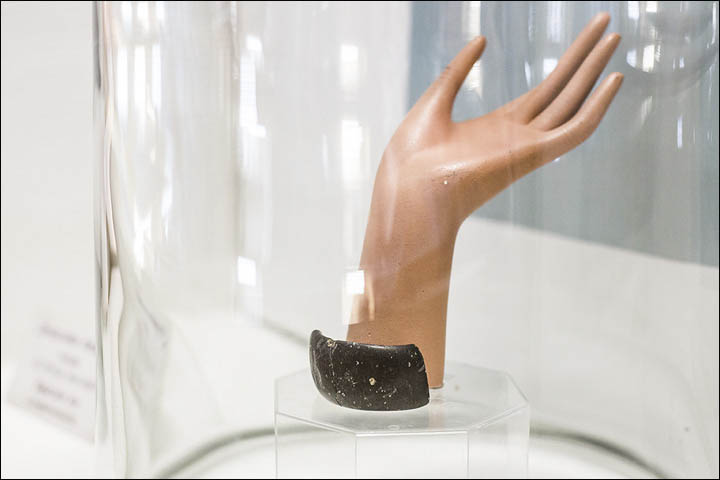
Denisovan bracelet, Museum of History and Culture of the Peoples of Siberia and the Far East in Novosibirsk.  Photograph by Vera Salnitskaya

2015 was a great year for evolutionary anthropology with the most exciting find being the potentially new member of our genus: Homo naledi. However, two other interesting news stories have also been added to the new questions we have in the new year. 

Eagle talons that may have formed part of a necklace/pendant by Neandethals and a Denisovan stone bracelet. 

Neanderthal made Eagle Talon necklace Pendant? Photograph by Luka Mjeda, Zagreb

Eagle Talon Necklace- Homo Neanderthalensis

Found over a century ago in Krapina, Croatia in association with the Mousterian stone tool tradition of the Neanderthals, Davorka Radovčić, a curator of Geology and Paleontology at the Croatian Natural History Museum, theorized that they may have been part of a necklace or pendant.

The evidence?

Notches on the talons.

Fig 7. Three examples of human manipulation
Convinced?

The results of this research were published on March 11, 2015 by Radovčić, and his colleagues. It can be read in its entirety here.

Bigger Context: What we now know about Homo Neanderthalensis?

This possible example of Neanderthal ornamentation is not isolated.
"Ornaments are commonly associated with fossil Homo sapiens and are thought to represent the special cognitive abilities and symbolic capacities of modern humans [1–4]. Studies in recent years have documented Neandertals using or producing art and symbolic items evidenced by unusual lithic objects [5], feathers [6–7], modified shells [8–9], ochre [10–13], mobiliary and cave art [14–17] and very sporadically raptor talons, consisting of single elements, presumably used as pendants [18].[...]
They are the earliest evidence for jewelry in the European fossil record and demonstrate that Neandertals possessed a symbolic culture long before more modern human forms arrived in Europe." - Davorka Radovčić et al. 2015
Discussions on Neanderthal complexity have been a core part of present day research that has reevaluated much of the older misconceptions about the Neanderthals. Unfortunately, the persistent myth of them being vastly inferior, dumb or vicious comes from the misinterpretations and rhetoric from the 19th century and reinforcement into the 20th in pop culture.

Appears to be an image from one of the old Field Museum dioramas. Source.

A more recent recent reconstruction of a Neanderthal woman and man. Neanderthal Museum, Mettmann, Germany. Source.

Neanderthals preceded us and were still around by the time we arrived from Africa. We coexisted with them, but they died off relatively soon after. Perhaps it was because of the competition for resources with us, a changing environment, and to a lesser extent interbreeding (some populations appear to have anywhere from 1-4% neanderthal DNA, though there is still a longstanding debate). The Neanderthal genome has also been sequenced as of 2010 by the Max Planck Institute.

They were more robust, often had larger skulls than ours (sloped foreheads and larger brow ridges but not small heads!) could methodically craft stone tools, used spears to hunt and maintained fires.

There are also possibly multiple cases of them purposefully burying their dead.

Reconstruction of burial at La Chappelle-Aux-Saints.
PHOTOGRAPH BY DEA, A. DAGLI ORTI/DE AGOSTINI Getty Images

Denisovan Stone Bracelet

Who?

The Denisovians are a group that is less well known and understood, but research is ongoing! In fact, the exact taxonomy has yet to be settled on. 


The expediently long and short of it though is that they may have co-existed and interbred with both humans and Neanderthals based on DNA evidence.

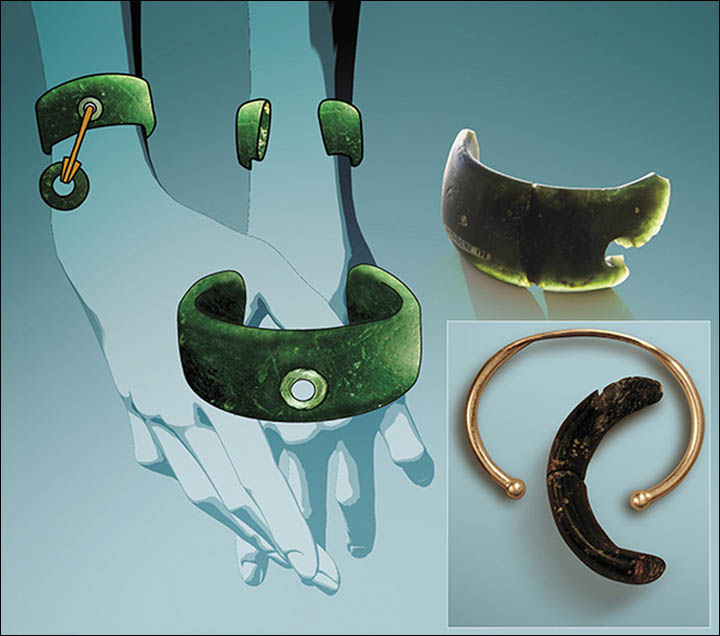
This chlorite bracelet originally found in 2008 adds another component to the puzzle though. 

Researchers do not believe that it was contamination from a more recent context/ level, but if not, then all we have are questions.

Bracelet from Denisova Cave, Altai Region, Siberia. Anatoly Derevyanko and Mikhail Shunkov


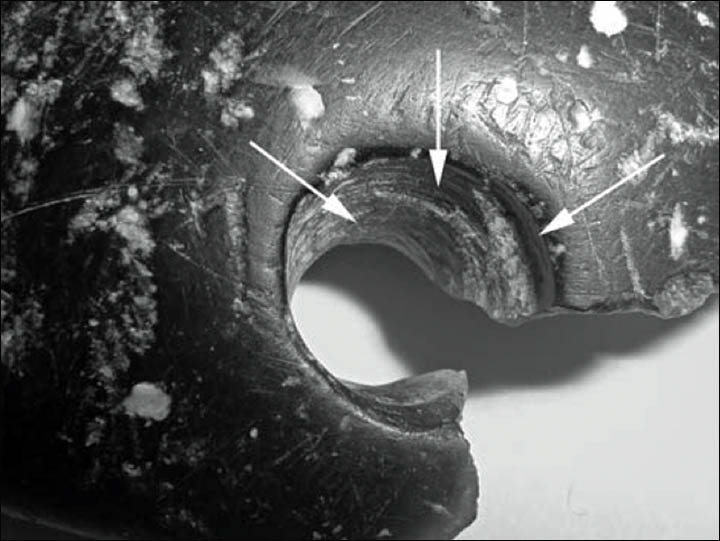
What makes this discovery perplexing is that the techniques and skills required to produce this artifact has never been known to have existed during this particular time.

Evidence of drilling. Anatoly Derevvanko and Mikhail Shunkov, Vera Salnitskava.

It implies that the Denisovans had a well-developed a skill set that neither H. sapiens nor H. neanderthalensis had then.

Unfortunately, it is the only example thus far. 

Perhaps more details will follow.

Conclusion of Questions

There are many questions to be asked about the complexity of our relatives and also how similarly or differently we saw the world.

What it means to be uniquely human and whether that existential question or crisis matters is almost always brought up. In our humanly quest to eternally redefine ourselves as special, we may separate ourselves too much. But at the same time, when we draw similarities, do we also draw false equivalences?

It's the old "splitters vs. lumpers" debate that occurs in anthropology when it comes to creating categories.

What are the Neanderthals and Denisovans to us? How different were they?

These pieces are also unique in that they have survived in the material record and there are few other examples to look at, so how much can we read into them? 

When it comes to the objects above, shall we call them "jewellery", decoration, personal, ritual adornment, and all the implications (i.e. economic, cultural, ethnic, social, gender-based constructs associations) that come with them?

Where shall we stand I wonder, when it comes to making sense of this?


24 February 2016

THE APOCALYPTIC COLLECTION

COLLECTIONS CORNER

BY: JENNIFER MAXWELL

The end is nigh…

The Apocalypse is here. From arthouse films to summer blockbusters, destroying the world and surviving its aftermath has never been more popular. But there is one bright spot to be found in all the blood and mayhem: like in all apocalyptic fiction, something of society survives.

As shown in many films and TV shows – such as 2012, The Day After Tomorrow, and The 100 – certain cultural artefacts are often saved as representatives of a lost society when the apocalypse hits. That being said, these fictional works assume that these collections have been pre-selected by a council of “experts”. Fictional experts aside, I was curious to know what other cultural artefacts might survive an apocalypse. So I asked and you responded! Drumroll…and the lucky objects are:

Taxidermy Passenger Pigeon
“I know that sounds strange but I figure the world may need an environmental reminder of how things can go wrong. Is that so terribly grim?” – Jenny

© 2016 Smithsonian Institution

Tina Turner’s steel mail dress from Mad Max Beyond Thunderdome
“If the world has gone to hell, I will track down Tina Turner's steel mail dress from Mad Max Beyond Thunderdome to assert myself as chief badass in the apocalyptic wasteland, and preserve (pop) cultural memory.” – Anya

Source

Zippo Lighter
"It's iconic, portable, and most of all, a survival tool." – Glenn

North Pacific Coast No. 12 Sonoma
“It’s one of the most beautiful locomotives; a sad reminder of the destruction of our home in this world and the irrevocable remorse of manifest destiny.” – Alex

© 2011-2014 California State Railroad Museum

The Declaration of Independence
“It contains such beautiful and inspiring words about equality and happiness… The Declaration of Independence is also a self-rescuing princess and that’s why I know it will survive the apocalypse!” – MD

Steamboat Willie animated short film
“Because who doesn’t love Disney, really?” – Anonymous


Golden Horse Fountain of Yarmouth, NS
“It just reminds me of home, and I can’t imagine surviving the apocalypse without it. Plus it has already survived nature’s elements, wayward snowplows, and a home-made bomb – not to mention high school grads!” – Sheila

© Parks Canada

“The Paper Bag Princess” by Robert Munsch
“It’s a fantastic story that invites kids to use their imaginations while also promoting girl power!” – Pamela

© 2016 Robert Munsch

Magna Carta
“It’s the document that led to democracy and modern civilization. If civilization is ending then it’s the one document that we should save to rebuild it.” – Tim

“It’s such a symbol for the advancement of equality in human kind. It begins the weakening of the ruling power and the steps towards the democracy (mostly) that we continue to thrive in.” – Sarah

© British Library Board

Original script for Star Wars
“Only because it would be funny if it became a creation story.” – Anonymous

A Pink Bedazzled Hammer
“Gilmore Girls said it best: I can use it to build a really pretty house in the post-apocalypse. It also doubles as a weapon.” – Jessica

Source

The Rosetta Stone
“It gave us the ability to understand Egyptian hieroglyphics and if civilization does collapse and become something out of the TV show The 100, it would provide the opportunity to rediscover Greek.” – Victoria

“Language is the most important tool humans have. And it’s a fascinating reminder of its evolution.” – Beka

© The Trustees of the British Museum

Original manuscripts of “The Lord of the Rings” by J.R.R. Tolkien
“[Tolkien] is one of the greatest authors of all time. It’s a timeless story that can lend its teachings to all aspects of life; something that could be read over and would still show you something new each time.” – Josh

© 2016, Peter Harrington

World Topographic Map
“Large and detailed….I would try to get one without country boundaries. Depending on the type of apocalypse, it could be very useful or remind future societies of what was destroyed.” – Leena

© 2008-2015 National Geographic Maps

The Eagles: Their Greatest Hits (1971-1975) on vinyl
"There is an element of sunshine and comfort when listening to the music. It would certainly make for a nice, mellow afternoon in the bunker.” – Jennifer

A massive thank-you to everyone who participated in my call-out on social media!

Last chance, the apocalypse is here! What cultural artefact would you save?