To start off this year taking charge of this column, I thought long and hard about the title: Conservation Tips... There are so many out there! So many great institutes around the world write documents specifically for people like us: what type of damage is possible, how to repair/prevent damage on artifacts, proper storage, pest management, etc.
So what did I want to do for my first article to help contribute to this ever-expanding pool of strong conservation materials? I began to feel a heavy weight upon my shoulders... what can I, a student with nothing but a keen interest in conservation and very general experience, give to those who want to learn more?
What I wanted was to create a resource that could be useful to people in a big picture sense, especially those who may not know where to start when it comes to conserving. This could be consultants, archaeologists, museum employees, local heritage professionals, or anyone with an interest in conservation!
So I came up with these babies: The Conservation Cheat Sheets (or more professionally--according to my document titles--Conservation 101 Sheets)! Actually, you can call them anything you want: Weird Looking Charts, Lots 'o' Lines, whatever you feel like. There are two: one for inorganic artifacts and one for organic. Below are their previews.
Say you have a basic conservation problem. Maybe you want a starting point to jump off from and Google is overwhelming you. All you have to do is open the handy dandy Conservation Cheat Sheets! You have a leather item that's so brittle it makes you nervous? Follow the lines to get to a useful source link. What about a piece of flaking pottery? No problem, just follow the path! Because that, my friends, is the destination. Each final result is actually a working link that will take you to the institution's webpage about said topic; usually there is even more useful information right on the page.
This means: the best part comes when you download them. You can then click the links at the bottom of your flowchart journey and bam, you have a place to start, a resource already in front of you.
So even though the images above may (generally) help you figure out the basic issue with your item, make sure to download them for clickability! Then you can keep them on your computer forever.
PS: These charts are very general and are meant to be more like starting off points. There was no way I could possibly link to all of the sources I wanted to, nor delve into the more complicated problems and sub-problems that occur in the fascinating world of conservation (not at this point, anyway!). I hope these interactive charts help out at least a few of you as you embark on your conserving adventures!
I began my day by reading an interesting article about the
National Museum of Video Games in Texas and of course, sipping a hot cup of
coffee. My interest in this article may
have been spurred by the impending stress of upcoming assignments for the new
semester and consequently a longing to escape into the world of video games.
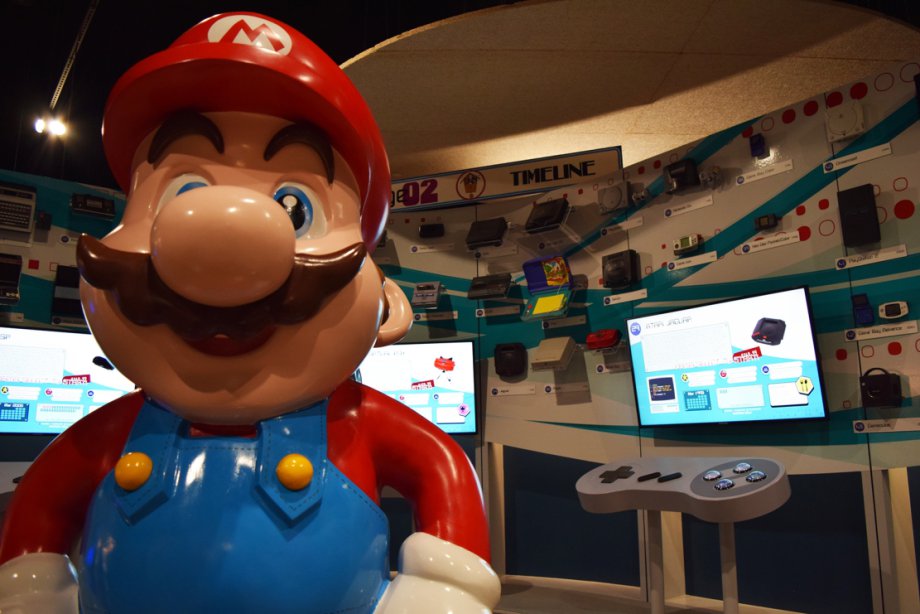
That being said, I had a brief virtual escape to the Video Game Museum which displays everything from old Pacman games to a giant game of Pong.
The
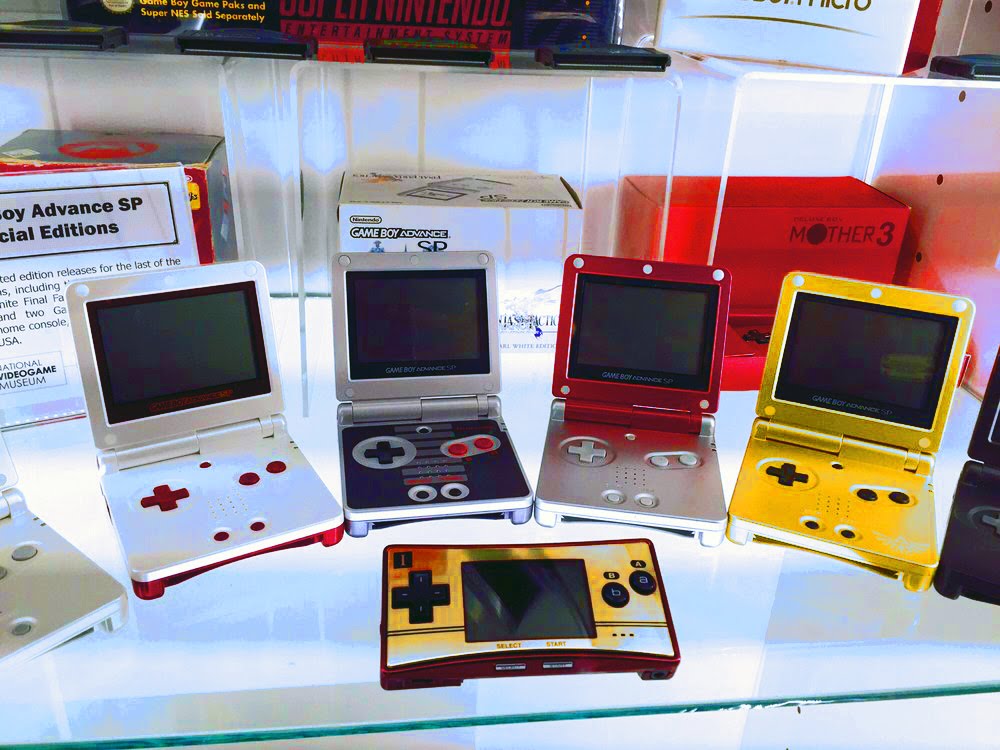
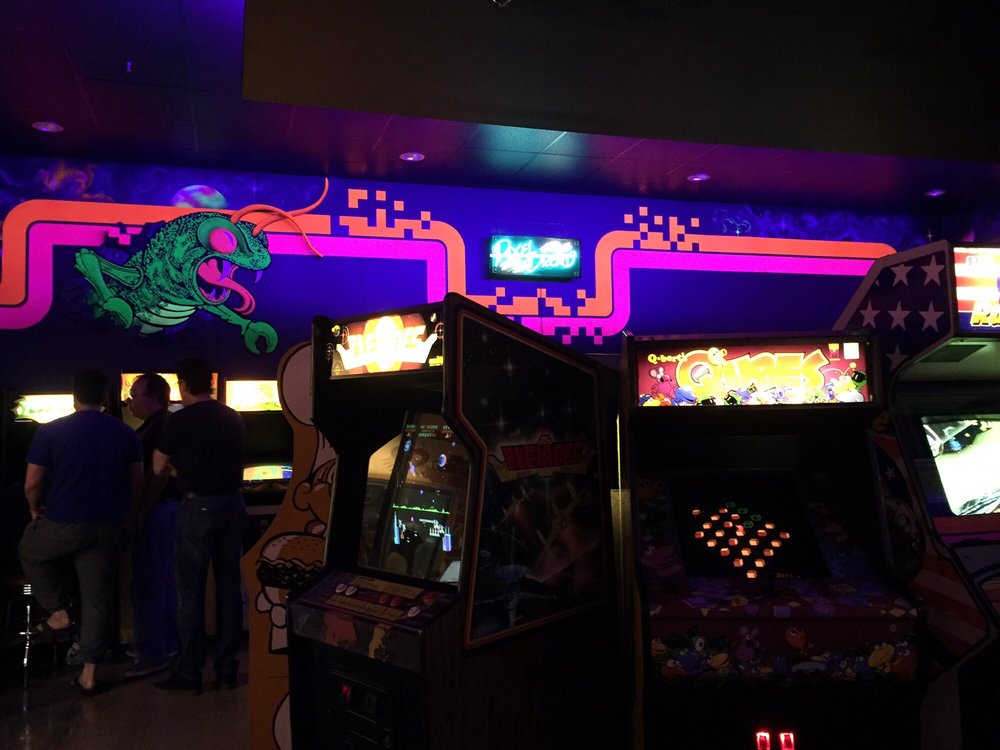
museum which opened just this past April is laid out in stages allowing visitors to progress from exhibits such as a timeline of consoles, to an 80’s
Arcade and finally to some of Nintendo’s first “prehistoric” creations. The museum
also offers educational programs which provide interactive tutorials in the
areas of science, technology and engineering for kids and adults. Another interesting, interactive feature of this museum is that the old arcade systems are made available for visitors to play! Wicked.
This brings me to a third feature of the National Video Game
Museum and that is its promotion of Pokémon Go. The Museum advocates playing it
through social media and has even held a Lure party in July. The adoption of
this innovative, geographically sensitive game seems natural on the part of the
Video Game Museum, as it not only fits their collection theme but will no doubt
become ingrained in their history. However, how do other Museums whose
objectives and themes differ from the Video Game Museum cope with the impact of
Pokemon Go? The mission of museums initially seems mismatched with the use of Pokemon
Go - a distracting technology that puts its users in what I like to call the
Hunched Zombie texting position.
Museums are being creative in approaching the Pokemon Go phenomenon. For instance, the Royal Ontario Museum offers an
online tour of Pokemon Go in the exhibits and reminds players of the historical significance
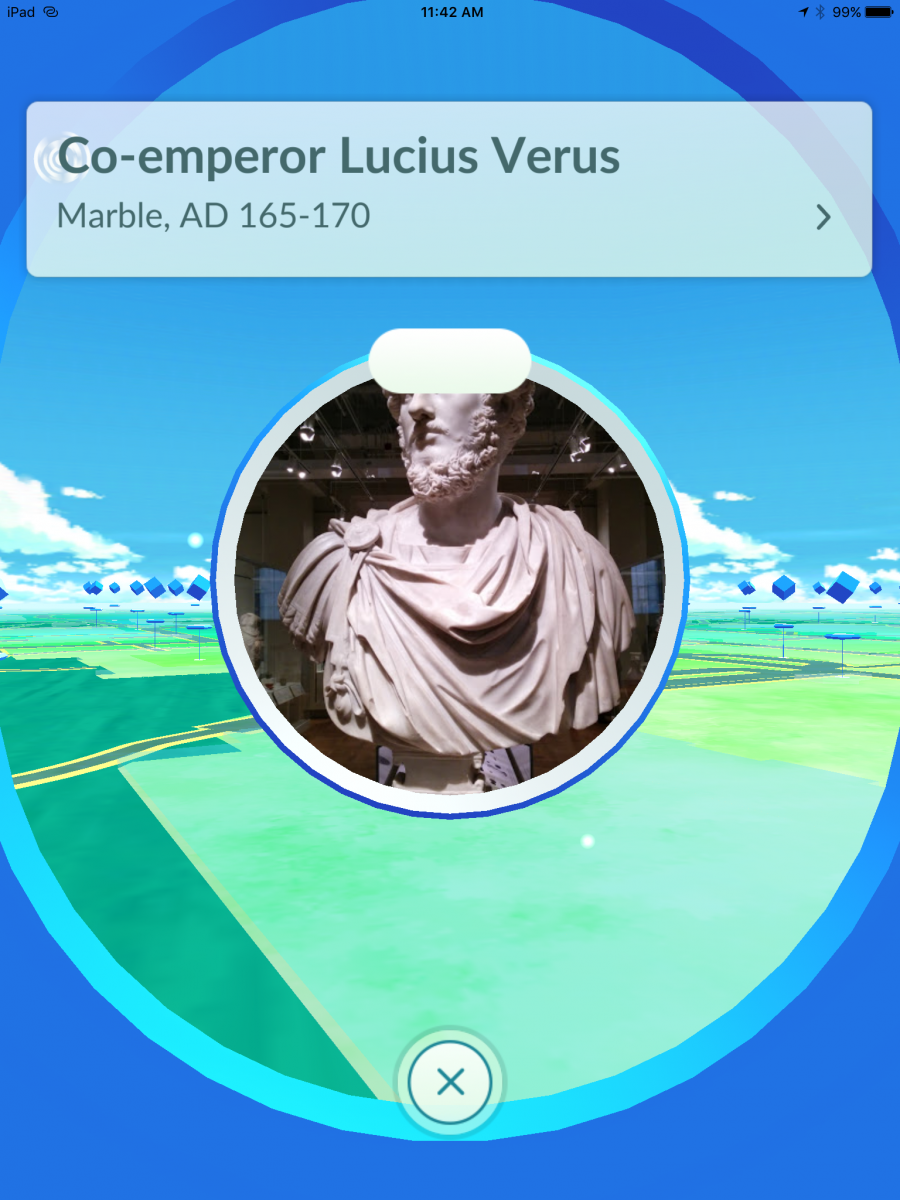
of artefacts where Pokestops are located. For example, the Leading Content Producer
Sarah Elliot informs players that this bust:
which at first glance may look like a
Pokestop, is also a portrait of Lucius Verus who served as a co-emperor in Rome from 161-169 CE (source).
Photo Courtesy of SI Instagram
This is an innovative way of helping
players relate to materials in the museum through a form of technology that can also be used as a culturally relevant
form of education. The Smithsonian Institute on the other hand has used
many references to Pokémon Go in their blogs, Instagram and Facebook, to
similarly help Pokémon Go players relate to objects and visit the museum. On the Smithsonian Instagram the accession of a new 1989 Gameboy is captioned with the label
“Before Pokemon Go there was the 1989 Nintendo Gameboy...This one is now in our @amhistorymuseum"(Source). Another Blog post by the Ocean
Blog compares favourite Pokemon to the specimen in the museum, another
innovative way to use the prevailing Pokemon Go fever to draw interest into an
educational experience.
However, a disgruntled Facebook comment in response to this blog
post suggested that the Smithsonian draw back the adults to the real world and
focus on Smithsonian issues. This embellishes the fine line that museum professionals
must balance in using new innovative technology to provide education for all
ages and interests.
What do you think? Is Pokemon Go an avenue for education in
museums? Or is it an innovation that ultimately takes away and distracts from
the museum exhibits?
Hello fellow Musers! For my inaugural post in
the "Greatest Hits" column I want to talk about Madeline Smolarz's
discovery of the Museum of Endangered Sounds.
It's quite telling that the website chose the
word museum to define and describe its collection of nostalgic technological sounds.
It implies that a lot of care and specific planning went into the selection of
these retro sound bites. As Madeline highlights in her incredibly fun blog entry, the creator Brendan Chilcutt justifies the existence of the website in a
clever and intentionally dramatic blurb that pokes fun at our post-modern
obsession with nostalgia while also embracing it.
So why do we find nostalgia so enticing? And why
is the Museum so much fun to visit and write about?
I think a partial answer to
my latter question lies in the novelty of sound-based media. We are so often
bombarded with visual nostalgia. Auditory nostalgia? Not so much. Even
modernized or repurposed retro objects still usually have the insides of
contemporary technology. I could go out and buy a beautifully designed modern
radio that looks exactly like one made in 1942, but it wouldn't be the same. I
wouldn't want to sacrifice things like modern sound quality, or wifi
capabilities. Even if I could somehow program this radio to sound retro when I
wanted it to, it still wouldn't be the same. And it really shouldn't be. A
reproduction can enhance but not replace a real artifact.
What makes the Museum such an interesting
little detour is its simplicity. It's fun to reminisce and take stock of where
we once were. Michael Enright's CBC podcast "Rewind" does this as
well, and audio is once again front and centre because the CBC archives are the
source material. But as with any podcast there is a time commitment and there
are underlying themes in play. With the Museum of Endangered Sounds, you can
pop in and out of the past at your leisure. You can combine random sounds from
different generations, or listen to your favourite sound over and over, just
because.
Familiar sounds and smells can trigger strong
emotional responses. Sometimes we just want to go home again. And sometimes,
however briefly, we can. Do you agree?
Welcome to the first post of a new column for Musings! As we are becoming increasingly aware (with classes such as Project Management and Fundraising) museums are not just collections and exhibitions. In fact, it could be suggested that one of the greatest challenges museums face today is fundraising. This column is intended to bring to your attention the multi-faceted and innovative efforts the sector is making to meet needs, make budget, and (hopefully) create fun programming and events!
Fundraise for museum dance parties, if nothing else. Source.
Although the theme of this column is not "let me bore you with money talk" I figured the first post was best spent outlining the basics... with a promise to reveal all kinds of innovative (fun)draising [get it?!] examples in the posts to follow.
The Strategy
A fundraising strategy might include:
A statement of the museum’s particular aspirations (its ‘vision’)
The stepping stones or stages by which it will achieve its vision
The methods to be used (e.g. sponsorship, trusts and foundations)
A budget for fundraising costs, annual and other milestone targets, income projections and a timetable for implementation
It might also set out policies and structures for organizing and providing the resources for people who will help to raise the funds. These should include senior volunteers such as Board members, whose influence will help open doors to prospective donors and supporter organizations which raise money for the museum as part of their role.
The Key Methods
Capital appeals
Corporate giving and sponsorship
Fundraising events
Individual giving
Legacy gifts
Friends/Memberships
... and more
If this is your current state - I have a point! Source
The 'So What'?
So what is the point in dedicating resources to secure funding? Let's take a look at a couple current fundraising campaigns in Canadian museums...
Montreal Museum of Fine Arts:
CAMPAIGN GOAL: $1 MILLION
"A donation to the Museum is really a gift for the children of future generations, who will be able to enjoy these unique collections of Quebec and Canadian Art, Old Masters, International Modern and Contemporary Art, Decorative Arts and Design, as well as art from World Cultures."
North Vancouver Museum and Archives:
CAMPAIGN GOAL: $10 MILLION
"The City Council of North Vancouver endorsed a resolution that authorized the North Vancouver Museum and Archives (NVMA) to undertake a Fundraising Feasibility Study that included the development of a recommended timeline for a capital campaign for a new North Vancouver Museum to be located in the Pipe Shop on Lot 4 of the Pier development."
If you aren't P Diddy (or don't have Puff sitting on your Board of Directors), fundraising is hard work. It demands patience and persistence.
Development directors at the Smithsonian Institution identified personal connections as the most important component in successful fundraising. In developing personal relationships, fundraising is “community building” or creating a feeling that being a part of the museum is important. In community building, a museum’s donor clubs and volunteer committees are viewed as important resources.
If you're at all skeptical about the Smithsonian Institute's strategy, check this out:
The newest addition to the suite of Smithsonian museums, the National Museum of African American History and Culture, approached the leaders of the historic Alfred Street Baptist Church in Alexandria with a surprising request: Would the African American congregation pledge $1 million to become a founding donor to the $540 million museum?
Yes.
This request highlights the bold thinking of the museum’s fundraisers, who tapped into Alfred Street’s tradition of service and its pride in its 200-year history in making their appeal.
Next time you are in a museum or gallery, I hope the takeaway from this brief (and gif filled) intro to fundraising has you thinking about how the travelling exhibition you're visiting was feasible, how the institution can afford to maintain its collections, and/or how your membership makes a difference.
Please share any exciting fundraising events or campaigns below!
Sources
Anderson, E. 2006. "Fundraising for Museums". Association of Independent Museums. http://www.aim-museums.co.uk/downloads/ee7f04d4-dd7c-11e1-bdfc-001999b209eb.pdf.
McGlone, P. 2016. "How the African American Museum is Raising the Bar for Black Philanthropy". The Washington Post. https://www.washingtonpost.com/entertainment/museums/african-american-museums-fundraising-touches-deep-history-among-donors/2016/05/23/bc2cbc94-1613-11e6-924d-838753295f9a_story.html.
Montreal Museum of Fine Arts. n.d. "My Museum, My Masterpiece". 2015-2016 Fundraising Campaign. Accessed September 26, 2016. http://www.mbam.qc.ca/en/about-the-mmfa/foundation/2015-2016-fundraising-campaign/.
Optimus Fundraising. 2016. "Review of Campaign Status and Future Fundraising for the New Museum in the Shipyards". North Vancouver Museum and Archives. http://nvma.ca/wp-content/uploads/2016/01/CDNV_DISTRICT_HALL-2800602-v1-CNV_Fundraising_Report_attachment_Jan-16.pdf.
Smithsonian Institution. 2001. Fundraising at Art Museums. Smithsonian Institution. https://www.si.edu/Content/opanda/docs/Rpts2001/01.10.FundraisingArt.Final.pdf.
Ahhh Autumn. The crispness in the air, the falling of the leaves, and the pumpkin spicing of every baked good and caffeinated drink in sight. It's also "back-to-school" season which means that classes have started again at our beloved iSchool. Welcome back second-years and to incoming first-year students, make sure to check out my previous column, The Grad School Guide, where you can hopefully find some helpful info about life as a Museum Studies student.
This particular September marks an immense milestone in my academic career: my last first day of school and the last time I can thrive on the sense of possibility, opportunity, and excitement that accompanies a new school year—at least for the foreseeable future. Ever since I was a kid, I always loved the feeling of going back to school and to this day, this season is a nostalgic reminder of the strange sentimentality that comes with buying school supplies, creating new schedules, and contemplating future learning activities. School has always been fun for me, and so have museums, so I thought to myself: "this edition of Museum Mondays should address something that is an amalgamation of both schools AND museums!"
Enter the fact that there are many museums and galleries established in buildings that were former public schools or school houses, and in current academic institutions. I first became curious about this idea during my internship at the Koffler Centre of the Arts, which is in the office and library of a former public school. The similarities in practice between schools and museums, such as using primary sources to ignite students' learning experiences, make the establishment of a museum in a school an intriguing, and decidedly apropos concept. Now let's discuss a few galleries and institutions, located in schools, that I think have employed the school-museum shtick to the fullest. Please reply in the comments with your favourite museum-school hybrids!!!
Stavanger School Museum
As a fan of Scandavian design and culture (hygge anyone?), I was more than pleased to read about the Stavanger School Museum in southwestern Norway. Located in a 1920's-era school house that formerly housed the Kvaleberg school building, the museum exhibits the history of the Norwegian elementary school system from the 1800's until today. The museum also possesses a large collection of school-related artifacts, and is home to a collection of over 25,000 historic textbooks (Source). Imagine purchasing 25,000 textbooks at the UofT bookstore! A girl can only dream.
The lovely-looking Stavanger School House. Source.
MoMa PS1
Once home to the first public school in Long Island City, Queen's, New York, MoMA PS1 is now the location of one of the foremost contemporary art institutions. The gallery is dedicated to "displaying the most experimental art in the world" (Source), and is also one of the oldest contemporary art institutions, dating back to the 1970's, prior to its affiliation with MoMA (Source). MoMA PS1 definitely plays up the fact that it functions in a former school house in its public programming. From a summertime workshop and lecture series titled "Summer School" to the "Warm Up" party series reminiscent of gym classes of yore, PS1 seems to emphasize its origins and weave this narrative throughout its current operations.
Old Library Building at Trinity College, Dublin
Part of Trinity College in Dublin: the oldest university in Ireland; the Old Library Building at this school is home to an exhibition on the Book of Kells and the library holds an extensive book collection comprising a copy of every book ever written in Ireland. I had the opportunity to visit the Old Library and exhibition space this past summer, and words can hardly describe the feeling of being surrounded by that many historic books all at once. If you are a book-lover and a "back-to-school" aficionado, like myself, prepare to be awestruck by this old school (pun intended) library.
An image of the Library's Great Hall from my travels this summer.
From a conservationist standpoint, light is often viewed as an enemy, causing damage to objects within a museum collection. However, light can be used to create unique displays that inspire visitor engagement. This is seen in the new Royal Ontario Museum (ROM) exhibit entitled: Chihuly.
I was really impressed with the way the exhibit controlled light. Throughout the exhibit there are interesting displays that reflect, absorb, and manipulate the light in order to complement the glass work itself.
I think the best example of this mastery of light is seen in the Persian Ceiling. The Persian Ceiling has many works of glass arranged to form a ceiling and there are lights shining above the artefact.
Personal Photo Credit: Hayley Mae Jones
The art installation is enclosed in a room with cream coloured walls. These cream walls/floor of the exhibit were a beautiful canvas for the multi-coloured light reflecting through the art work. This showed off the natural beauty of the glass work, while compelling visitors to look up towards the ceiling.
Personal Photo Credit: Hayley Mae Jones
The multi-coloured light also drew my eyes upwards towards the placement of the object, and made visitors arch their necks. The light really felt like a part of the object itself.
Personal Photo Credit: Hayley Mae Jones
The ROM also provided visitors a place to sit and lie down within this exhibit space providing visitors with different perspectives and methods of experiencing the light shining through the art work. This allowed the visitors to view the glass work, and light from different angles.
Museums should take into consideration, how light can be used to create different types of visitor experiences, and how light can dramatically impact an exhibition. Light is what allows visitors to view objects within a collection, and poor lighting design can cause a negative impact on the visitor experience. That doesn't mean that all museums should push for elaborate light shows within their exhibitions. Dramatic lighting effects are not always possible, due to the materials and condition of the objects displayed. Museums should take into consideration how to best use light to meet their exhibition, collection, and visitor needs.
That being said, the Persian Ceiling shows how combining objects and light can create a unique visitor experience.
Art and Innovation: Traditional Arctic Footwear from the Bata Shoe Museum Collection. Photo Credit: Sadie MacDonald.
This week I went to the Bata Shoe Museum for the first time! Generally shoes aren't my friends (having flat feet with a significant discrepancy in size will do that to you), but I easily put that troubled past aside while visiting here.
I especially enjoyed the semi-permanent exhibition Art and Innovation: Traditional Arctic Footwear from the Bata Shoe Museum Collection, which opened earlier this year. If you haven’t gone to see it yet, you really should!
This exhibition features boots, clothing, and sewing tools from various people who live around the Arctic. Cultures from three continents are represented, from Inuit to Sami to Nenet. The showcases are grouped by region (Greenland, Canada, Alaska, Western Siberia, Eastern Siberia, and Sápmi) and are positioned according to those regions’ respective location around the Arctic within the room’s space (clever, clever). This project is the result of field research organized by the Bata Shoe Museum, and interviews and demonstrations were conducted with the objects’ makers. The opening statement reminds us that “many of the boots in this exhibition have a story to tell.”
The Art and Innovation exhibition's glacial ambience. Photo Credit: Sadie MacDonald.
The room is lined with sharp-edged, glacial white displays that surround an expanse of space. Interspersing this cold set-up are the stunning and eye-catching featured objects, which imbibe the area with vitality and activity. The exhibition design reflects the popular idea of the Arctic as a barren wasteland and simultaneously challenges that notion by pointing to the vibrant and diverse cultural traditions of those who live there. While they are all grouped under this exhibit as part of the Arctic in general, the articles on display are from a variety of cultures and were made for a variety of purposes from a variety of materials. Utility, ceremony, gender identity, and straight-up artistry are common themes. Materials include reindeer pelt, seal intestine, grass, fish skin, and duck skin.
Slippers made from eider duck skin – seriously! Meeko, Silatik. Sanikiluaq, Belcher Islands, Nunavut, Canada. 1989. Photo Credit: Sadie MacDonald.
I really appreciate how this exhibit credits nearly all of the makers of the objects on display, and in the very few cases where the artist is not known, the label acknowledges it. The labels also frequently provide the artists' cultural background and their reasons for making the pieces. This personalized labelling was part of a deliberate effort to avoid the anonymity that tends to accompany indigenous artifacts. Senior curator Elizabeth Semmelhack wanted to move past the “anonymous maker” concept; in this exhibit, “we know the names of all the makers, who they made the pieces for, and why they were made in that way.” Sometimes museums present indigenous works as generalized, representative examples of the cultural practices they originate from, but here, these objects have particular stories and were made by and for specific people.
Siberian white reindeer boots. Moldanova, Natasha. Beloyarsk, Ob Basin, Siberia, Russia. 1980s. Photo Credit: Sadie MacDonald.
The boots above, for example, were made in the 1980s by Khanty seamstress Natasha Moldanova for her son Valery. He would wear them while undertaking activities like hunting, fishing, and the annual March reindeer festival. You can learn more about Siberian reindeer boots like these at the Bata Shoe Museum blog here.
These must have taken forever to make. Okadluk, Leah. Arctic Bay, Northwest Territories, Canada. 1987. Photo Credit: Sadie MacDonald.
My personal favourite were these awesome sealskin kamiks made by Leah Okadluk, an Iglulingmiut Inuit artist, for the 1987 Bata Shoe Museum Foundation Decorated Moccasin competition. She won second place (Joyce Growing Thunder Fogarty won first). These show a complicated fur inlay technique, in which the artist crafts stylized motifs from aligning different types of fur in a smooth effect. Get a load of those polar bears!
Take a closer look at that snout. Photo Credit: Sadie MacDonald.
The photo above shows traditional Sami shoes called gallohat. This pair was made by Berit Karen Bongo Utsi for her husband Nils using the pelt off a reindeer’s head. See where the nose is? And with that nose fur the artist managed to get the nice curled toe that is distinctive to Sami footwear. The exhibited objects are in beautiful condition – lots of glossy pelts and bright colours here! Most of these items were made during the 20th century by skilled craftworkers. It’s an important reminder that these are contemporary objects involved in ongoing cultural traditions and everyday activities, and not artifacts from dead, ancient history as popular perception too often casts indigenous works. Here, they are alive. True to their word, there are many stories told by these shoes. Give them a listen sometime!
If you visit Victoria, BC, you should definitely check out the Royal BC Museum’s Food Truck Festival. Unless, like me, your ferry departs at 10am and the festival doesn’t open for another hour.
Next summer for sure. Photo by the author.
Luckily, the Songhees Seafood & Steam was conveniently located by the dock. Fresh bannock with house-made blackberry preserves hit the spot. It paired especially well with Resilience of the People, an exhibit at the Robert Bateman Centre and produced in partnership with the Songhees Nation.
Songhees Seafood & Steam is a collaboration between Songhees Nation Chief Ron Sam, Clipper Navigation, Inc., and Victoria chef David Roger. Their mission is “Food + Culture + Community. And really, really good food.” (source).
This food truck is more than meets the eye. Photo by the author.
The truck is part of a movement to reclaim indigenous foodways. In Minneapolis, Tatanka Truck is reclaiming “aboriginal tacos” by replacing the fry bread with locally-available corn cakes. Both trucks have a social responsibility: to offer restaurant education and jobs to aboriginal people. They’re also revitalizing indigenous foodways through experimentation and education.
I grabbed my food truck brunch and boarded the boat. The sweet, crispy mouthful brought a wave of memories.
As a kid growing up in the Northwest, picking blackberries was one of my chores. The berries on my morning bannock were definitely the sweet and plentiful Himalayan variety, not the seedier native species. Himalayan blackberries are invasive to British Columbia and Washington state, where they were introduced by Europeans, much like me.
Can confirm: really good food. Photo by the author.
Years ago, when I was an undergrad working at the Museum of Anthropology at UBC, I fell into conversation with a Coast Salish carver. I can’t remember his name any more, but I remember the crinkle of his eyes when he smiled. At that age, I was in the first throes of white guilt. As a descendant of Scottish missionaries, I felt like I had no right to be there.
I must have seemed confused and apologetic because the man said something like, “You know bannock isn’t a First Nations word? The Scottish settlers recognized what we were making from their homeland.” Fried carbs are a fairly global food, I thought. A lot of people find it comforting. His story bridged a divide for me. He revealed a history we had in common, in spite of historic and ongoing power imbalances.
A list of questions followed:
How did fry bread become associated with First Nations foodways?
According to Zoe Tennant, “originally a Scottish bread, brought here in the bellies of ships carrying fur traders and early settlers during the late eighteenth century, bannock—bannach in Scots Gaelic—was adopted and adapted by Indigenous nations across the country.” Read more of her interviews First Nations artists in Ontario here.
Where did the ingredients come from?
Some people call flour, milk, lard, salt, sugar, and baking powder the “five white gifts.” On reserves, they were government-issued survival foods. Find recipes and debate here.
What’s the difference between bannock and fry bread?
I'm not sure, but the names might be regional. Or it may depend on whether the cook uses lard or not. If you know more, I'd love to hear from you. The Southern Foodways Alliance gives a perspective from “the Mississippi Band of Choctaw Indians” below:
The carver at MOA showed me what museums can create: an environment where hospitality and generosity can inspire curiosity and better understanding - a bit like sharing a meal.
Whether you call it bannock or fry bread or avoid it altogether, it gave me an entry into the diverse experiences of indigenous people in North America.
If you have more to share, feel free to leave a comment or contact me.
Note: The following owes much to Carola Vynhak's invaluable efforts in reporting and following up on the main story below with her many articles as it progressed between 2010 and 2011. It is also absolutely important to recognize Historian Lynn Phillip Hodgson's dedicated and active efforts in keeping Camp X history alive through his website, books and tours.
“If you didn't put it in writing, you pretty much gave it to us,” she responded. “Like, hello? How stupid are people?”' -Deirdre Stuart's response to criticism of her sale of the Camp X collection her late father curated.
“This is crazy, man,” beamed collector Bill Steele as he showed off the hefty prize that’s destined for his living room. “Look, there’s just two or three guys bidding. I had a grand to spend and I’ve just spent it.” -Toronto Star
'“I can’t find them anywhere,” she said of the boots and dress tunic her distraught mother hoped she’d retrieve. “She’s disappointed those things will be lost to us. I kind of came to say goodbye.”'- Granddaughter of a veteran looking for her grandfather' possessions.
'“My grandfather wouldn’t have intended this stuff to be sold,” says Smith. “They do not belong to (Deirdre Stuart). This is a Canadian heritage collection and should be treated as such.”'-Cameron Smith
Today it's back in the public consciousness through the CBC's X Company drama series, but perhaps it should've come out earlier in 2010 when the Camp X collection was thrown into the winds.
Camp X and the SOE
On Dec. 6, 1941, when Britain the only country left in Western Europe, a day before Pearl Habour and two days before the Battle of Hong Kong (Canada's first battle*) began, Camp X was opened in Whitby/ Oshawa.
It served as the training ground for future paramilitary agents of Britain's Special Operations Executive. The SOE was responsible for conducting espionage, sabotage, demolition, recruitment and providing aid to resistance groups in WW2. It was also home to an important telecommunications network between the Americas and the UK during the war known as HYDRA.
Ian Fleming (creator of James Bond) and Roald Dahl (author of Willy Wonka and the Chocolate Factory) were well known figures who have passed through there and the head of it all, William Stevenson, was an inspiration for James Bond.
On the whole. SOE agents came from diverse backgrounds and includes women like Noor Inyat Khan or Denise Bloch who fought and died behind enemy lines. Nancy Wake, the most decorated servicewomen in WW2 was also an SOE agent. The above 3 women weren't trainees from Camp X, but it does show you the range of histories that may be hidden away or told through through a museum's collection. At another related SOE camp** created later, a group of Chinese Canadian volunteers were trained at Commando Bay, British Columbia to go behind enemy lines in the Pacific theater.
The Camp X Collection
In the late 70's or early '80s, Robert Stuart began to collect artifacts from Camp X and belongings from other veterans of the Canadian Army in the local area and they were housed in a city-leased building at the South Field of the Oshawa Airport for around 33 years. But this stasis wouldn't to continue in the end of course.
So it would have been nice if the X Company TV series had been on in 2010 when the large collection of Camp X and other WW2 artifacts were put up for sale by his daughter after his passing.
Many veterans' families were outraged that their parents or grandparents personal belongings, donated in good faith, were to be summarily sold to the highest bidder, their attempts at recovering/ buying them back them scoffed at and rebuffed (see above quote). It isn't clear how the Ontario Regiment Museum fits into this and whether the donors actually thought they were donating to the museum as Stuart's daughter was the ultimate inheritor despite its place in the institution. Many objects appear to have been given by veterans who were friends or at least on friendly terms with Robert and dependent on “gentlemen's agreements” as opposed to clear documentation of transfers on whether they were or which ones were donations, loans or sales. Deirdre disputed these claims, arguing that they were almost all bought by her father unless proven otherwise and that she had the ultimate ownership over it.
Where Did the Collection Go? ???? Robert Stuart is said to have given away some minor objects (sunglasses, gunbore scope) he had to at least one child.
In 2010, some were put up on eBay for sale, though how many were sold here is unknown. In the same, year, the asking price for the whole collection was 1 million. Deirdre would also later refute that she ever sold objects through eBay.
Around July 2010 Deirdre Stuart donated an oil painting of Canadian fighter pilot and Distinguished Service Order recipient, Lloyd Chadburn to the Oshawa Air Cadets.
November 2010, the Canadian War Museum had bought 15 objects, according to the Toronto Star. This included Historian Lynn Phillip Hodgson's own radio briefcase, which was originally donated for Robert Stuart to curate.
2011. No buyer took the 1 million dollar ask and the bulk of the objects were auctioned off separately at Bruce Kellett’s auction barn in Blackstock, Ontario. Individual collectors and families of veterans were known to have been there. The prices appear to have been fairly low and under their actual value, which perhaps, calls into question why Deirdre didn't simply consult concerned family members.
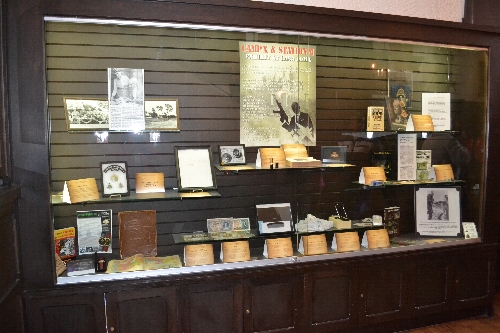
2012. The “Camp X Collection”, a permanent exhibit was opened at the Regional Municipality of Durham Headquarters with the involvement of Lynn Phillip Hodgson, the most visible and active expert on Camp X's history. See here for more detailed photos:
2014- A theft occurred at the Durham Region Headquarters and a number of items were stolen from the Camp X collection.
???? Some Camp X artifacts from Lynn Phillip Hodgson's collection may also be found at Casa Loma, titled the "Station M" collection. Casa Loma itself was a sort of "Q lab" of sorts, responsible for preparing hidden compasses, map scarves and forged documents and clothing.
Wherever most of them are scattered now, which objects came from whom and where probably have no context other than the metonymic militaria found elsewhere in old army surplus shops. Many personal stories and memories that were intrinsically and very clearly tied to these objects were lost in 2011.
For Want of a Nail... I remember being frustrated during my first year of undergrad at the time. I even joined the Facebook group led by historian Lynn Phillip Hodgson and sent out emails to a couple of politicians when someone suggested it though I never did talk to anyone in the group - I was just 18 years old and everything still seemed oddly daunting or awkward, so I mostly lurked. The group also attempted to build a fund to get the whole collection.
But that was then, and the options to mobilize weren't as plentiful.
The almighty power of online crowdfunding platforms and twitter today could have been invaluable and an immediate option now. Granted, the 1 million dollar asking price would still have been far more than would be feasible most likely. And yet. perhaps with a bigger audience then, there would have been more action or public interest. Documentation kept by both parties would have settled disputes more clearly as well. Objects and Memory, Forgotten Corners Everywhere...
There are many nuances that get lost and become difficult to research, even if we think we know everything about something as visible as the Second World War.
Now a four book series apparently.Time to catch up!
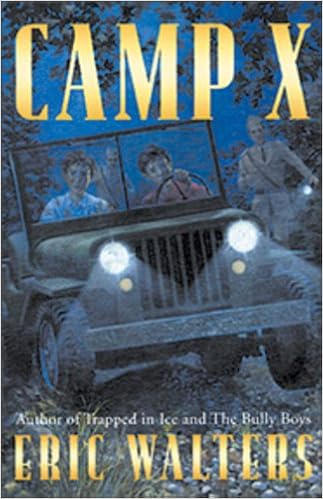
I only learned about the camp though Eric Walters' Camp X novel as a teen as it was never really taught. It's a lot like how the Battle of Hong Kong is forgotten, despite being the first engagement of the war for Canada.
You almost have to stumble on it and often it's not even viewed as relevant or important to many but just a failed defense of a colonial possession (my ancestral home). For me, it is an intrinsic link between both my identities and one that I only learned by coming across the 1505 tombstones (228 Canadian) on the way down from my grandfather's terraced grave. I never asked my grandparents what it was like to be civilians under Japanese or British rule and they've all since passed away.
I have an an old first aid manual and a small byline in a letter from a British medical colleague to my grandfather about living through the war but little context to make any sense of it. One of the few others is a story about my great uncle and aunt, then fiancees, staring down a Japanese soldier, and even that I only learned at his funeral. Still, I suppose I have tangible leads.
At the end of the day, I can't imagine what it’s like for the families who went to auction looking for their parents/ grandparent's belongings- things they thought would be protected and preserved. It may feel mundane to many people, but the memories and objects that were but currency and collectibles to the seller and other buyers meant a lot more in the hands of the families that have lost them completely.
Sai Wan War Cemetary dedicated to British, Canadian and Indian soldiers who died in the Battle of Hong Kong. Commonwealth War Graves Commission
Another: Camp 30
There is another related story of Camp 30, a German POW camp which was the site of a POW uprising turned school and survived arson, defacement and potential demolition.
*Technically, Canadian forces entered the battle on Dec. 11, but the battle began on the 8th.
** both headed by the British Security Co-Ordination (BSC)
Editor's Note: A previous edition of this article incorrectly stated that Robert Stuart's artifacts were stored in the Ontario Regiment Museum for 33 years. Mr. Stuart's artifacts were stored in a nearby city-leased building at the South Field of the Oshawa Airport. Musings apologizes for this error.
Welcome back Musings readers, writers and MMSt students! I hope you all had wonderful summer and are ready for all of the exciting adventures that await you in the new academic year. I couldn't think of a better way to start Musings' fall season than to do a final Internship Check-in for the 2016 internship class. This post will be a recap of last Friday's Ignite Presentation Conference which was organized by the talented students on the Ignite Committee to showcase 5 minute talks by MMSt students about the valuable museological lessons that they learned during their 12 week internships.
Professor Blackburn giving the opening remarks to the Ignite Presentations (Photo: Natania Sherman)
This year's Ignite talks were organized into the following themes: The Future of the Museum, Collections and Critical Issues, Collections and Records Management, Risk Management, Small Cultural Institutions, Museum Management, Virtual Museums, Critical Issues, Visitor Experience and Engagement, Partnerships and Collaboration, Public Programming and Museum Management. Each group of talks ended with a 5 minute panel discussion to discuss the common museological issues within each group. The biggest takeaway was to see the breadth and range of activities that students undertook during their internships and to be able to compare experiences with my peers.
I also spoke to my fellow Musing's writers to get a broader student perspective on the presentations. Kate says, "I loved seeing the diversity of everyone's experiences - some people working exclusively in collections while others did policy or copyright or exhibition planning. As an EMP the world is your oyster!" When asked what she learned from the experience, Hayley mentioned, "That including 'the rose is ugly' in your collections forms is not a good idea... Also putting matches in with paper artifacts. Also that our class has a great sense of humour, so many presentations made me smile and laugh!"
One of the key takeaways from all of the talks was the importance of resilience and versatility when working in non-profits, especially as a student intern who must learn to work with all of the constituents of an organization in an exceptionally short amount of time.
Internship achievement unlocked, Museum Professional level up! (Source)
Finally I'd like to extend a few thank-you's. The first is to all the students, faculty and internship supervisors who attended the conference. Your comments and questions made this a truly memorable event. A huge thank you goes out to to the Ignite Committee for organizing the event. Finally, I would be remiss if I did not include a special thank you to Professor Cathy Blackbourn for making sure each and every one of us was able to have a valuable internship experience this summer. I can't wait to see what we'll do this year!