Showing posts with label Video Games. Show all posts

22 March 2021

PLAYING (WITH) HISTORY: ACCURACY, AGENCY, & ACCESS IN HISTORICAL VIDEO GAMES

 Heritage Moments | Madison Carmichael


A few recent articles here at Musings got me thinking about heritage, pop culture, and video games. I’m always interested to see how the past is portrayed in pop culture, whether that be historical fiction or a period drama, but video games are a relatively new media form on this particular scene. As gaming becomes a more culturally pervasive business, heritage scholars and historians have begun to dig into how games – in any form – present the past to players. 

Historical video games can be considered a form of public history, as they communicate the past to the public outside of traditional academia. Historical games take many forms – shooters (think Call of Duty), strategy, adventure, civilization-builders, etc. Some operate similarly to historical fiction novels. They feature fictitious protagonists operating within a historical setting, and they don’t change too much vis-à-vis historical narratives. Larger franchises such as Assassin’s Creed market itself on how it interacts and presents historical settings. In recent years, they’ve hit upon Victorian London, revolutionary France, Ancient Greece, etc. The 2017 installment, Assassin’s Creed: Origins, has a “Discovery Tour”, a gameplay mode that specifically allows players to go on interactive tours curated by historians and Egyptologists.

Other games are more conceptual, and this is largely where you find your strategy games and civilization-builders. Rather than showing a player the past, they tell you how the past might’ve functioned through systems and mechanisms. For example, snatching valuable resources in Sid Meier’s Civilization can make all the difference in whether your fledgling civilization becomes a world power or not. This very result tells you something about the role that resources may have played throughout history. 

As someone who sunk far too many hours into Civilization V and grew up backseat gaming my brother through various installments of the Assassin's Creed franchise, I find it endlessly fascinating to consider how video games do history. (Source)

But are they accurate? Does accuracy matter in these games? And just what constitutes accuracy in a historical video game?

Tara Jane Copplestone conducted 156 interviews of video game players, developers, and cultural heritage practitioners on the topic of accuracy. She found that players, creators, and even heritage practitioners often considered accuracy to be how closely the visual elements of a game resembled source material. Developers specifically defined accuracy as related to physical components and their ability to render them to a known standard – “reconstructing things correctly,” or in other words, constructing them as closely as possible to how they would have looked in the past. While there is certainly value in this approach, it does resemble the authoritarian approach to history that museums have had for much of their own history. The idea that there is one story to tell in history seems antithetical to the medium of video games, which inherently present multiple experiences as a result of the player’s agency to make choices and steer the narrative.

In fact, the interactivity of historical games has been known to produce counterfactual narratives. Many seem to think that this is a strength, making games an interesting medium for exploring the pastJeremiah McCall insists that video games present an opportunity for exploration, control, and possibility, as well as serious consideration. To his mind, they can help to move history and heritage education beyond the philosophy of straight facts.

For some indication of what kind of games tend to be developed for this genre, and their breadth, Steam has categorizes them specifically as "Historical." (Source)

The definition of accuracy being how closely one might reconstruct something “correctly” certainly creates some stunning graphics. It’s the use of “correctly” that puts me ill at-ease. What does correct mean? Who defines correct?

Copplestone found, through her interviews, that several casual gamers thought that accuracy was contingent, based on the nature of heritage and history itself. One gamer argued that it was possible, and even necessary, for a game to have inaccuracies, because “isn’t history all just from different perspectives, so will always be somewhat inaccurate?” I’m not sure if I agree entirely, but I see their point. Some perspectives are, and have been historically, privileged over others, meaning that there are entire histories obscured or else plain silenced. This is especially critical when ideas of “accuracy” are weaponized in discourse surrounding historical media to sustain racist and sexist arguments for a lack of diversity and representation.

A player’s familiarity with the video game media form, and their awareness of their own agency within that form, lends itself to exploration. So, perhaps video games could provide a space to explore the past differently and to depart from the dominant narratives of history.

I could stare at this replica for hours. (Source)

As a final note on the interplay between video games, accuracy, and heritage, let’s take it back to 2019. After the fire at Notre Dame that year, many people turned to Assassin’s Creed Unity (2014), which was set in revolutionary France and possessed a virtual replica of the cathedral. It was created from scratch by artist Caroline Miousse at Ubisoft – a process which took around 5,000 hours.

In the wake of the fire, the ability to explore Notre Dame within the game apparently brought a great deal of comfort to those upset by the destruction. Sales of the game skyrocketed, and Ubisoft even made the game free for a time. In this CBC article, Ubisoft historian Maxime Durand admits that while the in-game cathedral is a one-to-one replica, it’s not totally accurate. Liberties had to be taken in order to optimize gameplay. Regardless, it’s clear that this replica mattered to people in that moment, and beyond that, it’s also a means for those who’ve never been to Paris – and who may not be able to visit – to access Notre Dame.

Much like period dramas, which tend to reach wide audiences, historical games reach many, many people, and whether they intend to or not, they teach their players something about history. The players' perception of that history – and the game’s overall portrayal of it – and whatever “accuracy” it may put forth is worth a think. How might these portrayals of heritage shape public history?

10 March 2021

VIDEO GAME NARRATIVES IN EXHIBIT DESIGN: THE THESIS OF ANDREY MINTCHEV

Final Project ReflectionsCaitlin McCurdy


The number of students who choose to do the thesis stream of the MMSt program is considerably smaller than those who choose the exhibition project route. One of these students is Andrey Mintchev, and he very kindly took the time to answer some of my questions about his path to the thesis stream.

His decision to pursue a thesis occurred after taking Velian Pandeliev’s course INF2164H: UX Research and Design for Video Games. He described the class as a study of the positive impact that UX-forward thinking has on elements such as level design and gameplay in video games. He then thought to himself, “Is anyone doing this in museum studies? How awesome would it be if museums felt like videogames?” As he discussed this idea with Prof. Pandeliev and continued learning more about human-computer interactive (HCI) sciences and their research methods, he realized that there wasn’t a particular class on this topic, and that his new conception of an amalgamation of gaming and museology would be best realized in a thesis. 

Courtesy of Andrey Mintchev.


Andrey has a very interesting story about how he came to meet his thesis supervisor, Tony Tang:

“I was waiting for the light to go green on Saint George and Bloor, when I overheard a conversation between two people, who were discussing something about AR. The one guy responded with a “I don’t know Tony, but that sounds interesting” and I immediately assumed that it was Tony Tang. I sheepishly interrupted with a “hi, sorry, but are you Tony Tang? I want to talk to you about turning museums into a VR world”, to which he pleasantly offered up his email.

Andrey then fulfilled his research methods course requirement with a reading course overseen by Prof. Tang, where he was able to make connections between HCI and museology and began to work out his ideas for his thesis. Andrey’s final thesis proposal was the fourth or fifth iteration of his initial idea, and it was at this point that he approached Costis Dallas about being his second reader.

When I asked Andrey for the elevator pitch for the current iteration of his thesis, he was kind enough to give me the short elevator ride pitch, the slightly longer elevator ride pitch, and the elevator ride to the penthouse pitch. Here’s what he said:

“My thesis is on applying videogame level design and narrative design to exhibit design. What I’ve done is record 14 hours of gameplay between five games that boast a compelling narrative, recorded every instance where the story was being conveyed and what the level in that moment looked like, and then produced 598 lines of code to synthesize each screenshot into qualitative data. The idea is to use my synthesized data to identify the best practices for level design and narrative design and apply them to the reinterpretation of an existing museum exhibit. The final deliverable should produce a compelling exhibit that improves on the existing one.”

Courtesy of Andrey Mintchev

This all sounds very fascinating to me, as someone doing an almost entirely theoretical thesis based in historical research and epistemological philosophizing. I’m excited to see the final product of Andrey’s work, I think his research could definitely shed light on how video game practices could innovate our approaches to exhibit design.

Courtesy of Andrey Mintchev

I asked Andrey to give one tip for prospective students considering the thesis stream, and his answer was very insightful.

“There is no right or wrong stream at our school, but if you’ve got this awesome idea, I promise you that our faculty will do everything it can to help [you] walk out of this program with a publication that you’ll be proud of.”

Ultimately, if you have an idea you can’t get out of your head that you’ve brought into the program with you, you can make the thesis stream work for you, and you control the subject, process, and end result of your work, with insight along the way from your very knowledgeable supervisor(s). Andrey also pointed out that this control is fairly unique to the thesis stream, as the final exhibition project is subject to variables like the makeup of your student group and the flexibility of your industry partner. To give Andrey the last word, “Real-talk, it’s the most academically satisfying thing you can do if you hate group work.”

21 October 2018

INDIGENOUS, INGENIOUS, iNDIGITAL

Weekend Edition | Samantha Summers


Now nineteen years old, the imagineNATIVE Festival is best known for its wide variety of Indigenous films from across the world, engaging with Indigenous artists both here on Turtle Island and abroad. However, films are not the only medium represented at imagineNATIVE. As I discovered in the iNdigital Space, this festival also provides a platform for Indigenous virtual reality (VR), game, and media artists beyond film and from around the world.


The iNdigital Space is a carefully curated and interactive exhibit which is free to visit, located on the ground floor of the TIFF Bell Lightbox at 350 King Street West, Toronto. The Space is headed by Meagan Byrne, the Digital + Interactive Coordinator for imagineNATIVE. A game designer by trade and founder of Achimostawinan Games, Byrne joined the imagineNATIVE team in April 2018 with a vision to expand the space allotted to game and digital artists at the festival. This year’s iNdigital Space, the first-ever, is a prototype of her vision: to see the best of VR, gaming, and interactive digital art by Indigenous artists from around the world brought together in one space. “Let’s keep supporting our new wave of Indigenous creators,” Byrne says. The best way to do that? By providing spaces dedicated to Indigenous creators and creations, and by making it clear that these creators are priorities at imagineNATIVE and within the Canadian media scene more broadly.


A visitor in the iNdigital Space playing Abenaki creator Ashlee Bird's One Small Step.
Photo courtesy of Samantha Summers.

Byrne’s commitment to the idea that screen-based media goes way beyond the box office is attested to with every piece in the iNdigital Space. Helpful and friendly volunteers pointed me toward experience after experience, each unique and profound. While the website Fafswagvogue.com (by Tanu Gago, a Samoan artist based in Aetearoa) had me coordinate and then judge a vogue battle, it also allowed me to engage with the artists represented (all real vogue dancers) and learn about their stories. ~2700 was designed by Métis artist Travis Mercredi as a tribute to the approximately 2700 missing and murdered Indigenous people in Canada. This experience had me walking through a large field, passing by 2700 white tombstones. It was a sombre and important reminder of a major human rights crisis. In Biidaaban: First Light, on the other hand, Anishinaabe artist Lisa Jackson allows visitors to experience a Toronto in which nature has reclaimed much of our modern infrastructure, and Indigenous languages - Wendat, Kanien’kehá:ka, and Anishinaabemowin - provide a path forward through reconciliation.


These are just a few among the many incredible experiences awaiting you at the iNdigital Space, an exhibit that is equal parts fun, thought-provoking, and awe-inspiring. These experiences can be capped off with a laser-cutting demonstration provided by the Maker Bean Cafe in the iNdigital Makerspace. See cookies and coasters laser-cut with the Festival logo and Festival pins 3D-printed before your very eyes, all free to visitors of the Space.


Aided by imagineNATIVE staff, a visitor to the iNdigital Space experiences Ngarluma artist Tyson Mowarin's VR simulation, Thalu: Dreamtime is Now. Photo courtesy of Samantha Summers.


When we sit down to talk, Byrne emphasizes the importance of spaces like this. Speaking as a Métis creator, she is familiar with the kind of pain, anger, and conflict Indigenous peoples across Turtle Island face, and she is familiar with the power of art to explore and confront those experiences. She speaks to the challenges of Indigenous creators, who she says are often forced to ask themselves, “Do I belong? Where do I belong?” Here in this incredible exhibition during this very special festival, Byrne creates a space in which Indigenous artists and their art not only belong, but thrive.


Sugar cookies are marked with the imagineNATIVE logo and slogan ("Original. Indigenous.") by representatives from the Maker Bean Cafe. Photo courtesy of Samantha Summers.


The imagineNATIVE Film + Media Arts Festival closes on Sunday, October 21.

The author would like to acknowledge and thank the staff, volunteers, and attendees of the iNdigital Space for their cooperation and for the use of their images. 

29 September 2016

VIDEO GAMES AND POKEMON GO: AN AVENUE FOR DISTRACTION OR EDUCATION?

MUSEUM INNOVATIONS

BY: CASSY KIST

I began my day by reading an interesting article about the National Museum of Video Games in Texas and of course, sipping a hot cup of coffee.  My interest in this article may have been spurred by the impending stress of upcoming assignments for the new semester and consequently a longing to escape into the world of video games.
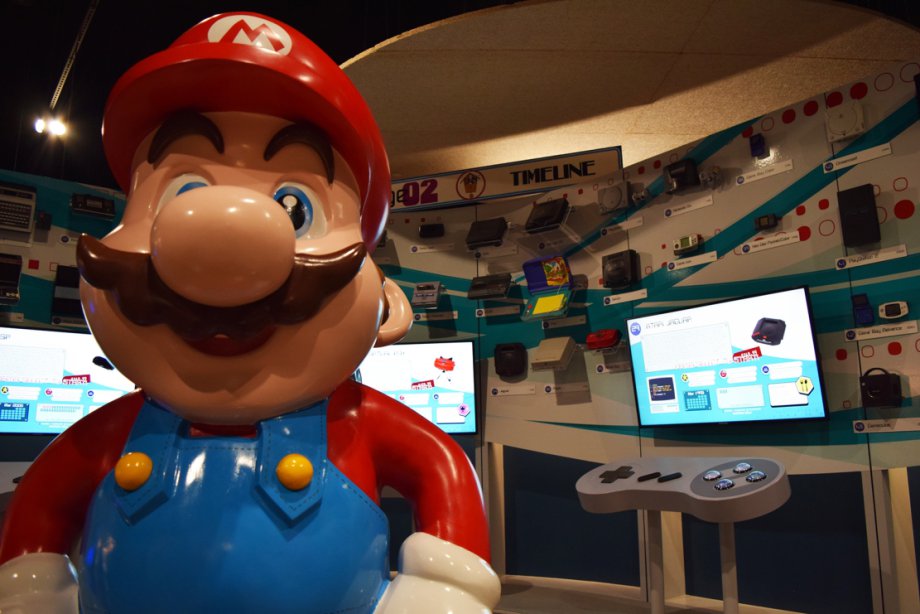
That being said, I had a brief virtual escape to the Video Game Museum which displays everything from old Pacman games to a giant game of Pong. 

National Video Game Museum. Source. 
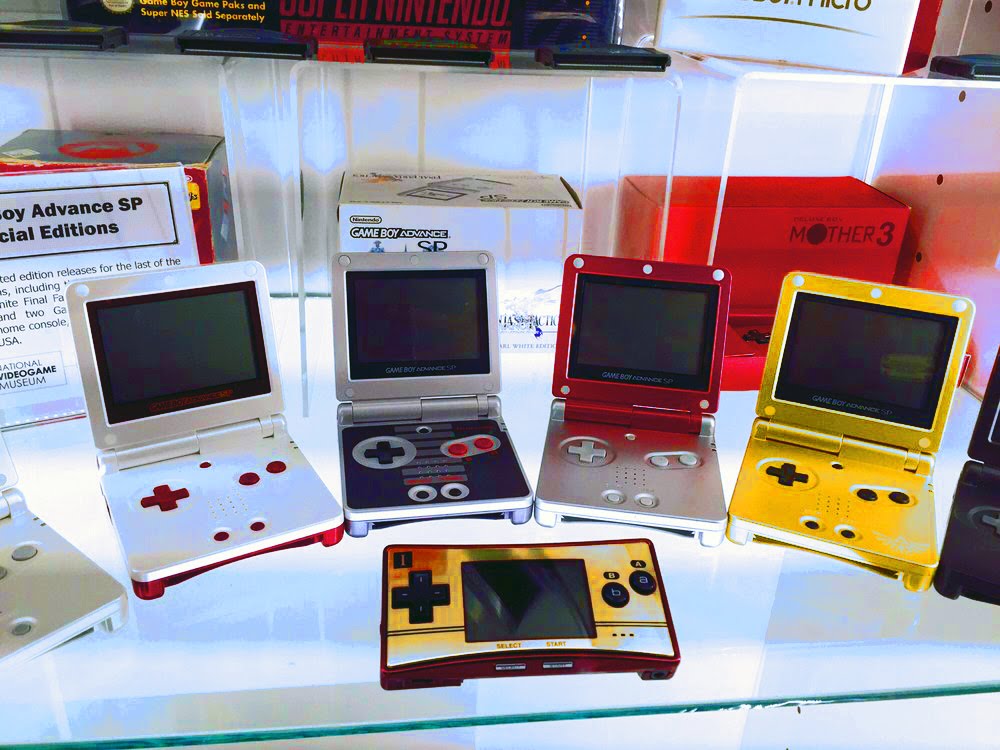
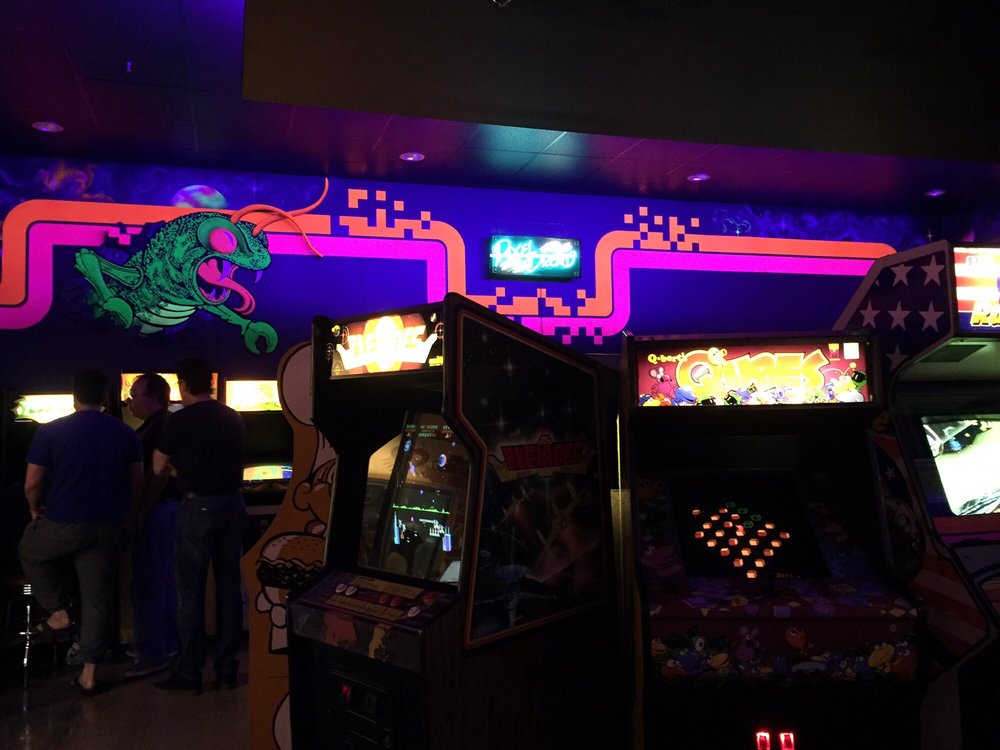
The museum which opened just this past April is laid out in stages allowing visitors to progress from exhibits such as a timeline of consoles, to an 80’s Arcade and finally to some of Nintendo’s first “prehistoric” creations. The museum also offers educational programs which provide interactive tutorials in the areas of science, technology and engineering for kids and adults. Another interesting, interactive feature of this museum is that the old arcade systems are made available for visitors to play! Wicked.
National Video Game Museum Arcade. Source
This brings me to a third feature of the National Video Game Museum and that is its promotion of Pokémon Go. The Museum advocates playing it through social media and has even held a Lure party in July. The adoption of this innovative, geographically sensitive game seems natural on the part of the Video Game Museum, as it not only fits their collection theme but will no doubt become ingrained in their history. However, how do other Museums whose objectives and themes differ from the Video Game Museum cope with the impact of Pokemon Go? The mission of museums initially seems mismatched with the use of Pokemon Go - a distracting technology that puts its users in what I like to call the Hunched Zombie texting position.

Photo Courtesy of New York Times Post: The Texting Dead
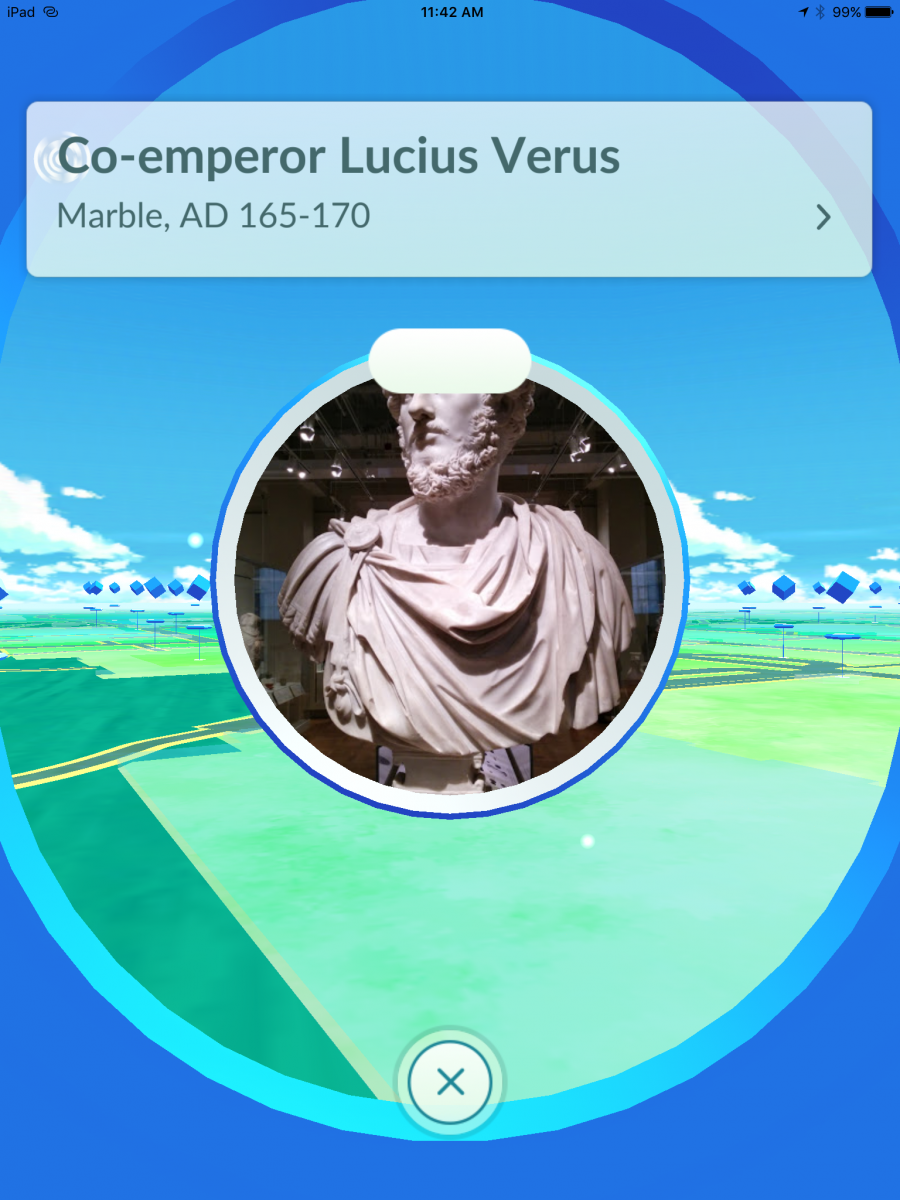
Museums are being creative in approaching the Pokemon Go phenomenon. For instance, the Royal Ontario Museum offers an online tour of Pokemon Go in the exhibits and reminds players of the historical significance of artefacts where Pokestops are located. For example, the Leading Content Producer Sarah Elliot informs players that this bust:
Photo Courtesy of Royal Ontario Museum Blog
which at first glance may look like a Pokestop, is also a portrait of Lucius Verus who served as a co-emperor in Rome from 161-169 CE (source). 
Photo Courtesy of SI Instagram
 This is an innovative way of helping players relate to materials in the museum through a form of technology that can also be used as a culturally relevant form of education. 

The Smithsonian Institute on the other hand has used many references to Pokémon Go in their blogs, Instagram and Facebook, to similarly help Pokémon Go players relate to objects and visit the museum. On the Smithsonian Instagram the accession of a new 1989 Gameboy is captioned with the label “Before Pokemon Go there was the 1989 Nintendo Gameboy...This one is now in our @amhistorymuseum"(Source).
Another Blog post by the Ocean Blog compares favourite Pokemon to the specimen in the museum, another innovative way to use the prevailing Pokemon Go fever to draw interest into an educational experience.
Photo courtesy of SI Ocean Blog 
However, a disgruntled Facebook comment in response to this blog post suggested that the Smithsonian draw back the adults to the real world and focus on Smithsonian issues. This embellishes the fine line that museum professionals must balance in using new innovative technology to provide education for all ages and interests.

What do you think? Is Pokemon Go an avenue for education in museums? Or is it an innovation that ultimately takes away and distracts from the museum exhibits? 

24 November 2015

10 REASONS WHY I LOVE NANCY DREW VIDEO GAMES

TECHNOLOGY TUESDAYS

BY: STEPHANIE READ

Ever since I was 12, starting when a gift from my grandmother meant for my cousin was accidentally mailed to me, I have been an avid fan for Nancy Drew video games from Her Interactive. These games come out twice a year. There are over 30 of them. I actually have become conditioned to get antsy and irritated every May and October right before the games come out. I call it PNS, or “pre-Nancy syndrome”. It is very real, although the doctors do not yet acknowledge it!

For those of you who don’t know ND (as the fans call her), educate yo’self.

So why do I adore these games, especially as a Museum Studies student? Here are my top 10 reasons:

1) A BUNCH OF THEM ARE SET IN MUSEUMS!

Yes. Nancy actually has to get to know many museums in-depth to solve dastardly crimes! My favourite museum-situated game is “The Secret of the Scarlet Hand”, where Nancy helps a curator prepare for a show featuring rare artifacts from the reign of Lord Pakal, king of the Mayan city-state of Palenque.

Nancy in the Main Exhibition Space. (Secret of the Scarlet Hand).

2) THE CURATORS ARE ALWAYS REALLY, REALLY ANNOYED!

The curators in these games have a bone to pick! These gals have no time and plenty of deadlines to meet and if you do not know how to watch your step, you will straight up get cut (or prompted to shamefacedly return to the Main Menu and start again).

Ain't nobody got time for that! (Secret of the Scarlet Hand).

3) THE ARCHAEOLOGY STUDENT TOTALLY DIGS YOU!!!

Ned Nickerson won’t be pleased, but how can you resist that tessera collection?

Well hello, blonde archaeologist Spike look-alike. (Phantom of Venice). 

4) YOU ACTUALLY LEARN STUFF!

I mean, I did just write ‘tessera’...

5) GAME PLAY INCLUDES ACTUALLY DOING “DULL” MUSEUM RELATED TASKS!

In “Secret of the Scarlet Hand”, you are pretty much forced to do mundane tasks like fill out and order inventory sheets, fix the audio guide system, set up displays, test the interactive games and more!

6) NANCY DREW IS ALL ABOUT CONSERVATION EFFORTS!

In “Danger on Deception Island”, Nancy gets to help an orphaned orca from poachers while chilling out at the local Whale World. In “Ghost Dogs of Moon Lake”, Nancy once again is called upon to help stop shady individuals from dragging the pristine lake. Nancy helps that tall drink of water Ranger Akers clean up some archival information at Moon Lake State Park Nature Centre.

Ranger Akers, AKA Tall Drink. (Ghost Dogs of Moon Lake)

7) SOMETIMES THE PRICELESS ARTIFACT YOU ARE PROTECTING CONTAINS SECRET GOLD!

In “Sea of Darkness”, the ancient Icelandic ship Heerlijkheid collides into the harbour. The ship is a priceless cultural icon with a dark history and treasure abound!

Wouldn't be a mystery without a scary lighthouse! (Sea of Darkness)

8) YOU ARE THE ONLY THING STOPPING EVERYONE FROM STEALING ARTIFACTS!

Stop them at the source! Butt heads with annoying celebrity archaeologists at an Egyptian archaeological site, determine the provenance of objects at a Classical Antiquities museum in Greece, and help the Italian authorities capture a wily thief!

No words! (Tomb of the Lost Queen)
9) EATING AND SLEUTHING GO HAND IN HAND!

What are these? Who knows! Eat as many as you can before you remember that they aren’t real...

Scottish snacks for hungry gumshoes! (Silent Spy)

10) YOU HAVE TO LEARN A TON OF VOCABULARY FROM SEVERAL LANGUAGES!

Mayan, Italian, Icelandic, German, French, Greek, Japanese, Latin – the list goes on! Nancy Drew is a world-traveler, so have your online translator ready ;-)

Greek Antiquities! (Labyrinth of Lies)

Having written this list, a few pieces of the puzzle are falling into place for me vis-à-vis my career path... Hmm... These games have a soft spot in my heart, especially because of the focus on learning new things while I sleuth! 


Do you have experiences of games growing up that feature museums? Have you played Nancy Drew, too? Let me know in the comments below!

13 October 2015

MUSEUMS VS. VIDEOGAMES: A COLLECTIONS MASH-UP

TECHNOLOGY TUESDAYS

BY: ORVIS STARKWEATHER

Images collaged by Orvis Starkweather. Original images from http://www.freeimages.com/photographer/melodi2-44775 and http://www.freeimages.com/photographer/mattc3004-43116.
With 54% of Canadians having played a videogame in the last 4 weeks, it is unquestionable that the medium is pervasive. Most young people that visit museums arrive with a set of assumptions about collections that have been influenced by videogames. “As a cultural medium, games carry embedded beliefs within their systems of representation and their structures, whether game designers intend these ideologies or not” (Flanagan, 223). As informed professionals, thinking critically about the relationship between museums and videogames is important to better understand our communities. To get the ball rolling, I offer three entry points on the relationship between in-game collecting and museums as a way to provoke further thought.

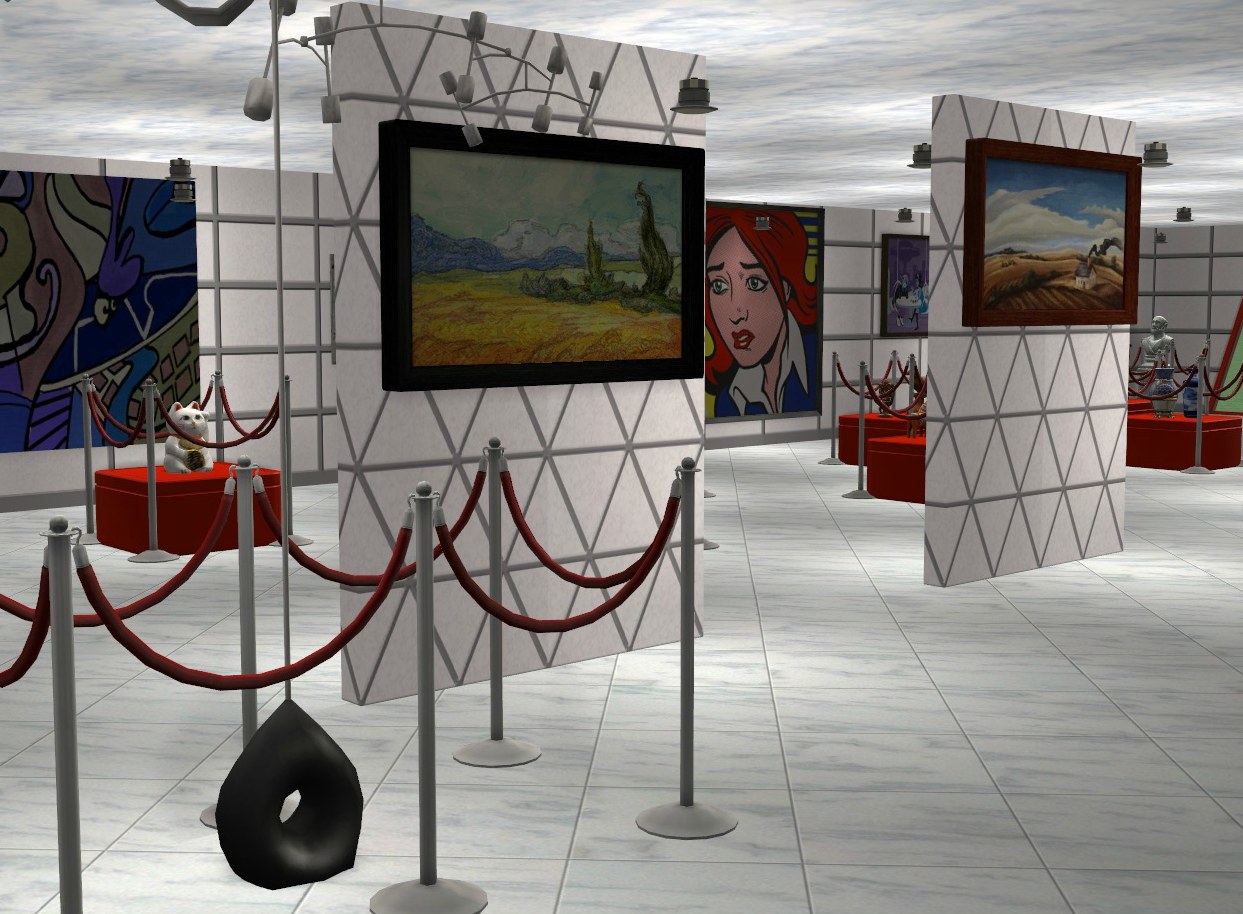
User modified art gallery from SIMS 2. Source.

FUNCTION

In videogames, playable characters are often given collection items as rewards. While some of these collections are meant only to be viewed like the trading cards in the Harry Potter game series, others items provide an added benefit to the avatar, such as improved stats from a weapon. In these games, objects are used as tools in addition to their secondary role as objects prized for their visual splendor. Objects can be kept throughout the game, or they can be discarded or sold as the player, receives superior ones. Other objects one collects can be consumed or used up during the course of play. Museums, on the other hand often try and preserve their objects, with a desire for conserving them for future generations. 


SENSORY EXPERIENCES

In videogames, players are able to manipulate objects in ways that glass cases prevent. In The Elder Scrolls V: Skyrim, for example, the avatars can pick up objects and listen to the sounds they make as they interact with other items. Museums, on the other hand, have the potential to provide even deeper access to objects by providing an experience the console has yet to reproduce: touch. 
Collected Pokemon from Pokemon X or Y. Source


AUTHENTICITY

While authenticity is a value that museum collections are expected to achieve, the same standard isn’t assumed of most collected items in video games. While Assassin’s Creed Unity is established as a blockbuster videogame with historical content, the buildings and other period specific objects are modified to make a more enjoyable playing experience and meet budgeting needs. Other games, such as The Vanishing of Ethan Carter use Photogrammetry to capture objects from the real world to create 3-D models. These models, however, are often combined like a collage, making information about the original location and provenance difficult to track down. For these reasons, most people would assert the museum provides a more authentic experience. Yet, I would propose there are at least two exceptions where authenticity in videogames is on par with or surpasses that of museums: art games and experiences. When a videogame is intended to be read as an artwork it maintains the intention and vision of its creator, like Jason Rohrer’s Passage

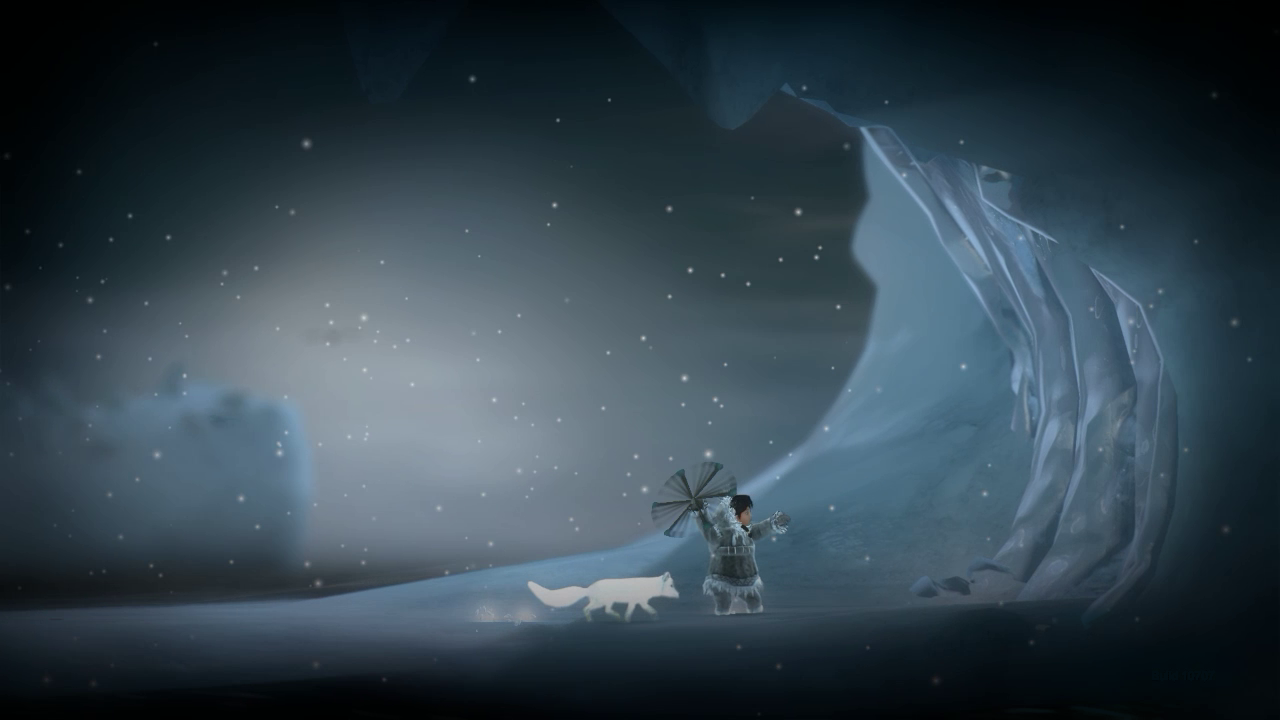
Screenshot from Never Alone. Source.

The immersive environments of videogames also free up possibilities for generating experiences that would be unattainable in a museum. The game Never Alone, for example, was envisioned by Alaska Native storytellers as a way to bestow their values and lore. This allows the game creators to tell their story on their own terms and create an experiential learning opportunity that is more accurate than what is found in a museum.

WANT MORE INFORMATION?