Cultural heritage institutions rely on both financial and in-kind (material) donations to keep their collections thriving. In 2008, author Lawrence Hill donated his papers to the Thomas Fisher Rare Book Library. I sat down with him at the bustling Paisley Coffeehouse in Hamilton to discuss why he chose to donate his papers, and what the Fisher does to maintain their relationship with him.
 |
| The Paisley Coffeehouse and Eatery in Westdale, Hamilton. Photo courtesy of Daniel Osorio. |
Well, I’m sort of the perfect person to have donated. My father and paternal grandmother believe you should never throw anything out because of family history, and so I was already a person who never threw anything out. You know, paperwork, short stories, terrible short stories I wrote when I was thirteen or fifteen. Poems, photos, letters to my family written when I was a child, teenager, or young adult. I already had boxes and boxes of stuff. And also early drafts of books.
Why the Fisher? You’re a major Canadian literary figure, I’m sure many institutions would have wanted your papers.
Well, for one thing they reached out to me… and I just have a fondness for the [University of Toronto]. I went to high school right beside it. It was a place that welcomed my father to Canada when he came here as an immigrant from the United States and began his graduate degree at the UofT. Plus, it’s close and I can get access to them easily. So if I need to see stuff in my own holdings, it’s easy to get there.
Do you continue to have a close relationship with the Fisher?
I do. I’ve made several subsequent donations. Sometimes if there’s a special show they’ll invite me to it. There was a special show about the holdings relating to the Nobel Prize-winning poet Derek Walcott; they put on a special exhibit of his holdings a few years ago. They included some of his paintings, and I didn’t know that in addition to being a Nobel Prize-winning poet, he was also an active recreational painter. I went to look at that exhibit, just to enjoy it. So yes, we are in touch, and it’s a very special part of my professional life.
Are there more ways that you would like to be involved in the community at the Fisher, or are you happy with where you stand with them?
Well, as a researcher I always like to know how to find stuff. So sometimes I draw upon people in the archival community just to help me locate things as a researcher of novels and non-fiction. If there’s special events I like to know about them. I like to know what’s going on.
Do they keep in touch with you about how your papers are being used?
Informally. It’s not like a formal report. One year I donated a series of letters written to my father pleading for the right to have a kitten. And so I’m told by Jennifer Toews [Thomas Fisher Modern Manuscripts and Reference Librarian] that it’s the most frequently requested item in my holdings. They are kind of funny, very silly, and they’re very poorly written letters that I wrote earnestly as a child to plead for a cat, or to criticize my father for not being kind to the cat once I had one. They’re pretty emphatic letters, and they were written between the ages of six and ten or so. People seem to find them interesting, and I also find them kind of interesting to look back on. I hear little reports like that, like, “By the way, Larry, lots of people have been in to ask to see your kitten letters.”
So does that surprise you? What people are interested in seeing?
No, not really. I’m a writer too, and if I were writing about another writer I’d be very interested in the personal. The personal is often the thing that creates such clear interest for people. Even when the archives were soliciting my materials, they were very clear they were interested in the personal. Diaries, letters, and photos are among the things they’re interested in the most. Who needs a copy of a book I published? They could get that anywhere. They’re looking for things that provide a kind of personal insight that others wouldn’t have access to.
Do you feel like they’re being put to good use then, all the papers you have at the Fisher?
I feel they are. Again, I’m not aware of what’s happening on a monthly or yearly basis, but I am told that people check them out, so I feel they’re being put to good use. I don’t have my finger on the pulse of exactly when they’re being used.
Donating papers seems like a good way to thank an institution.
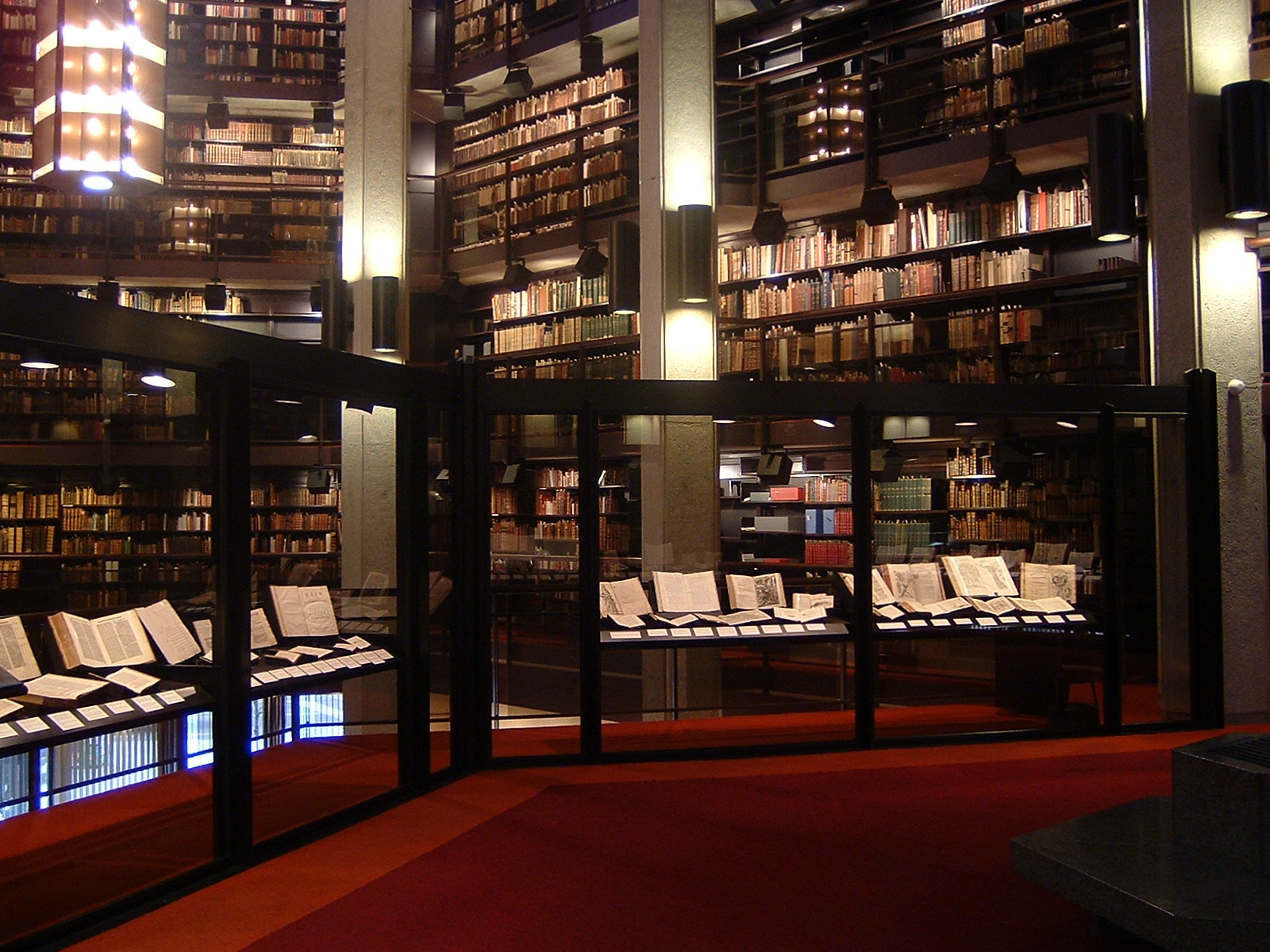 |
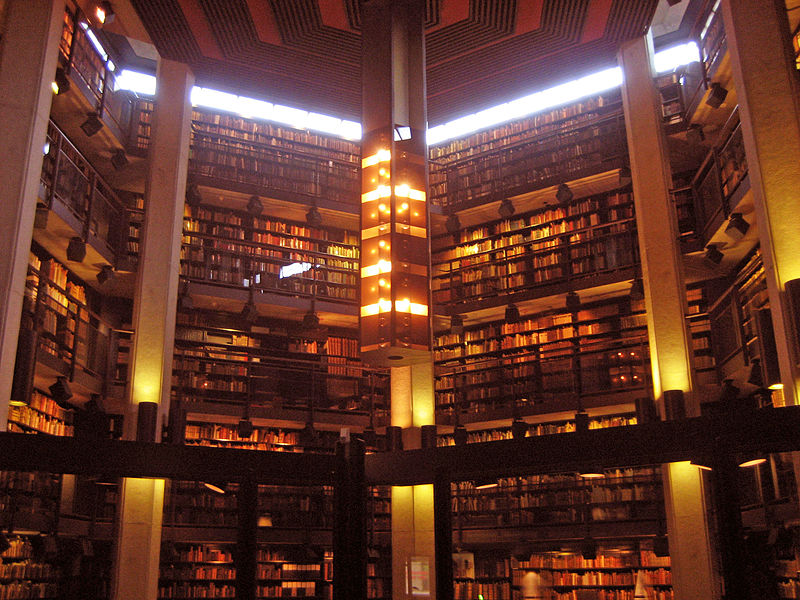
| The Thomas Fisher Rare Book Library, home to the Lawrence Hill holdings. Source. |
I do. I’ve made several subsequent donations. Sometimes if there’s a special show they’ll invite me to it. There was a special show about the holdings relating to the Nobel Prize-winning poet Derek Walcott; they put on a special exhibit of his holdings a few years ago. They included some of his paintings, and I didn’t know that in addition to being a Nobel Prize-winning poet, he was also an active recreational painter. I went to look at that exhibit, just to enjoy it. So yes, we are in touch, and it’s a very special part of my professional life.
Are there more ways that you would like to be involved in the community at the Fisher, or are you happy with where you stand with them?
Well, as a researcher I always like to know how to find stuff. So sometimes I draw upon people in the archival community just to help me locate things as a researcher of novels and non-fiction. If there’s special events I like to know about them. I like to know what’s going on.
Do they keep in touch with you about how your papers are being used?
Informally. It’s not like a formal report. One year I donated a series of letters written to my father pleading for the right to have a kitten. And so I’m told by Jennifer Toews [Thomas Fisher Modern Manuscripts and Reference Librarian] that it’s the most frequently requested item in my holdings. They are kind of funny, very silly, and they’re very poorly written letters that I wrote earnestly as a child to plead for a cat, or to criticize my father for not being kind to the cat once I had one. They’re pretty emphatic letters, and they were written between the ages of six and ten or so. People seem to find them interesting, and I also find them kind of interesting to look back on. I hear little reports like that, like, “By the way, Larry, lots of people have been in to ask to see your kitten letters.”
 |
| The “kitten letters” appear in the Lawrence Hill fonds finding aid on the Thomas Fisher Rare Book Library website. Source. |
So does that surprise you? What people are interested in seeing?
No, not really. I’m a writer too, and if I were writing about another writer I’d be very interested in the personal. The personal is often the thing that creates such clear interest for people. Even when the archives were soliciting my materials, they were very clear they were interested in the personal. Diaries, letters, and photos are among the things they’re interested in the most. Who needs a copy of a book I published? They could get that anywhere. They’re looking for things that provide a kind of personal insight that others wouldn’t have access to.
Do you feel like they’re being put to good use then, all the papers you have at the Fisher?
I feel they are. Again, I’m not aware of what’s happening on a monthly or yearly basis, but I am told that people check them out, so I feel they’re being put to good use. I don’t have my finger on the pulse of exactly when they’re being used.
Donating papers seems like a good way to thank an institution.
Very much so. My father arrived after serving in the US Army in the Second World War. He comes to the UofT as a Black man from the South in the States. He has no contacts here, he has nothing but the desire to leave his own country and create a new life for himself in Canada. The University of Toronto became his home— the professors, the students, the people who advised him. It wasn’t just an MA and a PhD, both of which he got from the UofT, but it really was his home in this new country. Although I didn’t study at university there, it has meant a lot to me to have those links through the library and through the archives. Also, by being a donor to the archives I’ve been able to concoct an arrangement which allows me to have library cards at the UofT, which I’ve used with impunity many times. It’s very helpful for researching. And I’ve spent huge swaths of my life in the Robarts library researching books, pretty well all of them. That’s one more reason why I feel really happy to make the donation and make the connection, because it’s where I’ve done my research.
 |
| Dr. Daniel G. Hill’s thesis, Negroes in Toronto: A Sociological Study of a Minority Group, is available in microfilm through the University of Toronto Library system. Photo courtesy of Samantha Summers. |
This interview has been condensed for length and clarity.