Showing posts with label #fundraising. Show all posts

10 October 2019

MEETING THE PERSON BEHIND THE BRAND

(Fun)draising | Samantha Summers


The Art Gallery of Hamilton (AGH) plays a major role in its community, which means establishing strong relationships with corporate sponsors both small and large who have a stake in the arts in Hamilton. I chatted with Cindy Carson, Director of Corporate Partnerships and Development for the AGH, to talk about corporate partnerships and meeting the person behind the brand.


The Art Gallery of Hamilton in downtown Hamilton. (Image.)


The Art Gallery of Hamilton is obviously a very well-known gallery. How would you describe its mission?

The gallery is 105 years old now. We were founded in 1914, and our mandate has always been about the art. We expanded our mandate with our strategic planning over the last five years and going into the next five years, our four strategic priorities are:  the art, community engagement, long-term sustainability, and learning through the art. Those are our four key priorities.


A big part of that, and in supporting all of that, is sponsorship.

Traditionally fundraising is done under the guise of donations. Donations and then you have sponsorships, which are two totally different pots, especially your corporate funders. You have your tried and true donors, who support the art gallery, who are largely individuals, through their memberships and then sometimes through donations as well on top of their memberships. I used to say we attract corporate sponsors through branding and alignment. When I meet with the corporate sponsor and I get to interact with a person one-on-one, at the heart of it, they are sponsoring the Art Gallery of Hamilton because they know it’s important to support the arts, period. They aren’t sponsoring it so much because, I get my logo here and I get my logo there and this and this. Corporately, maybe they are. When you break it down and talk to an individual, they’re doing it for good, philanthropic reasons.


So there’s the brand, and the person behind the brand.

Right, absolutely. They have different motivations.


How do you develop those partnerships?

We’ve worked really hard and over a long period of time and we continue to work on developing sponsorship opportunities. There are some natural segues. Say for instance, there’s our film program. Who’s going to be a natural fit for our film program? You’re going to look at your Rogers Media,  Bell Media,  Cogeco, all of those sponsors to support your film program because there’s just a natural tie-in. But the other side of that coin is BMO Bank of Montreal is our major film sponsor, and the Insight Foundation has always been a big film sponsor of ours too, so areas where we thought should tie in to film don’t really. However, there’s lots of exposure with our film program. BMO does have a fair bit of corporate presence there.


So you try to predict it, but…

Yeah. So when we do a local Hamilton exhibition, I tend to go to the local businesspeople. And you are looking at smaller sponsorship dollars there, but they’re very tied to that because they’re proud Hamilton supporters, and you can see that.


Part of Cindy’s job is finding local Hamilton businesses to partner with, specifically for exhibitions and programming that features or benefits Hamilton. (Source.)

What do you look for in a sponsorship partner or a corporate partner?

Well, the financial dollars are certainly important. My goal is to try to round out our financial well-being. Half of my role is commercial revenue, and the other half of my role is philanthropic development, fundraising, corporate sponsorship and development.


So you’re working with both pools.

Yeah, so say we have a client who holds an event here. Say, it’s a large bank. It gives me the great opportunity to call them up after the event to say, “Hey, I know you guys had your corporate mixer here. Did you know we have this exhibition going on? It ties in well with your values. If you want to learn more about sponsorship let’s go out for coffee.” That’s a great avenue for me to go down that road.


Is the approach very different between the corporate side and the more donations-based side?

Totally. So we do a direct mail appeal once a year, but I’m trying to do it at least twice a year now. We find the part that really resonates with the individuals is we pull out the programming, the education value of an art institution, the value we bring to kids, and to the school system. So we will create a direct mail appeal to ask individuals to support the AGH’s educational programs, and that really resonates with individuals. It’s not as though I can compete in a really strong way with healthcare in my own backyard and say, “We really need your help to buy this piece of art,” the urgency isn’t there when I’m saying, “This kid has cancer over here, but we really need to buy this piece of art, so you, Joe Individual, support this artwork versus that.” It’s a really, really careful ask. So you do have to make it more about what’s in it for the whole community, what’s really going to be an emotive way, that’s going to stir people to actually break out their checkbook, open it up, pop it in the mail, and go through that whole psychology of giving to something that has meaning for them.


It can be very difficult to get the public to support ongoing operations. They like to be able to say, “This is a project, I did that, I helped fund that program, I did this or bought that thing.” Is it easier with corporate sponsors?

In some regards. When they have their corporate hat on they like to be able to say, “We own this,” and their logo can be on all of that. But again, when you get back to the person, they’re like, “Oh as long as it’s going toward something good.” It always comes back to an individual. So you’ve got certain avenues, like literacy. Everybody knows TD’s big stronghold is literacy and the environment. So when we’re rolling out an authors series or a reading and literature series, the first thing I’m thinking of is TD.


I’ve never thought of corporate relationships with institutions as being very personal. I’ve always thought of them on a business level.

We’ve been very fortunate, because the individuals I work with who represent those corporate entities, we’ve really been able to cultivate good strong relationships with them. They’re people I feel I can pick up the phone and just have a coffee with them for no reason at all, and it’s not about, “Oh I have to check in with that person every four months,” it’s because I feel like we’ve actually developed a very good friendship. I think it’s all about relationship building ultimately. Sponsors with their corporate hat on, want to know that they’re supporting an institution that’s in good standing, t respected, is a leader, and that’s trying new and innovative things. We don’t always do everything perfectly, but they have faith and confidence in us that we’re going to get there and that we’re going to keep striving and that we’re doing a good job, as best a job as anybody else in the museum and art gallery business can go.


What is the most exciting thing that’s been achieved here at the AGH through sponsorship since you started here?

Thank goodness it’s happened, our biggest achievement, was the launch of our new website. We so desperately needed a new website. Our older one couldn’t even take donations online. It has made a world of difference for us. That has been probably the most important change for us, institutionally. It certainly impacts  our exhibitions attendance, all of our programming, our retail shop, and our wedding and events services. People are tied to a website, and rightfully so. That has been such an important thing. We do all our tickets online now, which is something we didn’t do three years ago.


Check out these current and upcoming exhibitions and classes at the Art Gallery of Hamilton: My Back Pages: The Art of Zines and Indie Publishing, The Collection Continues: A Quarter Century of Collecting, Adult Studio Class: Intro to Stone Carving, Adult Studio Class: Altered Books.

This interview has been edited for length and clarity.

11 April 2019

DANCING THROUGH LIFE: MMSt ALUM JOHN DALRYMPLE ON HIS WORK AT CANADA’S NATIONAL BALLET SCHOOL

(Fun)draising | Samantha Summers


In 2006 while serving as the Director of Development at the Textile Museum of Canada, John Dalrymple attended a ballet in New York City that brought him to tears. He was there on behalf of the Textile Museum on a stewardship trip with donors, and having had nothing but yawn-inducing experiences with the opera and the theatre, he had expected it to be the same. He did not expect to be so touched by this art form. Then again, very little of John’s career has been what he expected.

Fresh out of his undergraduate degree, John had anticipated dedicating his life to archaeology. He found several gigs, first in Ontario and then in Central America, where he spent his days Indiana Jones-ing his way through the jungles of Belize. He loved when tour groups stopped by the ancient structures he was working on and he was able to make a meaningful connection between them and the history he was working with. Turning visitors into learners and onlookers into participants was way more interesting to him than dusting off shards of pottery.


Canada's National Ballet School at 400 Jarvis Street, Toronto. Photo courtesy of Canada's National Ballet School.

The trouble with being a nomadic archaeologist-cum-adventurer, however, is the nomadism. John missed his family back in Canada, and they missed him. He packed up and headed home, keen to find a career in developing that personalized meaning-making and knowledge translation he had a taste of with visitors to his digs. His interests brought him to the University of Toronto, where in the Master of Museum Studies program John studied alongside a small and extremely close class of approximately 15 people. Here he learned much what MMSt students at the University of Toronto learn today: principles of curation, conservation theory, and how museums make meanings. What John didn’t seem to be hearing a lot about was how museums keep the lights on. We talk about government grants, donors, and corporate sponsorships, but who are the people behind these titles? How do we convince them to support our visions and our institutions?

This burgeoning interest in development is what brought John into his current career. He has worked at some of Toronto’s top museums: the ROM, the Gardiner Museum and the Textile Museum of Canada. He was working at the Textile Museum of Canada, just finishing up a stint as Acting Executive Director, when Canada’s National Ballet School (NBS) came calling. A half decade after that ballet had brought John to tears, it had come back into his life to stay.


John Dalrymple dancing during an NBS Sharing Dance community workshop in Calgary. Photo courtesy of Canada's National Ballet School.

“Do you have a history of dance yourself?” I ask as John leads me through the warren-like basement of the Betty Oliphant Theatre on Jarvis Street, which is owned by Canada’s National Ballet School. He laughs, “Only at weddings and bars.” A quick walk and an elevator ride later and we’re in the sparkling upper floors of Canada’s National Ballet School, and John is explaining that his staff group—all 29 of them—get together over their lunches to learn the choreography for Sharing Dance, one of NBS’ many community programs. “I dance a lot now,” he adds.

Everyone here dances a lot. At every stop on the tour of this gorgeous facility dancers are training around me, pushing themselves to Olympian limits. Even the majority of the staff have a history of dance, and many of John’s staff studied dance themselves in their youth. It’s a testament to how passionate people are about this school and its mission to share the power of dance. The problem until recently, however, has been converting the unbelievers.


When John first arrived at Canada’s National Ballet School approximately 90% of their privately donated funds came from what he estimates to be twenty donors. This was a passionate core support group, but having that much support from so few people is ultimately an unstable funding model. John’s job over the past few years has been to increase philanthropic interest in the school from a more diverse donor pool. “You say ‘elite training and performance,’ and people hear ‘elitist,’” John tells me.

Breaking through the barrier posed by that image has involved producing lots of publicly accessible content, dance training, and outreach, and demonstrating that just because ballet is an old dance form it doesn’t have to come with old-fashioned attitudes. Artistic Director and CEO Mavis Staines has been leading the global charge to make ballet more body-positive and health-focused, and her commitment to this goal can be felt in the training programs implemented here at Canada’s National Ballet School. The Pathway Project aims to help young and talented dancers who might have less access to ballet make their way to the school to train. NBS’ REACH provides open-access materials to help public school teachers and community programmers across the country learn how to bring relevant, inclusive dance programming into their spaces from the world-class instructors who teach at Canada’s National Ballet School.

Behind all of these incredible initiatives are dedicated and passionate colleagues that John feels privileged to work with. Laying the foundation for this programming requires them to approach donors and sponsors and explain how Canada’s National Ballet School enriches the fabric of Canada and impacts dance across the globe. Rooted in his love of knowledge translation, first discovered in Belize and then enhanced in the MMSt program, John works to makes ballet and dance meaningful to those who otherwise may have misunderstood its importance.

This is where John Dalrymple’s MMSt has taken him.

Where will yours take you?

21 March 2019

DIRTY MONEY: CANDICE HOPKINS ON THE ETHICS OF CASH IN CANADA

(Fun)draising | Samantha Summers


In November I was able to catch world-renowned curator Candice Hopkins on a panel entitled Power and Possession: The Ethics of Collecting at the Gardiner Museum. She mentioned the ethics of donated and fundraised money, and I was intrigued. We sat down in January at the Toronto Biennial headquarters at the Museum of Contemporary Art, where Candice will be stationed for the next two years, to discuss fundraising ethics and more.

A sign that reads “We will protect our nation for future generations” at an Idle No More protest in Ottawa in 2013. As Canada becomes more invested in reconciliation measures questions of museum accountability to marginalized groups and nations within Canada are being raised more frequently. Source.
When I saw you speak you mentioned the ethics of using fundraised, donated money. What did you mean by that?

I think a big question is where that money comes from and who it impacts. Oftentimes funders - particularly in Canada - will fund or be aligned with exhibitions as a PR campaign. One of the best examples I know was an exhibition which took place in 1988 called The Spirit Sings: Artistic Traditions of Canada’s First Peoples which was sponsored by Shell Oil Canada, who were actively drilling on the lands of the Lubicon Lake Cree and many other Indigenous peoples. It was among the first exhibitions to be publicly protested in Canada. Protesters were taking issue with two main things. One, Shell Oil was actively drilling on Native land, Native land in northern Alberta that was left out of the treaty-signing process. Two, the exhibition itself had not involved any work or contribution by living Native people. The only Native people that they were collaborating with were in public programs, and this felt like it was after the fact. Out of this the Task Force on Museums and First Peoples was formed, which I really recommend people look at as an important resource.

And there was a counter-exhibit that was later developed.

It was called ReVisions, and it was at the Walter Phillips Gallery in Banff. One of the best things about ReVisions, which is documented in the catalogue, is an essay by Jean Fisher called “The Health of the People is the Highest Law.” Often people who live in very remote regions have fairly little voice, but the Lubicon [Lake Nation] used the language of existing media in protesting and starting that campaign against The Spirit Sings. They understood one of the ways of raising awareness was to contact all the formerly agreed-upon lenders to the exhibition, including the Smithsonian and the British Museum. They sent them letters asking them to withdraw their loans, and I believe the Smithsonian did, among others. That campaign was a very strategic way of understanding how exhibitions are put together and where the sources of influence are, which includes other museums.

A display of “Early Indigenous Tools” at the Royal Ontario Museum in Toronto, Ontario. It is important to know not only where and who these tools came from, but also how they were sourced and purchased, and the political and social relationship between the purchaser and Indigenous peoples. Source.

From my perspective it doesn’t look like accountability for historic and present violence is happening as quickly in museums as it should. How have you observed accountability measures happening?

I think it happens in ways that aren’t as visible. One of the things that we did at the Biennial was to hire Ange Loft, a local Mohawk artist, musician and theatre director. We commissioned her to write the Indigenous Context Brief. One of the great things about the research that she’s been able to do is it gives people a different perspective of this place. When you’re asking artists to come in and work in a place in a way that’s site-responsive, you need to give them very specific kinds of tools. I think some of the biggest changes within institutions at the moment are structural. It’s important to consider questions such as, what is your board makeup? What voices are represented and not? What is your staff make up? How is this reflected in your programming? I think we’re in a position in Canada where we tend to think of society in a very binaristic way. We often think of society in terms of Indigenous people and settlers, and the voices that are left out are immigrant voices, also people who came here not by their own will - Canada also has a history of slavery. I feel like these kinds of histories and relations are important to talk about. [We need to be] thinking about how these conversations and collaborations have emerged, and also conflict, over the history of our country.

When working with the donors is there any push-back in trying to pitch this new way of looking at things?

What I find compelling is how quickly things have started to shift. Recently a potential funder [for the Toronto Biennial] wanted more information about how Indigenous artists will be represented, and also staff, advisors, board, and I thought, “Wow, we’ve come a long way if funders are actually asking for this.” When I first started working in this field, it almost felt like it was a checkbox, with regards to Indigenous participation. I think Canada is in the midst of a historical reckoning where the question of historical reconciliation is being taken seriously, and people are thinking about what their responsibility is in regards to that. On the other hand, I think that what happens when you’re working with funders is that they want to have an impact, so in the context of an exhibition they often want to associate their names with what they feel might be the biggest event. Oftentimes, when you’re working with or as a part of Indigenous projects there’s a real emphasis on process. So how do you create support for that process that might not be visible or it might take a very long time? To invest in people instead of the big, splashy thing at the end, can be a challenge for some funders and even arts organizations to consider.

Have you ever been in a position where you’ve had to compromise your artistic or curatorial vision in order to do what will most please donors, the public, or the media?

For an exhibition called Documenta 14 when it was opening in Kassel, Germany, we had commissioned a Sámi artist, Joar Nango, to produce a podium for us for the press conference. He really was insistent that this podium was made with materials that he had gathered enroute in his drive from Sápmi in northern Norway, all the way down to Athens, and all the way back to Kassel. He wanted to include a sealskin draped over the podium, and the concern from marketing was that there would be inordinate focus on this element of the podium that could potentially overshadow what we were trying to communicate because of the polarizing issue of seal hunting. Sustainable seal hunting is of course an Indigenous right, protected by the United Nations Declaration on the Rights of Indigenous Peoples. In the end he included a piece of clothing instead, but he wasn’t comfortable with the decision. I think it was a good example of the fact that there’s still a lot of bias and misunderstanding with regards to how many people live their lives. It’s a shame that in times like these there’s not sometimes an opportunity to slow down and ask, “Well, what’s really the important issue here?”

Is there a favourite thing that you’ve managed to achieve in your career?

One that I’m particularly proud of is this last SITE Santa Fe Biennial, which we called Casa tomada, which loosely translated from Spanish to English, is “house taken over” or “house under the influence.” The exhibition was concerned with the question of who belongs and who doesn’t and who decides who belongs and who doesn’t. Given all of the talk at the moment about borders, and this is happening in Ontario as well, a swing to extreme conservative values, the exhibition was a means to respond to this. We included a number of Indigenous artists, Black artists, and Chicano artists, as well as other artists from across the Americas. I think what was really valuable about this project is that it was the first time I think I’ve worked on an exhibition like this where the artworks weren’t seen first and foremost as representing the identity of where the artists were from. The weaving of someone like Melissa Cody, who is Diné/Navajo, was positioned as relating to migration, because the weaving she does emerges from Germantown weaving, which emerged out of the attempted cultural genocide of the Navajo Long Walk (Hwéeldi). The prints and drawings and textiles of Victoria Mamnguqsualuk were included because of her ongoing interest in the figure of Kiviuq, and Kiviuq is this eternal wanderer. I think it is opportunity for us to have this more expanded conversation, especially at a moment when people who consider themselves to be very liberal are having rather close-minded conversations regarding identity. This was an opportunity to open that up.

To learn more about Candice Hopkins’ current role with the Toronto Biennial, visit their website. To learn more about The Spirit Sings and ReVisions, check out these resources: Harrison (1988) "The Spirit Sings: The Last Song?", Wrightson (2017) "The Limits of Recognition: The Spirit Sings, Canadian Museums and the Colonial Politics of Recognition", Dibbelt (1988) "Nations gather to protest Glenbow's Spirit Sings display".

20 February 2019

CREATING THE LAUNCHPAD: ANNUAL GIVING AND DONOR CIRCLES AT THE ROM

(Fun)draising | Samantha Summers


The Royal Ontario Museum (ROM) is one of the country’s leading museums, both in terms of programming and in terms of donor relations. I sat down with Jessica Hall-Cummings, Director of Donor Circles and Annual Giving for the ROM, to discuss getting people involved in Patrons Circles at the ROM, and maintaining their interest in these groups once they have joined them.


The Michael Lee-Chin Crystal at the Royal Ontario Museum, illuminated by night. Source
Donor circles always offer incentives to join and incentives to stay, such as early access to exhibits. How is it decided which incentives you’re going to offer?

That’s always an interesting topic of conversation. We’re always playing with it. We’re always tinkering. It’s important to be really responsive to the donors, you can’t just say, “Here’s the program.” They’re living organisms, as it were. Especially over time. The Young Patrons Circle is very easy to make adjustments to, because young people tend to be very open to change. The Royal Patrons Circle, for a long time, when you surveyed them said, “Everything’s great, never change.” But it will continue to grow, and there’s a large group of the boomer generation which will move into that circle, and their needs and preferences are wildly different than people who are in the program now.

Obviously young people are a sought-after demographic in cultural and heritage institutions, presumably because one day we’re going to have money and invest it in these organizations. How do you court young people? How do you set up those relationships and then maintain them?

Specifically from the foundation side, the Young Patrons Circle is our channel to do that. Not to say that other people don’t end up working with younger donors, but that is our main way in which we engage young people. It was created almost fifteen years ago, and the idea was that we wanted a younger generation to join our Patrons Circle, but all the research said that the benefits that drove success in that group were not going to be of interest to a younger generation. They launched a fully separate program. It has changed a lot over time, but the idea remains the same: What is an attractive offer to young people to get them engaged with the ROM, and then hopefully turn them into the future major gift donors of tomorrow?

What kind of stuff is offered [to the Young Patrons Circle]?


The program is very socially-motivated. Our hope is to have one event a month. They’re of varying sizes. Sometimes they’re quite small and have limited capacity, sometimes they’re massive like an exhibit opening and shared with other donor groups, so they’re not always exclusive to that group. It’s important to have enough that are exclusive to that group for them to feel happy. I would say that’s different from when the program started, when it was very, very socially-motivated and it wasn’t as much about the museum. There were lots of events like Supper Clubs, where it was around social opportunity and the program was making those opportunities possible, but it wasn’t necessarily reinforcing what it is we do at the ROM.

Friday Night Live, an event hosted at the ROM in which the museum becomes a club. Drink and dance with your favourite dinos! Source

Making these events more tailored to the museum makes a lot of sense. 

Yeah, and we do share a number of events with the Royal Patrons Circle every year. With that change in our benefits that I mentioned before, we now have a healthy number of younger people at those events. The hope is that by the time they’re ready to leave the Young Patrons Circle, it isn’t like they won’t know anybody. But essentially programs like that are a long-term experiment that I don’t know if anyone in Canada has seen the long-term results of. I feel like there are institutions in Canada which are in this middle place like us where they’re starting to see better integration, but it will be a long time before we see if these people become major gift donors to the ROM in their fifties and sixties.

When you have all these funds coming in from Patrons Circles, memberships, and major gift donors, how does all of that get allotted?

The ROM has a strategic plan that our office looks at. Priorities are identified with the ROM, and then through various channels we would be going out and raising money. The annual giving program funds the highest priorities: our operations. There are opportunities within that to do some directed giving, but it’s always our priority that people give to highest priorities because that is a crucial need. Operations is always a crucial need, it just isn’t a very sexy need. That’s part of why the donor circles work, because you have all these great experiences to engage in all these facets of the ROM, without needing to say, “I funded this specific thing.”

It’s obviously really nice for the ROM to get those super big donations, but it sounds like membership, Patrons Circles, they’re the funding that’s keeping the ROM afloat.

Our Board chair would say that the money that gets raised through those programs and the money that comes in to operations is an investment in our office to then make those other things happen. That’s the money to create the launchpad for everything else.


A post shared by Royal Ontario Museum (@romtoronto) on


What is the most exciting thing for you personally that has been achieved at the ROM through fundraising since you joined nine years ago?

There are lots of exciting things. I think the thing that springs to mind is that finally this year we secured all the funding we need to build our new Dawn of Life gallery. [It will] start the story, as it were, and it will also be a gallery of the twenty-first century. A gallery planned in this age, where there will be lots of digital activations and ways of thinking about how people interact with museum spaces today when technology is such a prevalent part of everyone’s life. In our Instagram this week they did a great story about a bunch of kids who got really excited about the Dawn of Life gallery, and they ended up doing their own little fundraising campaign to raise money. So they brought them all in to meet the lead curator, go behind the scenes, and hear about how the gallery will look.

Did they approve?

I think they did. There were lots of happy faces.

Check out upcoming Young Patron Circle events, and take a look at the ROM’s current major exhibition Zuul: Life of an Armoured Dinosaur

29 January 2019

“I LIKE TO KNOW WHAT’S GOING ON”: LAWRENCE HILL ON DONATING TO THE FISHER


Cultural heritage institutions rely on both financial and in-kind (material) donations to keep their collections thriving. In 2008, author Lawrence Hill donated his papers to the Thomas Fisher Rare Book Library. I sat down with him at the bustling Paisley Coffeehouse in Hamilton to discuss why he chose to donate his papers, and what the Fisher does to maintain their relationship with him.


The Paisley Coffeehouse and Eatery in Westdale, Hamilton. Photo courtesy of Daniel Osorio.
What made you want to donate your papers to the Fisher in the first place? 

Well, I’m sort of the perfect person to have donated. My father and paternal grandmother believe you should never throw anything out because of family history, and so I was already a person who never threw anything out. You know, paperwork, short stories, terrible short stories I wrote when I was thirteen or fifteen. Poems, photos, letters to my family written when I was a child, teenager, or young adult. I already had boxes and boxes of stuff. And also early drafts of books.

Why the Fisher? You’re a major Canadian literary figure, I’m sure many institutions would have wanted your papers.

Well, for one thing they reached out to me… and I just have a fondness for the [University of Toronto]. I went to high school right beside it. It was a place that welcomed my father to Canada when he came here as an immigrant from the United States and began his graduate degree at the UofT. Plus, it’s close and I can get access to them easily. So if I need to see stuff in my own holdings, it’s easy to get there.

The Thomas Fisher Rare Book Library, home to the Lawrence Hill holdings. Source.
Do you continue to have a close relationship with the Fisher?

I do. I’ve made several subsequent donations. Sometimes if there’s a special show they’ll invite me to it. There was a special show about the holdings relating to the Nobel Prize-winning poet Derek Walcott; they put on a special exhibit of his holdings a few years ago. They included some of his paintings, and I didn’t know that in addition to being a Nobel Prize-winning poet, he was also an active recreational painter. I went to look at that exhibit, just to enjoy it. So yes, we are in touch, and it’s a very special part of my professional life.

Are there more ways that you would like to be involved in the community at the Fisher, or are you happy with where you stand with them?

Well, as a researcher I always like to know how to find stuff. So sometimes I draw upon people in the archival community just to help me locate things as a researcher of novels and non-fiction. If there’s special events I like to know about them. I like to know what’s going on.

Do they keep in touch with you about how your papers are being used?

Informally. It’s not like a formal report. One year I donated a series of letters written to my father pleading for the right to have a kitten. And so I’m told by Jennifer Toews [Thomas Fisher Modern Manuscripts and Reference Librarian] that it’s the most frequently requested item in my holdings. They are kind of funny, very silly, and they’re very poorly written letters that I wrote earnestly as a child to plead for a cat, or to criticize my father for not being kind to the cat once I had one. They’re pretty emphatic letters, and they were written between the ages of six and ten or so. People seem to find them interesting, and I also find them kind of interesting to look back on. I hear little reports like that, like, “By the way, Larry, lots of people have been in to ask to see your kitten letters.”

The “kitten letters” appear in the Lawrence Hill fonds finding aid on the Thomas Fisher Rare Book Library website. Source.

So does that surprise you? What people are interested in seeing?

No, not really. I’m a writer too, and if I were writing about another writer I’d be very interested in the personal. The personal is often the thing that creates such clear interest for people. Even when the archives were soliciting my materials, they were very clear they were interested in the personal. Diaries, letters, and photos are among the things they’re interested in the most. Who needs a copy of a book I published? They could get that anywhere. They’re looking for things that provide a kind of personal insight that others wouldn’t have access to.

Do you feel like they’re being put to good use then, all the papers you have at the Fisher?

I feel they are. Again, I’m not aware of what’s happening on a monthly or yearly basis, but I am told that people check them out, so I feel they’re being put to good use. I don’t have my finger on the pulse of exactly when they’re being used.

Donating papers seems like a good way to thank an institution.

Very much so. My father arrived after serving in the US Army in the Second World War. He comes to the UofT as a Black man from the South in the States. He has no contacts here, he has nothing but the desire to leave his own country and create a new life for himself in Canada. The University of Toronto became his home— the professors, the students, the people who advised him. It wasn’t just an MA and a PhD, both of which he got from the UofT, but it really was his home in this new country. Although I didn’t study at university there, it has meant a lot to me to have those links through the library and through the archives. Also, by being a donor to the archives I’ve been able to concoct an arrangement which allows me to have library cards at the UofT, which I’ve used with impunity many times. It’s very helpful for researching. And I’ve spent huge swaths of my life in the Robarts library researching books, pretty well all of them. That’s one more reason why I feel really happy to make the donation and make the connection, because it’s where I’ve done my research.

Dr. Daniel G. Hill’s thesis, Negroes in Toronto: A Sociological Study of a Minority Group, is available in microfilm through the University of Toronto Library system. Photo courtesy of Samantha Summers.
You can learn more about Lawrence Hill here, and the “kitten letters” may be accessed at the Thomas Fisher Rare Book library, box 115, folder 7.

This interview has been condensed for length and clarity.

18 December 2018

DONATIONS: THE HEART OF THE THOMAS FISHER


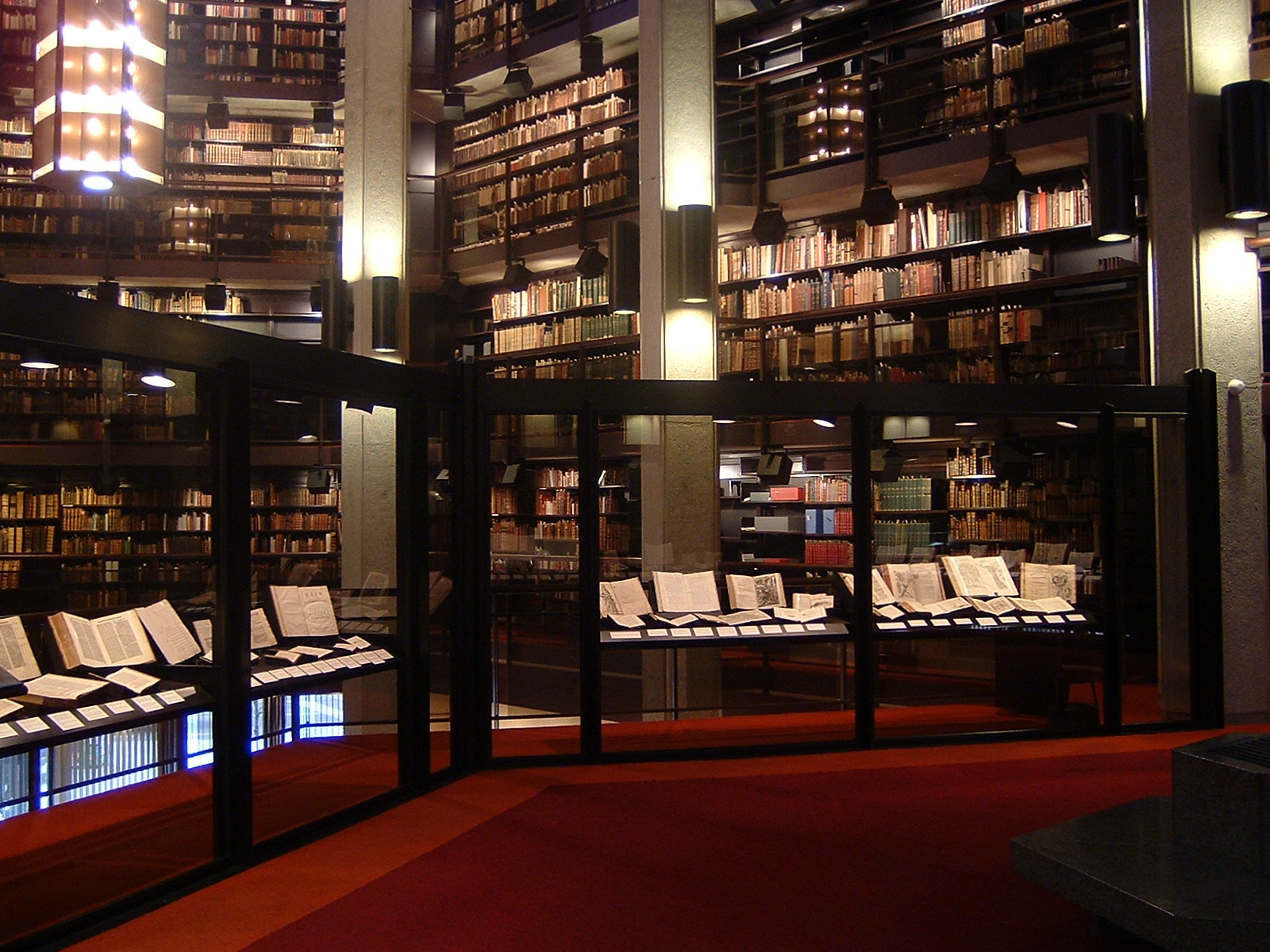
The Thomas Fisher Rare Book Library is one of the best-known libraries in the country, and it has cultivated an extremely dedicated group of donors and patrons. I sat down with outreach librarian John Shoesmith to discuss the importance of donor relations to the Fisher, and to reconsider what we mean by “fundraising.”

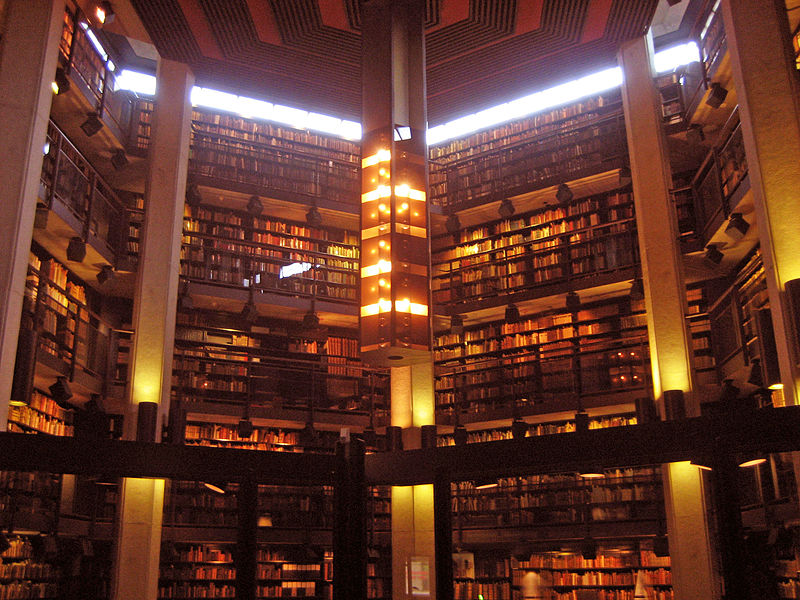
Interior of the Thomas Fisher Rare Book Library. Source.
Thanks for meeting with me. Although many of our readers will be familiar with the Thomas Fisher Rare Book Library, before we begin, would you mind giving me a brief overview of what the Library’s mission is?

Essentially our library’s mission is to support the teaching and research of the University of Toronto as a whole, but also our mission is to support teaching and research worldwide.

How does fundraising fit into that picture, and what role does fundraising play at the Fisher?

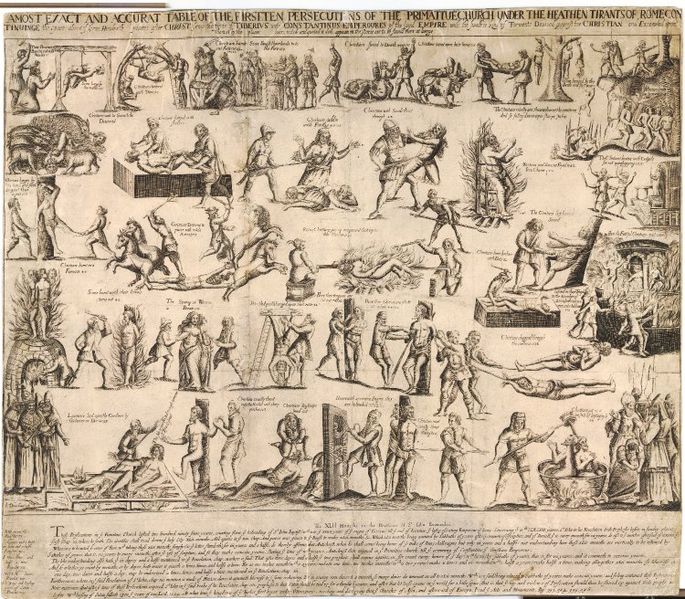
It’s funny, we don’t normally use the word “fundraising.” The term we tend to use is “donor relations,” and whenever I do tours for students I always talk about the importance of donor relations. It’s not something that is ever really spoken about very much in the teaching curriculum, and yet it’s so critical to what we do here at the Fisher. Even outside of “fundraising,” the library itself is built on donations. We do have an acquisitions budget, but really the foundation of the library has been based on donations of books. We couldn’t have built this library without a huge donor base, having rabid book collectors decide to give us their collections. Some of our most important collections have been built primarily by our community. A great example is Foxe’s Book of Martyrs. A Scarborough prof came off the elevator one day, had this list in his hand, and he said, “I have this list of books, would you be interested in these books?” It was a complete collection of Foxe’s Book of Martyrs. That’s how a lot of our stuff has been built up over the years.

Foxe's Book of Martyrs, 1641. Source.
Reaching out to the younger demographic is so important. How do you do that?

One of the simplest thing we’ve done, and it sounds almost trite to say it, is that at one time our Friends of Fisher lectures would begin at 8pm. So a simple thing was just moving them from 8pm to 6pm, our argument being that at 8pm there’s not going to be many students hanging around campus, and they aren’t going to want to attend a lecture. Becoming a Friend of Fisher as a student is quite cheap, it’s $25. As a library we recognize the importance of our donors. We couldn’t do what we do without them. We try to pay tribute to them as much as possible, whether it’s publicly through events, or going out for lunches or dinners with them. We’re going through the process of hiring a Director for the Fisher, and they’re part of that process. The steering committee of the Friends of Fisher will meet the candidates, have a say in the process. And that’s important, because a big role for the Director is working closely with our donor community, so their voice is important.

For donors who are donating more than is average, or a particularly substantial donations, how does the Fisher recognize that support specifically? Or do they?

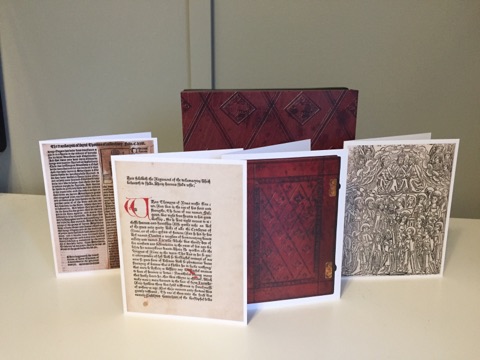
They do and they don’t. Earlier this year we purchased the William Caxton Cicero, which was a significant amount of money. It’s a great fundraising story, because a lot of the money had been generated by donations. This past week they had an event to honour the donors. It was very well-attended, there were probably fifty or so core donors of the Caxton. They generated this little piece for them, these little cards with the individual pages of the Caxton. It’s a very small gesture, but they loved it. One of the donors phoned and said, “I want to purchase twenty more of these.” So it’s small things like that. The Caxton was great, because they really felt like part of the acquisitions team, because it’s such an important purchase for us. That was such a great donor story for everyone involved, for us and for the donors themselves.


A gift of custom Caxton Cicero stationary given to donors who helped the Fisher purchase the Caxton. Photo courtesy of Samantha Summers.

When you get these incredible acquisitions with the help of donors, which is more rewarding: Seeing the text itself and interacting with it, or seeing how excited people are that they’ve contributed to this incredible text?

I think it’s both. We were chatting with Allan Gottlieb, who used to be the ambassador to the United States. Long time politician, was a book collector for a long time, mostly collecting fine bindings. He approached us probably two years ago wondering if we were interested in his bindings, and of course we were. He was very tied to them, he had a hard time getting rid of them. So what we did was create a prominent place [for them], and then after we received the donation we had a little tea for him and his family that was held in the mezzanine, and the books were out on display. Just a small thing to say, “Your donation is valued and is important to us. It has a prominent display. We recognize how important these books are to you. You can come any time and take a look at them. They’re not going anywhere.”

The Caxton is the best success story we’ve had in the last couple years or so. For us, it pointed to how excited the donor community was to be able to purchase this hugely important book. They had Alan Galey speak at the reception the other night, and they were very excited to see that Alan has already been incorporating it into his classes or into his own research. The Caxton is great simply because it’s the oldest English-language book now here in Canada. So that’s one part of it. But it’s not a momento piece, it’s actually for scholarship. To have it is one thing, but to have it as something that forms the core of someone’s research is so much more important for the Friends. They want to see this material being used.


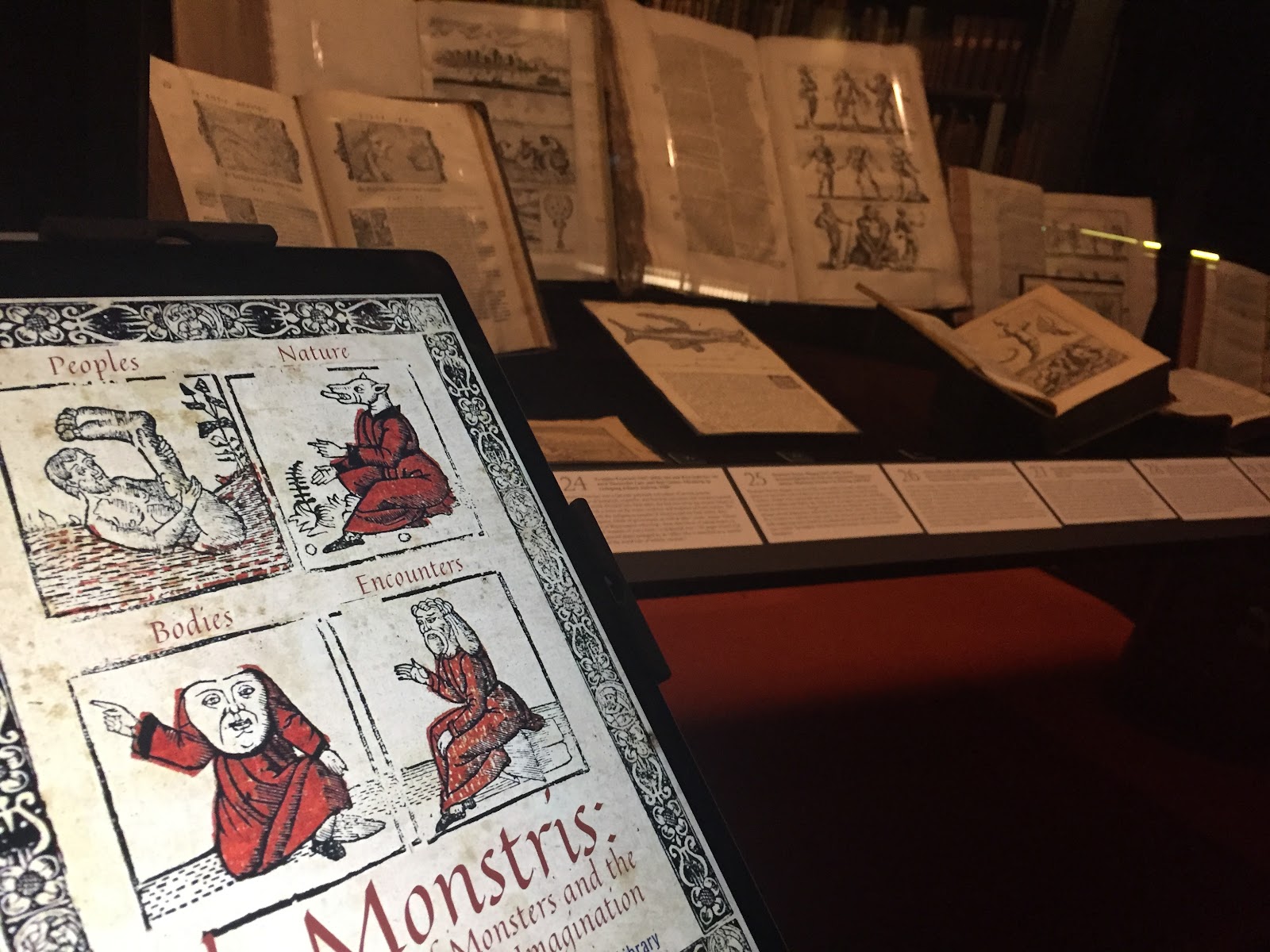
An iPad contributes an interactive element to the Thomas Fisher Rare Book Library’s latest exhibit, De Monstris: An Exhibition of Monsters and the Wonders of Human Imagination, running September 17 to December 21. Photo courtesy of Samantha Summers.

Visit the Thomas Fisher Rare Book Library website for visiting information, and check out these upcoming events: George Kiddell Lecture on the History of the Book and The Johanna and Leon Katz Memorial Lecture.

This interview has been edited and condensed for length and clarity.

20 November 2018

PASSION, MEET PROFIT


(Fun)draising | Samantha Summers


The Textile Museum of Canada is having an exciting year. With two new endowment funds being established, a thriving volunteer community, and exhibit after exhibit earning rave reviews, Executive Director Emma Quin sees no sign of the museum slowing down. We sat down during the Textile Museum’s Beads, they’re sewn so tight exhibit to talk about fundraising and the importance of having a close-knit community.

A quote adorns the wall of the Textile Museum's collection space. "Who is worthy of memory?" -Desmond Miller.
Photo courtesy of Samantha Summers.
Would you mind giving me a brief overview of what the Textile Museum’s mission is?

Ultimately we’re here to create an understanding of the human experience through textiles. We’re looking to ignite creativity and to spark wonder, conversation, and learning through textiles.

How does fundraising fit into this picture?

It’s significant, as it would be with any cultural institution or museum. We have a development department, and fundraising is one of the key places that we generate revenue to support the programming that we do. We’re looking to bring in revenue through membership, donations, patron relations, individual giving, and corporate and foundation sponsorships. It’s quite a wide spectrum, and it’s about one third of our budget that we’re bringing in through fundraising. So I’d say it’s pretty important.

Jean Marshall, Ring of Fire (2015), 2015. Photo courtesy of Samantha Summers.
Could you give me a rough breakdown of where your finances are coming from?
Sure. An ideal model is to have one third - one third - one third; one third through earned revenues, one third through the private sector, and one third through the public sector. We’re close to that. Membership, admissions, our retail store, and ticketed events are on the earned revenue side. Publicly we are funded by three levels of government - municipal, provincial and federal. On the private side, in addition to the way we fundraise that I mentioned before, we also have a volunteer committee and the volunteers actively fundraise for us. They do a textile bazaar and a number of sales through the year, and we’re really fortunate that they drive a lot of activity and funding to us. They bring $40-$45 000 a year into the operations of the museum.

That’s impressive.

It’s very impressive. We run an annual campaign from the fall to the winter, an appeal to support the mandate and the mission of the museum. When we’re doing something like that we try to make it as personal as possible; we want the ask to come from somebody who has passion for the institution. Our membership is generous, people donate on top of their annual membership on an ongoing basis, so there’s a consistent stream of ongoing donations.

Katie Longboat, Kokum's Flowers, 2018. Photo courtesy of Samantha Summers.

Once someone is a member or has donated, how do you keep them involved in the museum?

I think engagement is really critical. For membership we’re sitting in the realm of 800 members. There are different levels of membership, so there are slightly different levels of engagement across all those areas. They’re supposed to be well-connected to us and therefore we want to keep them apprised with what’s going on. We open approximately five exhibitions per year and each are layered with public programs. Independent of those exhibitions, our education department programs numerous activities monthly. Making sure the membership is invited to all of those [is important]. We are actually actively working to improve how we communicate and connect with our membership. We’re thinking quite deeply on how we can make our connection much more meaningful. I think that’s an ongoing commitment, because how people want to engage changes and evolves, and we have to change with it.

What do you look for in a corporate partnership?

Our largest corporate sponsor is BMO Financial Group. I think we align to their philanthropic goals and what they’re looking to support. They’re advocates of our programs, and they’re advocates of the mandate and mission of the organization. In this past fiscal year they have been our [primary] exhibition sponsor. I think the most important thing is aligning with their philanthropic goal and their organizational beliefs. The primary piece that we’re looking for is how do we tell a story about what it is that we’re doing that really aligns with the mandate of that corporate institution.

Bev Koski, (from left to right), Toronto #1 (2013), Banff #4 (2012), Toronto #2 (2015). Photo courtesy of Samantha Summers.
What is the most exciting thing that has been achieved through fundraising since you joined the Textile Museum?

Can I say two things?

Absolutely.

One that’s just quite recent is we’ve established the curatorial endowment fund. One of our senior curators retired, and to celebrate her accomplishments along with our long standing commitment to curatorial excellence we launched this new fund. The fund will inspire ongoing and future curatorial excellence at the museum, providing our curators with dedicated resources to realize their curatorial visions, support their research on our collections, and provide essential funding for the development of special exhibitions that further advance the museum’s curatorial reputation.

We were delighted that one of our long-standing supporters, Shirley Beatty, decided to make a leading gift that started the fund off with a $50,000 donation, and we look forward to continuing to grow it. We also established a Future Fund for the museum, recognizing that we have to think about innovative ways to move the museum forward and require access to a pocket of money to do that as those decisions come about. We were able to establish that Future Fund with another leading donation that we received from Kathy Paterson, one of our volunteers, for $100 000. I think with having those two pieces it just helps us think strategically toward the future and what we can do.

It must be so exciting to play such a big role in this institution that so many people care about.

There is a deep passion for this institution. The museum gets called a “hidden” gem, and it is a gem, it’s really beautiful. The people that walk through our doors leave with a deep emotional connection to it. We see that over and over and over again.

Olivia Whetung, #35, 2015. Photo courtesy of Samantha Summers.
Visit the Textile Museum website for visiting information, and check out these upcoming events: Textile Teach-In: Spinning WorkshopArt Chat: Cape Dorset Printed Textiles, Textile Teach-In: Rug Hooking.

This interview has been edited and condensed for length and clarity.
23 October 2018

SMALL SPACE, BIG AMBITIONS


Nestled in between Annesley Hall (Victoria University at the University of Toronto) and the Lillian Massey Building sits the Gardiner Museum, one of the world’s most renowned specialty museums, a hotbed of ceramic activity, and one of Toronto’s best-known museums. With an operating budget of $4M per annum, they have fundraising down to a science. I sat down with Gardiner Museum Chief Operating Officer Lauren Gould to learn about how fundraising works at the Gardiner and what happens behind the scenes on major events like SMASH. 


The Gardiner Museum located at 111 Queens Park, Toronto. Source.


Lauren, thank you for agreeing to meet with me, I’m very excited to be talking about fundraising at the Gardiner. How are you today?

I’m doing well, how are you?


I’m doing well, thank you. So although many of our readers will be familiar with the Gardiner Museum, before we get into this, would you mind giving me a brief overview of what the Museum’s mission is?

Sure. It [the Museum] was founded in 1984, and it was a gift to the City, the Province, and the country from George and Helen Gardiner, who were avid ceramic collectors. We’re one of the few museums in the world that’s focused on ceramics, so one of the world’s most notable specialty museums. In terms of our mandate and mission, our mandate is to bring together people of all ages and communities through the shared values of creativity, wonder, and community that clay and ceramic traditions inspire. With that mandate we’re really trying to engage audiences with our exhibitions, our programs, classes, and also steward a significant permanent collection. We also champion emerging and established Canadian artists and their role internationally. We do a lot of innovation through our clay education programs, so that we can bring together through the experience of actually making ceramics with a deeper understanding of the art form.


So how does fundraising fit into that Gardiner picture? It takes resources to support that kind of programming.

Fundraising is vital for everything that we do. Depending on any capital or special projects that we’re doing, we raise about $2M a year, which is about half of our operating budget. We’re a bit less reliant on government support than some other institutions, so our government funding usually only forms between fifteen and twenty percent of our operating costs, whereas with a lot of arts organizations it tends to be at about fifty or sixty percent. We do have a more diverse funding base, which is a good thing. A lot of our fundraising happens through our memberships, both general memberships and Patron Circle memberships, who are people who want to have membership benefits, but also want to philanthropically support the institution and what we’re doing. Being able to tell the story of what our education programs accomplish, what exhibitions bring to the people of Toronto and beyond, those are the stories that people really respond to and then want to support.


There are so many ways for the public to support the Gardiner and its mission, two of which are the Porcelain Society and the Young Patrons Circle. Would you mind elaborating a little bit for our readers on what those two groups are and how they contribute to the community?

The Porcelain Society was developed for those who intend to make a planned gift to the Museum, if they’ve either left a bequest of funds or a bequest of objects within their will as a gift to the Gardiner. The Porcelain Society comes together at least once a year, we do a very special event for them either with one of the scholars or experts in the field that we’re bringing in for a lecture. They’re people who are very, very dear to us as an institution because they’ve made a big commitment.

The Young Patrons Circle is something I actually worked to develop at the Gardiner. When we were getting to the point where we wanted to create a Young Patrons Circle I used a lot of methods that I would have used when we were developing a new public program or outreach to a specific community. That involves going out and asking people what will work for them and what they want to see the Gardiner do, how they want to interact and have a relationship with us. In the last three years, they’ve put on their SMASH art party event, which has been wildly successful and has really been a great compliment to our other major fundraiser that happens during the year. I think what’s been special about SMASH is because we’re small, it’s easy for us to really immerse people in art at a party. When you come to the Gardiner for SMASH, it looks so different, and you’re surrounded by the art, and you’re interacting and participating with it the entire evening. You’re not just walking past something and seeing something that might be incidental to the party itself; the art really is the party for us.


How long does it take to plan an event like that? How many people have to get involved in its planning?

Well, a number of people are involved in the planning for sure. There’s usually a subcommittee of the Young Patrons Circle that gets involved in steering the event alongside staff. The special events coordinator at the Gardiner drives the process forward, they work in partnership with an art director that’s selected for the event. That art director, alongside the committee and the special events coordinator, comes up with the theme. The art director really does the outreach and selects the artists that are going to be involved and the installations. On-site, the special events coordinator is working with our marketing team, operations team, curatorial team to make sure it’s the best experience and event possible. Sponsorship obviously plays a role in that, both cash sponsorship and in-kind sponsorship. The process for a party like that usually starts a year before in terms of putting the committee together, recruiting the art director, choosing a theme, but I would say it really hits the ground running in terms of planning in January for the June event.


Fundraising, running the Museum, creating exhibitions, engaging with the Community Arts Space [a project which invites local artists to utilize space in the Gardiner to stage projects and exhibitions], it all comes together in one big, cohesive Gardiner picture. What’s your favourite thing about all of these fundraising and outreach efforts that the Gardiner does?

You know, it’s hard to choose the best night of the year. I think one of the most rewarding things is seeing the satisfaction and sense of accomplishment and pride from the team here. Our staff work incredibly hard to make sure that the Gardiner is successful, to make sure as many people engage with our great programs and exhibitions [as possible], so I think that’s probably number one for me. When I think about some of the most special nights of the year, I think of things like Empty Bowls, where potters donate bowls and chefs come in and donate their time and soup, and all the money we raise goes to Anishnawbe Health Toronto. Or when we do have the exhibition opening for the [ceramic] works that the Barbara Schlifer Commemorative Clinic group does, which usually happens in December. Those two things are ones that say, “Okay, we’re not just a museum, stewarding a wonderful collection, putting on world-renowned exhibitions, and bringing in artists like Yoko Ono. We’re also doing things that are really impactful for the community.”


That’s really amazing. If you could narrow it down, is there anything that stands out as particularly impactful or meaningful for you individually that has been achieved at the Gardiner through fundraising since you joined?

There were a number of big fundraising successes that we’ve had, but when I started working in development here our sponsorship goals for exhibitions were extremely modest. The Gardiner was trying to raise $25 000 for presenting exhibition sponsorships, and when we invited Kent Monkman to come and do an artist intervention as one of our major exhibitions in 2015, I said, “Let’s ask TD [Canada Trust] for $100 000. We know that this exhibition is going to be expensive, this is a major show, he’s an amazing artist talking about an issue that’s so important in Canada.” We put in an ask for $100 000, received $75 000, and it was the biggest corporate exhibition sponsorship we’d ever been awarded. I think it just demonstrated to us that we could actually be what we were worth, and that just because we were small didn’t mean our ambitions had to be.


Check out some upcoming events and initiatives at the Gardiner Museum: Japan Now: Female Masters, Power and Possession: The Ethics of Collecting, Adult Classes, Drop-In Classes. Learn more at the Gardiner Museum website.