Showing posts with label World War Two. Show all posts

20 September 2016

LOSING THE "CAMP X COLLECTION" (AND FAMILY MEMORIES)

MUSEUM MYSTERIES

BY: CHRISTOPHER WAI


Note: The following owes much to Carola Vynhak's invaluable efforts in reporting and following up on the main story below with her many articles as it progressed between 2010 and 2011. It is also absolutely important to recognize Historian Lynn Phillip Hodgson's dedicated and active efforts in keeping Camp X history alive through his website, books and tours.

X Company, CBC 2015
“If you didn't put it in writing, you pretty much gave it to us,” she responded. “Like, hello? How stupid are people?”' -Deirdre Stuart's response to criticism of her sale of the Camp X collection her late father curated. 
“This is crazy, man,” beamed collector Bill Steele as he showed off the hefty prize that’s destined for his living room. “Look, there’s just two or three guys bidding. I had a grand to spend and I’ve just spent it.” -Toronto Star
'“I can’t find them anywhere,” she said of the boots and dress tunic her distraught mother hoped she’d retrieve. “She’s disappointed those things will be lost to us. I kind of came to say goodbye.”'- Granddaughter of a veteran looking for her grandfather' possessions.
'“My grandfather wouldn’t have intended this stuff to be sold,” says Smith. “They do not belong to (Deirdre Stuart). This is a Canadian heritage collection and should be treated as such.”'-Cameron Smith
Today it's back in the public consciousness through the CBC's X Company drama series, but perhaps it should've come out earlier in 2010 when the Camp X collection was thrown into the winds.

Camp X and the SOE

On Dec. 6, 1941, when Britain the only country left in Western Europe, a day before Pearl Habour and two days before the Battle of Hong Kong (Canada's first battle*) began, Camp X was opened in Whitby/ Oshawa.

It served as the training ground for future paramilitary agents of Britain's Special Operations Executive. The SOE was responsible for conducting espionage, sabotage, demolition, recruitment and providing aid to resistance groups in WW2. It was also home to an important telecommunications network between the Americas and the UK during the war known as HYDRA.

Ian Fleming (creator of James Bond) and Roald Dahl (author of Willy Wonka and the Chocolate Factory) were well known figures who have passed through there and the head of it all, William Stevenson, was an inspiration for James Bond.
X Company CBC
On the whole. SOE agents came from diverse backgrounds and includes women like Noor Inyat Khan or Denise Bloch who fought and died behind enemy lines. Nancy Wake, the most decorated servicewomen in WW2 was also an SOE agent. The above 3 women weren't trainees from Camp X, but it does show you the range of histories that may be hidden away or told through through a museum's collection. At another related SOE camp** created later, a group of Chinese Canadian volunteers were trained at Commando Bay, British Columbia to go behind enemy lines in the Pacific theater.


The Camp X Collection

In the late 70's or early '80s, Robert Stuart began to collect artifacts from Camp X and belongings from other veterans of the Canadian Army in the local area and they were housed in a city-leased building at the South Field of the Oshawa Airport for around 33 years. But this stasis wouldn't to continue in the end of course.

So it would have been nice if the X Company TV series had been on in 2010 when the large collection of Camp X and other WW2 artifacts were put up for sale by his daughter after his passing.

Many veterans' families were outraged that their parents or grandparents personal belongings, donated in good faith, were to be summarily sold to the highest bidder, their attempts at recovering/ buying them back them scoffed at and rebuffed (see above quote).

It isn't clear how the Ontario Regiment Museum fits into this and whether the donors actually thought they were donating to the museum as Stuart's daughter was the ultimate inheritor despite its place in the institution. Many objects appear to have been given by veterans who were friends or at least on friendly terms with Robert and dependent on “gentlemen's agreements” as opposed to clear documentation of transfers on whether they were or which ones were donations, loans or sales. Deirdre disputed these claims, arguing that they were almost all bought by her father unless proven otherwise and that she had the ultimate ownership over it.


Where Did the Collection Go?

???? Robert Stuart is said to have given away some minor objects (sunglasses, gunbore scope) he had to at least one child.

In 2010, some were put up on eBay for sale, though how many were sold here is unknown. In the same, year, the asking price for the whole collection was 1 million. Deirdre would also later refute that she ever sold objects through eBay.

Around July 2010 Deirdre Stuart donated an oil painting of Canadian fighter pilot and Distinguished Service Order recipient, Lloyd Chadburn to the Oshawa Air Cadets.

November 2010, the Canadian War Museum had bought 15 objects, according to the Toronto Star. This included Historian Lynn Phillip Hodgson's own radio briefcase, which was originally donated for Robert Stuart to curate.

2011. No buyer took the 1 million dollar ask and the bulk of the objects were auctioned off separately at Bruce Kellett’s auction barn in Blackstock, Ontario. Individual collectors and families of veterans were known to have been there. The prices appear to have been fairly low and under their actual value, which perhaps, calls into question why Deirdre didn't simply consult concerned family members.

2012. The “Camp X Collection”, a permanent exhibit was opened at the Regional Municipality of Durham Headquarters with the involvement of Lynn Phillip Hodgson, the most visible and active expert on Camp X's history. See here for more detailed photos:

Camp X Exhibit at the  Regional Municipality of Durham, Camp X Official Site

2014- A theft occurred at the Durham Region Headquarters and a number of items were stolen from the Camp X collection.

????  Some Camp X artifacts from Lynn Phillip Hodgson's collection may also be found at Casa Loma, titled the "Station M" collection. Casa Loma itself was a sort of "Q lab" of sorts, responsible for preparing hidden compasses, map scarves and forged documents and clothing.
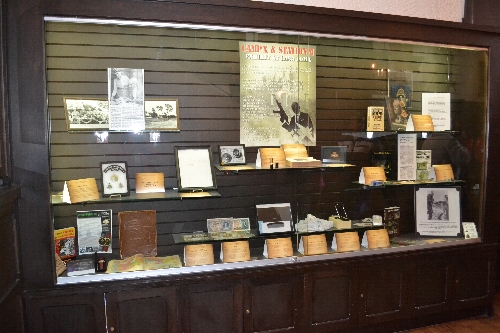
Casa Loma Station "M" Exhibit, Camp X Official Site


Wherever most of them are scattered now, which objects came from whom and where probably have no context other than the metonymic militaria found elsewhere in old army surplus shops. Many personal stories and memories that were intrinsically and very clearly tied to these objects were lost in 2011.

For Want of a Nail...

I remember being frustrated during my first year of undergrad at the time. I even joined the Facebook group led by historian Lynn Phillip Hodgson and sent out emails to a couple of politicians when someone suggested it though I never did talk to anyone in the group - I was just 18 years old and everything still seemed oddly daunting or awkward, so I mostly lurked. The group also attempted to build a fund to get the whole collection.

But that was then, and the options to mobilize weren't as plentiful.

The almighty power of online crowdfunding platforms and twitter today could have been invaluable and an immediate option now. Granted, the 1 million dollar asking price would still have been far more than would be feasible most likely.

And yet. perhaps with a bigger audience then, there would have been more action or public interest. Documentation kept by both parties would have settled disputes more clearly as well.

Objects and Memory, Forgotten Corners Everywhere...

There are many nuances that get lost and become difficult to research, even if we think we know everything about something as visible as the Second World War.
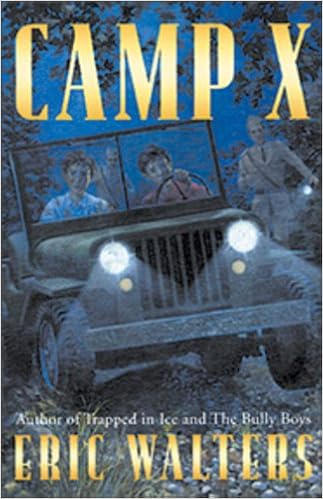
Now a four book series apparently.Time to catch up!

I only learned about the camp though Eric Walters' Camp X novel as a teen as it was never really taught. It's a lot like how the Battle of Hong Kong is forgotten, despite being the first engagement of the war for Canada.

You almost have to stumble on it and often it's not even viewed as relevant or important to many but just a failed defense of a colonial possession (my ancestral home). For me, it is an intrinsic link between both my identities and one that I only learned by coming across the 1505 tombstones (228 Canadian) on the way down from my grandfather's terraced grave. I never asked my grandparents what it was like to be civilians under Japanese or British rule and they've all since passed away.

I have an an old first aid manual and a small byline in a letter from a British medical colleague to my grandfather about living through the war but little context to make any sense of it. One of the few others is a story about my great uncle and aunt, then fiancees, staring down a Japanese soldier, and even that I only learned at his funeral. Still, I suppose I have tangible leads.

At the end of the day, I can't imagine what it’s like for the families who went to auction looking for their parents/ grandparent's belongings- things they thought would be protected and preserved. It may feel mundane to many people, but the memories and objects that were but currency and collectibles to the seller and other buyers meant a lot more in the hands of the families that have lost them completely.

Sai Wan War Cemetary dedicated to British, Canadian and Indian soldiers who died in the Battle of Hong Kong. Commonwealth War Graves Commission 

Another: Camp 30

There is another related story of Camp 30, a German POW camp which was the site of a POW uprising turned school and survived arson, defacement and potential demolition.

Here are a few links if you are interested:

https://www.thestar.com/opinion/letters_to_the_editors/2013/09/09/students_enjoyed_camp_30.html
https://www.thestar.com/news/ontario/2010/05/24/historic_camp_30_saved_from_wreckers_ball.html
http://www.lfpress.com/2014/11/09/an-insult-to-our-military-history
https://www.thestar.com/news/gta/2009/03/29/blaze_damages_pow_camp.html
https://www.facebook.com/groups/121336101904/

*Technically, Canadian forces entered the battle on Dec. 11, but the battle began on the 8th.
** both headed by the British Security Co-Ordination (BSC)

Editor's Note: A previous edition of this article incorrectly stated that Robert Stuart's artifacts were stored in the Ontario Regiment Museum for 33 years. Mr. Stuart's artifacts were stored in a nearby city-leased building at the South Field of the Oshawa Airport. Musings apologizes for this error. 

18 March 2016

HOW 20TH C. CANADIAN COOKBOOKS BOTH WROTE & ERASED HISTORY

HISTORIC KITCHEN

BY: LEAH MONCADA

Selected Recipes:
Tomato Soup Cake with Cream Cheese Frosting
Cheddar Shorties
Manoomin

The 20th century saw many periods of change (flavoured with surprisingly persistent continuity). One of the biggest catalysts for change was of course, the wartime period. Looking at repositories of wartime recipes is a fascinating glimpse of how Canadian Cookery and home life changed. However, I also learned that while cookbooks are a unique method to illuminate history, they can also actively erase important histories as well. Lest we assume that cookbooks are entirely honest and forthright in where foods come from, let us critically examine one of the first compilations of publicly contributed Canadian recipes: the Centennial 1967 Canadian Cook Book, the product of a joint endeavour between the Laura Secord Chocolatier and the Canadian Home Economics Association.

In this post I shall use recipes from the following two cookbooks, in addition to a recipe saved in oral history form:

57 Ways to Use Heinz Condensed Soup. Toronto: H. J. Heinz of Canada, 1944. Print.

The Canadian Home Economics Association, comp. The Laura Secord Canadian Cookbook. 5th ed. Toronto: McClelland & Stewart, 1971. Print.


In this post I venture beyond my usual practice of relying upon other food historians to adapt old recipes. Due to the shared technology and recipe terminology, there was little need to adapt these recipes to a 21st century kitchen.


Tomato Soup Cake
57 Ways to Use Heinz Condensed Soups, Heinz Company of Canada LTD, 1944


Tomato Soup Cake. Photo: Leah Moncada.

3/4 cup shortening
1 1/4 cups sugar
2 eggs
1 10 oz. can Heinz Condensed Cream of Tomato Soup
3/4 cup water
1 tsp baking soda
3 cups sifted all-purpose flour
1 tbsp baking powder
1 tsp cinnamon
1 tsp nutmeg
1 tsp cloves

Cream shortening and sugar thoroughly. Add eggs and beat well. Combine Soup, water and baking soda. [In a separate bowl,] Sift together flour, baking powder and spices. Add the Soup mixture and sifted dry ingredients alternately, stirring after each addition. Pour into a greased pan (9" x 9" x 2"). Bake in a moderate oven (350F) for 55 minutes. When cool, frost with Cream Cheese frosting (recipe below). Note: If desired 3/4 cup seedless raisins may be added before patter is poured into pan.

Cream Cheese Frosting
57 Ways to Use Heinz Condensed Soups, Heinz Company of Canada LTD, 1944

1 package (4 oz.) cream cheese
1 1/2 cups confectioners' (icing) sugar
1/2 tbsp butter
1/2 tsp vanilla

Beat cream cheese with rotary beater (hand beater) until smooth. Add confectioners' sugar and continue beating until well blended. Add butter and vanilla.

Front cover, "57 Ways to Use Heinz Condensed Soups", 1944. Photo: Leah Moncada.

Inside cover, "57 Ways to Use Heinz Condensed Soups", 1944. Photo: Leah Moncada.
"Canada has determined to change the eating habits of a nation, because she has learned that efficient production of food is only half the victory. It takes efficient consumption, too, to give full meaning to the slogan, ‘Food will win the war.’" -A. Fromer, 1942
The wartime periods serve as nexus points of radical change within Canadian kitchens. In the First World War, newspapers published special 'wartime menus' that encouraged substitution of high-demand items. Previously unregulated food items became limited or heavily controlled. The Second World War saw further steps being taken by the Government to regulate the food economy. The Government took unprecedented steps aimed to transform the Canadian diet, through campaigns that pushed 'patriotic' dishes, the launching of a national nutrition campaign, and the regulation of production, distribution and price on thousands of food items. In this feature by the Food Network on wartime recipes you can see the result of the heavy regulation on meat, sugar and flour. There are such recipes as "Eggless, Butterless, Milkless Cake," "Beef loaf" and "Carrot and Honey Cookies". All of these steps were an attempt to save food on the Homefront in order to feed the Soldiers and Allies in Europe.

This cookbook belongs to the collection of Musings' own Natania Sherman! (You can read more about her vintage recipe pamphlets in this post). I poured over her collection with starry-eyed delight and found this little treasure by the Heinz Company from 1944. 

This was a delicious cake! I gather that it was included in this recipe book almost as a dare, all of the other entries are meatloaves, casseroles, sauces and the like. It smelled very much like pumpkin pie while in the oven, and tasted much like my Grandmother's spice cake. The use of tomato soup results in a deliciously moist and rich cake body. I highly recommend!


Cheddar Shorties
The Laura Secord Canadian Cookbook, The Canadian Home Economics Association, 1971


1 cup all purpose flour
1/2 tsp paprika (or more)
1/4 tsp dry mustard
pinch cayenne
1/2 cup butter
1/2 lb. (2 cups, 225g) shredded and packed cheddar cheese

Sift flour, paprika, dry mustard and cayenne together. In a separate bowl, cream the butter. Gradually blend the shredded cheese into the butter. Add in the flour mixture and knead. Form the dough into rolls, about 1 inch in diameter, and chill until firm. 
Slice into 1/4 inch rounds. Place on greased baking sheet. Brush with milk and sprinkle with poppy seeds.
Bake at 400F for 8-10 minutes, watching closely.

This is something of a holiday and potluck favourite in our family, and it has fallen upon my hands to whip it out at various occasions. My family has, and I say this with great affection, all the self restraint of starving squirrels in front of banquet of nuts after a particularly harsh winter when it comes to these cookies. (I include myself in this behaviour.) You eat one, two, blink, and all of a sudden you've consumed 14. Over the holiday season I probably bake this recipe on at least three occasions, usually at twice the amount. (And let me tell you, nothing says love like repeatedly being willing to shred a pound of cheddar cheese. And then kneading it.)

This particular cookbook belong to my Grandmother, and is the source of a number of family dishes. Over the past holiday break I poured over it and noticed a strong appearance of cheddar in the cheese options. I came to wonder, is Canada particularly obsessed with cheddar over other cheeses? With further research, I discovered that our own humble nation is actually revered internationally for our ability to create delicious cheddar! We just so happen to have the perfect combination of soil, climate, ingredients and livestock to make perfect cheddar. Canadian exports of cheddar in 1904 were, wait for it, 234 million pounds. That made cheddar the second largest export after timber. Goodness gracious. In today's world of abundantly available processed cheese, our cheddar exports are much more meagre, more in the range of 5 million pounds.


Front Cover, "Laura Secord Canadian Cook Book" 1971. Photo: Leah Moncada. 

I want to mention the source of these recipes as an artifact in the history of interpretation. In 1967 Canada celebrated 100 years as a confederated nation. Most people think of the Centennial with an image of Expo 67, but another popular celebratory item was this Laura Secord Canadian Cookbook, originally published in 1966. It claims to be the first publicly sourced cookbook, that brought together submissions from home cooks across the nation. Previous cookbooks collected recipes in small groups of individuals, rather than open to any household across the entire country. It frames itself as both a cookbook as well as an educational tool on Canadian cuisine. Each entry has a short interpretive text on the history or provenance of the recipe.

This is a great example of why inclusivity is so critical to interpretation. Reading through the interpretive text with a critical eye, it is striking how much the authors choose to not include. For example, there are a number of First Nations, Inuit, or Metis recipes, yet these recipes are almost never attributed to those peoples. Not attributing First Nations origin or history was a common occurrence in cookbooks of this time. On this web-archived series at Library and Archives Canada, you can see the practice of speaking about First Nations cooking (and existence) as though it is entirely in the past. In the Laura Secord Cook Book, the interpretive texts for Succotosh and Bannock go on at length about "settlers," erasing the importance (or origin) of these foods in First Nations history, and the presence of First Nations as active peoples in Canada at this time.
Excerpted recipes for Succotash from the 1971 "Laura Secord Canadian Cook Book". Photo: Leah Moncada.

If I were to rewrite the interpretive text for Succotash, as seen above in the Laura Secord Canadian Cook Book, I might say something along the lines of:
Succotash is a popular First Nations and Native American dish that has entered the kitchens of many North Americans. Usually based upon the Three Sisters (corns, beans, and squash), succotash has many variations and can also include other ingredients such as smoked or salted meats, herbs, and other vegetables. It is especially important amongst the Haudenosaunee. Early immigrants from Europe adapted succotash recipes into their cooking due to the abundance of its ingredients and ease of preparation.
However, the above passage is far from perfect. It is silent on the intercultural interaction between these two groups of people. I would edit it further, after conducting additional research and consultation.

Manoomin
a Metis family recipe

Photo: Leah Moncada.

1 cup wild Canadian rice, rinsed
4 cups water
salt
seasonal berries (recommended raspberries, blueberries, blackberries)
maple syrup

Put the rice and water together into a pot, and add a pinch of salt. Bring to a boil and let simmer for 45-60minutes. There should be some water left in the pot, and you should see the rice starting to split. When the rice is somewhat soft, (with a little bit of texture still) it is done.
Strain the rice and put into a large bowl. Add large handfuls of berries, and drizzle with maple syrup. Recommend: a package each of berries, and about 1/2 cup of maple syrup.

Manoomin is a delicious, healthy, and incredibly easy dish to prepare. I absolutely loved the taste, which is somehow both nutty and fresh. A very good friend of mine, Jade Huguenin showed me this recipe. She remembers it from her childhood, growing up in a Metis home. Traditionally manoomin is a breakfast or dessert item. Family members used to bring it as a gift when they came to visit. Jade now works in an Indigenous workplace, and taught me a little about First Nations cooking in relation to her work. Her workplace recently completed a research project on Traditional Foods and Diabetes, which you can see in this beautifully shot video illustrating the importance of maintaining traditional food practices.

Photo: Leah Moncada.


Manoomin is a highly labour intensive rice to harvest, but serves as an important ingredient for many dishes, in addition to being eaten on its own. In this video you can follow along the story of one man as he beautiful articulates the rhythm of harvesting and practice of giving thanks out on the water.

Want more Historic Kitchen? 
This will be my last post on Musings, as I will proudly graduate this coming June. I have greatly enjoyed this journey with you all over the last 11 months, so much so that I cannot bring myself to end it! If you are interested in following along on my continued escapades, I invite to join me on my new website! It's been wonderful folks, have a lovely summer.


3 March 2016

'MAKE DO AND MEND': SUSTAINABILITY AND WAR

THROWBACK THURSDAY

BY: KATE SEALLY

Welcome to Thursday! The last two Throwback Thursday articles I’ve written have discussed historic sustainable living solutions and World War II. This week, I am combining these themes to talk about some sustainable practices that were employed during World War II to save resources.

When we talk about sustainability or recycling today, for most of us it is a choice. During the poverty of the 1930s and into wartime in the 1940s, this was not a choice. You were either too poor to be able to afford new things or new things were not even available to buy because of rationing and limited manufacturing of civilian goods.

Some flour sacks. Source
For example, many women in the '30s and '40s had to find alternatives to buying commercial fabric. Many women turned to feed or flour sacks to make clothes for their children. When flour companies realised this, they began putting their feed or flour in beautifully patterned sacks, with labels printed in ink that could be easily washed out. This meant that the sacks were very effectively re-used and re-purposed.
Flour sack fabric swatches. Source.

During World War II, the government was heavily invested in encouraging Canadians to “Make do and mend” and to re-use and recycle things like fabric (needed for soldiers’ uniforms), fat (needed for bullets), and metal (for vehicles, weapons, etc.).

While many people have heard about wartime rationing in England, many don’t realise that Canada also rationed certain goods during World War II. Canada’s rationing was much less strict than in the UK or other occupied countries in Europe since many things were produced or grown here. The major problem that faced British food sources were the disruptions to Atlantic trade cause by German U-boats.

During the latter years of WWII each Canadian was entitled to the following rations:
  • Tea and/or Coffee: 1.5 ounces of tea or 5.5 ounces of coffee per week. 
  • Sugar: Half a pound per week.  
  • Butter: Half a pound per week. 
  • Meat: Up to 2.5 pounds per week depending on the type of meat.
  • Canned salmon: ¼ pound per week. 
So-called ‘victory gardens’ were a very popular way of supplementing rationing, in both Canada and Europe. In Canada, it is estimated that upwards of 209,200 victory gardens were in operation at the peak in 1944. They produced a total of 57,000 tons of vegetables. Fruits and vegetables were also canned for the winter, a practice that was also highly encouraged by the government. You could even apply for a special canning “licence” that would entitle you to extra sugar rations.

To help women determine what to do with all their fruits and veggies, as well as the reduced portions of goods, over 200 “wartime cooking” cook books were published during the war, on top of countless pamphlets produced by the government and private companies.

A classic wartime cake (you may notice that it's also vegan!). Source
Many exhibits and a lot of research have been done on the battles or military strategies of WWII. Increasingly, however, museums and historians are beginning to pay more attention to the 'home front' and what life was like at home during the war. On at the War Museum right now is an exhibit about women during the world wars. The Imperial War Museum in London, England also features many exhibits and podcasts on this topic. I think one of the reasons that this topic resonates with people is that many lived through WWII. Or even if they didn't, their mothers continued to save fat or mend socks when new ones could be bought. The mentality of war thriftiness stayed with many people, and trickled down through the generations to today.

If you enjoyed this article, don’t forget to keep an eye out for Leah’s next Historic Kitchen instalment, which will feature 20th century recipes!

Sources:

4 February 2016

THROWBACK THURSDAY: EMERGENCY PREPAREDNESS AND WWII

THROWBACK THURSDAY

BY: KATE SEALLY

Most of us first year MMSt students are currently enrolled in the mandatory collections management course. What I have learned so far is that a) I am not cut out to be a collections manager and b) a LOT can go wrong with your collections.

Part of the course is about emergency preparedness, which is terrifying to contemplate. Which of your potentially priceless works of art do you save? It’s a veritable Sophie’s choice.

Michael, from The Office, discussing his most recent 'Sophie's choice'. Source.

One of the most dramatic examples of an emergency situation was during the Second World War, when museums in major European cities had to evacuate their contents to prevent them from being destroyed by bombs. In London, the National Gallery’s collection was evacuated to a slate quarry in North Wales. Ironically, the constant temperature and humidity of the quarry proved to be perfect for the collection, and in fact proved the importance of regulating these factors in the storage of artefacts.

Damage to the NHM's Shell Gallery, c. 1940. Source.

The Natural History Museum in London, meanwhile, was evacuating its collections to various country houses outside of London. This presented a few challenges, since staff had to keep track of what was going where (can you imagine being in charge of this?!). As you might imagine, some owners of the requisitioned country houses were less than happy to have collections, and museum staff, moved into their houses. Fawley Court and its owner, Major Mackenzie, received over 300 cabinets from the entomology department. Unsurprisingly, they were less than pleased about this, and arguments between Mackenzie and the museum staff member deteriorated into questions of how to split the heating bill.

Thanks to this evacuation, most of the NHM's collection survived the war intact. Had it remained in London, many objects would have been destroyed. Between September 1940 and April 1941, the Natural History Museum was hit by oil and incendiary bombs in several air raids.

The situation was even more dire in Continental Europe, where many objects and pieces of art never made it back to their museums after being looted by the Nazis or the Russians, or caught in bombing raids by either side.

The Louvre's empty galleries during WWII. Source.

I hope that, for those of you who are headed into collections management, your careers are never as eventful as those of the museum staff who lived through World War Two.

For a great watch related to this topic, check out The Rape of Europa, which is basically the PBS documentary version of Monuments Men.