Showing posts with label First Nations. Show all posts

1 February 2021

RECOGNIZING RIBBON SKIRTS: CLOTHING AS CULTURAL HERITAGE

 Breaking the Glass Case | Chantelle Perreault


Last December, 10-year old Saskatchewan student Bella Kulak, of Cote First Nation, was criticised by a teaching aid for wearing a ribbon skirt to her school’s Formal Day: the ribbon skirt, an item of traditional clothing within multiple Indigenous communities, was not recognised by the school employee as appropriate for the event. When Kulak’s story was shared online by a family member, the student received an outpouring of support, both from within her community and across Canada. Supporters posted images of themselves in their own ribbon skirts, displaying pride in their traditions and demonstrating that there is an important connection between material culture and heritage. 

The wearing of a ribbon skirt, both as an everyday garment and as ceremonial attire, is a tradition that spans many Indigenous communities in Canada. As noted by the Milwaukee Public Museum, when Europeans arrived in North America, woven fabrics and ribbons were used to trade with Indigenous people, and they used these materials to create a variety of symbolic items, including the ribbon skirt.

Ribbon Skirt in the collection of the National Museum of the American Indian, acquired 1950 (catalogue no. 21/4934)

Ribbon skirts are made with a unique process of applique, wherein ribbons of diverse colours are sewn onto a base fabric, using methods of cutting and folding to create patterns. This practice of ribbon-work began in the late 19th century in the Great Lakes region, eventually moving westward towards the prairies and increasing in prominence. However, coinciding with community displacement and assimilation efforts, the practice began to lose popularity in the late 19th century. In the first half of the 20th century, museums increasingly began to acquire and display ribbon-work and today museums across North America have ribbon skirts within their collections.

The practice of ribbon-work re-emerged in the second half of the 20th century, alongside Indigenous cultural resurgence movements and Indigenous activism movements, specifically in western Canada. Ribbon skirts can come in a variety of forms, some more simple and some more elaborate, incorporating many different colours and motifs. The colours of the ribbons used can convey symbolism, reflecting ties to nature and land, or to political movements and initiatives such as Missing and Murdered Indigenous Women and Girls (MMIWG). Today, ribbon skirt teachings and customs can vary from community to community, and colours and motifs can indicate diverse meanings. 


Clothing acts as an important connection to one’s cultural heritage and identity. As noted by Seneca College News, it can demonstrate a connection to family and ancestry, and it can give the wearer feelings of safety and security. The ribbon skirt is an example of the connection between clothing and heritage, and reminds us that the items we see in museums exist not only within their museum context, but within a community context as well. 

23 February 2018

DON'T FORGET TO REMEMBER

GHOSTS OF TORONTO'S PAST

BY: KATIE PAOLOZZA

This is the first in a short series of blog entries that attempts to explore the Indigenous history of Toronto. I'm very excited to shift the focus from a post-colonial, post-modern bias to a narrative that is more inclusive of Indigenous Peoples. More importantly I want to question our notions of home and identity, and how fragile those concepts are when we remember that we live on stolen land. In this first article, I'll muse about our collective ignorance.

Source
How do you define yourself? More specifically, how disenchanted with your native country would you have to be to leave your nationality out of a description about yourself? I acknowledge that it's a particularly difficult question to answer as a Canadian. Canadians as a culture tend to admire modesty and an understated approach to nationalism. However, I could argue that it's equally Canadian to shrug off any sort of nationalistic, umbrella designation. 

Source
There is, of course, probably a middle ground that is closer to the truth. The issue is not what percentage of a traditional Canadian stereotype we happen to embody, since no one is immune to their environment, especially during their formative years. It's a difficult question for anyone living in a post-colonial environment because our homes and cultures are transparent artificial constructs. There are signs everywhere of other cultures that had deep roots in this land before British and French occupation. I couldn't count the number of times I cut through Huron Street on campus.

Source

TheBata Shoe Museum has these moccasins from the Wyandot people in their collection
Source
The Huron-Sussex neighbourhood is just one example of a historical place that has its own post-modern identity, though a large part of that identity seems to have been shaped around acknowledging its own complex history. A few years ago it was even featured in the Globe and Mail, but like a lot of charming and distinct Canadian places, it cultivated a post-colonial identity and only retained small vestiges of its Indigenous past.

Everywhere in Ontario there are places like this. I grew up east of the city in Whitby, a town that borders Lake Ontario and takes its name from a similar British port town made famous in literature as the place where Count Dracula enters England. As a child, Mississauga was nothing more than the Western equivalent of Whitby. I was wrong about that in many ways, but more importantly I had no clue how to contextualize Canada as a young country. I skated at a place called Iroquois Park, had friends who cottaged in Muskoka, classmates who went to Nipissing, and I hung out at Wasaga Beach and took family day trips to Niagara Falls, not realizing that every one of those places had Indigenous names. Many of our museums also display First Nations items on stolen land, and it is only relatively recently that they have begun to acknowledge this irony.

Source
Even the title of this column, "Ghost of Toronto's Past," is a throwback to a Victorian idea of the past and death. But Toronto has more than one kind of ghost. We don't have our anglicized associations with places simply because of the natural evolution of culture. We work with vestiges because that is all we have. The nations that lived here before us had their own epic successes and tragedies, and we've compounded all of those tragedies with our dismissiveness. We've willfully forgotten things worth remembering, and it's shameful. 

I've loved creating and writing this column. I'm graduating soon, and I don't want my last blog entries to be Eurocentric. Toronto's history did not begin with European contact, and despite tremendous, violent force, there are still First Peoples who live and flourish here. Please join me for the next part of this journey, and please do not hesitate to share your opinions or suggestions for the upcoming articles. We produce stronger, more honest work when we are willing to collaborate and share.

15 January 2018

ROOTS: SEED SAVING, COMMUNITY, AND HERITAGE

A MUSE BOUCHE

BY: JENNIFER LEE

Flowers and fruit are only the beginning.
In the seed lies the life and the future.

- Marion Zimmer Bradley

Even the earliest of heritage professionals recognized the importance of collecting plant material. Hans Sloane’s collection, which became the foundational collection of the British Museum, included plant cuttings from his travels - now held in the Natural History Museum, London. Non-museum collections also collect and store plants: seed banks like the Millennium Seed Bank and Svalbard Global Seed Trust act as repositories for millions of seeds, protecting Earth’s biodiversity in the face of species loss and climate change. In a bleak post-apocalyptic future, we may need to call upon seed banks to repopulate plant species lost to climate change and disease. 

The Svalbard Global Seed Trust in Spitsbergen, Norway, has a storage capacity of 4.5 million samples. Source.

If this sounds somewhat anxiety-producing, fear not; seed saving isn’t just for doomsday preppers and biologists. Seeds are more than containers for plant DNA: they represent rich cultural and personal histories, and the possibility of stewardship, partnership, and reconciliation.

Global capitalism, in the form of huge farms breeding fruit and vegetables designed to travel long distances and last on the shelf, has eliminated thousands of plant varieties over the last century. We’ve moved away from seasonal consumption and diverse native varieties and toward imported foods and privately-patented seed varieties. In 1903, there were more than 500 varieties of cabbage in North America; eighty years later, there were 28. These varieties are often patented by large corporations, depend on pesticides, and are susceptible to disease and pest damage. It’s not unusual to hear news reports that imported foods Western consumers take for granted, like coffee, bananas, chocolate, and peanuts, may be extinct within decades due to climate change.

This flattening of our once-diverse food and plant cultures has a cultural toll as well as an ecological one. We stand to lose our understanding of where and how our food is grown, and our agency over our own health and consumption. Indigenous peoples, disconnected from their traditional territories, agriculture practices, and foodways by colonial reservation and residential school systems, are particularly vulnerable to the loss of their cultural knowledge and health.

Heirloom vegetables like this Glass Gem corn (available from Native Seeds/SEARCH) have been endangered by large-scale operations and imported varieties. Source. 

This is where seed saving comes in.

Individual seed savers and seed saving organizations are working to preserve, grow, and distribute native plant varieties. This can be itself a form of intangible cultural heritage. In some Indigenous nations, seed keepers traditionally safeguarded seeds, shared them with others, and passed heirloom varietals down to family members. For seed keepers, growing and keeping seeds strengthens connections to their cultures and ancestors. (Indigenous seed saving initiatives include plants for medicinal and ritual purposes as well as food.) Terrylynn Brant, a Haudenosaunee seed keeper, told the CBC, "There's so many foods that we have and enjoy that make us strong emotionally, physically, mentally, spiritually, that we couldn't continue to exist as Haudenosaunee people if we didn't continue to eat the foods of our ancestors."

It can also be a way to Indigenize health education. Dream of Wild Health, a non-profit seed saving organization in Minnesota, aims to recover “knowledge of and access to healthy Indigenous foods, medicine, and lifeways”, working through a community garden, public demonstrations and classes, and an Indigenous foodshare. A cornerstone program hosts a summer camp for Native American youth which incorporates organic farming, health, and traditional knowledge.

Youth gardening at the Dream of Wild Health farm. Source. 

It can also be a way to bridge divides, start conversations, and form working relationships. The CMU farm at Canadian Mennonite University (Winnipeg, MB) occupies a former Métis river lot. In 2015, CMU farm workers collaborated with Métis seed keeper Caroline Chartrand and the local Métis community in order to grow squash seeds cultivated by gardeners from the Miami nation in Indiana. Collaborative projects like this one open up space for settler-Indigenous dialogue over the land on which food is grown and create partnerships while saving vegetable varietals and Indigenous history.

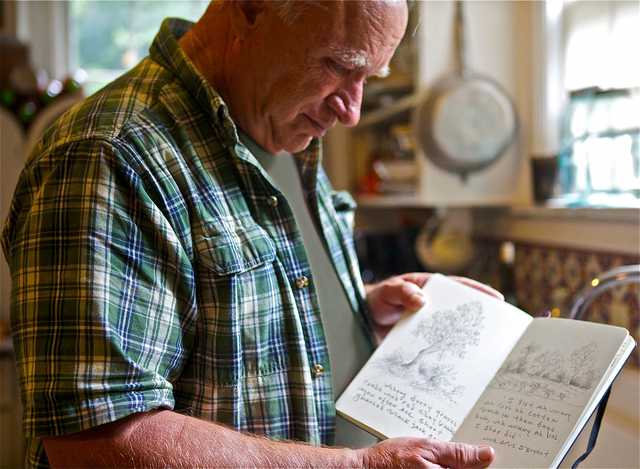
Other communities are also making use of seed saving to preserve their heritage alongside their vegetables. The seed saver John Coykendall, who collects heirloom seeds in Appalachia, keeps details journals of his collecting expeditions, which he calls ‘memory banking’. Like a collections database, his notes record valuable contextual and historical information.

John Coykendall with a 'memory bank', a notebook used to record cultural memories and contextual information in his search for heirloom seeds. Source. 

“A little bit of ancestral history … Where were you living? Where did this seed come from? Did it come from your grandmother or grandfather? Was it brought here from somewhere else? How do you grow it? How was it cooked? ... If someone doesn’t record it, put it down, it is going to be lost for all time. That goes for the seeds. This is the living part of it. Living heritage. Our agricultural heritage.”

While global seed banks work to preserve our biodiversity and health at a macro scale, community and individual projects can work at the micro level, protecting cultural heritage and public health on a personal level. Many libraries (including our own at the iSchool!) house seed libraries – but given their potential to start conversations around culture, food security, health, and heritage, they might not be out of place at a museum either.

7 June 2017

UNION STATION AND THE REMNANTS OF A HAUNTED CITY

GHOSTS OF TORONTO'S PAST

BY: KATIE PAOLOZZA

I am very excited to introduce a new column to our ever-expanding Musings family: Ghosts of Toronto's Past. My impetus for creating this new byline sprang from my twin loves of Toronto and of history. The latter was one of my majors when I did my undergraduate degree here at U of T, but I fell into a stereotypical Canadian trap, meaning I focused most of my energy on international history and ignored what was in my own backyard.

Source
There are so many fascinating, thought-provoking, and fun things about Canadian history that get overlooked in both the public and educational domains because as Canadians we tend to be modest and subdued with the concept of civic pride. I think a significant part of why that's so is the fact that much of our urban growth has its roots in destructive imperialism. Pride in our history comes with the caveat that we must accept and celebrate the forced removal and genocide of Indigenous culture. The ghost stories we sift through and mourn only existed in the first place because of a much greater tragedy; a tragedy that has for most of Canada's history been omitted from the national narrative. As a country that spends so much time defining its national character based on what it isn't as opposed to what it is, it's particularly difficult to synthesize a historical narrative, especially one that is so heavily reliant on colonialism and immigration.

I could probably write about our national history forever, but I have chosen to focus on Toronto for a few reasons. Firstly, we are University of Toronto students. I want to acknowledge how much the school and city has given to its students over the years. I am the first to complain about post-secondary bureaucracy, but that frustration lives alongside an abiding love for higher education and the pure joy of academia. Secondly, Musings featured a special, one-time byline called Toronto Stories that was a wonderful, eclectic array of local history.

Their snippets of Toronto's past got me thinking of how little we Torontonians are aware of the ground we stand on. Since the column was the result of a special class project and is not an ongoing feature, I figured it was time we create something that we could continually revisit. Toronto history has its own unique blend of heroism, political intrigue, national firsts, and seediness. The word "ghosts" is in the title not because of any supernatural elements (though a ghost story may pop up every once in a while), but because the contemporary city has been forged and maintained with the blood, sweat, and tears of countless forgotten individuals. There are echoes of this forgotten past all around, from Union Station to Campbell House to Pearson Airport.

Source
In the post-modern era, tourists and new Canadians will likely see the country for the first time through Union Station via Pearson Airport. When my father emigrated from Italy he spent several nauseous days aboard a ship before docking in Halifax, only to immediately transfer to a train that took him and his family to Ontario. Nowadays the route to the heart of the city is far less circuitous, but no less overwhelming. Union Station is currently transitioning to its fourth iteration. Here is how it looked when it was first constructed in 1858:

Source
And here is William Armstrong's painting of the original station from 1859:

Source
The city and the railways grew so quickly that the station had to be rebuilt less than thirty years later. Here is the second Union Station, completed in 1873:

Source
And here is a photograph of the same station in 1888:

Source
These photos are all public domain, easily accessible through the Toronto Public Library archives or through Wikipedia, but what interests me is what is unseen. The 1888 photo shows a Toronto that doesn't yet have a lakeshore, but even with all of the changes that have taken place in the city since then, it was already a colonial metropolis. By the 19th century there were precious few traces of the land and cultures that had thrived for hundreds of years. Our Toronto is a social and cultural construct that was forcibly carved from the remains of several First Nations, most notably the Wyandot, Iroquois, and the Mississaugas. 

Scroll back up and look at Armstrong's painting. There's a hint of what was already long gone by the time the first Union Station was erected. It's a sobering thought. When we shuffle through Union to get to a Jays game or catch a commuter train, we don't think about what specifically brought us to that moment. We certainly don't think of the decades of blood, labour, infrastructure, and sheer volume of bodies that necessitated Union Station to be built and rebuilt four times in less than two centuries. I'm hoping that this column will remind me to occasionally slow down and rethink my perspective on the subjects of land, culture, and the intangible concept of home. Perhaps some readers will join me in that, but in the meantime I'm happy to traverse Toronto's haunts on my own. I've a feeling that the solitude will be temporary, though, because aren't we all haunted by something?

3 March 2017

JANE ASH POITRAS: AN ANTI-COLONIAL STANCE AT THE ROYAL ONTARIO MUSEUM

SHE'S MY MUSE

BY: NATANIA SHERMAN

Jane Ash Poitras: New Acquisitions of Contemporary First Nations Art (Photo: Natania Sherman)
Milestone birthdays are a prime opportunity to celebrate but also to take stock and think about the future. Those of us in the culture sector in Canada are currently facing this exact challenge, since our institutions are preparing Canada 150 programming and events. It is easy to get lost in a celebration of our Canadian-ness but the challenge is that in moments of nationalistic pride it is difficult to remember that many people see our national symbols as painful reminders of a dark past. One need only look at the Colonialism 150 hashtag on Twitter to see the opposition many Canadian First Nations feel to the Canada 150 fanfare.


The Colonialism 150 T-shirt. (Source)
Although the Truth and Reconciliation Commission (2015) has led to a renewed awareness of Canada’s dark history of colonialism, there is still a long way to go before Canadian settlers and Canadian First Nations are able to truly reconcile with our past and create change for the future.  Today I’d like to take a view of Canadian history through the lens of Cree artist,  Jane Ash Poitras. A current exhibition, Jane Ash Poitras: New Acquisitions of Contemporary First Nations Art  at the Royal Ontario Museum (ROM)'s First People's Gallery presents a darker take on Canadian symbolism and reveals what we can learn from listening to the perspectives and experiences of others.

A collage of colonial symbolism (photo: Natania Sherman)
Although the purpose of Jane Ash Poitras: New Acquisitions of Contemporary First Nations Art at the Royal Ontario Museum (ROM) is to highlight new acquisitions, the resulting display, which places historical and ethnographic objects next to Poitras' paintings, is a subversive and anti-colonial take on the museological tradition of showing off newly acquired objects.  The tagline of the exhibition is "Four paintings recently acquired by the ROM explore colonialism and traditional knowledge of the therapeutic properties and spiritual significance of plants, wisdom now lost but which we hope to reclaim" (ROM, 2017).  The works in question are large scale paintings by Poitras that contrast traditional indigenous knowledge of medicinal plants with the drudge work imposed on indigenous youth by the residential school system. Works like Potato Peeling 101, Ethnobotany 101 directly challenge historical white settler's assumptions that children from indigenous communities were only good for peeling potatoes, by highlighting medicinal knowledge such as the fact that foxglove or digitalis purpurea had medicinal uses familiar to first nations peoples well before its medicinal properties were "discovered" by European scientists. Poitras' paintings tell a story through scale and through the sheer number of paint and collage elements included in each piece. Large painted backdrops resembling a classroom blackboard are overlayed with colonial symbols like the Hudson's Bay Company stripes and images of western medical textbooks. Poitras' hand painted elements creep in to overtake the colonial symbols in the form of expressionistic flowers and stylized buffalo, representing traditional knowledge and sacred medicine.

Buffalo Seed by Jane Ash Poitras (Photo: Natania Sherman)
The exhibit features ethnographic and historical objects alongside the paintings; a school writing desk and baskets for gathering herbs. In the context of the installation and interpretation, these objects take on a spectral quality, highlighting the losses in culture and disruption to family and social life that were a legacy of the residential school system.


 The modes of display also work to reinforce Poitras' artistic voice. Red and yellow interpretive text featuring botanical illustrations, The beautiful red interpretive labels, give this exhibition the feel of a very well designed pop-up exhibit, and they add to the aesthetics of the exhibition with botanical illustrations. The exhibit  features ethnographic and historical objects alongside the paintings; a school writing desk and baskets for gathering herbs. In the context of the installation and interpretation, these objects take on a spectral quality, highlighting the losses in culture and disruption to family and social life that were a legacy of the residential school system.

The new acquisitions' also look at the buffalo hunt, and how over hunting and extermination by European settlers nearly wiped out a key food soucre for First Nations peoples. The painting Buffalo Seed from 2004, which tells the story of the buffalo, is contrasted with oil paintings by European artist George Catlin, that romanticize the buffalo hunt as a dying relic of a dying people. Poitras' paintings tell us otherwise and are a scathing critique of our easy assumptions about  Canadian history.

I wish I could continue to write about all of the indigenous women artists whose work sometimes flies under the radar when it comes to the dominant narrative of Canadian History. So often we struggle to name even one woman artist when asked, (in fact there's a challenge about just this from the National Museum of Women in the Arts in the States) so creating a dialogue whenever possible highlights the importance of female voices in our cultural landscape.

29 November 2016

REPRESENTING IDENTITIES AND BULLDOZING SITES PART 2: HIERARCHIES OF POWER

MUSEUM MYSTERIES
BY:CHRISTOPHER WAI

Note: The DAPL protests also covers environmental and water safety concerns, but I have focused on the heritage aspect below only.
Elderly woman arrested holding a prayer stick on Oct. 27: Source: Indian Country Today

Part A: Dakota Access Pipeline Update: 
  • - The United Nations and Amnesty International have both sent human rights observers to North Dakota to monitor the situation.
  • Over 500 protestors have been arrested. Many were injured or suffered from hypothermia, after a barrage of rubber bullets, concussion grenades, water cannons and tear gas. One of them includes Sophia Wilansky, who may lose her arm after a concussion grenade was shot directly at her.  
Protestor injured by rubber bullets and water cannons Source: TYT            
Tear Gas canisters fired. Source TYT 
  • - New drones have secured footage of the the DAPl activities, including indications that construction has been closer to the water than was thought. A drill platform has been set up, despite the fact that this is beyond the permit Army Corps of Engineers.

Drone footage showing the construction of the drill pad and proximity to water: Source: Dean Deadman via TYT
  • - President Obama has not attempted to stop construction activities for further investigation but has stated that he would prefer to “let it play out” in an interview in November. President -elect Trump owned Energy Transfer Partners' stock shares, but sold them over the summer.
  • - Most major news networks have not sent reporters or journalists on the ground to cover this story. In light of the recent concerns of false news reports in the elections, this has only clouded the facts on the topic.
  • -The Army Corps of Engineers has issued two requests to Energy Transfer Partners to halt for 30 days to no avail.
  • - The Army Corps of Engineers plans to force the closure of one of the protestors' camps on December 5 , though they have outlined a “free speech zone”.
  • - Water protectors intend to hold out through the winter.

Part B: Hierarchies of Power: 


Still of two women just before they are dragged and arrested in front of advancing police line: Source

                                      
1. The Myth of “Stakeholder” Equality?

A First Nations archaeologist once told a class back in my undergraduate years that he couldn't help but scoff on reflex when he saw a list of stakeholders for a project. For him, the notion of being viewed as or called just another “stakeholder” in a list of profiteers was absurd. It was his past that was on the line. The whole way of “balancing” stakeholders as if they were equal was a lie, he thought. The potential for loss was different and the gaps in power and voice were immense. “Balancing” stakeholders assumed an equality where there was none and depended on one party playing the part of the fair mediators. The truth is it is only an attempt at equality in a mess of hierarchies whether it's people or priorities. So a lot of it is fragmented and difficult to tease out. Give me another 8 or 20 years and I might be wiser, but in lieu of that, here are some starting points to understand the black box.


2. Developers, Energy Companies, Land Owners are the Drivers: 

Developers are the primary driver of archaeological and environmental assessments, and the reason why most archaeology in North America is salvage archaeology. 

In the present system, they ultimately have the most leverage, and it is in many ways, in their control. They pay for assessments and therefore, would prefer to have it done quickly and continue development. It is entirely contingent on the individual developers as to whether they understand or are interested in making sure that archaeological sites or more importantly, burials are respected and whether they would like to adhere to the law and their ethical guidelines or manipulate loopholes to save costs.

Many clients do follow the proper process, but preventing or prosecuting malfeasance is difficult. The reasons are quite simple. The powers that be who can step in are often slow to action, hesitant to hold parties accountable or do not hold much priority as they do not view the consequences to be important. Those who cannot can only petition or protest. Even in cases where wrongdoing is identified or legislation is passed, existing penalties may not be a sufficient deterrent if penalties are deemed is less costly. 

With that being said, it should be acknowledged that smaller homeowners may also find themselves footing the bill for archaeological assessments for basement renovations, an issue that has a different context and power gap. 

Drone footage showing work into the night and the arrival of the drill: Source TYT

3. Mechanics of Destruction:

Two general strategies are taken in cases of malfeasance: 

Fait accompli is the strategy taken where an area is bulldozed and developers or owners state that they either did not know about it or it was already done due to miscommunication. Since it was already done and intent cannot be proven, construction activities must go ahead.The DAPL project began with shades of this, though the clear antagonism displayed may defeat any feigned ignorance.

Demolition by neglect on the other hand, applies more to historic and built Euro-Canadian/ American heritage where land owners choose to let buildings fall beyond repair so that demolition is a necessity due to safety concerns.Toronto has had discussion on these topics frequently enough

In all cases, it is difficult to assess intent.

4.The Government Scattered: 

Senator Bernie Sanders speaking to a crowd of protestors outside the White House: Source

The government holds the greatest power theoretically. However, the present system is rarely able to respond very quickly when serious problems arise. Speed is essential to assessing and protecting lands, but the system(s) in place in North America is often severely underfunded and has little in place to ensure accountability against those who take advantage of its weaknesses.

As with all the groups here, it is not one monolith , but small hierarchies within a hierarchy. Police are often unfamiliar with investigating this topic and often do not prioritize it. Lawmakers do not view First Nations as a priority and often decisions are made by local governments without awareness of the issues. Cultural heritage professionals in the government must fight for funding and recognition within a larger structure that has different goals. Not all jurisdictions mandate archaeological assessments by law, though we do in Ontario. 

Concerns of how the Army Corps of Engineers managed the DAPL permits were raised as early as Oct. 18th and the internal conflict with its goals of economic development in this case have been brought up.

5. Salvage Archaeology is the Predominant Model: 

Archaeology in North America is by and large done as salvage projects, either by private Cultural Resource Management (CRM) firms, teams within a larger organization (mining, oil companies or engineering firms) or government archaeologists.

CRM Archaeologists in North America are often the first and last line of defence. This is neither praise nor critique, but an unenvious responsibility. This is because they are often the only ones in the system who regularly assess properties, make recommendations to clients, contact First Nations, analyze and report findings, and disseminate information within reasonable time and preserving privacy (i.e. protecting site location). All of this is done under time and pressure. Contracts may also be underbid to less qualified firms.
An Army Corps of Engineers sponsored poster from 2002: Christopher Wai

If archaeologists cannot find the information necessary for accurate assessment the system fails. Within an organization (i.e. engineering firm or government) that holds other interests, their voice is muted and subject to their employers. If they are independent firms, they may have to preserve relationships for future contracts.

Archaeologists must make tough decisions- most firms cannot save every site, though they attempt mitigation (i.e. recommend building around specific areas) as a primary strategy and excavation or relocation as secondary fail-safe to protect the record. Unfortunately, most archaeologists are not First Nations and may be unaware of certain issues or, under pressure, some archaeologists may make problematic decisions 
Drone footage: Closer view of drill pad: Dean Deadman via TYT
6. First Nations Archaeologists are Under-represented and Must View,"The Other from Within":

Kennewick Man has only begun to be repatriated after a DNA analysis in 2015 (and not the previous use of outdated and racist classifications of “Mongoloid”/“Caucasoid”/ “Negroid” features).

One of, if not the largest Canadian repatriation projects that reburied 1760 individuals from University of Toronto and Ontario Heritage Trust collections at the Thonnakona Ossuary was completed just three years ago in 2013.

So, first and foremost, becoming an archaeologist for Indigenous peoples is not the most understandable nor comfortable thing to do. Anthropology (or Museum Studies) students who say that they are (metaphorically) "beat over the head with" the history of colonialism can only do so because they are so distanced from it. At the core of it is what Whitney Battle-Baptiste once described about her own experiences as a black female archaeologist as (adapting from Michelle Wright's concept): to see “the other from within”- to be a part of the system as a member of those who have been “othered” by the same system.

It means having to stare at the long history of archaeologists and anthropologists measuring skulls, cataloguing artifacts and being labelled assorted things for the pursuit of eugenics, colonialist justification or a mangled form of “Enlightenment ideals”. It does not go away, but hangs as a spectre.

To paraphrase the same guest lecturer and another who felt the same way, he felt he had to compare it all and decide to somehow make sense of it and justify how he could reconcile being First Nations and being an archaeologist; how they will be different and how they can explain it to families and friends.

Whereas the demographics of archaeologists in most of the world are now largely descendants of the people that they study as opposed to the earlier colonials and have agency over their own heritage, this is not so in North America. This being said, many countries will also have local labourers who do not hold the same status and their own issues with local communities and urbanization.

In North America (and somewhat similarly, in Australia and The U.K.) however, there is a different power dynamic. At all levels, all members on an excavation are expected to have BAs at the minimum to be field technicians. Field techs serve as the predominant labour here and are primarily seasonal with high rates of turnover. Higher levels requires degrees beyond the bachelor's level and sufficient time spent in this unstable job environment. 

In Ontario, advancement requires either a BA and enough experience for a research license and a full professional license requires an MA. Each level grants the authority to manage or direct projects. First Nations archaeologists are few and far between with Brandi George as the only one holding a full professional license and who runs her own archaeological firm. A separate system of First Nations monitors has become more common as an attempt to rectify things, but monitors often do not have the same privileges in the existing system as fully licensed First Nations Archaeologists and may have to negotiate separately with clients.

7. Indigenous Peoples of North America Face Many Issues

A friend of mine gave me a stark reminder when I naively asked her why her grandparents never voted on a drive back to the city just the other day. 

First Nations in Canada only had the right to vote a little over 50 years ago. Prior to that (1867-1960), the only way would be to give up their status and treaty rights or in other words, to be forced to assimilate. Something to think about as we move into Canada's 150th.

In the US, all Indigenous peoples were granted citizenship in 1924, but voting rights were under the jurisdiction of individual states and many could not vote until 1957.

Voting rights for Indigenous peoples in the US and Canada are recent and politicians have rarely ever treated them as people to hear or to engage with. For Indigenous communities in North America, the bulldozing of their ancestors is one of a long line of issues to contend with while having very little visibility in public dialogues or in positions of power in the government, along with the scars of treaties broken, the traumas of residential schools, environmental concerns, assimilation and disappearance of identity in their own ancestral home (unlike immigrant groups that still have an ancestral country elsewhere), housing, incarceration, or missing women.

Next: Where do Museums and Publics stand? 

In the next and final part, I will continue on to some of the issues of silence in media, the public and museums, especially in the context of the curation crisis that exists and the legwork that will need to be done in the future to recover what is being lost. 

In the meantime, protestors/ water protectors prepare for the winter.

For more discussion, Chip Colwell, Curator of the Denver Museum of Nature and Science and Lecturer at the University of Colorado, Denver, and Rosalyn LaPier, Visiting Professor at Harvard, have also discussed similar issues with a focus on defining sacred sites.

Water protectors building structures for winter Source: TYT

Correction: It has started snowing.


25 October 2016

REPRESENTING IDENTITY AND BULLDOZING SITES PART 1: BACKGROUND

MUSEUM MYSTERIES

BY: CHRISTOPHER WAI

Note: This is the first of three loose parts covering how archaeological or historic sites and collections, both First Nations and Euro-Canadian/ American sites have been bulldozed or become at risk. Also please consider signing the UTGSU Statement in Solidarity with Standing Rock. 

The Dakota Access Pipeline Protests as of today:
President Obama...his Army Corps of Engineers and Department of Justice are apparently researching now the cultural and environmental effects. Well, what the h--- does that matter if the pipeline is already built?”
-Jordan Chariton reporting from the Sacred Stone Camp on Oct. 15, in the aftermath of the end of the temporary halt on construction for part of the land.  
March in front of police with batons Oct 15, 2016: TYT Politics
 The protests against the Dakota Access Pipeline continue as pipeline development continues in the face of risks to water source and the environment, as well as the destruction of Sioux burial grounds without a full environmental impact assessment. Over the past weeks, there have been questions over the mistreatment of protestors/ water protectors, the use of attack dogs, the arrests of journalists Amy Goodman (released) and Deia Schloserg and seizure or obstruction of video recordings

1,281 museum professionals (including 50 museum directors), archaeologists, anthropologists and academics have issued a statement for the US government against the development of the pipeline. The UTGSU is also preparing a statement in solidarity with those protesting.

The temporary halt to development of part of the area by the US government has been lifted and police officers appear to have mostly replaced private security. Calls for halting and legal battles have so far failed to have much effect. As of October 24, it has been reported that over 120 protestors have been arrested and drones used by protestors to monitor DAPL activities have been shot down by police.

Protestor in front of bulldozers, Democracy Now!


Part 1: A Long Running History
The troubles in Standing Rock is an example of the latest in a long standing history of controversies that involves tensions between First Nations, land developers, governments, the media reporting, environmentalists and the cultural heritage sector (archaeologists, historians, museums) in North America. It is not so much a one off as it is a microcosm of a whole multitude of longstanding issues.

There are many aspects to the Standing Rock protests, from the fear of possible contamination of drinking water, to the bulldozing of Sioux burial sites, the destruction of land, the mistreatment of First Nations in the existing system and the arrests of reporters on the ground. However, today, I will focus more on the issues of bulldozing sites of spiritually, historically and archaeologically meaningful sites.

The bulldozing of Sioux burials at Standing Rock is by no means the first time First Nations burials, or more generally, culturally significant heritage sites have been bulldozed or threatened in the face of development. The situation has improved today overall with greater collaboration generally, but there is still a long history of mistakes to account for and will likely continue in the near future.

Pop Culture Consciousness/ Quasi-guilt and Spectacle
In fact, this issue is well-entrenched in the American sub-consciousness to some extent, albeit in a very specific and oddly narrow part of it. The trope of building on “Indian Burial Grounds” exists in American literature and media as an occasionally recurring theme used in American horror that exists as a bizarre combination of underlying tensions between a quasi-acknowledgement of colonial encroachment of First Nations lands, fear of the "other" and a colonial misappropriation of First Nations dead as ghostly antagonists in the western tradition. As TV tropes summarizes, examples can be found in film, comics, literature, television, games and animation.

Famous examples include Poltergeist, the Simpsons, Family Guy, the Hulk, Disneyland, The Shining, The Amityville Horror, Buffy the Vampire Slayer, Supernatural, Friends, Parks and Recreation, South Park, and Rugrats.

A less than flattering summary of American perceptions: Simpsons

And yet, there is a long history running concurrently in real life where burial sites are at risk on a fairly regular basis. The reality of the disturbance or desecration of burial sites for construction that lies behind it exists, but often in short reports scattered about.

A Glimpse of a Timeline 

The disturbance of human burial for land development in North America is by no means rare and often go unnoticed, though many are reported in local news.

-Between 1951-1991, it has been estimated that over 8,000 heritage sites have been destroyed in Halton, Durham, Peel and York. 25% of this is believed to have been culturally significant.

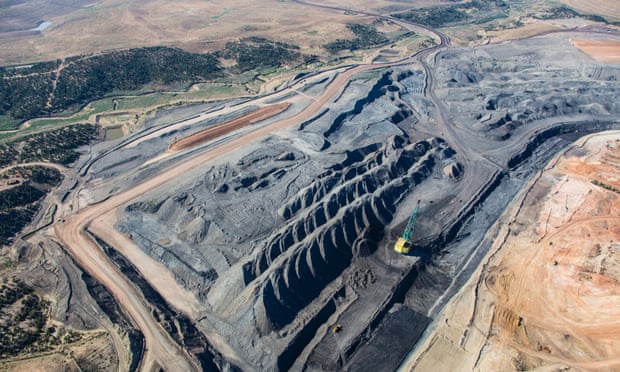
- In 1967, the Peabody coal company leased land from Navajo and Hopi reservations and archaeologists were brought in for the Black Mesa archaeological project. Anthropologist Kelley Hays Gilpin from the University of Northern Arizona has stated that human remains were destroyed by mining machinery. The remains that were excavated were stored at the University of Illinois and University of Nevada. The Guardian reports that the US Army Corps of Engineers found the collections storage at the University of Illinois in the 2000s to be “substandard” and had pest problems. See 2014.

Black Mesa Mine: Sam A Minkler
-In 1992, two houses were constructed by a private developer on reserve territory (established 1857) in Owen Sound where burial sites were located. The Chippewas of Nawash protested for a week until a settlement was reached, where the government removed the houses and the private developer was financially compensated.

-In 2001, at Staines Road in Toronto, the remains of 308 First Nations Remains were found during land development amongst a fill of soil and garbage bearing marks of heavy machinery. No charges were laid after a police investigation and they were reburied in the same location.

-In 2001, West Virginia University attempted to sell a parcel of land to Wal-Mart for development, but upon receiving letters of concern for the disruption of First Nations Burials, Wal-Mart left the sale. In 2003, the university sold it to CMC company that subsequently sold it to Gateway Town Centre for construction. Gateway had the area excavated but remains were handed over to the Seneca in New York instead of the Monongahela. The land itself was originally donated for the university to care for its archaeological record by a private citizen.

-In 2007, approximately 45 Native Hawaiian remains were found during development for a Whole Foods store in Hawaii. Attempts were made to re-designate the site as a cemetery, but appears to have failed

-In 2010, concerns were raised by Huron-Wendat officials when they discovered that an archaeological excavation was done without consultation on Teston Rd. in Vaughn, near a known ossuary that had been discovered and reburied in 2005. No remains appear to have been found, though the outline of a longhouse was discovered. At the time, no application had been submitted for development, though the archaeologist hired to assess the property noted "They didn't want to hold this up. They wanted to go fast. They didn't want to contact the aboriginal groups. That is clear. But I don't want to be the bad guy here. I did what my employer said to do." While the Huron-Wendat wanted the archaeologist to halt and notify them through proper channels, the land owner did not.  

-In 2011, archaeological excavations at the construction site for the Canadian Museum for Human Rights drew controversy and disagreements on the extent of the assessments made. It appears that no burial sites were present, though the First Nations site contained multiple occupations and large concentrations of artifacts. There is perhaps a persistent sense of irony of a national museum for human rights built on such land. This would be one of a number of controversies that the museum would have even up to its opening in 2014.

Canadian Museum for Human Rights Wikimedia Commons
-In 2014, the Peabody coal company sought to extend its mining permit from a lease to a lifetime permit on reserve land.

-In 2014, tensions rose with archaeologists when the Federated Indians of Graton Rancheria objected to excavation of a burial and village site under development for luxury homes. Instead, the remains were reburied, but the rest of the site was paved over by the developer in Larkspur California.
-Between 2000 and 2013, 7 assessments were done by 3 different archaeological firms at the Allandale Station lands, a property owned by Metrolinx and slated for development for Go Transit. It was found that as early as 1907, archaeologist Andrew Hunter had known that there had been a large ossuary and a series of smaller ossuaries at this location. Two of these assessments found human remains in the crawlspace of one of the buildings and adjacent to one of the buildings. The latter excavation recovered fragments of human remains partially obscured by cement. Unfortunately, part of the area was bulldozed due to issues with communication that existed throughout this time between parties, including a systemic failure to share prior archaeological assessments by the City of Barrie. News of this only broke after a whistle-blower contacted Archaeological Services Inc and the Aboriginal Peoples Television Network (APTN) has been the only news source to have dedicated much time in investigating this story.
  
Allandale Station Lands 2011: APTN 
The Role of the Media:
The above list was pieced together from small stories here and there that were often the only reported by a handful of people. The wording and framing of most these articles are also often problematic and invokes stereotypes of old, but they are often the little that is available to the public.  Without adequate reporting, accountability and awareness or public awareness can be scant.

Journalists for Human Rights, a Canadian organization dedicated to promoting and training on reporting overlooked stories, recently released a report, “Buried Voices” that found that first Nations news stories only represented 0.46 of all news stories from 171 Ontario news outlets in in 2013.

How this compares to reporting elsewhere in Canada or the United States is unclear, but it is doubtful that is much more, though the Liberal government's commitment to investigating the disappearance of missing First Nations women and the Standing Rock protests may have changed this somewhat (or become buried by the 2016 election). As such, it is key that the media is involved. However, the arrests of reporters on the scene at Standing Rock and the seizure of film is important to keep in mind.

Democracy Now's! viral report on the ground on the use of dogs by private security

Understanding the Black Box
There is much literature on many of the controversies with how First Nations remains have been treated, but there has been little on issues within the present system to understand how the checks and balances in the system can sometimes fail. Without understanding this, it is difficult to see beyond the black box where a site is bulldozed and everyone seems to be simply unable to do anything about it.

In the second part, I will try to provide some nuances to these topics with a discussion of the limitations found in the present system of managing archaeological sites, a few known strategies that have been used to manipulate the process and a fundamental question I have for museums and public education.

In the third part, I will reiterate some of the points made during our Ignite Session earlier this year on the state of collections today.