Showing posts with label Jennifer Lee. Show all posts

9 April 2018

I'D LIKE TO PROPOSE A TOAST

A MUSE BOUCHE

BY: JENNIFER LEE

Delectable readers, our time has come: this is my last Musings article. Thank you for joining me at the table this year as I explored food in and out of museums and libraries. As my colleagues and I leave the iSchool and get ready to move up to the grown-ups’ table, I’d like to propose a toast. While I have your attention, and while our champagne flutes, wine glasses, and teacups are raised, perhaps we can use this last column to ponder an area of food history that I’ve neglected a little: the history and politics of drink.

I hope that I’ve managed to convince you in this column that food is political. What we eat (and what we don’t eat), when and how we eat it, how we talk about it, and who gets invited to sit at the table are not random happenstance, but the end results of historical processes that have been working for decades, centuries, or even millennia. Of course, drinks are political for the same reasons. What we serve, where it comes from, and who is drinking are all worth thinking, talking, and museum-ing about, because they tell us a lot about ourselves.

What is a museum for, if not to tell us about ourselves?

W.D. Cooper's engraving of the Boston Tea Party demonstrates how political a drink can be. Source. 

 I propose three ideas to bring drink history into the museum in ways that matter now and will matter more and more in the future. Gentle reader, let us slake the public’s thirst for knowledge together.

1. Make your narratives inclusive

Everyone needs to drink something, and all kinds of people have been involved in making and serving drinks. We’ve already talked about the work that Teresa McCulla is doing at the Smithsonian to diversify the history of early American beer brewing, bringing to light the role of women, enslaved people, and immigrants. When we research and talk about members of historically disenfranchised groups and their work, we emphasise their agency and make the stories we tell more interesting, more diverse, and more true to historical fact.
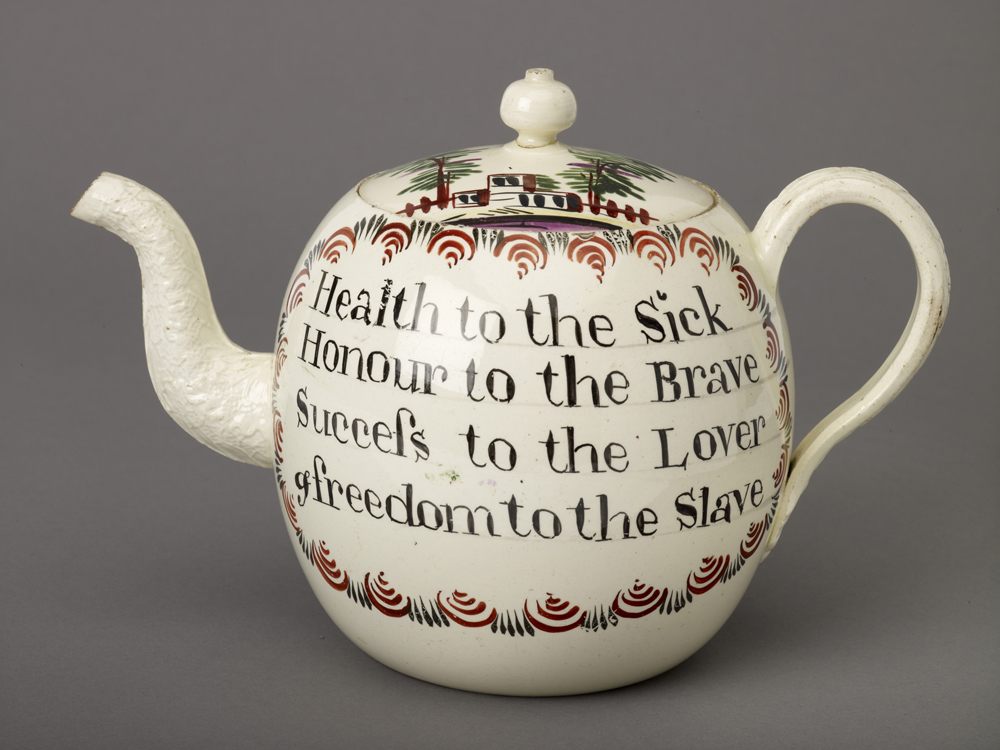
Abolition Teapot, by Josiah Wedgwood & Sons, c. 1760. Birmingham Museum and Art Gallery. Source. 

2. Find the politics in the everyday object

I’ve told everyone I know about this incredible article in Lapham’s Quarterly. Patricia A. Matthew writes about the late 18th-century consumer movement to boycott sugar from slave plantations. In the material record, this manifested as teapots and drinking utensils with snappy anti-slavery slogans, which allowed British women to organize around a political cause when they were not permitted to vote. Although we tend to think of teapots as the most domestic and innocuous of objects, their use speaks to complex issues of gender, colonialism, class, and globalization. Spin out the meanings of everyday objects, and you will often find that they have been more controversial than you think.

3. Make a political statement.

Indigenous water protectors protest the Dakota Access Pipeline at Standing Rock, ND; oil pipelines endanger drinking water and coastlines in addition to violating treaties. Source. 

It is not an accident that the communities without access to safe drinking water are disproportionately poor and non-white. In Canada, 107 First Nations reserves were affected by boil-water advisories at the end of last year. In the United States, citizens and water protectors are still fighting for access and regulation, and against fracking and pipelines, in communities like Standing Rock and Flint. Governments, regulatory bodies, and corporations have failed these communities. In a few decades we may all be in their position, with our access to fresh water jeopardized by government mismanagement and corporate interests.

Museums must work toward water justice – for disenfranchised communities now and for everyone in posterity. There are many ways to do this: through advocacy, ensuring that organizations obtain and sell water in ethical ways (Nestle’s water operation in Michigan, for example, violates a treaty which protects the land for Grand Traverse Band and Saginaw Chippewa tribal use), and, of course, through the interpretation of art and objects.

Ruth Cuthand's Don’t Breathe, Don’t Drink highlights the First Nations water crisis in Canada. 2016. Source.
The AGO’s acquisition and display of Ruth Cuthand’s arresting piece Don’t Breathe, Don’t Drink drew attention to the water crisis on reservations across Canada. Unless we resolve the inequalities that persist around access to safe drinking water, drawing attention to water justice and empowering visitors to act will only become more important in the future. While some necessary action, including divesting from fossil fuels and selling ethically-obtained water, represent big changes for museums, mindful acquisition and display of objects which speak to inequality is not only a possibility but a duty.

Cheers, santé, and prost, Musings readers! This is my final Musings column; it’s been a pleasure to connect with you and with my wonderful fellow columnists this year. Stay hungry, thirst after knowledge, and feed your souls. I’ll see you around the table.

16 March 2018

WHO'S IN THE KITCHEN? EXPLORING CANADA'S CULINARY CULTURE AT THE THOMAS FISHER RARE BOOK LIBRARY

A MUSE BOUCHE

BY: JENNIFER LEE

It's exhibition opening season, gentle readers! My colleagues Cassandra Curtis and Sadie MacDonald graciously answered my questions about their project, an upcoming exhibition at the Thomas Fisher Rare Book Library and a banquet of associated programming (both public and digital). Join us to talk about complementary interpretive vehicles, making exclusion visible, and a really, really cool cookbook. 

JL: Hello! Can you describe the project and your specific roles in it?

SM: Our exhibition is entitled Mixed Messages: Making and Shaping Culinary Culture in Canada. We explore Canadian culinary texts, objects, and ephemera with a focus on the individuals and communities who participated in and influenced - or were excluded from - that wider culinary culture.

Image used with permission of Rogers Media Inc., All Rights Reserved.
Cassandra and I are responsible for curating an interactive exhibition in the MacLean Hunter room, the lower gallery/classroom space of the Thomas Fisher. We are also preparing a public program connected to the exhibition at Fort York for Doors Open Toronto 2018.
Officially, Cassandra is in charge of all digital content (such as our exhibition blog, which Cassandra built on Omeka and coordinated content for) and I am coordinating physical content (I researched the culinary print material in the Fisher), but we basically have been working on everything together and jumping in to support each other when needed. As curators we have been working under the direction of Irina Mihalache, Nathalie Cook, and Elizabeth Ridolfo, who are curating the upper gallery space.

Our external partners are the programming team at Fort York. We have been working closely with Bridget Wranich and Jocelyn Kent to develop programming for Doors Open Toronto. 

JL: This is a multifaceted project, using digital content and public programming alongside more traditional exhibition models. How have you found the process of working with so many different interpretive vehicles? How does each enhance the exhibition as a whole?

SM: It has been a bit of a learning curve working with these multiple project components (before this project, neither of us had extensive experience with programming, for example), but Cassandra and I have both been really enjoying the process so far.

Each component - digital, programming, and traditional - has unique qualities that add to the exhibition. For example, this an exhibition that is all about food and cooking, but obviously we can’t have any of that take place in a rare book library space! This is why the Doors Open public program is so valuable; it gives us an opportunity to actively participate in the culinary culture explored in this exhibition, and invite others to do so as well. We will be serving food based on recipes in the exhibition at this event.

A bottle of Crosse and Blackwell curry powder, estimated to be from the Edwardian period. On loan to the Thomas Fisher Rare Book Library from the Collection of Mary Williamson. Photo courtesy of Sadie MacDonald.

The digital content provides an additional way to share the themes and stories of this exhibition with our audiences. There will be an iPad in the gallery that visitors can use to explore culinary texts - not all of which will be explored in detail in the physical gallery displays. The exhibition blog also adds a personal, “behind the scenes” touch to our exhibition, as it is a way for those involved in curating the exhibition to share their experiences bringing the project together.

The digital, programming, and traditional aspects all play into each other and reference each other, but each adds something special to the exhibition using the unique qualities provided by that medium.

CC: It really has been very valuable how multifaceted this project has been for us. I never would have chosen solely a public programming project but I've found it surprisingly fun and engaging to put together!

JL: You mentioned that the exhibition discusses individuals and communities who were excluded from culinary culture, not just those who were visible. It can be difficult to tell these stories when marginalization and erasure affect the material available to us. Has this been an issue for you?


CC: Interesting question! Like a lot of collections, what's absent is what stands out sometimes when it comes to marginalized communities. We've been trying to find a constructive way to talk about the fact that so many of these recipes reference ingredients from these communities without giving them any credit. Then there are some opposite examples too, where a surprising amount of credit is given.

SM: Yes, there is more material out there than one might anticipate. Dr Mihalache and Liz Ridolfo will be discussing Indigenous community cookbooks in the upstairs gallery, for example. And there is one fascinating cookbook, a “crowd-sourced” recipe collection of “Canadian Favourites” organized by the Co-operative Commonwealth Federation (a forerunner party to the NDP) in the 1940s. This book includes a wide variety of recipes from many cultures present in Canada, including Indigenous and immigrant cultures, and more importantly, credits those cultures and the individual who provided each recipe.

However, this is something of an exception. A lot of the cookbooks we look at fail to credit the original cultures, or superficially or erroneously make reference to the recipe’s cultural context (for example, the trend of cookbooks referring to recipes with pineapple in them as “Hawaiian”).

So that in itself provides a way to open this conversation about marginalization - by talking about the gaps and oversights themselves and looking at what they tell us.

Canadian Favourites: CCF Cookbook. Ottawa: CCF National Council, 1947. Collection of the Thomas Fisher Rare Book Library.
JL: Is there an object or story that you've found particularly meaningful or delightful?

CC: For myself I've most enjoyed thinking about these cookbooks in the context of the real women who used them and how much they were asked to do. One of the angles we're looking at this from is the resourcefulness that was demanded of women in terms of domestic work, from angles such as rationing and technology. The feminist in me has been really enjoying doing research about women and domesticity! 

SM: I already mentioned the CCF cookbook, and I think that’s my favourite object because of how surprising it is in the context of this exhibition. While many cookbooks from our period of study (1860-1960) appropriate recipes and fail to credit their cultures of origin, that isn’t the case with this cookbook. There are a few Indigenous recipes provided by the Fisher River Reserve in Manitoba, for example - and they are given credit for it. Recipes from immigrant communities are also credited, and the names of the dish in their original languages are often given as well. It’s a very multicultural cookbook - you can find Chinese and Russian recipes on the same page! Reading this cookbook, which was produced in a political context, one gets the sense that it is attempting to speak to the multicultural make-up of 20th-century Canada.

JL: I'm so excited to see this woke proto-NDP cookbook, I can't even tell you.


Mixed Messages: Making and Shaping Culinary Culture in Canada will open on May 21st at the Thomas Fisher Rare Book Library and run until August 31st. The Doors Open event will take place on May 26th and 27th at Fort York. You can find more information about the exhibition here and read blog posts from Sadie, Cassandra, and other project team members at the exhibition blog.

12 February 2018

UNLOCKING THE DINING ROOM AT THE METROPOLITAN MUSEUM OF ART

A MUSE BOUCHE

BY: JENNIFER LEE

The Dining Room at the Metropolitan Museum of Art, formerly the Members Dining Room, opened to the public for the first time in mid-2017. If you were not aware that the Met had a members-only dining room, then you are not alone: it was notoriously well-hidden, requiring visitors to navigate several extensive galleries on the ground floor and take an elevator from the European Sculpture Galleries to the fourth floor. Members who successfully completed this odyssey through world art were treated to a meal in a quiet dining room whose huge glass windows overlook Central Park.

The restaurant, rechristened the Dining Room at the Met, will now take your money whether you have a membership or not, from 12-2:30 on weekdays, on Friday and Saturday nights, and for Sunday brunch. By all accounts, opening up the restaurant and the resulting press has livened up the dining room considerably.

Was it ridiculous for a twenty-first century public institution to maintain a separate restaurant for its members? Arguably, yes, so opening the restaurant might be taken as more pragmatic than political: a statement for economics, not access. But what’s changed since the restaurant’s inception in 1991 to make a members’ dining room untenable, and what does this move say about the Met and the way we think about museum visitors?

Grilled octopus from the Dining Room menu, now available to any visitor with $21 (plus tax and tip) and a blazer. Source. 
This development comes at an interesting time in the Met’s history; it’s been dogged by deficits as it undergoes a sea change in institutional culture, and recently announced in a spectacularly unpopular move that it would introduce mandatory admissions fees for out-of-town visitors. Previously, admission to the museum was pay-what-you-wish at the door: anyone willing to stand in line could enjoy the Met at whatever price point they felt was appropriate.

It’s important to read the existence of the Members’ Dining Room in this context. Providing a service limited to members only is a good way to convince people to pay for membership when they know that they can get in for free. (Annual membership to the museum currently starts at $100 USD, more or less on par with institutions like the ROM or the AGO but higher than other New York institutions such as the Whitney, MoMA, or the Guggenheim, which all charge for admission.) 

The few other major institutions that maintain exclusive food and drink facilities for members – the British Museum and the V&A among them – work on a free-admission model and are crowded with visitors, so offering a quiet place to sit can help to justify buying a membership to a nominally-free museum. The Met, indeed, continues to maintain a member’s lounge and rooftop bar. However, ending a perk which was underused even by members seems like a natural move for a museum which struggles to stay both relevant and solvent.


The Dining Room at the Met. Does the stunning view save the restaurant’s otherwise humdrum décor? Source. 

The Dining Room is the only one of the Met’s dining options with a designated dress code (smart casual), and the most expensive by far. Brunch, available through a prix fixe menu only, will run you $55, and dinner for two could easily cost several hundred. This is not, of course, astronomical for a meal in New York, but it does raise the question: is this restaurant really so much more accessible than before? How many people are going to eat here who would be unable to afford a museum membership?

Perhaps it’s the optics of exclusivity, rather than the economics, which makes for inaccessibility in this case. The democratic rhetoric of the twenty-first century is that museums are there for everyone to enjoy, and the more exclusive the perks available to – let’s be honest – rich people, the more uneasy we feel about them. This is a problem for institutions which are trying to balance wide public accessibility with the feeling of exclusivity and belonging that drives membership sales.

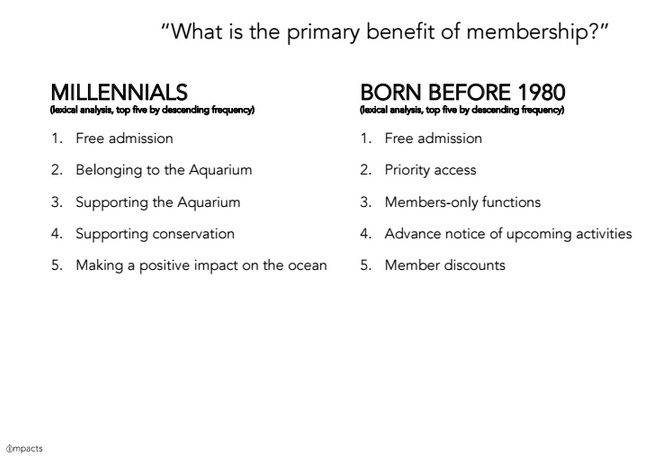
Millennials, in particular, invest in non-profit membership for completely different reasons to the generations before us: we’re interested in seeing the impact of our money and supporting a cause, while those born before 1980 want VIP treatment.

The primary benefits of aquarium membership, according to millennials and non-millennials. Source.

So opening up the Dining Room makes a statement that this museum is, in fact, for us; it recognizes that young audiences want a different experience at the museum than their parents and grandparents, and that it's possible to love and support a museum without investing in membership. 


Time will tell whether young patrons take to the restaurant, although I suspect that the museum might need to consider a gentle redesign if it wants to attract an Instagram-happy crowd. The Dining Room’s décor is fairly underwhelming: beige walls, beige carpet and rather dowdy wall sconces make it feel more like a mid-1990s hotel lobby, or the Scarborough dim sum restaurants of my youth, than an exclusive Manhattan hotspot. Like an astonishing number of museum restaurants, it is devoid of the very thing patrons have come to see, i.e. art. If it can find the money, the Met might want to take a leaf from the books of art museums like the Guggenheim, the Centre Pompidou, or the new gallery on the block, the National Gallery of Singapore, all of which boast restaurants which are attractions in their own right. 


National Kitchen by Violet Oon, a ridiculously beautiful restaurant serving Singaporean favourites at the National Gallery of Singapore. I mean, can you even. Source.
While older patrons may be content with beige carpet and a good view, the combination of good food and beautiful surroundings are especially important to the 20- and 30-somethings that museums are desperately trying to attract. People visit museums to be surrounded by beauty, and also to take pictures and put them on social media so that other people know how cultured they are, and they visit high-end restaurants for the same reasons. The Met has yet to catch on, but at least they've got good natural light. 

15 January 2018

ROOTS: SEED SAVING, COMMUNITY, AND HERITAGE

A MUSE BOUCHE

BY: JENNIFER LEE

Flowers and fruit are only the beginning.
In the seed lies the life and the future.

- Marion Zimmer Bradley

Even the earliest of heritage professionals recognized the importance of collecting plant material. Hans Sloane’s collection, which became the foundational collection of the British Museum, included plant cuttings from his travels - now held in the Natural History Museum, London. Non-museum collections also collect and store plants: seed banks like the Millennium Seed Bank and Svalbard Global Seed Trust act as repositories for millions of seeds, protecting Earth’s biodiversity in the face of species loss and climate change. In a bleak post-apocalyptic future, we may need to call upon seed banks to repopulate plant species lost to climate change and disease. 

The Svalbard Global Seed Trust in Spitsbergen, Norway, has a storage capacity of 4.5 million samples. Source.

If this sounds somewhat anxiety-producing, fear not; seed saving isn’t just for doomsday preppers and biologists. Seeds are more than containers for plant DNA: they represent rich cultural and personal histories, and the possibility of stewardship, partnership, and reconciliation.

Global capitalism, in the form of huge farms breeding fruit and vegetables designed to travel long distances and last on the shelf, has eliminated thousands of plant varieties over the last century. We’ve moved away from seasonal consumption and diverse native varieties and toward imported foods and privately-patented seed varieties. In 1903, there were more than 500 varieties of cabbage in North America; eighty years later, there were 28. These varieties are often patented by large corporations, depend on pesticides, and are susceptible to disease and pest damage. It’s not unusual to hear news reports that imported foods Western consumers take for granted, like coffee, bananas, chocolate, and peanuts, may be extinct within decades due to climate change.

This flattening of our once-diverse food and plant cultures has a cultural toll as well as an ecological one. We stand to lose our understanding of where and how our food is grown, and our agency over our own health and consumption. Indigenous peoples, disconnected from their traditional territories, agriculture practices, and foodways by colonial reservation and residential school systems, are particularly vulnerable to the loss of their cultural knowledge and health.

Heirloom vegetables like this Glass Gem corn (available from Native Seeds/SEARCH) have been endangered by large-scale operations and imported varieties. Source. 

This is where seed saving comes in.

Individual seed savers and seed saving organizations are working to preserve, grow, and distribute native plant varieties. This can be itself a form of intangible cultural heritage. In some Indigenous nations, seed keepers traditionally safeguarded seeds, shared them with others, and passed heirloom varietals down to family members. For seed keepers, growing and keeping seeds strengthens connections to their cultures and ancestors. (Indigenous seed saving initiatives include plants for medicinal and ritual purposes as well as food.) Terrylynn Brant, a Haudenosaunee seed keeper, told the CBC, "There's so many foods that we have and enjoy that make us strong emotionally, physically, mentally, spiritually, that we couldn't continue to exist as Haudenosaunee people if we didn't continue to eat the foods of our ancestors."

It can also be a way to Indigenize health education. Dream of Wild Health, a non-profit seed saving organization in Minnesota, aims to recover “knowledge of and access to healthy Indigenous foods, medicine, and lifeways”, working through a community garden, public demonstrations and classes, and an Indigenous foodshare. A cornerstone program hosts a summer camp for Native American youth which incorporates organic farming, health, and traditional knowledge.

Youth gardening at the Dream of Wild Health farm. Source. 

It can also be a way to bridge divides, start conversations, and form working relationships. The CMU farm at Canadian Mennonite University (Winnipeg, MB) occupies a former Métis river lot. In 2015, CMU farm workers collaborated with Métis seed keeper Caroline Chartrand and the local Métis community in order to grow squash seeds cultivated by gardeners from the Miami nation in Indiana. Collaborative projects like this one open up space for settler-Indigenous dialogue over the land on which food is grown and create partnerships while saving vegetable varietals and Indigenous history.

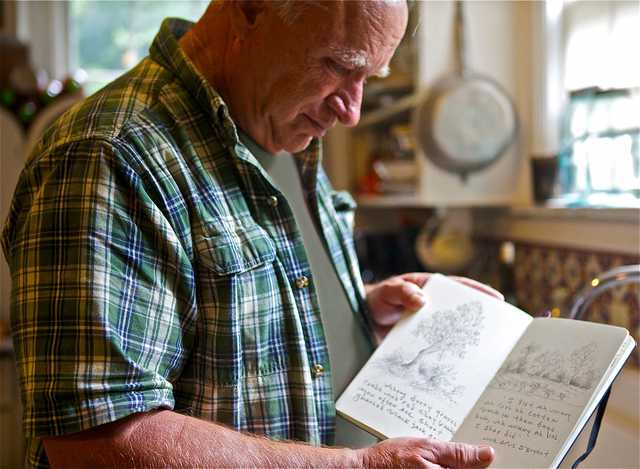
Other communities are also making use of seed saving to preserve their heritage alongside their vegetables. The seed saver John Coykendall, who collects heirloom seeds in Appalachia, keeps details journals of his collecting expeditions, which he calls ‘memory banking’. Like a collections database, his notes record valuable contextual and historical information.

John Coykendall with a 'memory bank', a notebook used to record cultural memories and contextual information in his search for heirloom seeds. Source. 

“A little bit of ancestral history … Where were you living? Where did this seed come from? Did it come from your grandmother or grandfather? Was it brought here from somewhere else? How do you grow it? How was it cooked? ... If someone doesn’t record it, put it down, it is going to be lost for all time. That goes for the seeds. This is the living part of it. Living heritage. Our agricultural heritage.”

While global seed banks work to preserve our biodiversity and health at a macro scale, community and individual projects can work at the micro level, protecting cultural heritage and public health on a personal level. Many libraries (including our own at the iSchool!) house seed libraries – but given their potential to start conversations around culture, food security, health, and heritage, they might not be out of place at a museum either.

13 November 2017

A SPOONFUL OF SUGAR: EDIBLE ART HISTORY AT THE PORTLAND ART MUSEUM

A MUSE BOUCHE

BY: JENNIFER LEE

How far do the limits of interpretation stretch? In virtually every museum in the world, we see art, artifacts, and specimens interpreted into text to help the visitor understand and connect to them. Over time, and especially after the advent of digital media, interpretation has expanded; we can now expect multimedia interpretives like audio tours, videos, and apps in addition to the ubiquitous wall label. Most of these strategies are basically linguistic and visual, depending on words, images, and perhaps sounds to aid understanding.

Interpretation designed for visitors with disabilities might be experienced primarily through other senses; for example, reproductions of paintings which visitors can touch to understand the painter’s brushstrokes. These strategies also benefit visitors who can see: the more senses we can use to experience something, the better an understanding we can form.

Feeling Van Gogh, a touchable (and smellable) interpretive display designed for visitors with visual impairments, at the Van Gogh Museum, Amsterdam. Source. 

Our senses of scent and taste, however, are underused in museum interpretation, often for perfectly good reasons. There are conservation issues involved in bringing food into museum spaces, and many visitors cannot or would prefer not to experience strong, evocative smells in the gallery. For the adventurous, though, food-as-interpretation might be the next frontier of museum experience.

Jared Goodman interprets art into ice cream sundaes as the Culinary Artist in Residence at the Portland Art Museum in Portland, Oregon, where he designs and hosts a public programming initiative titled ‘Edible Art History’. The residency grew out of the Morgan Street Theatre, the ‘dessert theatre’ ice cream pop-up he runs out of his home. At Morgan Street Theatre events, guests experience ice cream and storytelling at communal tables; the intention is to foster social connection and conversation. The menus are chosen with intent: a course at Goodman’s Dr. Seuss-themed ice cream social drew attention to foods endangered by climate change like pecans, bananas, and chocolate. His yearly Passover seder re-imagines the symbolic foods of the traditional seder as sundaes.

Goodman carried this format over to the Edible Art History programming at the Portland Art Museum. Previously, themes have included A Taste of American Art, A Taste of the 1970s, and 20th Century Abstraction. For each event, Goodman selects three pieces in the museum’s collection and creates an ice cream sundae based on each one. (The sundae form, he explains, is well-suited for the job because it allows for a combination of flavours and textures). The choice of flavours is based on the pieces’ “aesthetic, history, and social context”. At the event, Goodman and visitors are joined in conversation by a museum curator.
Left: City Perspectives (1932) by Raymond Johnson, Portland Art Museum. Right, Jared Goodman's interpretation, a sundae composed of passion fruit ice cream, salted brownie, olive oil, and raspberry shrub. Source.

The interpretations aren’t straightforward visual recreations of each work into edible form, but are inspired by single notes: an element of the work’s history, or a feeling it evokes, might determine the flavour or texture of a sundae. An ingredient local to the setting of a painting, or popular at the time of its creation, might figure into the recipe. Like label writing, tour planning, or any other kind of interpretation, this interpretive strategy must be selective: which aspects of the piece are most interesting or important? Too much information, and you risk overwhelming the visitor; too little, and they’ll walk away without an understanding of the piece.

It’s difficult to get a full sense of Goodman’s interpretive process from the limited information abut the Edible Art History program online (to my knowledge, there are no reviews available, so many of the ice cream/art pairings remain tantalizingly unavailable), but it seems to be grounded in the same principles as most other interpretation: research, critical thought, and a desire to make art personal to the visitor. In a feature by Oregon Public Broadcasting, he examines Helen Frankenthaler’s painting Spaced-Out Orbit. “So how do you get from this to ice cream? Well, the thing that I’ve been thinking about most is this idea of restraint and this idea of intention,” he explains. 

That’s a complex idea for any interpretation to express, let alone in the medium of cream and sugar. I’m struck by the subject matter of previous Edible Art History events: 1970s art and abstraction could be inaccessible and off-putting to visitors without a grounding in art history, but a three-course ice cream tasting probably makes them more palatable.

Helen Frankenthaler, Spaced Out Orbit (1973). Acrylic on canvas. Portland Art Museum. Source.

It’s easy to imagine this idea – local man makes art into ice cream! – as a gimmick designed purely to attract visitors and media attention, where interpretive practice is sacrificed for feel-good, Instagrammable novelty. I’ve suspended my cynicism in this case (besides, this man has my dream job). Goodman and his surprisingly complex sundaes evoke Tilden’s fifth principle of interpretation: “Interpretation is an art, which combines many arts…” When rigorously and thoughtfully applied, the culinary arts can be as provocative and revelatory as in-person or written interpretation, if not more so.

Perhaps, to paraphrase the famous maxim, writing about making ice cream about art is like dancing about architecture, but I put it to you that an interpretive dance about architecture would be amazing, and I have similarly warm feelings about responsible ice-cream based interpretation.

16 October 2017

THE SMITHSONIAN REALLY WANTS YOU TO THINK ABOUT FOOD

A MUSE BOUCHE

BY: JENNIFER LEE

How much time do you spend thinking about your food? The everyday business of shopping for, buying, cooking, and eating food consumes enough attention that we can miss opportunities to consider the cultural, economic, and historical processes that shape our diets. If you’ve ever wondered why nutrition labels look the way they do, or who decided that carbs were bad for you anyway - or if this is the first time you’ve pondered this - the Smithsonian’s National Museum of American History might be able to help you out.


Take a moment to stop and think about food. Source. 

From Oct 26 to 28, the Smithsonian Institution will host the third annual Smithsonian Food History Weekend under the theme ‘Many Flavors, One Nation’. The weekend brings researchers, culinary practitioners, writers, and the general public to the National Museum of American History to discuss and understand the history and role of food in America. The meat of the weekend lies in the moderated roundtable discussions (free to attend and streamed online) and Saturday’s Food History Festival, a day stuffed full of food-related public programming.

Commendably, the SI keeps its yearly weekends topical; last year’s theme was ‘Politics on Your Plate’, in keeping with the end of the 2016 election campaign season. Each Food History Weekend wrestles with big and often difficult questions and themes, including identity and the politics of farm labour, nutrition, and health. In 2016, participants and attendees asked, “Whose voices are influencing food policy today? What are the critical issues, and what role does democracy play in the future of food in America?” This year, the weekend will centre on stories of migration, cultural exchange, tradition, and identity. The theme suggests that the weekend will embrace pluralism and emphasize the diversity of American food history: the ways in which all of our foodways and traditions influence each other. A public discussion on culinary diplomacy (“A new soft power, culinary diplomacy has the ability to bridge conflicts in situations where traditional forms of diplomacy have been ineffective”) seems almost comically well-timed for the current political climate.

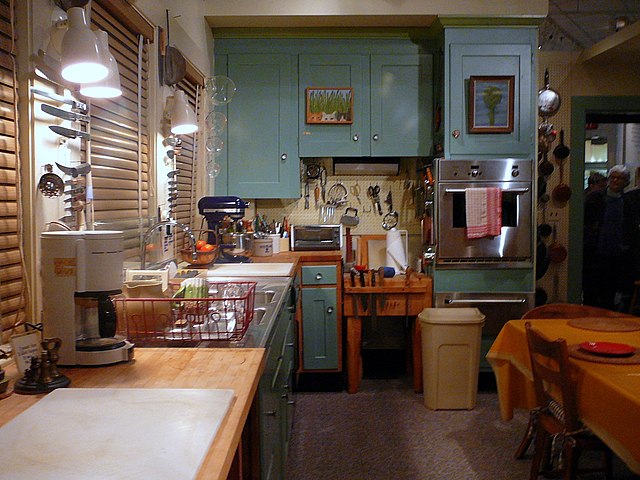
The Food History Weekend is only one pea in a pod full of food-history initiatives at the Smithsonian. The NMAH boasts a full slate (or perhaps a full plate?) of exhibitions and programming that examine why and how Americans eat the way they do. Most famously, the museum houses Julia Child’s kitchen, which was featured in her later cooking shows and relocated from her home in Massachusetts, complete with her signature copper pans.

Julia Child's iconic kitchen, preserved at the NMAH. Try to resist doing the Voice. Source. 

Child’s kitchen serves as the gateway to the ongoing exhibition FOOD: Transforming the American Table 1950-2000, which examines the changes wrought by innovation, industry, and cultural change on American diets. A demonstration kitchen hosts regular historically-inspired demos hosted by Smithsonian staff and guest chefs, and the museum runs programming outdoors in its gardens, including a recreated wartime Victory Garden. 

The Smithsonian’s commitment extends into the history of beverages. In January of this year, it hired Theresa McCulla as overseer of its American Brewing History Initiative (described by more than one media outlet as ‘the best job ever’). McCulla, a Harvard scholar whose background is in social history and food literacy, began by surveying the museum’s beer-related collections. She stated in January that she especially hopes to illuminate the overlooked role of women, immigrants, and enslaved people in the early history of American brewing.


Cheers to that. Source. 

Why this commitment to food history, and why does it matter?

Food history as demonstrated in museums (one of the most publicly accessible media through which people can learn about food) often takes the shape of demonstrating pre-industrial processes and recipes from the history of white settlement in North America: this is how pioneers made bread and brewed beer. Less frequently, museums and heritage sites may expose visitors to Indigenous foodways, usually also rooted in the distant past. These approaches are limited in time and scope: food history isn’t just about what white pioneers ate, but how all people have fed and continue to feed ourselves. What’s missing is a discussion of how we got from breadmaking in the eighteenth century to Yelp reviews of sushi in 2017, how culinary traditions have been adapted to meet the needs of the recent past and the present, and a critical look at how we think about food, including diet culture, food labour, and food literacy.

Food is both universal and highly specific. The ways in which we eat and think about eating are determined by and reflect our time, place, class, ethnicity, and gender. The universality of food as an experience makes it an ideal starting point for education: visitors already have a strong personal connection to the subject.

It’s loaded with meaning, and that means it’s well worth talking about everywhere in the public sphere, but especially in museums. At the same time, food can act as a gateway to topics we need to address more than ever: health, politics, labour, the environment, and racial and cultural difference. The Smithsonian’s food history programming recognizes that we are what we eat, and if what we eat isn’t ideal, that’s an interesting avenue to discuss, too. 

Can food history programming tell me why millennials are obsessed with pizza? Actually, yes, it probably can. Source. 

The Food History Weekend programming champions diversity, research, and critical thinking, which will be increasingly important as we face a changing intellectual landscape, in which there are facts, "facts", and Twitter. 

As stewards of material culture and historical record, heritage institutions are well-placed to help people think through historical processes and current events, and institutions like the NMAH have the resources to do this in a big way. The museum was the third most-visited Smithsonian institution last year, after the Air and Space and Natural History Museums, and welcomed 3.6 million visitors. Even without the impact of online content such as podcasts, blog posts, and the streamable Food History Weekend roundtables, that’s a pretty impressive reach, and it represents 3.6 million opportunities to get people thinking critically about their food.

If you’re interested in food history at the Smithsonian, I suggest checking out the NMAH blog's food history tag and the Food History Weekend page for videos of past roundtable events. If you're podcast-inclined, there's an interview with beer historian Teresa McCulla on the Smithsonian podcast, Sidedoor.

25 July 2017

TALKING TO ROBOTS ABOUT ART: A VISITOR RESEARCH ROUND-UP

RESEARCH COLUMN

BY: JENNIFER LEE

As summer internships wrap up and August approaches, you may already be itching to get back to class. Fear not: it’s not too early to start hitting the academic journals again! My own summer internship has involved some visitor research projects, and it’s fascinating to see what kinds of information we can miss about our publics until we think to ask. In the spirit of inquiry, here are some recent developments in visitor-centred research to get us thinking about museum users in the wild.

"There's one! Crikey." Source. 

Our first stop is Pittsburgh, where staff at the Carnegie Museums of Pittsburgh are currently developing a mobile experience (working title MUSE) which they describe as “a friendly, knowledgeable and charming chatbot extension”. MUSE would use native systems on users’ mobile phones, including cameras and SMS/messaging clients, as a platform to answer questions and make conversation about museum objects and facilities. The idea is reminiscent of Brooklyn Museum’s ASK system, but would use artificial intelligence rather than real-time human expertise.

This strategy removes a substantial obstacle to getting users to engage with museum apps, i.e. that very few living humans have ever intentionally downloaded a museum app. The Carnegie Museums found that 93% of the visitors they surveyed were carrying a mobile device, and virtually all of them had Facebook Messenger, iMessage, or both. If they can leverage those numbers to provide as frictionless an experience as possible, there’s reason to be optimistic about MUSE’s success. The recent popularity of SFMOMA’s ‘Send Me SFMOMA’ service, which texted artwork in response to user requests and emojis, proves that there’s quite a niche for whimsical digital experiences with museum collections.

Art on demand from the San Francisco Museum of Modern Art (Send Me SFMOMA). The future has arrived, and it is *heart eyes emoji*. Source. 

After an intensive visitor study, CMP have kindly made their visitor research data, methodology, and infographics available on GitHub, where they might be useful for other museums looking to develop similar programs (and they’re an interesting read for the inquisitive – the incidence of selfies will surprise you).

Next we move to New York and this month’s issue of the Journal of Museum Education (vol. 42, July 2017), centred on the theme ‘Does Museum Education Have a Canon?’ In the article “Well-Chosen Objects Support Well-Being for People with Dementia and Their Care Partners”, Carolyn Halpin Healey of Arts and Minds, a non-profit which works with people with dementia and their caregivers in New York museums, explains staff concerns in selecting artworks for these programs.

In keeping with the issue’s theme, much of the article’s focus is the tension between the canonical objects of a museum’s collection and the need for an accessible and enjoyable experience for participants, ultimately the more important factor. The most famous, visible, and ‘important’ objects in a museum are there for all visitors to enjoy; visitors with cognitive impairments are often unable to access them for physical reasons or because of fear and stigma associated with their impairments. While it’s important to push back against this stigma and increase access to the canon, there is also much to be gained from looking outside the canon and with specific groups’ histories and personalities in mind. 

An Arts and Minds program at the New York Historical Society. Successful programs for visitors with cognitive impairment have tangible benefits for all participants, including caregivers, but what makes a successful program, and how does the choice of art factor in? Source. 

My main takeaway came from the author’s testament to the importance of thoughtfulness: “While the “wrong” choice will certainly not cause harm, the “right” choice has the potential to catalyze self-exploration as well as provide the opportunity to reflect on the past, to empathically connect with others, and to imagine new ways of being as one ages, particularly in the face of life-altering cognitive impairment.” Even when the risks of curation are low, the payoffs may be substantial; all museum visitors deserve the best we can give them. The article draws usefully on existing education, visitor and neurological research, and is a neat example of how theory can be used to guide and bolster practice.

On our final stop, we move from understanding and shaping visitor experience to directly influencing visitor behaviour. In “Fostering customers’ pro-environmental behaviour at a museum” (Journal of Sustainable Tourism, 25.9), Heesup Han and Sunghyup Sean Hyun explore the factors which predict pro-environmental decisions like recycling, water conservation, waste reduction and transport choice while visitors are in the museum.

The authors identified five cognitive dimensions (environmental value, concern, awareness, knowledge, and self-efficacy, or the belief in one’s own ability to act toward goals) and two affective dimensions (the expectation of positive versus negative feelings after completing actions) which impact eco-friendly intentions and behaviour, as well as two additional factors, willingness to sacrifice and interconnectedness to nature. Using survey results from several South Korean museums, they produced a model which showed the relationships between all these factors in visitor decision-making.

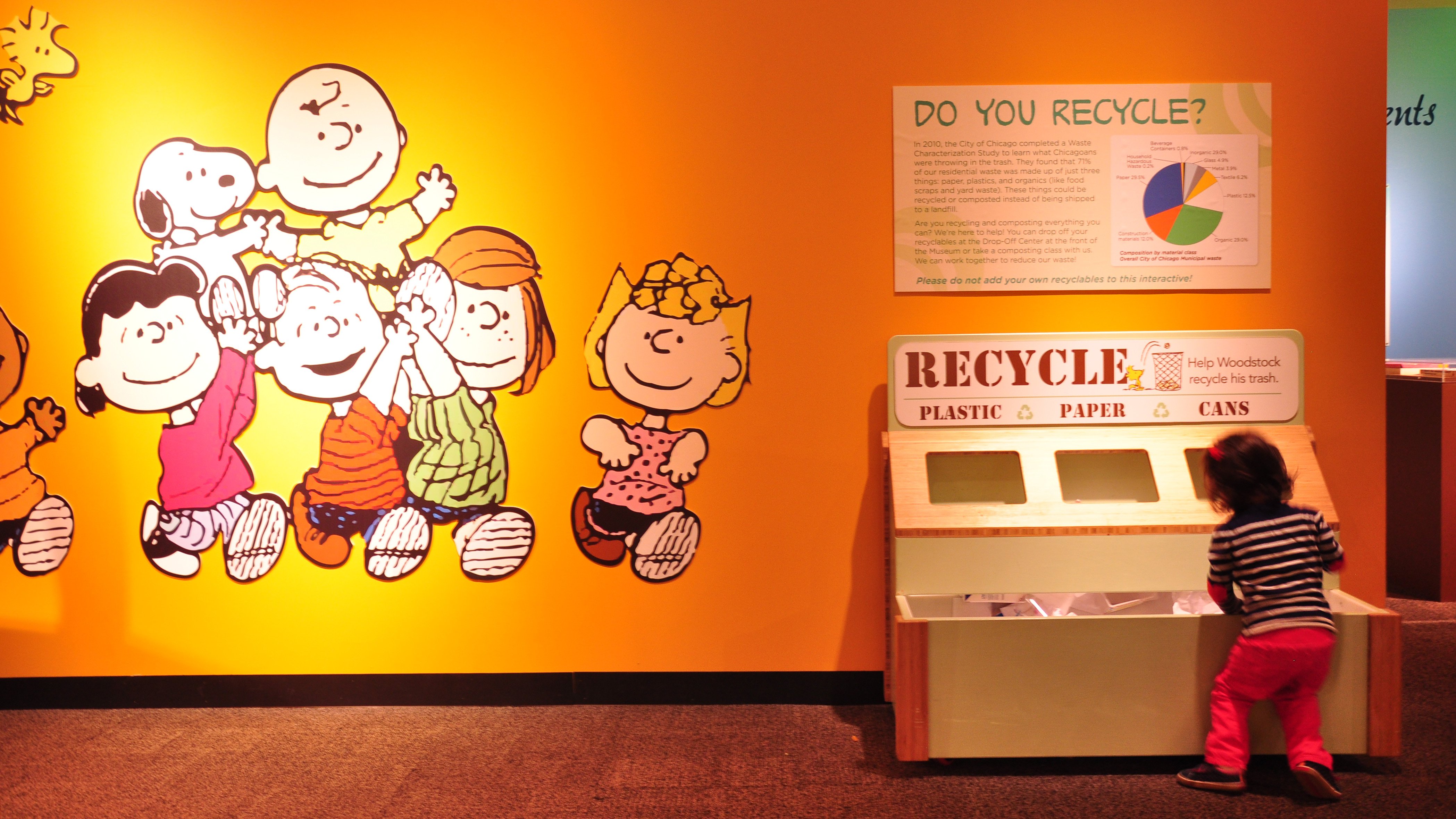
A young visitor acts on the expectation of positive affect at the Peggy Notebaert Nature Museum in Chicago, IL. Source. 

It turned out that the factor with the largest impact on pro-environmental behaviour was negative anticipated affect, or the expectation of feeling guilty, remorseful, and bad after they took action or failed to take action. The second most important factor was positive anticipated affect: visitors were motivated to recycle or reduce waste because they knew they would feel good afterward. The cognitive dimensions were also crucial. An effective strategy might be to let visitors know that recycling, creating less waste, and choosing friendly transport options is the decent and worthwhile thing to do, while making other choices has adverse consequences. As we have always secretly suspected, the best way to make sure visitors act ecologically in the museum might be with some gentle shaming. Perhaps someone could develop an ecologically-minded chatbot to remind them to recycle?


SUGGESTED READING 

Halpin-Healy, Carolyn. "Well-Chosen Objects Support Well-Being for People with Dementia and Their Care Partners." Journal of Museum Education 42, no. 3 (July 14, 2017): 224-35. doi:10.1080/10598650.2017.1342189.

Han, Heesup, and Sunghyup Sean Hyun. "Fostering customers' pro-environmental behavior at a museum." Journal of Sustainable Tourism 25, no. 9 (November 25, 2016): 1240-256. doi:10.1080/09669582.2016.1259318.

Inscho, Jeffrey. "No App Required: Toward a Utilitarian Museum Mobile Experience." The Studio. May 18, 2017. Accessed July 23, 2017. https://studio.carnegiemuseums.org/introducing-muse-20a6f11c7c35.

Inscho, Jeffrey. "Field Study: Benchmarking Visitor Behaviors and Mobile Device Usage in the Museum." The Studio. July 18, 2017. Accessed July 23, 2017. https://studio.carnegiemuseums.org/chatbot-field-study-91fcbb1d4875.

26 June 2017

"THE PEOPLE'S OWN REMEDY FOR STRESS, LONELINESS, AND ALIENATION": THE MUSEUM AS THIRD PLACE?

RESEARCH COLUMN

BY: JENNIFER LEE

“If we valued fraternity as much as independence, and democracy as much as free enterprise, our zoning codes would not enforce the social isolation that plagues our modern neighbourhoods, but would require some form of public gathering place every block or two.” (Ray Oldenburg, The Great Good Place)

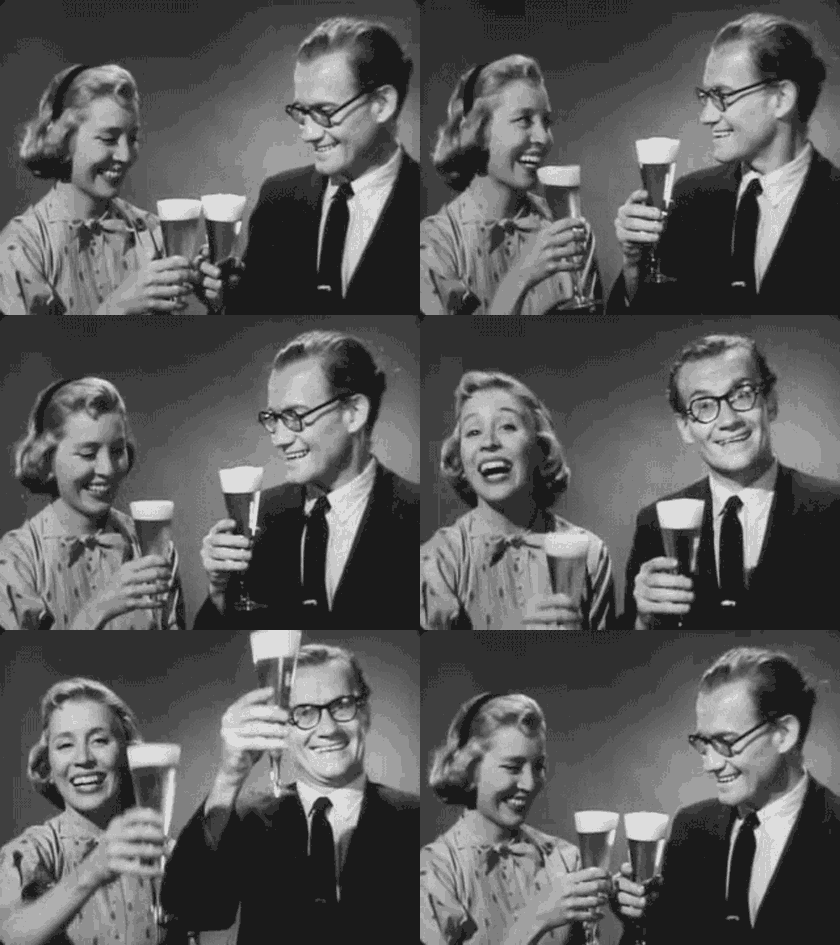
Think of the last museum you visited. Did everyone look comfortable, at ease? How quiet was it? Could you hear conversation? What about laughter? Did strangers strike up conversation with each other, or stick to their own groups? As financial and political pressures on the museum change, some museums are looking to become social ‘living rooms’ where visitors can meet and congregate. The phrase ‘third place’, taken from the vocabulary of urban planners and sociologists, is often thrown around in these discussions, conjuring up a picture of museums as shiny, Starbucks-like lounges full of happy millennials. Unsurprisingly, this is not a vision that everyone finds attractive. What do museums stand to gain – and lose – by pursuing the ideal of the third place? 

Millennials enjoy a relaxed third place. Laughter is an important element of social bonding. Source.

The sociologist Ray Oldenburg defined the concept of the third place (or third space) in his book The Great Good Place, published in 1989. The first place, he theorized, is home, where our personal lives play out; the second place is work or school, where we live our professional lives. The third place is neither: it’s the neutral 'watering holes' such as coffee shops, bars, barber shops, parks, and other spaces between work and home where we congregate. The most important features of the third space are that they are accessible spaces open to everyone, and that they allow for shared social experience and the breaking-down of social boundaries. They are convivial and free: a remedy "for stress, loneliness, and alienation"(40).

Robert Putnam’s Bowling Alone: The Collapse and Revival of American Community (published 2000) complements Oldenburg’s work, tracing Americans’ increasing disengagement from public life and community structures (such as political parties, charities, and parent-teacher organizations) throughout the late 20th century. Putnam found widespread decline in what he called ‘social capital’ – Americans’ personal social networks were smaller and their sense of mutual trust, respect, and altruism had eroded over time. He also warned, presciently, that “if participation in political deliberation declines – if fewer and fewer voices engage in democratic debate – our politics will become more shrill and less balanced” (342). Part of the problem, he theorized, was mass media: the more time we spend watching television, the less time we spend engaging with our communities. (Reading this book seventeen years later, I have to wonder what Putnam makes of that 21st-century institution, the Netflix binge.)

One way to combat the death of social capital, of course, is through the third place: if people are given neutral spaces to socialize and get to know each other, to work through their differences, it follows that trust and respect will increase, residents will feel they have a stake in their communities, and civic engagement will follow. This is the thinking that leads some museums like MOMA and the Worcester Art Museum to pursue third-place-ness, hoping to bolster a sense of community and engagement - and tempt some new visitors into the museum.

A blind-date 'conversation meal' between strangers at the Oxford Museum of Natural History. Source. 

But by Oldenburg’s criteria, many museums don’t qualify as third places: in the still, hushed atmosphere of the average art gallery or history museum, complete with security guards, visitors rarely feel like they can let down their guard enough to engage in the kind of convivial, free discussion Oldenburg describes. Although museum cafes and atriums might have a lighter atmosphere, high entry fees, program registration fees, and membership costs may also present a barrier to those who can’t afford to attend regularly. Unfortunately, the success of a third place depends on regulars who create a shared culture and welcome newcomers. Many people, for reasons of class, race, or social and educational background, simply don’t feel comfortable walking into a museum, let alone visiting one regularly as a social event. Creating a third-place atmosphere could mean rolling back entrance fees and relaxing or changing our expectations of visitor behaviour, altering the atmosphere of the museum.

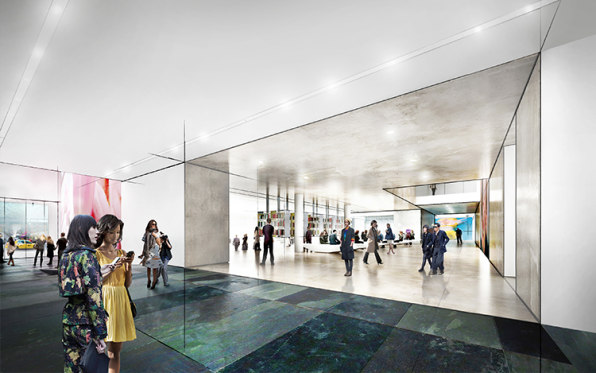
There’s also the problem of the art. When the Museum of Modern Art released their plans for an expansion in 2014, they were heavily criticized for the amount of room given to social and performance space, much of it accessible without paying an entrance fee. Vulture critic Jerry Saltz commented that the new space was designed “so people can look at other people looking at other people looking at people.” Surely the point of visiting a museum, the skeptics asked, was to look at the collections? In response, director Glenn Lowry defended the museum as a space of experience, reflection, and conversation. Creating a third place in the museum may contradict ideas (even among museum staff, and especially among visitors) of what a museum is and does: is it, as Saltz believes, primarily a space for people to look at art? Is it a community living room? Can it possibly be both?

Plan for the MOMA expansion by architectural firm Diller Scofidio + Renfro. Admittedly, there is a conspicuous lack of art in this art museum. Source. 

The truth, as usual, may lie somewhere in the middle. Museums certainly have a role to play in dialogue, engagement, and forming relationships – some particularly excellent programs rose in the wake of the U.S. election, like the National Civil Rights Museum's vow to engage in "difficult and uncomfortable" conversations with volunteers about prejudice and systemic inequality. As civic institutions, we can’t divorce ourselves from civic life and our communities. But we’re not Starbucks or a neighbourhood pub, and likely couldn’t be if we tried. As Nina Simon writes, “Museums are explicitly about something, and third places are about nothing in particular”. We may even do ourselves a disservice by competing with other public spaces as a watering hole rather than a repository of beauty and human knowledge (which is, after all, our great strength). Obviously, museums need to make themselves more accessible and encourage people outside of their traditional audience to visit – but in the interest of being a better museum rather than a third place.

Suggested Reading

Ferro, Shaunacy. “MOMA’s redesign won’t destroy the museum”. Co.Design. January 13, 2014. https://www.fastcodesign.com/3024679/momas-redesign-wont-destroy-the-museum

Freeman, Terri Lee. "Twentyseventeen." National Civil Rights Museum. http://www.civilrightsmuseum.org/news/posts/twentyseventeen

Oldenburg, Ray. 1991. ‘The Character of Third Places’. Reprinted in Common Ground? Readings and Reflections on Public Space, edited by Zachary P. Neal and Anthony M. Oren, 40-48. New York: Routledge.

The Project for Public Spaces. https://www.pps.org

Putnam, Robert. 2000. Bowling Alone: The Collapse and Revival of American Community. New York: Simon and Schuster.

Simon, Nina. 'The Great Good Place Book Discussion Part 1: Can Museums Be Third Places?' Museum 2.0. June 1, 2010. http://museumtwo.blogspot.ca/2010/06/great-good-place-book-discussion-part-1.html


29 May 2017

"WHAT'S WATER?": LOOKING BACK AT THE NEW MUSEOLOGY

RESEARCH COLUMN

BY: JENNIFER LEE

Welcome back to the Research Column! This summer, we’ll be taking a closer look at some of the critical theory that has influenced the museum field and continues to shape our ideas and conversations about museums.

If you’re reading this blog, there’s a non-zero chance you’ve heard of ‘New Museology’. There may even be a neglected copy of The New Museology (1988, ed. Vergo), purchased in a fit of pre-grad-school optimism, sitting on your bookshelf. (Guilty). So for my inaugural Musings column, I decided to take out my copy and get to grips with the New Museology, the Old Museology, and whatever differences lay between them.

On the cover, the Saxon god Thuner looks rather accusingly at students who don't do their theory reading. (Photo courtesy of Jennifer Lee)
New Museology is a school of thought which emphasizes reflexivity, accessibility, justice, and interdisciplinarity in museum practice. It emerged in the 1970s and flourished in the 1980s, along with the ecomuseum movement and community museology, and the general expansion and exploration of the definition of ‘museum’ as new types of museums and methods sprung up rapidly. After more than a decade of exploring the ideas of new museology, the Declaration of Quebec (‘Basic Principles of a New Museology’) was drafted at the First International Workshop on Ecomuseums and the New Museology in 1984, calling for the implementation of New Museology principles and the formation of an international federation of new museology. ICOM now has an affiliated organization, MINOM, which is dedicated to furthering and utilizing the ideas of New Museology.

The New Museology is also the title of a volume of nine essays edited by Peter Vergo, Reader in the History and Theory of Art at the University of Essex, and published in 1988. Several of his colleagues at the university, and professionals from London museums, contributed essays on topics ranging from historic theme parks to visitor studies in art galleries. (Of course, New Museology extends far beyond this book and into the work of other scholars like Eilean Hooper-Greenhill, Cheryl Meszaros, and Robert Sandell. I could write many blog posts about its reach and scope, but time and blog posts are both, sadly, finite).

The New Museology was a reaction against an ‘old museology’ which Vergo and his colleagues felt was unreflexive, uncritical, and dated, concerned with the conservation and display of objects above all other issues. New Museology theorists took a step back from the museum to examine it from the outside, asking why museums were the way they were, and how they could be made better. They also embraced new perspectives on museum work, writing on visitor studies and the role of the museum as popular entertainment. The Old Museology, they argued, was so concerned with curatorial practice and art history that it neglected to consider the visitor's perspective. This was the 1980s, and critical theory was heavily influenced by the works of scholars like Michel Foucault, Antonio Gramsci, and Pierre Bourdieu, so many of the essays explore the ideas of power and authority: how the museum positions itself as a cultural authority, and what might happen if it ceded that power and engaged the visitor in a collaborative relationship.

A critical response to a museum display - much in the spirit of the New Museology. Source.
The more I read, the more familiar the ideas and outlook of the nine essays collected in The New Museology felt. Looking for the influence of the New Museologists as a museum studies student in 2017, I remembered the joke about the fish who ask, “What’s water?”. It can be hard to appreciate the impact of these ideas precisely because we’re now swimming in them. Nearly thirty years after its publication, when museum studies students throw words like ‘authenticity’ and ‘reflexivity’ around the classroom with wild abandon every week, it's hard to imagine that ideas that seem obvious to us now (like the suggestion that art museums should cater to visitors without specialist art knowledge!) represented a departure from contemporary museum practice in 1988.

Source.
A few essays stood out to me as especially interesting. Philip Wright’s ‘The Quality of Visitor’s Experiences in Art Museums’ (chapter 7) is an argument for responsibly interpreting art, for providing visitors with historical and social context so they can make sense of what they see, and for being honest and transparent about the ways objects are acquired, ordered, and displayed. As well as providing concrete suggestions to improve practice, which now seem like common sense, the essay is also a fascinating glimpse at a time when most major museums simply didn’t consider visitor research or interpretive planning to be important.

Colin Sorenson’s ‘Theme Parks and Time Machines’ (chapter 4) examines museum practices that seem to allow visitors to 'travel in time', like historical theme parks and multimedia and film displays. There are predictable references to Disneyland and Beamish, but the essay is a lyrical examination of historical nostalgia and collection, ending in an imagined future in which reconstructed historical sites fill the landscape. Overall, the essays are eloquent, readable, often scathing in their criticism of contemporary curatorial practices, and for the most part, still relevant to the current museum landscape.

So do you need to read The New Museology? If you’ve read anything published about museums in the last 20 years, you’ve probably already encountered many of the ideas at the heart of this book. The New Museologists have definitely shaped our current thinking about museums. But it’s a worthwhile read if you want to know where we started from, and it made me question my own assumptions about museums. What will museologists of the next generation think about the practices and ideas that seem natural to us?

Sources:

Meyrand, P. 2015. 'The new museology proclaimed'. Museum International nos 261-264: 115-118.

MINOM-ICOM.

Vergo, Peter. 1989. The New Museology (ed. Vergo). Reaktion Books London.