Showing posts with label public programming. Show all posts

13 February 2020

A MUSEUM WITHOUT STUFF?: NON-COLLECTING MUSEUMS

Collections Corner | Jaime Meier 


It is safe to say that collections are a major part of museums and their adjacent institutions. While collections can serve as a cultural cornerstone of museums and galleries - defining their mission and values - there has been a unique departure in many contemporary art institutions. Many modern and contemporary art galleries have defined themselves as non-collecting institutions, meaning that they have no permanent collection. Contemporary art appears to find itself at uncommon intersection, it is deemed important for institutions to make available but not important enough to own. But, the issue is more complex than that.

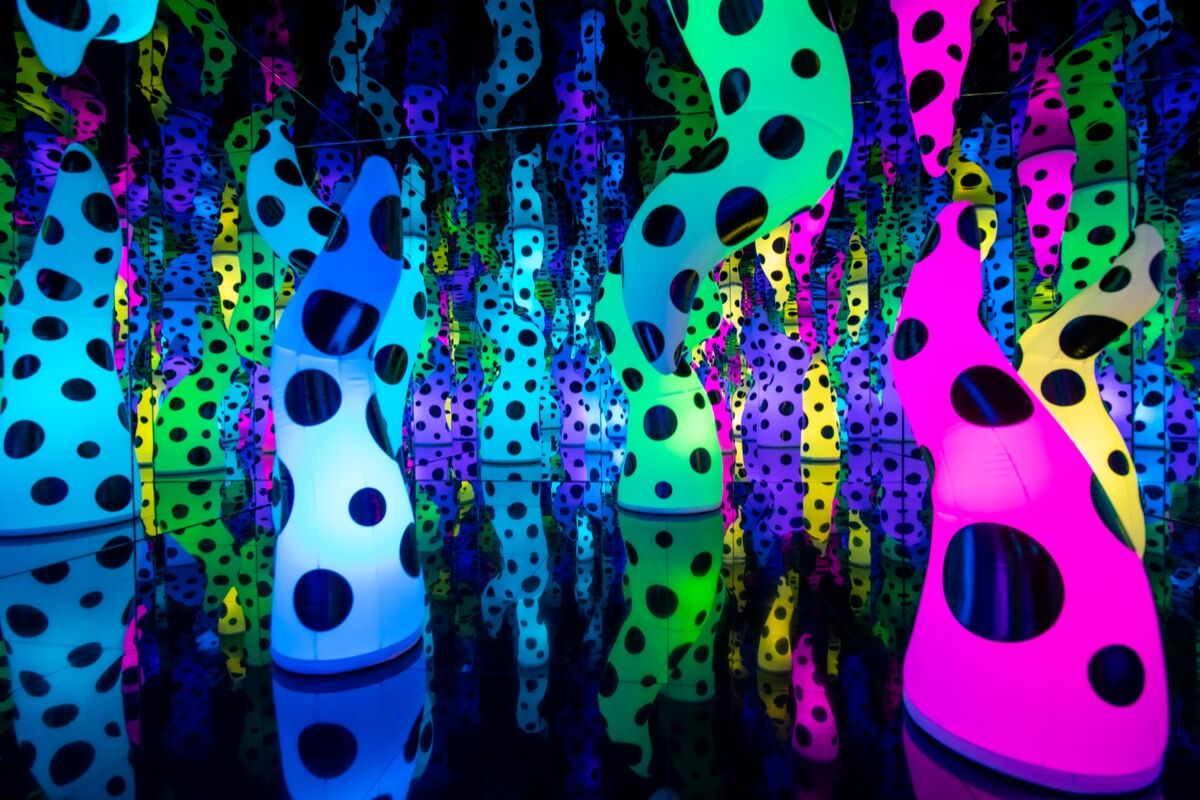
Yayoi Kusama's work is beautiful but if we focus on finding its specific meaning, it can be hard to decipher. (Source)
Contemporary art easily confounds and intimidates the public (myself included), it should be of some consolation that it also intimidates collectors. All of us have seen an abstract contemporary art form, whether it be a Warhol or Pollock, and know it has immense monetary value and yet the reason completely escapes us. Contemporary art can be experimental and strange, that deciding on the value can be nearly impossible. If an institutions invests in an artwork too early and risk never seeing the money pay off or wait too long and have the art become too expensive to purchase. The premise behind non-collecting for contemporary art emerged for these fears coupled with the desire to promote and raise awareness of challenging and evolving art practices.

With a non-collecting museum, ownership is de-centered as the foundation of the museum structure, allowing for cultural exchange to occur in other forms. Documentation fills the gap of collecting by recording visual or written information about the context, concept, and process of the art and exhibition. Instead of physically collecting and item, interaction and mediation is preserved. The lack of collections also means precious money is saved by not employing conservators and collections staff. Processes such as accessioning, deaccessioning, and repatriation become a non-issue. The lack of funds being spent on collections can be redirected into high quality public programming, outreach, and education.

Image result for powerplant toronto
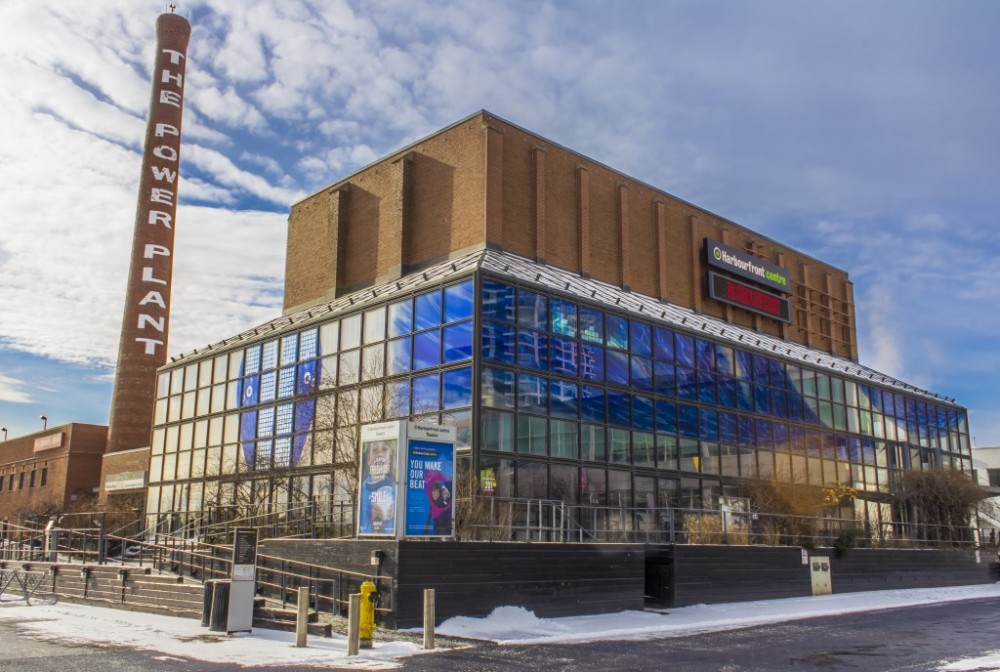
The Power Plant Contemporary Art Gallery, Toronto. (Source)
While there are many benefits  surrounding the collection of contemporary art, it brings up important concerns surrounding the livelihoods of artists. It is impossible to have a functional and thriving art community without providing monetary support to the artists. The Power Plant in Toronto has become a place, that despite its lack of collecting, provides a beneficial relation to artists. Their strategic plan for 2019-2022 outlines their mission to commission new works of art, therefore not collecting but still funding important projects. As a part of their 2018-2019 programming schedule, they also provided portfolio nights and other events for their artist members.

Non-collecting museums and institutions are almost exclusively found in the contemporary art sector. While this allows for more money to go into public engagement and projects, money is not always being used to directly support artists. I am curious to see if this model will continue and the longterm role it will play in the expansion or depreciation of contemporary art.

16 March 2018

WHO'S IN THE KITCHEN? EXPLORING CANADA'S CULINARY CULTURE AT THE THOMAS FISHER RARE BOOK LIBRARY

A MUSE BOUCHE

BY: JENNIFER LEE

It's exhibition opening season, gentle readers! My colleagues Cassandra Curtis and Sadie MacDonald graciously answered my questions about their project, an upcoming exhibition at the Thomas Fisher Rare Book Library and a banquet of associated programming (both public and digital). Join us to talk about complementary interpretive vehicles, making exclusion visible, and a really, really cool cookbook. 

JL: Hello! Can you describe the project and your specific roles in it?

SM: Our exhibition is entitled Mixed Messages: Making and Shaping Culinary Culture in Canada. We explore Canadian culinary texts, objects, and ephemera with a focus on the individuals and communities who participated in and influenced - or were excluded from - that wider culinary culture.

Image used with permission of Rogers Media Inc., All Rights Reserved.
Cassandra and I are responsible for curating an interactive exhibition in the MacLean Hunter room, the lower gallery/classroom space of the Thomas Fisher. We are also preparing a public program connected to the exhibition at Fort York for Doors Open Toronto 2018.
Officially, Cassandra is in charge of all digital content (such as our exhibition blog, which Cassandra built on Omeka and coordinated content for) and I am coordinating physical content (I researched the culinary print material in the Fisher), but we basically have been working on everything together and jumping in to support each other when needed. As curators we have been working under the direction of Irina Mihalache, Nathalie Cook, and Elizabeth Ridolfo, who are curating the upper gallery space.

Our external partners are the programming team at Fort York. We have been working closely with Bridget Wranich and Jocelyn Kent to develop programming for Doors Open Toronto. 

JL: This is a multifaceted project, using digital content and public programming alongside more traditional exhibition models. How have you found the process of working with so many different interpretive vehicles? How does each enhance the exhibition as a whole?

SM: It has been a bit of a learning curve working with these multiple project components (before this project, neither of us had extensive experience with programming, for example), but Cassandra and I have both been really enjoying the process so far.

Each component - digital, programming, and traditional - has unique qualities that add to the exhibition. For example, this an exhibition that is all about food and cooking, but obviously we can’t have any of that take place in a rare book library space! This is why the Doors Open public program is so valuable; it gives us an opportunity to actively participate in the culinary culture explored in this exhibition, and invite others to do so as well. We will be serving food based on recipes in the exhibition at this event.

A bottle of Crosse and Blackwell curry powder, estimated to be from the Edwardian period. On loan to the Thomas Fisher Rare Book Library from the Collection of Mary Williamson. Photo courtesy of Sadie MacDonald.

The digital content provides an additional way to share the themes and stories of this exhibition with our audiences. There will be an iPad in the gallery that visitors can use to explore culinary texts - not all of which will be explored in detail in the physical gallery displays. The exhibition blog also adds a personal, “behind the scenes” touch to our exhibition, as it is a way for those involved in curating the exhibition to share their experiences bringing the project together.

The digital, programming, and traditional aspects all play into each other and reference each other, but each adds something special to the exhibition using the unique qualities provided by that medium.

CC: It really has been very valuable how multifaceted this project has been for us. I never would have chosen solely a public programming project but I've found it surprisingly fun and engaging to put together!

JL: You mentioned that the exhibition discusses individuals and communities who were excluded from culinary culture, not just those who were visible. It can be difficult to tell these stories when marginalization and erasure affect the material available to us. Has this been an issue for you?


CC: Interesting question! Like a lot of collections, what's absent is what stands out sometimes when it comes to marginalized communities. We've been trying to find a constructive way to talk about the fact that so many of these recipes reference ingredients from these communities without giving them any credit. Then there are some opposite examples too, where a surprising amount of credit is given.

SM: Yes, there is more material out there than one might anticipate. Dr Mihalache and Liz Ridolfo will be discussing Indigenous community cookbooks in the upstairs gallery, for example. And there is one fascinating cookbook, a “crowd-sourced” recipe collection of “Canadian Favourites” organized by the Co-operative Commonwealth Federation (a forerunner party to the NDP) in the 1940s. This book includes a wide variety of recipes from many cultures present in Canada, including Indigenous and immigrant cultures, and more importantly, credits those cultures and the individual who provided each recipe.

However, this is something of an exception. A lot of the cookbooks we look at fail to credit the original cultures, or superficially or erroneously make reference to the recipe’s cultural context (for example, the trend of cookbooks referring to recipes with pineapple in them as “Hawaiian”).

So that in itself provides a way to open this conversation about marginalization - by talking about the gaps and oversights themselves and looking at what they tell us.

Canadian Favourites: CCF Cookbook. Ottawa: CCF National Council, 1947. Collection of the Thomas Fisher Rare Book Library.
JL: Is there an object or story that you've found particularly meaningful or delightful?

CC: For myself I've most enjoyed thinking about these cookbooks in the context of the real women who used them and how much they were asked to do. One of the angles we're looking at this from is the resourcefulness that was demanded of women in terms of domestic work, from angles such as rationing and technology. The feminist in me has been really enjoying doing research about women and domesticity! 

SM: I already mentioned the CCF cookbook, and I think that’s my favourite object because of how surprising it is in the context of this exhibition. While many cookbooks from our period of study (1860-1960) appropriate recipes and fail to credit their cultures of origin, that isn’t the case with this cookbook. There are a few Indigenous recipes provided by the Fisher River Reserve in Manitoba, for example - and they are given credit for it. Recipes from immigrant communities are also credited, and the names of the dish in their original languages are often given as well. It’s a very multicultural cookbook - you can find Chinese and Russian recipes on the same page! Reading this cookbook, which was produced in a political context, one gets the sense that it is attempting to speak to the multicultural make-up of 20th-century Canada.

JL: I'm so excited to see this woke proto-NDP cookbook, I can't even tell you.


Mixed Messages: Making and Shaping Culinary Culture in Canada will open on May 21st at the Thomas Fisher Rare Book Library and run until August 31st. The Doors Open event will take place on May 26th and 27th at Fort York. You can find more information about the exhibition here and read blog posts from Sadie, Cassandra, and other project team members at the exhibition blog.

16 October 2017

THE SMITHSONIAN REALLY WANTS YOU TO THINK ABOUT FOOD

A MUSE BOUCHE

BY: JENNIFER LEE

How much time do you spend thinking about your food? The everyday business of shopping for, buying, cooking, and eating food consumes enough attention that we can miss opportunities to consider the cultural, economic, and historical processes that shape our diets. If you’ve ever wondered why nutrition labels look the way they do, or who decided that carbs were bad for you anyway - or if this is the first time you’ve pondered this - the Smithsonian’s National Museum of American History might be able to help you out.


Take a moment to stop and think about food. Source. 

From Oct 26 to 28, the Smithsonian Institution will host the third annual Smithsonian Food History Weekend under the theme ‘Many Flavors, One Nation’. The weekend brings researchers, culinary practitioners, writers, and the general public to the National Museum of American History to discuss and understand the history and role of food in America. The meat of the weekend lies in the moderated roundtable discussions (free to attend and streamed online) and Saturday’s Food History Festival, a day stuffed full of food-related public programming.

Commendably, the SI keeps its yearly weekends topical; last year’s theme was ‘Politics on Your Plate’, in keeping with the end of the 2016 election campaign season. Each Food History Weekend wrestles with big and often difficult questions and themes, including identity and the politics of farm labour, nutrition, and health. In 2016, participants and attendees asked, “Whose voices are influencing food policy today? What are the critical issues, and what role does democracy play in the future of food in America?” This year, the weekend will centre on stories of migration, cultural exchange, tradition, and identity. The theme suggests that the weekend will embrace pluralism and emphasize the diversity of American food history: the ways in which all of our foodways and traditions influence each other. A public discussion on culinary diplomacy (“A new soft power, culinary diplomacy has the ability to bridge conflicts in situations where traditional forms of diplomacy have been ineffective”) seems almost comically well-timed for the current political climate.

The Food History Weekend is only one pea in a pod full of food-history initiatives at the Smithsonian. The NMAH boasts a full slate (or perhaps a full plate?) of exhibitions and programming that examine why and how Americans eat the way they do. Most famously, the museum houses Julia Child’s kitchen, which was featured in her later cooking shows and relocated from her home in Massachusetts, complete with her signature copper pans.
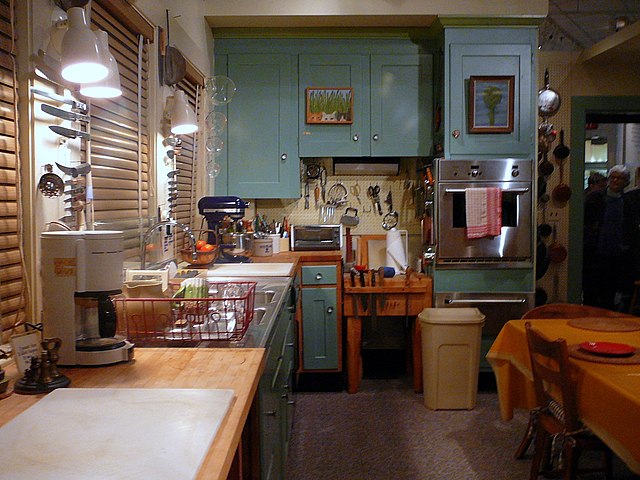
Julia Child's iconic kitchen, preserved at the NMAH. Try to resist doing the Voice. Source. 

Child’s kitchen serves as the gateway to the ongoing exhibition FOOD: Transforming the American Table 1950-2000, which examines the changes wrought by innovation, industry, and cultural change on American diets. A demonstration kitchen hosts regular historically-inspired demos hosted by Smithsonian staff and guest chefs, and the museum runs programming outdoors in its gardens, including a recreated wartime Victory Garden. 

The Smithsonian’s commitment extends into the history of beverages. In January of this year, it hired Theresa McCulla as overseer of its American Brewing History Initiative (described by more than one media outlet as ‘the best job ever’). McCulla, a Harvard scholar whose background is in social history and food literacy, began by surveying the museum’s beer-related collections. She stated in January that she especially hopes to illuminate the overlooked role of women, immigrants, and enslaved people in the early history of American brewing.


Cheers to that. Source. 

Why this commitment to food history, and why does it matter?

Food history as demonstrated in museums (one of the most publicly accessible media through which people can learn about food) often takes the shape of demonstrating pre-industrial processes and recipes from the history of white settlement in North America: this is how pioneers made bread and brewed beer. Less frequently, museums and heritage sites may expose visitors to Indigenous foodways, usually also rooted in the distant past. These approaches are limited in time and scope: food history isn’t just about what white pioneers ate, but how all people have fed and continue to feed ourselves. What’s missing is a discussion of how we got from breadmaking in the eighteenth century to Yelp reviews of sushi in 2017, how culinary traditions have been adapted to meet the needs of the recent past and the present, and a critical look at how we think about food, including diet culture, food labour, and food literacy.

Food is both universal and highly specific. The ways in which we eat and think about eating are determined by and reflect our time, place, class, ethnicity, and gender. The universality of food as an experience makes it an ideal starting point for education: visitors already have a strong personal connection to the subject.

It’s loaded with meaning, and that means it’s well worth talking about everywhere in the public sphere, but especially in museums. At the same time, food can act as a gateway to topics we need to address more than ever: health, politics, labour, the environment, and racial and cultural difference. The Smithsonian’s food history programming recognizes that we are what we eat, and if what we eat isn’t ideal, that’s an interesting avenue to discuss, too. 
Can food history programming tell me why millennials are obsessed with pizza? Actually, yes, it probably can. Source. 

The Food History Weekend programming champions diversity, research, and critical thinking, which will be increasingly important as we face a changing intellectual landscape, in which there are facts, "facts", and Twitter. 

As stewards of material culture and historical record, heritage institutions are well-placed to help people think through historical processes and current events, and institutions like the NMAH have the resources to do this in a big way. The museum was the third most-visited Smithsonian institution last year, after the Air and Space and Natural History Museums, and welcomed 3.6 million visitors. Even without the impact of online content such as podcasts, blog posts, and the streamable Food History Weekend roundtables, that’s a pretty impressive reach, and it represents 3.6 million opportunities to get people thinking critically about their food.

If you’re interested in food history at the Smithsonian, I suggest checking out the NMAH blog's food history tag and the Food History Weekend page for videos of past roundtable events. If you're podcast-inclined, there's an interview with beer historian Teresa McCulla on the Smithsonian podcast, Sidedoor.