Showing posts with label Colonialism. Show all posts

19 August 2021

WHAT WE CHOOSE TO REMEMBER: REMOVING MONUMENTS AS A STEP TOWARDS RECONCILIATION


Breaking the Glass Case | Megan C. Mahon
___________________________________________________________________________________


Content Warning: Residential Schools


On July 1st, in my hometown of Winnipeg, Manitoba, a rally was held in support of Indigenous peoples and residential school survivors in lieu of Canada Day celebrations. During this peaceful rally, a statue of Queen Victoria which sat on the grounds of the Manitoba Legislature was toppled. Participants wrapped the statue in ropes and covered it in red paint, and brought the old queen of England crashing to the ground. In her place was left a sign which read, “We were children once. Bring them home.” Today, a month and a half later, the statue is gone but the plinth remains, covered in red handprints as a poignant reminder of the so-called country of Canada’s colonial past.


Protestors topple a statue of Queen Victoria at the Manitoba Legislature. Source: Travis Golby, CBC. https://www.cbc.ca/news/canada/manitoba/queen-victoria-statue-winnipeg-1.6087684


Predictably, after this happened, a group of people who had likely never given this statue a second glance came out of the woodwork, arguing that Vandalism Is Bad and Statues Deserve Human Rights. Encouragingly, they were met with a great number of detractors who countered that the statue of Queen Victoria was a horrible reminder to Indigenous peoples of Canada’s genocidal policies towards them, and that removing her likeness was a small step towards truth and reconciliation. I’m sure you know that this author – a white settler of British descent – believes that the latter view is the correct one. However, far more relevant to this discussion than the author’s views is the question: what’s to be done with this statue, now that history has finally caught up with it?

It needs to be noted that this is not the first time this statue has been subject to protests. In the summer of 2020, during a rally in support of Black Lives Matter, it was dashed in red and white paint. If this history is any indication, then Manitobans have already made their feelings about the statue perfectly clear. So, clearing the statue of its paint, removing the messages of support for Indigenous people from its plinth, and reinstating Queenie V isn’t an option. It would be a slap in the face to those fighting for truth and reconciliation (also, objectively speaking, the statue is an eyesore). What, then, is to be done with it?


Red handprints adorn the plinth where the statue of Queen Victoria once stood. Source: Gary Robson, CTV News. https://winnipeg.ctvnews.ca/statues-of-queen-elizabeth-ii-queen-victoria-toppled-at-manitoba-legislature-1.5493572


From a Museum Studies perspective, I would love to see this plinth remain as a marker in our history: a representation of the people’s will and a reminder to settler Canadians that Canada’s genocidal past is not past at all. The statue of Victoria can be melted for scrap, for all I care – it's not the important part anymore. The plinth, with its multitude of red handprints, can rest on the legislature along with other important figures in Manitoba’s history (most of which, it must be said, are white and male) as a call to action, and a reminder that until the truth is uncovered and reparations are made, there can be no reconciliation at all.

What are statues, after all, besides physical manifestations of that which a nation chooses to remember? A monument stands as a representation of history: a Sparknotes summary, if you will, of the most important bits. People can observe these relics and see what about their country’s identity is important enough to be cast in stone. By showing Queen Victoria, we were celebrating our history of British colonialism. By tearing her down, we were indicating that we no longer value what she represents. If the Manitoba government decides to leave the plinth as it is, red handprints and all – as I sincerely hope they do – it will serve as a marker of the chapter in our history where settler Canadians were forced to reckon with a past that has been not hidden, but rather ignored for far too long.

The most important thing that we can do about this statue, however, is to ask Indigenous communities what they believe should be done with it. There’s no situation where the status of reconciliation improves if Indigenous people are not consulted about the ways that the history of this land should be portrayed. In fact, it’s not just reconciliation that’s at stake: Indigenous people need to be included in all aspects of our decision making for the future of our world. Indigenous land and water defenders have been at the forefront of the fight against climate change for decades, including at Fairy Creek in Pacheedaht Territory. So, no, this issue isn’t just about an exceedingly ugly statue. It’s about ensuring Indigenous involvement in re-shaping the ways we view our past, so we can save our future.

Although there’s no word on what’s to be done with the statue as of yet, we can only hope that the Manitoba government – and governments all across Canada who are facing similar situations – will heed the words of those who tore Queen Victoria down: this statue no longer represents who we want to be. Let’s create new monuments, to a better and more equal future, together.


Further Reading

Devon McKendrick. "Statues of Queen Elizabeth II, Queen Victoria toppled at Manitoba Legislature."

Rachel Bergen. "Mother figure or colonial oppressor? Examining Queen Victoria's legacy after Winnipeg statue toppled." https://www.cbc.ca/news/canada/manitoba/queen-victoria-winnipeg-statues-residential-schools-colonialism-british-empire-1.6090322

Nia Williams. "What's happening in Fairy Creek? An explainer on the fight over B.C.'s old-growth forests." https://nationalpost.com/news/whats-happening-in-fairy-creek-an-explainer-on-the-fight-over-b-c-s-old-growth-forests.

"2 statues of queens toppled at Manitoba Legislature." https://www.cbc.ca/news/canada/manitoba/queen-victoria-statue-winnipeg-1.6087684



2 November 2020

DEFYING DEFINITION: THE JUDGEMENT OF FRIDA KAHLO AND BAYA MAHIEDDINE

 She's My Muse | Jaime Meier


Baya, Femme attablées | Source

Art institutions often organize their permanent collection around a timeline, location, or similar genre of art. While this approach can be helpful for the visitor, assigning a genre to female artists of colour can often fail to adequately capture their identity and artistic practice. Artistic styles, such as impressionism or cubism, are not assigned based on style alone, but are informed by ideals enforced by colonialism and identity politics. Such is the case with Frida Kahlo and Baya Mahieddine, two talented artists who, despite subverting definition, are entwined within the genres of surrealism and primitivism. 

Surrealism was an artistic movement that focused on interpreting the human experience through exploring the subconscious and dreams and rejecting rationality. The surrealist style of painting relied on the colonial gaze as a lens to view and appropriate non-white cultures. The pioneers of surrealism, such as André Breton, were not simply painting and writing about dreams, but sought "inspiration" from peoples in the Americas, South Pacific, and Africa — all of which were considered to be "primitive." Non-white cultures were incorrectly viewed as simpler and without the societal restrictions that the surrealists intended to free themselves from. While the white men of surrealism looked to other cultures, women of colour associated with surrealism looked to express their own cultures. 

Frida Kahlo, Las Dos Fridas | Source

Frida Kahlo is well known for her colourful paintings that use cultural references to depict major events in her life. Art was a therapeutic way for Kahlo to process her memories of the Mexican Revolution, medical issues that permanently disabled her, a tumultuous marriage, and difficult miscarriages. Breton took a special interest in Kahlo and included her work in the International Exhibition of Surrealist Art in Mexico City. Kahlo ultimately rejected the title of "Surrealist," as they painted dreams and Kahlo painted her reality. Instead of allowing her lived experiences to be interpreted and given meaning by white men, Kahlo turned away from the European tradition and embraced the identity of a naïve painter, a genre that was often used to demean self-taught artists and associate them with primitivism. 

Similar to Kahlo, Baya Mahieddine had her art narrowly defined by Breton as surrealism. Baya was a talented painter from Algeria and was cared for by her grandmother until adopted by the French intellectual and art collector, Marguerite Camina Benhoura. Art historians are conflicted about whether it was a familial adoption or if Baya was hired to work alongside her grandmother, who was already employed by Benhoura as a maid. Regardless of the relationship, Benhoura was aware of Baya's talent and supported her efforts, ultimately resulting in her first exhibition in Paris at only 16 years old. 

Portrait of Baya alongside her painting Femme robe jaune cheveux bleus | Source

Baya's colourful paintings of fellow Algerian women caught the eyes of Pablo Picasso and André Breton. Picasso was thought to be inspired by her aesthetic, specifically Baya's line-work and use of colour. He invited her to work with him and lead him to create the "Women of Algeria" series. While Picasso had an appreciation for Baya, he would refer to her as "La Berbère," which denoted her ethnic origin, which seems to speak more to Picasso's fascination and exploitation of African cultures for personal gain rather than a respect for them. Breton was also considered to be a supporter of Baya, but in his writings he referred to her art as "childlike" and "primitive." Throughout her career, Baya refused to associate herself with one genre of art as the definitions provided were a way of examining her instead of understanding her art. 

Categorizations of art can be a helpful interpretation method for visitors or a systematic way for museums to exhibit their collections. However, it is important to keep in mind the conditions that formed organizational systems and their lasting implications on the art and artists they capture. Through neatly defined artistic genres, women inspired by their homelands were called or claimed to be primitivists, while the men whose countries had colonized and appropriated their cultures were surrealists.

13 October 2020

FRAMING THE CONTEXT OF COLLECTIONS AT THE NMAAHC

Collections Corner | Martin Bierens


After I have graduated from the MMSt program my goal is to be hired as a collection manager. I assume that I will find myself in two possible situations. First, I find myself at a well-established museum with a larger collection, that is well documented and it will now be my job to continue this excellent care. Or perhaps I am hired by a small institution that is in desperate need of somebody to come in and document their collection which has not been housed or organized efficiently in the past. What I would never imagine is coming to a museum with not a single object, and then being asked to amass a complete collection in little more than a decade.

Lately, I have been reading A Fool’s Errand: Creating the National Museum of African American History and Culture in the Age of Bush, Obama, and Trumpa new book by Lonnie Bunch, Secretary of the Smithsonian and former director of the National Museum of African American History and Culture. During the development of the new NMAAHC, which opened in 2016, Bunch was in charge of the exact task I have described above. Bunch and his small team of curatorial staff and collections managers had to travel the United States to establish a brand new museum collection — from scratch.

Trumpet owned by jazz musician Louis Armstrong, part of the NMAAHC collection. (Source)

I could tell the story of how Bunch went about finding objects to collect, all the interesting people he met on this mission, and the collection’s lasting impact on the Smithsonian. All of these stories are fascinating, but I guarantee that in his book Bunch tells these stories much better than I could. Rather, I would like to ponder the differences between a “new” collection and an “old” collection, and the implications of each.

Museums are constantly trying to innovate and stay relevant in the twenty-first century, and many are doing an excellent job engaging with their communities, but there are still many issues. Perhaps an origin of these contemporary issues is that collections reflect radically different methodologies and values from those today. Could part of the reason that these collections do not serve their communities be due to the age of the collection?

I would like to make it clear that the age of the objects within a collection is not the issue, but rather the context in which the object has been collected which can dictate the stories that museums convey centuries later. Many large institutions such as the ROM, the British Museum, and the Louvre were founded in the nineteenth or early twentieth century. As a result, the objects that were chosen to be included in these museum collections were influenced by this time period.

Some museums, like the Brooklyn Museum pictured here, have opted to promote transparency in the museum's practises with "open collections" visitors can explore as additions to traditional galleries. (Source)

It is not the fault of the objects, but many of these objects reflect the attitudes and beliefs of this time. For example, in ethnographic museums, the collection reflects a history of Western colonial exploitation and the theft of material culture from marginalized colonial populations. Art museums on the other hand may reflect gender, class, and racial prejudices of the past. Think of all the white-male artists hanging in galleries all over the world. Of course, the great tragedy of collecting practices of the past that were based on deeply held prejudices is to think of what we have lost because it was not considered worth preserving at the time.

Ole Worm's "Musei Wormiani Historia" the original colonial collecting practise, the Cabinet of Curiosity (Source)

In a sense, the new collection at the NMAAHC is free from the dubious collecting practices of the past. However, perhaps in one-hundred years, future museum professionals will look back at the material collected today and identify issues that we are now foolishly unable to recognize. This highlights the assumptions, and reminds us that collections are so much more than their objects, the act of collecting itself has long-lasting implications, reaching beyond the objects, and the lowly collection manager themselves.

13 July 2020

"FOR GENTLEMEN OF MATURE YEARS & SOUND MORALS": BODHISATTVA TARA IN THE BRITISH MUSEUM'S SECRET ROOM

Object of the Week | Caitlin McCurdy


The centralization of Western sensibilities regarding sex when it comes to the treatment of non-Western artifacts is nothing new. When artifacts from one culture are usurped by another, the sensibilities of that new culture may cause some willful misinterpretations on the part of the interpreter, and the history of the usurped object becomes altered. This process is highlighted in the history of a statue of the Buddhist deity Tara, and its home in the British Museum’s Secretum, or as it is known by its more colloquial name, The British Museum Porn Room.

The statue is made of solid bronze, gilded in gold, and stands 143 cm high. It was made in the 7th-8th century AD in Sri Lanka. Her lower body is covered in a tight-fitting cloth knotted around the hips, her upper body is bare, revealing prominent breasts. It is this last detail that caused so much disruption upon its arrival at the British Museum. Despite Britain’s scandalization of her, Tara does not serve a sexual or erotic role in her original contexts in Medieval-era Buddhism. Tara is a spirit of generous compassion in Buddhism. Her origins can be traced to a Hindu mother goddess, eventually adopted by Buddhists. As a Bodhisattva, she guides worshippers along the spiritual path to enlightenment.

The Statue of Tara in it's current gallery at the British Museum. Source.
Tara was looted during the British annexation of Kandy in the early 19th century in Sri Lanka, then known as Ceylon. The British Governor of Ceylon, Robert Brownrigg donated it to the British Museum in 1830, where it would remain in storage for several decades due to the statue’s nudity, considered unacceptable by British standards. She was described as “dangerously erotic and voluptuous” and the British Museum determined this statue to be too obscene and sexual for public display, and only allowed approved men to view it and other artifacts housed in the same room. Tara is not a sexual entity in Buddhism, yet that understanding is now embedded in her history due to her presence in the Secretum.

Postcard Depicting 19th century Kandy. Source.
The 19th century in England saw a rise in Victorian sexual hysteria where it was believed that to protect an impressionable public from moral decay, the “moral perils of erotica” must be kept from them, which lead to the establishment of the Obscene Publications Act in 1857. This line of thought emerged while Britain was looting and pillaging countries across the world, in which they often found objects they determined to be of an “obscene” nature, but yet served no such purpose. This evidently led to complications when the artifacts were returned to Britain and distributed amongst their museums. With this act in mind, the British Museum established their Secretum where objects seen as too obscene or perverse were displayed for the viewing pleasure of “gentlemen of mature years and sound morals.” Men who wished to view this room had to prove that they met the arbitrary requirements to do so. Women and men of lower classes were denied access.

British Museum, 1857. Source.
What is sexual culture? And who decides who has access to the perceived obscene? The regulation of sexual culture is well documented in British history, even well before the establishment of the Obscene Publications Act or the Secretum. Considering this with the development of museums during the 19th century in Britain, clear distinctions were being drawn between art, material culture, and the obscene. The people in power decide what is obscene and what can and cannot be seen. This is directly tied to what artifacts can be held in museums and the narratives we choose to present them with as we put them in exhibitions. By collecting certain objects in one spot that gentlemen believed were for their eyes only, the British Museum decontextualized and redefined objects they stole.

While the statue of Tara is now housed in the British Museum’s China & South Asia gallery, it was not originally defined by its own culture, but rather what the colonial powers perceived it to be. That the nudity of a colonized and racialized deity was considered dangerous and erotic by the same museum that displayed and revered the nudity of Greco-Roman statues for their artistry exemplifies the long lasting and engrained Victorian sensibilities of Britain’s most identifiable museum.

1 July 2020

DIVERSITY IS NOT INCLUSION: MUSEUM INNOVATIONS THAT FACILITATE CHANGE

Museum Innovations | Jaime Meier


When I think about the history of museums and their place in the future, I think about Audre Lorde. She once said, "The master's tools will never dismantle the master's house. They may allow us to temporarily beat him at his own game, but they will never enable us to bring about genuine change. And this fact is only threatening to those women who still define the master's house as their only source of support." Museums have already led campaigns of "diversity" to meet quotas and appease the public, but what is needed is a complete restructuring demonstrated through hiring and purchasing practices that will dismantle the museum as we know it and create something new.

Bronx Museum of the Arts | Artsy
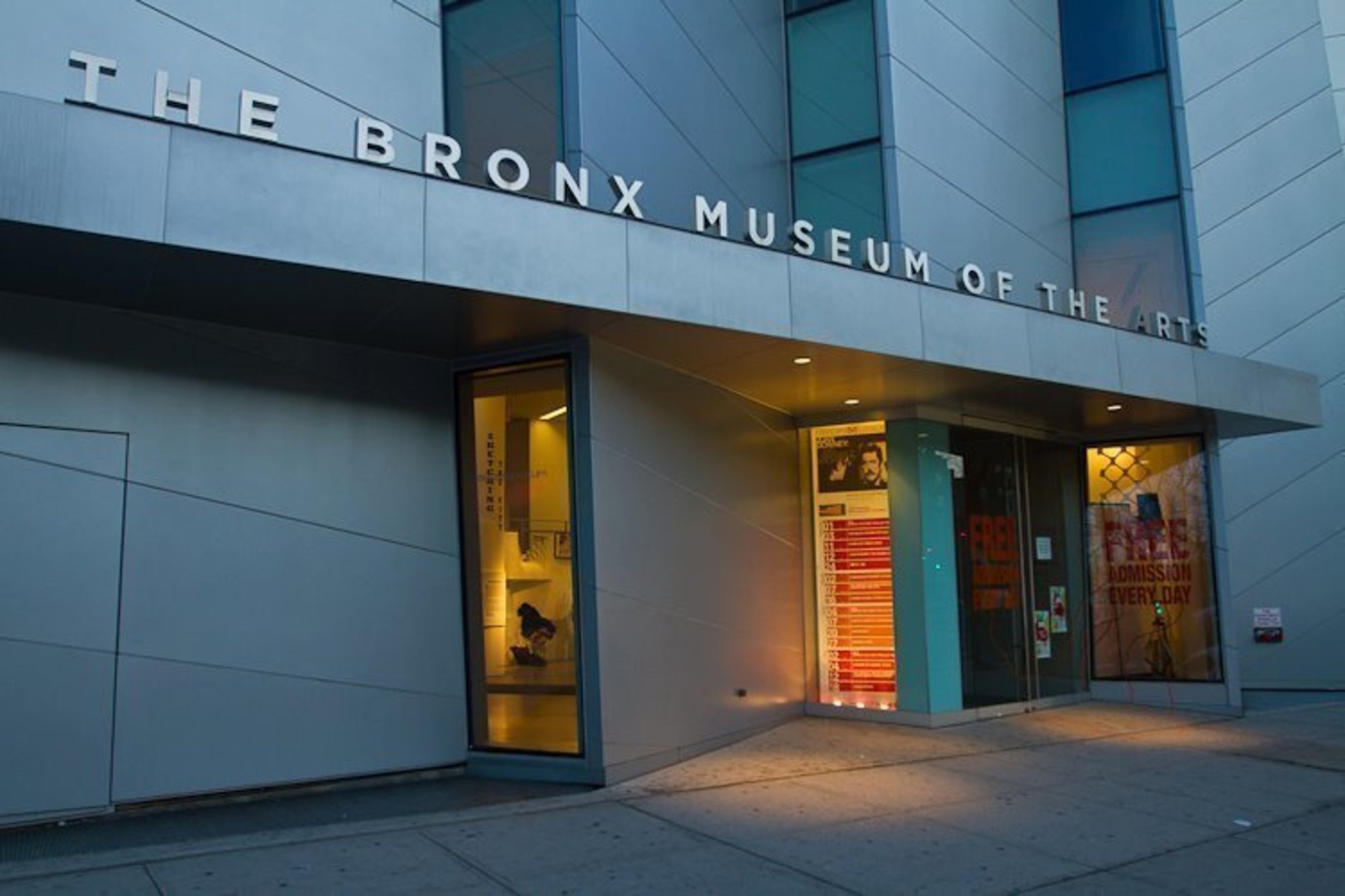
The Bronx Museum (Source)
The Bronx Museum has recently hired Jasmine Wahi as the Holly Block Social Justice Curator to "prompt dialogue and subsequent change towards a more socially equitable and just society." A huge part of her job as curator is to consider who the exhibition is created for and how to bring in stories and discourses that are often suppressed and go beyond a single audience narrative. Wahi also encourages museums and galleries to not only purchase more art created by people of colour, but also provide investment through "respect, attention, and intellectual investment." Reconsidering who is hired and their intentions within the museum is at the heart of a museum's innovation and their capacity to change.
Image may contain: text
Museum Professionals of Colour Logo (Source)
Within the Master of Museum Studies program, Museum Professionals of Colour (MPOC) are starting within the educational institution to dismantle racial bias before Masters students officially enter the museum field. MPOC was created by students who realized that their lived experiences were not being adequately addressed in academic and professional settings and were willing to put in the emotional labour to ensure that the art, history, and other disciplines that permeate museums serve a wider audience, instead of privileging a white colonial one.

Jasmine Wahi – Glassbook
Jasmine Wahi (Source)
Some of the necessary changes, such as diversifying art collections or staff hiring, have been met with concerns over meritocracy. However, a true meritocracy has never existed. The racial, social, educational, and other boundaries have always been successful at rejecting people who do not serve the colonial project, no matter their ability. As Jasmine Wahi has said, "I can say with zero doubt that there are plenty of mediocre white men in positions of power who have not risen through the ranks based on their intellectual or creative prowess," not in attempt to discount many talented white men but rather dismiss the myth that good work means reward.

The problem is not the desire to witness and experience art and science, but rather how it is done through colonial institutions that I believe are capable of change if the right steps are taken. It is my hope that museums will cease to only show exhibitions and instead innovate to become a trusted centre for the local art community and general public, while still welcoming international audiences.

14 January 2020

WHAT DOES IT LOOK LIKE TO DECOLONIZE CULTURAL HERITAGE?

Breaking the Glass Case | Alexandra Forand 
_________________________________________________________________________________

In 2017 Emanuel Macron, the prime minister of France, toured Africa and declared that France would begin to “decolonize cultural heritage.” At the time, this comment was thought of as political politeness and an attempt at forgetting France’s colonial past. Despite the doubt, it only took a couple months to enlist academics and researchers, Bénédicte Savoy and Felwine Sarr, to pen what would become the Sarr/Savoy report, also known as Rapport sur la restitution du patrimoine culturel africain (the report on the Restitution of African Cultural Heritage).

Le musée du quai Branley-Jacque Chirac (Source).

Dear readers, I have become interested (if not, down-right obsessed) with this report. The Sarr/Savoy report is made up of three parts. The first part outlines the reasons why and how these African artifacts were forcefully removed from their communities and brought to France. In the report, the acts of colonization are presented as acts of violence and domination. The report uses language that is forceful and honest. In regards to the return of these stolen items, Sarr and Savoy do not frame it as a debate, but rather a command.

At one time, France occupied almost every continent, and the subsequent collecting practises can still be viewed in French museums today. (Source). 

The second part of the report requests museums with African heritage (in France) to complete a full inventory of the items they hold, send the lists to relevant African countries to claim their heritage, and publish these inventories online by Spring 2019 (Stay tuned, we are going to discuss this aspect of the report more in depth in a future article)!

The third aspect of of the report states that starting November 2022, France will be returning all claimed artifacts. 

While the Benin Bronzes residing in France have been at the centre of restitution talks, the one pictured above is actually a little closer to home... The National Museum of Natural History, Washington DC. (Source).
You don’t have to tell me that this is a tall order to fill. The thought of a huge institution undertaking an inventory which would be completed in a year is down-right preposterous. The report puts an undo onus on museums, that quite frankly aren’t up to the task. This is clear example of optimistic academia avoiding the bleak reality museums face. Beyond the report's do ability there is a huge legal component to this restitution of property, namely: is it even legal?

I’m sad to say, it is not.

According to French law, public museum collections are deemed ‘inalienable’ by law, meaning that no single item can be permanently removed without changes in legislature. This is not to say this has not been done before. For instance, in 2002 Saartjie Baartman’s remains were returned to South Africa and in 2010 sixteen Maori heads were returned to New Zealand.

So, if the Sarr/Savoy report is so unattainable, why am I even writing about it? Well dear reader, this report is special. Firstly, it gives an unflinching account of French colonialism in parts of Africa, accounts that should be known and considered in the 21st century. Canada has yet to create an account such as this in any legal document when considering our own colonial history.

Secondly, the Sarr/Savoy report establishes a comprehensive universal framework for the return of artifacts to cultural groups. I’m not saying this framework is perfect, but it is one of the first of its kind and should be thought of as best practises for musuem collections. Returning artifacts to their homeland is never easy or simple and requires trust, cooperation, and should be built on a foundation of relationships and knowledge exchange that does not begin or end with restitution of artifacts. With that being said, this report is ground breaking and is an important document to consult when discussing restitution in any colonial state.

What are your thoughts? I really want to know! Leave a comment or if Twitter and Instagram are more your speed my handle on both is @Ally_but_online.

1 November 2019

GOING BEYOND THE GLASS CASE

Breaking the Glass Case | Alexandra Forand 


I’ve been thinking a lot lately about museums. That might not come as a surprise since I am a second year Museum Studies Student, but I’ve been thinking about themes and events that aren’t often discussed in a museum context. Now don’t get me wrong, these themes and events are being discussed, but they are bypassing the museum sphere altogether.

For instance, In the winter of 2019 I was lucky enough to partake in the KAIROS Blanket Exercise through an iSkills workshop at the University of Toronto. The KAIROS Blanket Exercise is a participatory retelling of what we are taught to be “Canadian History.” The workshop starts by everyone standing on their own small blankets, which represent Turtle Island. These blankets are plentiful, and they overlap each other, but nobody seems to mind. These blankets are also colorful and seem to encourages the excited and palpable energy which dances in the air. The two facilitators of the workshop start telling the story of Indigenous people through time and as they do the blankets (and the people on them) become separated, isolated and in some cases, they are removed from the learning area (symbolizing the shrinking numbers of Indigenous peoples through disease, assimilation, and extermination). 

Blankets starting to shrink back symbolizing the loss of Indigenous land. Photograph Courtesy of Alexandra Forand.

Soon, the blankets are no longer plentiful and anyone who is still standing (there aren’t many) are tired. The jubilant energy which filled the space is no longer present. After the retelling of events, there is a sharing circle where people are asked to reflect on what they have heard. The KAIROS Blanket Exercise challenges participants to look at history in a different way. 

Another learning experience I had was viewing the commemorative art installation Walking With Our Sisters (WWOS) which honored missing and murdered Indigenous women. This idea sprung forth from Christi Belcourt, a Michif (Métis) visual artist, who put a call out for moccasin vamps. People from all over the world answered this call and over 2,000 vamps were submitted. 


 A moccasin vamp is the top part of the moccasin, but these vamps will never be sewn into footwear, but instead represent the unfinished lives of the women and girls. I was a witness for the final installation and the closing ceremonies of WWOS at Batoche National Historical Site, SK. The sage smoke hung heavy in the dry, hot air and a river could be heard, but not seen because of the thick brambles. The installation cut through the low trees and carried on all the way to the river, where we, the viewers, could sit for a minute, before heading back to the gathering ground where elders were available to chat.


You see, these experiences could have easily been in a museum, but it would have decontextualized the activity. We discuss the danger of decontextualizing artifacts in collections, but why are we so ready to decontextualize the story that created these objects, which contributes to the narrative told in museums. For the KAIROS blanket exercise, standing in a classroom only heightened the fact that this history isn’t being taught in schools across the country. On the other hand, taking in the WWOS exhibit, being surrounded by the land that I love, comforted me as I walked with the women and girls whose lives were stolen from them. These feelings of anger, bitter loss, and, dare I say solace, could never be experienced fully in a museum setting where the objects, stories, and audiences are supposed to be “neutral.”

Some events, such as colonialism, cannot be contained in a glass case, there are no collections that illustrates the broken promises made between nations, and no one--no matter how talented--can write a didactic panel with the story of the land they refuse to acknowledge. The place in which you experience something is just as important as what you are experiencing and sometimes we are left with no choice but to look beyond the museum to see this.

As always, you can leave a comment, send me an email (allyforand@gmail.com), or if Twitter and Instagram are more your speed my handle on both is @Ally_but_online. Also, if you aren't following Christi Belcourt, you're missing out. She is an incredible artist, activists, and inspiration. 

6 April 2018

PRINCE ALBERT & HENRY COLE: WHAT'S SO GREAT ABOUT THE GREAT EXHIBITION?

WALK OF FAME

BY: SERENA YPELAAR

Hi, Musings readers! This is my penultimate post for the blog (!!!). Reflecting on my MMSt journey and all that I've learned about what museums were, what they are, and where they are going, I wanted to take this final Walk of Fame back to one of the earlier iterations of museums: The Great Exhibition.

The Great Exhibition of the Works of Industry of All Nations was an international exhibition organized by Prince Albert, prince consort of Queen Victoria, and Henry Cole. Their intention was to showcase British imperial prosperity and the might of the Industrial Revolution by exhibiting manufactured goods. Exhibitions comprised the display of raw materials and their manufactured counterparts, which of course included resources and products from overseas. The Great Exhibition was housed in the Crystal Palace in Hyde Park, built specifically for the event. It took place between May 1st and October 15th, 1851.

Crystal Palace in Hyde Park, from Dickinson's Comprehensive Images of the Great Exhibition of 1851. Source.
At this point you may be wondering, "why are you using your final post to talk about two Victorian white men who created the Great Exhibition?"

In short, I'd like to use the Great Exhibition to explore the colonial origins of museums. How can we respond to these early conventions to operate modern museums that serve their diverse and multicultural communities, especially in a place like Canada? The two individuals below represent members of a hierarchical society that don't necessarily make up the visitor population today, but their work can inform what we do.


Henry Cole
Henry Cole.
Source.

An inventor and British civil servant, Henry Cole (1808-1882) sought support for the exhibitions through his involvement with the Society for the Encouragement of Arts, Manufactures, and Commerce (RSA). He was dedicated to improving the standards of industrial design, and ultimately secured Prince Albert's patronage for exhibitions on art manufactures between 1847 and 1849.

After visiting the 11th Quinquennial Paris Exhibition in 1849, Cole aspired to expand the RSA's planned exhibitions for 1850 and 1851 to international participants, so in 1850 he obtained Queen Victoria's backing to establish the Royal Commission for the Exhibition of 1851.

Cole's dedication to artistic and scientific pursuits led to his creation of what's considered the first commercial Christmas card, in 1843. He was adamant that the Great Exhibition's profits be allocated to the purchase of land for the South Kensington Museum, of which Cole was the first director. Established in 1852, the museum is now the Victoria & Albert Museum, and has a Henry Cole wing.


Prince Albert 


Prince Albert, c. 1848. Source.
Prince Albert (1819-1861)'s role in the Great Exhibition reflects his class in relation to Cole; while Cole and the RSA were the mobilizing force behind the Exhibition, the Prince Consort was enthusiastic in his support of it.

Prince Albert was lauded as the mastermind of the Exhibition, and his vision resulted in the profit of the showcase, bringing in £186,000. It was by Prince Albert's decree that the funds be used to “increase the means of industrial education and extend the influence of science and art upon productive industry”, ultimately contributing to the creation of what is now known as the V&A.

Beyond the Royal Family, who visited the Exhibition three times, prominent Britons at the time also made appearances, such as Charles Darwin, Charlotte Brontë, Lewis Carroll, Charles Dickens, George Eliot, and Alfred, Lord Tennyson. Though other individuals such as Karl Marx disapproved of the Exhibition for sensationalizing capitalism, six million people visited in total.


What does remembering the Great Exhibition mean for us today?

Countries from the world could exhibit their industrial accomplishments, but the Great Exhibition was primarily intended to prove British superiority. As a colonial engine, therefore, the Exhibition is an example of how museums and their exhibitions can perpetuate a hegemonic agenda.

Nevertheless, we don't have to resign ourselves to this prospect. Rather, we know that through conscious and responsible interpretation we can subvert and overturn these notions of superiority - whether by class, race, gender, sexual orientation, or culture - and aspire to capture empathetic responses to the human experience.

Rather than exhibiting differences in a way that creates hierarchies, we can celebrate those differences and learn from them with a positive vision. That's my hope for the general direction of museums today, and in the future - but as museum professionals we're responsible to go beyond hope and create change through action.

Thank you all for coming on this Walk of Fame with me all term. Going forward, I hope we don't simply dismiss the past as something irrelevant to us, but instead examine it in a way that serves our commitment to progress today.

3 March 2017

JANE ASH POITRAS: AN ANTI-COLONIAL STANCE AT THE ROYAL ONTARIO MUSEUM

SHE'S MY MUSE

BY: NATANIA SHERMAN

Jane Ash Poitras: New Acquisitions of Contemporary First Nations Art (Photo: Natania Sherman)
Milestone birthdays are a prime opportunity to celebrate but also to take stock and think about the future. Those of us in the culture sector in Canada are currently facing this exact challenge, since our institutions are preparing Canada 150 programming and events. It is easy to get lost in a celebration of our Canadian-ness but the challenge is that in moments of nationalistic pride it is difficult to remember that many people see our national symbols as painful reminders of a dark past. One need only look at the Colonialism 150 hashtag on Twitter to see the opposition many Canadian First Nations feel to the Canada 150 fanfare.


The Colonialism 150 T-shirt. (Source)
Although the Truth and Reconciliation Commission (2015) has led to a renewed awareness of Canada’s dark history of colonialism, there is still a long way to go before Canadian settlers and Canadian First Nations are able to truly reconcile with our past and create change for the future.  Today I’d like to take a view of Canadian history through the lens of Cree artist,  Jane Ash Poitras. A current exhibition, Jane Ash Poitras: New Acquisitions of Contemporary First Nations Art  at the Royal Ontario Museum (ROM)'s First People's Gallery presents a darker take on Canadian symbolism and reveals what we can learn from listening to the perspectives and experiences of others.

A collage of colonial symbolism (photo: Natania Sherman)
Although the purpose of Jane Ash Poitras: New Acquisitions of Contemporary First Nations Art at the Royal Ontario Museum (ROM) is to highlight new acquisitions, the resulting display, which places historical and ethnographic objects next to Poitras' paintings, is a subversive and anti-colonial take on the museological tradition of showing off newly acquired objects.  The tagline of the exhibition is "Four paintings recently acquired by the ROM explore colonialism and traditional knowledge of the therapeutic properties and spiritual significance of plants, wisdom now lost but which we hope to reclaim" (ROM, 2017).  The works in question are large scale paintings by Poitras that contrast traditional indigenous knowledge of medicinal plants with the drudge work imposed on indigenous youth by the residential school system. Works like Potato Peeling 101, Ethnobotany 101 directly challenge historical white settler's assumptions that children from indigenous communities were only good for peeling potatoes, by highlighting medicinal knowledge such as the fact that foxglove or digitalis purpurea had medicinal uses familiar to first nations peoples well before its medicinal properties were "discovered" by European scientists. Poitras' paintings tell a story through scale and through the sheer number of paint and collage elements included in each piece. Large painted backdrops resembling a classroom blackboard are overlayed with colonial symbols like the Hudson's Bay Company stripes and images of western medical textbooks. Poitras' hand painted elements creep in to overtake the colonial symbols in the form of expressionistic flowers and stylized buffalo, representing traditional knowledge and sacred medicine.

Buffalo Seed by Jane Ash Poitras (Photo: Natania Sherman)
The exhibit features ethnographic and historical objects alongside the paintings; a school writing desk and baskets for gathering herbs. In the context of the installation and interpretation, these objects take on a spectral quality, highlighting the losses in culture and disruption to family and social life that were a legacy of the residential school system.


 The modes of display also work to reinforce Poitras' artistic voice. Red and yellow interpretive text featuring botanical illustrations, The beautiful red interpretive labels, give this exhibition the feel of a very well designed pop-up exhibit, and they add to the aesthetics of the exhibition with botanical illustrations. The exhibit  features ethnographic and historical objects alongside the paintings; a school writing desk and baskets for gathering herbs. In the context of the installation and interpretation, these objects take on a spectral quality, highlighting the losses in culture and disruption to family and social life that were a legacy of the residential school system.

The new acquisitions' also look at the buffalo hunt, and how over hunting and extermination by European settlers nearly wiped out a key food soucre for First Nations peoples. The painting Buffalo Seed from 2004, which tells the story of the buffalo, is contrasted with oil paintings by European artist George Catlin, that romanticize the buffalo hunt as a dying relic of a dying people. Poitras' paintings tell us otherwise and are a scathing critique of our easy assumptions about  Canadian history.

I wish I could continue to write about all of the indigenous women artists whose work sometimes flies under the radar when it comes to the dominant narrative of Canadian History. So often we struggle to name even one woman artist when asked, (in fact there's a challenge about just this from the National Museum of Women in the Arts in the States) so creating a dialogue whenever possible highlights the importance of female voices in our cultural landscape.