Showing posts with label Jaime Meier. Show all posts

16 April 2021

SO LONG, FAREWELL, AU REVOIR: GOODBYE LETTER FROM THE EDITORS

  Letter from the Editors | Jaime Meier and Erika Serodio


Today is the last day of mine and Erika’s reign as Editors-in-Chiefs and while we are sad to bid everyone adieu, we are excited to look back at the articles created by our talented team of writers. Over the past year we had 16 fantastic permanent and guest writers to cover a huge variety of museum topics, from collections to MMSt classes. If you weren’t able to catch all of our publications, we have made a list of highlights. 

We appreciate your ongoing support! | Courtesy of Jaime Meier

For Collections Corner, Martin interviewed recent CDP grad, Karen Macke, to discuss her collections related insights and her hugely popular Facebook group that focuses on collections. 

Madison brought fresh perspectives to the Heritage Moments column with her article on preserving historic scents and their important place as intangible heritage. 

With the pandemic changing how we view exhibitions, Rachel brought us comforting Exhibition Reviews, such as the “Three-Thirty” show at the Doris McCarthy Gallery, and how cultural institutions are seeking to adapt rather than cease creation. 

Brooke made our Research Column better than ever with her in-depth series on critical conversations happening in museum and the rights of museum workers that have been challenged by “neoliberal economic strategies” and ongoing resistance from museum workers. 

For Museum Innovations, Sara brought us examples of how the cultural sector has continued to engage communities on new platforms like Twitch and Tiktok. 

Annabelle highlighted the Jewish community's many accomplishments through Walk of Fame, including the crucial role of Frieda Schiff Warburg in the creation of the Jewish Museum in New York City, one of the first and oldest to focus on Jewish history. 

For Internship Check-in, Annie brought us the inside scope on working in cultural institutions, including Lauren at the Royal Botanical Gardens and Leora at the Robertson Davies Library. 

Caitlin created a new column, Final Project Reflections, to highlight the many accomplishments of students completing their thesis and exhibition projects, including her own and the inspiration behind it. 

For Technology Tuesday, Jaime explored what the future holds for interpretation in museums after the pandemic ends and many of the new approaches significantly aid in accessibility for all visitors. 

Melissa used GLAM Gets Mindful to bring us resources to help in our success and reduce stress, with a very timely one with tips on how to conquer job search anxiety. 

We have been so lucky to have Museum Professionals of Colour contribute a Special Edition each season, with their most recent article highlighting their successes and delivering handcrafted memes. 

The MUSSA President & Co-President also contributed a Special Edition where they gathered and shared student experiences from working in the field and all of our wonderful memories together. 

Natalie is a student like none-other and wrote for two whole columns, Sew What and A Muse Bouche. She delved into her Italian heritage to explore and re-create disappearing pasta forms and also explored the sustainable history of 18th century clothing through fabric reusing - the duality! 

Erika continued to highlight outside-the-box spaces for arts and culture, like Underpass Park, in the Beyond Tradition column.

In Museum Mysteries, Mia has kept us wildly entertained with stories of horror, fictional fantasy, and eerie holiday traditions. 

Helen took us to museums all around the world with Musings Abroad, where she looked at how international museums work with topics like black culinary culture, scents, and women's history. 

It has been a very "online" year for all of us, with museums closed for the majority of our school year. Finding inspiration to write has been challenging and has made the accomplishments of this year's writers even more impressive. We look forward to someday running into each other in museums again, and finally meeting the writers who we've been working with all year but have never met in person. The articles from this year will be remembered as small tokens of resilience. We know it has been anything but easy and we are so very grateful for everyone that's written with us and followed along. 


Signing off,

Jaime & Erika

23 March 2021

MAKING YOUR WAY DOWNTOWN: TORONTO'S SELF-GUIDED WALKING TOURS

Special Edition | Jaime Meier


Happy first week of Spring! With the sunny and warm weather Toronto has been experiencing, I have been looking for COVID-19 safe outdoor entertainment. A great option for getting outside and getting a dose of Toronto's arts and culture scene is self-guided tours. The City of Toronto has created a wide variety of self-guided tours that delve into art, architecture, nature, and even ghosts. 


Start: Union Station or Royal Ontario Museum
End: Royal Ontario Museum or Union Station
Time: Two hours+

The tour is comprised of over 25 of Toronto's most haunted locations from the Former Christie Mansion to various locations across the University of Toronto.

"Fishing in Mimico Creek" Mural by John Kuna | Source


Start: Islington Station
End: Kipling Station 
Time: One hour+

Take a journey down Dundas Street West to experience 19 stunning murals down a 5-block stretch. 

Start: Broadview Station
End: Broadview Station or Castle Frank Station
Time: Two hours+

Explore the Don Valley and associate sites, like Todmorden Mills and Chester Springs Marsh, to experience natural beauty within a sprawling city. 

Massey Hall National Historic Site | Source

Start: College Station
End: St. Patrick Station
Time: One hour+

A chance to learn about the historical and artistic buildings that have shaped Toronto over the decades. 

Start: Union Station
End: St. Lawrence Market
Time: One hour

In partnership with the Koffler Gallery,  this audio guides brings you through Old Toronto and talks about the beauty of Toronto that is often missed but ever-present. 


2 March 2021

TO DIG OR NOT TO DIG?: TECHNOLOGIES AND TEMPERMENTS IN ARCHAEOLOGICAL DIGS

Technology Tuesday | Jaime Meier


I was thrilled to get the chance to visit the ancient city of Troy while I was on a tour through Turkey in 2019. The city was made infamous through the stories of Homer – detailing the decade of battle and the adventure home to Greece. The city re-appeared in my undergrad as an example of horrific archaeology practices that have likely destroyed the possibility of finding objects of significant historical value. Through lessons from the past and new technology, these issues have largely been avoided, as reflected in the case of the Terracotta Army in Xi’an, China.  

The City of Troy | Photo courtesy of Jaime Meier


In 1873, Heinrich Schliemann, an amateur archaeologist from Germany, dedicated his post-retirement life to finding the city of Troy due to the impact of the Iliad on his childhood. Without a permit from Turkish authorities and against the advice of other archaeologists, Schliemann began his assult on the site. One of his major projects was digging a giant trench that went down through nine different layers of the city of Troy – uncovering evidence of cities being built on top of each other and also causing untold damage to original buildings. It is incredible that Schliemann was able to find the site and due to his haste and desire for infamy, our understandings of the ancient city may be permanently affected. 

The different layers, indicating a new city, is marked by numbered plaques | Photo courtesy of Jaime Meier

The terracotta army was discovered in 1974 by farmers and the excavation, led by Zhao Kangmin began shortly after. The initial excavation in Pit 1 lasted 10 years, resulting in the discovery of over 1000 terracotta figures. The project was paused in 1986 and would remain untouched until 2009, as the archaeology teams recognized the need for more advanced technology to uncover the remaining objects and patiently waited for the equipment to become available. The excavation of pit 2 went similarly, with efforts being paused in the late-1990s due to concerns around object damage, with projects restarting in 2015 with new technology and strategies. While the discovery of new objects is always exciting, it is imperative to prioritize preservation of the objects and community needs over the personal gains achieved through quickly gathering objects for sale.

The terracotta army | Source

While the ideas and technology surrounding archaeology had changed considerably during the excavations of Troy and the Terracotta Army, an interesting difference is also the locality of the people making decisions regarding the sites. In the case of Troy, Schliemann was a German businessman and amateur archaeology. While the Terracotta Army had the great fortunate of being initially discovered by farmers, who alerted local archaeologists, including Zhao, who went to the site. The difference between these men is not inherently their experience, but rather the respect shown to the sites. As someone not from the area and a budding interest, Schliemann had no issue in exploiting the site based on personal interest and gain, whereas Zhao was able to recognize the importance of the site to not only his history, but the history of others. Unearthing new discoveries is exciting and it is also crucial for all archaeologists to follow the example of Zhao in centering community needs and long-term preservation. 


2 February 2021

WHAT NOW?: MUSEUM TECHNOLOGY POST-PANDEMIC

Technology Tuesdays | Jaime Meier


This winter, my roommates and I have been kept very warm, at times much TOO warm, by the radiators in our apartment. The design of this intense heating system was to combat a previous pandemic – the Spanish Influenza in 1918. Radiators were created to be so hot that occupants would open their windows to maintain a livable temperature, which would also allow fresh air to circulate through homes, schools, and workplaces. There is no doubt that CoVID-19 will have a similar impact on museum infrastructure which will affect interpretation and engagement technology.

3D-printed replicas of stone spear points. | Source

One of the greatest opportunities for new technology in museums is through ensuring there is not a backslide in sensory museology, primarily through touch and hands-on experiences, while implementing important health and safety measures. Tactile objects may still be utilized as 3D printed replicas because the plastic is easily sanitized, and the object can easily be replaced after significant wear. It is also important to keep in mind possible barriers for blind people who rely on touch for reading and interpreting information. One of the most simple and cost-efficient solutions is raised drawing boards that allow for an easily embossed and readable handout. 

With museums and their exhibitions moving online, ideally there would be a continuation in forms of remote museum learning. In addition to exhibitions and educational programming available online, a possible accompaniment would be travelling outreach kits that would be available to not only teachers, but also other organizations and groups that promote learning and play. While this form of engagement is on hold for now, as the pandemic retreats it will likely become a popular option to fulfill educational desires and maintain the health of users.

Example of a museum mobile app. | Source

A final key in maintaining engagement is museums taking advantage of their mobile apps. The level of usability for museum apps fluctuates from institution to institution, with some museums charging for their content and others offering little more than a few audio guides or a map. A mobile app provides the opportunity for personal engagement via built-in tours and programming within museums as well as opportunities for learning outside of the museum. However, there are still accessibility issues with this form of engagement, as not everyone is able to own a mobile device or a mobile device with the required operating system. 

One of the highlights for me when visiting museums is experiencing new or exciting interpretation strategies. I am looking forward to the day when I am able to return to museums and for the technological innovations that will be implemented. What form of museum engagement are you hoping to see when museums open again?

24 November 2020

HOW THE GUERRILLA GIRLS HOLD THE ART WORLD ACCOUNTABLE

She's My Muse | Jaime Meier


The first time I saw artwork by the Guerrilla Girls in person was during the exhibition "The Incomplete History of Protest" at the Whitney Museum, which displayed the group's criticism of said museum for its sexist and racist collection. It was impressive to see that the impact of the group was so large that it not only pushed for the institution to change, but the institution displayed the works to publicly hold itself accountable and acknowledge its shortcomings. One of the most interesting things about the Guerrilla Girls is that, in addition to their impactful art, they are able to organize group action through anonymity and intersectionality. 

"History of Wealth and Power" by the Guerrilla Girls | Source

The Guerrilla Girls are known for their posters that call attention to gendered and racial inequality within art institutions, with their most famous poster comparing the amount of female artists and amount of naked women on display at the Met. Natalie Sherman's article gives a great overview of the group's history, beginning in 1985 and continuing to the present. A consistently relevant 35-year career is no easy feat within the art world and I believe this success is due to the 55 members that have joined the group over the decades. Some members stay for weeks while others stay for years, with the fluctuating membership allowing for new talent and ideas to keep the group relevant. A major part of their appeal to so many members is their dedication to intersectionality.


"Traditional Values and Quality Return to the Whitey Museum" by the Guerrilla Girls | Source

While the title "Guerrilla Girls" instantly associates them with women, the heart of their organization is feminism, which transcends gender. One of my favourite things about the group is that they do not homogenize by only looking at gender, they also consider racial implications that impact artists of colour. Their earliest works, such as "Traditional Values and Quality Return to the Whitey Museum," important demonstrate the distinction between gender and race. Most recently, they created a video in response to the ongoing police brutality in the United States. 

"NYC Recount" by the Guerrilla Girls | Source

Every few years the Guerrilla Girls update their posters to analyze how and if things have changed within the institutions they have critiqued. The continued accountability and calls to action are crucial for continued and sustained change. The updates often reveal minor improvement and quickly remind the institution that a one time or slight improvement will not be accepted in the place of sincere change. I believe the Guerrilla Girls are creating an art world that will allow for more people to enjoy art institutions because they will actively see themselves reflected and be more likely to engage. 

20 November 2020

A-MUSING ACTIVITIES: UPCOMING EVENTS IN THE GLAM SECTOR

 Muse News | Jaime Meier


With December right around the corner (yes, I am sorry to hear it too!), deadlines are looming and it is important for your health and sanity to take time for yourself each day to do something you enjoy. As someone who struggles with procrastination and staying focused, I am all too familiar with the guilt that accompanies avoiding a necessary task or struggling to finish an assignment. A great way that I have learned to cope and self-justify pausing school work is through participating in free online arts and culture related events. 

Event Hosted by 519 | Source


TODAY, November 20th

Trans Day of Remembrance 2020
Host: 519 
Time: 6:00pm EST
Where: Zoom
Registration: Required

It is the 21st annual Trans Day of Remembrance (TDoR) is being hosted by 519 to commemorate and honour the memories of members of the trans community taken too soon. This event will include speakers, singers, and other artistic components. 


Tuesday, November 24th

Zine-Making Workshop + Wellness Discussion with Melina Mehr
Host: Museum Professionals of Colour (MPOC)
Time: 5:00pm EST
Where: Zoom
Registration: Not required

Join accomplished MMSt alum, Melina Mehr, for an evening of discussion and creation around wellness and self-care. Guaranteed to be a relaxed and fun evening centered around creativity and support.


Thursday, November 26th

MUSSA Trivia Night
Time: 6:00pm EST
Where: MMSt Channel (Virtual Inforum)
Registration: Email mussa.ischool@gmail.com by November 25 at 11:59 pm (Include your team members - max. 4 - or request to join a team)

You don't want to miss teaming up with fellow MMSt and CDP colleagues for a spirited game of trivia! The winning team will receive a prize (and bragging rights). 


EMILIA-AMALIA | Source

Wednesday, December 2nd


An evening of lecture, workshop, and performance is a part of an ongoing program that explores feminist praxis through historical memory, exclusion, and refusal. Meyer and McKinney explore the idea of ruins in relation to sexuality throughout their journey from Vancouver to Disneyland.


Thursday, December 3rd

INTERFERENCE – A Virtual “Music in the Museum”
Host: American University Museum At The Katzen Arts Center
Time: 7:30pm EST
Location: Livestream
Registration: Required

Do you think museums are a little too quiet? Join the music collective INTERFERENCE for their concert that focuses on using instruments and computer technology to create a musical and visual performance within a museum environment. 


Thursday, December 3-11th

Time: 6:30pm EST
Location: Online
Registration: Required

The 9th annual HRFF is a week long event focusing on sharing stories and experiences regarding international human rights through film and discussion. The keynote address by Syrus Marcus Ware on the last day of the festival will certainly be a highlight. 


What arts and culture events are you looking forward to? Leave a comment or drop us a line at musings.mmst@gmail.com!


12 November 2020

MENTAL HEALTH MATTERS: RESOURCES FOR GRAD STUDENTS

Grad School Guide | Melissa Mertsis and Jaime Meier

_______________________________________________________________

CW: anxiety, depression, therapy 

Grad school is full of many wonderful moments that make us excited to enter the field and at times it can also feel overwhelming and difficult to get the most out of classes without the proper support. Accessing Mental Health services, in particular, can feel daunting, so Melissa and I are here to share resources that can be utilized at the iSchool, University of Toronto, and off-campus. One of the most important things in ensuring your success is finding a resource that works well for you — whether that be a psychologist, a counsellor, or an app-based service. We have either personally used and benefited from these services, had friends benefit from them, or have heard stellar recommendations from others.
Feelin' like this lately? We've got your back.

The iSchool offers support via student services and an embedded counsellor. When you’re struggling with your mental health, school can quickly become overwhelming. Thankfully there are many great folks at student services who can help out! For example, Sherry Dang, the MI and MMSt academic advisor, is a great contact to have in mind if you need support or assistance with academic planning, academic progress, financial aid, and scholarships. If you are having a tough time managing deadlines, she is wonderful at taking the time to discuss your options and find a solution that works. If you’re looking to reach out to the iSchool for a different reason, here is a list of all the contacts who are always happy to help whenever they can. The iSchool also has an embedded counsellor, Tracey Doyle, who can help MI/MMSt students for FREE with transition issues, anxiety and depression, and much more! She can be booked through the Health and Wellness Centre.
 
The University of Toronto also has a great variety of resources, such as Navi, a new app that helps UofT students find mental health resources on and off-campus based on their specific needs. Not only does it provide possible sources for therapy and counselling, but also “tips, strategies, programs, and resources.” The Health and Wellness Centre also offers everything from short-term counselling to psychiatric care. I personally attend the centre and would encourage anyone with any interest or questions to call their wonderful receptionist team and they can get you booked in where you need to be.
Our reaction because MMSt has such great in-house support!

Other than student services and Navi, all of these resources cost money. Luckily, student benefits through the UTGSU cover $500 worth of psychologists and therapists per year. Not to mention that OHIP covers psychiatry services because they are doctors able to prescribe medicine. While these forms of payment have worked for Melissa and I, make sure to talk to your psychiatrist’s/therapist’s office to ensure that you are on the same page about billing and coverage.

If you’re interested in going outside of the University of Toronto for mental health support and assistance, there are a ton of options for you to explore. If you’re not ready to see a professional yet (which is okay!) there are some great resources to check out on your own. BounceBack is a free online resource offered by the Canadian Mental Health Association, “designed to help adults and youth manage low mood, mild/moderate depression and anxiety, stress, [and] worry.” Video topics include problem-solving, balanced thinking, and how to deal with unhelpful behaviour, and are offered in 7 different languages! These videos were a great segway into getting comfortable with getting help. 
If you're feeling stressed, anxious, or alone, chances are someone else is too! 
Check in on your pals to see how they're holding up.


If you’re ready to start getting support outside of your own means, there are a number of ways to find someone to connect with. Shift Collab helps you connect with therapists virtually, offering 15 minute free meet-and-greets with their practitioners to make sure you are a good fit before getting started. They also have compiled a “Starting Therapy” package which is a great resource to reference when you’re first starting out. Good2Talk is another confidential support service for students in Ontario (and Nova Scotia!) offering phone counselling, or text-based support if you’re in crisis. ConnexOntario also offers support on the phone, over email, or online chat. Hope for Wellness Helpline and Talk4Healing are similar services geared towards Indigenous folks, so make sure to check those out if you’re looking for someone to talk to.

Online psychology databases like Psychology Today, Toronto Psychotherapy Group, and Ontario Society of Registered Psychotherapists are all good starting points when trying to find a therapist. These databases allow you to read about a ton of practising professionals, sort by specialization, availability, and more. The UTGSU also has a list of walk-in counselling resources that do not require appointments or fees; just be sure to check on their COVID policies before going! Although most professionals, in our experience, offer free consultations, there are hourly charges associated with seeing a therapist or counsellor. Be sure to check out pricing, affordability, and government or benefit coverage before committing! The Canadian Association for Mental Health has a document describing the differences between OHIP-covered assistance and paid assistance that may be helpful.

Taking care of your mental health can be a lot sometimes, but keep pushing through — you can do it!


If you’re looking to get started on your own mental health journey, whether within the University of Toronto, the Faculty of Information, or externally, there are a few things to keep in mind. First and foremost, give yourself a pat on the back! Taking care of your mental health is a hard thing to accomplish, and admitting you might need some support is even harder. Second, patience is key. Take your time reaching out and testing multiple providers to find what is best for you; don’t give up! As we mentioned at the beginning of the article, different resources work for different people. Find what works best for you and focus on that. Your mental health is important — we hope you have a chance to explore some of the resources we've shared today!

--- 
If you are in crisis or physical danger call 911. 
You may also contact a Telehealth Ontario nurse at 1-866-797-000, or contact Distress Centres of Toronto at 416-408-HELP (4357). 
Telecare can be contacted at 416-920-0497 and offers service in Mandarin & Cantonese.
Other crisis contacts can be found here. 

2 November 2020

DEFYING DEFINITION: THE JUDGEMENT OF FRIDA KAHLO AND BAYA MAHIEDDINE

 She's My Muse | Jaime Meier


Baya, Femme attablĆ©es | Source

Art institutions often organize their permanent collection around a timeline, location, or similar genre of art. While this approach can be helpful for the visitor, assigning a genre to female artists of colour can often fail to adequately capture their identity and artistic practice. Artistic styles, such as impressionism or cubism, are not assigned based on style alone, but are informed by ideals enforced by colonialism and identity politics. Such is the case with Frida Kahlo and Baya Mahieddine, two talented artists who, despite subverting definition, are entwined within the genres of surrealism and primitivism. 

Surrealism was an artistic movement that focused on interpreting the human experience through exploring the subconscious and dreams and rejecting rationality. The surrealist style of painting relied on the colonial gaze as a lens to view and appropriate non-white cultures. The pioneers of surrealism, such as AndrĆ© Breton, were not simply painting and writing about dreams, but sought "inspiration" from peoples in the Americas, South Pacific, and Africa — all of which were considered to be "primitive." Non-white cultures were incorrectly viewed as simpler and without the societal restrictions that the surrealists intended to free themselves from. While the white men of surrealism looked to other cultures, women of colour associated with surrealism looked to express their own cultures. 

Frida Kahlo, Las Dos Fridas | Source

Frida Kahlo is well known for her colourful paintings that use cultural references to depict major events in her life. Art was a therapeutic way for Kahlo to process her memories of the Mexican Revolution, medical issues that permanently disabled her, a tumultuous marriage, and difficult miscarriages. Breton took a special interest in Kahlo and included her work in the International Exhibition of Surrealist Art in Mexico City. Kahlo ultimately rejected the title of "Surrealist," as they painted dreams and Kahlo painted her reality. Instead of allowing her lived experiences to be interpreted and given meaning by white men, Kahlo turned away from the European tradition and embraced the identity of a naĆÆve painter, a genre that was often used to demean self-taught artists and associate them with primitivism. 

Similar to Kahlo, Baya Mahieddine had her art narrowly defined by Breton as surrealism. Baya was a talented painter from Algeria and was cared for by her grandmother until adopted by the French intellectual and art collector, Marguerite Camina Benhoura. Art historians are conflicted about whether it was a familial adoption or if Baya was hired to work alongside her grandmother, who was already employed by Benhoura as a maid. Regardless of the relationship, Benhoura was aware of Baya's talent and supported her efforts, ultimately resulting in her first exhibition in Paris at only 16 years old. 

Portrait of Baya alongside her painting Femme robe jaune cheveux bleus | Source

Baya's colourful paintings of fellow Algerian women caught the eyes of Pablo Picasso and AndrĆ© Breton. Picasso was thought to be inspired by her aesthetic, specifically Baya's line-work and use of colour. He invited her to work with him and lead him to create the "Women of Algeria" series. While Picasso had an appreciation for Baya, he would refer to her as "La BerbĆØre," which denoted her ethnic origin, which seems to speak more to Picasso's fascination and exploitation of African cultures for personal gain rather than a respect for them. Breton was also considered to be a supporter of Baya, but in his writings he referred to her art as "childlike" and "primitive." Throughout her career, Baya refused to associate herself with one genre of art as the definitions provided were a way of examining her instead of understanding her art. 

Categorizations of art can be a helpful interpretation method for visitors or a systematic way for museums to exhibit their collections. However, it is important to keep in mind the conditions that formed organizational systems and their lasting implications on the art and artists they capture. Through neatly defined artistic genres, women inspired by their homelands were called or claimed to be primitivists, while the men whose countries had colonized and appropriated their cultures were surrealists.

14 October 2020

THE TOLL OF BRIDGING THE GAP: GENDERED AND RACIAL SYSTEMATIC SEPARATION IN MUSEUM STUDIES

She's My Muse | Jaime Meier


Last year I walked into my first day of class in the MMSt program and was pleasantly surprised to see the room of women before me. Despite this female majority, a handful of men, and certainly not all, have taken it upon themselves to occupy the most space. One went as far as to say that he "speaks for the class," as the silence of women during discussion may be interpreted as an apprehension to participate rather than contemplation for a thoughtful answer. Others will have a moment of self awareness and acknowledge that they "talk too much," but continue to take up space or repeatedly add their commentary to the chat box. The men mentioned would be horrified to learn that their actions had negative impacts on their female colleagues, as it is not done out of a dislike of women, but because systems of oppression rely on separation, whether it be gendered or racially based. I find myself fearing these dynamics will continue within museum spaces once I enter the workforce. 
(Source)

I strive to participate in class discussion and use in-class activities and written assignments to assert my thoughts and critically engage, which has led to a male professor branding me as "brazen" — to be bold and without shame. While I am willing to embrace this term, I wonder if the men dominating discussion are ever called brazen or if their opinions and statements are easily accepted as being reasonable. It is also not lost on me that Audre Lorde has called attention to the ways Black women have been associated with hostility when expressing sentiments similar to white women, such as myself, or men. Lorde continues on to say that we "too often pour the energy needed for recognizing and exploring difference into pretending they are insurmountable differences." This has led me to reflect on how the MMSt program has been preparing or under-preparing us to face and overcome these challenges in the field. 

It has often been students and student organizations working to challenge systems of oppression present within the MMSt program. A Report on Diversity and Inclusion Experiences at the Faculty of Information was created based on a survey in June 2020 and was compiled by Oy Lein Jace Harrison and Lo Humeniuk, members of the Diversity Working Group, and Dominica Tang from Museum Professionals of Colour in collaboration with the Accessibility Interests Working Group, the Doctoral Student Association Indigenous Connections Working Group, the Master of Information Student Council, and Master of Museum Studies Student Association. Over 130 students, faculty, and alumni attended the panel discussion on the report. The report highlights the lack of inclusion in regards to BIPOC, people with disabilities, and the LGBTQ2+ community and how these topics have been handled in an inappropriate way that has left students feeling unsafe. Reports such as these can be difficult to absorb and implement, as challenging systems threaten those within power, but growth is not possible without feedback and critique.
Courtesy of the Diversity Working Group, Museum Professionals of Colour, Accessibility Interests Working Group, the Doctoral Student Association Indigenous Connections Working Group, the Master of Information Student Council, and the Master of Museum Studies Student Association. 

The students and organizations who participated in the survey, put together demands for change, and led the panel discussion, were not compensated for their labour. Many of the published comments from the survey mention difficult experiences that were hard to endure the first time and I am sure were unpleasant to repeat. The coordination between six different student organizations is no easy task, getting three people together to discuss a project over zoom is difficult enough, not to mention the hours that were poured into the brilliantly executed report. Luckily, t I have many counterparts in MMSt with me, straight and queer, men, women, and non-binary people, and we all have a responsibility to each other to reduce the emotional toll that comes with our mere existence within a system that so often seeks to destroy difference in favour of assimilation. While I work on navigating my relationships with talkative men in MMSt and ensuring that I uplift rather than ignore the struggles experienced by BIPOC and people with disabilities, it is my hope that MMSt graduates will take reciprocity, inclusion, and relationality into the field with them, as oppression cannot survive as long as we bridge the gap together.

10 August 2020

RIGHT WHERE YOU SHOULD BE: STUDENTS REFLECT ON MMST

Grad School Guide | Jaime Meier
I learned about the MMSt program when one of my undergraduate classes required us to present on three school or job options we were interested in after convocation and how to achieve them. I was thrilled to get in to MMSt but had to make the big move from Saskatoon to Toronto. As the Museum Professionals of Colour team put it so eloquently in their grad school guide on imposter syndrome, it can be easy to feel like you don’t belong in a new program or place. I have thoroughly enjoyed the program so far but my experiences with MMSt are just one of many, so I surveyed MMSt and CDP students for feedback about their experiences. Even with COVID-19, it is my hope that the experiences discussed will still make new and continuing students excited for the year ahead. 

(Source)

With my degree and prior work experiences focusing on history and art history, I had expected a majority of the students in the program to be similar to myself but was pleasantly surprised to meet students whose backgrounds range from Environmental Studies in International Development to Sports Industry. As much as I love talking about art whenever possible, having classes with students who had knowledge far outside my scope only enhanced the experience. One student commented that they were initially nervous about not having specific museum experience but later realized the value in everyone having a different background that allows them to contribute unique skills and passions. It is important for incoming and continuing MMSt students to know that their opinions are valuable, and people usually want to hear them, so take a step outside your comfort zone and contribute in class — the professors always appreciate it.

While students come from different areas of study, we are connected by an interest in museums, galleries, and cultural institutions. The students surveyed commented on how they wanted to make museums more interesting to locals, improve accessibility, and address the lack of diversity and inclusion. These interests can be embraced through conversations with fellow classmates and in class. Some of the favourite classes from the feedback survey were Interpretation and Meaning Making, Public Programming, and Museums and Indigenous Communities. Professors and their assignments often allow the flexibility to work in a current area of interest or explore something new. I learned so much through my personal research for assignments; it's a good opportunity to learn more about topics that you haven't yet had a chance to study. 

A few of the amazing people I've met! They've taught me about everything from archaeology to zoology. Photo courtesy of ChloĆ© Houde. 

With classes in the fall guaranteed to be online,  COVID-19 will require us all to show up for each other digitally. The most common sentiment expressed in the survey was how people's experience in the MMSt program was enhanced by the camaraderie experienced between people in the cohort. To over come the possible isolation this coming year, make sure to check out the discussions and events happening via the Virtual Inforum on Acorn, as well as events put on by the Museum Studies Student Association (MUSSA) and Master of Information Student Council (MISC). Grad school will provide many moments to take your education into your own hands, so despite any road blocks put in place by the pandemic, make sure to make the most of it!


A huge thank you to everyone who participated in the feedback survey! We appreciate you so much. 

31 July 2020

“THE MONA LISA WAS DISAPPOINTING:” THE MYSTERIOUS WAYS THAT ART BECOMES A MASTERPIECE

Museum Mysteries | Jaime Meier


The "Mona Lisa" by Leonardo da Vinci (Source)
The “Mona Lisa” by Leonardo da Vinci is known by art lovers and avoiders alike. The painting resides in the Louvre Museum in Paris, which is one of the most visited museums in the world as evidenced by its 9.6 million visitors in 2019. Contrary to what you may believe, the Mona Lisa does not loom in popular culture because of her beauty and cheeky smile. Rather, her notoriety is concertedly preserved by the people and institution which house her.

When the “Mona Lisa” was acquired by the Louvre in 1804 and subsequently hung, the painting “wasn’t even the most famous painting in its gallery, let alone in the Louvre.” But on August 21, 1911 the painting was stolen and swiftly hurled into the international art scene by sensational media coverage. The painting was regained 28 months later when one of the thieves attempted to sell it to an art dealer in Florence. The “Mona Lisa” was hence returned to the Louvre a new woman.

The international media sparked an interest that has led millions of people in the century since to traverse the Louvre and whirl past statues and paintings to reach the “Mona Lisa,” only to be disappointed by its size, quality, or the swarm of people surrounding it. This is because the “Mona Lisa” has been deemed a masterpiece, and thus people must be able to recognize its splendor on sight, right? The problem is that the idea of subjectivity in art and pronouncing certain artworks as masterpieces are two ideas that cannot coexist. To truly allow all people to enjoy art, the hierarchy and status of certain mediums and painters must be dismantled. The expectation that one can recognize and feel a great work of art on sight is upheld by an upper class who have access to knowledge about art history but establish their elite and special status as art connoisseurs by spreading the idea that a great work of art is simply “known.”

A crowd in front of the "Mona Lisa." (Source)

Advertisement on the Louvre website. (Source)
The act of seeing the “Mona Lisa” is also hardly about the artwork; it plays into a social game, as established by Pierre Bourdieu, that relies on continuous interest and participation by visitors to ensure its continued status as a must-see masterpiece. Many people grow up hearing and learning about the “Mona Lisa,” creating an investment in it that may urge them to travel and see the painting for themselves. By visiting the painting and spreading positive or negative reviews, this very act ensures the continuation of the game by either encouraging others to experience its enchanting brushstrokes and chaotic crowd or become an art topic to complain about.

The Mona Lisa is not inherently a masterpiece – no artwork is. That is simply the value invested in by an elitist culture that seeks to prevent others from fully enjoying art. If art is indeed subjective, then one should enjoy it on their terms, not the ones decided for them. Whether you are interested in art or not, I, a resident art lover, encourage you to re-examine why certain works of art and their makers are given a certain status over others. Come to your own conclusions about the art you enjoy and the art you would prefer to avoid.

1 July 2020

DIVERSITY IS NOT INCLUSION: MUSEUM INNOVATIONS THAT FACILITATE CHANGE

Museum Innovations | Jaime Meier


When I think about the history of museums and their place in the future, I think about Audre Lorde. She once said, "The master's tools will never dismantle the master's house. They may allow us to temporarily beat him at his own game, but they will never enable us to bring about genuine change. And this fact is only threatening to those women who still define the master's house as their only source of support." Museums have already led campaigns of "diversity" to meet quotas and appease the public, but what is needed is a complete restructuring demonstrated through hiring and purchasing practices that will dismantle the museum as we know it and create something new.

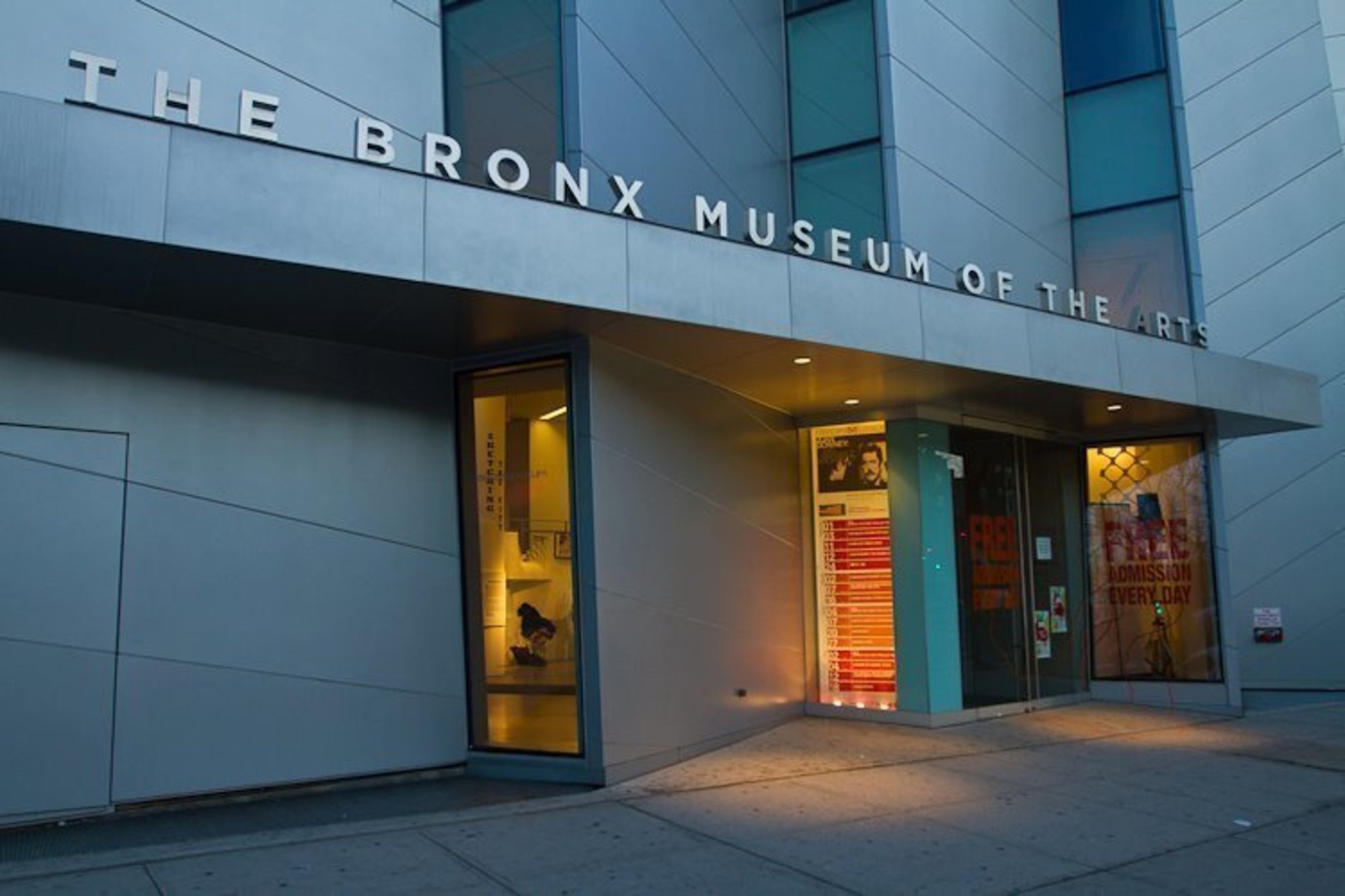
Bronx Museum of the Arts | Artsy
The Bronx Museum (Source)
The Bronx Museum has recently hired Jasmine Wahi as the Holly Block Social Justice Curator to "prompt dialogue and subsequent change towards a more socially equitable and just society." A huge part of her job as curator is to consider who the exhibition is created for and how to bring in stories and discourses that are often suppressed and go beyond a single audience narrative. Wahi also encourages museums and galleries to not only purchase more art created by people of colour, but also provide investment through "respect, attention, and intellectual investment." Reconsidering who is hired and their intentions within the museum is at the heart of a museum's innovation and their capacity to change.
Image may contain: text
Museum Professionals of Colour Logo (Source)
Within the Master of Museum Studies program, Museum Professionals of Colour (MPOC) are starting within the educational institution to dismantle racial bias before Masters students officially enter the museum field. MPOC was created by students who realized that their lived experiences were not being adequately addressed in academic and professional settings and were willing to put in the emotional labour to ensure that the art, history, and other disciplines that permeate museums serve a wider audience, instead of privileging a white colonial one.

Jasmine Wahi – Glassbook
Jasmine Wahi (Source)
Some of the necessary changes, such as diversifying art collections or staff hiring, have been met with concerns over meritocracy. However, a true meritocracy has never existed. The racial, social, educational, and other boundaries have always been successful at rejecting people who do not serve the colonial project, no matter their ability. As Jasmine Wahi has said, "I can say with zero doubt that there are plenty of mediocre white men in positions of power who have not risen through the ranks based on their intellectual or creative prowess," not in attempt to discount many talented white men but rather dismiss the myth that good work means reward.

The problem is not the desire to witness and experience art and science, but rather how it is done through colonial institutions that I believe are capable of change if the right steps are taken. It is my hope that museums will cease to only show exhibitions and instead innovate to become a trusted centre for the local art community and general public, while still welcoming international audiences.