
Showing posts with label Dominica Tang. Show all posts

12 March 2021

A YEAR IN MPOSEASONS: REFLECTIONS ON COLLABORATION AND MAKING CHANGE

Special Edition | Dominica Tang, Chloé Houde, Denise Tenio, and Megan Sue-Chue-Lam


We’ve all been hustling through and dealing with internships, jobs, school, MPOC projects, exhibition development, and general pandemic stress and we haven’t had the time to really process what has happened with MPOC in our first year of existence. Despite all the physical barriers, this year has really been about connecting and collaborating. We wanted to take this opportunity to reflect and share what we have learned, and give thanks to these amazing relationships.

Four plants representing the four seasons
Source: Megan Sue-Chue-Lam


Spring — Birth

We formed MPOC because we felt neglected in a program that didn’t address our unique experiences in museums as people of colour. As early as spring 2020, we met and spoke with Wendy Ng, J’net Ayayqwayaksheelth, and Armando Perla, who are museum professionals of colour addressing and tackling issues of inequality and violence in their museums, in academia, and the larger museum field. Reaching out to people can be as nerve wracking as it is exciting. You want to do right by your collaborators. Listening is foundational to understanding how to best support each other. It will inform your practice moving forward and help you figure out how to best support each other. The Museum Detox panel was a great opportunity to listen to IBPOC for both us and the iSchool and figure out how to support fellow students. Spring was also a time of incredible student support from you all, as well as MUSSA and Musings.

In case you didn’t know, MPOC started out as a bigger group of museum students of colour. To them: thank you so much for “planting the seeds” of MPOC and for your ongoing support; we hope that we are doing right by you.


Summer — Growth

Spring was the catalyst for building so many new connections and as our network grew, our sense of who we are and where we want to take MPOC grew with it. During the summer, we learned a great deal from professionals in Canada and abroad, doing the work and holding space for marginalized folx in their community. Through MPOSees and a number of other projects, the collaborations and conversations had with these individuals has informed our own practice as an organization that strives to uplift IBPOC voices.

Summer was also a time of understanding how much change people could inspire if we advocate for each other. Social justice movements against anti-Black racism defined the warmest months of the year, and cultural institutions felt the heat now more than ever to take accountability for upholding systemic racism. Our faculty was also pressured to reevaluate its operations, as student-led protests revealed the severe lack of support minoritized students and alum faced at the iSchool. While we were unsure of how our actions would affect our careers before they had taken off, we were firm in our convictions and believe that taking action is doing the right thing. As we look back at summer 2020, we feel proud (and to be honest, a little impressed) of the work we’ve done, but we also recognize how much room there is left to continue growing.

Though there are things we still have to figure out – like pacing ourselves – we’re looking forward to all the lessons we’ll learn in this second year of MPOC.
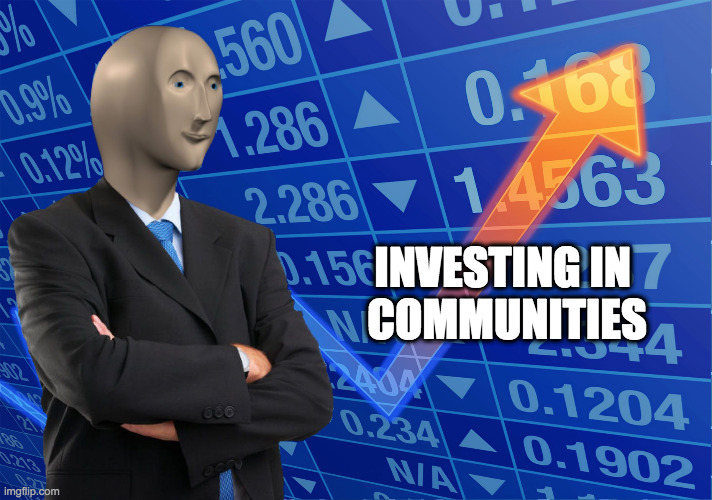
An image of a mannequin dressed in a suit looking at stocks next to white text that says "Investing in Communities"
Source: Chloé Houde


Fall — Harvest

By the time fall rolled around, we felt so grateful for all the connections we had made, but we knew we needed to slow down and reflect upon all the initiatives we had undertaken. To be honest, we were burnt out. We realized that a large part of the work we do is spontaneous by nature, but that we also need to be more intentional about who we work with and what we work on. We knew that it was important to continue growing by strengthening our existing relationships, rather than branching out more and more until we were unable to dedicate time and energy to nurture them.

With our impending final semester at the iSchool and the prospect of increasing quarantine isolation looming over us, we knew that the upcoming winter would be harsh, so we were careful not to overextend ourselves. Instead, we focused our efforts on the Diversity and Inclusion in Information Sciences (DIIS) Speaker Series, a collaborative event initiated by the Accessibility Interests Working Group (AIWG), in order to bring our focus back to the faculty where we have our roots. This series allowed us to create more connections with local organizations and artists, and reminded us of the astounding work going on in our city.


Winter — Hibernation

Although winter causes many creatures to hibernate, our academic, professional, and personal commitments showed no signs of slowing down. We did, however, wind down our more external MPOC operations to focus on our internal development, but not before completing our DIIS series. We also released our brand new website and the first MPOSees interview we recorded back in May, two projects we had steadily been working on for months. It felt amazing to see the fruits of our longer term endeavours come to light, like children borne out of sweat and strained eyes and the cold and darkness of a pandemical winter, especially since these were more permanent than other initiatives we’d undertaken before.

We recently achieved a major milestone — our first anniversary of being ratified as an official UofT student group! This year has been a wild ride, where at times we’re in control and other times we’re going along for it (and sometimes we’re stuck upside down in a loop-de-loop). We went through lots of late nights, choppy video calls, faking it till we make it, and hyping each other up this year, and we don’t regret a second of it. As the end of this semester and of our degrees alarmingly approaches, we’re getting ready to plant more seeds as we head into our second year of existence. Without forgetting, of course, the hard work of clear-cutting done by museum professionals of colour before us, which has made everything we’ve done possible. As we look towards the future, we’re taking time to reflect on what we’ve accomplished, what we can improve on, and what MPOC is becoming.


Source: Chloé Houde

3 August 2020

FOOD DREAMS: FINDING OUR MUSES


A Muse Bouche | Dominica Tang and Lindsay Chisholm


Happy summer days to you all! We have previously written on pressing issues such as the impact of COVID-19 on food and racism in the food industry. We are putting our other ideas on the back burner for now but we’ll get back to the meat of things in our next articles. In light of the sweltering humid heat of Toronto, we have decided to cool things down and take a more introspective approach to this month’s writing. We thought this would be an opportune time to reflect on our food journeys and dreams through a light conversation with each other.

Mother of All Foodie Muses, Julia Child, photographed in her own kitchen. 
This kitchen was reconstructed within the Smithsonian's National Museum of American History.

Dominica: Lindsay, you are one of my favourite people to geek out about food! We’ve picked A Muse Bouche, so clearly, you have a special affinity for food in museums. What do you find so special about it?

Lindsay: Food is universally necessary for survival and intertwined into all aspects of life; through its research we can learn more about what it means to be human. The examination of tangible foodways can help uncover intangible concepts, whether they be reflections on society, culture, economics, and/or politics. Personally, I’m interested in people from past civilizations through the study of “edible archaeology”. What eats at you to study food and museums?

Dominica: Yes I think we both love food for its ability to provide insight on so many facets and intersections of human relationships, ideas, and activities. I'm interested in the broader modes of learning that multi-sensory experiences can provide, and intrigued by food as a medium for immersive learning. Most of my experiences with food studies in academia were purely theory-based, and while I thoroughly enjoyed that, my knowledge was enriched through cooking and baking in the historic kitchens of museums. I’d love for food to breach the walls of historic kitchens and infiltrate the larger museum sphere. COVID-19 has certainly stunted the growth of this aspect of museum learning, and I’m interested to see how museums further develop ways around this new challenge. 

Lindsay: What would your ideal museum food experience look like? Mine would be within a recreation of a Roman-style villa. I’d sample the elaborate tastes of the Roman elite while lounging on a kline atop an ostentatious mosaic within the triclinium. Bring me a globi and some peacock or boar to snack on. Possibly an edible chubby dormouse

"The Unswept Floor" mosaic in the Villa on Aventine Hill in Rome, created during Hadrian's reign. Source.

Lindsay: I’d also want to experience the life of a cook for a prominent family in a working kitchen. The grueling task of bread making can be recreated from this time period. The smells of sweat and smoke while enclosed in a hot cooking space would transpose oneself into the mentality of poorer Romans. These harsh and arduous working conditions exemplify what the daily life of a worker might have been like. Too often we get lost in the romanticization and wonders of elite and mythos of emperors, forgetting the larger portion of the population. Further dialogue should then take place within museum contexts that displays artifacts from antiquity in relation to food stuffs and cooking ware. And of course, my forever love of garum (the Monosdium Glutamate (MSG) of the Roman world). Who wouldn’t want to sample putrid fish guts?

Dominica: I love MSG and fermented fish sauce, so I would totally be into that. Echoing your thoughts on focusing on the general population, I want food and other multi-sensory experiences in museums to turn more towards marginalized histories and present-day experiences. MSG is still labeled as unhealthy, which is the legacy of a white scientist’s racism against Chinese immigrants. I still see “MSG-free” labels on Chinese food products and at Chinese restaurants. Of course, food can bring people together, but people also use food to antagonize, demonize, and ostracize a community as we’ve recently seen with the “bat soup” myth. As we’ve mentioned before, museums have a large platform to shed more light on these stories and I think food will play an important role in encouraging greater empathy towards these experiences. The Museum of Food and Drink put on the multi-sensory "Flavor: Making It and Faking It" exhibit, which included the science and history of MSG. The exhibition team offered home-made MSG tablets for visitors to try! 

The end of our conversation concluded with a hypothetical discussion about our new life goal to open a Michelin star restaurant together. The menu will be historic food inspired using kitchen instruments from that era. A historian and a classicist. What a dream team. GoFundMe account coming soon! (Just kidding!) 

                                Till next time in Julia Child's signature sign-off, "Bon Appetit!"

17 July 2020

"ARE WE EVEN QUALIFIED TO WRITE ABOUT IMPOSTER SYNDROME?": A GUIDE ON HOW TO REASSURE YOURSELF THAT YOU'RE DOING JUST FINE

The Grad School Guide | Megan Sue-Chue-Lam, Denise Tenio, Dominica Tang, Chloé Houde

Made by Megan Sue-Chue-Lam

Hello incoming graduate students! We — Megan, Chloe, Denise, and Dominica — are the current Museum Professionals of Colour (MPOC) executive team. MPOC aims to support students who identify as BIPOC and works toward making the MMSt program more diverse, inclusive, equitable, and accessible. We are three Asian cisgender women and one white cisgender woman. Our group is limited by our own lack of diversity and we do not speak on behalf of Black, Indigenous, and other People of Colour. We strive to make our program, and by extension the museum field, a safer space for us all.

When we met each other and our incredibly accomplished colleagues, we felt our imposter syndrome skyrocket. Generally, imposter syndrome is the feeling that you are where you are by chance rather than by merit, and that you don’t deserve to be in that position. It comes with an unhealthy fear of being outed as an imposter at every achievement and opportunity you earn. Dr. Suzanne Imes and Dr. Pauline Rose Clance first identified the psychological and sociological phenomenon in 1978. While many people can experience imposter syndrome, it disproportionately affects those who’ve been marginalized, including women and people of colour.


As much as imposter syndrome is an internal condition that distances us from our peers, systemic external factors amplify the symptoms. Too often, students feel unable to take advantage of the resources available to them because these resources are inaccessible. Lack of appropriate resources, too-long waiting lists to see counsellors, and numerous other barriers all add up to create a dangerous culture of isolation and unattainable self-sufficiency [CW: link discusses mental illness, sexual violence, suicide].

Feelings of inadequacy can be magnified by the fact that faculties routinely validate those who have more “traditional” academic and professional backgrounds, to the detriment of others. When schools affirm the experiences of those who’ve had the privilege of focusing on their academics and not on other needs, this further alienates already marginalized people. For example, only select students are able to take on unpaid internships in order to make crucial professional connections and build up targeted work experience.

On top of all this, there’s the harsh truth of tokenism. Tokenism is an unfortunate reality that is made all the more apparent by the lack of equity-focused resources, and can lead you to question your self-worth. Being aware that there are likely only a few openings for people like you can lead to a damaging sense of competition within oppressed groups, when really, we deserve to feel solidarity amongst those we identify with. Perhaps most importantly, we must remember that it is not our fault. It’s up to the institutions that benefit from our work and our identities to change, in order to create a culture of sustained action and justice.

Made by Denise Tenio | Source

With all that being said, how can we monitor our imposter syndrome and mitigate its effects on our mental health?

First off, find your support system!

Identify the people in your life who you can trust, or who share similar life experiences as you, to talk openly with about your imposter syndrome. Whether that’s your family, friends, or peers, having a strong support system is extremely important, so you don’t end up carrying the weight of your anxieties all by yourself. We can wholeheartedly vouch for how uplifting it is to find your people in this program. Make friends with others in your cohort who will encourage you as fellow emerging museum professionals.

You may be wondering, “how do I find my people?” One surefire way to develop closer bonds with others is by participating in student life! In our MMSt program, we have three associations you can get involved with: The Master of Museum Studies Students Association, Musings, and Museum Professionals of Colour (that’s us!). Reach out to your student representatives on these organizations and feel free to chat with the second years in each group for advice. There’s also an Incoming 2020 iSchool Students Facebook group that you can join to meet other first year students. However, while extracurriculars are a great way to meet new people, we acknowledge that they aren’t for everyone. Our program requires a lot of group work, so even that can be an easy way to connect!

Second, realize that your worth isn’t tied to academia.

For many of us who’ve chosen to pursue academia, it can be difficult to separate our sense of self from the work we produce as students. This dangerous mentality is what often leads to imposter syndrome. If we fall into a rut of convincing ourselves we’re not capable enough, this ultimately diminishes our mental health. When you feel your imposter syndrome being triggered, try to remember that you are so much more than your academic abilities. One way to remind yourself of this is by practicing self-affirmations daily. Repeating phrases like “I have endless talents which I will utilize today” is a great way to start or end the day and, over time, could positively influence your self-esteem.

Lastly, reach out to academic support services within the University of Toronto or the iSchool.

The iSchool has a number of staff members whom you can meet with to talk about your worries. However, if you find yourself too nervous to contact them yourself, consider reaching out to peer groups or intermediaries such as iStudents for Mental Health who can get you started on finding the help you need.

Made by ErinWhite1 | Source

Now, in terms of what can be done to change the institutional culture that breeds imposter syndrome, here’s what people in positions of authority or leadership can do to make a significant difference.

First, be proactive in letting your students know how they can get help and how the school is there to support them.

It’s not always obvious who to go to for questions or problems, especially if a student’s concerns have to do with matters outside of course content. Invite Student Services staff to your classes so that everyone is familiar with them, what they do, and how to reach them. Similarly, be proactive in seeking out professional development opportunities that specifically focus on inclusion, equity, and accessibility for your students. Make them feel supported in every sense.

Second, familiarize yourself with your unconscious biases.

Understand that imposter syndrome affects different groups of people disproportionately, based on different factors, such as race, sexuality, gender, mental health, and many more. Make your official and unofficial class policies more accessible, and make your course content more diverse. Practice active listening in order to ensure that you are interpreting your students correctly and to show that you respect their contributions.

Finally, don’t take for granted what people know.

Especially in a program like MMSt, where students come from such various academic and professional backgrounds. A concept you assume to be common knowledge might not be widely known by others — this can be alienating and trigger students' imposter syndrome. Understand that your students come from diverse backgrounds and experiences, that they all bring something enriching to the table, and that this diversity is a strength that should be fostered.

But what do we know! ¯\_(ツ)_/¯

Here are some inter-faculty peer-support groups and mental health resources:
  • Sherry Dang is the Associate Registrar and oversees Student Services. She’s amazingly supportive!
  • MUSSA hosts amazing events and opportunities for you to meet your peers.
  • As for us at MPOC, we have openings on our team reserved for first years (to be announced!) and there are always opportunities to get involved in events. You can email us or find us on Facebook, Instagram, Twitter, and LinkedIn.

Sincerely,
The MPOC team ❤︎

Made by Chloé Houde | Source

8 July 2020

MIGRANT AGRICULTURAL WORKERS' RIGHTS


A Muse Bouche | Dominica Tang and Lindsay Chisholm

  
Our previous article, “The Museum In My Kitchen: Trying WWI Recipes,” centered on the role of food in museums during a pandemic, specifically within the context of food shortages in Canada. We explained that the rise in food shortages in Canada were brought on in part by the travel ban that prevented many agricultural migrant workers from entering the country. Agricultural migrant workers have since begun work on farms again, but that does not mean our food industry should return to business as usual. Many Canadian farmers violated the basic rights of these workers, and continue to do so. This has only worsened during the pandemic. Although discussions of these human rights problems are only now becoming dinner table conversations in many Canadian homes, these issues are endemic to Canada’s colonial structures and have occurred for generations.

Fresh produce at a grocery store. Source

European settlers in Canada have been exploiting people of colour for cheap labour since the late 1800’s. According to the Royal BC’s Museum research project on “Ethnic Agricultural Labour,” the workers were Indigenous, Chinese, Japanese, Doukhobor, and Portuguese. Today the agricultural sector is heavily dependent on seasonal migrant workers, mostly from countries in the Caribbean and Mexico, through the Seasonal Agricultural Workers Program (SAWP) and the Temporary Foreign Worker Program. The agricultural industry is labour intensive and requires highly skilled workers. In the bee keeping sector, for example, one must have the ability to identify the queen among tens of thousand of worker bees and detect mite infestation. A day’s work can consist of long hours, working with dangerous machinery, and under difficult climatic conditions. Workers must adhere to these strenuous working situations with inadequate pay. Living conditions on these properties are no better. They are often cramped, dirty, and receive little ventilation. The authors of “Canada jeopardizes migrant workers amid pandemic,” likens these conditions to an “open-air prison.” The sordid living and working conditions have become a hotbed for the rapid spread of the virus. Given the cramped conditions, workers cannot quarantine or work while social-distancing. Consequently, there are three reported deaths and hundreds of new COVID-19 cases springing up within these farms. Recently, the Nature Fresh farm in Ontario has shut down due to an outbreak of COVID-19. This situation truly speaks to the inadequacy of Canada's food infrastructure. Graeme McKay put it best in their editorial cartoon: "Covid grows in Ontario."


Currently, there are no formal structures in place, either in the programs that bring workers to the farms or in the federal government, that effectively hold these employers accountable for the mistreatment of their workers. Additionally, migrant workers have very few rights to express concern as they are not permanent residents. Their unstable and uncertain status with lack of ability to unionize, makes them vulnerable to exploitation by their employers. The work permit visa stipulates that migrant workers may only be affiliated with one employer per temporary residency contract term. Since they are tied to one employer, speaking out against them would risk their deportation.

The mistreatment and exploitation of migrant workers is inherently racist, and a violation of their human rights. Additionally, some Canadians felt emboldened by COVID-19 to express their racism more explicitly through racial profiling, barring these workers from entering shops, and surveilling them. To document the completion of the self-isolation period for individuals who have recently arrived in Canada, The Haldimand-Norfolk Health Unit created identification cards. However, the health unit only distributed the cards to migrant agricultural workers and have since discontinued the cards. The association of plague with racialized bodies is not a novel phenomenon in the discourses of white supremacy. Recall just earlier this year when many attacked Chinese people — both verbally and physically — and vilified their food, because some scientists speculated that COVID-19 originated from wet markets in Wuhan, China. Mainstream culture treats racialized bodies as if they are “a risk, rather than at risk.”

A banner for migrant workers rights at the May Day of Action rally. Source
Museums, such as the Canadian Museum of Human Rights and the Royal BC Museum, have researched and exhibited these issues to some extent, but museums are more connected to migrant workers than in the collection of migrant workers’ oral histories or in educating their publics on the injustices that these workers face. Many museums offer food programming or provide food services, making them part of the food supply chain where they likely benefit from the labour of migrant agricultural workers. As part of the food supply chain, and as cultural institutions, museums should practice ethical food consumption. Indeed, museums have discussed ethical food consumption practices in the past and there is already a responsible procurement policy published in A Sustainable Development Guide for Canada’s Museum Food.  However, museums, as cultural institutions who are beholden to their publics, ought to take a more active and outward stance. Jordan Fee opined, in “‘Where Does This Come From?’: Pondering Provenance In The Global Supply Chain,” that the food industry ought to take a page from museum’s collection policies on provenance, but perhaps there is mutual learning to be had. Food provenance can persuade consumers to stop purchasing from unethical businesses, such as the farmers who are guilty of exploiting and discriminating against migrant agricultural workers, and demand that guilty farmers be held accountable and regulations be put in place to ensure worker's rights are upheld. This approach is already taking place in the museum's collections as seen in the repatriation of stolen objects, but museums ought to dissolve that silo-mentality and investigate other parts of the museum as well. If only abandoning the practice of stealing artifacts is not good enough, then only halting business with farms that violate human rights is not sufficient either.

As individuals, what we collect and ingest must follow these same standards. This is a time of introspection. Are the foods you consume ethically sourced? How are you supporting migrant agricultural workers? Armando Perla's chapter "Representing Agricultural Migrant Workers in the Canadian Museum of Human Rights," in The Idea of a Human Rights Museum, underscores that while some farmers- typically those who own larger farms- are the ones violating the worker's basic rights, the Canadian "government's inactivity has allowed the perpetuation of a system that discriminates against and exploits foreign workers without any accountability." As such, we ought to hold our government accountable for their inaction and for upholding  these oppressive systems. You can sign the Migrant Rights Network’s petition to call on federal, provincial, and municipal leaders to provide migrant workers with health care, with worker’s protection, and to grant them permanent resident status.

1 June 2020

THE MUSEUM IN MY KITCHEN: TRYING WWI RECIPES


A Muse Bouche | Dominica Tang and Lindsay Chisholm

  
The National WWI Museum and Memorial launched the online exhibition “War Front: From the Home Front to the Front Lines,” in 2014. To compliment the exhibit, it features a 1918 cookbook entitled “Win the War in the Kitchen,” and invites the audience to re-create war-time recipes. With the support of the Woodrow Wilson government, the United States Food Administration originally published this cookbook to further inspire women to “take up arms” and mobilize certain skills on the homefront.

                 
National WWI Museum and Memorial in Kansas City, United States. Source.


Blogs and news outlets have rediscovered this exhibit to provide the public with ideas on how to adapt their meals to the increased food shortages and to support their audience emotionally during this time of extreme stress. The increase of food shortages are brought on by mass hoarding of resources and a shortfall of agricultural labourers. The exhibit is finding relevance and purpose in a COVID-19 context, and we aim to find what new meanings have emerged because of it and the differences between cooking historic recipes in the museum and our homes. Lindsay and I chose two recipes to make and eat with our families at home and shared our experiences with each other.

Dominica: I chose to make potato bread and poultry with peas because their flavours were complementary. They also shared quite a few ingredients, which kept my grocery list nice and short.

Potato Bread  [Left] and a Poultry with Peas dish [Right]. Photographs courtesy of Dominica Tang. 
Lindsay: I made a scalloped cabbage dish and a tomato and bean stew, akin to a “Meatless Monday” menu. The United States became a major contributor for food supplies for the frontline when they joined the war. Meat consumption was restricted on the home front so that the meat could be exported for the frontline.
Scalloped Cabbage dish [left] and Tomato and Bean Stew [Right]. Photographs courtesy of Lindsay Chisholm.
Dominica: My family had trouble purchasing fresh meat, especially at the beginning of the lockdown. The number of dairy products that customers can purchase are also being limited in many grocery stores. So how did you find cooking and eating these dishes?

Lindsay: My prior experience in museology and food stems from the realm of edible archaeology. The key to unearthing stories from the past is through the systematic study of the archaeological record. It was this mindset that restricted any creative decision-making during cooking. It took every morsel of my being not to doctor up these recipes and alter the steps of seasoning to retain historical credibility. The lack of aromatics [onions, garlic, and herbs] made the food bland. For instance, without browning your butter first, it lacks a nutty richness and a pleasant aroma. This blandness may be accredited to the food shortages during the war. Did you have similar sensory issues?

Lindsay put on a cute, frilly apron for the occasion! Photograph courtesy of Lindsay Chisholm.
Dominica:  I actually used the recipe more as an inspiration than as a strict guide and as such, I took a creative licence in “recreating” the historic recipes. To the poultry and peas recipe, I added MSG, bacon, parsley, and garlic to add more flavour and colour. Both recipes called for bacon fat, so it made economical sense to also add the meat and not waste it. The mashed potato kept the bread wonderfully moist and fluffy, but the bread was extremely bland. I generously coated each slice with salted butter.

Slices of potato bread toast paired with a hot cup of coffee. Photograph courtesy of Dominica Tang.
Lindsay: Did you find your cooking was drastically altered when experimenting in your at-home kitchen rather than within a historic kitchen at a house museum?

Dominica: Yes! I have made potato bread before from a 19th century recipe in Mackenzie House’s historic kitchen, where I bake in a wood-fired iron stove and followed the recipe to a tee. An unofficial exception of the museum and our visitors was to recreate the recipe as accurately as possible. At home, I was free to incorporate and accommodate for my personal tastes and my family’s dietary preferences. My family was more interested in trying something new, rather than sampling food from a specific historic period. All the extra ingredients were still historically accurate to the period and location, MSG can be found naturally in products like cheese, and cooks have always altered their recipes to suit their diners.
Dominica's potato bread loaf in the historic oven at Mackenzie House museum [Left]. The bread tasted delicious with a bit of butter, jam, and marmalade [Right]. Photograph courtesy of Dominica Tang. 

Lindsay: That’s very true. By tracing histories from the past through food, we can make similar comparisons between how we examine recipes of the early 20th century to that from ancient societies. In “Win the War in the Kitchen” and Roman culinary sources, like Apicius, both lack detailed information on measurements, amounts of foodstuffs, and cooking times. The writers expected the audience to be experts in their field who would have taken liberties with their art. Dominica, you interpreted the record like a chef from the past by adding your own fixings! We were both able to incorporate museum based-programming for at home use. It is through creativity and connection that a person can figuratively leave the confines of their home isolation and be transported into a past world of exploration.

Digitizing and sharing these historic recipes with the public gives the audience control over their edible museum experience and provides access to them when people need it most. We chose to write about “Win the War in the Kitchen,” because it became a COVID-19 relevant project through public interest instead of the museum's. People are interested in museum programming that distracts them but also helps make sense of the world. Being a community-centered museum and appealing to an audience during COVID-19 goes beyond providing online education, entertainment, and emotional support. In times of crisis, museums should, as Nina Simon argues, serve the needs of people who are most vulnerable to the social, mental, and physical consequences of the pandemic. The Brooklyn Museum, for example, partnered with Campaign Against Hunger and donated their parking space to serve as a free food-pick up site. Will museums continue this type of community work in a post-lockdown world? We sure hope so.

21 February 2020

VICTORIAN AFTERNOON TEA: CATERING TO A GREATER AUDIENCE THROUGH MULTISENSORY PROGRAMMING

Program Reviews Dominica Tang

My sister's favorite thing to do in a museum is sleep. To be fair, some of the benches are rather comfy and the galleries can be awfully quiet. I, on the other hand, would join the museum equivalent of a Tuscan wine tour faster than you can say "you don't have enough money, Dominica!" I get it though. Museums just do not appeal to everyone. Some people are not interested in reading the text panels or studying the artefacts and specimen. However, their perspective is still valuable to the museum. It might not always be that they are not interested in the content, but that the way in which museums present that content is not interesting enough. Multisensory-rich programs can accommodate for these visitors, create entry points into the exhibits, and, potentially, change their relationship with museums.

Last summer, I was tasked with planning a week-long family trip to London, UK. In the effort to make our trip meaningful and worthwhile for the entire family, I strategically selected only a few museums that I thought best catered to both mine and my sister's interests. One such museum was the Victoria and Albert Museum (V&A) because it offered a unique opportunity to try Victorian Afternoon Tea. This program was created by Tasha Marks, an award-winning artist, food historian and founder of AVMCuriosities, in partnership with Benugo, a catering franchise that brings food to different public spaces in a creative and sustainable way. Marks is a wonderfully talented curator and artist,  who holds an interesting perceptive on museum programming and story telling. With exhibitions called 5318008 (Boobies spelled backwards) and The Edible Archive, it is no wonder that she has captured the attention of so many well-established museums and formed partnerships with them. Her immersive and multisensory programming captured my sister's interest in new food experiences and made her visit to the museum an ounce more memorable.

Photograph courtesy of Benugo.

The Victorian Afternoon Tea program costs £30 per person with the option of upgrading to the Prosecco Afternoon Tea for £35 or Champagne Afternoon Tea for £38. It takes place every Friday between 1:00 pm and 7:00 pm in the Morris Room and requires a reservation via email. It comes with every item on the menu and unlimited tea! The lemon and elderflower tea was my favourite by far and I drank a few pots worth of it. Yes, a few pots worth. Marks’s curation of this collection of bite-sized Victorian foods from the second half of Queen Victoria's reign balances sweet and savory dishes, and more familiar recipes and lesser-known ones. They range from Crayfish and Mayonnaise Sandwich (1890) to the spongey Victoria Sandwich (1901). 

Menu Courtesy of Victoria and Albert Museum. 

Gooseberry Tart (left) and Lemon and Seed Cake (right). Photograph courtesy of Benugo.

It is quite pricey and, certainly, not for everyone. However, it highlights how the sociability of food lends itself to developing dynamic museum programming that effectively engages with a wider variety of audiences. It especially caters to visitors, such as my sister, who are seeking novel experiences to share with their friends and family.

At the most superficial level it serves the experience economy. Food programming, however, is far more than a tourist attraction; it has the potential to be pedagogical, immersive, accessible, artistic, experimental and, overall, an asset for engagement in informal learning spaces. Mark's curates multisensory environment creates a quasi-simulacrum of Victorian aristocratic life that encourages full-bodied learning without the visitor being fully aware of it. This article is a testament to the fact that this program has truly stuck with me and that I still think about this absolutely scrumptious experience several months later.


The choice of location is, though in the most subtle way, a significant factor to the success of this program. The Morris Room, originally called the Green Dining Room, is located in the 19th century refreshments center. William Morris, an activist, interior decorator, a champion of artisanal methods of production over industrialization, and an artist who was commissioned by the museum to decorate the Green Dining Room with light green wall paper, teal wood paneling, and stained glass. The V&A also display Morris's work throughout the rest of the museum.  In this way, the room doubles as an exhibit that is not unlike the ones in the main halls. In addition to the continuity of Morris's art, the Victorian foods carries forth a pedagogical and historical significance aligned with other museum artefacts. This pocket within the museum creates an environment that is conducive to boisterous  discussion, infused with delicious smells, and wholeheartedly encourages hands-on learning, all the while respecting visitors who prefer silent meditation in the gallery spaces or have allergies.

Morris Room at the V&A. Photograph courtesy of Benugo.


Indian Ham Sandwich (left) and Nasturtium Open Sandwich (right). Photograph courtesy of Benugo.

Working in living history museums where the multisensory programming is embedded in the exhibition spaces and speaking with other food studies enthusiasts, I wanted to see larger institutions move away from the current model of separating food and exhibits and to adopt this type of environment.  The symbiotic relationship between Marks's artistic program and the Morris Room demonstrates that it can be done in a way that accommodates for all types of visitors.


The Tang family post-afternoon tea. Photograph courtesy of Dominica Tang.

My sister was engaged for the entirety of Victorian Afternoon Tea; a rare occurrence in her museum-going experience. Be sure to check out the rest of Marks's highly experimental and eye-opening work, and I will see you in the next one!

20 January 2020

VERTICAL INTERSECTION: HISTORIC HOUSE SPROUTS ANEW


Program Review Dominica Tang and Lindsay Chisholm

Mackenzie House Museum is hosting the "Vertical Intersections Installation, Workshop & Pok¡ Launch" created by Diana Guzman of IDITA Design Services, every Sunday between January 19th and 26th as part of the DesignTO2020 festival. Guzman is a multidisciplinary industrial designer and architect that works with several mediums to create human centered designs. Her newest product, named Pok¡, is a paper-based, yet waterproof, sleeve that holds small plants that can be decorated with crayon and hung indoors or outdoors. They start out as a single sheet of paper and is transformed into a three-dimensional plant-holder with a few folds. Pok¡ is named endearingly after the pouch’s poke-ability and is an expression of Guzman’s passion for bringing people together through art and gardening.

Photograph courtesy of Dominica Tang and Lindsay Chisholm
At Mackenzie House Museum, the plants are hung on an upright rack creating a living exhibit that displays the personalities and creativity of individuals who share an interest in Guzman’s work; hence, a “vertical intersection.” The Vertical Intersection program serves as a quasi- communal garden that fits perfectly in the concrete jungle where green spaces are far and few between. It caters to anyone looking for a mini escape from the brutal wintriness of January and wishes to be in the presence of some greenery, creativity and great company.

While we sipped Moringa tea from Colombia and listened to El_Búho and Nicolă Cruz’s music, the ambiance of Mackenzie House museum shifted from being strictly a pedagogical atmosphere to a more relaxed space for open discussion. Each of us relinquished personal stories about our love for plants and our studies, which was followed by laughter. This eased us into a creative mindset where we felt connected and comfortable within the space. After an in-depth presentation on her creative process, Guzman demonstrated and patiently guided us through the assembly process at our own pace. This felt more like a conversation among friends than an educational tutorial. Finally, we decorated our Pok¡s with crayon and placed a small plant of our choice in each one. Here are our finished plant-abodes:

Photograph courtesy of Dominica Tang and Lindsay Chisholm


Toronto, during the long, barren winter months, can feel restrictive, isolating, and cold. This can make any Torontonian, especially those residing in our infamous shoe box-sized apartments, feel gloomy and disconnected. Newcomers, who may not have a local support system, can be further afflicted by the winter blues. Spaces of greenery can help relieve these feelings and serve as an oasis to escape the slush and greyness of the Torontonian winter. Guzman’s project creates green spaces to foster community building; it, as she puts it

“invite[s] locals into shared public space to grow plants, share stories, and create community. It nourishes opportunities for interaction and new friendships fighting loneliness and social isolation; grows awareness of local ecosystems and the importance of their protection and integration into urban landscapes, and educates the community to reclaim and create more green urban spaces.” 
Dominica Tang, Lindsay Chisholm and Diana Guzman. Photograph courtesy of deMirandaProducciones

Mackenzie House Museum's decision to host Vertical Intersections is something worth thinking about when considering the value and purpose of museum programming. Green spaces are not often associated with small historic houses. Furthermore, there is no obvious connection to the history of the museum, William Lyon Mackenzie, or to printing. Yet, it ties in with and enunciates the underlying values of Mackenzie House Museum, namely community building, diversity, and the well-being of their visitors. Museums in Toronto are striving to become loci of community building, but some museums activities such as self-explored and guided tours, though valuable in their own right, are not appropriate tools for such a goal.

A Pok¡ for Museum Studies Student Association (MUSSA) and one for Musings. Photograph courtesy of Dominica Tang and Lindsay Chisholm


Admission into the museum and attendance to the program is free, creating an inclusive and accessible environment. The space is inviting and allows for a wider range of visitors to attend, with a wider breadth of interests that not only pertain to history. There are few social spaces left, outside of our own homes, where we can gather and not expect to pay. Here, we can fully be in the moment and enjoy each other’s company without the looming guilt of spending money on leisurely and self-care activities.

Mackenzie House Museum, the structure and institution, and its community benefits from green-based programming. Participants bring a new liveliness and form connections to the space by taking care of the plants and colouring the Pok¡s with their own personal touch. This process helps visitors associate new memories and meaning with Mackenzie House Museum and can, potentially, change their perception of what a museum can be. A symbiotic relationship is formed resulting in the ongoing care of the heritage site.

Stay tuned for more museum programming adventures with Dominica and Lindsay, your program purveyors!
Photograph courtesy of Dominica Tang and Lindsay Chisholm

29 October 2019

FLOUR POWER: 1960S HOUSEWIVES COOKING IN TORONTONIAN MUSEUMS


A Muse Bouche | Jordan Fee and Dominica Tang

Hello, fellow Musers! For today’s post, I have invited another Museum Studies colleague, Dominica Tang, to chat with me about how the museum enacted gender roles within the framework of 1960s food programming in Toronto. More specifically, we will be taking a look at the workshops and demonstrations organized by the Women’s Committee at the Art Gallery of Ontario (AGO) and comparing them with some of the activities offered by the newly founded Black Creek Pioneer Village (BCPV), which opened to the public in 1957. Our discussion is inspired by Joan Sangster's article "Creating Popular Histories: Re-Interpreting "Second Wave" Canadian Feminism," and Irina D. Mihalache's “Recipes as Culinary Communication in a Canadian Art Museum: Lobster Souffle, Beef Stroganoff, and the Tensions of Gourmet Cooking in the 1960s."

During the 1960s, the AGO – then known as the Art Gallery of Toronto – held a series of cooking workshops and demonstrations, organized by a group of female volunteers known as the Women’s Committee. Famously, the Women’s Committee invited celebrated chefs, such as Dione Lucas and James Beard, to share their knowledge and training of gourmet cooking with a Canadian audience.

Conversely, the female volunteers at BCPV worked to demonstrate historic methods of cooking – ones that did not necessarily coincide with contemporary understandings of culinary expertise. In this case, knowledge was disseminated in a manner that was less formal, sometimes creating a romanticized portrait of Canadian life during the nineteenth century. However, as will be shown, this portrait also reflected 20th century understandings of gender roles and the domestic sphere at large.

Jordan: So Dominica, how did a place like BCPV come to represent a time other than the 19th century?

Dominica: Museums are a product of their time. Living history museums, such as BCPV, may represent and interpret a past time period, but their rationale and methodology is grounded in their contemporary environment and ideologies.

In 1960s Ontario, there was a push towards increased industrial and commercial capacity, which caused many women to leave the domestic sphere and enter into the professional world. The 1960s also saw somewhat of a reinforcement of gender roles, especially in suburban areas, which is reflected in some of the programming offered at Black Creek. In the 21st century, BCPV has softened these rules greatly. During my employment with BCPV, I cooked, cleaned, and spun wool as a Victorian farm wife would, but you would also find me in the tinsmith shop piercing tin squares or in the doctor’s office showcasing 19th century splints and stethoscopes. Additionally, my pixie cut at the time did not conform with the typical feminine Victorian style, so I covered it at all times with a house cap or bonnet.


Jordan: Although BCPV was certainly envisioned as an historical site, it represented an idealized construction that in many ways mirrored contemporary social values. While it was built as a reaction against rapid modernization, it also helped to strengthen existing gender roles in that it offered a space for female volunteers to teach female visitors about domestic practices. In this way, the programming at BCPV mirrored the cooking demonstrations taking place at the AGO.

Dominica: Both programs served as a means to assert gender identities through the improvement of culinary skills in different ways. The food programs at BCPV were, in the participants’ imaginations, models for imparting and reinforcing gender roles for their children. The motivation for women partaking in the culinary program at the AGO was to become better hosts as part of their duties as middle-class housewives. By offering a historical perspective, the female interpreters at BCPV were attempting to reiterate and reinforce the superiority of modern lifestyles. They, moreover, compared the laborious and time consuming mode of preheating a wood-fired brick oven to a simple push of the button on their stoves at home. I often did in my interpretation while the visitors watched me chuck yet another log into the fire and wipe the sweat off my brow. The AGO also sought to maintain this superiority but through a more direct manner by partnering up with the Consumer’s Gas Company and Canada’s Packers’ ltd.

Both the AGO and BCPV were maintaining the division of domestic labour, and offering female participants the opportunity to improve their own lives through the use of more efficient technologies, both in regard to the packaging and the preparation of food items. In order to understand the role of women in the 1960s, it is crucial to remember that agency does not simply come from rebellious or transgressive behaviour, rather these women were exercising agency by choosing to actively participate in the improvement of their own lives. Saba Mahmood, in her discussion on the Egyptian Islamic Revival, terms this understanding as “docile agency.”

Jordan: Still, it does seem that the AGO offered a less restrictive environment. The women who observed and participated in these cooking demonstrations were not as bound to the past as the female volunteers at BCPV. Rather than reframing the past through an understanding of the present, the AGO’s Women’s Committee worked to create new possibilities, which included modern techniques and ingredients. In addition, the gourmet cooking programs organized by the Women’s Committee were meant to elevate quotidian practices, often understood as mundane, into the realm of the miraculous.

Surprisingly, the AGO has not taken advantage of the 21st century obsession with all things food, which is reflected today in an almost total lack of food programming. BCPV, on the other hand, still offers butter churning workshops as part of school tours, and still keeps living animals on the farm. When I visited BCPV in 2018, I was quite surprised that these traditions had been maintained so carefully.
Posing Sheep at Black Creek Pioneer Village (Photograph Courtesy of Dominica Tang)

While the programming offered at Black Creek Pioneer Village in the 1960’s was perhaps more traditional, it has nevertheless been sustained well into the 21st century. Although the workshops and demonstrations organized by the Women’s Committee were perhaps more innovative, they eventually died out either from increasing food costs or decreasing interest; we cannot be sure. In any case, it is quite evident that both of these institutions helped to cement and subvert power structures and gender roles at a time when the general social landscape was undergoing a drastic transformation.
