Showing posts with label digital technology. Show all posts

22 March 2021

PLAYING (WITH) HISTORY: ACCURACY, AGENCY, & ACCESS IN HISTORICAL VIDEO GAMES

 Heritage Moments | Madison Carmichael


A few recent articles here at Musings got me thinking about heritage, pop culture, and video games. I’m always interested to see how the past is portrayed in pop culture, whether that be historical fiction or a period drama, but video games are a relatively new media form on this particular scene. As gaming becomes a more culturally pervasive business, heritage scholars and historians have begun to dig into how games – in any form – present the past to players. 

Historical video games can be considered a form of public history, as they communicate the past to the public outside of traditional academia. Historical games take many forms – shooters (think Call of Duty), strategy, adventure, civilization-builders, etc. Some operate similarly to historical fiction novels. They feature fictitious protagonists operating within a historical setting, and they don’t change too much vis-à-vis historical narratives. Larger franchises such as Assassin’s Creed market itself on how it interacts and presents historical settings. In recent years, they’ve hit upon Victorian London, revolutionary France, Ancient Greece, etc. The 2017 installment, Assassin’s Creed: Origins, has a “Discovery Tour”, a gameplay mode that specifically allows players to go on interactive tours curated by historians and Egyptologists.

Other games are more conceptual, and this is largely where you find your strategy games and civilization-builders. Rather than showing a player the past, they tell you how the past might’ve functioned through systems and mechanisms. For example, snatching valuable resources in Sid Meier’s Civilization can make all the difference in whether your fledgling civilization becomes a world power or not. This very result tells you something about the role that resources may have played throughout history. 

As someone who sunk far too many hours into Civilization V and grew up backseat gaming my brother through various installments of the Assassin's Creed franchise, I find it endlessly fascinating to consider how video games do history. (Source)

But are they accurate? Does accuracy matter in these games? And just what constitutes accuracy in a historical video game?

Tara Jane Copplestone conducted 156 interviews of video game players, developers, and cultural heritage practitioners on the topic of accuracy. She found that players, creators, and even heritage practitioners often considered accuracy to be how closely the visual elements of a game resembled source material. Developers specifically defined accuracy as related to physical components and their ability to render them to a known standard – “reconstructing things correctly,” or in other words, constructing them as closely as possible to how they would have looked in the past. While there is certainly value in this approach, it does resemble the authoritarian approach to history that museums have had for much of their own history. The idea that there is one story to tell in history seems antithetical to the medium of video games, which inherently present multiple experiences as a result of the player’s agency to make choices and steer the narrative.

In fact, the interactivity of historical games has been known to produce counterfactual narratives. Many seem to think that this is a strength, making games an interesting medium for exploring the pastJeremiah McCall insists that video games present an opportunity for exploration, control, and possibility, as well as serious consideration. To his mind, they can help to move history and heritage education beyond the philosophy of straight facts.

For some indication of what kind of games tend to be developed for this genre, and their breadth, Steam has categorizes them specifically as "Historical." (Source)

The definition of accuracy being how closely one might reconstruct something “correctly” certainly creates some stunning graphics. It’s the use of “correctly” that puts me ill at-ease. What does correct mean? Who defines correct?

Copplestone found, through her interviews, that several casual gamers thought that accuracy was contingent, based on the nature of heritage and history itself. One gamer argued that it was possible, and even necessary, for a game to have inaccuracies, because “isn’t history all just from different perspectives, so will always be somewhat inaccurate?” I’m not sure if I agree entirely, but I see their point. Some perspectives are, and have been historically, privileged over others, meaning that there are entire histories obscured or else plain silenced. This is especially critical when ideas of “accuracy” are weaponized in discourse surrounding historical media to sustain racist and sexist arguments for a lack of diversity and representation.

A player’s familiarity with the video game media form, and their awareness of their own agency within that form, lends itself to exploration. So, perhaps video games could provide a space to explore the past differently and to depart from the dominant narratives of history.

I could stare at this replica for hours. (Source)

As a final note on the interplay between video games, accuracy, and heritage, let’s take it back to 2019. After the fire at Notre Dame that year, many people turned to Assassin’s Creed Unity (2014), which was set in revolutionary France and possessed a virtual replica of the cathedral. It was created from scratch by artist Caroline Miousse at Ubisoft – a process which took around 5,000 hours.

In the wake of the fire, the ability to explore Notre Dame within the game apparently brought a great deal of comfort to those upset by the destruction. Sales of the game skyrocketed, and Ubisoft even made the game free for a time. In this CBC article, Ubisoft historian Maxime Durand admits that while the in-game cathedral is a one-to-one replica, it’s not totally accurate. Liberties had to be taken in order to optimize gameplay. Regardless, it’s clear that this replica mattered to people in that moment, and beyond that, it’s also a means for those who’ve never been to Paris – and who may not be able to visit – to access Notre Dame.

Much like period dramas, which tend to reach wide audiences, historical games reach many, many people, and whether they intend to or not, they teach their players something about history. The players' perception of that history – and the game’s overall portrayal of it – and whatever “accuracy” it may put forth is worth a think. How might these portrayals of heritage shape public history?

8 February 2021

GET OUTSIDE, STAY HOME: VIRTUAL NATURE AND MENTAL WELLNESS

 GLAM Gets Mindful | Melissa Mertsis 

_______________________________________________________________

Anyone else battling a case of the winter blues these past few weeks? Finding yourself itching to go outside, but wanting to stay safe at home? Missing the glorious rush of serotonin that comes from being immersed in nature? Never fear — virtual nature is here!

Being outside immersed in nature is always fun, but also has proven benefits. Research shows that exposure to nature and the outdoors might help reduce stress, increase attention span, and improve overall emotional wellness. Green, tree-filled spaces are also known to have an impact on blood pressure, lowering it as well as other stress-inducing hormones like adrenaline and cortisol. Even though we're all stuck at home (for good reason, of course) it's still important to get your fix of nature and all the good things that come along with it. Take a look at some of the tours and experiences below to get you outside, while staying home. 

A Clipper butterfly (Parthenos sylvia). Image retrieved from Cambridge Butterfly Conservatory website.

Visit the Cambridge Butterfly Conservatory through a 360-degree YouTube video featuring beautiful greenery, tons of natural light, and, of course, butterflies! If you want to venture a little further than Cambridge, Ontario, the American Museum of Natural History also has a 360-degree tour of their conservatory (complete with classical music, of course). 

Butterflies aren't your thing? No problem! Parks Canada has put together an extensive list of National Parks and Historic Sites to explore, powered by Google Street View. Venture all over the country, from Terra Nova National Park in Newfoundland and Labrador to the S.S. Keno National Historic Site in the Yukon. 

Terra Nova National Park. Image retrieved from Parks Canada

If you're less about the trees and more about flowers and foliage, you can also tour botanical gardens from all around the world. Check out the Buffalo and Erie County Botanical Gardens in New York with a virtual tour, or head across the ocean to the National Botanic Gardens of Ireland and take a peek at their herbarium or Palm House. 

If you're more of an animal person, we've got you covered — after all, "nature" can mean a lot of things! Lucky for you, places like The Toronto Zoo are also bringing nature to you. You can watch live streams of gorillas, giraffes, penguins, and meerkats on The Toronto Zoo's Twitch, TorontoZooLife, with zookeeper talks every weekday at 2pm EST. If you want more options to watch your favourite furry (or non-furry) friends, Explore.org offers live videos from all around the world — when else will you be able to watch Brown Bears fish at Katmai National Park in Alaska? 

A Brown Bear from Katmai National Park in Alaska. Image retrieved from National Park Service.

No matter your interests (or the state of our stay-at-home advisory) it's never impossible to enjoy nature. One of the benefits of operating online is that institutions and organizations are getting more and more clever with how to bring their in-person experiences to you at home, so take advantage of these amazing digital experiences.  Let's not forget the benefits that nature (virtual or otherwise) can have on our wellbeing —  get outside, stay home, and take care of yourself!

6 February 2020

DIVING INTO THE DIGITAL: EXPLORING HERITAGE ONLINE

Heritage Moments | Carly Wolowich

Museums are changing. With the advent of the World Wide Web, the physical bricks-and-mortar museum has now been extended, as audiences around the world are enabled to learn and engage with heritage from their very own home. Virtual exhibitions are subverting their seeming ephemeral nature to acquire a sense of permanence—as physical exhibitions have specific opening hours, online exhibitions are open 24 hours a day, 365 days a year.

As noted by Sara Angel, Founder, Executive Director and Publisher of the not-for-profit Art Canada Institute (ACI),
“Cultural expression is a need and a human right—one so fundamental that the United Nations General Assembly enshrined it in the Universal Declaration of Human Rights in 1948. Yet it is something that only 30 percent of Canadians are actively interested in or reached by”. 
With an increase in digital exhibitions over recent decades the answer as to how to interact with wider audiences seems to lie in the online realm.

Heritage Toronto, a charity and agency of the City of Toronto, celebrates and commemorates the city’s rich heritage and the diverse stories of its people, places, and events — both to make sense of our present and to inform our future. Creating programs such as Yonge Street: The Heart of Music City, a digital tour developed by Kristen McLaughlin, I find Heritage Toronto’s online presence exemplifies a sense of inclusivity and connection often remis in the walls of museums and art galleries. To learn more about Heritage Toronto’s digital creations I corresponded with Lucy Di Pietro, Manager of Marketing and Communications, to ask her some questions regarding the display of heritage online.

Image taken from Yonge Street: The Heart of Music City. Source.
In thinking of what work goes into creating web-based exhibitions and programming, Lucy notes there are two main streams which ideally should be developed in tandem – content development and digital production. The first, content development, follows much the same processes as it would for a physical exhibit or program; “the consideration of goals and outcomes, who the audiences are, and developing a strong narrative or experiences that meet the project's objectives and speaks to the audience(s) interests, needs, and desired behaviour”. According to Lucy, “in developing this content, ideally we would consider the delivery mechanism and medium. As an example, you might select a different visual for a digital project than if you were treating the same subject in a museum exhibit space”. In thinking of digital production, Lucy also notes such processes to span front-end and back-end development which could include the development of video and audio experiences. Digital production “is highly specialized, and in our case (and I suspect the same for many museums) the work is outsourced to professional contractors”.

In response to my question of what are the greatest strengths in sharing culture digitally, Lucy says there are two:

-Accessibility (assuming there is internet affordability and access to devices and equipment which is not always a given).

-Depth (you can layer a lot of information in a digital interface which you can't really address in a physical environment). This allows for customized user experiences that can be very high-level or be more like deep scholarly dives.

While there is an intrinsic malleability in the creation of web-based material, cultural institutions are still faced with determining what stories to tell, and whose voices to include in such narratives. Lucy notes moving forward, a main objective for all of Heritage Toronto’s programs (including digital) “is to bring under-represented voices and perspectives to the stories that define our city. Doing so, we believe not only contributes to sense of place, but helps create a compassionate city which honours its diverse stories so that each resident feel reflected, and has a voice, in its future”. As a result, Heritage Toronto has a broad definition of heritage, which Lucy says is best described in their recent State of Heritage Report. In this report it “includes the tangible (traditional) definition, but also the very important and defining intangible elements of behaviours, beliefs, traditions and cultural practices, etc”. Furthermore, Lucy asserts that “in all our work, an underlying priority is to pursue partnerships. This is especially the case where we are exploring the heritage of a cultural or ethnic community, to which none of our staff belong. Community members may reach out to us directly, (e.g. The Little Manila tour we offered from 2016-2018) or we may reach out to them based on a program idea/concept (e.g. The ArQuives for our PRIDE walk)”.   
Image taken from Yonge Street: The Heart of Music City. Source.
Woking in the realm of the digital affords cultural institutions a new medium for expression with new forms of communication. Online exhibitions and programming force us to rethink ideas surrounding access and inclusion and demand us to reconsider the very definition of the museum itself. Lucy Di Pietro noted “that many museums are doing fantastic digital work which is immersive and innovative”. At the beginning of a potential cultural shift, online exhibitions and programming hold the potential to reshape how society interacts with and considers heritage.

Please comment below any of your favourite online exhibitions and programs!

7 November 2019

NON-NEUTRAL SPACES: ALUMNI CHECK-IN WITH ERIN CANNING

Alumni Check-In | Elizabeth Cytko


Erin poses in the Aga Khan photobooth.
Photo courtesy of Erin Canning. 

Erin Canning is the Digital Platform Administrator at the Aga Khan Museum. They defended their Master’s thesis Affective Metadata for Object Experiences in the Art Museum in 2018 and graduated from the University of Toronto in 2019. Erin also sits on the Canadian Heritage Information Network (CHIN) Linked Open Data advisory committee; CHIN’s mandate is to assist Canadian museums in documenting, managing, and sharing information about their collections now and in the future.

What is your favourite memory from your time in the Museum program?

My favorite memory is probably my thesis defense. It can be really stressful. And there definitely was a lot of stress involved with it. But it was also probably like what a lot of exhibitions students feel with their exhibition opening. It's a culmination of all of this work that you've put in and a real critical point that shows all of the different things that you've learned during your time at the iSchool. For myself as a CRO*, it was really a chance to work across both departments, applying the things I learned in the MI program to the MMSt context, and just get a chance to really look back at all the work that I had done in putting the pieces together and seeing it actually work.

*Concurrent Registration Option, now known as the Combined Degree Program

Why did you decide to pursue a thesis instead of the exhibition project?

I did my MI studies in Information Systems Design and User Experience Design. I'm really interested in information structures and information systems design in the arts and culture heritage context. The exhibition option didn't really speak to those things. Additionally, I'd spent a number of years working at an artist-run center during my undergrad, so I had a lot of exhibitions experience already and I was looking for something that could sort of take what I was interested in now to the next level.

Did your thesis feed into your current position?

Definitely. All the database courses, database structure, coding, etc., that's what I do. I spend most of my days in SQL and in the back end of databases. But having that museum studies knowledge and being able to understand it through that lens and in that context is really essential for doing the work well, making it fit the institution and knowing the kinds of questions that I need to raise or that should be discussed, and finding the people to talk about those with. Databases are not these neutral things: we make them, we actively configure them, and the ways that we label and structure and present information is very political. We need to make sure that the ways that we're developing our information systems speaks properly to the concerns that we have around collections, and that theory really comes from the museum studies side. The work that I do really encompasses a lot of the core concepts that I was taught about in the MI and the MMSt sides at my time at the iSchool.

What pulled you toward digital platforms?

I've worked in digital for quite some time. In my first jobs out of undergrad working in the commercial art scene, one of the biggest issues that I always noticed was that we had great artists, we had amazing art, we had amazing collectors, but we weren't really great at connecting the information about the art in the artists with the collectors in the ways that they wanted to see it. A lot of that came down to the fact that our databases weren't really working for us. I realized that everything could be much more efficient if we had our information systems geared up in a way that actively works to support our end goals. That got me really interested in digital platforms because databases now are digital; this led me back to the iSchool for my Master's program.

What is digital infrastructure?

It’s the plumbing in your house, it’s the lay of your foundation. If I'm going to put it up an exhibition online, that may be your public presentation, but the infrastructure is the piece behind that links all these things together. So if we want to create a publication after the website we don't have to recreate pulling our assets together. Infrastructure is the work that the public doesn't see that has to take place in order for us to produce the best exhibitions and programming and educational initiatives because we can spend our time focused on those public presentations as opposed to finding the things that we need in order to make them.

Databases are not all Erin works on. Here is a "hologram" they made.
GIF Courtesy of Erin Canning

What should current Museum Studies students keep in mind when it comes to digital collections?

Just because you see digital collections one way doesn't mean that is the way that it will always be or the way that is the best. It means that it's the way that we are currently trying, because it's the best that we've gotten to so far. You might see an online collection and think, “that doesn't really come across very well, therefore, digital doesn't do anything for me”. That makes about as much sense as going to one exhibition and saying that all museums aren't working: you're seeing just one thing in just one way, because we're trying things that are new. Keep that open mindedness towards it, but come at it with a critical eye as well.

Don't shy away from it and don't shy away from learning about the mundane tasks that are required in order to make those things happen. With any of those projects, there's a monumental amount of work that goes on behind the scenes. No matter where you're working in the museum, being able to understand a little bit of that is really helpful.

Is there anything you wish you had done while you were in the program?

I didn't start going to conferences until my third year, I wish I started going earlier. My advice here would be to go to all the conferences you can, take advantage of that student funding. Everyone that I've ever met at a museum conference has been nothing but welcoming, and willing to Skype with me about their projects. Take advantage of those things and start doing it as early as you can.

24 June 2019

DATA DRIVEN VISITORS: ALUMNI CHECK-IN WITH CAITLIN TRACEY-MILLER

Alumni Check-In | Elizabeth Cytko


Caitlin Tracey-Miller and her daughter Edie at the Cincinnati Art Museum.
Photo courtesy of Caitlin Tracey-Miller


Caitlin Tracey-Miller is the Visitor Research Coordinator at the Cincinnati Art Museum. She graduated from the Museum Studies program in 2013. Caitlin transforms visitor information collection techniques with an eye for inclusion and long term outcomes.

What is your favourite memory from your time in the Museum program?

I had many wonderful experiences during my time in the program, including trips to Montreal and Ottawa, engaging conversations, and great projects, including a fun one about the Dodo bird I worked on for Curating Science. I also made lasting friendships that continue to be important to me both personally and professionally. I connect with my MMSt buddies at least once a week!

Is there anything you wish you had done while you were in the program?

I wish I had managed to fit in an internship or other hands-on opportunity that worked directly with collections. My experiences focused on forward facing museum work, such as programs, volunteers, visitor research, and digital learning. I do not work directly with objects in my job, and I would have enjoyed a chance to do more of that.

What has changed in museums from the time you graduated to now?
I graduated in 2013, so I do not think things have dramatically changed  in terms of practice as a whole, but I think a lot about museums as a place for empathy, conversation, and connection during a divisive and difficult time here in the United States. I also make an effort to think about inclusion and diversity when I create research tools, analyze data, and think about outcomes.


Front view of the Cincinnati Art  Museum
Photo courtesy of Caitlin Tracey-Miller

Can you tell me a little about the Cincinnati Art Museum?

The Cincinnati Art Museum has been around since the late 19th century and our collection spans more than 6,000 years. Visitors see art from around the world as well as work that connects intimately with the Cincinnati region. We offer a rotating calendar of dynamic exhibitions, a diverse set of programs, and have a hands-on space for children and their families to engage in art-making. Last summer we had an exhibition featuring the Terracotta Army and this summer we have No Spectators: the Art of Burning Man. We recently hosted Iris van Herpen: Transforming Fashion, which I believe the ROM welcomed as well. The museum aims to contribute to the vibrancy of our city and the region through connecting and inspiring people with art.

What does a Visitor Research Coordinator do?

My position lives under the umbrella of Visitor Experience, but I work with departments across the museum. I'll complete front-end studies for upcoming exhibitions, summative evaluations at the conclusion of projects, coordinate participation in citywide studies, maintain monthly experience and demographic reports, and even design and execute fun interactive visitor research tools.
 
What does a typical day entail at your job?


My day to day work varies dramatically. Some days I work directly with volunteers or interns on training or I might work with team members in meetings. On other days, I am at my desk sifting through data and creating reports or presenting my findings to others. I work hard to make reports visual and easy to digest, so that they are as useful as possible.

What do you find most fulfilling about your work?


I value the opportunity to listen to and share visitor voices. I love thinking about the outcomes and value of museum work, and finding ways to measure what we do so we can share that information with stakeholders, funders, colleagues, volunteers, etc.

Interactive ball chart.
Photo courtesy of Caitlin Tracey-Miller

What was one of your favourite / most illuminating research projects that you have done to date?


I successfully applied for our department to serve as an AmeriCorps host site, which has been a rewarding and fun project. This project takes us out into nearby neighborhoods to ask visitors about their experiences with and impressions of the Art Museum and helps us break down barriers to visitation. As a part of this project, we designed some fun research interactives, such as a ping pong ball charts.

What is the best way to prepare to present your research results to stakeholders?

Less is more! I have found that visual and concise reports are important. I always include an email memo with my reports pulling out a few highlights. I'll point stakeholders in the direction of more in-depth information, but I want them to know what the big takeaways are up front. People are busy. If it isn't easy to tell what they're supposed to see, the report will sit unused.

Is there something you wish you had more time to do but which your current position prevents you from?

I wish I had more time to travel and visit other museums for inspiration in my free time. The Art Museum generously grants professional development grants, so I have been able to attend the Visitor Studies Association conference and develop great relationships with my counterparts in other Art Museums. I contact them regularly to bounce ideas around.

What is the best way to connect with volunteers?

Personally, I have done large-format trainings for our iPad surveys, but nothing beats one-on-one conversations. Some volunteers have truly become survey champions, and I could not collect all of the data I do without them. Emails and other written communications are important, but they can get lost.

IPad survey
Photo courtesy of Caitlin Tracey-Miller
How has technology made your job easier/harder?

Easier! I use iPad survey kiosks in all of our special exhibitions, and they have dramatically increased the number of responses we receive to our special exhibitions. Technology helps me store, sort, analyze and present research in a visual way.

What technology skills do you suggest Museum Studies students develop while in the program?

For my job, comfort with Excel and tablets have been important. I utilize Infogram to create infographics and our museum's metrics dashboard and QuickTap Survey for iPad research. We also use Survey Monkey and Microsoft Teams.

What are some of the greatest risks you have taken in your career?


I moved to Toronto and took a chance on the MMSt!

What is one of your failures that was a great learning experience?

I created an interactive to accompany a front-end study that I thought was a lot of fun. It involved drawing what came to mind when presented with a set of terms. Unfortunately, it was confusing for visitors and volunteers hated facilitating it. It was difficult to describe in written directions and it was a flop. I think it was a great example of the importance of prototyping before you roll out a tool that you hope will yield results.

What is your best networking advice?

Seek relationships first. I've made great connections networking that have led to great opportunities, but I don't think you should go into networking looking for instant results. Museum friends have been hugely important to my work and I always enjoy talking about a field I'm passionate about.

What advice would you give to museum professionals entering the sector today?

Patience. Sometimes it takes some work to build a resume or land the perfect position. When I look around at my colleagues from the program, many of them are doing really amazing work in the field they chose. There were doubts and frustrations along the way, but it's neat to see where people have landed.

If you could travel back in time, what would you advise your younger self?

I think I would advise my younger self to take a deep breath and relax a bit. I often over-committed myself in a desperate attempt to build my resume and never let an opportunity float away. A couple of years out of the program, I experience some feelings of burnout and had to cut back on some of the extra unpaid museum opportunities I had taken on.

What is your advice to young museum professionals in creating a solid financial base for their future?

If possible, avoid huge student loans. I'll be paying mine for a long time! Also, be realistic about the salaries in museums. Do some research and see what people are making in the positions you are interested in. I am happy I am in this field, but it is important to be aware.

11 February 2019

DIGITIZATION TO THE RESCUE

Conservation Tips & Tricks | Selin Kahramanoglu


The much-anticipated (just humour me, you guys) third and final part of the "Alternative Conservation" series has arrived! This post will address the digitization approach to conservation, using the Lascaux Caves as our case study. Hold onto your floppy disks and let's get going!

Wall painting in the Lascaux Caves. Source.
Don't Get Too Excited

Now, I'm not going to sugar coat this (partly because I'm on a diet), but digitization is some tricky business. Creating digital records is an everyday occurrence that can't be helped. Left and right, born-digital records are being produced almost as often as superhero movies. Unfortunately, with digital records, we can never go back to the original context of the record's creation. For this reason, records are unstable.

Let's say that I want to remember my trip to the Lascaux Caves. I can take a picture, a video, an audio recording, or even a 3D scan of the site. What if I want to post a shorter version of the video of my trip on Instagram? Then, it's no longer the same video. It doesn't matter that the edited video is from the same source, and has the same content. It's been changed, and that's that. No turning back.

Tip: Metadata is always changing and updating, so it's important to acknowledge that it's difficult to keep up with digital records, but not impossible.


More Bad News

One thing we can't ignore is that digital records live fast, and die young. In the next couple decades, some hardware and software will be obsolete. This means that some records will no longer be accessible, retrievable, or even comprehensible. If you want to record an audio file on your visit to the Lascaux Caves using the recording app of your smartphone, think twice. In two years, that phone won't charge anymore, the battery will die, and your file will be lost.

With planned consumerism, the lifespan of digital mechanics are getting shorter and shorter. Still, the digital method is convenient. Especially when it comes to phones, laptops, and tablets, these digital resources are right at our fingertips. The question is, do you think constantly paying for the newer update is worth the trouble?

Tip: The reality of the matter is that restoring an older digital format or reader is time-consuming, requires resources, expertise, and money. A lot of money.


ANYTHING Positive to Say?

After all those limitations, why in the world would we use digitization as a conservation method? Remember that digital records are easy to create, to manipulate, and to dispose of. That's why it can be an excellent method for conservation! Let's say that you want to teach someone about how the light dances in the Lascaux Caves. Just take a video and show them. You've just created a digital record of an entire experience, easy-peasy.

With so many artifacts in a museum collection, it is not very realistic to put them all on display. However, digitizing the catalogue and making it available for public online viewing is similar to displaying them. Some museums are strictly digitally accessible. In any case, digitization allows the museum visitor to see and experience much more, pushing the boundaries of the physical museum.

Tip: Limited exhibition space? Place a tablet containing digitized artifacts relevant to the exhibition theme in the gallery to compliment the physical objects on display.


Finally, Good News

With the digitization of artifacts, rare, and unique object can be seen at any time, and anywhere in the world. We can simulate realistic, and immersive, interpretations of lost heritage to our heart's content! Through landscape digitization, we can visit the Lascaux Caves, and even walk among the site in a virtual reality experience. Digital copies of artifacts and archaeological sites also protects the originals from the damages that can occur from too many physical interactions. Not only that, digitization can be useful for wayfinding. Have you ever gotten lost, or unsure of what your destination looks like? The Google Maps app and Street View can get you to where you need to go because global geography has been digitized!

Tip: The digital record has the potential to become an exact replication of the original, but it can never replace it. Rather, the digital adds another dimension to comprehending information.


The next time you're considering alternative conservation methods, digitization is a very real and frequently used approach in the modern age. Of course, the more traditional methods of preservation and restoration are good options too. It all depends on what you're trying to salvage, for how long, and if you have enough resources to do so. Good luck with your upcoming conservation practices, my friends, because I know that choosing one method is not as easy as it looks.

21 March 2018

iGINSBERG: BEYOND TRADITION ON CAMPUS (PART THREE)

BEYOND TRADITION

BY: AMY INTRATOR

Welcome to the final edition of Beyond Tradition on Campus! For my last post this year, I will be venturing inside the Thomas Fisher Rare Book Library. The library opened in its current location in 1973, and has established a reputation for its extensive collection of rare books and dedication to research. Over the years, the Fisher library has also held several special exhibitions. Its current exhibition displays pieces of the collection but also integrates technology and interpretive materials in new and exciting ways.

Fleeting Moments, Floating Worlds, and the Beat Generation: The Photography of Allen Ginsberg is currently on display on the at the Thomas Fisher Rare Book Library. The exhibit explores Allen Ginsberg, a poet known for his defining role in the Beat literary movement. Ginsberg’s poetry is familiar to many, especially his poem Howl, but the exhibit explores the familiar poet through his  less familiar photography. The library is home to the largest collection of Ginsberg prints in the world, and the exhibition displays over 100 of these photographs. 

Poster for the current exhibit at the Thomas Fisher Rare Book Library: "Fleeting Moment Floating Worlds, and the Beat Generation: The Photography of Allen Ginsberg. Photo courtesy of Amy Intrator.
The scope of the exhibit is phenomenal. The exhibit displays photographs taken throughout Ginsberg’s long literary life, from early photographs taken before his seminal works were published, to portraits of friends and fellow Beat poets in the 1950s and onwards, to photographs taken up to Ginsberg’s death in 1997. The exhibition takes on the major task of contextualizing Ginsberg’s photography, which captures everything from same sex relationships in the mid-twentieth century, to the Beat movement and its poets, to the counter-culture movements in the 1960s, to social justice in the late twentieth century. The extended timeline makes for a lot of content, but the exhibit is also full of interpretive tools that make this material more accessible, like the iPads dispersed throughout the exhibition space.

The first display case of the exhibit, which includes photographs and poetry by Ginsberg. Photo courtesy of Amy Intrator. 

The iPads help make the information in the exhibit accessible in new forms. The digital content doesn’t repeat the information available in the display cases, but rather, provides new forms of digital interaction. The iPads offer the visitor a menu of options, from listening to an audio recording of Howl, to viewing the pages of the poem’s manuscript, to scrolling through a detailed timeline of Ginsberg’s life. For a visitor who may not have the time to read every panel, or who prefers to navigate material at their own pace, the iPads offer new opportunities to interact with Ginsberg the man, the poet, and the photographer. 

One of the iPads on display at the exhibit. Photo courtesy of Amy Intrator.

Beyond the iPads, the library also offers free audio tours of the exhibition available on iTunes and Soundcloud. The curator-led tour offers another way to interact with the exhibition and supplements the material on display with additional insights. On the library’s Soundcloud page, anyone can access tours from the last five exhibitions. These tours supplement current exhibitions, but they also provide a way to interact with previous exhibitions that are no longer on display.

Poster for the exhibition's audio tour. Photo courtesy of Amy Intrator.

The Thomas Fisher Rare Book Library may be primarily known for its amazing collection, but this exhibit opened my eyes to the library’s innovative use of its exhibition space. The library’s next exhibition, Mixed Messages: Making and Shaping Culinary Culture in Canada, will also feature a digital component. You can read more about the exhibition’s innovative approach in Jenny’s most recent article Who’s In the Kitchen? Exploring Canada’s Culinary Culture at the Thomas Fisher Rare Book Library.

With that final glimpse at an innovative space on campus, it’s time for me to bid farewell to this special edition series of Beyond Tradition. Thank you for joining me in my exploration of campus spaces. Through my campus journey, I learned that while campus may not be the first place I look for museum innovation, there are countless spaces that are incorporating exciting museum practices. I hope next time you embark on a museum adventure, you consider paying a visit to campus.

25 July 2017

TALKING TO ROBOTS ABOUT ART: A VISITOR RESEARCH ROUND-UP

RESEARCH COLUMN

BY: JENNIFER LEE

As summer internships wrap up and August approaches, you may already be itching to get back to class. Fear not: it’s not too early to start hitting the academic journals again! My own summer internship has involved some visitor research projects, and it’s fascinating to see what kinds of information we can miss about our publics until we think to ask. In the spirit of inquiry, here are some recent developments in visitor-centred research to get us thinking about museum users in the wild.

"There's one! Crikey." Source. 

Our first stop is Pittsburgh, where staff at the Carnegie Museums of Pittsburgh are currently developing a mobile experience (working title MUSE) which they describe as “a friendly, knowledgeable and charming chatbot extension”. MUSE would use native systems on users’ mobile phones, including cameras and SMS/messaging clients, as a platform to answer questions and make conversation about museum objects and facilities. The idea is reminiscent of Brooklyn Museum’s ASK system, but would use artificial intelligence rather than real-time human expertise.

This strategy removes a substantial obstacle to getting users to engage with museum apps, i.e. that very few living humans have ever intentionally downloaded a museum app. The Carnegie Museums found that 93% of the visitors they surveyed were carrying a mobile device, and virtually all of them had Facebook Messenger, iMessage, or both. If they can leverage those numbers to provide as frictionless an experience as possible, there’s reason to be optimistic about MUSE’s success. The recent popularity of SFMOMA’s ‘Send Me SFMOMA’ service, which texted artwork in response to user requests and emojis, proves that there’s quite a niche for whimsical digital experiences with museum collections.

Art on demand from the San Francisco Museum of Modern Art (Send Me SFMOMA). The future has arrived, and it is *heart eyes emoji*. Source. 

After an intensive visitor study, CMP have kindly made their visitor research data, methodology, and infographics available on GitHub, where they might be useful for other museums looking to develop similar programs (and they’re an interesting read for the inquisitive – the incidence of selfies will surprise you).

Next we move to New York and this month’s issue of the Journal of Museum Education (vol. 42, July 2017), centred on the theme ‘Does Museum Education Have a Canon?’ In the article “Well-Chosen Objects Support Well-Being for People with Dementia and Their Care Partners”, Carolyn Halpin Healey of Arts and Minds, a non-profit which works with people with dementia and their caregivers in New York museums, explains staff concerns in selecting artworks for these programs.

In keeping with the issue’s theme, much of the article’s focus is the tension between the canonical objects of a museum’s collection and the need for an accessible and enjoyable experience for participants, ultimately the more important factor. The most famous, visible, and ‘important’ objects in a museum are there for all visitors to enjoy; visitors with cognitive impairments are often unable to access them for physical reasons or because of fear and stigma associated with their impairments. While it’s important to push back against this stigma and increase access to the canon, there is also much to be gained from looking outside the canon and with specific groups’ histories and personalities in mind. 

An Arts and Minds program at the New York Historical Society. Successful programs for visitors with cognitive impairment have tangible benefits for all participants, including caregivers, but what makes a successful program, and how does the choice of art factor in? Source. 

My main takeaway came from the author’s testament to the importance of thoughtfulness: “While the “wrong” choice will certainly not cause harm, the “right” choice has the potential to catalyze self-exploration as well as provide the opportunity to reflect on the past, to empathically connect with others, and to imagine new ways of being as one ages, particularly in the face of life-altering cognitive impairment.” Even when the risks of curation are low, the payoffs may be substantial; all museum visitors deserve the best we can give them. The article draws usefully on existing education, visitor and neurological research, and is a neat example of how theory can be used to guide and bolster practice.

On our final stop, we move from understanding and shaping visitor experience to directly influencing visitor behaviour. In “Fostering customers’ pro-environmental behaviour at a museum” (Journal of Sustainable Tourism, 25.9), Heesup Han and Sunghyup Sean Hyun explore the factors which predict pro-environmental decisions like recycling, water conservation, waste reduction and transport choice while visitors are in the museum.

The authors identified five cognitive dimensions (environmental value, concern, awareness, knowledge, and self-efficacy, or the belief in one’s own ability to act toward goals) and two affective dimensions (the expectation of positive versus negative feelings after completing actions) which impact eco-friendly intentions and behaviour, as well as two additional factors, willingness to sacrifice and interconnectedness to nature. Using survey results from several South Korean museums, they produced a model which showed the relationships between all these factors in visitor decision-making.

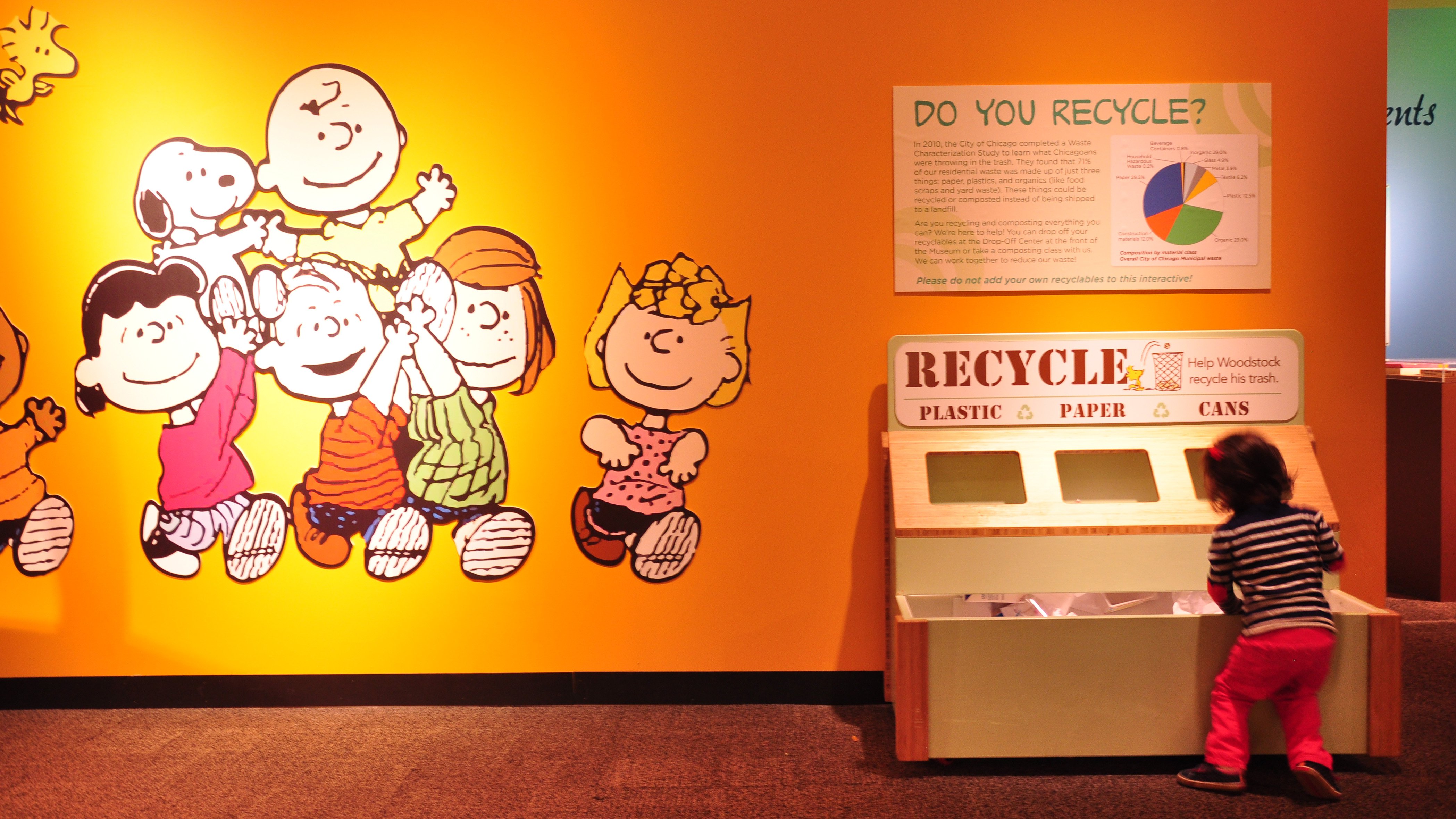
A young visitor acts on the expectation of positive affect at the Peggy Notebaert Nature Museum in Chicago, IL. Source. 

It turned out that the factor with the largest impact on pro-environmental behaviour was negative anticipated affect, or the expectation of feeling guilty, remorseful, and bad after they took action or failed to take action. The second most important factor was positive anticipated affect: visitors were motivated to recycle or reduce waste because they knew they would feel good afterward. The cognitive dimensions were also crucial. An effective strategy might be to let visitors know that recycling, creating less waste, and choosing friendly transport options is the decent and worthwhile thing to do, while making other choices has adverse consequences. As we have always secretly suspected, the best way to make sure visitors act ecologically in the museum might be with some gentle shaming. Perhaps someone could develop an ecologically-minded chatbot to remind them to recycle?


SUGGESTED READING 

Halpin-Healy, Carolyn. "Well-Chosen Objects Support Well-Being for People with Dementia and Their Care Partners." Journal of Museum Education 42, no. 3 (July 14, 2017): 224-35. doi:10.1080/10598650.2017.1342189.

Han, Heesup, and Sunghyup Sean Hyun. "Fostering customers' pro-environmental behavior at a museum." Journal of Sustainable Tourism 25, no. 9 (November 25, 2016): 1240-256. doi:10.1080/09669582.2016.1259318.

Inscho, Jeffrey. "No App Required: Toward a Utilitarian Museum Mobile Experience." The Studio. May 18, 2017. Accessed July 23, 2017. https://studio.carnegiemuseums.org/introducing-muse-20a6f11c7c35.

Inscho, Jeffrey. "Field Study: Benchmarking Visitor Behaviors and Mobile Device Usage in the Museum." The Studio. July 18, 2017. Accessed July 23, 2017. https://studio.carnegiemuseums.org/chatbot-field-study-91fcbb1d4875.

30 January 2017

THE CLEVELAND MUSEUM OF ART: GALLERY ONE

EXHIBITION REVIEWS

BY: TABITHA CHAN

Interactive Kiosk (Source)
The Cleveland Museum of Art officially unveiled Gallery One in January 2013, as part of an ambitious overarching initiative to reinstall and reinterpret its entire permanent collection into new gallery spaces. Gallery One offers visitors an innovative opportunity to experience and learn about art through technology. The space fluidly integrates interactive and immersive digital activities with physical artworks from the museum’s collection.

There are four main digital components: a 40-foot multi-touch MicroTile Collection Wall, six interactive learning kiosks, a dedicated family area called “Studio Play” and the ArtLens application. Gallery One has six stations or “lenses” to examine groupings of physical artwork through: sculpture lens, lions lens, epic stories lens, globalism lens, thirties lens and painting lens. Each lens offers interactive games and activities designed around the specific theme and question of the lens.

Collection Wall (Source)
The sculpture lens features two different activities called “Make a Face” and “Strike a Pose” that enables visitors to use their physical bodies to create connections with the artwork. In the first activity, a visitor’s facial expression is matched to artworks within the CMA’s collection using facial recognition software. The nodal points in the visitor’s image are compared to the nodal points in the database of 189 catalogued artworks. 

Sculpture Lens: "Make A Face" activity (Source)
In the second activity, visitors are asked to mimic the physical position of the image of a sculpture displayed on the screen. Through the use of sensors, visitors are “evaluated” and given a percentage based on how accurate their pose matches the original. These activities incorporate an aspect of humour and encourage visitors to interact with the artwork in a fun, unconventional way. Although only one person can partake in each activity at a time, this lens naturally attracts groups of people to watch.

Sculpture Lens: "Strike A Pose" activity (Source)
The painting lens has a total of five activities, but I will focus on two called “Make Your Mark” and “Remix Picasso”. In the first activity, visitors are presented with three artworks from the CMA’s collection representing three different abstract painting techniques. Visitors are invited to experiment digitally with different painting techniques such as pour, drip and gesture. They are able to share their paintings to a visitor-created collection in the lens. 

The second activity encourages visitors to adopt the mindset of Picasso and digitally rearrange abstract pieces of a composition by using rotational and zoom functions, as well as, manipulating flatness and depth perspectives. Both of these activities give visitors the chance to learn about abstraction by becoming the artist and creating their own abstract artwork.

Visitors are empowered to play and create their version of abstraction, while a real Picasso or Pollock is hanging in front of them. The goal of these activities is not for visitors to learn how to paint, but in adopting the mindset of the artist, they are able to make a real connection to the greater context of what constitutes as abstraction. Abstract art is often a difficult topic to approach for visitors without an art background. These activities act as an accessible entry point, as visitors are engaged in active learning and motivated by discovery.

Painting Lens: "Make A Mark" activity (Source)
In addition to these interactive games, all six stations have a “Look Closer” mode activated by touching any artwork on the screen. This mode gives visitors the ability to rotate and zoom in on high-resolution images of the artwork. Visitors can learn more about each artwork through informational hotspots, in the form of text and video, conveying further details about the artwork, artist and time period.

Although Gallery One makes use of thematic groupings, the CMA’s role as a museum according to its mission is primarily to provide the institutional space, art objects and technological tools to transform visitors from being passive observers into active participants. The magnitude and depth of how much is learned is left up to the visitor. Gallery One is successful in providing visitors with opportunities to learn experientially through digital technology and to ultimately enjoy the process of learning.


Resources:
Alexander, J. (2014). Gallery One at the Cleveland Museum of Art. Curator: The Museum Journal, 57(3), 347-362. doi:10.1111/ cura.12073