Showing posts with label museums and technology. Show all posts

7 November 2019

NON-NEUTRAL SPACES: ALUMNI CHECK-IN WITH ERIN CANNING

Alumni Check-In | Elizabeth Cytko


Erin poses in the Aga Khan photobooth.
Photo courtesy of Erin Canning. 

Erin Canning is the Digital Platform Administrator at the Aga Khan Museum. They defended their Master’s thesis Affective Metadata for Object Experiences in the Art Museum in 2018 and graduated from the University of Toronto in 2019. Erin also sits on the Canadian Heritage Information Network (CHIN) Linked Open Data advisory committee; CHIN’s mandate is to assist Canadian museums in documenting, managing, and sharing information about their collections now and in the future.

What is your favourite memory from your time in the Museum program?

My favorite memory is probably my thesis defense. It can be really stressful. And there definitely was a lot of stress involved with it. But it was also probably like what a lot of exhibitions students feel with their exhibition opening. It's a culmination of all of this work that you've put in and a real critical point that shows all of the different things that you've learned during your time at the iSchool. For myself as a CRO*, it was really a chance to work across both departments, applying the things I learned in the MI program to the MMSt context, and just get a chance to really look back at all the work that I had done in putting the pieces together and seeing it actually work.

*Concurrent Registration Option, now known as the Combined Degree Program

Why did you decide to pursue a thesis instead of the exhibition project?

I did my MI studies in Information Systems Design and User Experience Design. I'm really interested in information structures and information systems design in the arts and culture heritage context. The exhibition option didn't really speak to those things. Additionally, I'd spent a number of years working at an artist-run center during my undergrad, so I had a lot of exhibitions experience already and I was looking for something that could sort of take what I was interested in now to the next level.

Did your thesis feed into your current position?

Definitely. All the database courses, database structure, coding, etc., that's what I do. I spend most of my days in SQL and in the back end of databases. But having that museum studies knowledge and being able to understand it through that lens and in that context is really essential for doing the work well, making it fit the institution and knowing the kinds of questions that I need to raise or that should be discussed, and finding the people to talk about those with. Databases are not these neutral things: we make them, we actively configure them, and the ways that we label and structure and present information is very political. We need to make sure that the ways that we're developing our information systems speaks properly to the concerns that we have around collections, and that theory really comes from the museum studies side. The work that I do really encompasses a lot of the core concepts that I was taught about in the MI and the MMSt sides at my time at the iSchool.

What pulled you toward digital platforms?

I've worked in digital for quite some time. In my first jobs out of undergrad working in the commercial art scene, one of the biggest issues that I always noticed was that we had great artists, we had amazing art, we had amazing collectors, but we weren't really great at connecting the information about the art in the artists with the collectors in the ways that they wanted to see it. A lot of that came down to the fact that our databases weren't really working for us. I realized that everything could be much more efficient if we had our information systems geared up in a way that actively works to support our end goals. That got me really interested in digital platforms because databases now are digital; this led me back to the iSchool for my Master's program.

What is digital infrastructure?

It’s the plumbing in your house, it’s the lay of your foundation. If I'm going to put it up an exhibition online, that may be your public presentation, but the infrastructure is the piece behind that links all these things together. So if we want to create a publication after the website we don't have to recreate pulling our assets together. Infrastructure is the work that the public doesn't see that has to take place in order for us to produce the best exhibitions and programming and educational initiatives because we can spend our time focused on those public presentations as opposed to finding the things that we need in order to make them.

Databases are not all Erin works on. Here is a "hologram" they made.
GIF Courtesy of Erin Canning

What should current Museum Studies students keep in mind when it comes to digital collections?

Just because you see digital collections one way doesn't mean that is the way that it will always be or the way that is the best. It means that it's the way that we are currently trying, because it's the best that we've gotten to so far. You might see an online collection and think, “that doesn't really come across very well, therefore, digital doesn't do anything for me”. That makes about as much sense as going to one exhibition and saying that all museums aren't working: you're seeing just one thing in just one way, because we're trying things that are new. Keep that open mindedness towards it, but come at it with a critical eye as well.

Don't shy away from it and don't shy away from learning about the mundane tasks that are required in order to make those things happen. With any of those projects, there's a monumental amount of work that goes on behind the scenes. No matter where you're working in the museum, being able to understand a little bit of that is really helpful.

Is there anything you wish you had done while you were in the program?

I didn't start going to conferences until my third year, I wish I started going earlier. My advice here would be to go to all the conferences you can, take advantage of that student funding. Everyone that I've ever met at a museum conference has been nothing but welcoming, and willing to Skype with me about their projects. Take advantage of those things and start doing it as early as you can.

4 April 2018

THE NATURAL HISTORY MUSEUM RETHOUGHT: CURRENT DIRECTIONS

MUSEUMS ON EARTH

BY: LANA TRAN

As stewards of nature, natural history museums dedicate a large proportion of their resources to the conservation and development of collections, from which an indispensable understanding of the Earth has come. It’s humbling to think that the careful categorization and analysis of specimens could create such a fundamental awareness of the history of existence itself. It seems, however, that such a feat is no longer enough.

Natural history museums need to do more, differently—or at least, that seems to be the prevailing conversation in the museum literature.

The speed of technological advancement and accompanying social movements are challenging museums to keep up. Citizen science and maker movements are finding space within museums, opening new options for visitor engagement. In collaboration with game developers of all levels, the Royal Ontario Museum's soon-to-be permanent gallery The Dawn of Life has already popped out some interactive apps—one being a dating RPG for, well, prehistoric invertebrates.
 
Screenshot of eCambrian dating game, Royal Ontario Museum. Source.

Meanwhile, more analogue, high-touch approaches could help connect urbanites with values in nature and culture that underlie contemporary issues. To do this, natural history museums will need to go beyond internally-focused practices to engage with the cultural realities of the immediate community.

One such example is the Environmental and Climate Justice Dialogue Initiative. Using object-based storytelling circles, museums can activate their collections, at the same time encouraging local people to see their individual experiences and talents as valid in the struggle for conservation.

4.5 billion-year-long story short, natural history museums are awakening to the idea that long-term relevance is not achieved in self-mummification, but adaptation. 

Further Reading

Dorfman, Eric. 2018. The Future of Natural History Museums. Milton Park, Abingdon, Oxon: Routledge.

6 April 2016

WE CAN ENGAGE THEM, WE HAVE THE TECHNOLOGY.

GREATEST HITS 

BY: HAYLEY MAE JONES

In her post What to Wear During Wartime: 'Fashion on the Ration', Mallory Horrill tackled a question all museums have faced: how do we engage visitors?

While visiting the exhibit Fashion on the Ration at the Imperial War Museum, Mallory observed that some visitors were slightly disengaged with the subject matter of "fashion". In trying to increase their attendance, museums need to figure out ways to engage new audiences, and Mallory suggests the use of audio and video aids. I agree with what Mallory suggested; however, I think that museums should not be limited to the use of audio and video aids to create new and engaging experiences. There are many new technologies being produced that can facilitate visitor interactions, while at the same time increasing visitor engagement. This is seen in the Star Wars Identities Exhibit that is currently touring the globe.


The Star Wars Identities Exhibit was displayed at the Canada Aviation and Space Museum, in Ottawa (summer 2013). I was hesitant to visit this exhibit, mostly because I am not a huge Star Wars fan.  I had seen the Star Wars movies, but I was worried that I would be confused or worse -- bored. In retrospect, I had nothing to worry about.

Visitors were provided with a hands-free audio guide that incorporated infrared technology, making the exhibit's audio-visual content accessible to visitors of all languages. The exhibit then surpassed my expectations by letting visitors create their own realistic Star Wars hero based on the visitors' responses to pre-set questions.

Before entering the exhibit, I was given an RFID bracelet, which tracked my progress throughout the exhibit. The exhibit had various stations that asked visitors questions about what type of Star Wars hero they wanted to develop. These questions tackled key building blocks of an individual's identity such as: species, genres, parents, culture, mentors, friends, events, personality and values. To answer each question, I would tap my RFID bracelet with my selected answer. All of my answers shaped my character, and in turn created my own unique Star Wars hero.

Hayley Mae Jones' Star Wars Identities Character - Published with X3 Production's Permission
 
At the end of the process, I had to select whether or not I would join the "dark side".  I chose to resist the "dark side", and fight against the Emperor.  My character was then  displayed on a giant screen for all visitors to see, and I was also able send myself an email with my character and character information. 

It was such a popular exhibit that its stay at the Canadian Aviation and Space Museum was extended by over a month. This exhibit is a significant example of how museums can go beyond the traditional audio and visual aids by using technology creatively. It also shows how new and innovative technologies can engage visitors in an unexpected way.  Hopefully we will continue to see more unique applications of technology in the future. 

Comment bellow if you know of any other exhibits that use innovative technology to engage visitors!

8 March 2016

WHAT THE TOP MUSEUM TRENDS MEAN FOR CANADA

MUSEUM INNOVATIONS

BY: JENNY FORD

It's finally here! Last week, the American Alliance of Museums (AAM) released its 21016 TrendsWatch guide—an outline of the top museum trends to watch for in 2016. But how does the list stack up against Canadian institutions? Are we lagging, challenging, or overcoming these shifts?

1. THE CHANGING WORKFORCE

Quite depressingly, the first trend for 2016 is the changing nature of employment. Many full-time, permanent jobs are transitioning to a “gig” economy, the report states. In other words, more contracts and less job security, no matter what field you're in.

Man dusting T. rex nose.
The dream, right? Source.

It’s no secret this is affecting the museum world in Canada. Jobs are highly competitive and contracts are becoming the norm. Especially at this time of year, museum job boards are peppered with Young Canada Works posts and volunteer positions—roles that don't necessarily translate to positions after graduation.

The Ontario Museum’s Association acknowledges in their initial Looking Ahead Initiative that the workforce is changing, however it doesn't yet address what this new work will look like. The question is, should we be shifting our expectations about what is a museum job?

2. ACCESSIBILITY AND ABILITY IN MUSEUMS

Increasing accessibility is the next trend. Accessibility is not an "add on" but a thoughtful part of the total experience. While many museums have a long way to go in becoming totally accessible, some Canadian museums are making pretty amazing strides.

The design team at the Canadian Museum for Human Rights, for instance, developed a universal keypad so visitors with visual impairments, physical disabilities, or hearing loss can adjust volume, have images described, or interact with touch tables in all their exhibits. Bluetooth technology also allows museumgoers with visual impairments to have text and artifacts described to them as they move through the museum. This is just the start of what our museums can do. 

Person looking at panel with universal keypad buttons.
You can see the CMHR's keypad in the corner. Source.

3. EXPLORING NEW REALITIES

We’ve seen augmented reality (AR) and virtual reality (VR) at museums before. Take the ROM’s Ultimate Dinosaurs exhibition back in 2012-2013, which used AR to bring dinosaurs to life. According to the 2016 TrendsWatch, AR/VR are becoming increasingly prevalent, so how can museums capitalize?

While the report does raise some concerns about VR replacing the need to visit museums, it also notes the huge benefits for accessing new audiences and experiences. The company Mobius Virtual Foundry created a VR experience which puts users on a bus as Rosa Parks, for instance. Other technology may let visitors manipulate and "touch" objects, further enhancing museum experiences and accessibility.

People try on virtual reality devices to see what it was like being on the bus as Rosa Parks.
The Rosa Parks Experience. Source.

The trend doesn't seem to have taken off in Canadian museums quite yet (please share examples if you have them). Either way, it’s something to watch for in an increasingly technology-focused museum world.

4. IDENTITY AND COMMUNITY


The world last year was moved by questions of race, culture, and identity. We are redefining ourselves and how others perceive us. As the TrendsWatch guide states, museums “find themselves enmeshed in the struggle over representation, identity and material culture.” This is just as true in the Canadian context, where these questions are at the forefront like never before.

There are countless discussions we could have here, but I'm gong to focus on the Truth and Reconciliation Commission (TRC) report released last year. Part of the report outlines how museums and archives play a role in reconciliation through education and deconstructing imperialist narratives.

Panels from the Balance Lost exhibit at PAMA, which looks at the genocide of Aboriginal Peoples.
The PAMA exhibition. Source.
Recently, on a visit to the Peel Art Gallery, Museum and Archives, I was inspired to see how they addressed the TRC's the questions in their permanent exhibition We Are Here, even using the word "genocide". We all know this is a loaded term. Just look at the Canadian Museum for Human Rights' experiences. But perhaps we need pay closer attention to how museums are (and are not) coming out of the shadows on these issues.

5. THE HAPPY MUSEUM

The final trend for 2016 is happiness. Yes, happiness. Really, this speaks to a trend where countries are moving away from measuring economic success to measuring citizen well being.

People int the Happy Show Exhibition
Stefan Sagmeister: The Happy Show. Source.

Museums can equally work off this idea. The Museum of Vancouver even brought in The Happy Show in 2015. Not only can we help foster this happiness and well-being through positive and enlightening interactions, we can also start measuring our own success based on it. It’s long been argued that numbers and dollars are not true assessments of a museum’s success—we can take a page from the happiness philosophy, as well.

WHAT IS YOUR TAKE ON CANADIAN MUSEUMS TRENDS?

9 October 2015

THE WORLD'S OLDEST COMPUTER?

OBJECT OF THE WEEK

BY: ROWENA MCGOWAN

What came first, the printing press or the computer? What a silly, obvious question, right? It’s clearly the computer!

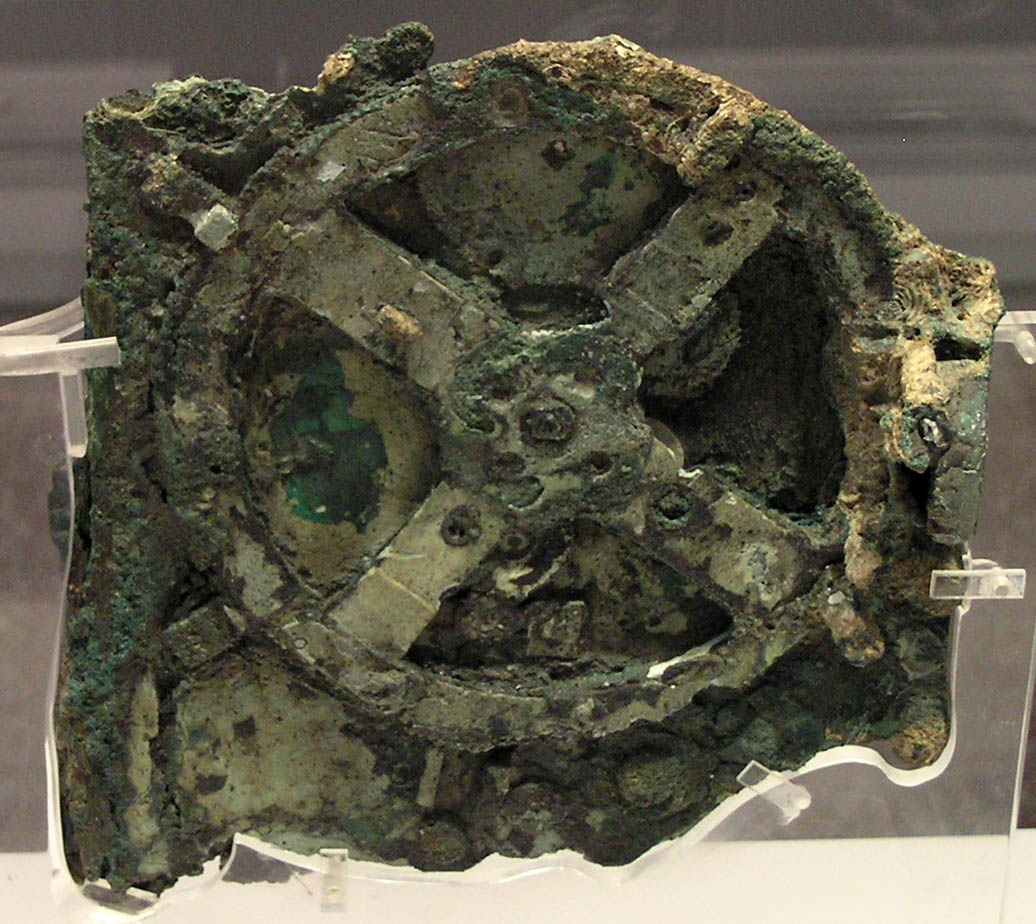
Meet the Antikythera Mechanism, which could have been made as early as 220 B.C. (yes, that’s B.C.). Looks a bit steampunk, doesn’t it?

 
Fragment of the Antikythera Mechanism. Source.

The Antikythera Mechanism comes from a submerged Roman-era shipwreck, which was discovered by sponge divers off the coast of Antikythera, Greece (hence the name) in 1900. Excavations of the ship started later that year and continued until 1901, although it has been investigated many times since, including this year! Since the ship was a merchant vessel, it was filled with statues and other artifacts.

The Antikythera Mechanism wasn’t a particularly impressive sight when it was first found, just lumps of corroded metal. 82 fragments were recovered. They, along with the rest of the shipwreck’s objects, were sent to the National Museum of Archaeology in Athens, where they remain to this day.

 
Fragments of the Antikythera Mechanism on display at the National Museum of Archaeology. 
Photo by Rowena McGowan.

It didn’t take researchers long to discover that the mechanism was something special. The development of techniques such as radiography and CT scans allowed the interior of the mechanism to be examined, which revealed new details about how it might have worked and inscriptions on the inside.

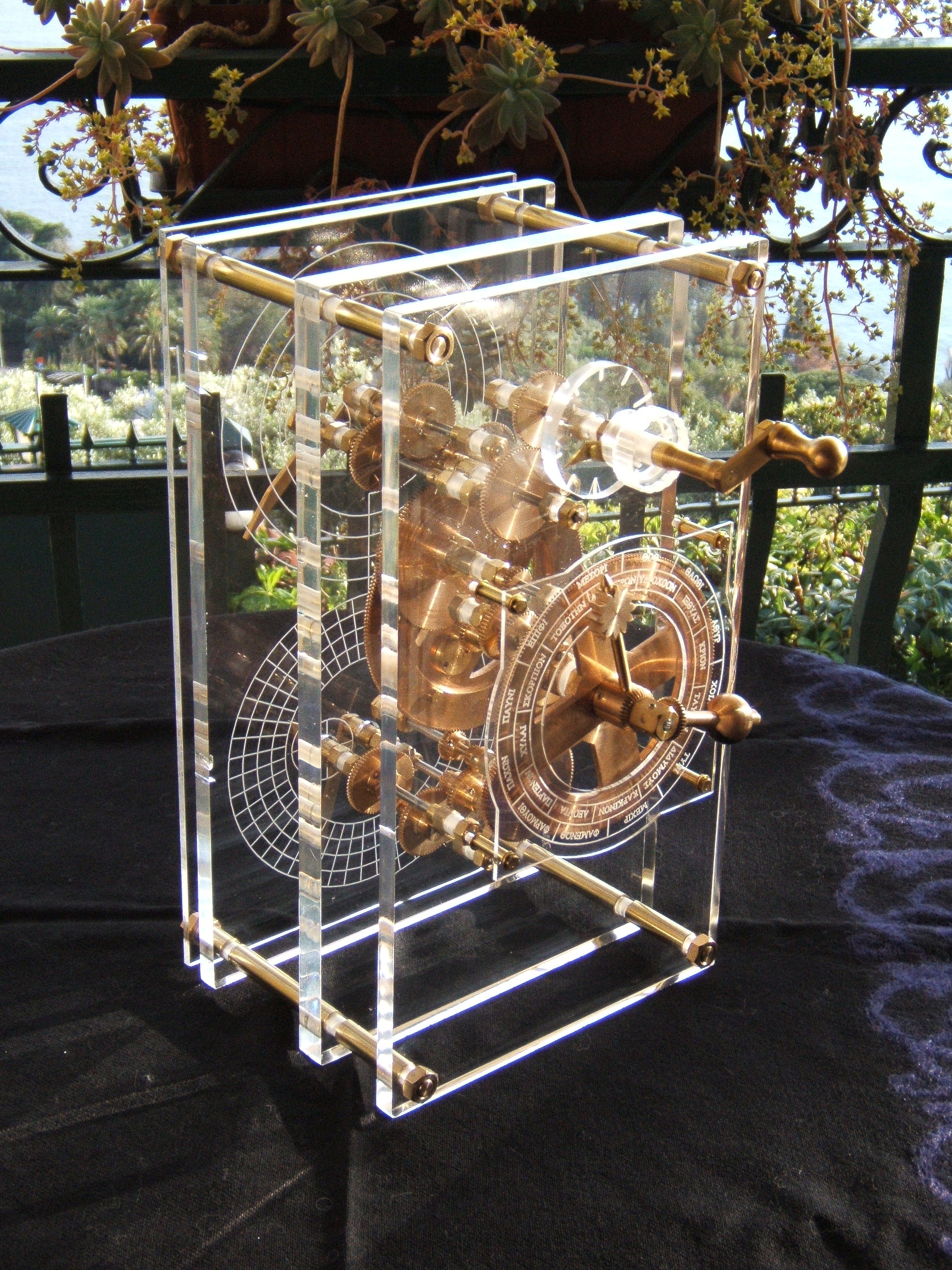
Calling it a ‘computer’ is actually a bit of an exaggeration and I’ll explain why I deliberately used that word in a paragraph or two. That doesn’t mean it’s not a complex and important piece of technology, however. The mechanism is more correctly referred to as an astronomical calculator. It was capable of showing lunar and solar cycles, as well as the positions of various stars and planets. We still aren’t completely sure how it worked or what the full mechanism would have looked like, although various theories have been proposed.

 Reconstruction of the mechanism. Source.

The story of the Antikythera Mechanism provides an interesting lesson on spin and publicity. Some accounts of the mechanism like to dress it up as centuries before its time, an ancient marvel (hence why I initially referred to it as an ancient computer). In fact, three of the top frequently asked questions on the Antikythera Mechanism Research Project website are ‘Is it fake?’, ‘Is it evidence of time travel?’ and ‘Was it left by aliens?’ The answer to all of these questions is a resounding NO!

The Antikythera Mechanism is an extraordinary artifact and, yes, unique – but only because of its survival. Ancient Greece had a long and well-documented history of scientific, mechanical and astronomical development. The mechanism, far from being ahead of its time, fits neatly into that history. We have evidence from no less a person than Cicero that Archimedes was making astronomical machines, years before the creation of the Antikythera Mechanism. The strangest thing about the mechanism is that it managed to survive into the 21st century – it’s special because of its uniqueness now, not because of its uniqueness at the time it was made.

Which raises an interesting question about the way we perceive the ancient world. Why are we so likely to assume that people who lived in the past were primitives, incapable of the same complex reasoning and technological skill that we are today? Why is it more logical to some people that aliens came to Earth and left their technology behind, rather than that people back then were just as curious, just as clever and just as inventive as we are today?


Sources

Academic Team of the Antikythera Mechanism Research Project. (2015).The Antikythera Mechanism Research Project. Retrieved from http://www.antikythera-mechanism.gr

Edmunds, M. G. (2014). The antikythera mechanism and the mechanical universe. Contemporary Physics, 55(4), 263-285. doi:10.1080/00107514.2014.927280

Freeth, T. (2009). Decoding an Ancient Computer. Scientific American. Retrieved from http://www.cs.virginia.edu/~robins/Decoding_an_Ancient_Computer.pdf


5 March 2015

PRINTING, GAMING, TINKERING, OH MY : THE RISE OF MAKER CULTURE

MUSEUM INNOVATIONS

BY: JAIME CLIFTON-ROSS

In adopting a constructivist attitude, where the act of learning-through-doing is key, maker culture blends the experimental approach of DIY crafting with technology. Through digital fabrication, interactive design, physical computing, adaptive gaming, and more, this creative cultural movement is making waves in both the academic and museum worlds! Science centres and children museums, in particular, have embraced these hands-on activities through cutting-edge interactive displays. Gaming in history museums and academic hackathons are now a popular method for education and engagement. Some of the most innovative maker initiatives in Canada are coming out of our very own Semaphore Critical Making Lab, at the University of Toronto's iSchool, as well as the Maker Lab in the University of Victoria's Humanities Department. Today, I offer you a small selection of cool and cutting-edge maker projects (not in any particular order)


Professor Matt Ratto and PhD Candidate ginger coons are leading a team of researchers in the development of 3D-printed limbs for children in Uganda. They were even featured on the CBC!

3D-Printed Limbs at the iSchool's Semaphore Lab, Photo by Semaphore Lab


2. FEMBOX: By Nina Belojevic and Theresa Slater for Integrate Arts Festival in Victoria, BC

"Through console-like play the piece combines multiple elements: the clearly material — physical controllers, glimpses into the “black box” showing wires and component parts — with the seemingly ephemeral — lights, projections, invisible processes; the electronic with the biological; the technological with the bodily" (Fembox Webpage 2015).


This iPad game was created using the intricate "Strawberry Thief" pattern designed by Arts and Crafts artist, William Morris. The point of the game is for the Strawberry Thief bird to collect strawberries in order to transform a blank piece of paper into the vibrant floral design. What a fun way to engage with museums and art history!


This static installation of mesmerizing 3D-printed objects, created by 40 girls between the ages of 8-13, considers how objects make a space. The non-linear narrative encouraged young makers to "interpret a space by means of reinventing objects, not destroying them" (Ladies Learning Code Webpage 2015). 

Girls Learning Code, a vital part of the Ladies Learning Code National program, hosts a series of hands-on workshops that promote technological experimentation amongst young girls. 

Envision: 3D Printed Art, Photo by Jaime Clifton-Ross

This project aims to physically preserve old technologies that have gradually grown obsolete or inaccessible. Through replicas of interactive and hands-on technologies packaged in distinct "cultural kits", this project explores the history of media technology through digital fabrication and physical computing. Users are encouraged to reflect on the physicality of technology and consider how this is embedded in cultural history.  

Sketch of Kit for Cultural History, by Nina Belojevic
Boxed Anthologies: Kits for Culture by Shaun Macpherson and Nina Belojevic
Now that you've been inspired by these amazingly talented makers, go create something of your own and please share your results!

16 October 2014

100 YEARS OF LOSS: ABORIGINAL HISTORY WILL NOW BE TAUGHT IN CANADIAN CLASSROOMS

MUSEUM INNOVATIONS
BY: JAIME CLIFTON-ROSS

Often discussed in MMSt courses are the ways in which museums and other cultural organizations effectively and respectfully represent difficult knowledge or “dark” aspects of history. How can museums portray the history of cultural oppression while illustrating truth, instigating affect, and maintaining integrity? How do they consider audiences who were directly or indirectly impacted by traumatic events?

Do YOU remember learning about the history of First Nations, Métis, and Inuit Peoples in elementary school and/or high school? Was is it even part of your class curriculum? I personally received the bulk of my knowledge of Aboriginal cultures while growing up on Vancouver Island where First Nations art is prominently displayed throughout the city, in art galleries, and museums. It wasn’t until University though where I finally learned about the social significance of potlatches, animal symbology, and weaving traditions. I also learned about the devastating history of Indigenous colonialism which is largely omitted from grade school curriculums in Canada.


Aboriginal students and staff assembled outside the Kamloops Indian Residential School

In collaboration with the Aboriginal Healing Foundation (AHF), Aboriginal Affairs and Northern Development Canada (AANDC), and Canadian Heritage, the Legacy of Hope Foundation's (LHF) innovative development of 100 Years of Loss - The Residential School System in Canada is working to change this. In producing this invaluable education program, modelled on museum education practices, the LHF is on a quest to integrate Aboriginal history into Canadian grade school curriculums for ages 11-18.


Their primary mission is to “increase public awareness and knowledge of the Indian Residential School System” (100 Years of Loss Website), to move forward with the healing and reconciliation process, and to instigate more equality for Aboriginal people of Canada. The LHF collaborated with residential school survivors, numerous Indigenous community members—including museum curators, researchers, educators, and curriculum developers—over the course of ten years. By involving a range of stakeholders, they ensured that all educational materials produced would accurately reflect the testimonials of survivors and maintain cultural respect.

Offered in both French and English, this program includes the following components:

THE EDU-KIT:

The curriculum is comprised of a “small-scale wall-mounted timelines, videos including Survivor testimonies, and a Teacher’s Guide with six customizable Lesson Plans (12-24 hrs of activities), teacher resources and extension activities” (Legacy of Hope Website).

100 Years of Loss Education Program Booklet Cover
100 Years of Loss Education Program Booklet

MOBILE EXHIBITION (travelling exhibition):

This unique exhibition consists of “eight thematic pods (4 in each official language), and a wavy wall that presents interweaving timelines” (Legacy of Hope Website). Complete with photographs, documents, and text, this exhibition has travelled throughout the county and has even visited The Montreal Holocaust Memorial Centre, The Canadian Museum of History, as well as Parliament Hill, to name a few.

Mobile Exhibition on Display

WORKSHOP:

“The workshop process, whether using the activities-based Edu-Kit or the inquiry, research, and discussion-based mobile exhibition workshop, is designed to take youth through the spectrum of awareness, to sensitization, to understanding, and finally to action that has the potential, and indeed initiates the process of reconciliation” (Legacy of Hope Website).

DIGITAL EXHIBITION:

The corresponding digital exhibition depicts the history of Residential Schools through photographs, testimonials, texts, and a timeline. This user-controlled narrative —similar to those developed by Google Cultural Institute—utilizes contemporary storytelling techniques that enable users to intimately engage with the content. This web and mobile app can be accessed online or downloaded via Google Play and iTunes.

100 Years of Loss Digital Exhibition Screenshot.

By developing a range of materials, both physical and digital, the curriculum implementation process was successfully initiated in 2012. Future generations of Canadians will now learn the vital history of First Nations, Métis, and Inuit Peoples that were largely absent from our childhood educations.

CHECK OUT "WE ARE THE CHILDREN", ANOTHER DIGITAL EXHIBITION DEVELOPED BY THE LHF IN 2001.

7 October 2014

HIGH-TECH HUMAN RIGHTS?

TECHNOLOGY TUESDAYS

BY: JENNY FORD

The Canadian Museum for Human Rights (CMHR) is not your typical museum experience. Sure you’ll see the regular text panels and artifacts, but a major component of the Winnipeg museum, which opened its doors on Sept. 20, is technology.

“We don’t just use technology as a hook, it’s about how we can best present the story that’s being told,” says Corey Timpson, director of exhibitions and digital media at the CMHR.

The 11-gallery museum has six theatre spaces, two soundscapes, a three-storey-high media projection, touch tables and interactive games, to name a few of the highlights. In the Canadian Journeys gallery alone there are 19 mix-media installations.

Visitors use touch screens in a gallery.
Visitors use touch screens in the Protecting Rights gallery.
The CMHR has been called an “ideas museum,” which leads technology to be a natural fit for allowing visitors to engage with different human rights concepts and access information in multiple ways, says Timpson.

“Human rights is a concept. If you compare other history museums or science museums or art galleries, ours is this really broad concept,” says Timpson. “Technology allows us the ability to be changeable. Changing a panel or a physical installation is expensive and changing the content digitally allows us to remain current with the domain and with the subject matter itself.”

Interactive games and touch tables are just some of the methods the museum uses. Role playing video games in the Actions Count gallery allow visitors to start their own virtual anti-bullying campaign, for example. The Breaking the Silence gallery features a giant 24-user touch table where visitors learn about different atrocities, such as the Rwandan Genocide and trans-Atlantic slave trade. A 360-degree theatre features a film about indigenous rights and responsibilities.

“Form and function and story really mesh well in this case,” describes Timpson about the 360-degree theatre. “It really does a good job of putting the visitor in a scenario to easily accept the message that’s being told.”

Visitors use an interactive floor game.
The "Lights of Inclusion" game in the Canadian Journeys gallery.
However, the most innovative technology at the CMHR is completely out of view from visitors, says Timpson. Be it a video, a touch table or website content, an enterprise content management system allows museum staff to update programs and content without having to install brand new displays or software. This is a first in museums, says Timpson.

“It means we can have a curator, researcher, or program staff sit at a computer and update that interface and publish it directly to that end point,” he says.

This not only allows the museum's content to stay fresh in a fast-changing digital world, but also allows them to update technology without starting from scratch.

“When it comes to maintenance and evolution of our technological landscape, we can actually deal with things, take a piece out and put a new piece in,” says Timpson.

Visitors look at a linear projection featuring pictures of houses.
Visitors look at one of the museum's many linear media projections.
Accessibility is another consideration incorporated in the technology. The museum’s design team developed a universal keypad so visitors with visual impairments, physical disabilities, or hearing loss can adjust volume, have images described, or interact with the touch tables.

The museum also incorporates Bluetooth technology so museumgoers with visual impairments can have text panels, images and artifacts described to them using a mobile program as they move through the museum.

“We think of the needs of everyone at the outset and that drives our design solutions,” says Timpson.

Only four of the 11 galleries are currently open to the public. The rest will see their first visitors on Nov. 11. Technology plays a crucial role in all spaces, says Timpson, and makes learning about human rights accessible to everyone.

“Technology is a facilitator of the dialogue and of meaningful experiences,” he says.

26 June 2014

MUSEUM INNOVATIONS: INTERACTIVE STORYTELLING

BY: JAIME CLIFTON-ROSS

Today on Musings, I'm going to talk about how various forms of media are used as engaging storytelling devices. These forms not only further the narrative using interactive devices, such as videos and animated text, but some facilitate a user-controlled experience. This not only provides the viewer with a new perspective, but also may encourage a more personal interaction.

BRITISH PATHE

Image Source

While writing a blog post for the Royal Ontario Museum, I came across this wonderful digital archive called British Pathé. This media company was founded in London in 1902, but was originally conceived in Paris by Charles Pathé, an early pioneer of the moving picture. This digital database essentially hosts over 3500 hours of historic footage that documents some of the most important events in 20th century history. Not to mention, all videos are free to view (over 80,000 videos) either on YouTube or on their website. Structured as a blog with multiple galleries, the British Pathé website offers a wealth of historical information. While simple in presentation, each video is accompanied with a short write-up, film stills, and a sharing feature. My personal favourites are films that document rare moments and unexplainable oddities. Here are a couple of delightful videos:

Maple Syrup Harvest 1920-1929
Click here for video details.

Fresh Air Frolics 1931
Click here for video details

GOOGLE CULTURAL INSTITUTE

The second web resource that integrates interactive storytelling devices in their narrative, is Google Cultural Institute. This website has grown exponentially over the last couple of years. Not only are they hosting Google Art Project—that provides high-resolution zoom-in images of museum artworks—but they also feature famous stories, cultural figures, monuments, street art, and events (to name a few). Many of these narratives include Google Street View indoors.

Check out this video to see how Google Cultural Institute works.

PALACE OF VERSAILLES

My favourite example is the tour of the Palace of Versailles. This narrative, called Immortalising Versailles: 1850-2013, provides a glimpse into how photography has captured its history and traces its passage through time. Through photography, animated text, and a virtual tour of the palace (using Google Street view technology, of course), users can control the pace and movement of their experience.

Immortalising Versailles: Google Art Project Screenshots
Immortalizing Versailles Screenshots, by Jaime Clifton-Ross
ANNE FRANK

Another story that resonated with me traced the story of Anne Frank, from the Women in Culture category. Through rare photos, videos, and explanatory text, users are guided through her life through affective devices. They experience an emotional impact while switching back and forth as active readers and active viewers.

Anne Frank: Women in Culture, Google Cultural Institue
Anne Frank: Women in Culture, Google Cultural Institue, Screenshot


Anne Frank: Women in Culture, Google Cultural Institue, Screenshot

3 April 2014

KRAFTWERK, FEAR AND FASCINATION WITH TECHNOLOGY

WALK OF FAME

BY: JAIME CLIFTON-ROSS

Last week, I had the pleasure of attending a Kraftwerk concert at the Sony Centre in Toronto. For those of you who are unfamiliar with this influential band, they emerged from the experimental German music scene in the 1970s. Founding members, Ralf Hütter and Florian Schneider, first met at the Dusseldorf Conservatory while studying classical music. What makes Kraftwerk  (meaning "power station") such a relevant and pioneering musical group, is their artistic development of early minimalist electronic music. Self-described as “Robot Pop”, their combined fascination and fear of technology has defined their identity for decades. 

"The Robots" & "Radio Activity", Kraftwerk 1978
https://www.youtube.com/watch?v=EdubMwbOndo

Kraftwerk 3D Glasses, photo by Jaime Clifton-Ross

Their experimental performance art pieces explore the use and development of technologies, such as computers, calculators, robots, mass transportation, and spaceships, to name a few. Their identity is strategically crafted through their LP cover art, promotional materials, live performances, stage props, and their instrumentation. Another definitive aspect of their identity is their emergence as children of Nazi Germany. In an effort to reconstruct German identity and to distance their generation from the destructive fascist past of Germany, they celebrated the development and acceleration of technology. Their musical themes alleviated anxieties associated with the perceived domination of futurist robotics through playful humour concerning the oddities of technologies. Even after 45 years of artistic production, Kraftwerk continues to embrace new technologies by exploring technological progression and its effects on human civilization. Their live performances incorporate mesmerizing 3D visuals and lighting that illustrate imagery associated with their music. They ultimately reaffirm their conceptual principles by recreating their music using modern technologies.

"Computer Love"
https://www.youtube.com/watch?v=ZtWTUt2RZh0

Kraftwerk Imagery
http://www.allmusic.com/artist/kraftwerk-mn0000104714/biography

You must be wondering how Kraftwerk relates to museums? Well first and foremost, the progression of technology is incredibly relevant to the future of museum development. This is apparent through the integration of 3D printing and maker-culture, mobile applications, and extensive digital collections with museum culture. And secondly, the MOMA hosted a series of live performances in their museum that explored the “sonic and visual experiments” of Kraftwerk through “a live presentation of their complete repertoire”(MOMA website). As described on the event webpage, “this reinterpretation showcases Kraftwerk’s historical contributions to and contemporary influence on global sound and image culture” (MOMA website).

http://www.moma.org/visit/calendar/exhibitions/1257

Do you believe that technology has a place within museums? What technologies do you associate with progression? In what ways does electronic music embody elements of human progression and experimentation? Please share your thoughts. :)

6 March 2014

TACO DIBBITS AND THE RIJKSMUSEUM

WALK OF FAME

BY: JAIME CLIFTON-ROSS

In December 2003, The Rijksmuseum in Amsterdam closed its main building for much needed renovations and restoration. For nearly ten years, only 400 artifacts and artworks — of their one million object collection— were on display for public view in the museum. During this extended closure, the collections department embarked on a massive project in which they digitized thousands of works of art intended for viewing on their newly designed museum website. Taco Dibbits, the head of collections at the Rijksmuseum (as of 2008), was instrumental in this groundbreaking initiative.

Dutch Prince Constantijn (Left) with Taco Dibbits
http://www.digitalmeetsculture.net/article/rijksmuseum-reopens-and-
makes-its-digital-collection-of-125000-masterpieces-free-to-all/

Dibbits studied Art History at the Amsterdam Free University and the University of Cambridge before joining the Rijksmuseum as a curator of 17th-century painting, in 2002. He eventually became the head curator of the Fine and Decorative Arts department at the museum in 2006. Dibbits played an important role in the development of the new layout for the museum, as well as the wonderful award-winning digital application called “Rijksstudio”. 


Rijksstudio account
Screenshot of my Rijksstudio account

Rijksstudio
http://mw2013.museumsandtheweb.com/bow/rijksstudio-make-your-own-masterpiece/

This application, available on their website, showcases over 125,000 works of art from the Rijksmuseum collections. These digital renditions are constructed using high-resolution technology that enable users to zoom into artworks, thus revealing intricate painterly detail. Furthermore, users can download, share, and manipulate these high-quality images of artworks. Many users have even re-purposed them through designs for bedding, cell phone cases, cars, and tattoos. Make sure you create a Rijksstudio profile in order to take advantage of this wonderful application! And don’t worry fellow academics, these digitized artworks can be legally obtained and manipulated as they predate copyright laws. The Rijksmuseum has embraced the open-source movement. 


Rijksstudio
http://mw2013.museumsandtheweb.com/bow/rijksstudio-make-your-own-masterpiece/
Rijksstudio
http://mw2013.museumsandtheweb.com/wp-content/uploads/2013/02/gorgels.fig9-kopie.png

In an interview from 2012, Dibbits discusses the transformation of the Rijksmuseum and its motivation to embrace digital technology. He strongly believes that the internet is a toy that is all “about a playful use of material”. Because he considers the museum as “a place of inspiration, learning, and knowledge”, he has modelled the Rijksstudio “on the idea of connection and [the] exchange of [this] knowledge”. He has basically invited the public to play with the collection and to seek a personal creative outlet. Talk about interactive and inspirational! It is individuals like Dibbits and the Rijksstudio development team that will help breach the divide between art and technology (read Brittney’s posts here and here that address this concept).


While I strongly believe that digital technologies in museums should never take precedence over material collections, they should facilitate interactivity and public participation. Rather than attempting to replicate a physical visit to a museum, digital technologies can present content and objects through a different lens. The Rijksstudio enables users to intimately engage and interact with artworks in a way that is not possible to experience in the museum setting — most notably on tablets and iPads. This application allows the museum to assert their role as an innovative cultural institution that has embraced the intersection of art with technology. Furthermore, I believe it acts as a democratizing medium that enables further access and circulation of museum content. What do you think? Do you like this application? Do you believe it has a place within the museum model? 

I will leave you with another wonderful iPad application (completely unrelated to the Rijksmuseum) that will put you in a trance!