31 March 2020

ANIMALS TOUR OTHER ANIMALS

Technology Tuesdays | Val Masters


Hello! On this week's edition of I Spend Way Too Much Time On The Internet, I noticed a fabulous phenomenon: zoos, aquariums, and science centres posting on social media about their animals touring other animals' exhibits. This kind of species-to-species interaction actually takes place regularly as an enrichment activity in many institutions that care for animals, but it is usually done behind-the-scenes. Since the threat of COVID-19 has caused all museums, science centres, aquariums, and zoos to close their doors to visitors, animals at these institutions can spend more time exploring out of their enclosures.

Magellanic penguin Tilly meets Kayavak the belgua at Shedd Aquarium in Chicago. As a warm-weather species, Tilly would never encounter an Arctic creature like a beluga in the wild. Source


I came across this recent outpouring of documentation of animal interactions since I've been looking out for how staff at cultural institutions are managing during the crisis. As an emerging cultural sector professional, it is important to me to know what operations are ongoing in a dire situation like the one we are facing. In many institutions, the crisis response has consisted of canceling nonessential operations, communicating changes with staff and visitors, and continuing essential operations as safely as possible. Others have gone beyond this and taken the opportunity to engage the online populace with fun and educational content.

While it is of course important to take note of the more formal educational resources being promoted remotely by cultural institutions, it is also interesting to observe the role that these institutions can play in maintaining our mental health. My colleague Melissa Mertsis recently reported on how online collections, tours, lectures, and tutorials can ease feelings of loneliness and anxiety, and I think less intellectually stimulating content has a role to play as well. 


The keepers can also take the opportunity to insert sweet animal facts, as the Shedd Aquarium did to give context to this interaction:


I encourage you to follow suit and enrich yourself via animal viewing with some amazing livestreams.


Did looking at this make you feel better? Have you taken advantage of any online museum content this week? Let me know in the comments below!

30 March 2020

DIGITAL FASHION: THE BEST ONLINE TEXTILE COLLECTIONS

Sew What | Natalie Heaton


Source Kyoto Costume Institution 

The cancellation and closures due to the COVID-19 virus have left people inside their homes and the doors to cultural institutions are closed. While the closure of these institutions is devastating, many museums as using this as an opportunity to highlight their digital collection and online resources such as tours and education resources. In this article, I will highlight the top 5 best online fashion and textile collections!

5. FIDM Museum and Galleries, Los Angeles, USA


19th Annual Art of Motion Picture Costume Design, 2011
Source FIDM
Founded in 1978, Fashion Institute of Design and Merchandising Museum (FIDM) has a collection of over 12,000 costumes. This institution is known for its collection which specializes in early Hollywood costumes, with items such as Norma Sherer’s gown for the 1936 film Romeo & Juliet. Every year the FIDM holds an exhibition in the spring called Art of Motion Picture Costume Design. This exhibition features costume from top Hollywood Films, including The Great Gatsby (2013) and The Young Victoria (2009). FIDM’s online collection is sorted into different collections and images from past exhibitions. All photos are high resolution and feature pieces from the collection that date back to the 18th century, through to contemporary fashion.


4. The Kyoto Costume Institution (KCI), Kyoto, Japan

The KCI aims to collect, preserve and understand Western and Asian fashion and textiles. Their online collection highlights stunning gowns and garments from the museum along with access to all the institution’s publications, past exhibition catalogues, and more! Anyone that holds an interest in fashion and textiles, especially in the museum sector, this is a webpage that one could easily spend hours on! The museum also has a very active Instagram account that is filled with photos of the collection, the building, and different events that are taking place at the KCI.


View this post on Instagram

3. The Victoria & Albert Museum, London, England

The Victoria & Albert Museum (V&A) is one of the leading institutions in the world. The museum is known for having a massive collection of over 2.2 million objects with over half of them being digitalized and available in their online collection. A good number of these artefacts are textiles and garments. They have gowns that would have been worn near Marie Antoinette, to original Balenciaga, to Alexander McQueen, there is something that is bound to spark everyone’s interest!

Fashion "Search Collection" Home Page.
Source: Victoria and Albert Museum Website.

If stunning images wasn’t enough to intrigue you to check out of there website, there are also great articles, behind the screen videos and catalogues from past exhibitions.


2. Palais Galliera, Paris, France

Photo From Palais Galliera's Online Collection
Source: Palais Galliera

This institution has no permanent exhibitions due to conservational issues, so they only put on temporary exhibitions. Palais Galliera’s focus is on historical fashion and the fashion industry. Since the museum isn’t often open unless there is a temporary exhibition on, there is a lot of effort that goes into their website, and the viewers can tell. The website is organized into various categories to make for a smoother search, and help the viewer find exactly what they are looking for. Like many of the other institutions on this list, Palais Galliera offers past exhibition’s catalogues and publications, as well as workshops. What makes this online content stand out is that is it focused on French fashion history. With this narrow scope, the institution is able to dive into the content in a way that encyclopedic museums, such as the V&A or MET are unable to do.


Photo from Palais Galliera's Online Collection
Source: Palais Galliera


1. The Metropolitan Museum of Art, New York City, USA

The first thing that pops into a lot of people’s heads when talking about fashion and museums is the annual MET Gala. This fundraising event for The Metropolitan Museum of Art’s (MET) costume institute.

With the MET being so well known for their costume institute, it is no surprise that their website and the online collection is fabulous! I have spent many hours on it, and I know that as I continue in this field, I will spend many more. This website not only has thousands upon thousands of high-quality photographs of textiles, but they also have an Art History timeline, numerous publications, blog posts, videos, and much more. If you only end up visiting one website, the MET would be my top choice!

Costume Institute's Past Exhibitions
Source: Metropolitan Museum of Art webpage


Overall, even with museums around the world having to close their doors, their online resources are always open. From reading about past exhibitions, searching through thousands of stunning images, or reading more into the institution itself, there is always something new to learn in the museum, despite your location.

27 March 2020

STRONGER TOGETHER: ALUMNI CHECK-IN WITH LYNNE KURYLO


 Alumni Check-In | Elizabeth Cytko


Lynne Kurylo
Photo courtesy of Lynne Kurylo

Lynne Kurylo is the Chair for Liberal Studies in Continuing Education at George Brown College. Lynne’s focus is on adult education and is continually improving how it is delivered. Lynne remains in the museum community by volunteering at the Enoch Turner Schoolhouse Foundation.

What is your favourite memory from your time in the Museum program?

It was my internship. The internship back then was very broad on what we could do; there weren't many precedents or guidelines. I organized a tour of museum education departments in England for six months, after the program ended. I wrote to the museum studies program in Leicester and asked which places they recommended for adult educational programming and they sent me back a list. I got permission to visit five or six places. It was a huge insight, a huge learning experience and I got many ideas I was able to apply when I started working.

What has changed in museums from the time you graduated to now?

I'm looking at it from a museum educator’s point of view. When I started it was very much ‘how do you do educational programming in a glass case museum?’ With the influence of the Leicester Museum, as well as from influences from the United States, we started using interpretation methods that were lots more experiential (hands on) than what visitors were used to encountering at the ROM for example. That came through interrelationships that we developed going to different museum associations conferences. You were exposed to museum education methods and techniques from all these other places, and it became much more of a blend.

What does a typical day entail at your job?

I'm an academic administrator. That means I'm responsible for planning the development and delivery and evaluation of over 130 courses in a wide range of subject areas. I have to make sure on a day to day basis that those courses are running smoothly, that they have instructors, and that the instructors have all the support that they need in order to deliver their courses. I have to coach my staff and my instructors. Teaching at a post-secondary institution is different from what they're used to, many of my instructors come from the financial sector. They are either trainers or working in in some kind of job that has a direct connection to our courses.

Do you have any advice on how to become an effective leader?

I think it's really important to know your own strengths and knowledge. What is it that you know about? What is it that you can do? What are your skills? How can you be useful and relevant to the job? You need to be really clear on who you are and what you've got to offer, because that's your foundation. That's your strength, that's where you're coming from. You also need a vision or a goal. I used to have written on a little yellow sticky on my desk, "What am I here for?" and every day, I had to answer that question. You also have to recruit other people to your vision. Let them be part of it. How can they contribute? How can they help make it happen? And why should they? You need to respect them and value them so that you can achieve a set of goals that you all believe in. And you want to make it fun. If it's not fun, what are you here for?

When managing major projects, what does one need to be aware of?

You need to have a really clear, realistic understanding of your resources. If you’re going to do something, you've got to have the resources to do it. How much money is in your budget? How many employees? How many staff members do you have? How many external sources might you be able to rely on for materials or programming or whatever, right? You can't do more than you have resources for. If you get the institution into financial problems because you overspend, nobody will thank you.

What are some of the greatest risks you have taken in your career?

It was doing the programming for Into the Heart of Africa at the Royal Ontario Museum. We didn't know how risky it was at the time, but it was.

From the perspective of the Education team we made really strong, wide ranging connections with the African Canadian community in Toronto. We had a great team effort with representatives of those communities, and we put together a really good series of concert performances, activity days, and so on. For the first three or four months, everything went well. We did our best to do outreach, but on the board or at the more senior levels there were no black voices. We had done that exhibition in the context of multiculturalism. I don't know if you are aware that in the 1980s, the federal government’s National Museum Program promoted multicultural awareness, to celebrate all the different cultures that made up Canadian society. And they made money available to museums and other cultural institutions to do public programming. A guest curator of ethnology, Dr. Jeanne Cannizzo, saw that using the African collection would be a way of meeting the goals of the multicultural program and a source of funding to carry out a National Cultural policy.

Four months into the exhibition is another story altogether. But once the activism started, certain groups in the city who felt that they had messages to give the public about blackness and structural racism saw an opportunity. It became a kind of a vehicle to carry that message, but it got ugly. It ruined at least one career. You know, maybe more. I don't think the team ever recovered from that, the curator certainly.

You have to work with the collections and this African collection was brought to the ROM in a particular way by a missionary. It was part of what was going on in the late 19th, early 20th century with Britain and its colonies. It was in hindsight imperialistic, culturally arrogant and wrongheaded. And the curator was influenced by her colleagues in the ethnology field to pull the curtain back and show that collection and how it got here. She was just saying here it is, judge for yourself.

A really valuable insight was offered by a history professor from the State University of New York who came up to see the exhibition. I was the one who took him through. I asked if he had any insight into why this happened? And he said,

 “Well, no, not really. But I'll tell you what I think about this collection and what you did with it. If you're going to start a conversation, or a relationship with a group of people that you have never had a relationship with before, you don't start by airing the dirty linens. That was your mistake. You told a very sad, unhappy story as your first gesture in trying to make the African collection available to the community. It was the wrong thing to do. You had to find a positive, happy, constructive topic. And then once everybody has built some trust you can ask, well now do you want to see what we've got in the closet?”

If you could travel back in time what would you advise your younger self?

Don't put all your eggs in one basket. In other words, don't let yourself be defined totally by your job. When you lose that job, and inevitably you will, then you're in trouble. Diversify your interests and hobbies, and make yourself a whole person, not just a job. I think that was one of the big things I learned. I would also say don't be willful, don't be arrogant. You also have to listen and respect other people's views and needs. You're not flying the plane alone, you know? You’ve got a crew there with you and you need to work together.

What are some of the long term trends that you think young museum professionals need to be aware of?

It’s important to understand your own values and find a place where you can make your values actual. If you believe in sustainability, put yourself in an institution that also cares about sustainability. You’ve got to find a match for what you're about.



26 March 2020

SOMETHING TO MAKE YOU SMILE

Throwback Thursday | Emma Puddicombe


We’ve all heard at some point the snarky comment, “Take a picture, it’ll last longer.” Well, here are a few times I am so thankful a camera was present. Some moments are just too amazing to not capture, and these are moments I could look at all day. In difficult times it’s important to find something that brings a smile to your face, and these photos are sure to do that. 


Canada. Department of National Defence / Library and Archives Canada / PA-134093 

Able Seaman Daniel Ralph with the mascot of the patrol vessel Allaverdy, of the Fishermen’s Reserve, Esquimalt, British Columbia, 8 November 1941. A tiny cat sitting in a sailor’s cap is too cute a photo to not keep! The juxtaposition of a cat being on a ship is what really makes this photo stand out in the first place. However, the fun fact behind it is that cats were regular pets aboard naval ships in wartimes. They were highly valued for their rat-catching abilities and many felines were brought aboard ships to fight against rodents who would spread diseases and infest the crew’s rations.

CWM ARCHIVES / ARCHIVES DU MCG: Photo Archives 52A 4 29.60 / 20030014-220

See! Cats everywhere! Here we have a photograph of a ship’s kitten named Tiny sitting in its hammock below deck with a sailor in the background. The cat's hammock is marked "TINY MX-0001".


Penguins going for a stroll with a keeper at the London zoo in the 1930s. I only recently came across this photo, but it never fails to make me smile when I see it. Perhaps it’s the absolute trust the zookeeper has in the penguins, and faith that they will not run away. Or maybe it’s the thought of these wild animals just toddling along down the road with their little waddle. Especially now, it reminds me of the Chicago Shedd Aquarium’s decision to let their penguins roam free while the premises are closed to the public. Check it out on Twitter!

George Metcalf Archival Collection Canadian War Museum 20020173-001 

Members of the Royal Canadian Air Force’s 414 Squadron are greeted on a runway by their loyal mascot. Man’s best friend, right? Just like cats, dogs were often adopted as mascots during wartimes. They were meant to bring up the spirits of soldiers during hard times and provide comfort, something they are still good for today. Don’t forget! Monday, April 20th to Sunday, April 26th is Museum Week this year, so if you want to recreate a photo like the Canadian War Museum did last year, try this one! 

Photo Courtesy of Emma Puddicombe 

Paul Puddicombe (Left), my dad’s father, with his best friend Scrivens (Right) in London’s Trafalgar Square surrounded by pigeons. The sheer abundance of pigeons at their feet, and the fact that neither they nor the two men above them are all thrown by the situation, really makes this photo great. Even more interesting is the fact that this location was once well known for being swarmed by feral pigeons 24/7! They harbored no fear for humans, and eventually “Can I feed the pigeons?” became a serious question for those planning their summer vacations in this area. 

Photo Courtesy of Emma Puddicombe

Albert Frederick Gurr, my mom’s grandfather, with his cat (one of many). In times of great stress, animals have been known to calm those around them simply by being there. This cat seems to be very comfortable where he is, just perched on the shoulder of his owner. No matter what your stance is in the age-old debate “Which is better, cats or dog?” you must admit that this cat is pretty chill.


Through these tough times, it's important to remember that not everything needs to be taken seriously. Take some time to find little things that make you smile just because they do! 

25 March 2020

2020 UNIVERSITY OF TORONTO SHELLEY PETERSON STUDENT ART EXHIBITION: A MEETING PLACE FOR STUDENT ARTISTS

Heritage Moments | Carly Wolowich and Muskoka Dittmar-McCallum

The University of Toronto Shelley Peterson Student Art Exhibition (SPSAE) is a space for exchange. An annual exhibition which celebrates the artistic excellence of University of Toronto’s tri-campus undergraduate Visual Studies students, the 2020 SPSAE offers a meeting place for students to voice ideas through their diverse artistic practice.

Originally founded by the University of Toronto’s 32nd Chancellor, David Peterson, the exhibition was an opportunity to support and exhibit the works of student artists at the University of Toronto’s St. George Campus. The exhibition—named for Shelley Peterson, an artist, author, performer, businesswoman, and the spouse of David Peterson—has continued after Petersons’ retirement, evolving from an intimate event hosted in the Chancellor’s Office at Convocation Hall to a gallery-based exhibition at the Art Museum. As curators for this year’s exhibition, our aim is to not only honour Peterson’s legacy but also cultivate new approaches to exhibiting student art.

An inquiry into contemporary art forms, the exhibition brings together works by Jasaña Alleyne, Meech Boakye, Chantel Briana Campbell, Jasmine Canaviri, Regina Caeli Dela Cruz, Gian Lorenzo Giannone, Yara Matta, Sean Morello, Liam Mullen, Purvi Qadri, sameda, Beenish Shahab, Isabella Varrasso, Jessica Velasco, Zi Yan Bai, Lana Yuan, and Agnes Zeng. The 2020 SPSAE offers nuanced reflections on contemporary issues both locally and globally. Texts, images, and stories have been transformed by these artists into installations and interventions that address themes of identity, cultural belonging, and displacement. All the artists offer gestures of questioning, of exploration, and of disturbance, inviting viewers to question the space they occupy. The exhibition abandons the traditional role of the spectator, as visitors are greeted with a multi-sensory experience and encouraged to participate with the art.

Beenish Shahab, They All Look Alike, 2019. 18x24. One of Four Photo Paper Prints. Image Courtesy of the Artist. 
Artist Beenish Shahab, a Pakistani-Canadian multidisciplinary artist, currently studying at the University of Toronto Scarborough, innovatively challenges racial stereotypes in They All Look Alike. Working with the concept of identity, challenging Western ideologies with her perspectives and experiences of South Asian culture, Shahab draws inspiration from artists like Shirin Neshat and Maria Qamar. In her sculptural photography-based project, the artist physically weaves together images of two people from the same race. Shahab’s work “examines cross-race effect, where members of one race might metaphorically perceive that members of another race all look alike” by photographing eight students from the University of Toronto who have experienced the effects of the cross-race phenomenon. 

Jessica Velasco, Statements, 2019-Ongoing. 180x120. Ink on Paper. Image Courtesy of the Artist. 
Statements, is an ongoing series by Jessica Velasco, a student from the University of Toronto Mississauga campus. Velasco notes, “being mixed race or interethnic often invites micro transgressional racism. These comments are just “subtle” enough that most who offend don’t even realize that they are doing it”. ​Statements​ explores the racist micro-transgressions that the artist has experienced throughout their life to visually assert the absurdity of “subtle racism” and just how often it occurs in today’s society, even to white-representing interethnic people. Velasco will activate this work with a performance piece, Hindi ako nagsasalita ng Tagalog, on the opening night of the exhibition.

Liam Mullen, Flat, 2019. Installation. Image Courtesy of the Artist. 
An artist and student from the University of Toronto St. George campus, Liam Mullen, experiments with photography and personal narrative. Flat​, looks to compress original pictures to create an aura-less image by way of creating a reproduced reality in a repeated pattern that obscures narrative offers an insight into the tragedy of reproduction as a means of stripping away detail in a picture. Flat is a twenty-first century reply to the writings of cultural theorist Walter Benjamin. The installation is composed of heirloom negatives, an Epson printer, and 8 ½ by 11’’ printer paper. Mullen’s work is often accompanied with a documentary video which records his installation process.

The above works are only three of the seventeen works activated in the University of Toronto Art Centre. The exhibition displays a variety of media, including; photography, works on canvas, kinetic sculpture, film, participatory art, performance art and more. Works are displayed unconventionally as they are installed on the floor, hung from the ceiling, and camouflaged into the architecture of the gallery space. Collectively, the artworks on display present current representations of contemporary art practice from across Toronto.

The University of Toronto Shelley Peterson Student Art Exhibition is projected to open April 16th and run until May 17th 2020. Due to the national response to COVID-19, the exhibition reception and opening date may change. Please consult Art Museum’s website for current information.

24 March 2020

MITIGATING LONELINESS BY MOVING ONLINE

GLAM Gets Mindful | Melissa Mertsis
________________________________________________________________________________

Humans are inherently social creatures, but with social distancing and isolation in full swing, many of us are bound to have creeping feelings of loneliness and anxiety. These past few weeks have been a drastic change from my average social life; instead of visiting museums and galleries, I'm stranded at home, and it's only a matter of time before boredom prevails. GLAM institutions are aware of the effect that closures have on the publics that typically enjoy them, and have come up with many ways to mitigate loneliness, curb your boredom, and keep your mind active. Here are some of the coolest online activities to explore when you're feeling especially restless. 

Digital tours are a great way to satiate your need to visit your favourite museum, especially since many institutions have closed their doors. The Museum of Modern Art in New York offers more than 84,000 of its artworks through online collections; from Van Gogh to Picasso, you really can see it all from the comfort of your living room. Always wanted to see Musée d'Orsay, but never been to Paris? Never fear. You can sift through the museum's collection index to see some of your favourites (or perhaps discover a new one!) 


One of my favourite fossils at the Royal Ontario Museum - the T. Rex! You can check this guy out on the ROM's online collections page while the museum is closed. Photo Courtesy of Melissa Mertsis.
If you're more of an auditory learner, the GLAM sector's got you covered. Many institutions offer free videos on their websites, from artist interviews and exhibition previews to collection highlights. The Met Museum has over 1400 videos available to watch on their website, in addition to audio guides of different exhibitions (available in 10 languages!) Some institutions are also on YouTube. The National Gallery of Canada's YouTube channel offers short video clips about exhibition installation, the curators behind your favourite exhibits, and more. 

Social distancing also allows time for picking up a new skill or a craft. Although many museum craft tutorials tend to be geared towards children, adults are free to try too! The Children's Museum of the Arts offers free online resources for crafting, including how to emboss with foil and painting with ice cubes. The #MetKids series on YouTube offers a variety of video tutorials at different learning levels. Try your hand at weaving on a hand-made loom, or learn some comic illustration techniques - the possibilities are endless. 
I tried my hand at weaving with some help from the #MetKids YouTube series - it's for grown-ups too! Photo Courtesy of Melissa Mertsis. 
If you're worried about losing out on learning opportunities while you're at home, there are plenty of opportunities to move this learning online. For example, you could try enrolling in an online lecture series such as the one John Walsh (Director Emeritus) of the J. Paul Getty Museum offers. This lecture series on the art collection at Yale University has a "syllabus" of its own, with recorded lectures and even a suggested reading list. Just because you're not in school anymore, it doesn't mean the learning needs to stop! 

We're certainly living through an interesting period in history with many of us spending more time at home than ever. The good news is that you don't need to stop interacting with museums just because you're at home! From arts and crafts, to tutorials, to exploring a new collection - moving your discovery online is one way to mitigate loneliness and boredom in our current climate, all thanks to museums. 


23 March 2020

WHAT DOES COVID-19 MEAN FOR MUSEUMS?

Muse News | Michelle Wright


Museums often ask themselves “who are my visitors, what are their needs, and how can we meet them?” These questions evolve, and with the challenges the world is facing today with COVID-19 museums are re-evaluating them all over again. Thousands of museums around the world are closed, and while they are struggling with the same challenges as other businesses and people, museums are rising to the challenge to remain a source of education, entertainment, and cultural importance.

Bradley Museum in Mississauga closed due to COVID-19. Photo courtesy of Michelle Wright.
Arguably, the average visitor today has two basic needs; visitors are looking to entertain and educate their children now home from school for an extended period of time, and visitors are looking for an escape from both what is happening and ultimately, boredom. In many ways the average visitor’s needs have not changed drastically, visitors still want verbs.

Verbs means they want something active and participatory, they want to learn, explore, make, etc. Museums are working hard to continue to meet those needs through digital platforms. Even though people are self-isolating, they are more connected than ever. We are relying on the digital world for news, connection, and entertainment. Many museums already have digital avenues put in place and are increasing these. Museums are producing new digital content multiple times a week, including new features to their websites like games and virtual tours, Instagram, Facebook, YouTube, and more.


It is important to remember that this is a marathon, not a sprint. This is not the time to create something completely new. Many places are reduced in staff, working from home, or are unable to access various things that would be readily available to them in the museum. Ultimately people are now faced with new stressors. Museums have a wealth of resources and knowledge, past programs, and staff full of ideas. They need to start with what they have available to produce content quickly.

Many museums are working on new scheduling of releasing content. Seema Rao, Deputy Director & Chief Experience Off at the Akron Art Museum in Akron, Ohio says that they are trying to follow a daily schedule based on visitors’ needs. They are releasing what she calls “deep content” which is thought-provoking in the mornings for people that are trying to get into the work mindset at home, “make-it” content in the afternoon for people that have been with their kids all day and need something for them, and lastly, Sunday is a games day.

Producing this much content means museums are doing a lot of sharing among themselves. The museum industry is more than an industry, it is a community. Over the past weeks many museums have been adopting a new hashtag for sharing content; #MuseumFromHome. One of the first to adopt this was the National Gallery of Art in Washington, DC which launched a daily series of gallery-by-gallery tours on various social media platforms. Many museums have followed suit and are sharing internally and externally.


We are living in unprecedented times and many people and companies are thinking heavily about the future and what might change. Many people and companies will struggle to make it through these times for many reasons, and of course one of the biggest things on peoples’ minds is the financial impact. Many museums rely on donations, ticket sales, and/or grants. Without people physically in them, museums will take a hit financially. However, with these struggles come new opportunities. Museums will always have a huge concern with people that do not come to visit, and this is now a chance to reach them. The longer self-isolation continues the more people will be online, sharing content, and looking for new things to do. Museums could be reaching more audiences than they ever thought, and this pandemic may change many things about the industry. Only time will tell exactly what.

Just remember everyone is struggling and we can help each other by being kind, careful, and staying connected. 

21 March 2020

MUSEUM DETOX PANEL REVIEW: ADDRESSING CHALLENGES IN THE MUSEUM

Weekend Edition | Madison Carmichael & Jaime Meier


The Master of Museum Studies program (MMSt) is overwhelmingly white. This is true whether you’re looking at the students or the syllabuses. We talk about diversity and race in the context of museums often, but not so often do we remark upon the privileged position from which many of us speak, nor the privileged position from which many of us will operate once we move into our careers.

Museum Professionals of Colour (MPOC) was originally a support group for students of colour to talk about being in an all-white program. It started out with about six or seven Indigenous, Black, and People of Colour (IBPOC) who were excited to finally be open about their feelings of underrepresentation and isolation. Upon learning that the MMSt program previously had a diversity group that had dissolved, MPOC decided to become an official student organization to provide a permanent collective for future generations. They are driven by their desire to support People of Colour (POC) within the MMSt program and help facilitate conversations about race with their peers and the wider museum community. MPOC have used multiple platforms to achieve their goal, including social media (InstagramFacebook), online publications, and most recently a panel featuring Wendy Ng, Manager of School Programs at the Ontario Science CentreJ’net Ayay Qwa Yak Sheelth, Indigenous Outreach and Learning Coordinator at the Royal Ontario Museum (ROM); and Just John Samuels, Art Curator and Community Organizer at Blank Canvas Gallery

From left to right: Denise Tenio, Megan Sue-Chue-Lam, Wendy Ng, J'net Ayay Qwa Yak Sheelth, Just John Samuels, Dominica Tang, and Chloé Houde. Photo courtesy of Jaime Meier. 
The panel, “Museum Detox: Cleansing Institutions of Unconscious Bias and Developing Anti-Racist Praxis,” was developed by MPOC in partnership with MUSSA. Guided by questions from members of MPOC, panelists discussed the emergent trend of diversity work in cultural institutions and how museums might break that trend-cycle to do “diversity right,” speaking to institutional examples or projects as well as the unexpected and very real challenges in doing this important work. Race is, according to panelist Wendy Ng, a pivotal factor in oppression, and it is critical to recognize the role that race plays in intersectional museum work as well as the oppression that one may experience within these institutions. 

These discussions led us to the idea of risk. Risk and risk-taking is embodied in the work that the panelists and MPOC themselves engage in everyday to decolonize cultural institutions and support their communities in the face of systematic oppression. While various groups work to assist in these efforts, it is critical that we consider and reflect upon how risk differs depending on who undertakes it. 

From left to right: Wendy Ng, J'net Ayay Qwa Yak Sheelth, & Just John Samuels. Photo courtesy of Jaime Meier. 
As panelist J’net Ayay Qwa Yak Sheelth so aptly put it, museums are rooted in systems of white supremacy and the systems that abet it. They are rife with binaries of us and them – or else us vs. them – which is only compounded by the strict hierarchies of power, position, and knowledge hammered into their foundations. And the “us,” those who occupy the highest positions of power, are – much like our program – overwhelmingly white, and so the systems in place actively advantage white folks and disadvantage others. As such, what constitutes risk and what is at stake in taking a risk looks markedly different within a system like that. 

It is not and cannot be up to POC alone to address all institutional issues themselves. White people and allies have an important role to play in challenging institutions that uphold white supremacy, that stem from colonial roots, and to recognize those histories and structures so as to confront them in real terms and meaningful action. MPOC have played a crucial role in beginning this work in the faculty, inspiring peers and others in the museum field to do the same. The panelists brought attention to the fact that we exist in a culture of whiteness that requires us to decenter ourselves in regards to power, culture, and relationships. A starting point for allies and white people is to ask important questions about our relationship to hierarchies and privilege. This may include:
  • What privilege do you have?
  • Who’s missing from the conversation? Who are you talking to?
  • How can we create equilibrium in our (museum) spaces?
  • Who are events for? Is it a performance for non-racialized folks? 
  • What risks are you willing to take? How will you leverage your power to enact change and challenge oppressive structures?

Faculty and students alike consider issues of  doing "diversity right," confronting institutional systems of white supremacy, and the important work that allies can engage in to help with these efforts. Photo courtesy of Jaime Meier. 
Once allies and white people occupying museum spaces begin to consider these things, important work can begin to take place. This does not mean turning to POC exclusively for guidance and support; white people and allies must shoulder the responsibility of educating themselves and talking to other white people and allies about issues that POC face, even when they are not in the room. MPOC have also stressed the importance of allies speaking up in difficult situations and to take the initiative to ask questions and challenge statements. It is a moment of fleeting discomfort as opposed to the compounded lifetime of negative experiences felt by POC, which only increases feelings of isolation. In the words of Wendy Ng, white people need to be willing to sacrifice their comfort, and at times more, in order to be an ally. 

“Museum Detox” was, in the words of MPOC, a single step towards developing anti-racist practice within cultural institutions but not a small or unimportant one. As Just John Samuels so wonderfully put it, we’re in such a beautiful position to begin this work in earnest. Whether as museum professionals or as students of museum studies, we have the power to enact change and pose challenges. And so we must agree with Just John: that position is indeed a beautiful place in which to work. 

And, of course, if you're interested in listening to the panel yourself, please check out the livestream here!

20 March 2020

NOT YOUR AVERAGE MUSEUM: FASCINATING MUSEUMS ACROSS THE GLOBE

Collections Corner | Jaime Meier


When I tell people I am a Master of Museum Studies student, they often ask why I chose this particular field and some tell me they "aren't museum people." I have been a museum person since I was a kid, I was lucky enough to have parents who would take my sister and I to see the dinosaurs at the University of Saskatchewan, investigate the Mendel Art Gallery (now the Remai Modern), and travel back in time at the Western Development Museum.  I often wonder if people do not identify with museums because they have not found the right museum for them. An ongoing joke in my program is that "everything is a museum," so I have compiled a list of unique and unexpected museums, which may turn the most resistant museum visitor into a fan.

Messner Mountain Museum - Corones. (Source)
If adventure and nature sound more exciting than an enclosed museum, the Messner Mountain Museum is for you! Six stunning mountain locations offer unique hiking experiences and exhibitions, varying from the history of alpinism, mountaineering, and religion. These histories are portrayed alongside paintingssculpturescastles, and incredible views. The museum also acknowledges mountain peoples across the world, where the mountains are not the inhospitable places we often illustrate them as, but have ensured survival and longevity. 

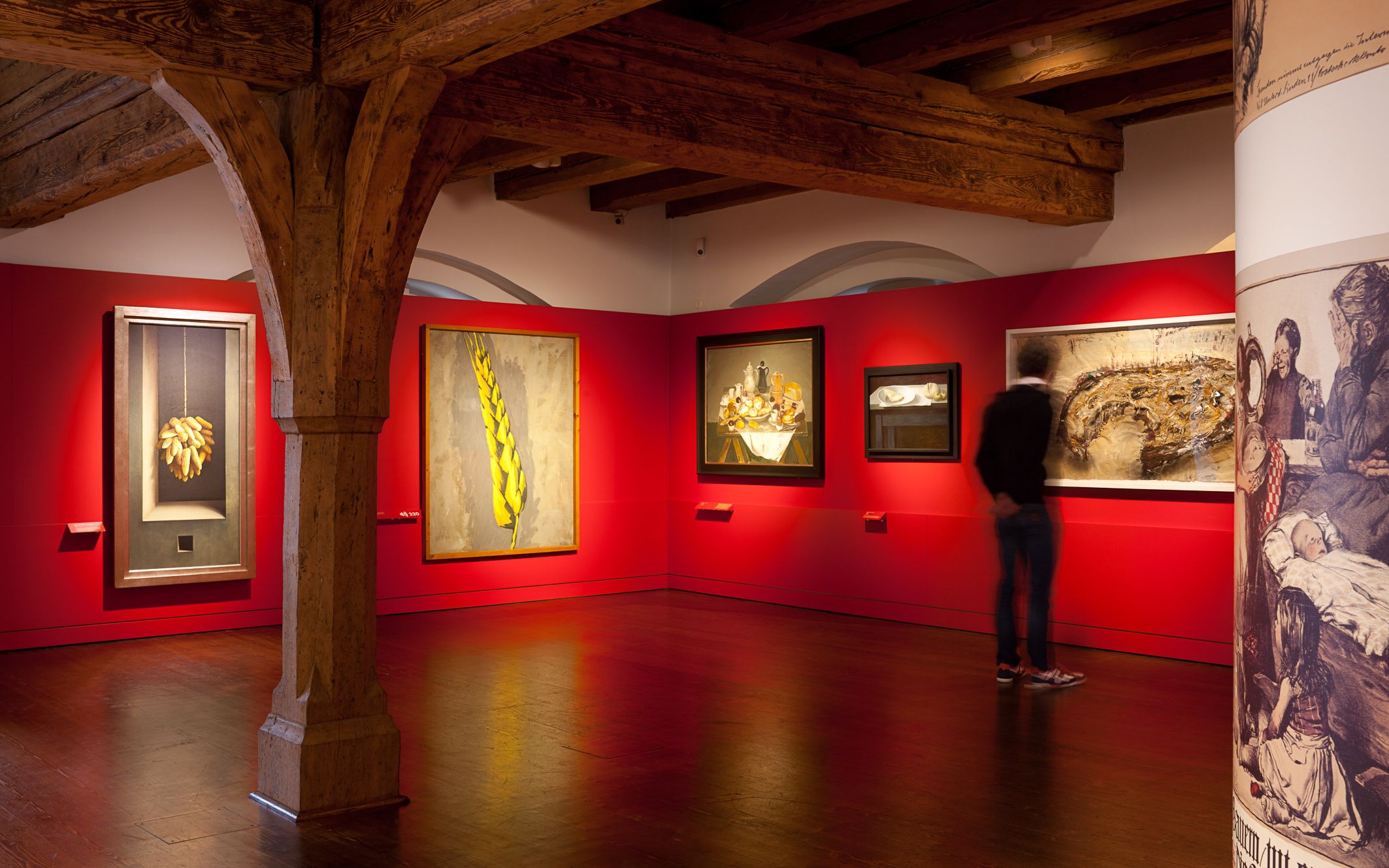
Museum Brot und Kunst, Germany. (Source)
2. Museum Brot und Kunst, Germany
Tucked away in the German countryside is Museum Brot und Kunst - the Museum of Bread and Art. The museum tackles the association of bread with everyday life, nutrition, and consumption that leads to a wider exploration of international food concerns, demands, and stereotypes. These ideas are complimented by an impressive art collection depicting "the relationship between man and nature, religious and ethical questions of nutrition and allocation, and the role of people in society." Whether you are in it for the bread or the art, this is a museum for everyone with taste.


Museum of Bad Art, United States. (Source)
3. Museum of Bad Art (MOBA), The United States
Have you ever looked at a painting and thought, "I could do that?"Well, at the Museum of Bad Art (MOBA), you probably could have! The mission of the gallery is to celebrate "the labour of artists whose work would be displayed and appreciated in no other forum." Great artists did not start their practice with perfect paintings and the MOBA interprets the ongoing evolution of artistic talent, creating a relatable art experience.

The vortex tunnel in museum of illusions toronto
The Museum of Illusions, Canada. (Source)

At museums, it can often feel as though you are having a one-sided conversation with the art pieces, artefact, or object. At the Museum of Illusions, the exhibitions are made to work with and challenge your senses. Whther it be the anti-gravity room, holograms, or optical illusions, you will leave seeing the world in new ways. Other activities, such as the Smart Playroom, are an excellent place to stimulate "cognitive thinking and strategy building skills." A perfect place for people looking for a fully immersive experience.

Museum of Enduring Beauty, Malaysia. (Source)
Western beauty standards are often incorrectly placed at the centre of understandings of beauty. The Museum of Enduring Beauty works to overcome colonial understandings of beauty by demonstrating its international dimensions. Beauty practices include corseting, tattooing, lip stretching, and foot binding. If we are able to understand cultural context behind these practices, whether or not we agree with them, an important conversation is still happening and opens the door to treat all people with humanity. 

These are only a very small sample of the uncommon museums the world has to offer. There are hundreds of others across the world, including the Mustard Museum, the Museum of Broken Relationships, the International Cryptozoology Museum, and many more. If traditional forms of museums and galleries do not appeal to you, there is a museum somewhere that fits your interests. 

18 March 2020

TEACHING CLIMATE CHANGE PART IV: ROADBLOCKS AND OBSTACLES

Museums on Earth | Defne Inceoglu


Illustration courtesy of Defne Inceoglu.

Last time, we looked at examples of how international museums are speaking to the crisis. On this, my last post for Museums on Earth, I wanted to spend some time thinking about what sorts of obstacles lay ahead for museums.

\\\

Please reflect on your past and current public engagement on climate change. Your work matters, and it matters that we all perform at new levels. Allow these examples to embolden you to reach farther and to advocate in your organization, and in the field, for similarly creative and ambitious projects, then please share your learning and results widely. We must all learn and share as much as we can, as fast as we can, to create scalable and scaled change in ways that support and repair our climate. We must work at a rate never before attempted.
Sarah Sutton and Cynthia Robinson, "Museums and Public Climate Action" in the Journal of Museum Education vol. 45 (January 2020): 3.


The Journal of Museum Education's (JME) latest issue is dedicated to Museums and Climate Change - another addition of growing scholarship around museum and climate action. 

I close this chapter with more questions than answers. It is, of course, important to ask questions. Questions lead to problem-solving, discussion and action. Without addressing some very core issues, we risk overlooking issues or embracing naivety. 

I identify the following four issues below that I believe, through my research, to be the main obstacles that museums will face going forward:

Obstacle 1 |  Fighting apathy

Obstacle 2 | Funding and donorship

Obstacle 3 | Teaching accessible science-literacy

Obstacle 4 | Moving away from neutrality 


1 | Fighting apathy

It is important to address apathy. From my visitor research at the Royal Ontario Museum, I noted that visitors do not feel invigorated to take climate action if they are burdened with the sort of esoteric or existential reality of climate change. This, I claim, can lead people to apathy. One way to combat this is to ensure that our exhibits and programming focus more on local, community efforts - meetups, conversations, panels, presentations, interactive outings facilitated by the museum, etc. This sort of programming can look like a lot of things - however integrating more social action and conversation, as well as providing tangible resources for visitors. I think this is a large challenge, as the ability to create ongoing engagement and enrichment for visitors is sometimes a coin toss. Talk to your audience, your visitors - see what they want to see the museum doing - bring in new voices. Focus on real efforts being made by community groups and members in your cities and towns. 

This graph, based on the comparison of atmospheric samples contained in ice cores and more recent direct  measurements, provides evidence that atmospheric CO2 has increased  since the Industrial Revolution.  (Source: [[LINK||http://www.ncdc.noaa.gov/paleo/icecore/||NOAA]])
This graph, based on the comparison of atmospheric samples contained in ice cores and more recent direct measurements, provides evidence that atmospheric CO2 has increased since the Industrial Revolution. (Credit: Luthi, D., et al.. 2008; Etheridge, D.M., et al. 2010; Vostok ice core data/J.R. Petit et al.; NOAA Mauna Loa CO2 record.) Image courtesy of NASA's climate change website.

2 | Funding and donorship

Funding is always an uncertainty. Museum fundraising is tricky and complicated (as Samantha's column (Fun)draising for Musings spends time talking about). How do you invigorate your donors to support new, climate-focused exhibits or programming? Your institutions may not necessarily be science-oriented - art museums, galleries, historic houses, etc., can have different types of fundraising or donorship strategies that don't include convincing stakeholders to fund climate-focused content. 


Sea level rise is caused primarily by two factors related to global warming: the added water from melting ice sheets and glaciers and the expansion of seawater as it warms. The first graph tracks the change in sea level since 1993 as observed by satellites. This satellite data shows that the average sea levels rise 3.3 millimetres per year. Image courtesy of NASA.

3 | Teaching accessible science-literacy

Literacy matters, accessibility matters, and equity matters. If the content of your exhibitions is difficult to interpret, or if you do not provide a baseline for visitors, it can quickly become confusing or irrelevant. Science-literacy is not just about understanding graphs or subscribing to journals - you cannot expect all visitors to your museum to have these skills or wants. Instead, focus on taking steps to understand where visitors are coming from and what their education levels are. This way, you can tailor your content. It doesn't hurt to test your content, either. 

Take the Royal Ontario Museum's Blue Whale exhibition, which ran from March-September 2017. This exhibition was enormously popular - utilizing storytelling and community strategies to create a successful exhibit. 

This chart is what I am getting at: accessible information, explanation and resources for further research. Phew! Image courtesy of NASA.


4 |  Moving away from neutrality 

It is impossible to assume that you can achieve neutrality when talking about climate change. I talked about this in Part I, and as the months have passed it has really dawned on me that taking a stance, challenging visitors, and backing up your work with up to date literature and science is the only way to truly invigorate real change. 

///

That's all, folks! Stay safe out there.