CLICK HERE to be redirected to our new and improved website! :)

22 March 2023
17 December 2021
适量 "SHILIANG" THE APPROPRIATE AMOUNT
Colour the Canvas | Jingshu Helen Yao
Back in 2020, I submitted a Chinese rice cake recipe to Cooking the Past, an online cookbook collected by a group of food historians. During the correspondence with my editor, I was asked to provide specific measurements for the amount of flour and glutinous rice that was used.
I had no idea.
 |
| Rice Cake by Helen, Courtesy of the author. |
When I made the rice cake, I just raised the bag of flour over the mixing bowl and shook it. I watched the white powder pile up like snow covering a hill, a mountain in winter. I then poured water and watched it stream down the sides of the mountain of flour, like waves washing over a sandcastle. I stirred them up with chopsticks and when they refused to form a dough, I added more water, and then more flour, until the dough was neither too dry nor too wet.
That was an honest description of me making a dough but not something I could share directly. Not without stating how many cups of flour I used, even though I don’t have a measuring cup in my kitchen; not without saying how many grams of sugar I added, even though I think it depends, none at all or a whole lot of it – both measurements make sense.
On one hand, I understand why precise amounts are needed. If someone wants to recreate the dish, four cups are much easier to follow than the “appropriate amount.” But that wasn’t how the food was made at home, not how the recipe was taught to me. Both my mother and grandmother often used 适量 (Shiliang) or “The Appropriate Amount” to describe the amount needed for each ingredient. Even if they were asked to quantify it, they would say “as much as you think is needed” or “give it a try and you will know.” To me, recipes were never written; they were told over a steaming pot, over the sizzling sound of oil, over the aromatic smell of species. That was how I learned to cook, not through words and numbers, but through watching, listening, and smelling.
Eventually, I made a guess for my recipe submission and wrote two cups of flour and half a cup of glutinous rice. But I have no idea if someone followed these instructions strictly, whether or not they could make the rice cake that I’m familiar with. Subconsciously, I felt a little ashamed for not being able to provide a more accurate answer, for not having a drawer of kitchen supplies that have numbers and measuring units encrypted. But I didn’t give the feeling much thought and forgot about it soon after.
 |
| Amazon Best Sellers Kitchen Measuring Tools, Screenshots from Amazon.ca. |
When I watched Mama Put’s story in Ozoz Sokoh’s documentary, Rice and Beans, I heard the following narration: “She has neither pastry cutter or cupcake plunger but she knows how deep to stick her knife…she will not win any awards for sophistication, her own people won’t let her... and because she does it anyway, without language. Do we not call her unskilled labour?” The memory of writing that rice cake recipe came back to me. Like many videos of street food vendors that went viral online, people may look in awe at the skills, eyes wide open. But these videos would not be categorized the same as the ones that feature a clean kitchen, shiny tools, young and attractive chiefs, and measurements. Not yet.
I was really excited to connect with Ozoz Sokoh through MSL4000: Exhibition Project, where she was a guest speaker at one of our lectures. I brought up how the documentary had moved me and inspired me to think deeper about my own culinary traditions. I shared my dilemma with her about measurements in recipe writing. Ozoz replied, “I think people have to understand the difference between conceptual recipes… by sight, taste, and deep understanding; versus precision cooking by following a recipe and measuring… they co-exist and one is not necessarily better than the other.” She then introduced me to the Persian word “Andaaza/ loose estimation”, discussed by Shayma Saadat (one of Ozoz’s friends and a food writer and blogger) in an article about her mother’s Ginger Chicken. It sounded a lot like how my mother would use 适量, which made me wonder how many cultures had, or used similar terms this way – to represent knowledge that is passed down from generation to generation without defining, specifying, or measuring.
In my first draft of this article, I titled it “The Opposite of Sophistication.” But what Ozoz said reminded me of is that cooking without precise measurement is not necessarily unsophisticated, but simply a different kind of sophistication related to a different culture, a different way of teaching. Therefore I renamed it with a term that I am familiar with and have been for a long time but had not yet fully explored: 适量 The Appropriate Amount.



9 December 2021
CAN THE MUSEUM BE RECONCILED?
Breaking the Glass Case | Megan C. Mahon
On the surface, this looks great. These galleries definitely need an overhaul - as Geoff Russ, a member of the Haida community and a Victoria resident, put it, the First Peoples gallery in particular “desperately needs input from Indigenous experts” before it can reopen. The other exhibits also need thorough examination to ensure that they explain history from more than one (white) viewpoint. No, I’m not against gallery overhauls. But I’m also not sure that this gets to the very root of the problem.
The reason the RBCM is making these changes is that past staff members have complained about “a culture of racism and discrimination.” The resignation of Lucy Bell, who had been the head of the Indigenous Collections and Repatriation department, sparked a third-party investigation into internal practices - the results of which were, apparently, “not good.” Put simply? It’s not only the galleries that need an overhaul.
___________________________________________________________________________________
Good morning museum friends, and now it’s time for another issue of Here’s How Hard It Is To Decolonize Museums. Not to depress anyone at this late stage in the semester, but I wanted to talk about a trend I’ve been noticing among Canadian museums recently and ask a vital question: do we, as participants in this program, believe that the museum can be reconciled? Not simply decolonized, but reconciled?
Some might argue it’s an issue of semantics. But I believe that, in most cases, decolonization is something that follows reconciliation. In theory, once Canadian museums have reconciled with the Indigenous peoples on whose land they stand, they can continue, with their input, to decolonize the museum - that is, to reimagine and reorganize their content with justice and restitution in mind. However, I fear that “decolonization” is in danger of simply becoming another museum buzzword – a trend that quickly fizzles, rather than a way of operating that all institutions should be committing to for the future. Many Canadian museums are at risk of putting half an effort into their decolonization practices, by not putting reconciliation first. And that will involve a total re-imagination of what “the museum” actually is and should be.
The Royal BC Museum in Victoria, for example, has recently closed its third floor, citing the need to completely overhaul their exhibitions in the name of decolonization. The galleries prepped to close include the “Becoming BC” exhibition and the extremely popular Old Town (which depicts the city of Victoria as it would have looked in the late nineteenth and early twentieth centuries). They’re also going to close their First Peoples gallery, as they want to feature Indigenous stories that are not based in white settler stereotypes from 1886 (when the museum was founded).
Good morning museum friends, and now it’s time for another issue of Here’s How Hard It Is To Decolonize Museums. Not to depress anyone at this late stage in the semester, but I wanted to talk about a trend I’ve been noticing among Canadian museums recently and ask a vital question: do we, as participants in this program, believe that the museum can be reconciled? Not simply decolonized, but reconciled?
Some might argue it’s an issue of semantics. But I believe that, in most cases, decolonization is something that follows reconciliation. In theory, once Canadian museums have reconciled with the Indigenous peoples on whose land they stand, they can continue, with their input, to decolonize the museum - that is, to reimagine and reorganize their content with justice and restitution in mind. However, I fear that “decolonization” is in danger of simply becoming another museum buzzword – a trend that quickly fizzles, rather than a way of operating that all institutions should be committing to for the future. Many Canadian museums are at risk of putting half an effort into their decolonization practices, by not putting reconciliation first. And that will involve a total re-imagination of what “the museum” actually is and should be.
The Royal BC Museum in Victoria, for example, has recently closed its third floor, citing the need to completely overhaul their exhibitions in the name of decolonization. The galleries prepped to close include the “Becoming BC” exhibition and the extremely popular Old Town (which depicts the city of Victoria as it would have looked in the late nineteenth and early twentieth centuries). They’re also going to close their First Peoples gallery, as they want to feature Indigenous stories that are not based in white settler stereotypes from 1886 (when the museum was founded).
 |
| The outside of the Royal British Columbia Museum. Source: Michael Klajban. https://en.wikipedia.org/wiki/Royal_British_Columbia_Museum |
The reason the RBCM is making these changes is that past staff members have complained about “a culture of racism and discrimination.” The resignation of Lucy Bell, who had been the head of the Indigenous Collections and Repatriation department, sparked a third-party investigation into internal practices - the results of which were, apparently, “not good.” Put simply? It’s not only the galleries that need an overhaul.
 |
| Some artifacts of the First Peoples collection at the Royal BC Museum. Source: Wikimedia Commons. |
Museums are made up of people. While art, objects, and artifacts might be the public face of an institution, people make them run – and it’s the people, not the artifacts, that have to do the work of reconciliation. If the RBCM changes their exhibits and didactics, that’s great. But if the people who make those exhibits and didactics continue to participate in making the museum unsafe for Indigenous folks, then only the surface has changed. The colonial wound has not, in fact, healed at all.
It’s a similar story at the Canadian Museum for Human Rights. Following their own – oft-repeated and studied by students in this program – blunders, their CEO was fired. They’ve since spent over four thousand hours on employee training (don’t be racist! is it really that difficult?) and instituted Robert Greene as Indigenous Elder-In-Residence. But as new CEO Isha Khan has stated, disrupting the colonial standard in museums “takes really thoughtful and deliberate work and takes a long time.”
She’s right. For once, I have to think the CMHR is taking the right approach. It’s not about changing galleries - although that takes a lot of work, it can happen relatively quickly. Changing people won’t happen overnight.
However, that brings me to the question which is the crux of this article: is the museum too steeped in coloniality to ever be reconciled, no matter how much the people within them may change and grow?
Pondering this question led me to Sumaya Kassim’s famous article “The Museum Will Not Be Decolonized,” which I’m sure most people in this program have read. It details her experiences as a co-curator at the Birmingham Museum and Art Gallery, creating an exhibition that examined the museum’s colonial history. Although her exploration into the history of the museum’s artifacts was fascinating, what’s more relevant to this discussion is her struggle with the overall structure of the museum. As she put it, white supremacy and coloniality are “so embedded in the history and power structures” of cultural institutions that she was doubtful about whether decolonization could ever be achieved. Museums are made by, for, and about white audiences. Before we can think about changing museums, we have to alter their entire structure and purpose.
I’m an eternal optimist: I believe that the museum can be reconciled and, eventually, decolonized. But I think that museums have to change their definition of what that means. For the Royal BC Museum, it means more than simply changing your galleries. For the Canadian Museum for Human rights, it means more than firing your CEO and conducting staff workshops. Of course, these things are all good (especially if your CEO does nothing to combat reports of racism), and they have their place in the reconciliation process. But they also fail to fundamentally disrupt the nature of the museum, which is, I think, the true way to reconcile and decolonize.
This has been a long, deep dive into what museums are doing – and not doing – that works to create safer environments for everyone and to reconcile with communities they have harmed in the past. My final point is that it must happen in layers: change the structure, change the people, change the artifacts. If everything I’ve learned in this program is true, it won’t happen quickly. All of us who work in museums will have to ensure that reconciliation is our primary focus. But, if the end result is safer and anti-colonial museum spaces, it will be worth it. And we aren't averse to hard work, are we?
It’s a similar story at the Canadian Museum for Human Rights. Following their own – oft-repeated and studied by students in this program – blunders, their CEO was fired. They’ve since spent over four thousand hours on employee training (don’t be racist! is it really that difficult?) and instituted Robert Greene as Indigenous Elder-In-Residence. But as new CEO Isha Khan has stated, disrupting the colonial standard in museums “takes really thoughtful and deliberate work and takes a long time.”
She’s right. For once, I have to think the CMHR is taking the right approach. It’s not about changing galleries - although that takes a lot of work, it can happen relatively quickly. Changing people won’t happen overnight.
However, that brings me to the question which is the crux of this article: is the museum too steeped in coloniality to ever be reconciled, no matter how much the people within them may change and grow?
Pondering this question led me to Sumaya Kassim’s famous article “The Museum Will Not Be Decolonized,” which I’m sure most people in this program have read. It details her experiences as a co-curator at the Birmingham Museum and Art Gallery, creating an exhibition that examined the museum’s colonial history. Although her exploration into the history of the museum’s artifacts was fascinating, what’s more relevant to this discussion is her struggle with the overall structure of the museum. As she put it, white supremacy and coloniality are “so embedded in the history and power structures” of cultural institutions that she was doubtful about whether decolonization could ever be achieved. Museums are made by, for, and about white audiences. Before we can think about changing museums, we have to alter their entire structure and purpose.
I’m an eternal optimist: I believe that the museum can be reconciled and, eventually, decolonized. But I think that museums have to change their definition of what that means. For the Royal BC Museum, it means more than simply changing your galleries. For the Canadian Museum for Human rights, it means more than firing your CEO and conducting staff workshops. Of course, these things are all good (especially if your CEO does nothing to combat reports of racism), and they have their place in the reconciliation process. But they also fail to fundamentally disrupt the nature of the museum, which is, I think, the true way to reconcile and decolonize.
This has been a long, deep dive into what museums are doing – and not doing – that works to create safer environments for everyone and to reconcile with communities they have harmed in the past. My final point is that it must happen in layers: change the structure, change the people, change the artifacts. If everything I’ve learned in this program is true, it won’t happen quickly. All of us who work in museums will have to ensure that reconciliation is our primary focus. But, if the end result is safer and anti-colonial museum spaces, it will be worth it. And we aren't averse to hard work, are we?
6 December 2021
CATHERINE THE GREAT... ART COLLECTOR?
Collections Corner | Kara Annett
 |
| The art conisseur herself. Source. |
Sometime during the 1750s, a Berlin merchant named Johann Gotzkowski began travelling around Europe to purchase artwork at the request of King Frederick II of Prussia who hoped to expand the royal collection. This would never come to be, as the Seven Years War devastated Prussia in Gotzkowski’s absence, leaving Frederick unable to afford the 225 paintings that had been collected for him. Luckily for Gotzkowski, one man’s misery is another (wo)man’s fortune. In 1764, Catherine the Great bought the collection – if only to rub it in Frederick’s face that Russia could still afford to make such lavish and expensive purchases. These 225 paintings would eventually grow to a collection of over three million pieces.
 |
| Cupid and Pysche by Antonio Canova. Source. |
Catherine had a bit of a shopping addiction and by 1771 her collection had outgrown the Small Hermitage. As anyone in this situation would do, Catherine had a second building constructed to accommodate her new collection, aptly called the Great Hermitage. Since there was no point in letting all this newfound space remain empty, the museum wasted no time in acquiring the collection of Baron Pierre Crozat in 1772, closely followed by that of Sir Robert Walpole’s in 1779, and the John Lyde Browne’s ancient sculpture collection in 1787.
Some of the highlights from her impressive collection include multiple Rembrandts, Raphael’s Holy Family, Pieter Paul Ruben’s Bacchus, and the infamous Peacock Clock that her lover Grigori Potemkin commissioned for her in 1766. The collection housed at the Hermitage became the envy of Europe, especially amongst the French who thought they were cheated out of the Crozat’s collection by Dennis Diderot (yes, that Diderot). This didn’t deter Catherine, who remained an avid collector up until her death. Throughout the last three decades of her life, Catherine employed several agents to travel across Europe and purchase works for her rapidly expanding collection. By 1796, she had amassed nearly 4,000 paintings and established herself as one of the greatest art collectors in Europe.
It wasn’t just all fun and games though; by building up such a prestigious collection, Catherine was able to transform Russia’s global reputation from one of supposed backwardness and barbarism to the epicentre of cultural enlightenment. However, it came at a cost: while millions of rubles were being spent on art, Catherine was also quashing growing unrest amongst peasants and serfs, who continued to suffer under feudalism. Amid the Great Hermitage’s construction, a military officer named Yemelyan Pugachev led hundreds of thousands into a rebellion in response to Russia’s continued conflict with Turkey. Pugachev ended up burning Kazan and captured Tsaritsyn before he was ultimately caught and executed by Catherine’s army, along with other members of the rebellion.
It’s undeniable that Catherine the Great transformed Russia’s reputation during her rule, leading the country to become a major power in terms of arts, sciences, and education. She supposedly embraced Enlightenment ideals with the promotion of education and freedom, yet she failed to abolish serfdom and kept thousands of people enslaved in the name of maintaining power. While her ideals were at odds with her actions, her expansive collection altered the Russian cultural landscape, establishing the country as an enlightened power to be reckoned with.
 |
| Rembrandt's Portrait of a Young Bachelor, part of the Hermitage collection. Source. |

Some of the highlights from her impressive collection include multiple Rembrandts, Raphael’s Holy Family, Pieter Paul Ruben’s Bacchus, and the infamous Peacock Clock that her lover Grigori Potemkin commissioned for her in 1766. The collection housed at the Hermitage became the envy of Europe, especially amongst the French who thought they were cheated out of the Crozat’s collection by Dennis Diderot (yes, that Diderot). This didn’t deter Catherine, who remained an avid collector up until her death. Throughout the last three decades of her life, Catherine employed several agents to travel across Europe and purchase works for her rapidly expanding collection. By 1796, she had amassed nearly 4,000 paintings and established herself as one of the greatest art collectors in Europe.
 |
| The Peacock Clock. Source. |
It wasn’t just all fun and games though; by building up such a prestigious collection, Catherine was able to transform Russia’s global reputation from one of supposed backwardness and barbarism to the epicentre of cultural enlightenment. However, it came at a cost: while millions of rubles were being spent on art, Catherine was also quashing growing unrest amongst peasants and serfs, who continued to suffer under feudalism. Amid the Great Hermitage’s construction, a military officer named Yemelyan Pugachev led hundreds of thousands into a rebellion in response to Russia’s continued conflict with Turkey. Pugachev ended up burning Kazan and captured Tsaritsyn before he was ultimately caught and executed by Catherine’s army, along with other members of the rebellion.
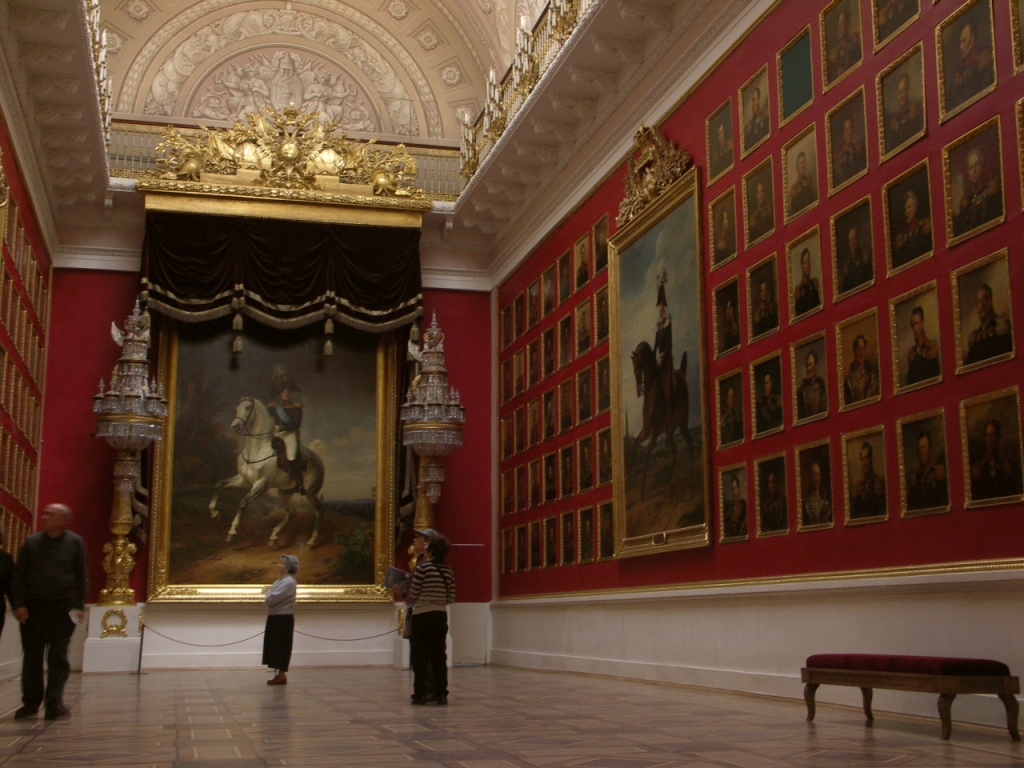 |
| The Hall of Military Fame. Source. |

It’s undeniable that Catherine the Great transformed Russia’s reputation during her rule, leading the country to become a major power in terms of arts, sciences, and education. She supposedly embraced Enlightenment ideals with the promotion of education and freedom, yet she failed to abolish serfdom and kept thousands of people enslaved in the name of maintaining power. While her ideals were at odds with her actions, her expansive collection altered the Russian cultural landscape, establishing the country as an enlightened power to be reckoned with.
25 November 2021
THE ENDURING RELEVANCE OF PIONEERING OCCULT ARTIST ROSALEEN NORTON
____________________________________________________________________________________
"I came into this world bravely, I'll go out bravely."
~ Rosaleen Norton, artist, occult practitioner, daughter of Pan, before her death in 1979
Rosaleen Norton has only recently begun to get the cultural recognition she deserves. Despite being a tremendously influential and defining artist of the mid 20th century, Rosaleen’s unapologetic artistic legacy remains relatively obscure compared to her counterparts. Perhaps this has to do with how she was outcasted, crudely mocked and relentlessly hounded by the media. She was branded by most as a depraved, satanic witch. In the 1940s and 1950s, she became a national fascination and was perceived as a major threat to the social norms and moral orthodoxy of a predominately Christian Australia. Her artwork, tragically misunderstood, was torched by the government, confiscated by police and censored by major museums and galleries in Melbourne. She remains the only Australian artist whose work was physically destroyed by order of the courts. Rosaleen also faced charges of obscenity for her provocative paintings depicting Greek gods and goddesses, female sexuality and ritual magic. In a recently made film about the artist, director Sonia Bible proclaims that Rosaleen was once “the most persecuted artist in Australia.”

Born in Dunedin, New Zealand in 1917 and plagued with spiritual visions as a child, Rosaleen had always been fascinated by the otherworldly. What seems now to be an instance of cosmic foreshadowing, at 14 she was expelled from school for supposedly corrupting fellow schoolgirls with her “deviant” drawings. By her twenties, Rosaleen was mastering her occult and artistic skills, practicing Aleister Crowley trance magic and creating paintings that fused her search for transcendence with her spiritual beliefs. Being openly bisexual – in addition to her unconventional appearance, love for animals, bohemian lifestyle and penchant for worshipping and painting figures like Pan (a Greek god who resembles and is often mistaken for Lucifer) – made her a true outsider amidst the hyper conservative landscape of mid-century Australia. A 1949 exhibition of her work held at the Rowen-White Library in the University of Melbourne ended with a police raid and charges of obscenity. Later, her book The Art of Rosaleen Norton with poems by Gavin Greenlees (published by Walter Glover in 1952) was heavily censored in Australia and banned in America, and resulted in Glover also facing charges.
"I came into this world bravely, I'll go out bravely."
~ Rosaleen Norton, artist, occult practitioner, daughter of Pan, before her death in 1979
Rosaleen Norton has only recently begun to get the cultural recognition she deserves. Despite being a tremendously influential and defining artist of the mid 20th century, Rosaleen’s unapologetic artistic legacy remains relatively obscure compared to her counterparts. Perhaps this has to do with how she was outcasted, crudely mocked and relentlessly hounded by the media. She was branded by most as a depraved, satanic witch. In the 1940s and 1950s, she became a national fascination and was perceived as a major threat to the social norms and moral orthodoxy of a predominately Christian Australia. Her artwork, tragically misunderstood, was torched by the government, confiscated by police and censored by major museums and galleries in Melbourne. She remains the only Australian artist whose work was physically destroyed by order of the courts. Rosaleen also faced charges of obscenity for her provocative paintings depicting Greek gods and goddesses, female sexuality and ritual magic. In a recently made film about the artist, director Sonia Bible proclaims that Rosaleen was once “the most persecuted artist in Australia.”
Rosaleen Norton with one of her paintings, c. 1945-1950. Source.
Born in Dunedin, New Zealand in 1917 and plagued with spiritual visions as a child, Rosaleen had always been fascinated by the otherworldly. What seems now to be an instance of cosmic foreshadowing, at 14 she was expelled from school for supposedly corrupting fellow schoolgirls with her “deviant” drawings. By her twenties, Rosaleen was mastering her occult and artistic skills, practicing Aleister Crowley trance magic and creating paintings that fused her search for transcendence with her spiritual beliefs. Being openly bisexual – in addition to her unconventional appearance, love for animals, bohemian lifestyle and penchant for worshipping and painting figures like Pan (a Greek god who resembles and is often mistaken for Lucifer) – made her a true outsider amidst the hyper conservative landscape of mid-century Australia. A 1949 exhibition of her work held at the Rowen-White Library in the University of Melbourne ended with a police raid and charges of obscenity. Later, her book The Art of Rosaleen Norton with poems by Gavin Greenlees (published by Walter Glover in 1952) was heavily censored in Australia and banned in America, and resulted in Glover also facing charges.

Rosaleen Norton with her cat, c. 1950. Source.

Rosaleen Norton sketching, c. 1945-1950. Source.


References:
https://whatmagicisthis.com/2020/04/10/rosaleen-norton/
https://theconversation.com/friday-essay-why-rosaleen-norton-the-witch-of-kings-cross-was-a-groundbreaking-bohemian-154184
https://hyperallergic.com/144377/a-documentary-for-the-witch-of-kings-cross-australias-persecuted-occult-artist/
https://archive.org/details/bookofliesthedisinformationguidetomagickandtheoccult/page/n431/mode/2up?q=rosaleen+norton
https://www.talesfromthegrave.org/post/an-artist-who-practiced-the-occult-and-worshipped-pan
https://magazine.artland.com/the-fear-of-art-contemporary-art-censorship/
https://www.theguardian.com/film/2021/feb/09/sex-magic-occult-art-and-acid-the-story-of-the-infamous-witch-of-kings-cross
TO BREATHE LIFE INTO THIS SPACE: OBJECTS WITH LIVES AND AGENCY
Breaking the Glass Case | Megan C. Mahon
____________________________________________________________________________________
____________________________________________________________________________________
CW: This article contains mention of Canadian residential schools.
If you’re a Museum Studies student, it’s likely you’ve talked a lot about the ways that museums can better serve Indigenous communities, given that so many examples of traditional Indigenous art and cultural materials reside in Canadian institutions. Repatriation of these items – while one of this author’s favourite topics to expound on at length – will wait for another article. With this piece, I’d like to bring your attention to a novel agreement that’s been struck between an Indigenous artist and a certain (rather infamous, but that’s another story we all know) Canadian museum.
The Witness Blanket is a large-scale art installation made from hundreds of items reclaimed from churches, government buildings, and residential schools. The artist, master carver Carey Newman, is Kwakwak’awakw from the Kukwekum, Giiksam, and WaWalaby’ie clans of northern Vancouver Island, and Coast Salish from Cheam of the Sto:lo Nation along the upper Fraser Valley. The Blanket he and his team created stands as a national monument to the atrocities committed in residential schools, and symbolizes the work of ongoing reconciliation. It’s an incredibly moving piece: in addition to pieces from buildings which ran and operated residential schools, it contains personal items from survivors and weaves it all into a giant tapestry of tragedy, resilience, and hope.
The Blanket itself is marvel enough, but what deserves special attention – especially to us Museum Studies students – is the agreement behind its exhibition at the Canadian Museum for Human Rights. I see you twitching at the mention of that museum’s name, but I promise we won’t get into that whole sorry debacle here. The story is thus: after the Witness Blanket completed its cross-Canada tour, its creators knew that it needed a permanent home to rest and undergo conservation. However, they did not want to give the Blanket to the CMHR in a way that would imply the piece had one owner. So too, in order to reflect the spirit of truth and reconciliation in which the Blanket was created, they wanted to forge an alliance with the CMHR that did not reflect the traditional power imbalance between museums and Indigenous communities.
The agreement that resulted was unprecedented among museums. In a traditional gathering place on Vancouver Island, British Columbia, stakeholders and museum workers were invited to witness an oral ceremony that made Canadian museum history. For the first time ever, the Crown had ratified a binding legal document through Indigenous ways of knowing. The agreement struck between the CMHR and creators of the Witness Blanket would be put into effect using both written documents and oral agreements, both of which were given equal weight. Carey Newman described this groundbreaking contract as one that lives in two worlds, and joins Western and Indigenous traditions. But to my mind, that isn’t the only incredible part. The contract dictates that the Witness Blanket itself holds its own legal rights – not its creators or the museum where it will reside. This artifact, a physical testimonial to the horrors of residential schools and hope for a better future, has the right to its own story as an independent, living being.
This might sound strange to the majority of us who grew up thinking that museums owned artifacts, which were inanimate objects that were there to teach us about history. I know that’s how I grew up seeing objects in museums. But I think this unprecedented agreement is the first step to seeing artifacts in a different way, one that affords objects more agency. What does this mean for the future of museums?
When I heard about the agreement to treat the Witness Blanket as an object with its own life, I thought of this Robert Smithson quote: “Museums…are graveyards above the ground – congealed memories of the past that act as a pretext for reality.” And while I don’t entirely believe that this is true, I can’t deny that sometimes entering a museum does feel like entering a graveyard - not just because of the artifacts taken out of their contexts and placed behind glass cases, but because of the atmosphere of silence and the idea that we should be treating the space with quiet reverence. Quiet reverence doesn’t have to be a bad thing, but the idea that objects are living things with their own spirits – which many Indigenous cultures on Turtle Island have always known – opens up a whole new pathway of what museums can be.
In the context of this agreement, the Witness Blanket isn’t simply an art piece that commemorates those who never came home from residential schools. It’s a living thing with its own spirit and agency; it isn’t owned by a museum but stands as its own being. What would happen if we treated all museum objects this way? If we treated each artifact as something distinct, with its own life, deeply connected to the lives of those who made and used it?
We would be making museums safer spaces for Indigenous communities – and everyone else! We would be injecting emotional and spiritual care into the sometimes-sterile atmosphere of collections care. And we would be taking an important step down the road to museum reconciliation. If we have the courage to unlearn, a whole new era of interacting with objects is at our fingertips. With the precedent of the Witness Blanket set before us, now is the time to consider just how alive museums can really be.
The Witness Blanket is a large-scale art installation made from hundreds of items reclaimed from churches, government buildings, and residential schools. The artist, master carver Carey Newman, is Kwakwak’awakw from the Kukwekum, Giiksam, and WaWalaby’ie clans of northern Vancouver Island, and Coast Salish from Cheam of the Sto:lo Nation along the upper Fraser Valley. The Blanket he and his team created stands as a national monument to the atrocities committed in residential schools, and symbolizes the work of ongoing reconciliation. It’s an incredibly moving piece: in addition to pieces from buildings which ran and operated residential schools, it contains personal items from survivors and weaves it all into a giant tapestry of tragedy, resilience, and hope.
 |
| The Witness Blanket. Source: The Canadian Museum for Human Rights. https://droitsdelapersonne.ca/histoire/picking-up-the-pieces-the-making-of-the-witness-blanket |
The Blanket itself is marvel enough, but what deserves special attention – especially to us Museum Studies students – is the agreement behind its exhibition at the Canadian Museum for Human Rights. I see you twitching at the mention of that museum’s name, but I promise we won’t get into that whole sorry debacle here. The story is thus: after the Witness Blanket completed its cross-Canada tour, its creators knew that it needed a permanent home to rest and undergo conservation. However, they did not want to give the Blanket to the CMHR in a way that would imply the piece had one owner. So too, in order to reflect the spirit of truth and reconciliation in which the Blanket was created, they wanted to forge an alliance with the CMHR that did not reflect the traditional power imbalance between museums and Indigenous communities.
The agreement that resulted was unprecedented among museums. In a traditional gathering place on Vancouver Island, British Columbia, stakeholders and museum workers were invited to witness an oral ceremony that made Canadian museum history. For the first time ever, the Crown had ratified a binding legal document through Indigenous ways of knowing. The agreement struck between the CMHR and creators of the Witness Blanket would be put into effect using both written documents and oral agreements, both of which were given equal weight. Carey Newman described this groundbreaking contract as one that lives in two worlds, and joins Western and Indigenous traditions. But to my mind, that isn’t the only incredible part. The contract dictates that the Witness Blanket itself holds its own legal rights – not its creators or the museum where it will reside. This artifact, a physical testimonial to the horrors of residential schools and hope for a better future, has the right to its own story as an independent, living being.
This might sound strange to the majority of us who grew up thinking that museums owned artifacts, which were inanimate objects that were there to teach us about history. I know that’s how I grew up seeing objects in museums. But I think this unprecedented agreement is the first step to seeing artifacts in a different way, one that affords objects more agency. What does this mean for the future of museums?
When I heard about the agreement to treat the Witness Blanket as an object with its own life, I thought of this Robert Smithson quote: “Museums…are graveyards above the ground – congealed memories of the past that act as a pretext for reality.” And while I don’t entirely believe that this is true, I can’t deny that sometimes entering a museum does feel like entering a graveyard - not just because of the artifacts taken out of their contexts and placed behind glass cases, but because of the atmosphere of silence and the idea that we should be treating the space with quiet reverence. Quiet reverence doesn’t have to be a bad thing, but the idea that objects are living things with their own spirits – which many Indigenous cultures on Turtle Island have always known – opens up a whole new pathway of what museums can be.
In the context of this agreement, the Witness Blanket isn’t simply an art piece that commemorates those who never came home from residential schools. It’s a living thing with its own spirit and agency; it isn’t owned by a museum but stands as its own being. What would happen if we treated all museum objects this way? If we treated each artifact as something distinct, with its own life, deeply connected to the lives of those who made and used it?
We would be making museums safer spaces for Indigenous communities – and everyone else! We would be injecting emotional and spiritual care into the sometimes-sterile atmosphere of collections care. And we would be taking an important step down the road to museum reconciliation. If we have the courage to unlearn, a whole new era of interacting with objects is at our fingertips. With the precedent of the Witness Blanket set before us, now is the time to consider just how alive museums can really be.
17 November 2021
Art and Archive: Reflections from the Information Desk
Exhibition Reviews | Rachel Deiterding
Having worked in numerous museums and galleries, I somehow always managed to avoid gallery sitting…. until this fall. In September 2021, I was one of two gallery sitters at Jess Dobkin’s Wetrospective at the Art Gallery of York University. For a month I spent 18 hours a week looking at the show, telling people about the show, and learning more about all its hidden secrets. I can’t think of many exhibitions that I’ve visited more than once, let alone spent more than 72 hours with, but the perpetual proximity of gallery sitting, this long-term visiting, had a way of revealing the life of the exhibition. I was watching it grow and listening to it breathe. It felt personal. Maybe like it was watching me back?
Central to Jess Dobkin’s Wetrospective were the ideas of performance and archive. Jess Dobkin is a Toronto-based performance artist whose work facilitates uncomfortable encounters and is often created in dialogue with community. Using relics of past performances, the works were reimagined to produce multiple iterations of what a performance archive might look like. The exhibition was fueled by the tension of simultaneously looking at the past, the present, and the future. Thinking about the afterlife of the archive, the exhibition “demands of archives what we expect from performance: the live encounter of experience in a ritual of transformation.” (Emelie Chhangur, 2021)
 | |
|
 | ||
|
 |
| Jess Dobkin's Wetrospective, installation view, 2021 | Documentation by Yuula Benivolski | Source |
These details had almost slipped from my memory. I chalked them up to too much introspection; it’s just gallery sitting after all. It wasn’t until I was in a new gallery, in a new exhibition that I started to feel the viscerality of the space again, a connection being formed. Undoubtedly, exhibitions take on their own lives, and we have much to learn by being attentive to them. So, here I am, sitting in more exhibitions and trying to look and listen closely to uncover just what they might be trying to tell me.
15 November 2021
HONG KONG M+ MUSEUM OPENING AMID CENSORSHIP CONTROVERSY
As I write this article, Hong Kong’s M+ museum is scheduled to open in one day. M+ is Asia’s first museum of contemporary art, built to rival the Tate Modern and Metropolitan Museum of Art. On Friday November 12th, the museum will open, displaying 1,500 works from its collections of 6,413 to the public for the first time.
Two months ago, the museum was struck by a controversy regarding its choice not to display Ai Weiwei’s Study of Perspective: Tian’anmen (1997) which features the artist raising a middle finger at Bejing’s Tiananmen Square, in its online collection. Tiananmen was the site of a massacre by the People’s Liberation Army against peaceful pro-democracy protesters on June 4, 1989, resulting in thousands of deaths, injuries and arrests, as well as a massive government cover-up. This photograph was one of several pieces criticized by pro-Beijing politicians and media as inciting hatred against China, a violation of national security law.

A screenshot featuring Ai Weiwei's work on the M+ website with a Study of Perspective: Tian'anmen replaced with a grey image unavailable square. Courtesy of Avigayil Margolis.
Other pieces from the Study in Perspective series remain visible in the online collection even though they are not on display in the museum, so Tiananmen’s absence is glaring. Ai’s 2003 Map of China which features wood from Qing Dynasty temples and celebrates China’s cultural diversity has also been removed from the online collections. However, Whitewash (1995-2000), containing 126 Chinese Neolithic jars painted over by Ai is still being displayed during the museum’s opening and likely serves as a major draw due to the artist’s international fame.
Ai Weiwei has always been a highly political artist who criticized the Chinese government. In 2011 he was arrested and detained for 81 days, after which the government continued to watch him and restrict his movement by taking away his passport until 2015 when he was finally able to leave and moved to Berlin, Germany. His documentary Cockroach (2020) films the 2019 Hong Kong anti-extradition protests, empathizing with the youth fighting against an authoritarian government. His vocal support of the protests may be one reason his art is being specifically highlighted by politicians and media.
"China faces a massive problem if the youth of Hong Kong continues to protest," Ai said in a 2019 interview with the Hong Kong Free Press. "It is a challenge that alarms the rest of the world as to what kind of society China is. If they don’t stop the protests, the democratic voice will get louder and there will be better conditions for freedom. But how can they stop them? Hong Kong is not just another Chinese city. If that were the case, the military would have moved in and crushed it immediately. There would not be any media coverage or international attention. This already happens all the time in China. Hong Kong is different."
Looking back to protests against his own secret detention, during which artists posted his picture and name throughout the city to demand his release, Ai describes Hong Kong’s protests as "the most beautiful. They are so peaceful, rational, and those taking part are so young."
Ai Weiwei has always been a highly political artist who criticized the Chinese government. In 2011 he was arrested and detained for 81 days, after which the government continued to watch him and restrict his movement by taking away his passport until 2015 when he was finally able to leave and moved to Berlin, Germany. His documentary Cockroach (2020) films the 2019 Hong Kong anti-extradition protests, empathizing with the youth fighting against an authoritarian government. His vocal support of the protests may be one reason his art is being specifically highlighted by politicians and media.
"China faces a massive problem if the youth of Hong Kong continues to protest," Ai said in a 2019 interview with the Hong Kong Free Press. "It is a challenge that alarms the rest of the world as to what kind of society China is. If they don’t stop the protests, the democratic voice will get louder and there will be better conditions for freedom. But how can they stop them? Hong Kong is not just another Chinese city. If that were the case, the military would have moved in and crushed it immediately. There would not be any media coverage or international attention. This already happens all the time in China. Hong Kong is different."
Looking back to protests against his own secret detention, during which artists posted his picture and name throughout the city to demand his release, Ai describes Hong Kong’s protests as "the most beautiful. They are so peaceful, rational, and those taking part are so young."

An activist holds a doll, toy handcuffs and drawing of the detained Ai Weiwei in front of a police officers during a Hong Kong protest demanding his release. Photo: Laurent Fievet/AFP
The museum’s decision to remove the controversial pieces raises serious questions about censorship in the museum field and what our role is as museum professionals.
"This is the first contemporary museum in Hong Kong, so therefore, I want to ensure that the message is clear so that people don’t think that we are above the law," Henry Tang, the head of the West Kowloon Cultural District which includes M+ said at the museum’s opening ceremony. But does the argument of just following the law really hold weight when the law is unjust?
M+ director Suhanya Raffel had earlier said that the museum would have no problem showing works by dissident artists. This has held true in some regards, with local artist South Ho’s photographs of the city’s 2014 Occupy Central protests and Kacey Wong’s Paddling Home installation which represents his exile from Hong Kong to Taiwan to due his democracy activism both featured in the museum. M+’s agreement to remove the criticized artworks may have prevented a harder government crackdown which targeted more art or prevented the museum from opening to the public entirely. On the other hand, there is an inevitable dishonesty to only allowing government approved dissidence.
Ai Weiwei has criticized the museum for capitulating to censorship. "When you have a museum which cannot or is incapable of defending its own integrity about freedom of speech, then that raises a question. And certainly the museum cannot perform well in terms of contemporary culture," he told Reuters during a phone interview.
This raises the question of where a museum’s obligations to support freedom of speech end. Can a museum choose to break the law of the country where it is situated? Is it worthwhile for a museum to sacrifice a few high attention controversial pieces to allow itself to stay open and display a multitude of other important artworks?
There are no easy answers to this question of course. As museum professionals, we must work to maintain our own ethics and integrity, but we are still members of our countries and societies, subject to the laws and punishments that accompany them. Living in Canada with our rights to free speech and a fair trial, it is easy to say that we would defy any government censorship laws that targeted our museums. But how many of us would really risk jail time for our work? And should we even be expected to?
9 November 2021
LANGUAGE ACCESSIBILITY, COMMUNITY ENGAGEMENT, AND INCLUSION
Colour the Canvas | Jingshu Helen Yao
During the winter of 2020, I worked as a volunteer at Agincourt Community Services Association for their project Recipe for (Climate) Change. The project used video recordings to document senior community members’ knowledge of cooking, food preservation, and gardening, as well as its connection to their personal history. Youth participants then utilized the material to create a series of cooking lessons and a cookbook.
Most of the senior participants were immigrants with minimum English and I was brought in to be a Chinese translator. While there were second generation Chinese speakers among the youth participants, they either didn’t have or were not comfortable enough using the language abilities required to transcribe full meetings and recipes. During my time spent working with the participants, I realized the challenges of documenting storytelling and oral history in the face of the language barriers, technical difficulties, and the social isolation of COVID 19.
 |
| Translation sample for a workshop survey. Courtesy of the author. |
I had a background in translation studies as an undergraduate student, but I had only been trained to translate written text in an academic context. Translating unscripted speech was challenging and I often encountered unfamiliar vocabularies when cooking ingredients and techniques were involved. The language barrier was intensified by technical difficulties. It was already difficult to communicate with seniors through zoom call; the process became more challenging when we had to instruct them to turn on cameras, set up their phone or laptop at a correct angle, and start recording. It would have been much easier if we were able to communicate with them face to face, help them set up recordings, and give them direct assistance. However, none of these could have happened due to COVID-19 safety concerns.
Facing these difficulties, I had to use an extra amount of time to email back and forth with staff members and make multiple phone calls with senior participants. Still, I wasn’t satisfied with my work. Sometimes I failed to translate phrases and sentences during workshops or video calls, which took more time to communicate again later on. The deadline was pushed back once and once again due to these delays. However, the senior participants still expressed their gratitude despite the frustrating communication situation. They mentioned that they often felt isolated and lonely during the pandemic and were grateful to be able to participate in the project.
 |
| Example of a transcription for a cooking video. Courtesy of the author. |
A year ago, I joined the MMSt program without knowing much about the demographic of museum workers. The summer before my admission, the iSchool conducted research on the diversity and inclusion of the faculty. The working group formed by 3 students identified various issues. The adjustments to the curriculum were made and, in many of my first-year courses, the topic of diversity, inclusion, and decolonization in the culture sector was the centre of discussion.
Compared with the previous cohort, I wasn’t feeling as isolated, but I was still overwhelmed initially. Getting to know the statistics of underrepresentation of the BIPOC community and white dominance in art and culture-related careers was a setback. I almost lost hope in being employed at museums as an international student because a lot of institutions specified that the jobs are funded by YCW or Canada Summer Jobs. I also felt confused when we discussed “the lack of representation in the GLAM sector” and “how to diversify the museum field” in class. These conversations made me feel invisible at times and misplaced at others. I wasn’t sure how to approach these topics as a racialized person since it seemed like a conversation about us, not with us.
When I thought of diversity and inclusion before, it occurred to me more as recognition and representation, more on a psychological level than a physical level. Working with these senior participants made me realize that language was the key point for their engagement and in this case, the risk of exclusion wasn’t on an emotional but a physical level.
We always discussed engaging the community, sharing their voice, and making them feel included. However, in reality, how could we approach them if we don’t even speak their language, how could we share their voice if their voice is not accessible to the rest of the community, and what is “inclusion” when only the space is shared but not knowledge and thoughts? Through the time I volunteered as a translator, the participants tended to approach me with any questions, including information about compensation and confidential agreement that I wasn’t capable of answering. Even when the staff members sent out translated information through email, they tend to approach me for confirmation. The simple fact of a familiar tongue made me seem more approachable, thus granting me authority and trust.
It was with this new understanding that I joined Museum Professionals of Colour, students aimed at addressing the lack of racial diversity and representation within the MMSt program and GLAM sector at large. I’ve long followed their activities and was tempted to reach out several times during my first year. I was held back by my fear of not having an understanding of my role as a racialized museum professional as well as what changes I could possibly bring with my effort. The experience working as a translator didn’t fully address my doubts, but it allowed me to realize that diversity and inclusion is not a conversation about big ideas – but, rather, small tasks that could be exhausting and troublesome. That’s why it requires effort from as many individuals as possible, and I need to be one of them.
1 November 2021
SOAP, SKIN, AND SKULLS: INTO THE MACABRE WORLD OF THE MÜTTER MUSEUM
Collections Corner | Kara Annett
 |
| Some of the skulls at the Mütter Museum. Source. |
As we bid goodbye to October, I’m filled with a sense of dread knowing it won’t be long before stores start blasting Mariah Carey and Michael Bublé again and reminding us how it’s the most wonderful time of the year. To me, Halloween is the most wonderful time of the year and instead of hanging stockings by the chimney with care and visions of sugar plum fairies dancing in my head, I’m wondering how much longer I can get away with playing “The Monster Mash” and keeping the paper skeleton on my door. It’s no surprise then that I decided to write about one of the eeriest museum collections in the world; that’s right, today we’re delving into the marvellously macabre collections of the Mütter Museum in Philadelphia.
Founded in 1858 by Thomas Dent Mütter, the original purpose of the museum was to improve and expand upon medical education. The original collection of 1,700 objects has grown to over 25,000 and includes oddities such as sections of Albert Einstein’s brain and the unfortunately named Soap Lady, a poor woman whose body developed a fatty covering following burial (I don’t recommend looking up pictures of her after midnight because it definitely does not look like soap). Fellow bookworms might be interested in the world’s largest collection of anthropodermic bibliopegy, or books bound in human skin (this one is safe to Google, I promise). What’s most iconic, however, is their vast collection of skulls and skeletons.
 |
| A glimpse at just some of the skulls. Source. |
The Hyrtl Skull Collection came into the museum’s possession in 1874 through Dr. Joseph Hyrtl, a Viennese physician who studied 139 skulls to disprove phrenology, a popular theory at the time that stated a person’s intelligence, race, and personality could be determined by the shape and size of their skull. Hyrtl documented his findings on the sides of the skulls and his subjects mainly comprised of the poor and criminals from all over the world. Amongst those on display in the cabinet are Andrew Sokoloff, a Russian man who died of self-inflicted castration, and Francisa Seycora, a famous Viennese prostitute who died at 19 from meningitis. The skulls themselves are just as varied as the people they came from, with no two looking the same. Some have bullet holes, others are partially decayed, and absolutely none of them resemble the perfectly clean and symmetrical skull that Halloween aisles proudly display. As easy as it is to get caught up in the morbid fascination of it all, these were once real people just like you and me.
 |
| The skeleton of conjoined twins. Source. |
While it’s easy to dismiss the Mütter’s collection as morbid, it served an important purpose: to improve medical education. The museum is now run by the College of Physicians of Philadelphia, who use the acquisitions for research purposes. Carol Orzel passed away in 2018 from Fibrodysplasia Ossificans Progressiva, a rare disease that causes tissue to turn to bone. She donated her skeleton for the purpose of bringing public awareness to the disease and in hopes of researchers eventually developing a cure. Carol is displayed next to Harry Eastlack, who also had FOP and requested his body be used for research purposes. Harry’s case is still the most well-known when it comes to FOP and his body is still referred to in research. It was because of his skeleton that scientists were able to determine which gene is responsible for FOP, leading to ongoing trials for potential cures.
 |
| The skeleton of Harry Eastlack. Source. |
Though not every specimen in the Mütter is used to advance current medical research, it is impossible to deny the importance of this unique and sometimes disturbing collection. It’s easy to dismiss the museum as a cabinet of curiosities, but in reality, the Mütter has led to significant contributions in the medical field. Maybe I’ll keep the skeleton hanging on the door for just a bit longer.
 |
| A close-up of one of Hyrtl's skulls. Source |
30 October 2021
MUST BE THE SEASON OF THE WITCH (AND THE OCCULT AND MAGIC)
Musings Abroad | Molly Gosewich
October occupies a special place in the Gregorian calendar and in our hearts. As soon as September 30th becomes October 1st, you must watch Hocus Pocus while drinking Black tea. I don’t make the rules… But, ever since I can remember, I have been a sucker for every type of media that has to do with witchcraft, magic, and general spook.
So just as Halloween is impending, we travel to Cornwall in south-west England to steal a look at the Museum of Witchcraft and Magic, the perfect amalgam of the aforementioned and the occult. Cecil Williamson, a British Neopagan Warlock, founded a Museum of Witchcraft in Stratford-upon-Avon but later moved to the Isle of Man after local opposition in the 1940s. In 1951, The Folklore Centre of Superstition and Witchcraft opened with Gerald Gardner, the founder of modern Wicca, who was featured as the ‘resident witch.’ As time went on, Williamson returned to the mainland to set up a succession of witchcraft museums. Eventually, he settled in the Cornish village of Boscastle and opened the Museum of Witchcraft in 1960.
This brings us to today. With a selection of beautiful and mysterious objects ranging from shamanic amulets, talisman and ouija boards to grimoires and genitalia-shaped vessels, the Museum of Witchcraft and Magic is quite incredible. As a meaningful site for practitioners of Wicca, Paganism, and other esoteric traditions – the non-practicing public is welcomed too, including those interested in folklore, like myself.
In the spirit of Spooky Season, I present you with the most curious objects present in the Museum of Witchcraft and Magic’s collections.
 |
Incense Stick Holder Brass |
 |
Poppet of a Vicar Wax, hair, metal, paper, wood, glass |
This puppet pictured above is equally creepy and cool. Copyright information states that it is likely from Battle, East Sussex and Victorian, although a slightly later date of c. 1920 seems more likely. The Museum's Director has tried and failed to identify the church depicted in the painting attached to the back of the box. I would not want to be the guy inside the box, someone definitely had it out for him.
 |
Photograph |
Perhaps the creepiest object I found is a photograph of a woman named Joan Wytte aka the Fighting Fairy Woman of Bodmin. According to folklore, she was a witch and clairvoyant who lived in Bodmin, Cornwall at the end of the 18th century. Her nickname, the Fighting Fairy Woman of Bodmin, is in reference to her short stature and her even shorter temper. According to Strange Remains, "The legends of Joan Wytte state that she was born around 1775 in Bodmin... She was infamous for her tendency to pick fights. During a particularly nasty fight, she injured a couple people pretty bad and was arrested. She became ill in 1813, while in jail, and died at 38 years-old."
The photograph above was taken prior to her burial in 1998, as her bones had been interred for some time. They were also used for seances and other practices, and were eventually hung on the wall of the Museum of Witchcraft and Magic. Her bones are pictured here within a fleece lined blanket, along with a headstone and dish containing a clay pipe, tobacco, brandy, oils, herbs, and incense. It is alleged that while her skeleton was on display, they started to experience disruptive poltergeists... very spooky.
You can check out the MWM Collections for more photographs of her skeleton. If you're brave enough!
27 October 2021
INTANGIBLE HERITAGE: PRESERVING IDEAS
Heritage Moments | Annabelle Kolomeisky
As a person studying in Museum Studies, I often think in a very material sense. Thinking mostly of heritage being portrayed through physical spaces, such as protected heritage sites, and traditional objects such as the collections on display in museums, it is easy to forget the larger umbrella that covers what else heritage can be.
The overarching definition of heritage, according to Google, is: “property that is or may be inherited,” or “valued objects and qualities such as cultural traditions, unspoiled countryside, and historic buildings that have been passed down from previous generations.” Meaning, heritage in a broader sense can be understood as something, whether it be physical or not, that is inherited or passed down. It has less focus on what the piece of heritage actually might be physically and has a greater focus on the traditional and cultural impact the piece of heritage may have on society and the communities they originated from.
With this understanding of what heritage can include, it provides us an opportunity to take a look at a different type of heritage – intangible heritage. Intangible cultural heritage, according to UNESCO, are “traditions or living expressions inherited from our ancestors and passed on to our descendants,” with examples including “oral traditions, performing arts, social practices, rituals, festive events, knowledge and practices concerning nature and the universe, and knowledge and skills to produce traditional crafts.”
Under the lists of "Intangible Cultural Heritage and the Register of good safeguarding practices," one can explore the different traditions and practices that are being preserved and recorded for the future memory of these cultural valuable intangible heritage pieces. These examples range from commonly practiced and well-known traditions such as the traditional Neapolitan culinary practice of ‘Pizzaiuolo,' the four phases of preparing traditional Neapolitan pizza (as described by a MMST colleague who wrote about it recently!), to less well-known traditions such as the traditional Vallenato music of the Greater Magdalena region in Colombia.
While some of the traditions may continue to be passed on strongly, many traditions that are listed on the UNESCO list of Intangible Cultural Heritage face serious danger of being forgotten and are noted to be in need of urgent safeguarding. For instance, one of these endangered traditions is the Ma’di bowl lyre music and dance from Uganda. These songs and dances are based on by the community’s ancestors and are traditionally performed in various important community situations. Many rituals are also associated with the creation and use of the lyre as well. These traditional songs and dances were used to strengthen family ties and communities, as well as to educate from generation to generation. However, these traditions are now endangered, with the younger generations seeing them as old-fashioned. If these traditions are not be widely practiced, it may result in the loss of knowledge associated with them – in other words, the historical and cultural significance that is tied to these practices.
Looking at and preserving intangible heritage is extremely important, especially as we attempt to preserve the histories and traditions of cultures that rely on oral traditions, rather than material ones. Especially as emerging museum professionals, we must understand that different cultures present different traditions that are practiced and understood in different ways. Therefore, as we attempt to represent these cultures and work with local communities to preserve their traditions, we must look at all types of heritage – not just your average material collection in an object-based museum, but, rather, the intangible heritage as well.
If you are interested to see what intangible cultural heritage is being protected under UNESCO, you can visit their website and take a look at their list. Explore the different traditions from around the world that are being preserved and learn about international heritage from a different perspective!
As a person studying in Museum Studies, I often think in a very material sense. Thinking mostly of heritage being portrayed through physical spaces, such as protected heritage sites, and traditional objects such as the collections on display in museums, it is easy to forget the larger umbrella that covers what else heritage can be.
The overarching definition of heritage, according to Google, is: “property that is or may be inherited,” or “valued objects and qualities such as cultural traditions, unspoiled countryside, and historic buildings that have been passed down from previous generations.” Meaning, heritage in a broader sense can be understood as something, whether it be physical or not, that is inherited or passed down. It has less focus on what the piece of heritage actually might be physically and has a greater focus on the traditional and cultural impact the piece of heritage may have on society and the communities they originated from.
With this understanding of what heritage can include, it provides us an opportunity to take a look at a different type of heritage – intangible heritage. Intangible cultural heritage, according to UNESCO, are “traditions or living expressions inherited from our ancestors and passed on to our descendants,” with examples including “oral traditions, performing arts, social practices, rituals, festive events, knowledge and practices concerning nature and the universe, and knowledge and skills to produce traditional crafts.”
Under the lists of "Intangible Cultural Heritage and the Register of good safeguarding practices," one can explore the different traditions and practices that are being preserved and recorded for the future memory of these cultural valuable intangible heritage pieces. These examples range from commonly practiced and well-known traditions such as the traditional Neapolitan culinary practice of ‘Pizzaiuolo,' the four phases of preparing traditional Neapolitan pizza (as described by a MMST colleague who wrote about it recently!), to less well-known traditions such as the traditional Vallenato music of the Greater Magdalena region in Colombia.
 |
| Performance by traditional Vallenato musician | Source |
While some of the traditions may continue to be passed on strongly, many traditions that are listed on the UNESCO list of Intangible Cultural Heritage face serious danger of being forgotten and are noted to be in need of urgent safeguarding. For instance, one of these endangered traditions is the Ma’di bowl lyre music and dance from Uganda. These songs and dances are based on by the community’s ancestors and are traditionally performed in various important community situations. Many rituals are also associated with the creation and use of the lyre as well. These traditional songs and dances were used to strengthen family ties and communities, as well as to educate from generation to generation. However, these traditions are now endangered, with the younger generations seeing them as old-fashioned. If these traditions are not be widely practiced, it may result in the loss of knowledge associated with them – in other words, the historical and cultural significance that is tied to these practices.
 |
| Performance featuring the Ma'di bowl lyre | Source |
Looking at and preserving intangible heritage is extremely important, especially as we attempt to preserve the histories and traditions of cultures that rely on oral traditions, rather than material ones. Especially as emerging museum professionals, we must understand that different cultures present different traditions that are practiced and understood in different ways. Therefore, as we attempt to represent these cultures and work with local communities to preserve their traditions, we must look at all types of heritage – not just your average material collection in an object-based museum, but, rather, the intangible heritage as well.
If you are interested to see what intangible cultural heritage is being protected under UNESCO, you can visit their website and take a look at their list. Explore the different traditions from around the world that are being preserved and learn about international heritage from a different perspective!
Subscribe to:
Posts (Atom)