Showing posts with label Digital Applications. Show all posts

25 July 2017

TALKING TO ROBOTS ABOUT ART: A VISITOR RESEARCH ROUND-UP

RESEARCH COLUMN

BY: JENNIFER LEE

As summer internships wrap up and August approaches, you may already be itching to get back to class. Fear not: it’s not too early to start hitting the academic journals again! My own summer internship has involved some visitor research projects, and it’s fascinating to see what kinds of information we can miss about our publics until we think to ask. In the spirit of inquiry, here are some recent developments in visitor-centred research to get us thinking about museum users in the wild.

"There's one! Crikey." Source. 

Our first stop is Pittsburgh, where staff at the Carnegie Museums of Pittsburgh are currently developing a mobile experience (working title MUSE) which they describe as “a friendly, knowledgeable and charming chatbot extension”. MUSE would use native systems on users’ mobile phones, including cameras and SMS/messaging clients, as a platform to answer questions and make conversation about museum objects and facilities. The idea is reminiscent of Brooklyn Museum’s ASK system, but would use artificial intelligence rather than real-time human expertise.

This strategy removes a substantial obstacle to getting users to engage with museum apps, i.e. that very few living humans have ever intentionally downloaded a museum app. The Carnegie Museums found that 93% of the visitors they surveyed were carrying a mobile device, and virtually all of them had Facebook Messenger, iMessage, or both. If they can leverage those numbers to provide as frictionless an experience as possible, there’s reason to be optimistic about MUSE’s success. The recent popularity of SFMOMA’s ‘Send Me SFMOMA’ service, which texted artwork in response to user requests and emojis, proves that there’s quite a niche for whimsical digital experiences with museum collections.

Art on demand from the San Francisco Museum of Modern Art (Send Me SFMOMA). The future has arrived, and it is *heart eyes emoji*. Source. 

After an intensive visitor study, CMP have kindly made their visitor research data, methodology, and infographics available on GitHub, where they might be useful for other museums looking to develop similar programs (and they’re an interesting read for the inquisitive – the incidence of selfies will surprise you).

Next we move to New York and this month’s issue of the Journal of Museum Education (vol. 42, July 2017), centred on the theme ‘Does Museum Education Have a Canon?’ In the article “Well-Chosen Objects Support Well-Being for People with Dementia and Their Care Partners”, Carolyn Halpin Healey of Arts and Minds, a non-profit which works with people with dementia and their caregivers in New York museums, explains staff concerns in selecting artworks for these programs.

In keeping with the issue’s theme, much of the article’s focus is the tension between the canonical objects of a museum’s collection and the need for an accessible and enjoyable experience for participants, ultimately the more important factor. The most famous, visible, and ‘important’ objects in a museum are there for all visitors to enjoy; visitors with cognitive impairments are often unable to access them for physical reasons or because of fear and stigma associated with their impairments. While it’s important to push back against this stigma and increase access to the canon, there is also much to be gained from looking outside the canon and with specific groups’ histories and personalities in mind. 

An Arts and Minds program at the New York Historical Society. Successful programs for visitors with cognitive impairment have tangible benefits for all participants, including caregivers, but what makes a successful program, and how does the choice of art factor in? Source. 

My main takeaway came from the author’s testament to the importance of thoughtfulness: “While the “wrong” choice will certainly not cause harm, the “right” choice has the potential to catalyze self-exploration as well as provide the opportunity to reflect on the past, to empathically connect with others, and to imagine new ways of being as one ages, particularly in the face of life-altering cognitive impairment.” Even when the risks of curation are low, the payoffs may be substantial; all museum visitors deserve the best we can give them. The article draws usefully on existing education, visitor and neurological research, and is a neat example of how theory can be used to guide and bolster practice.

On our final stop, we move from understanding and shaping visitor experience to directly influencing visitor behaviour. In “Fostering customers’ pro-environmental behaviour at a museum” (Journal of Sustainable Tourism, 25.9), Heesup Han and Sunghyup Sean Hyun explore the factors which predict pro-environmental decisions like recycling, water conservation, waste reduction and transport choice while visitors are in the museum.

The authors identified five cognitive dimensions (environmental value, concern, awareness, knowledge, and self-efficacy, or the belief in one’s own ability to act toward goals) and two affective dimensions (the expectation of positive versus negative feelings after completing actions) which impact eco-friendly intentions and behaviour, as well as two additional factors, willingness to sacrifice and interconnectedness to nature. Using survey results from several South Korean museums, they produced a model which showed the relationships between all these factors in visitor decision-making.
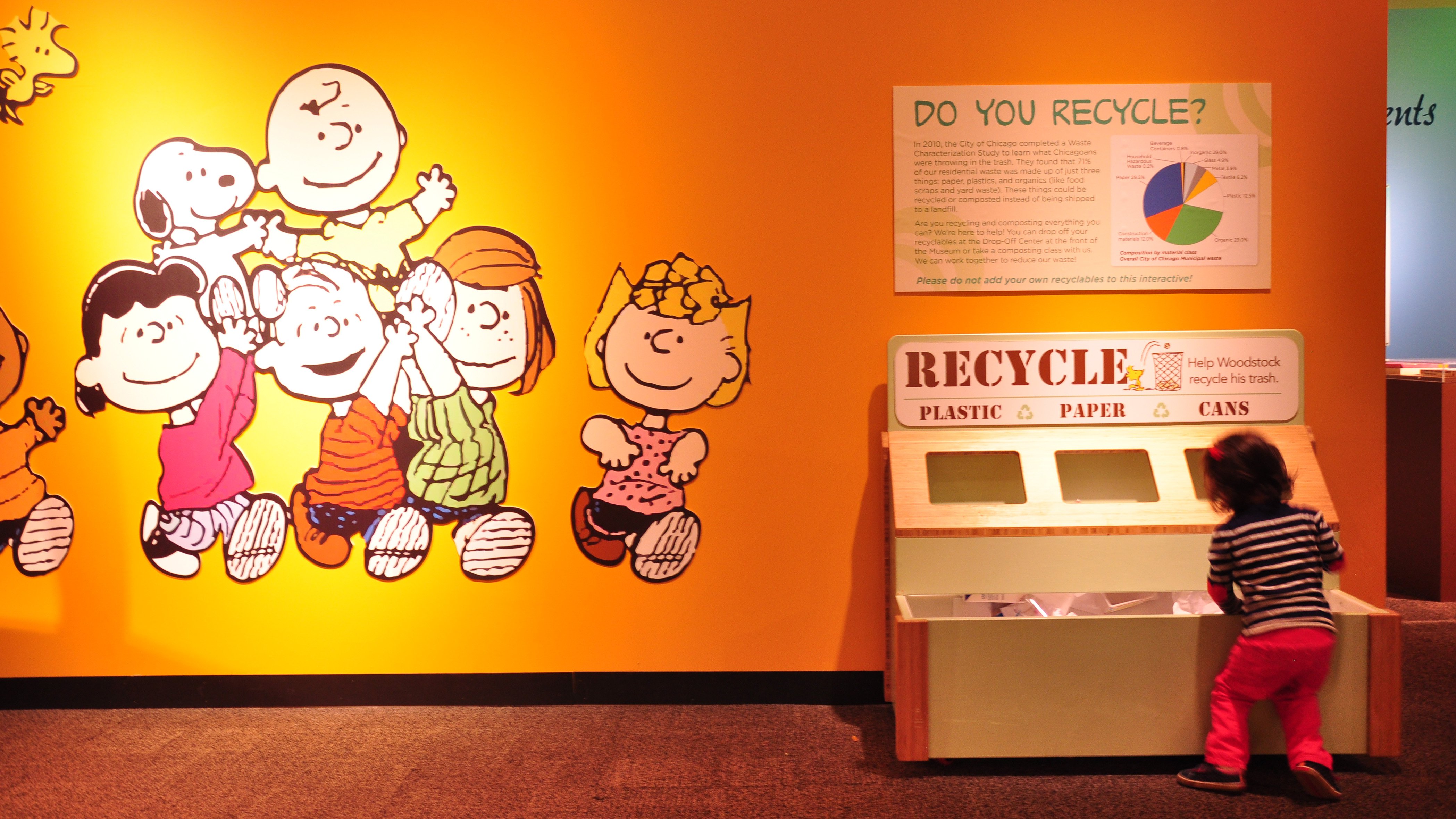
A young visitor acts on the expectation of positive affect at the Peggy Notebaert Nature Museum in Chicago, IL. Source. 

It turned out that the factor with the largest impact on pro-environmental behaviour was negative anticipated affect, or the expectation of feeling guilty, remorseful, and bad after they took action or failed to take action. The second most important factor was positive anticipated affect: visitors were motivated to recycle or reduce waste because they knew they would feel good afterward. The cognitive dimensions were also crucial. An effective strategy might be to let visitors know that recycling, creating less waste, and choosing friendly transport options is the decent and worthwhile thing to do, while making other choices has adverse consequences. As we have always secretly suspected, the best way to make sure visitors act ecologically in the museum might be with some gentle shaming. Perhaps someone could develop an ecologically-minded chatbot to remind them to recycle?


SUGGESTED READING 

Halpin-Healy, Carolyn. "Well-Chosen Objects Support Well-Being for People with Dementia and Their Care Partners." Journal of Museum Education 42, no. 3 (July 14, 2017): 224-35. doi:10.1080/10598650.2017.1342189.

Han, Heesup, and Sunghyup Sean Hyun. "Fostering customers' pro-environmental behavior at a museum." Journal of Sustainable Tourism 25, no. 9 (November 25, 2016): 1240-256. doi:10.1080/09669582.2016.1259318.

Inscho, Jeffrey. "No App Required: Toward a Utilitarian Museum Mobile Experience." The Studio. May 18, 2017. Accessed July 23, 2017. https://studio.carnegiemuseums.org/introducing-muse-20a6f11c7c35.

Inscho, Jeffrey. "Field Study: Benchmarking Visitor Behaviors and Mobile Device Usage in the Museum." The Studio. July 18, 2017. Accessed July 23, 2017. https://studio.carnegiemuseums.org/chatbot-field-study-91fcbb1d4875.

21 February 2015

FOLKSONOMIES AND VISITOR CURATION APPS: REVEALING A NEW DIRECTION FOR CURATION?

WEEKEND EDITION

BY: LEAH MONCADA

In this post I’d like to open a conversation on the subject of curatorial jurisdiction. Who holds greater influence over new curatorial trends - is it the (paying) visitors whose interests and needs are our mandate to fulfill? Or the ambitions and interests of knowledgeable curators whose insight and vision are lauded and respected? Two recent additions to the museum experience inspire this question: digital visitor curation apps, and social tagging projects for museum collections.

Publicly curated online collections such as the Rijksstudio, uCurate, and ArtLens have become increasingly popular in recent years. They offer a range of features, such as guided tours based upon physical proximity and individual interests, as well as the ability to curate personalized collections by ‘liking’ or tagging content. Some bloggers have shown great disdain for such programs and have voiced doubt that visitor curation can be as insightful or educated as that of professionals.

An application for digital collections and user-curation: uCurate by the Clark Institute.
uCurate by the Clark Institute. Image source.


However, does this perceived social desire to curate personal collections stem from the wish to increase accessibility and stamp ownership upon the collection, or also from a lack of interest in the curatorial themes chosen by professionals? As with all social phenomena, there are a whole slew of possible explanations. But is this explanation one that has heretofore gone unappreciated? If visitors feel the need to curate exhibitions based upon their own themes and categories, are blockbuster exhibitions accurately curated to the thematics visitors are told they should want to see rather than what they genuinely resonate with?

Social tagging projects such as the steve.museum project at the Met or the aforementioned Rijksstudio reveal that publics identify and value very different connective qualities and categories amongst collections pieces than curators do. For example, users would tag content matter, story, use of colour, etc. instead of artist, date, region, or other meta-data valued by curators and collections managers. Firstly, incorporation of folksonomic tagging brilliantly adds to the intellectual accessibility of collections. But to go a step further,  do these folksonomies reveal a call for exhibitions that showcase something less restrictive than the traditional categories of artist or movement or culture? Are visitors tired of the traditional format and content of blockbuster exhibitions, where the showcased Masters and themes are already explored in the permanent galleries? These new topics bridge categories and carry much potential for education, as well as open opportunities for interesting curatorial collaborations for departments to conduct research outside of their respective fields. 

French art historian Michel Pastoureau's series of books explores the deep symbolism of colour in different time periods.
French art historian Michel Pastoureau's series of books explores the deep symbolism of colour in different time periods. Image source.

For example, take colour. How is it used, and what does it mean in different eras and to different socioeconomic groups? Such an exhibit on the colour blue displayed at the Beinecke Rare Book Library asked - and tried to answer - these very questions. “‘Blue’ demonstrates ways alternative approaches to thinking about archival research can expose dense systems of meaningful connection and material association overlooked by more traditional modes of inquiry.” It included objects, manuscripts, costumes, art, and even created a playlist of songs that featured the colour blue as a significant lyric.

Broad topics like animals and colours have popularly been explored in books, like green (for which there is a gushing and thorough summary here) or red have been, or as online exhibits such as this one at the Met. But are they ‘big name’ enough for blockbuster exhibitions? Rarely do we see huge exhibitions on these loose topics, with perhaps the notable exception of exhibits on myth, such as the popular show on Medieval Beasts at the Getty in 2007. Exhibitions tend to serve as forums for famous artists to travel around the world and meet new audiences (in droves), but it seems that visitors might be just as interested in learning about overarching themes and patterns as they are in singular artists or movements. These new thematic landscapes span cultures, and open new conversations about how we categorize history. 

I would personally be extremely interested to see an exhibition based upon concepts such as ‘the doorway or threshold’, ‘mountain sanctuaries’, or perhaps ‘marriage ceremonies’. These of course are all very broad categorizations, but with careful curation they have the potential to highlight either the shared values or unique nuances of the world’s cultures. I would love to explore what these concepts meant in different times and places, as well as all of their many beautiful artistic manifestations found throughout history. 

What would an exhibit on ‘rabbits’ look like? All of these pieces would be tagged by content as ‘rabbit’, yet they all have very different meanings, contexts, and interpretations.
What would an exhibit on ‘rabbits’ look like? All of these pieces would be tagged by content as ‘rabbit’, yet they all have unique (hidden) meanings, contexts, and interpretations, and speak to very different phenomena within their societies. Sources, clockwise from top left: 1. 2. 3. 4.

I for one will be keeping my eyes peeled and my date book at the ready for such exhibitions in the future. What about you? What unconventional exhibition themes would you be interested in seeing? Do you agree that folksonomies reveal interest in themes beyond beyond those to which we are accustomed? If folksonomies and social tagging become more widely used in collections management, do you see exhibition planning or the role of the curator changing to meet the changing interests of the public?

2 December 2014

TOP 5 APPS YOU DON'T NEED A MUSEUM TO ENJOY

TECHNOLOGY TUESDAYS

BY: JENNY FORD

With the holiday season upon us, here's an early gift to keep everyone happy over the break (since I know we're going to miss museums so much!). I've scoured the app store for the best museum apps that don’t require visiting a museum to enjoy. Yes, that’s right, not a single virtual tour or audio guide in sight! All these apps were developed by museums to create buzz around exhibitions or their community. And the best part is they’re all FREE!

1) Londinium StreetMuseum
Discover London during the Roman years on a virtual archeology tour. Developed by the Museum of London and the History Channel, the app features a walking tour map of London where you retrace the city’s Roman roots. Here’s the awesome part: you don’t need to be in London to appreciate this app! Click on the pins to dig up artifacts found at different sites, or watch short videos reenacting Londinium life.

Uncovering an artifact.
Play archeologist and collect artifacts on your journey.
2) The Peacock Room comes to America
Explore the Victorian dining room and all its objects. The Smithsonian app allows you to discover every aspect of the room by clicking on each piece of porcelain and decorative art. Finally, create your own porcelain cabinet in a postcard you can send to your friends. The Peacock Room was painted by artist James McNeill Whistler in the 1870s and filled with porcelain by Frederick Leyland, a shipping magnate form Liverpool.

Room with vases and pottery on shelves.
Every object in the Peacock Room is clickable. What fun!
3) MoMA Art Lab
Release your inner artist! The MoMa Art Lab, developed by the Museum of Modern Art in New York, lets you try your hand at different modern art styles. Create a mobile in the style of Alexander Calder. Or a line design room in the tune of Jim Lambie. Save and share your best works!

A face made out of shapes.
I may not be an artist, but MoMA will let me try!
4) Creatures of Light
For those looking for a little “light” reading (no pun intended), the Creatures of Light app, by the American Museum of Natural History in New York, offers fascinating insight into the world of bioluminescence. And yes, there are deep-sea creatures. Click on interactive diagrams to see the different parts of a firefly, or an interactive map to learn about land creatures that glow.

A map showing examples of bioluminescence on land.
Explore the world of bioluminescence.
5) Virtual Heart
Finally, from the Museum of Science and Industry in Chicago, comes the Virtual Heart app. The app puts you in control of a beating heart. Speed up the number of beats per minute and see what happens. Look inside the heart and examine the electrical system. Dare I say it’s strangely addicting?

A beating heart.
Change the beat and see what happens.
Please share your opinions about these apps. And be sure to tell us about your favourite museum apps in the comments.

28 May 2014

MUSEUM INNOVATIONS: THE PUBLIC DOMAIN AND DIGITAL COLLECTIONS

BY: JAIME CLIFTON-ROSS

Is it just me or have museums been all over the news lately? The month of May has been incredibly active in the museum world as the Royal Ontario Museum collected the beached blue whale, The American Museum of Natural History partially launched their new digital collection, and now The Metropolitan Museum of Art has provided open access to images from their digital collections for personal download and non-commercial use. After obsessing over the wonderful Rijksstudio application—launched by the Rijksmuseum in Amsterdam last year—I was delighted to discover that yet another museum has altered their digital image policy and has thus entered the realm of the public domain. These high-resolution images, that thread together multiple photographs, reveal intricate details of paintings through a zoom-in feature.

Young Woman Seated on a Sofa by Berthe Morisot
Young Woman Seated on a Sofa, Berthe Morisot, ca. 1879, MET Digital Collection

The MET’s initiative, called Open Access for Scholarly Content (OASC) is essentially created for scholarly purposes as “students, educators, researchers, curators, academic publishers, non-commercial documentary filmmakers, and others involved in scholarly or cultural work” are encouraged to use this database (Quote from MET website). While their public domain and downloading policy is not presented as liberally as that of the Rijksmuseum (who encourage anyone to download, manipulate, and repurpose their art-read about it here), I believe this is a step in the right direction. 

Study for "A Sunday on La Grande Jatte" by Georges Seurat
Study for "A Sunday on La Grande Jatte", Georges Seurat, 1884, MET Digital Collections

The reason why so many museums—typically art-based—are able to offer this digital feature to the public is because many artworks are no longer under copyright laws. That being said, not every piece in museum collections can be openly available as copyright status, ownership titles, and other restrictions are prohibitive. You will also notice that artworks within the public domain are primarily historical. So you may just have to wait another 50 years or so for your favourite contemporary artworks to hop on this wagon!

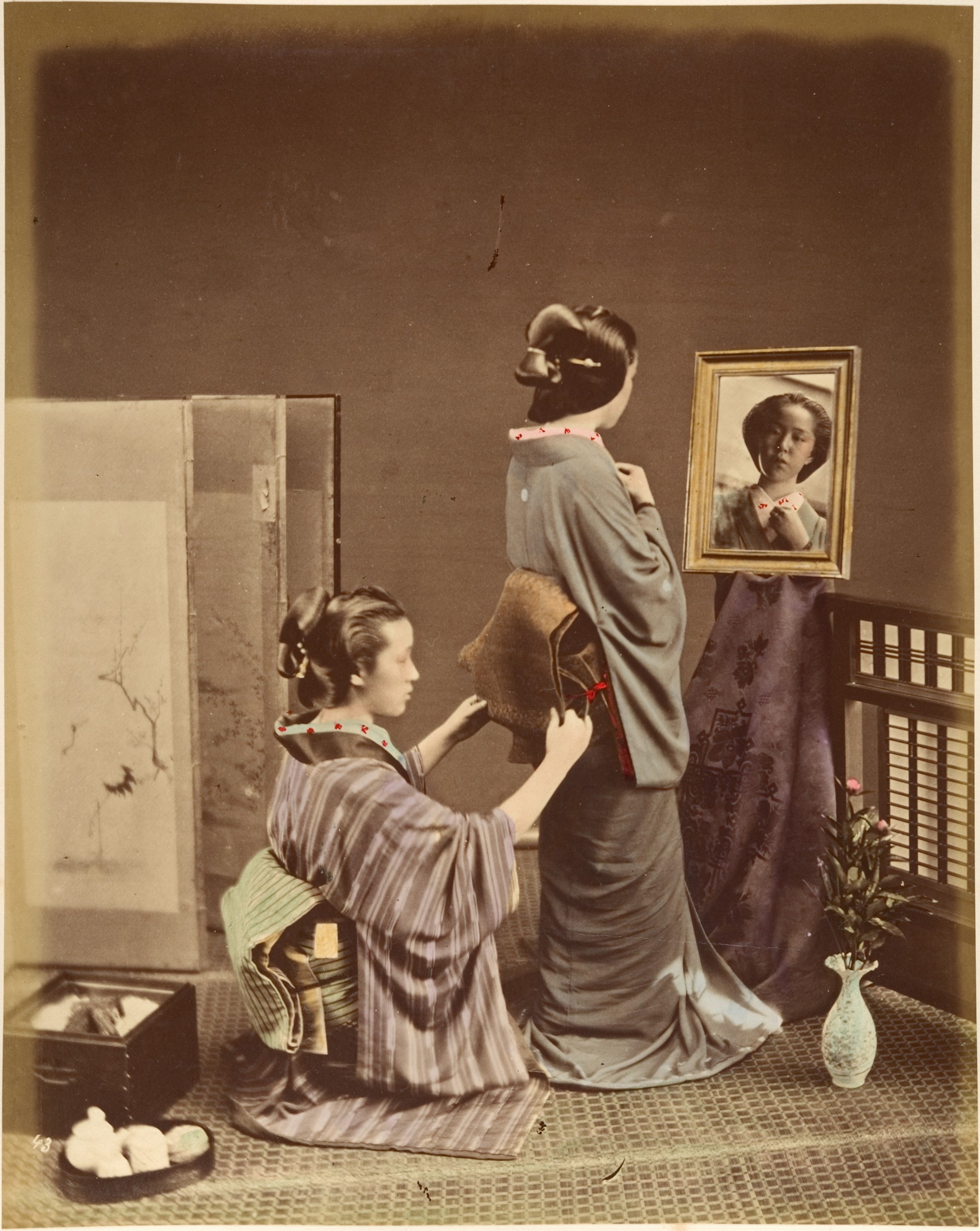
Two Japanese Women in Traditional Dress by Shinichi Suzuki
Two Japanese Women in Traditional Dress, by Shinichi Suzuki, 1870s, MET Digital Collection

While not everyone is thrilled about their favourite artworks being readily available for anyone to download, this digital trend will essentially ensure that high quality images of artworks are circulated on the internet. In doing so, these nearly flawless images will maintain the integrity of the original artwork and assert their association with the museum in which they are housed. Furthermore, each image is embedded with appropriate metadata thus optimizing search engine capabilities. This will ultimately rank them higher in Google searches than low quality renditions of artworks that currently crowd image searches.

The Unicorn is Found (from the Unicorn Tapestries)
The Unicorn is Found (from the Unicorn Tapestries), artist unknown, 1495–1505, MET Digital Collection

So what are the implications of digital museum collections? The most common argument amongst museum scholars is that digital replicas of artworks devalue the original and ultimately threaten its authenticity. Digitization more or less removes objects from their museum context and distances them from their physicality and the “essence” of the original. While this can definitely have some negative effects, digital replicas can offer a new lens in which objects can be examined. The public can now experience more intimate encounters with artworks as digital technologies tap into other human senses, such as light and touch. Imagine how engaging it would be to zoom into an artwork using your fingers on the surface of iPad or a tablet? As I have argued in my essays, digital replicas were not created as a replacement of original artworks, rather they act as supplementary devices that augment public experience—if users so choose. 

Bahram Gur Sees a Herd of Deer Mesmerized by Dilaram' s Music attributed to Miskin
Bahram Gur Sees a Herd of Deer Mesmerized by Dilaram' s Music, Folio from a Khamsa (Quintet) of Amir Khusrau Dihlavi, attributed to Miskin, 1597–98, MET Digital Collections

Do you believe digital technology should be prominently utilized in museum operations? What do you think are the positive and/or negative effects of the digitization of artworks. Please share your thoughts in the comments section.

6 March 2014

TACO DIBBITS AND THE RIJKSMUSEUM

WALK OF FAME

BY: JAIME CLIFTON-ROSS

In December 2003, The Rijksmuseum in Amsterdam closed its main building for much needed renovations and restoration. For nearly ten years, only 400 artifacts and artworks — of their one million object collection— were on display for public view in the museum. During this extended closure, the collections department embarked on a massive project in which they digitized thousands of works of art intended for viewing on their newly designed museum website. Taco Dibbits, the head of collections at the Rijksmuseum (as of 2008), was instrumental in this groundbreaking initiative.

Dutch Prince Constantijn (Left) with Taco Dibbits
http://www.digitalmeetsculture.net/article/rijksmuseum-reopens-and-
makes-its-digital-collection-of-125000-masterpieces-free-to-all/

Dibbits studied Art History at the Amsterdam Free University and the University of Cambridge before joining the Rijksmuseum as a curator of 17th-century painting, in 2002. He eventually became the head curator of the Fine and Decorative Arts department at the museum in 2006. Dibbits played an important role in the development of the new layout for the museum, as well as the wonderful award-winning digital application called “Rijksstudio”. 


Rijksstudio account
Screenshot of my Rijksstudio account

Rijksstudio
http://mw2013.museumsandtheweb.com/bow/rijksstudio-make-your-own-masterpiece/

This application, available on their website, showcases over 125,000 works of art from the Rijksmuseum collections. These digital renditions are constructed using high-resolution technology that enable users to zoom into artworks, thus revealing intricate painterly detail. Furthermore, users can download, share, and manipulate these high-quality images of artworks. Many users have even re-purposed them through designs for bedding, cell phone cases, cars, and tattoos. Make sure you create a Rijksstudio profile in order to take advantage of this wonderful application! And don’t worry fellow academics, these digitized artworks can be legally obtained and manipulated as they predate copyright laws. The Rijksmuseum has embraced the open-source movement. 


Rijksstudio
http://mw2013.museumsandtheweb.com/bow/rijksstudio-make-your-own-masterpiece/
Rijksstudio
http://mw2013.museumsandtheweb.com/wp-content/uploads/2013/02/gorgels.fig9-kopie.png

In an interview from 2012, Dibbits discusses the transformation of the Rijksmuseum and its motivation to embrace digital technology. He strongly believes that the internet is a toy that is all “about a playful use of material”. Because he considers the museum as “a place of inspiration, learning, and knowledge”, he has modelled the Rijksstudio “on the idea of connection and [the] exchange of [this] knowledge”. He has basically invited the public to play with the collection and to seek a personal creative outlet. Talk about interactive and inspirational! It is individuals like Dibbits and the Rijksstudio development team that will help breach the divide between art and technology (read Brittney’s posts here and here that address this concept).


While I strongly believe that digital technologies in museums should never take precedence over material collections, they should facilitate interactivity and public participation. Rather than attempting to replicate a physical visit to a museum, digital technologies can present content and objects through a different lens. The Rijksstudio enables users to intimately engage and interact with artworks in a way that is not possible to experience in the museum setting — most notably on tablets and iPads. This application allows the museum to assert their role as an innovative cultural institution that has embraced the intersection of art with technology. Furthermore, I believe it acts as a democratizing medium that enables further access and circulation of museum content. What do you think? Do you like this application? Do you believe it has a place within the museum model? 

I will leave you with another wonderful iPad application (completely unrelated to the Rijksmuseum) that will put you in a trance!