Showing posts with label visitor research. Show all posts

15 January 2020

TEACHING CLIMATE CHANGE PART II: LANGUAGE & NEED

Museums on Earth | Defne Inceoglu


Illustration courtesy of Defne Inceoglu.

\\\

In Part I of this column, we discussed the necessary politicization of museums that plan to tackle the subject of climate change. In Part II, we will look over how language affects learning and begin to address the needs of visitors.

\\\

Over the months of October and November, I undertook a visitor research project at the Royal Ontario Museum (ROM), where I conducted 100 anonymous interviews with visitors of varying demographics within the Life in Crisis: Schad Gallery of Biodiversity. The intention of this research was to inform my thesis work, which is interested in analyzing what exactly is the relationship between the halls of biodiversity galleries, the stuffed animals which inhabit them and the visitor who walks through them. What sort of takeaway is a biodiversity gallery that is focused on overarching themes related to a global ‘life in crisis’? How does the visitor see this; what do they look at or absorb and how do they relay what they've learned? 

An area of the Biodiversity Gallery which has stark climate change messaging. Photograph courtesy of Defne Inceoglu.


A didactic in the gallery which details the human
impact on Great Lakes ecosystems. Photograph courtesy
of Defne Inceoglu.


LANGUAGE 

Immediately, the idea of the language or the semiotics of climate change related displays created contention. It occurred to me that using a term like ‘climate change’ is not interchangeable with other concepts such as ‘deforestation’, ‘ocean acidification’, ‘habitat loss’ – among other things. The assumption that climate change would act as an umbrella term for most visitors ended up being false. Further to this, it appeared as though visitors at the ROM do not completely correlate or group these sorts of globally-scaled events like mass habitat loss or extinction with the idea of climate change. Language, then, plays an important role in creating climate change awareness and education.


Of the 99 participants who answered the question “in your own words, what was the exhibition trying to show?” – only 7 people outright mentioned climate change as a major theme in the Biodiversity Gallery. This small number however does not represent a gap in understanding of the exhibition’s themes -- rather it represents a wide variety of understanding, again enforcing the idea that there is more meaning-making going on than meets the eye. 

A portion of a display case in the gallery, detailing life
in the Great Lakes. Photograph courtesy of
Defne Inceoglu. 
When asked the question, some visitors replied:

“Endangered species. [Humans are] destructive to habitat(s)”. 
[Participant 13, aged 25-34, Ontario resident]. 

“Reminds us of nature, what was here before us”. [Participant 38, aged 25-34, Toronto resident].

“We’re losing things that were alive when I was a child. Urgency is accelerating”. 
[Participant 54, aged 45+, BC resident].

“Trying to show us nature and making us realize we are out there in the world. In our hands to see if these creatures are protected or destroyed”. 
[Participant 78, aged 35-44, Mississauga resident].


These four participants, while giving answers unrelated in terminology to climate change, demonstrate that the exhibition offered to them a divergent understanding. Here then, we see where the gaps emerge. A low percentage of visitors picked up on the explicit climate change message, opting instead to mention personal anecdotes or speak directly to a non-specific or generalized 'negative' human impact. This is a good start, and shows that visitors are in fact engaged and relating the content back to themselves in a way. However, we can now consider language as a barrier to universal understanding and we must shrug off the assumption that all visitors relate-to and can speak-to climate change terminology. Instead, we have to listen to our audiences and connect to what is really being asked for. 

NEED

When asked, "Do you have anything else you would like to share with me? Be they concerns or praises?" some visitors replied:

"Nice exhibit. Not a lot of actions steps, doom and gloom; what can you do? Missed opportunity". [Participant 51, aged 25-34, US resident].

"Needs stuff more prescriptive and non-intimidating. Small steps people can take".
[Participant 66, aged 25-34, Toronto resident].

"What is climate change, what are some of the effects, actually explaining it. The science, the challenge, [is it] attainable?"
[Participant 68, aged 45+, New York resident]. 

The arctic display case in the gallery. Photograph courtesy of
Defne Inceoglu.
I want to address this area of need. We took a long look at the language discrepancies that visitors presented. Now we see a request, a demand or want. Teaching hard-to-digest topics to museum visitors can be daunting, and discovering what visitors are looking for is a way to ensure that your messages are communicated effectively. In the ROM's case, it is clear that visitors are seeking out tangible, attainable action and information. This discovery is crucial in understanding how we can begin to create a running dialogue which will both educate, un-intimidate and invigorate visitors.


///

Next time, we'll cover a few different international institutions and their efforts in creating climate awareness using a biodiversity collection.

I did not go into detail on my research methods -- if you have questions please reach out through a comment and I can get back to you with more information.

This research was conducted with deep gratitude to the Social Sciences and Humanities Research Council for funding. The human research component of the project is approved by the University of Toronto's Research Ethics Board.

29 November 2019

CONSCIOUS DESIGN: ALUMNI CHECK-IN WITH BRITT BRAATEN

 Alumni Check-In | Elizabeth Cytko


Britt Braaten poses wearing a vintage apron.
Photo courtesy of Britt Braaten

Britt Braaten is the Creative Development Specialist at the Canadian War Museum. She graduated from the Museum Studies program in 2009, after switching from a law career to museums. Her museum internship was at the Immigration Museum in Melbourne, Australia where she worked in the Community Engagement/Curatorial department. 

The Canadian War Museum
Photo Courtesy of Britt Braaten

What does a typical day entail at your job?


My job is focused on the development of exhibitions; given the staff size (small!) and pace of work (fast!) at the War Museum, that means on any given day, I can expect to bounce between several different exhibitions and that each project will be at a different stage. For example, today, I reviewed and corrected design elevations for a traveling war art exhibition; reviewed English and French text for our major temporary exhibition about the Second World War, working with the historian, comparative editor, my manager and the project manager to finalize text; reviewed preliminary graphic layouts for that same exhibition and prepared comments for the designer; met with the historian to determine how we were going to fulfill a request from our Directors by adding content to that same exhibition; brainstormed potential visitor experiences for a proposed major temporary exhibition about war games; and corresponded with a colleague at another museum about balancing fun and learning in museum interactives.

What’s the best way to communicate with a team while creating exhibitions?

I think it’s important to be strategic in how you work with people:
I figure out what each person’s preoccupations are, and show that the approach I’m proposing addresses that—or, if it doesn’t, acknowledge that and invite them to help share their expertise.
I pay attention how each person likes to work—in person or on paper? Informal walk-and-talk conversations or extended workshops? —and tailor my work style to meet theirs.

It comes down to respect: respecting each others time, expertise and genuine desire to do good work. The more I’m able to understand my colleagues, the more I’m able to demonstrate my respect for them, and the better our long-term work relationships are. I find this kind of deliberate relationship management to be a critical ingredient in getting the support I need to do my job effectively.

Accessibility Guidelines
Photo courtesy of Britt Braaten

How do you approach creating visitor focused exhibitions?


In this role, my role as “visitor’s advocate” it’s my job to ask the right questions, and push back where needed.

Here is a list of the questions I consider:

Can visitors get to the exhibition?
Will they be comfortable in there?
Can they participate in a full and meaningful way?
Can visitors understand the exhibition?
Are we assuming prior knowledge in a way that will alienate people?
Will visitors care about what we have to say?
Have we totally missed the point?
Are we talking about what the subject-matter expert wants to talk about or what the visitor actually cares about?
How do we know what we know about visitors?
Can we actually talk to visitors to test our ideas before they make it on the floor?
Do we have research from past projects that could inform current decision-making?
Can we learn from our peers at other museums? Or am I relying on my own opinion and/or unreliable anecdotes?

Each of those questions plays out in innumerable ways, from intellectual decisions around the interpretive approach and content selection, to design decisions around fonts and colours, etc.

What’s the best way to include community voices/diversity in museum work?


A lot of it comes down to calling attention to instances where colleagues are treating “white man” as human-neutral (to borrow a phrase from comedian Hannah Gadsby) and see if there are other options that make sense in that case—sometimes it is a white man because that is what is authentic, accurate and appropriate for the topic. Other times, it’s just laziness, or a feeling that using someone other than a (straight, able-bodied) white man is somehow controversial or a “statement” in a way that defaulting to white-man isn’t. This isn’t always (or even often) a conscious decision, and I’ve found that calling attention to it and offering alternatives is an important and effective way to push for more diverse representation in exhibitions.

There are real impediments to representation—including attitudes and weaknesses in the collection—but I believe that this is an area where doing the work can pay off in real ways.

Britt Braaten delivering a talk during construction.
Photo courtesy of Britt Braaten

What is one of your failures that was a great learning experience?


One example that I think legitimately counts as a failure and that has influenced my approach to my job ever since comes from my first temporary exhibition at the War Museum. It was a pretty traditional art exhibition, but I was quite happy with it.

 What was the problem?

We had to reprint all of the labels—an unnecessary cost to the institution—because I had failed to account for two factors: first, in choosing fonts and colours, I worked exclusively in my office space. I didn’t think to print out samples and bring them down somewhere where the lighting matched the exhibition conditions. If I had, I would have increased the font size. But since I didn’t, it meant many visitors had to get in close to read the label. Unfortunately, I also didn’t account for how our decisions on security would impact the visitor experience: while some high-value artworks had individual alarms, for most of the exhibition, we opted for the less-expensive approach of curtain alarms—which were triggered when visitors stepped too close to the artwork. The combination of these two factors meant that many visitors were not able to get close enough to read the labels without also triggering the alarms. So the alarms went off all the time. We were able to correct this by reprinting the labels at a large enough font.

But I learned some important lessons. Now, I ALWAYS look at panels in as-close-to-real conditions as I can, early enough in the design stage that we can make changes. I also have developed a more holistic approach to exhibition development, and more of an awareness of how a decision in one department affects things in another department.

How does someone become the best ambassador for their museum?

Preparing in advance makes a real difference. In my undergraduate program, there was an unstated attitude that we should all be aiming for effortless brilliance at all things. Winging it was the highest ideal, while advanced preparation gave away that your brilliance was maybe not so effortless after all. It took me longer than it should have to move beyond that attitude and understand that what seems like effortless brilliance in others is usually the result of a lot of preparation. So the other part of being a good ambassador for the museum is being willing to do the work behind the scenes so that what you put forward into the world feels spontaneous and compelling, while in fact being very well planned.

Is there anything you wish you had done while you were in the program? 

I’m not a “regrets” sort of person. So while I’m sure there are things I could have done “better” in the sense that I half-assed a few assignments (especially in second semester of second year), I gave it the amount of time and effort that I was able to given the other competing priorities—working two part-time jobs, enjoying hobbies, seeing family and friends, etc. In fact, to answer the opposite of the question you asked, here’s a tip: nobody, not once, has ever asked me what my grades were. So, yes, I could have focused more on schoolwork and dropped one of my jobs—except that one of those jobs turned into a full-time gig after graduation, and the other covered food and rent and resulted in lifelong friendships. Or, yes, I could have stopped doing hobbies or seeing friends and put more time into my schoolwork—but those hobbies and friendships were what kept me happy and sane. So the lesson I really learned was: do what you have to do to get the degree, but not at the expense of your health and your future. Be kind to yourself, and understand that there’s a lot more to life than school.

24 June 2019

DATA DRIVEN VISITORS: ALUMNI CHECK-IN WITH CAITLIN TRACEY-MILLER

Alumni Check-In | Elizabeth Cytko


Caitlin Tracey-Miller and her daughter Edie at the Cincinnati Art Museum.
Photo courtesy of Caitlin Tracey-Miller


Caitlin Tracey-Miller is the Visitor Research Coordinator at the Cincinnati Art Museum. She graduated from the Museum Studies program in 2013. Caitlin transforms visitor information collection techniques with an eye for inclusion and long term outcomes.

What is your favourite memory from your time in the Museum program?

I had many wonderful experiences during my time in the program, including trips to Montreal and Ottawa, engaging conversations, and great projects, including a fun one about the Dodo bird I worked on for Curating Science. I also made lasting friendships that continue to be important to me both personally and professionally. I connect with my MMSt buddies at least once a week!

Is there anything you wish you had done while you were in the program?

I wish I had managed to fit in an internship or other hands-on opportunity that worked directly with collections. My experiences focused on forward facing museum work, such as programs, volunteers, visitor research, and digital learning. I do not work directly with objects in my job, and I would have enjoyed a chance to do more of that.

What has changed in museums from the time you graduated to now?
I graduated in 2013, so I do not think things have dramatically changed  in terms of practice as a whole, but I think a lot about museums as a place for empathy, conversation, and connection during a divisive and difficult time here in the United States. I also make an effort to think about inclusion and diversity when I create research tools, analyze data, and think about outcomes.


Front view of the Cincinnati Art  Museum
Photo courtesy of Caitlin Tracey-Miller

Can you tell me a little about the Cincinnati Art Museum?

The Cincinnati Art Museum has been around since the late 19th century and our collection spans more than 6,000 years. Visitors see art from around the world as well as work that connects intimately with the Cincinnati region. We offer a rotating calendar of dynamic exhibitions, a diverse set of programs, and have a hands-on space for children and their families to engage in art-making. Last summer we had an exhibition featuring the Terracotta Army and this summer we have No Spectators: the Art of Burning Man. We recently hosted Iris van Herpen: Transforming Fashion, which I believe the ROM welcomed as well. The museum aims to contribute to the vibrancy of our city and the region through connecting and inspiring people with art.

What does a Visitor Research Coordinator do?

My position lives under the umbrella of Visitor Experience, but I work with departments across the museum. I'll complete front-end studies for upcoming exhibitions, summative evaluations at the conclusion of projects, coordinate participation in citywide studies, maintain monthly experience and demographic reports, and even design and execute fun interactive visitor research tools.
 
What does a typical day entail at your job?


My day to day work varies dramatically. Some days I work directly with volunteers or interns on training or I might work with team members in meetings. On other days, I am at my desk sifting through data and creating reports or presenting my findings to others. I work hard to make reports visual and easy to digest, so that they are as useful as possible.

What do you find most fulfilling about your work?


I value the opportunity to listen to and share visitor voices. I love thinking about the outcomes and value of museum work, and finding ways to measure what we do so we can share that information with stakeholders, funders, colleagues, volunteers, etc.

Interactive ball chart.
Photo courtesy of Caitlin Tracey-Miller

What was one of your favourite / most illuminating research projects that you have done to date?


I successfully applied for our department to serve as an AmeriCorps host site, which has been a rewarding and fun project. This project takes us out into nearby neighborhoods to ask visitors about their experiences with and impressions of the Art Museum and helps us break down barriers to visitation. As a part of this project, we designed some fun research interactives, such as a ping pong ball charts.

What is the best way to prepare to present your research results to stakeholders?

Less is more! I have found that visual and concise reports are important. I always include an email memo with my reports pulling out a few highlights. I'll point stakeholders in the direction of more in-depth information, but I want them to know what the big takeaways are up front. People are busy. If it isn't easy to tell what they're supposed to see, the report will sit unused.

Is there something you wish you had more time to do but which your current position prevents you from?

I wish I had more time to travel and visit other museums for inspiration in my free time. The Art Museum generously grants professional development grants, so I have been able to attend the Visitor Studies Association conference and develop great relationships with my counterparts in other Art Museums. I contact them regularly to bounce ideas around.

What is the best way to connect with volunteers?

Personally, I have done large-format trainings for our iPad surveys, but nothing beats one-on-one conversations. Some volunteers have truly become survey champions, and I could not collect all of the data I do without them. Emails and other written communications are important, but they can get lost.

IPad survey
Photo courtesy of Caitlin Tracey-Miller
How has technology made your job easier/harder?

Easier! I use iPad survey kiosks in all of our special exhibitions, and they have dramatically increased the number of responses we receive to our special exhibitions. Technology helps me store, sort, analyze and present research in a visual way.

What technology skills do you suggest Museum Studies students develop while in the program?

For my job, comfort with Excel and tablets have been important. I utilize Infogram to create infographics and our museum's metrics dashboard and QuickTap Survey for iPad research. We also use Survey Monkey and Microsoft Teams.

What are some of the greatest risks you have taken in your career?


I moved to Toronto and took a chance on the MMSt!

What is one of your failures that was a great learning experience?

I created an interactive to accompany a front-end study that I thought was a lot of fun. It involved drawing what came to mind when presented with a set of terms. Unfortunately, it was confusing for visitors and volunteers hated facilitating it. It was difficult to describe in written directions and it was a flop. I think it was a great example of the importance of prototyping before you roll out a tool that you hope will yield results.

What is your best networking advice?

Seek relationships first. I've made great connections networking that have led to great opportunities, but I don't think you should go into networking looking for instant results. Museum friends have been hugely important to my work and I always enjoy talking about a field I'm passionate about.

What advice would you give to museum professionals entering the sector today?

Patience. Sometimes it takes some work to build a resume or land the perfect position. When I look around at my colleagues from the program, many of them are doing really amazing work in the field they chose. There were doubts and frustrations along the way, but it's neat to see where people have landed.

If you could travel back in time, what would you advise your younger self?

I think I would advise my younger self to take a deep breath and relax a bit. I often over-committed myself in a desperate attempt to build my resume and never let an opportunity float away. A couple of years out of the program, I experience some feelings of burnout and had to cut back on some of the extra unpaid museum opportunities I had taken on.

What is your advice to young museum professionals in creating a solid financial base for their future?

If possible, avoid huge student loans. I'll be paying mine for a long time! Also, be realistic about the salaries in museums. Do some research and see what people are making in the positions you are interested in. I am happy I am in this field, but it is important to be aware.

25 July 2017

TALKING TO ROBOTS ABOUT ART: A VISITOR RESEARCH ROUND-UP

RESEARCH COLUMN

BY: JENNIFER LEE

As summer internships wrap up and August approaches, you may already be itching to get back to class. Fear not: it’s not too early to start hitting the academic journals again! My own summer internship has involved some visitor research projects, and it’s fascinating to see what kinds of information we can miss about our publics until we think to ask. In the spirit of inquiry, here are some recent developments in visitor-centred research to get us thinking about museum users in the wild.

"There's one! Crikey." Source. 

Our first stop is Pittsburgh, where staff at the Carnegie Museums of Pittsburgh are currently developing a mobile experience (working title MUSE) which they describe as “a friendly, knowledgeable and charming chatbot extension”. MUSE would use native systems on users’ mobile phones, including cameras and SMS/messaging clients, as a platform to answer questions and make conversation about museum objects and facilities. The idea is reminiscent of Brooklyn Museum’s ASK system, but would use artificial intelligence rather than real-time human expertise.

This strategy removes a substantial obstacle to getting users to engage with museum apps, i.e. that very few living humans have ever intentionally downloaded a museum app. The Carnegie Museums found that 93% of the visitors they surveyed were carrying a mobile device, and virtually all of them had Facebook Messenger, iMessage, or both. If they can leverage those numbers to provide as frictionless an experience as possible, there’s reason to be optimistic about MUSE’s success. The recent popularity of SFMOMA’s ‘Send Me SFMOMA’ service, which texted artwork in response to user requests and emojis, proves that there’s quite a niche for whimsical digital experiences with museum collections.

Art on demand from the San Francisco Museum of Modern Art (Send Me SFMOMA). The future has arrived, and it is *heart eyes emoji*. Source. 

After an intensive visitor study, CMP have kindly made their visitor research data, methodology, and infographics available on GitHub, where they might be useful for other museums looking to develop similar programs (and they’re an interesting read for the inquisitive – the incidence of selfies will surprise you).

Next we move to New York and this month’s issue of the Journal of Museum Education (vol. 42, July 2017), centred on the theme ‘Does Museum Education Have a Canon?’ In the article “Well-Chosen Objects Support Well-Being for People with Dementia and Their Care Partners”, Carolyn Halpin Healey of Arts and Minds, a non-profit which works with people with dementia and their caregivers in New York museums, explains staff concerns in selecting artworks for these programs.

In keeping with the issue’s theme, much of the article’s focus is the tension between the canonical objects of a museum’s collection and the need for an accessible and enjoyable experience for participants, ultimately the more important factor. The most famous, visible, and ‘important’ objects in a museum are there for all visitors to enjoy; visitors with cognitive impairments are often unable to access them for physical reasons or because of fear and stigma associated with their impairments. While it’s important to push back against this stigma and increase access to the canon, there is also much to be gained from looking outside the canon and with specific groups’ histories and personalities in mind. 

An Arts and Minds program at the New York Historical Society. Successful programs for visitors with cognitive impairment have tangible benefits for all participants, including caregivers, but what makes a successful program, and how does the choice of art factor in? Source. 

My main takeaway came from the author’s testament to the importance of thoughtfulness: “While the “wrong” choice will certainly not cause harm, the “right” choice has the potential to catalyze self-exploration as well as provide the opportunity to reflect on the past, to empathically connect with others, and to imagine new ways of being as one ages, particularly in the face of life-altering cognitive impairment.” Even when the risks of curation are low, the payoffs may be substantial; all museum visitors deserve the best we can give them. The article draws usefully on existing education, visitor and neurological research, and is a neat example of how theory can be used to guide and bolster practice.

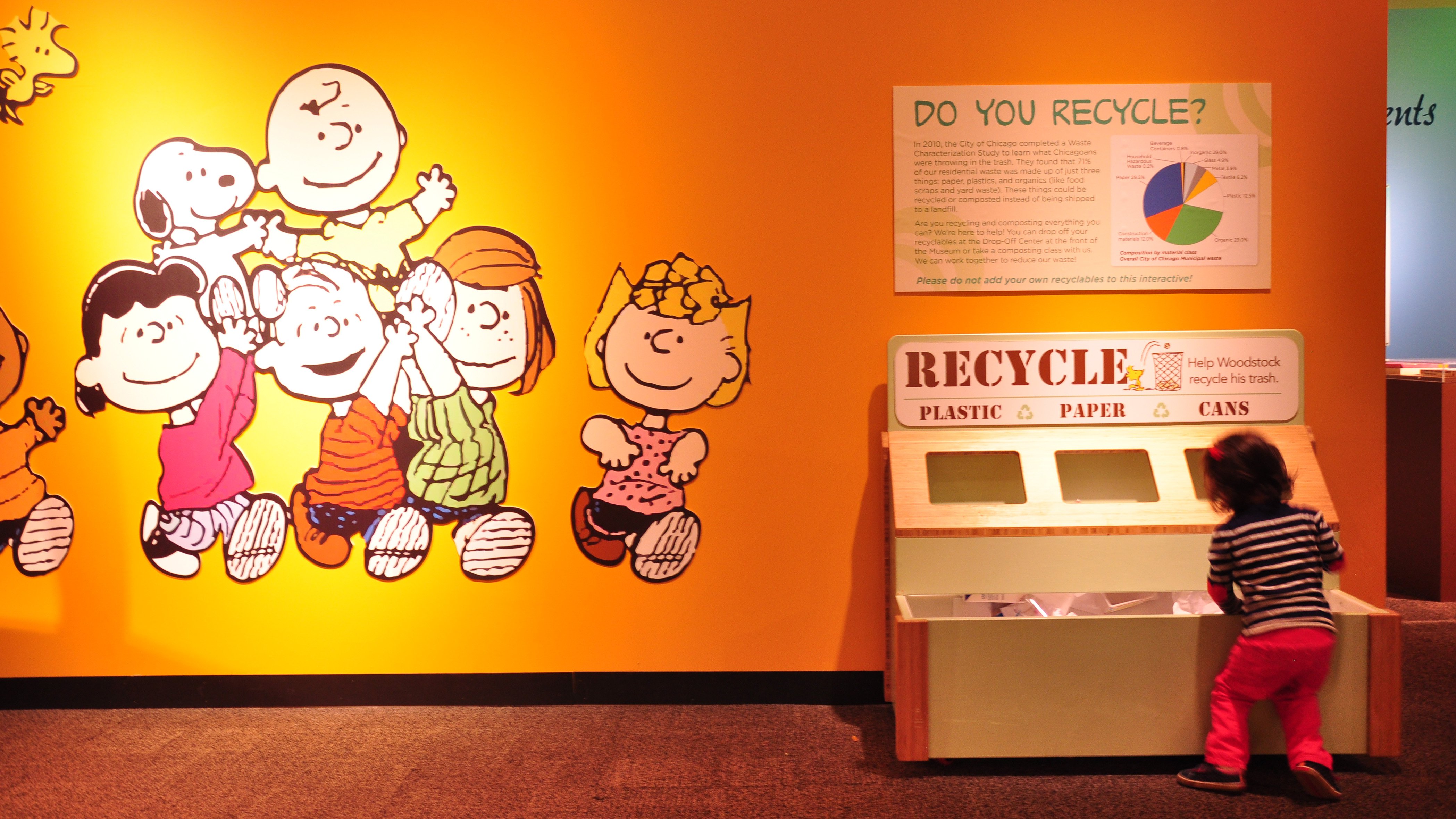
On our final stop, we move from understanding and shaping visitor experience to directly influencing visitor behaviour. In “Fostering customers’ pro-environmental behaviour at a museum” (Journal of Sustainable Tourism, 25.9), Heesup Han and Sunghyup Sean Hyun explore the factors which predict pro-environmental decisions like recycling, water conservation, waste reduction and transport choice while visitors are in the museum.

The authors identified five cognitive dimensions (environmental value, concern, awareness, knowledge, and self-efficacy, or the belief in one’s own ability to act toward goals) and two affective dimensions (the expectation of positive versus negative feelings after completing actions) which impact eco-friendly intentions and behaviour, as well as two additional factors, willingness to sacrifice and interconnectedness to nature. Using survey results from several South Korean museums, they produced a model which showed the relationships between all these factors in visitor decision-making.

A young visitor acts on the expectation of positive affect at the Peggy Notebaert Nature Museum in Chicago, IL. Source. 

It turned out that the factor with the largest impact on pro-environmental behaviour was negative anticipated affect, or the expectation of feeling guilty, remorseful, and bad after they took action or failed to take action. The second most important factor was positive anticipated affect: visitors were motivated to recycle or reduce waste because they knew they would feel good afterward. The cognitive dimensions were also crucial. An effective strategy might be to let visitors know that recycling, creating less waste, and choosing friendly transport options is the decent and worthwhile thing to do, while making other choices has adverse consequences. As we have always secretly suspected, the best way to make sure visitors act ecologically in the museum might be with some gentle shaming. Perhaps someone could develop an ecologically-minded chatbot to remind them to recycle?


SUGGESTED READING 

Halpin-Healy, Carolyn. "Well-Chosen Objects Support Well-Being for People with Dementia and Their Care Partners." Journal of Museum Education 42, no. 3 (July 14, 2017): 224-35. doi:10.1080/10598650.2017.1342189.

Han, Heesup, and Sunghyup Sean Hyun. "Fostering customers' pro-environmental behavior at a museum." Journal of Sustainable Tourism 25, no. 9 (November 25, 2016): 1240-256. doi:10.1080/09669582.2016.1259318.

Inscho, Jeffrey. "No App Required: Toward a Utilitarian Museum Mobile Experience." The Studio. May 18, 2017. Accessed July 23, 2017. https://studio.carnegiemuseums.org/introducing-muse-20a6f11c7c35.

Inscho, Jeffrey. "Field Study: Benchmarking Visitor Behaviors and Mobile Device Usage in the Museum." The Studio. July 18, 2017. Accessed July 23, 2017. https://studio.carnegiemuseums.org/chatbot-field-study-91fcbb1d4875.