Showing posts with label environment. Show all posts

17 August 2021

GROUNDWORK AND THE ANIMACY OF STONE

 Exhibition Reviews | Rachel Deiterding


In human timescales, stone signifies unwavering permanence. As Jeffery Jerome Cohen unearths the animacy of stone, he asks “if stone could speak, what would it say about us?” While seemingly speculative, his inquiry asks us to re-imagine our relationship to the earth and introduces us to rock bodies as agents. When I first encountered this question it was earth-shattering. It shifted the way that I understood the world and my position within it.  I was no longer a scientific ecological observer, but a collaborative member of a vast network of ecosystems made up of complex relations. This was the first step in a continued journey of confronting and unlearning colonial understandings of land, ownership, and extraction. My research has since been focused on bridging the gap between the human and the non-human, learning from Indigenous stewards of the lands on which I am a guest, and building relationships that are based in deep localized reciprocity. I have a new language to learn – we all do – and stone has much to teach us if we could only learn how to listen. 

Groundwork, installation view, 2021 | Photo documentation by Toni Hafkenscheid | Source

Exploring extractivism as a physical process and a mindset, Groundwork is on view at Critical Distance Centre for Curators (from May to August 2021). The exhibition goes beyond merely drawing attention to extraction to think about how performance can be mobilized to challenge and reconfigure our relationships to land using methods of camouflage and infiltration. 

Upon entering, an ambient soundtrack flows through the exhibition space. Its uncanny and alien resonances set the tone for the barren landscapes decimated by extraction and the uneven power relationships between human and non-human beings that underpin the work. Alana Bartol’s Orphan Well Adoption Agency (2017–ongoing) manifests an oil and gas company interested in the decommissioning and reclamation of abandoned oil wells that continue to pollute the landscape. In her video TOTAL FIELD (2017), she is dressed in blue, her vision is blocked with ping pong ball goggles, and she is carrying a mysterious forked branch. She is dowsing, a practice linked to her ancestry where a tool of divination is used to help locate water, oil, and minerals through the pull of the earth. Her performance has a dual function, she explores her own complicated familial relationship with extraction while also performing a close reading of the land to assess its levels of contamination. As an alternative mode of understanding the land, dowsing requires deep listening and a body attuned with the earth to identify and decipher the language of the land that circulates outside of human vocabularies. The work calls for new methods of listening rooted outside of colonial modes of understanding.

Alana Barol, OWAA Uniform and Tools, 2017 | Photo documentation by Toni Hafkenscheid | Source

As caretakers and stewards, how can we better learn to listen to the earth and find the patience to undergo the process of translation? In English, a noun-based language, we classify the earth as a thing, something to possess and act upon rather than something that acts itself. We don’t have the language to understand the behaviour of the earth, its non-human inhabitants, and their animacy. In Braiding Sweetgrass, Robin Wall Kimmerer describes her experience learning Potawatomi, pointing out that 70% of the language is verbs. In this context, language shifts everything, bringing the world to life. Suddenly a rock is not simply a rock but is in the act of being a rock, illustrating the underlying animacy of all non-human things.

If the earth is alive and speaking to us, do we not have the responsibility to listen? Tsēmā Igharasto protect the womb from x-rays and colonization (2017) features armour constructed from moosehide and copper pennies. The discontinued Canadian currency, extracted from Igharas' home territory of Tahltan Nation where copper mines have wreaked environmental havoc, draws attention to violent histories of extraction and land use. Furthermore, it draws on the potential for constructing realms of safety and balance when natural materials are accessed consciously and with respect for the broader network of relations to which they belong.

Tsēmā Igharas, Photograph: Re Naturalize no. 7, 2015-2016, Sculpture: to protect the womb from x-rays and colonization, 2018 | Photo documentation by Toni Hafkenscheid | Source

Returning to Cohen’s question of “if stone could speak, what would it say about us,” Ileana Hernandez Camacho's Corps roca (2018–ongoing) gives voice to stone, taking it on as a character and playfully interrogating the relationship between humans and the earth. Presenting rocks as living thinking beings, Hernandez Camacho constructs an alternative understanding of extraction, one where the earth has the agency to speak back, to voice its opinion, and to make its agency visible and naturalized. 

Ileana Henandez, Corps roca, 2018 | Photo documentation by Toni Hafkenscheid | Source

Throughout the exhibition, the artist's bodies are directly evoking and distilling alternative conceptions of land. The viewer is invited to participate by standing on Corps roca’s vibrating platform alongside one of the stone costumes. 
As the buzz of stone vibrated through my feet, I was reminded that I have much to do. The work not only challenges the way we think about land, but it also calls us to action. 

Stone has been on earth far longer than any of us, and it is a teacher that holds a wealth of knowledge. How can we be better listeners and learners? Beyond listening, how might we speak back and be better participants in the relations that support and sustain us? All in all, how might the alternatives displayed together in this show assist in reframing the hierarchical language of extraction which dominates colonial societies? While the impact of listening alone has proven limited, Groundwork reminds us of our responsibility to the earth and asks us to take up deeper listening, a shift in language, and a change in mindset. 

19 July 2019

MEANINGFUL CONNECTIONS: ALUMNI CHECK-IN WITH KATE WOLFORTH


Alumni Check-In | Elizabeth Cytko


Kate Wolforth, MMSt. (1997-1999) has been Manager of Collections, Exhibitions and Technical Services at The Rooms Provincial Art Gallery in St. John’s, NL since 2014.

Kate Wolforth is the Manager of Exhibitions, and the Collections/Exhibitions Program Supervisor at The Rooms Provincial Art Gallery . She graduated from the Museum Studies program in 1999. Kate keeps the show running, maintaining schedules, and ensuring that the exhibition changeover is completed smoothly.


What is your favourite memory from your time in the Museum program?

The other students and all the discussions we had. Just having the time to think, talk, read, and we had some good debates. It was a really small program in the late 1990s. We only had about 13 students. Everybody was just so passionate and happy to be there. I enjoyed my internship as well. I did my internship at the Shelburne Museum in Vermont. I worked with the education department doing all kinds of things. I developed an exhibition for kids and I worked on their summer camp program. I learned a ton – this museum was very supportive of interns at the time.

Is there anything you wish you had done while you were in the program?

I wish I had put myself out there more. I didn't publish anything. All the time that I spent writing papers for courses and I didn't turn any of [the papers] into a journal article while I had the time to think and write. Yes, so that's probably my biggest regret.

Can you give me a brief overview of where you work?

I work at The Rooms, which is the major provincial facility in the province of Newfoundland and Labrador. The Rooms is home to the provincial art gallery, museum and archives. We manage all of the important objects related to this place. It's a really exciting institution - especially if you're someone like me, who likes art, but also likes history. This place has a truly fascinating past and a very vibrant culture. It’s a great place to live and work.

What does a typical day entail at your job?

A lot of my work is sitting at a desk, writing emails to people, buying things… it could be any administrative job. There's also the interesting part where we're working with an artist to develop a commission or sculpture, and you're trying to get plans together for exhibitions and reading over texts that the curators create. That kind of thing is what's really fun. We change over exhibitions every three months. Even when you're finished an exhibition, you're going right into another one. There's not really time to relax!

Since Newfoundland is an island, are there any island-specific challenges in running a museum, like getting items out or in?

Definitely, people from the mainland don't know exactly how far we are. It takes seven to ten days of shipping from Montreal or Toronto, and I have to allow for the fact that the ferry might shut down. In wintertime, we can have weeks sometimes when the ferry doesn't cross and we have no other link. If something's really urgent, I try to ship it by air, but in general our shipping costs are very expensive. So again, when we're doing tours of exhibitions from here, people in central Canada are used to sending things out for a few thousand dollars; it can be tens of thousands of dollars for us to send an exhibition. We have to make a special request in wintertime for the transport trucks to find a spot on the ferry where they can plug in so that they can keep things at a regulated temperature. Transport is probably the biggest issue and also access to colleagues.

The Rooms presented SakKijâjuk: Art and Craft of Nunatsiavut in Fall 2016. It is currently touring across Canada and is set to open at the Art Gallery of Windsor in October 2019.
Photo courtesy of Kate Wolforth
Which traveling exhibition did you find most challenging to supervise?

A current exhibition we are touring right now is called SakKijâjuk: Art and Craft of Nunatsiavut, curated by Dr. Heather Igloliorte. It is a very challenging to tour because it involves 40 artists and 80 artworks. All of those artists required a contract, all of those objects have to be tracked and installed in each venue. We found, after we developed it, that there weren't a lot of venues that could take a show that big. It's a beautiful show. We're so proud that our institution was able to put it together and tour it. It has received huge, wonderful accolades. It was a bit of a beast, challenging but worth it.

Do you have any tips for negotiating (with suppliers/team/other museums)?


Clarity of communication is probably the biggest recommendation. Make sure emails are straightforward, say what you want to do and why, because we're all really busy. Be clear about what your limits are. When you’re not clear up front it generally leads to trouble down the line. We’ve tried to make sure our contracts are airtight pieces of legal language.

What are some of the greatest risks you have taken in your career?

Every time you move jobs: I've left jobs that I really enjoyed for other opportunities, when I felt it was time to make a change. It's always a risk when you take a new job, because you don't know exactly what you’re going into. So far, I’ve been very lucky – the jobs I’ve moved into in my career have given me opportunities to grow and learn.

The current major summer exhibition at The Rooms Future Possible: Art of Newfoundland and Labrador from 1949 to Present is a comprehensive look at the art history of the province.
Photo courtesy of Jordan Blackburn
What are some of the long term trends that you think young museum professionals need to be aware of?

I think we all need to think more about environmental sustainability in everything we do. Exhibitions, in particular, can be very wasteful and I think that's something that people need to think about more and more. There need to be different design strategies, different ways of producing materials, and just different ways of doing exhibitions, that isn't so wasteful, that's a direction we need to go in. It is hard to do when people are used to doing things in the same way.

We also need to consider how museums can help people connect in meaningful ways. I think we're all connected to our phones - we're all connected digitally – but we’re all craving real, meaningful connections and experiences. When we do surveys asking why people come to The Rooms, they tell us “we're coming for peace”, “we're coming for calm”, “we're coming to get away”, “we're coming to escape.” When I was doing museum studies we were taught that people come to museums to be social with each other and to learn, but that's not what we're hearing from visitors now. People want to get away, so that kind of changes the way you think about how you design your spaces. All that stuff changes when the goal is to help people relax and find peace. I think that people can learn anything now from their phones, they can learn all the basic facts, anything they want to know, they can look up on Wikipedia. What they come to museums and galleries for is an immersive experience, some way to just be totally enveloped in some other reality. I think that's something that we're going to have to do better.

What is your advice for becoming a great leader?

Recognizing that you're only as strong as the people around you, always thank other people around you; always give credit where credit is due. I think that's really important. Generally we're all moving so fast and we don't get to hear from people about how well we've done. Within our team, I always try to make sure that if we get a compliment from a visitor, it's passed along to the person who actually did the work. If someone's done a good job, they should hear about it, because it motivates them to keep going.

What advice would you give to museum professionals entering the sector today?

I think just be really flexible. Take opportunities when they come. Sometimes you think you might not be interested in something, but try it anyway. You never know what you might learn from that experience. I think in museology, you have so many opportunities to try lots of different things. I've switched back and forth between art and heritage, and I've had a really rich career because of that.

This interview has been edited for length and clarity.

4 April 2018

THE NATURAL HISTORY MUSEUM RETHOUGHT: CURRENT DIRECTIONS

MUSEUMS ON EARTH

BY: LANA TRAN

As stewards of nature, natural history museums dedicate a large proportion of their resources to the conservation and development of collections, from which an indispensable understanding of the Earth has come. It’s humbling to think that the careful categorization and analysis of specimens could create such a fundamental awareness of the history of existence itself. It seems, however, that such a feat is no longer enough.

Natural history museums need to do more, differently—or at least, that seems to be the prevailing conversation in the museum literature.

The speed of technological advancement and accompanying social movements are challenging museums to keep up. Citizen science and maker movements are finding space within museums, opening new options for visitor engagement. In collaboration with game developers of all levels, the Royal Ontario Museum's soon-to-be permanent gallery The Dawn of Life has already popped out some interactive apps—one being a dating RPG for, well, prehistoric invertebrates.
 
Screenshot of eCambrian dating game, Royal Ontario Museum. Source.

Meanwhile, more analogue, high-touch approaches could help connect urbanites with values in nature and culture that underlie contemporary issues. To do this, natural history museums will need to go beyond internally-focused practices to engage with the cultural realities of the immediate community.

One such example is the Environmental and Climate Justice Dialogue Initiative. Using object-based storytelling circles, museums can activate their collections, at the same time encouraging local people to see their individual experiences and talents as valid in the struggle for conservation.

4.5 billion-year-long story short, natural history museums are awakening to the idea that long-term relevance is not achieved in self-mummification, but adaptation. 

Further Reading

Dorfman, Eric. 2018. The Future of Natural History Museums. Milton Park, Abingdon, Oxon: Routledge.

7 February 2018

LUMBERING GIANTS: MUSEUM REACTIVITY TO ENVIRONMENTAL ISSUES

MUSEUMS ON EARTH

BY: LANA TRAN

Welcome to the inaugural posting of Musings’ newest column: Museums on Earth. Between the key words “museum” and “nature”, one might imagine a natural history museum, a science centre or natural conservation site. Here, we go beyond the archetypal – we probe into contemporary issues of nature and the environment found in all cultural realms. So… everything?


How does one approach the topic of “everything”? Museums! 

The museum field packs an intensely diversified workforce and a wide range of infrastructure operating in, out, and between various topics, localities and powers that be. However, before us museum folk blush at our own potential, we must acknowledge that much of our soft power is tied up in cautious and layered organizational systems – in other words, museums, from their conventional roots, can be slow to react. In particular, museums have been slow to realize the inescapable and increasing relevance of the environment – not even the Museum of Ice Cream is spared.


The environmental crisis is everything.

What makes climate change and its rippling effects so difficult to tackle is how nebulous the problem is. Solutions will involve increased awareness and decision-making at the individual and system scale, sourcing traditional and cutting-edge information from all walks of life – not just human! So, as museum professionals, how might we begin to loosen our knots and reach out?


Revving the cultural engine

Over different periods, many have suggested the leveraging of cultural capital – just as one might invest in natural capital – to raise environmental awareness and engaging local people in the decision making of their own sustainable futures. Yet, as R.R. Janes points out, responsiveness requires an individual museum professional to reach beyond the hierarchy within a given museum via interdisciplinary synergies with other individuals and organizations. Speaking locally, this idea is embodied in the Coalition of Museums for Climate Justice (CMCJ). 

Photos courtesy of Lana Tran.

CMCJ recently put together its first peer-learning circle, which brought together students and workers from around North America to engage in a theory for “everything” problems – systems thinking. Led by Douglas Worts, the group practiced mapping climate change cause and effect relations across disciplines, discovering potential tipping points for intervention. Focusing on these points, the group was tasked with dreaming up concepts and activities, many of which could be integrated into museum mandates and programming. A detailed write-up can be found here.

Photo courtesy of Lana Tran

There is still much to be explored in Museums on Earth, and the CMCJ is very much a collaborative and growing body. If you’re itching to know more, be sure to stop by the upcoming Museum Talks: Museums and the Environment at the iSchool!

6 February 2018

FRAMEWORKS FOR THE FUTURE: 12 WAYS MUSEUMS CAN TAKE ACTION AGAINST CLIMATE CHANGE

MUSEUM INNOVATIONS

BY: HANNAH MONKMAN

Museums often specialize in preserving and exhibiting the past for the present publics, but what are we doing as a collective to ensure that the heritages we safeguard will even have a future to exist in? Climate change has been a hot topic for such a long time, advocates often seem to be shouting into the void. But we all need to take action, now more than ever - so what innovations are museums producing to lead the fight against climate change?

We have already surpassed some of the measurable limitations of our planet, so how can we get back into the "safe space" before it's too late? Source.

Museums are not neutral, and climate change is not a debate. 


As museums, we often look to educate our publics rather than to reflect inwardly, as I discussed back in May 2017. I want to reemphasize that now, as more resources along these lines have been produced since then and the case is growing more urgent every day. When the very core of many museum operations contribute to an enlarged carbon footprint, including the high cost of energy for environmental controls vital for the preservation of collections, should we not take responsibility for preserving our future as well as our past?

We should be empowered as cultural institutions to take responsibility for our roles in contributing to climate change, and take actions to mitigate our impact. Source.
Julie’s Bicycle, a company aimed at bringing climate action to the creative arts, has partnered with the Arts Council of England and numerous other institutions in the UK’s cultural sector to produce Museums’ Environmental Framework in November 2017. This new resource provides tangible and measurable actions that museums can take as leaders in the environmental practice. The outline identifies twelve main areas museums can integrate climate justice into their operations:
  • "Aligning environmental values and stewardship with museum values and mission
  • Embedding environmental sustainability in governance and management
  • Commitment to environmental improvement and action
  • Understanding environmental impacts and measuring what matters
  • Communicating and engaging internally on environmental impacts and action
  • Communicating and engaging externally on environmental impacts and action
  • Engaging visitors and audiences on environmental values, understanding and action
  • Taking action to make buildings and sites more environmentally sustainable
  • Developing environmentally sustainable practice for collections care and exhibitions
  • Embedding environmental sustainability in commercial services
  • Integrating environmental sustainability in financial and investment decision-making and fundraising
  • Developing environmental collaboration and partnerships"

This provides a solid framework that expands on previous models to include every facet of the museum’s activities, and that can be overlaid any current museum model. While each institution will have to find their own way to best incorporate climate justice into their operations, the Museums’ Environmental Framework concludes by drawing together examples across the world of museums leading environmental action – proving it can be done.

Just say NO to those deniers and defeatists! Source.
In order to truly preserve heritage in the long-term, we must face climate change with optimistic action rather than passive defeat.


What action will you take?

(Keep your eyes out for fellow Musings Contributing Editor Lana Tran’s piece tomorrow to look at what museums are doing now, here in Ontario!)

15 January 2018

ROOTS: SEED SAVING, COMMUNITY, AND HERITAGE

A MUSE BOUCHE

BY: JENNIFER LEE

Flowers and fruit are only the beginning.
In the seed lies the life and the future.

- Marion Zimmer Bradley

Even the earliest of heritage professionals recognized the importance of collecting plant material. Hans Sloane’s collection, which became the foundational collection of the British Museum, included plant cuttings from his travels - now held in the Natural History Museum, London. Non-museum collections also collect and store plants: seed banks like the Millennium Seed Bank and Svalbard Global Seed Trust act as repositories for millions of seeds, protecting Earth’s biodiversity in the face of species loss and climate change. In a bleak post-apocalyptic future, we may need to call upon seed banks to repopulate plant species lost to climate change and disease. 

The Svalbard Global Seed Trust in Spitsbergen, Norway, has a storage capacity of 4.5 million samples. Source.

If this sounds somewhat anxiety-producing, fear not; seed saving isn’t just for doomsday preppers and biologists. Seeds are more than containers for plant DNA: they represent rich cultural and personal histories, and the possibility of stewardship, partnership, and reconciliation.

Global capitalism, in the form of huge farms breeding fruit and vegetables designed to travel long distances and last on the shelf, has eliminated thousands of plant varieties over the last century. We’ve moved away from seasonal consumption and diverse native varieties and toward imported foods and privately-patented seed varieties. In 1903, there were more than 500 varieties of cabbage in North America; eighty years later, there were 28. These varieties are often patented by large corporations, depend on pesticides, and are susceptible to disease and pest damage. It’s not unusual to hear news reports that imported foods Western consumers take for granted, like coffee, bananas, chocolate, and peanuts, may be extinct within decades due to climate change.

This flattening of our once-diverse food and plant cultures has a cultural toll as well as an ecological one. We stand to lose our understanding of where and how our food is grown, and our agency over our own health and consumption. Indigenous peoples, disconnected from their traditional territories, agriculture practices, and foodways by colonial reservation and residential school systems, are particularly vulnerable to the loss of their cultural knowledge and health.

Heirloom vegetables like this Glass Gem corn (available from Native Seeds/SEARCH) have been endangered by large-scale operations and imported varieties. Source. 

This is where seed saving comes in.

Individual seed savers and seed saving organizations are working to preserve, grow, and distribute native plant varieties. This can be itself a form of intangible cultural heritage. In some Indigenous nations, seed keepers traditionally safeguarded seeds, shared them with others, and passed heirloom varietals down to family members. For seed keepers, growing and keeping seeds strengthens connections to their cultures and ancestors. (Indigenous seed saving initiatives include plants for medicinal and ritual purposes as well as food.) Terrylynn Brant, a Haudenosaunee seed keeper, told the CBC, "There's so many foods that we have and enjoy that make us strong emotionally, physically, mentally, spiritually, that we couldn't continue to exist as Haudenosaunee people if we didn't continue to eat the foods of our ancestors."

It can also be a way to Indigenize health education. Dream of Wild Health, a non-profit seed saving organization in Minnesota, aims to recover “knowledge of and access to healthy Indigenous foods, medicine, and lifeways”, working through a community garden, public demonstrations and classes, and an Indigenous foodshare. A cornerstone program hosts a summer camp for Native American youth which incorporates organic farming, health, and traditional knowledge.

Youth gardening at the Dream of Wild Health farm. Source. 

It can also be a way to bridge divides, start conversations, and form working relationships. The CMU farm at Canadian Mennonite University (Winnipeg, MB) occupies a former Métis river lot. In 2015, CMU farm workers collaborated with Métis seed keeper Caroline Chartrand and the local Métis community in order to grow squash seeds cultivated by gardeners from the Miami nation in Indiana. Collaborative projects like this one open up space for settler-Indigenous dialogue over the land on which food is grown and create partnerships while saving vegetable varietals and Indigenous history.

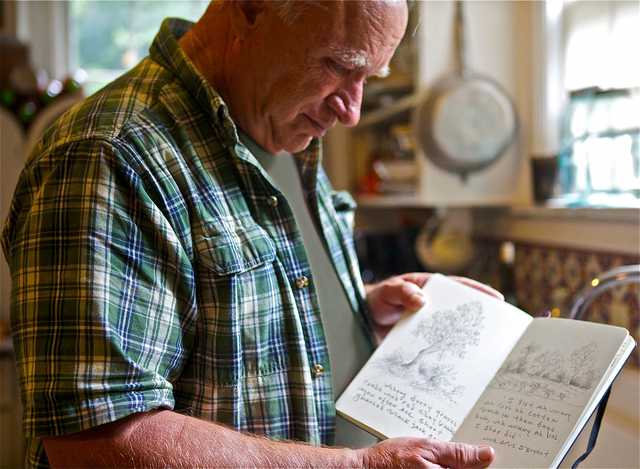
Other communities are also making use of seed saving to preserve their heritage alongside their vegetables. The seed saver John Coykendall, who collects heirloom seeds in Appalachia, keeps details journals of his collecting expeditions, which he calls ‘memory banking’. Like a collections database, his notes record valuable contextual and historical information.

John Coykendall with a 'memory bank', a notebook used to record cultural memories and contextual information in his search for heirloom seeds. Source. 

“A little bit of ancestral history … Where were you living? Where did this seed come from? Did it come from your grandmother or grandfather? Was it brought here from somewhere else? How do you grow it? How was it cooked? ... If someone doesn’t record it, put it down, it is going to be lost for all time. That goes for the seeds. This is the living part of it. Living heritage. Our agricultural heritage.”

While global seed banks work to preserve our biodiversity and health at a macro scale, community and individual projects can work at the micro level, protecting cultural heritage and public health on a personal level. Many libraries (including our own at the iSchool!) house seed libraries – but given their potential to start conversations around culture, food security, health, and heritage, they might not be out of place at a museum either.

25 July 2017

TALKING TO ROBOTS ABOUT ART: A VISITOR RESEARCH ROUND-UP

RESEARCH COLUMN

BY: JENNIFER LEE

As summer internships wrap up and August approaches, you may already be itching to get back to class. Fear not: it’s not too early to start hitting the academic journals again! My own summer internship has involved some visitor research projects, and it’s fascinating to see what kinds of information we can miss about our publics until we think to ask. In the spirit of inquiry, here are some recent developments in visitor-centred research to get us thinking about museum users in the wild.

"There's one! Crikey." Source. 

Our first stop is Pittsburgh, where staff at the Carnegie Museums of Pittsburgh are currently developing a mobile experience (working title MUSE) which they describe as “a friendly, knowledgeable and charming chatbot extension”. MUSE would use native systems on users’ mobile phones, including cameras and SMS/messaging clients, as a platform to answer questions and make conversation about museum objects and facilities. The idea is reminiscent of Brooklyn Museum’s ASK system, but would use artificial intelligence rather than real-time human expertise.

This strategy removes a substantial obstacle to getting users to engage with museum apps, i.e. that very few living humans have ever intentionally downloaded a museum app. The Carnegie Museums found that 93% of the visitors they surveyed were carrying a mobile device, and virtually all of them had Facebook Messenger, iMessage, or both. If they can leverage those numbers to provide as frictionless an experience as possible, there’s reason to be optimistic about MUSE’s success. The recent popularity of SFMOMA’s ‘Send Me SFMOMA’ service, which texted artwork in response to user requests and emojis, proves that there’s quite a niche for whimsical digital experiences with museum collections.

Art on demand from the San Francisco Museum of Modern Art (Send Me SFMOMA). The future has arrived, and it is *heart eyes emoji*. Source. 

After an intensive visitor study, CMP have kindly made their visitor research data, methodology, and infographics available on GitHub, where they might be useful for other museums looking to develop similar programs (and they’re an interesting read for the inquisitive – the incidence of selfies will surprise you).

Next we move to New York and this month’s issue of the Journal of Museum Education (vol. 42, July 2017), centred on the theme ‘Does Museum Education Have a Canon?’ In the article “Well-Chosen Objects Support Well-Being for People with Dementia and Their Care Partners”, Carolyn Halpin Healey of Arts and Minds, a non-profit which works with people with dementia and their caregivers in New York museums, explains staff concerns in selecting artworks for these programs.

In keeping with the issue’s theme, much of the article’s focus is the tension between the canonical objects of a museum’s collection and the need for an accessible and enjoyable experience for participants, ultimately the more important factor. The most famous, visible, and ‘important’ objects in a museum are there for all visitors to enjoy; visitors with cognitive impairments are often unable to access them for physical reasons or because of fear and stigma associated with their impairments. While it’s important to push back against this stigma and increase access to the canon, there is also much to be gained from looking outside the canon and with specific groups’ histories and personalities in mind. 

An Arts and Minds program at the New York Historical Society. Successful programs for visitors with cognitive impairment have tangible benefits for all participants, including caregivers, but what makes a successful program, and how does the choice of art factor in? Source. 

My main takeaway came from the author’s testament to the importance of thoughtfulness: “While the “wrong” choice will certainly not cause harm, the “right” choice has the potential to catalyze self-exploration as well as provide the opportunity to reflect on the past, to empathically connect with others, and to imagine new ways of being as one ages, particularly in the face of life-altering cognitive impairment.” Even when the risks of curation are low, the payoffs may be substantial; all museum visitors deserve the best we can give them. The article draws usefully on existing education, visitor and neurological research, and is a neat example of how theory can be used to guide and bolster practice.

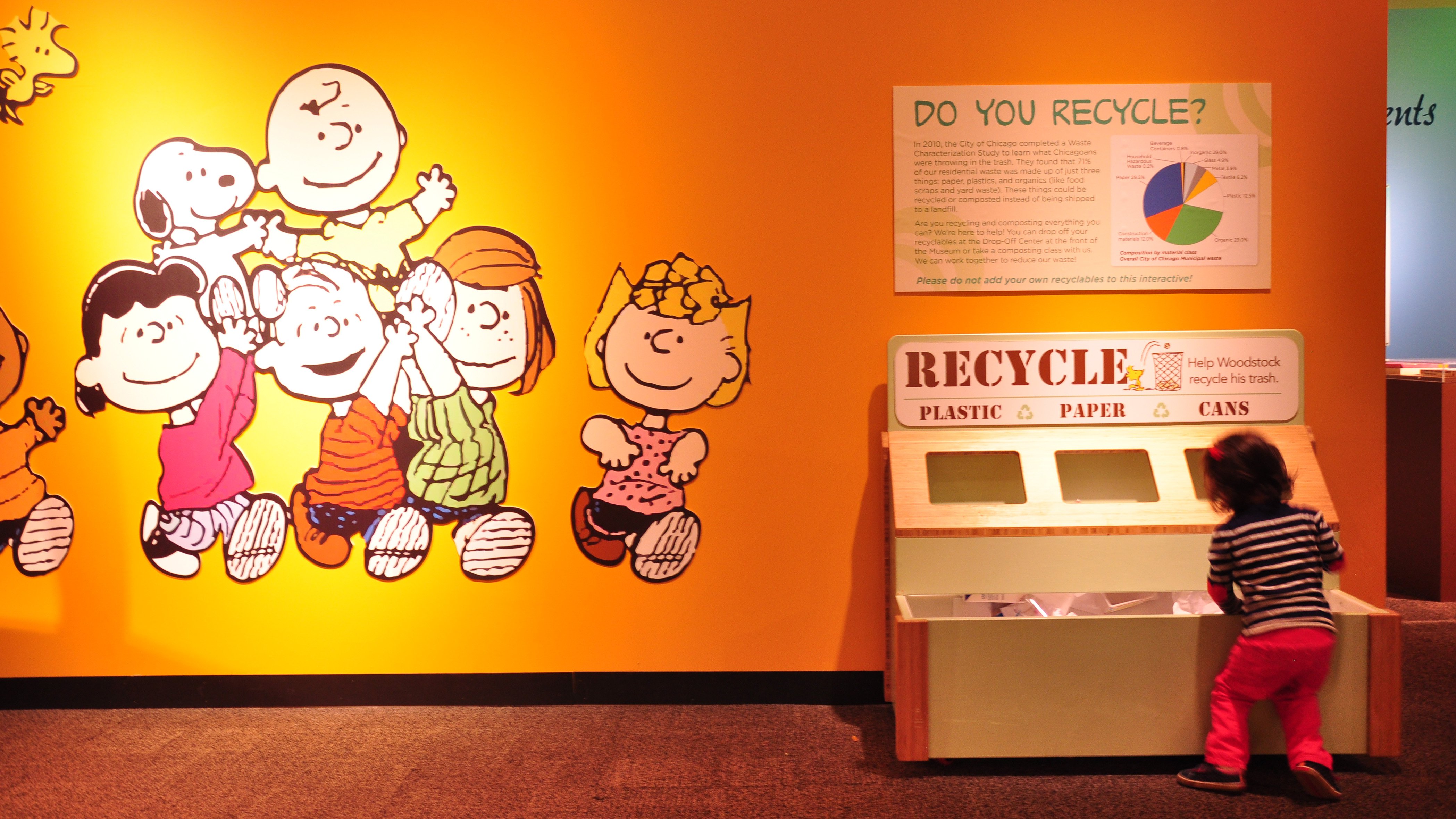
On our final stop, we move from understanding and shaping visitor experience to directly influencing visitor behaviour. In “Fostering customers’ pro-environmental behaviour at a museum” (Journal of Sustainable Tourism, 25.9), Heesup Han and Sunghyup Sean Hyun explore the factors which predict pro-environmental decisions like recycling, water conservation, waste reduction and transport choice while visitors are in the museum.

The authors identified five cognitive dimensions (environmental value, concern, awareness, knowledge, and self-efficacy, or the belief in one’s own ability to act toward goals) and two affective dimensions (the expectation of positive versus negative feelings after completing actions) which impact eco-friendly intentions and behaviour, as well as two additional factors, willingness to sacrifice and interconnectedness to nature. Using survey results from several South Korean museums, they produced a model which showed the relationships between all these factors in visitor decision-making.

A young visitor acts on the expectation of positive affect at the Peggy Notebaert Nature Museum in Chicago, IL. Source. 

It turned out that the factor with the largest impact on pro-environmental behaviour was negative anticipated affect, or the expectation of feeling guilty, remorseful, and bad after they took action or failed to take action. The second most important factor was positive anticipated affect: visitors were motivated to recycle or reduce waste because they knew they would feel good afterward. The cognitive dimensions were also crucial. An effective strategy might be to let visitors know that recycling, creating less waste, and choosing friendly transport options is the decent and worthwhile thing to do, while making other choices has adverse consequences. As we have always secretly suspected, the best way to make sure visitors act ecologically in the museum might be with some gentle shaming. Perhaps someone could develop an ecologically-minded chatbot to remind them to recycle?


SUGGESTED READING 

Halpin-Healy, Carolyn. "Well-Chosen Objects Support Well-Being for People with Dementia and Their Care Partners." Journal of Museum Education 42, no. 3 (July 14, 2017): 224-35. doi:10.1080/10598650.2017.1342189.

Han, Heesup, and Sunghyup Sean Hyun. "Fostering customers' pro-environmental behavior at a museum." Journal of Sustainable Tourism 25, no. 9 (November 25, 2016): 1240-256. doi:10.1080/09669582.2016.1259318.

Inscho, Jeffrey. "No App Required: Toward a Utilitarian Museum Mobile Experience." The Studio. May 18, 2017. Accessed July 23, 2017. https://studio.carnegiemuseums.org/introducing-muse-20a6f11c7c35.

Inscho, Jeffrey. "Field Study: Benchmarking Visitor Behaviors and Mobile Device Usage in the Museum." The Studio. July 18, 2017. Accessed July 23, 2017. https://studio.carnegiemuseums.org/chatbot-field-study-91fcbb1d4875.

16 May 2017

IT'S NOT EASY BEING GREEN: MUSEUM ACTION IN THE FACE OF A CHANGING EARTH

MUSEUM INNOVATIONS

BY: HANNAH MONKMAN

Hello all! I am very excited to join the Musings team as the Contributing Editor for Museum Innovations this summer! Today, I wanted to explore a topic near and dear to my heart (and one often neglected in discussions of information studies): environmental sustainability. While many Canadian museums are addressing sustainability in terms of cultural relevance and community involvement, less seem to be integrating green strategies in their operations – perhaps the idea of "going green" is daunting to museum professionals who are already struggling with a lack of resources. Whatever the situation, environmental sustainability should be a concern to all museums on some level.
After all, museums must navigate not only changing societies, but also a changing planet. So, what are museums doing to address this issue, and how can we incorporate those innovations into our future actions as museum professionals?

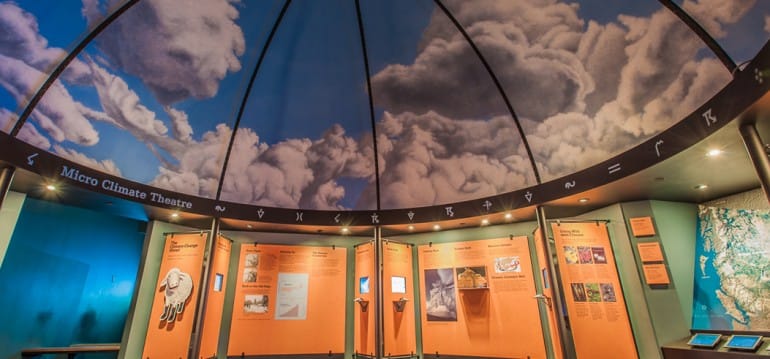
Educating Our Publics: The first (and more intuitive) role museums can take on with regards to environmental sustainability is that of the interpreter or educator. Through events and programming, art installations, exhibit displays, or even through the dedication of entire galleries, museums can help to educate the public about any and all of the issues related to the environment, including climate change, pollution, and species at risk of extinction.


"Climate Rules!" at the Royal BC Museum in Victoria is "one of the first galleries ever built that explains how climate is changing as a consequence of global warming."  Source. (Photo © RBCM.)
Of course, natural history galleries and science centres lend themselves more readily to these kind of programs, and some museums may feel that programming related to environmental sustainability is (rightly) well outside of their mandate. So I asked myself – what can ALL museums do?

Reflecting Within: Museums can – and should – address environmental sustainability by being mindful of their own internal operations. Some museums have already gone to great lengths in their pursuit for sustainability. For example, the Auckland War Memorial Museum in New Zealand has reduced its carbon footprint by 50% and reduced their waste to landfill carbon emissions by 72% since 2010. With such impressive numbers, there's a good reason to be optimistic about implementing our own initiatives in more Canadian museums!

Yayy!! Source.
But where do we start? At the Summit on Sustainability Standards in Museums 2013, the American Association of Museums worked to address the particular concerns museums face in environmentally sustainable development. "A Sustainable Development Guide for Canada’s Museums" was subsequently published in 2015, detailing the importance of sustainable development in Canada and how museums might approach it. However, the uptake of these guidelines seems to have been slow or nonexistent thus far in the majority of Canadian museums. These standards can help guide museums to be more environmentally conscious when considering their own internal practices.

Rooftop solar panels in Hanover, Germany. Source.
Just to get our brains thinking about how we might integrate environmental sustainability in practice, I've summarized some of the most important and/or easiest strategies to implement:
  1. A Sustainable Building. New museums or those undergoing renovations have the advantage of establishing sustainable buildings or building components into the design of the new architecture, such as by installing solar panels. The Kentucky Coal Mining Museum is doing just that – perhaps ironic due to the nature of the museum's theme. This project is not just a shift to a green energy source for the sake of being environmentally conscious, but is also expected to pay itself off in 5-7 years and then start saving the museum a substantial amount of money in energy costs. How's that for incentive?
  2. Energy-efficient Operations. From maintaining vital climate controls for collection preservation to powering computers in office spaces, the daily operations of a museum can consume a huge amount of energy. Lighting is typically a major part of this, but costs can be cut down by using automated systems to light rooms only when in use, or even simply by using energy-efficient bulbs. Of course, if the rooms are housing collections, energy-efficient lighting should always be in sync with preservation considerations. LED lights are typically ideal, since they cut down on energy usage as well as not producing excess heat or UV rays that may damage artifacts. The Biosphere (the Environment Museum in Montréal) models this strategy – amongst other green technologies  with motion sensor lights in its washrooms and offices, in addition to an automated system throughout the building so that its lights are only on during opening hours. Water consumption is also a concern, and it's typically a good idea to install water meters to monitor usage.
  3. Green Exhibit Design. On a smaller scale than the building itself, museums can also look to their future exhibits when thinking about sustainability.  In 2013, the AAM published a "Green Exhibit Checklist" through a project called exhibitSEED, which promoted sustainable practices for exhibit design  –  unfortunately, its website is no longer running. Nevertheless, the checklist helps guide museum professionals in thinking about their exhibits in terms of sustainability by focusing on five main areas: reducing new material consumption; using local resources; reducing waste; reducing energy consumption; and reducing products with toxic emissions.
  4. Management and Documentation Policies. All organizations produce large amounts of waste as a by-product of their operations, and museums are no exception; however, museums can reduce their waste by implementing policies across their organization. For example, creating a printing and paper policy that requires employees to physically print documents only when absolutely necessary, or to only print double-sided, can cut down on the number of paper documents destined for the recycling bin. It is also important to ensure that your museum has a thorough waste management policy. As a general guideline, it's good to follow the 4R's: reduce at the source, reuse, recycle, and reclaim
This is not even close to an exhaustive list of potential actions a museum might take to address environmental sustainability, and it is important to remember that any strategy is flexible to match each individual institution – whether that means undergoing extensive renovations or simply implementing policies to reduce waste. As stewards of our past and present for our future generations, museums have an obligation to be mindful not only of their authority in educating their publics, but also of their own environmental impact as institutions. After all, unless you're a certain frog, it's really pretty easy being green.