Showing posts with label visitor experience. Show all posts

29 November 2019

CONSCIOUS DESIGN: ALUMNI CHECK-IN WITH BRITT BRAATEN

 Alumni Check-In | Elizabeth Cytko


Britt Braaten poses wearing a vintage apron.
Photo courtesy of Britt Braaten

Britt Braaten is the Creative Development Specialist at the Canadian War Museum. She graduated from the Museum Studies program in 2009, after switching from a law career to museums. Her museum internship was at the Immigration Museum in Melbourne, Australia where she worked in the Community Engagement/Curatorial department. 

The Canadian War Museum
Photo Courtesy of Britt Braaten

What does a typical day entail at your job?


My job is focused on the development of exhibitions; given the staff size (small!) and pace of work (fast!) at the War Museum, that means on any given day, I can expect to bounce between several different exhibitions and that each project will be at a different stage. For example, today, I reviewed and corrected design elevations for a traveling war art exhibition; reviewed English and French text for our major temporary exhibition about the Second World War, working with the historian, comparative editor, my manager and the project manager to finalize text; reviewed preliminary graphic layouts for that same exhibition and prepared comments for the designer; met with the historian to determine how we were going to fulfill a request from our Directors by adding content to that same exhibition; brainstormed potential visitor experiences for a proposed major temporary exhibition about war games; and corresponded with a colleague at another museum about balancing fun and learning in museum interactives.

What’s the best way to communicate with a team while creating exhibitions?

I think it’s important to be strategic in how you work with people:
I figure out what each person’s preoccupations are, and show that the approach I’m proposing addresses that—or, if it doesn’t, acknowledge that and invite them to help share their expertise.
I pay attention how each person likes to work—in person or on paper? Informal walk-and-talk conversations or extended workshops? —and tailor my work style to meet theirs.

It comes down to respect: respecting each others time, expertise and genuine desire to do good work. The more I’m able to understand my colleagues, the more I’m able to demonstrate my respect for them, and the better our long-term work relationships are. I find this kind of deliberate relationship management to be a critical ingredient in getting the support I need to do my job effectively.

Accessibility Guidelines
Photo courtesy of Britt Braaten

How do you approach creating visitor focused exhibitions?


In this role, my role as “visitor’s advocate” it’s my job to ask the right questions, and push back where needed.

Here is a list of the questions I consider:

Can visitors get to the exhibition?
Will they be comfortable in there?
Can they participate in a full and meaningful way?
Can visitors understand the exhibition?
Are we assuming prior knowledge in a way that will alienate people?
Will visitors care about what we have to say?
Have we totally missed the point?
Are we talking about what the subject-matter expert wants to talk about or what the visitor actually cares about?
How do we know what we know about visitors?
Can we actually talk to visitors to test our ideas before they make it on the floor?
Do we have research from past projects that could inform current decision-making?
Can we learn from our peers at other museums? Or am I relying on my own opinion and/or unreliable anecdotes?

Each of those questions plays out in innumerable ways, from intellectual decisions around the interpretive approach and content selection, to design decisions around fonts and colours, etc.

What’s the best way to include community voices/diversity in museum work?


A lot of it comes down to calling attention to instances where colleagues are treating “white man” as human-neutral (to borrow a phrase from comedian Hannah Gadsby) and see if there are other options that make sense in that case—sometimes it is a white man because that is what is authentic, accurate and appropriate for the topic. Other times, it’s just laziness, or a feeling that using someone other than a (straight, able-bodied) white man is somehow controversial or a “statement” in a way that defaulting to white-man isn’t. This isn’t always (or even often) a conscious decision, and I’ve found that calling attention to it and offering alternatives is an important and effective way to push for more diverse representation in exhibitions.

There are real impediments to representation—including attitudes and weaknesses in the collection—but I believe that this is an area where doing the work can pay off in real ways.

Britt Braaten delivering a talk during construction.
Photo courtesy of Britt Braaten

What is one of your failures that was a great learning experience?


One example that I think legitimately counts as a failure and that has influenced my approach to my job ever since comes from my first temporary exhibition at the War Museum. It was a pretty traditional art exhibition, but I was quite happy with it.

 What was the problem?

We had to reprint all of the labels—an unnecessary cost to the institution—because I had failed to account for two factors: first, in choosing fonts and colours, I worked exclusively in my office space. I didn’t think to print out samples and bring them down somewhere where the lighting matched the exhibition conditions. If I had, I would have increased the font size. But since I didn’t, it meant many visitors had to get in close to read the label. Unfortunately, I also didn’t account for how our decisions on security would impact the visitor experience: while some high-value artworks had individual alarms, for most of the exhibition, we opted for the less-expensive approach of curtain alarms—which were triggered when visitors stepped too close to the artwork. The combination of these two factors meant that many visitors were not able to get close enough to read the labels without also triggering the alarms. So the alarms went off all the time. We were able to correct this by reprinting the labels at a large enough font.

But I learned some important lessons. Now, I ALWAYS look at panels in as-close-to-real conditions as I can, early enough in the design stage that we can make changes. I also have developed a more holistic approach to exhibition development, and more of an awareness of how a decision in one department affects things in another department.

How does someone become the best ambassador for their museum?

Preparing in advance makes a real difference. In my undergraduate program, there was an unstated attitude that we should all be aiming for effortless brilliance at all things. Winging it was the highest ideal, while advanced preparation gave away that your brilliance was maybe not so effortless after all. It took me longer than it should have to move beyond that attitude and understand that what seems like effortless brilliance in others is usually the result of a lot of preparation. So the other part of being a good ambassador for the museum is being willing to do the work behind the scenes so that what you put forward into the world feels spontaneous and compelling, while in fact being very well planned.

Is there anything you wish you had done while you were in the program? 

I’m not a “regrets” sort of person. So while I’m sure there are things I could have done “better” in the sense that I half-assed a few assignments (especially in second semester of second year), I gave it the amount of time and effort that I was able to given the other competing priorities—working two part-time jobs, enjoying hobbies, seeing family and friends, etc. In fact, to answer the opposite of the question you asked, here’s a tip: nobody, not once, has ever asked me what my grades were. So, yes, I could have focused more on schoolwork and dropped one of my jobs—except that one of those jobs turned into a full-time gig after graduation, and the other covered food and rent and resulted in lifelong friendships. Or, yes, I could have stopped doing hobbies or seeing friends and put more time into my schoolwork—but those hobbies and friendships were what kept me happy and sane. So the lesson I really learned was: do what you have to do to get the degree, but not at the expense of your health and your future. Be kind to yourself, and understand that there’s a lot more to life than school.

25 July 2017

TALKING TO ROBOTS ABOUT ART: A VISITOR RESEARCH ROUND-UP

RESEARCH COLUMN

BY: JENNIFER LEE

As summer internships wrap up and August approaches, you may already be itching to get back to class. Fear not: it’s not too early to start hitting the academic journals again! My own summer internship has involved some visitor research projects, and it’s fascinating to see what kinds of information we can miss about our publics until we think to ask. In the spirit of inquiry, here are some recent developments in visitor-centred research to get us thinking about museum users in the wild.

"There's one! Crikey." Source. 

Our first stop is Pittsburgh, where staff at the Carnegie Museums of Pittsburgh are currently developing a mobile experience (working title MUSE) which they describe as “a friendly, knowledgeable and charming chatbot extension”. MUSE would use native systems on users’ mobile phones, including cameras and SMS/messaging clients, as a platform to answer questions and make conversation about museum objects and facilities. The idea is reminiscent of Brooklyn Museum’s ASK system, but would use artificial intelligence rather than real-time human expertise.

This strategy removes a substantial obstacle to getting users to engage with museum apps, i.e. that very few living humans have ever intentionally downloaded a museum app. The Carnegie Museums found that 93% of the visitors they surveyed were carrying a mobile device, and virtually all of them had Facebook Messenger, iMessage, or both. If they can leverage those numbers to provide as frictionless an experience as possible, there’s reason to be optimistic about MUSE’s success. The recent popularity of SFMOMA’s ‘Send Me SFMOMA’ service, which texted artwork in response to user requests and emojis, proves that there’s quite a niche for whimsical digital experiences with museum collections.

Art on demand from the San Francisco Museum of Modern Art (Send Me SFMOMA). The future has arrived, and it is *heart eyes emoji*. Source. 

After an intensive visitor study, CMP have kindly made their visitor research data, methodology, and infographics available on GitHub, where they might be useful for other museums looking to develop similar programs (and they’re an interesting read for the inquisitive – the incidence of selfies will surprise you).

Next we move to New York and this month’s issue of the Journal of Museum Education (vol. 42, July 2017), centred on the theme ‘Does Museum Education Have a Canon?’ In the article “Well-Chosen Objects Support Well-Being for People with Dementia and Their Care Partners”, Carolyn Halpin Healey of Arts and Minds, a non-profit which works with people with dementia and their caregivers in New York museums, explains staff concerns in selecting artworks for these programs.
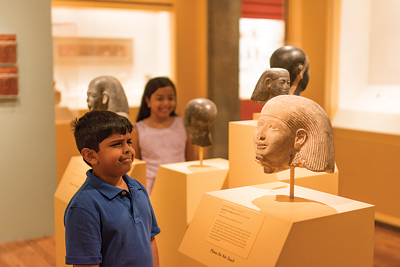
In keeping with the issue’s theme, much of the article’s focus is the tension between the canonical objects of a museum’s collection and the need for an accessible and enjoyable experience for participants, ultimately the more important factor. The most famous, visible, and ‘important’ objects in a museum are there for all visitors to enjoy; visitors with cognitive impairments are often unable to access them for physical reasons or because of fear and stigma associated with their impairments. While it’s important to push back against this stigma and increase access to the canon, there is also much to be gained from looking outside the canon and with specific groups’ histories and personalities in mind. 

An Arts and Minds program at the New York Historical Society. Successful programs for visitors with cognitive impairment have tangible benefits for all participants, including caregivers, but what makes a successful program, and how does the choice of art factor in? Source. 

My main takeaway came from the author’s testament to the importance of thoughtfulness: “While the “wrong” choice will certainly not cause harm, the “right” choice has the potential to catalyze self-exploration as well as provide the opportunity to reflect on the past, to empathically connect with others, and to imagine new ways of being as one ages, particularly in the face of life-altering cognitive impairment.” Even when the risks of curation are low, the payoffs may be substantial; all museum visitors deserve the best we can give them. The article draws usefully on existing education, visitor and neurological research, and is a neat example of how theory can be used to guide and bolster practice.

On our final stop, we move from understanding and shaping visitor experience to directly influencing visitor behaviour. In “Fostering customers’ pro-environmental behaviour at a museum” (Journal of Sustainable Tourism, 25.9), Heesup Han and Sunghyup Sean Hyun explore the factors which predict pro-environmental decisions like recycling, water conservation, waste reduction and transport choice while visitors are in the museum.

The authors identified five cognitive dimensions (environmental value, concern, awareness, knowledge, and self-efficacy, or the belief in one’s own ability to act toward goals) and two affective dimensions (the expectation of positive versus negative feelings after completing actions) which impact eco-friendly intentions and behaviour, as well as two additional factors, willingness to sacrifice and interconnectedness to nature. Using survey results from several South Korean museums, they produced a model which showed the relationships between all these factors in visitor decision-making.

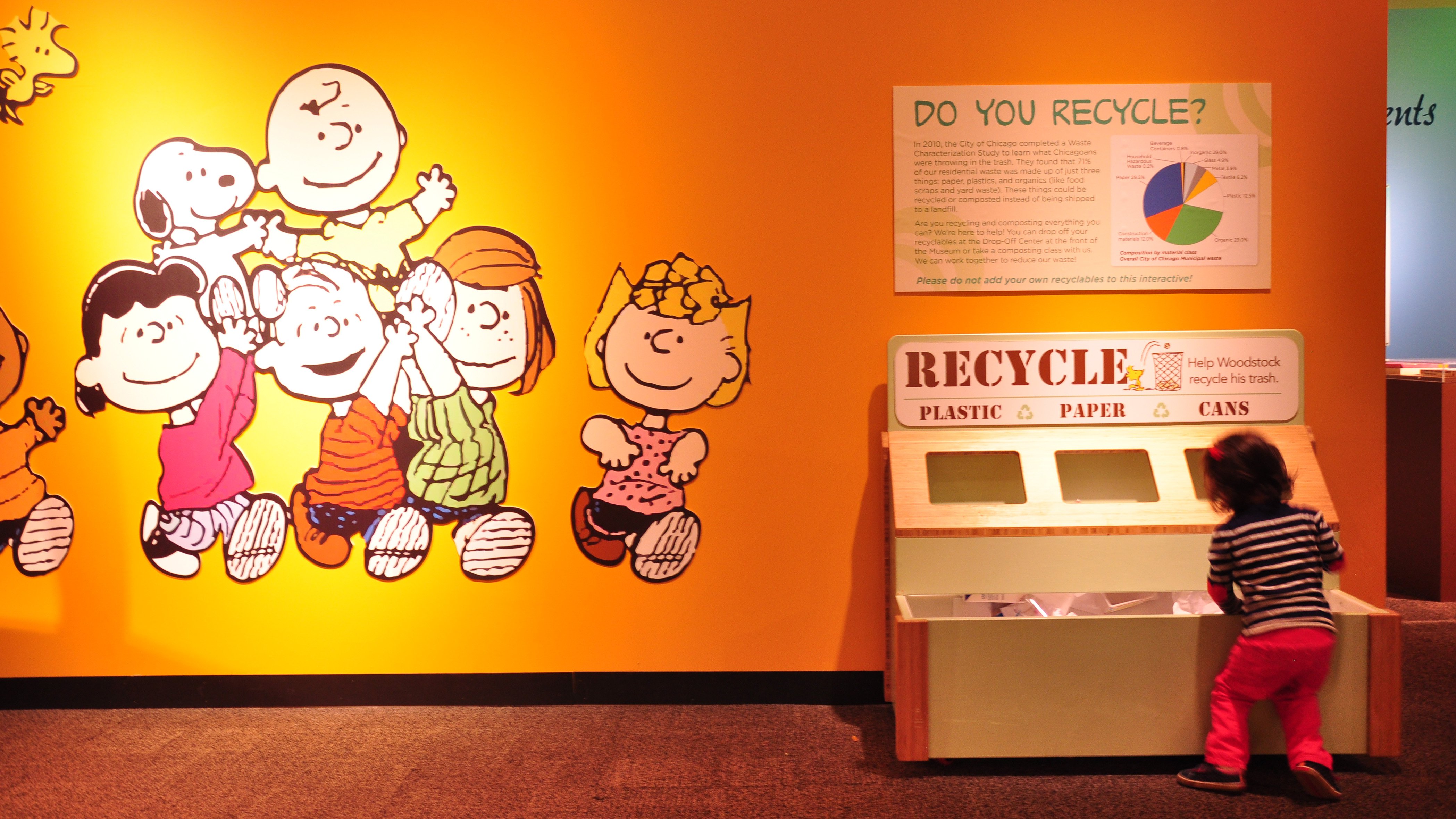
A young visitor acts on the expectation of positive affect at the Peggy Notebaert Nature Museum in Chicago, IL. Source. 

It turned out that the factor with the largest impact on pro-environmental behaviour was negative anticipated affect, or the expectation of feeling guilty, remorseful, and bad after they took action or failed to take action. The second most important factor was positive anticipated affect: visitors were motivated to recycle or reduce waste because they knew they would feel good afterward. The cognitive dimensions were also crucial. An effective strategy might be to let visitors know that recycling, creating less waste, and choosing friendly transport options is the decent and worthwhile thing to do, while making other choices has adverse consequences. As we have always secretly suspected, the best way to make sure visitors act ecologically in the museum might be with some gentle shaming. Perhaps someone could develop an ecologically-minded chatbot to remind them to recycle?

SUGGESTED READING 

Halpin-Healy, Carolyn. "Well-Chosen Objects Support Well-Being for People with Dementia and Their Care Partners." Journal of Museum Education 42, no. 3 (July 14, 2017): 224-35. doi:10.1080/10598650.2017.1342189.

Han, Heesup, and Sunghyup Sean Hyun. "Fostering customers' pro-environmental behavior at a museum." Journal of Sustainable Tourism 25, no. 9 (November 25, 2016): 1240-256. doi:10.1080/09669582.2016.1259318.

Inscho, Jeffrey. "No App Required: Toward a Utilitarian Museum Mobile Experience." The Studio. May 18, 2017. Accessed July 23, 2017. https://studio.carnegiemuseums.org/introducing-muse-20a6f11c7c35.

Inscho, Jeffrey. "Field Study: Benchmarking Visitor Behaviors and Mobile Device Usage in the Museum." The Studio. July 18, 2017. Accessed July 23, 2017. https://studio.carnegiemuseums.org/chatbot-field-study-91fcbb1d4875.

29 May 2017

"WHAT'S WATER?": LOOKING BACK AT THE NEW MUSEOLOGY

RESEARCH COLUMN

BY: JENNIFER LEE

Welcome back to the Research Column! This summer, we’ll be taking a closer look at some of the critical theory that has influenced the museum field and continues to shape our ideas and conversations about museums.

If you’re reading this blog, there’s a non-zero chance you’ve heard of ‘New Museology’. There may even be a neglected copy of The New Museology (1988, ed. Vergo), purchased in a fit of pre-grad-school optimism, sitting on your bookshelf. (Guilty). So for my inaugural Musings column, I decided to take out my copy and get to grips with the New Museology, the Old Museology, and whatever differences lay between them.

On the cover, the Saxon god Thuner looks rather accusingly at students who don't do their theory reading. (Photo courtesy of Jennifer Lee)
New Museology is a school of thought which emphasizes reflexivity, accessibility, justice, and interdisciplinarity in museum practice. It emerged in the 1970s and flourished in the 1980s, along with the ecomuseum movement and community museology, and the general expansion and exploration of the definition of ‘museum’ as new types of museums and methods sprung up rapidly. After more than a decade of exploring the ideas of new museology, the Declaration of Quebec (‘Basic Principles of a New Museology’) was drafted at the First International Workshop on Ecomuseums and the New Museology in 1984, calling for the implementation of New Museology principles and the formation of an international federation of new museology. ICOM now has an affiliated organization, MINOM, which is dedicated to furthering and utilizing the ideas of New Museology.

The New Museology is also the title of a volume of nine essays edited by Peter Vergo, Reader in the History and Theory of Art at the University of Essex, and published in 1988. Several of his colleagues at the university, and professionals from London museums, contributed essays on topics ranging from historic theme parks to visitor studies in art galleries. (Of course, New Museology extends far beyond this book and into the work of other scholars like Eilean Hooper-Greenhill, Cheryl Meszaros, and Robert Sandell. I could write many blog posts about its reach and scope, but time and blog posts are both, sadly, finite).

The New Museology was a reaction against an ‘old museology’ which Vergo and his colleagues felt was unreflexive, uncritical, and dated, concerned with the conservation and display of objects above all other issues. New Museology theorists took a step back from the museum to examine it from the outside, asking why museums were the way they were, and how they could be made better. They also embraced new perspectives on museum work, writing on visitor studies and the role of the museum as popular entertainment. The Old Museology, they argued, was so concerned with curatorial practice and art history that it neglected to consider the visitor's perspective. This was the 1980s, and critical theory was heavily influenced by the works of scholars like Michel Foucault, Antonio Gramsci, and Pierre Bourdieu, so many of the essays explore the ideas of power and authority: how the museum positions itself as a cultural authority, and what might happen if it ceded that power and engaged the visitor in a collaborative relationship.

A critical response to a museum display - much in the spirit of the New Museology. Source.
The more I read, the more familiar the ideas and outlook of the nine essays collected in The New Museology felt. Looking for the influence of the New Museologists as a museum studies student in 2017, I remembered the joke about the fish who ask, “What’s water?”. It can be hard to appreciate the impact of these ideas precisely because we’re now swimming in them. Nearly thirty years after its publication, when museum studies students throw words like ‘authenticity’ and ‘reflexivity’ around the classroom with wild abandon every week, it's hard to imagine that ideas that seem obvious to us now (like the suggestion that art museums should cater to visitors without specialist art knowledge!) represented a departure from contemporary museum practice in 1988.

Source.
A few essays stood out to me as especially interesting. Philip Wright’s ‘The Quality of Visitor’s Experiences in Art Museums’ (chapter 7) is an argument for responsibly interpreting art, for providing visitors with historical and social context so they can make sense of what they see, and for being honest and transparent about the ways objects are acquired, ordered, and displayed. As well as providing concrete suggestions to improve practice, which now seem like common sense, the essay is also a fascinating glimpse at a time when most major museums simply didn’t consider visitor research or interpretive planning to be important.

Colin Sorenson’s ‘Theme Parks and Time Machines’ (chapter 4) examines museum practices that seem to allow visitors to 'travel in time', like historical theme parks and multimedia and film displays. There are predictable references to Disneyland and Beamish, but the essay is a lyrical examination of historical nostalgia and collection, ending in an imagined future in which reconstructed historical sites fill the landscape. Overall, the essays are eloquent, readable, often scathing in their criticism of contemporary curatorial practices, and for the most part, still relevant to the current museum landscape.

So do you need to read The New Museology? If you’ve read anything published about museums in the last 20 years, you’ve probably already encountered many of the ideas at the heart of this book. The New Museologists have definitely shaped our current thinking about museums. But it’s a worthwhile read if you want to know where we started from, and it made me question my own assumptions about museums. What will museologists of the next generation think about the practices and ideas that seem natural to us?

Sources:

Meyrand, P. 2015. 'The new museology proclaimed'. Museum International nos 261-264: 115-118.

MINOM-ICOM.

Vergo, Peter. 1989. The New Museology (ed. Vergo). Reaktion Books London.

8 December 2016

THE MAGIC OF MUSEUM STORES

MUSEUM INNOVATIONS

BY CASSY KIST

Hello museum folks!      

I bet we could all use a little retail therapy right now, so this week I decided to check out what creative or “innovative” things museum stores are doing to enhance the experience of visitors.

National Gallery of Art store, Washington  D.C.
I may have been a little influenced by our first year classes… But according to research people don’t differentiate between time spent in the gallery and in the store or cafe; they are all “parcel” to the experience. And should visitors differentiate?

If museums are about the total sensory experience, then these components would seem vital parts to the larger institution. The museum store has a long controversial history due to the tension which has and continues to exist between its multiple roles including educator and money maker (Source). Since the 1990s it is believed that the precedence of education and the museum’s mission are winning out over money making (Source). As such, the museum store is becoming more of an extension of the actual exhibits and museum space by taking steps to become more integrated into the institution

According to Charles McIntyre - a specialist on consumer behaviour, to be integrated, museum stores should feature personal products that encourage personal transformation related to the learning process of museum visits (McIntyre, 2010).  He suggests that the store should be immersive, investigative, interpretive etcOne stellar example of a more “integrated museum store” is the store in Minneapolis Institute of Art, which has advocated these experiential components as part of its mission.

MIA Store
For instance, in a recent interview with Ryan Ross the head of retail at MIA, he emphasised that the store keeps products - even valuable jewellery pieces out on display and therefor open to touch (Source).

Staff even encourage customers to try on pieces. According to him, it is very important for visitors, after being surrounded by closed exhibit cases, to be able to have a tactile experience that can fulfil their desire for a bodily immersion at the museum which might otherwise be incomplete. This understanding and “counterbalance” of the store with exhibit space, suggests that both museum and store are capable of working together to provide the “parcel” experience.

Another aspect that embodies the mission of the MIA is its dedication to the stories behind the retail objects and their artists. In this way the store acts as an extension of the “investigative” and “interpretive” learning components of the exhibits. Customers want to learn about the products and where they come from and staff are fully trained, like gallery docents, to tell their compelling narratives.

MIA store

As another form of integration, it has also been suggested that the museum store have products related to the exhibits. Many museum stores are stocked with replicas or objects related to the exhibits but to different extents. The MIA in particular, states that many of their products connect not only to their special exhibits but also to their permanent collections and programming.
Spice products featured at MIA for their chef exhibit

A similar recent example of this, is the store within the National Museum of African American History and Culture. A news report claimed that the curators spent an extensive 2 years with merchants discussing objects in the collection to create products suited for the Museum store (source).

Museum stores have been referred to as liminal places, a place not fully integrated into the museum or fully separate, however, rather than this exemplifying a disconnect with the museum’s mission and its exhibits, I believe with this label specifically, it has the ability to be fully integrated into the museum 
1920 styled gloves from the VA museum
 store for the "Undressed Exhibit"

“Liminal” is often a term used in relation to places of magic. As such, museum stores as “liminal” can be integrated into the museum experience by being an immersive, interpretive and investigative place where people can piece together self identity and create transformations.

For anyone wanting a bit of magic, retail therapy or Christmas shopping I would also recommend checking out the Royal Victoria and Albert Museum Online store.


22 September 2015

ODE TO THE MUSEUM PRIZE EXCHANGE

MUSEUM INNOVATIONS

BY: JENNY FORD

Welcome to the first Museum Innovations column of the year! The first innovation of the season actually isn’t new at all. In fact, it celebrated its 30th birthday last year. But this underrated innovation still has a lot of un-tapped potential.

Nature Exchange in Sudbury. Shelves with trading items.
Nature Exchange at Science North. Source

The Nature Exchange reminds me of the prize counter at Chuck E. Cheese's – you’ve just played a bunch of games and have clambered together a couple hundred tickets to trade for prizes based on points.

Flip that to the museum. The Nature Exchange is the museum version of a prize counter. And it has SCIENCE! The exchange was the brain child of Science North in Sudbury, Ont. way back at its opening in 1984. Since then, the idea has been adopted in institutions from Las Vegas to Kamloops, B.C.


HOW IT WORKS

The goal of the exchange is for visitors to explore the natural world around them and bring that knowledge back to the museum. The Nature Exchange exhibit (if you can call it that) asks visitors to bring in their own natural history objects – rocks, shells, fossils, pinecones, etc. You then share your knowledge about the object with Nature Exchange staff.

People looking at objects at the Nature Exchange in Springs Preserve Las Vegas.
Nature Exchange at the Springs Preserve in Las Vegas. Source.
The more you know, the more points you get. The nicer or more curious the specimen, the more points you get. Visitors then cash in their points for other cool natural history objects at the exchange, like geodes or nifty shells. Bank points for some of the bigger objects.


KNOWLEDGE OUTSIDE-IN

What's fascinating about the Nature Exchange is how the experience spans beyond the museum walls. Usually, museums aim to transfer information from the inside-out; you learn something at the museum and then transfer that to your community.

But the Nature Exchange is the opposite. Visitors are learning outside the museum and bringing that knowledge into the institution. It's helping people learn more independently from the museum, you could say, while still using the institution as a forum for idea-sharing. However, I'm sure Nature Exchange staff share tidbits of information, as well.

The trading counter at the Nature Exchange at the Woodlands Park Zoo in Seattle.
Another version of the Nature Exchange at the Woodland Park Zoo in Seattle. Source

As far as I know, this outside-in approach is not too common in museums. You could say it happens when visitors share their experiences and memories about objects, but this is often knowledge they already possess.


HOW TO RE-APPLY

So, how would this model look in other museum settings? I'm not too sure of the answer to that. Maybe an "Art Exchange", like this mini-museum below, is in order.

The Mini-Art Exchange with art objects in Sudbury.
The Mini Art Exchange... also curiously from Sudbury. Credit: Jenny Ford

The applications are interesting to speculate, and there are advantages to thinking of museums not as disseminators of knowledge but forums, like at the Nature Exchange.


LET ME KNOW WHAT YOU THINK!

10 July 2015

TASTE, THE FINAL FRONTIER: CAN MUSEUMS RECREATE THE FLAVOURS OF HISTORY?

HISTORIC KITCHEN

BY: LEAH MONCADA

Selected Classical Recipes
Athenian Cabbage – The Classical Cookbook
Parthian Chicken – The Classical Cookbook
Lentils with Chestnuts – A Taste of History


For a full bibliography of the books used in the classical journey of Historic Kitchen, see this post.

Museums today are exploring different methods of display that incorporate senses other than sight and allow visitors to experience knowledge in new ways. It is not uncommon to see exhibits featuring soundscapes and opportunities for touch. Though growing as an interpretive tool, smell is still fairly rare.

But what about taste?

Pompei Banquet Wikipedia
A Roman Banquet in 1st c CE Pompeii. Source.
Food programs in gallery spaces have long been difficult due to valid logistical and conservation concerns. (The thought of crumbs, sugary materials, and bacteria-loving messes around delicate artifacts is an insurmountable hurdle in many cases.)

That is not to say they do not happen! The Canadian Food and Agriculture Museum has a Demonstration Kitchen opening onto their special exhibitions area. To compliment their current special exhibition Taking Care of Beesness, they host cooking with honey sessions. As well, the Children's Museum in the Canadian Museum of History has recently brought back their popular Kids in the Kitchen series with Great Greek Gastronomy to compliment the opening of The Greeks: Alexander to Agamemnon.

So what is a Museums to do if they lack a kitchen conveniently installed in their gallery space? Due to the nature of how taste works it can usually be replicated through the (much more exhibit friendly) sense of smell. The visitor may not have the satisfaction of consuming something, but the knowledge gained is similar enough for substitution. However, there are still potential issues of negative modern association, or lack of authenticity, that museums should be aware of.

The following recipes feature a number of pungent spices and herbs common in Roman foods, but noticeably unfamiliar to the average museum visitor. (I have handily researched and provided substitutions.) Not included below, but also found frequently throughout my recipe books are such intriguing spices and herbs as spikenard, cyperus, and myrtle.


The Recipes

Athenian Cabbage with Honey Vinegar– The Classical Cookbook, Sally Grainger and Andrew Dalby (also in Roman Cookery, Mark Grant)
Cabbage - Mnesitheus, quoted in Oribasius, Medical Collections 4, 4, 1
Honey Vinegar - Galen, Staying Healthy 4, 6

Athenian Cabbage The Classical Cookbook Sally Grainger
Athenian Cabbage. Photo: Leah Moncada
Honey Vinegar
½ cup honey
2 tbsp red wine vinegar

Cabbage
1 small cabbage
2 tsp chopped fresh green coriander in oil

2 tsp chopped or fresh dried rue (can substitute rosemary and pepper)

2 pinches asafoetida powder

salt
To make the honey vinegar, boil the honey, skim if necessary. Add the vinegar and reduce slightly. Set aside. 

To make the cabbage, finely slice, wash, and dry the head. Toss the herbs with 3 tbsp honey vinegar, sprinkle with asafoetida and a little salt to taste.

This recipe is quite good as a refreshing side, and was later adopted by the Romans from the Greeks. Lacking rue, I substituted rosemary and black pepper. According to Grant this omission is a travesty. Rue has a very distinctive flavour that simply cannot be replicated with any other herb. While once quite popular, rue has virtually disappeared from western kitchens since the Tudor period. Due to the unique taste and the ubiquity of its use in greco-roman recipes, I would be extremely interested in experiencing its flavour!


Parthian Chicken – The Classical Cookbook, Sally Grainger
Apicius 6.9.2


Parthian Chicken The Classical Cookbook Sally Grainger
Parthian Chicken. I do not know to what degree the violet hue is authentically Roman, but the dish certainly tasted just as good as it looked! Photo: Leah Moncada.
4 pieces chicken 
ground black pepper
¾ cups red wine
2 tbsp garum (or other fish sauce)
½ tsp asafoetida powder or 5 drops asafoetida tincture
2 tsp chopped fresh lovage or celery leaf
½ tsp group lovage seed or celery seed
2 tsp caraway seeds

Place the chicken in a casserole dish and pepper liberally. In a separate bowl, combine the wine, garum, and asafoetida. Mix. Add the lovage and caraway, mix, and pour over the chicken. Cover and bake at 375F for 1 hour. At the 30 minute mark uncover the chicken to allow it to brown. Serve covered in its own sauce.

This wonderful recipe deserves to be repopularized. There is a strong caraway undertone while the wine produces an extremely tender chicken. Though unfamiliar in my own cooking, asafoetida is commonly used in Indian recipes and can be found at your local Middle Eastern or Indian grocery store.

Aptly named, this dish is clearly from the Parthian Empire given the dominant taste of asafoetida. However, the caraway reminds us that this is a Roman adaptation. While caraway has disputed origins (ranging from central Europe to Egypt), it was extremely popular to the Roman palate.

Silphium from Cyrenaica Wikipedia
A coin from Cyrenaica depicting silphium. Source.

Asafoetida is actually a Roman substitute for the tragically extinct silphium. Grown only in small areas of Cyrenaica (modern Libya), this remarkable spice was so valued by the Romans that it was stored amongst the gold and silver in the state treasury. It was humorously known to incite deep slumber broken by sneezing fits amongst livestock who grazed in its fields. As recorded by Pliny, one fateful year grazing goats devoured the entire crop. Asafoetida is a distant cousin to this spice and quickly replaced silphium, though apparently it is not nearly as powerful.


Lentils with Chestnuts – A Taste of History, Jane Renfrew
Apicius 5.2.2

Lentils with Chestnuts Jennifer Renfrew A Taste of History
Lentils with Chestnuts. It's better than it looks! Photo: Leah Moncada.
100g lentils
100g shelled chestnuts
½ tsp baking soda
a pinch of pepper, cumin, coriander seeds, mint, rue, and pennyroyal (can substitute rue with rosemary and pepper; pennyroyal with strong fresh mint)
1 drop asafoetida essence
1 tsp garum or other fish sauce
1 tbsp vinegar
1 tbsp honey
1 tbsp olive oil

Cover the lentils with water and simmer gently for 30 minutes. In another pan, boil until tender the chestnuts with the baking soda in just enough water just to cover. Pound the spices and herbs. Add to the herb mixture asafoetida, garum, vinegar, honey, and mix. Pour over the chestnuts (drain nuts slightly if too much water), add olive oil and bring to a boil, stirring constantly. Mix with the lentils. Taste and adjust with extra spices if necessary. Serve hot.

A delightful recipe, I can imagine this would be wonderful in autumn. It has a very complex taste, reflecting the number of herbs and spices included. Of note is pennyroyal, a member of the mint family much beloved by Pliny. Pennyroyal is usually found among list of dangerous herbs. The oil is fatally toxic and improper consumption of the leaves can also be quite harmful. However, the incredibly pungent flavour lent itself well to sauces and stuffing.

Next time of Historic Kitchen:
I look at the staples of the Roman diet. We have previously explored imported flavours and high class cuisine. I want to conclude the Classical journey of Historic Kitchen by exploring a typical meal for the masses. Of course, with the Roman flair for extravagance, 'typical' Roman food never means 'boring'...

15 June 2015

THE MUSEUM ROAD LESS TRAVELED

THE GRAD SCHOOL GUIDE

BY: JENNY FORD

Whenever I tell someone I'm in Museum Studies, they usually assume I want to be a curator — "Like with dinosaurs or Egypt or something?" The truth is, there are countless different roads to explore in the museum world. There is a lovely list of some of these areas of interest on the Master of Museum Studies website, but this is just the tip of the iceberg. So, I put the question to my fellow students. What museum studies path interests them, and how has that influenced their studies?

AMELIA YAN: EDUCATION

Amelia gives a school tour at the Textile Museum of Canada.
Amelia gives a school tour at the Textile Museum of Canada. Credit: Amelia Yan
1. What drew you to your area of interest?
I love working with children! As I have a background in education, I enjoy facilitating museum programs and designing hands-on learning experiences for kids.

2. What museum studies courses have been most valuable to you so far?

Museums and Their Publics (MSL1350H) and Public Programs and Education (MSL2332H) have been the most rewarding courses. They have given me insight into developing programs for different publics, as well as best practices in the profession. They have also trained me to create museum programs of my own, and evaluate their effectiveness for future improvement.

3. What book/author have you found most useful given your area of interest?
The Journal of Museum Education is the most helpful resource for me. Its articles discuss contemporary museum education practices and relevant issues within the discipline.

MADELEINE ADAMSON: VISITOR RESEARCH

Madeleine at a PAMA event conducting visitor research.
Madeleine in action at a PAMA event. Credit: Madeleine Adamson
1. What drew you to your area of interest?
I knew visitor research would allow me to engage with visitors—something I really enjoy. I also see the value in giving visitors a voice so that it is possible to incorporate their wants and needs into future exhibitions, plans, and decisions.

2. What museum studies course has been most valuable to you so far?
Hands down, the most useful course for gaining skills and experience in visitor research has been Museums and their Publics (MSL1350H). The hands-on, practical, and engaging class gave me the skills and confidence I needed to embark on several visitor research projects at the Peel Art Gallery, Museum and Archives (PAMA).

3. What book/author have you found most useful given your area of interest?
Beverly Serrell and Samuel Taylor’s Try It! Improving Exhibits through Formative Evaluation has been very helpful in designing formative evaluation strategies for a current project at PAMA—interviewing visitors about their opinions on homelessness to inform an exhibition on homelessness in the Peel Region.

LEENA KILBACK: CONSERVATION & REGISTRAR

Inside Montgomery's Inn historic stie with Leena.
Leena on the scene at Montgomery's Inn historic site. Credit: Leena Kilback
1. What drew you to your areas of interest?
I studied archaeology during my undergrad and love stuff. I have collections of collections at home!

2. What museum studies course has been most valuable to you so far?
The Conservation and Preservation of Recorded Information (INF2120H) has been my favourite so far. It covered such a wide range of topics for archives and libraries and we had field trips to some awesome sites.

4. What book/author have you found most useful given your area of interest?
Conservation Concerns: A Guide for Collectors and Curators by Konstanze Bachmann covers many topics briefly for all types of materials, including their storage and conservation.

JENNIFER MAXWELL: COLLECTIONS MANAGEMENT

Installing a kayak at the Fort la Reine Museum
Jennifer installing a kayak at the Fort la Reine Museum. Credit: Jennifer Maxwell
1. What drew you to your area of interest?
As an amateur historian, I spent the majority of my time studying books, articles, records, diaries, etc. My connection with the past was always removed. Working as a collections registrar at the Fort la Reine Museum in Portage la Prairie, Man. changed all that. Through objects, collections management (CM) offered me the connection with history I was lacking.

2. What museum studies course has been most valuable to you so far?
Collections Management (MSL1150H) is the classic "Collections Management 101" course. I learned something new every week. The practicum was the perfect opportunity to put theory into practice (as well as being a resume booster!).

3. What book/author have you found most useful given your area of interest?
I have found websites and databases more useful than books. Some websites and databases I have bookmarked include the Canadian Conservation Institute, the Australian Institute for Conservation of Cultural Material, and the Collections Management Standards Toolkit. These sites contain so much practical information, helpful images, and related resource links.

AS FOR ME... 
JENNY FORD: INTERPRETIVE PLANNING

Looking at collection of animal bones in a drawer.
Me peering at collections for a potential exhibit. Credit: Jenny Ford
1. What drew you to your area of interest?
I've always loved storytelling, history, and writing. Interpretive planning combines all these elements. I love how objects, text, media, and interactives work together to form a three-dimensional story for  visitors. 

2. What courses have been most valuable to you so far?
The Interpretation and Meaning Making (MSL2330H) course opened my eyes to the world of interpretive planning both on a practical and theoretical level. Museums and Cultural Heritage (MSL2370H) also helped me understand the critical issues facing museums and how that influences interpretive planning.

4. What book/author have you found most useful given your area of interest?
The book I keep returning to is Exhibit Labels: An interpretive approach by Beverly Serrell. I find it  incredibly practical when going through the process of planning an exhibition. For me, it goes beyond just labels to other exhibition elements.

WHAT'S YOUR MUSEUM PATH? SHARE IN THE COMMENTS!

25 May 2015

VISIT A MUSEUM LIKE A MASTER

THE GRAD SCHOOL GUIDE

BY: JENNY FORD

I am probably the worst person to visit a museum with. I question everything and notice the smallest details. To be honest, I wouldn’t visit a museum any other way. Museum Studies has taught me to look at museums differently. It has taught me to appreciate the careful thought and balance that goes into an exhibition. But for those who can’t wait to get started, here’s how to visit a museum like a master's student.

Person walks by art installation made up of thousand of magazine pictures.
Exhibit at the National Gallery of Canada, Ottawa. Credit: Jenny Ford

THE HOOK

Panel text
The introductory panel to Brain. Credit: Jenny Ford
The first thing I notice in an exhibition are the words on the introductory panel. Does it capture my attention? Does it tell me what the exhibition is about? Sure you may have a lot of pretty objects, but I’m not going to learn anything if the text is poorly written.

Take this good example from the American Museum of Natural History's traveling exhibition Brain: The Inside Story. The introductory panel hooks you in and invokes all your senses. In the words of John Veverka, it provokes the visitor's interest, relates it to their lives, and reveals something new. On top of all this, it tells me what the exhibition is about.

CAREFUL OBSERVATION

People watching is also an important part of my museum experience. I take note of other people’s behaviours when they enter an exhibition, which way they turn, what objects they gravitate towards, and what text they end up reading (if any). Are visitors missing out on the most important object simply because of where it’s placed or how it’s presented? Sometimes, if I’m feeling bold, I eavesdrop on their conversations to see what's of interest to them, and if the exhibition's point is getting across.

Canadian Journeys Gallery at the Canadian Museum for Human Rights.
 Canadian Journeys Gallery at the Canadian Museum for Human Rights. Credit: Jenny Ford

WHO'S IN AND WHO'S OUT

Objects, places, people, and organisms have a thousand stories, but which one(s) is the museum telling? I always pay attention to who’s talking in an exhibition. Is it the curator? The artist? The people connected to the objects? I’ve definitely been to some one-sided museums, where the curator’s voice is loud and clear, but the people who used, for instance, are nowhere to be found.

I also look for the visitor’s voice in an exhibition. Is it a one-sided dialogue, or can the visitor contribute? Are they given time to reflect on diverse opinions or share their own? The picture below from the Parliament Interpretive Centre in Toronto is a lovely example of the multiplicity of voices in an exhibition.

Panel at the Parliament Interpretive Centre.
Panel at the Parliament Interpretive Centre. Credit: Jenny Ford

PUTTING THE WORLD ON DISPLAY

There are so many ways to showcase objects and stories. How this is done says a lot. I not only look where an object is displayed, but also what goes along with it. Accompanying labels, videos, and pictures can change how we view an object.

A taxidermy zebra in a glass case by itself is removed from its natural habitat. Does this give us an isolated sense of a zebra? But does placing it within a diorama, like the one below, give us an unrealistic and idealistic view of its natural world? You can now see why people love to hate visiting museums with me...

Diorama of African mamals at the American Museum of Natural History.
Diorama at the American Museum of Natural History. Credit: Jenny Ford

WHY AM I HERE AGAIN?

Finally, as I exit a museum or exhibition, I think back to what I’ve learned. Can I sum up the exhibition or was it just a blur of “stuff”? If it's the latter, we have a problem. It means the exhibition wasn’t successful in getting its message across, and something was lost in translation. A good exhibition should always leave you capable of answering the question “what was that all about”?

HAVE A TIP FOR VISITING A MUSEUM LIKE A PRO? SHARE IT IN THE COMMENTS!